Review: “East Florida in the Revolutionary Era, 1763–1785” by George Kotlik

Thirteen of the Great Britain’s North American colonies moved toward independence in 1775, declaring the fact officially the following year with the issuance of the Declaration of Independence. Perched below these thirteen rebellious provinces was the colony of East Florida. Earned after the Seven Year’s War by Great Britain from Spain, the most populous city an oldest permanently established European metropolis was St. Augustine, which was also the capital of the colony. This colony, through the eight years of the American Revolutionary War, had a tenuous connection with their neighbors to the north. Largely forgotten in the pantheon of history describing this period, from the time of Britain gaining possession in 1763 through the end of the Revolutionary era in this historian’s estimation, in 1785.
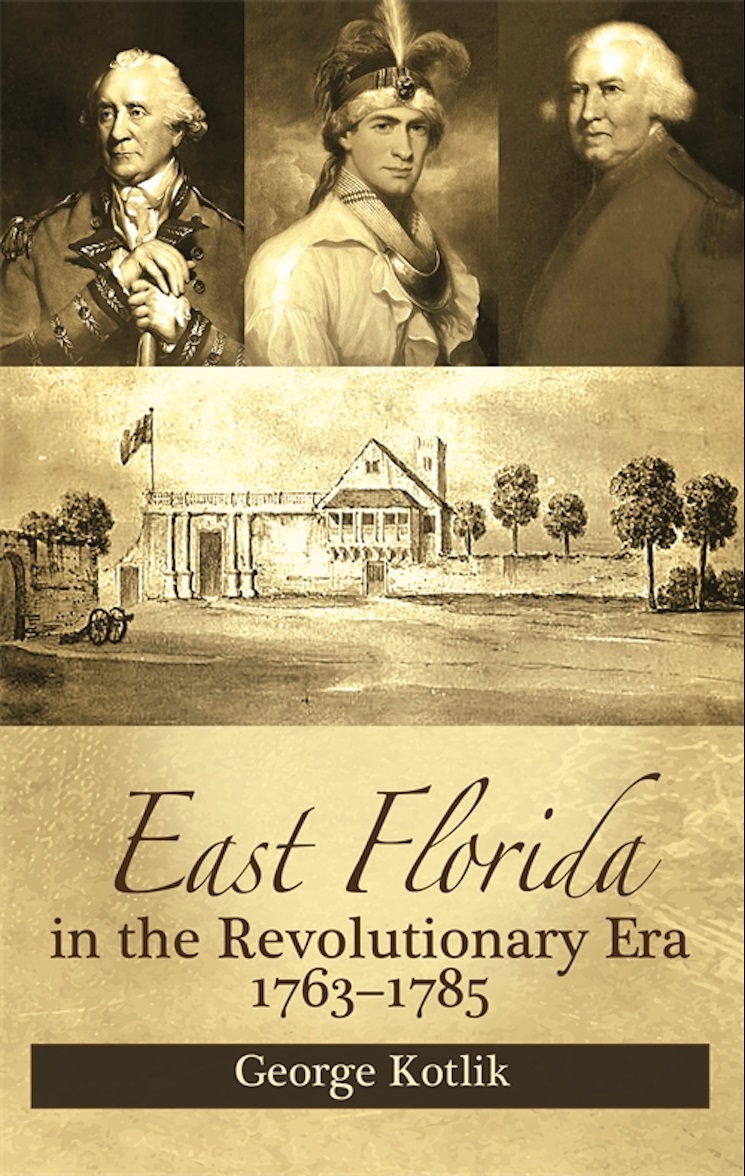
Entitled, East Florida in the Revolutionary Era, 1763-1785 and penned by George Kotlik, a historian specializing in 18th century North American history, the publication offers “an accessible and detailed narrative of the East Florida during the American Revolution.” (pg. 8).

What ensues in the following pages is a brief yet complete overview of the military, political, social, and economic history within those years of East Florida. Some of the names in the pages are well known to enthusiasts of the American Revolutionary War era whereas others will be new names to add to the repertoire for further study. From Governor Patrick Tonyn, British general and last governor for England of East Florida to bringing attention to the William Augustus Bowles, a Maryland born Loyalist, sympathetic to the Muscogee Native Americans of East Florida who tried in vain from the last decade of the 18th century, to establish an independent state for the tribe, with British support. These are just two of the historical personas that Kotlik discusses in his narrative, the rest await you within the pages of the book!

Although no major military actions happened within the confines of the colony that does not mean the role of East Florida in relation to the American Revolution should not be marginalized. “Militias were raised, a general assembly was postponed, St. Augustine experienced a heightened British troop presence, planters between the St. Johns and St. Marys Rivers suffered at the hands of George raiding parties, and a constant threat of a Spanish or American invasion” all affected the psyches and lives of East Floridians. (pg. 104-105).

The hope from Kotlik is to provide the launching point for further discussion into the role of East Florida specifically and Florida in general during the revolutionary period. “Such a lack of coverage is a reminder for scholars to to emphasize East Florida’s presence in the war that made America.” (pg. 111). With this history in hand, Kotlik has provided the necessary overview for further exploration.

Publisher: NewSouth Books, University of Georgia Press, 2023
156 pages plus images

Rev War Revelry: I Can’t Tell A Lie: A New Look at Parson Weems with Author and Historian James Bish

Parson Weems’ Fable; by Grant Wood, Amon Carter Museum of American Art, Fort Worth, Texas

George Washington’s lifetime family associations, primarily his Ball family relations, were relied on byWashington’s first biographer Parson Weems. James Bish’s new book “I Can’t Tell A Lie” looks into the Washington and Ball family associations, along with Weems’ family associations. Relying on these close associations, he identifies the sources for Weems’ many anecdotes regarding Washington. Mr Bish will also focus on the many Revolutionary War connections including The Prayer at Valley Forge, Dr James Craik, Col. William Grayson, John Cadwalader, Henry Lee II and Henry Lee lll.

Be sure to grab a drink, join us to learn a new theory about the Cherry Tree, Washington’s Prayer at Valley Forge and other Parson Weems’ anecdotes, in this interesting work about Parson Mason Weems and George Washington.

Rev War Revelry Tackles the Myth of the Battle of Waxhaws

The Battle of Waxhaws, fought on May 29, 1780, was a lopsided British victory by Lieutenant Colonel Banastre Tarleton’s British cavalry over American Colonel Abraham Buford’s Continental forces in Waxhaws South Carolina. Buford lost 316 of 350 men with the British losing less than 20. Known popularly as “Buford’s Massacre,” Continental leaders used the battle as a propaganda tool against the Crown forces in the south. But, was it really a massacre?

Join us as we welcome historian and author Dr. Jim Piecuch as we discuss his research and theory about the Battle of Waxhaws and its aftermath. Dr. Piecuch has written several books on the Southern Campaign of the American Revolution including his book “Blood Be Upon Your Head: Tarleton and the Myth of Buford’s Massacre.” This Rev War Revelry will be pre-recorded and posted on May 28th at 7pm. Grab a drink and a good seat and enjoy this great presentation on one of the most controversial battles of the American Revolution.

The Tea Act – 250th Anniversary (May 10, 1773)

May 10, 2023 marks the 250th anniversary of the passing of the infamous Tea Act. Though a seemingly innocuous Parliamentary action, it had dire impacts in the British North American colonies. Parliament was known to enact various laws to provide guidance and management of her colonies across the globe. Some like the Stamp Act led to direct protest and eventual repeal. But the Tea Act was something totally different. It focused on the North American colonies and was meant to benefit a single entity, the East India Company. These two variables, plus the on going strife in North America over British influence led to various protests in the American colonies. This ultimately resulted in the Boston Tea Party on December 16, 1773 (and other lesser known “tea parties” in Charleston, Philadelphia and other port cities).

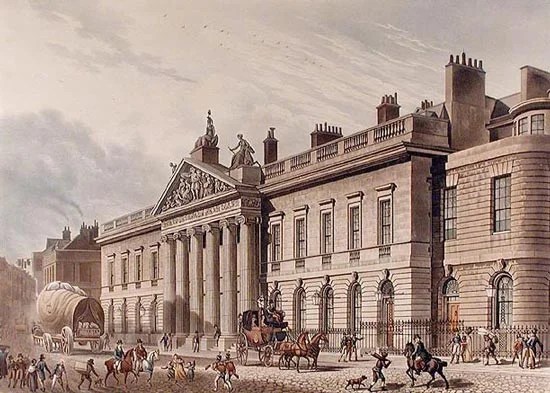
East India House in London, ca 1800

The East India Company was a joint stock company founded in 1600 and became one of the largest companies in the world. Tea was not their only commodity, however as they also traded spices, sugar, indigo, silk and much more. Parliament was heavily vested in the company’s success and began to enact laws that benefited the company. This included the Tea Act of 1773, passed to help the company divest itself of an over abundance of tea stored in its warehouses. The Crown and Parliament was worried that the prices of tea and the large supply would lead to serious financial strain on the company. The Tea Act also aimed to clamp down on the massive amounts of “illegal” tea that was being smuggled into the colonies. Some historians argued that men like John Hancock, who was deeply involved in smuggling, saw the Tea Act as his “rubicon” towards independence. He believed the act would impact his revenues via his smuggling. Now the American colonies were forced to purchase East India Company Tea (that could directly ship to the colonies) and which was taxed. Many colonial leaders saw this is as a backwards way to impose a tax without their consent and to force them to prop up a struggling East India Company

The road to revolution in the American colonies does not have a single starting point, but one could argue that 250 years ago the Tea Act was the last straw. It led to direct and open opposition (and destruction) of British rule and property in several ports along the Atlantic. These brazen “parties”, mainly the Boston Tea Party, led Parliament to pass the Coercive (Intolerable) Acts, which in turn united the various colonies like never before. Open armed conflict with Great Britain was just a year away.

Montgomery County, Maryland

Tell me I am not the only one that randomly goes on a car ride to a random town in their home state to just “see what is there?”

Regardless, that is what I decided to do on a sunny late April Sunday afternoon. I ended up in Rockville, Maryland. The town astride I-270 today was also on a major thoroughfare during both the 18th and 19th centuries that brought armies from the area, like General Edward Braddock’s in 1755 or General Jubal Early’s in 1864.

However, a different historical sign attracted my attention on this excursion.

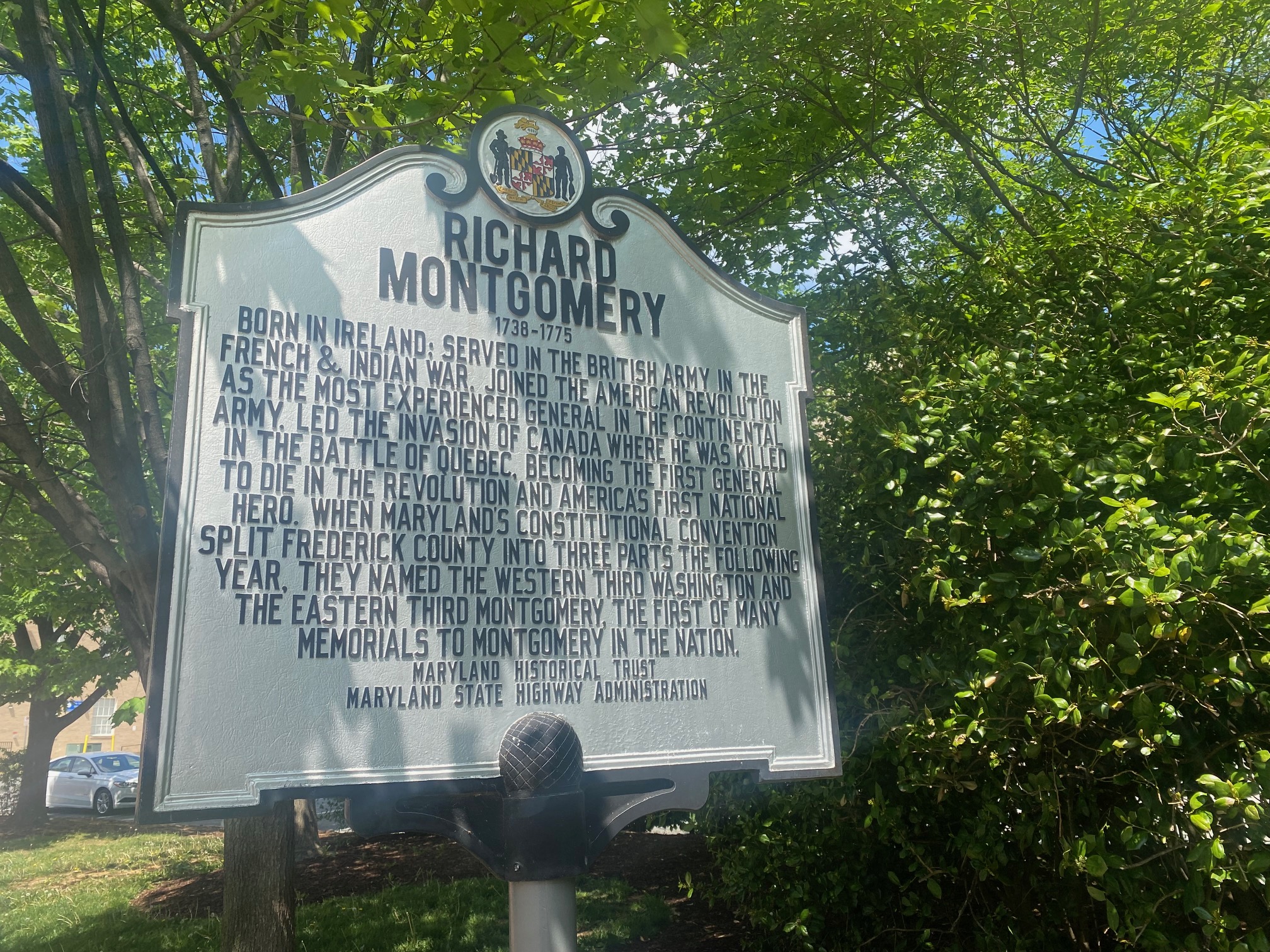
I read the title and the first line, Richard Montgomery…Born in Ireland. Served..” Which was all I could read as I slowly drove by, since it is near the court house and county government buildings. Even though it was a Sunday still not wanting to speed through. So…Naturally, I pulled over, as evidenced by the vehicle you see in the background!

I knew Montgomery, as the sign reads, died at the Battle of Quebec in a futile attempt to take the city for the American cause. He was the first general–Continental–to die in the cause of American independence.

On September 6, 1776 Thomas Sprigg Wootton, who hailed from Rockville, introduced legislation in the Maryland Constitutional Convention to separate the Frederick County into three. The upper or most western half, to become Washington County, named in honor of George Washington and the lower half, or most eastern, to be named Montgomery, in honor of Richard Montgomery. The remaining middle portion would retain the name Frederick. This may be the first recorded instance in the rebellious British colonies of names of counties, towns, or cities that did not refer to something in British history or famous persons. Another act of defiance at the beginning of the American Revolution!

With a random Sunday excursion one never knows what one will find. History is all around us, beckoning to be explored.

Evacuation Day

Emerging Revolutionary War welcomes guest historian Christopher of The British-American Historian blog.

Almost two years after debating a joint French-American assailment of Lord Cornwallis’ precarious position in Yorktown, Virginia over Washington’s grand plan to recapture New York long after being swept from the city and its environs as independence was officially declared in 1776, the implacable Washington prepared to reenter New York in triumph.

Eight years after making New York the center of the British war effort in the American Revolution, the massive garrison was greatly reduced and preparing for its final retirement from the new nation. The new commander in chief of North America, Sir Guy Carleton, arrived in New York on May 5, 1782[1] to relieve Sir Henry Clinton. Carleton won accolades for holding Quebec City when the Continental Army struck during a late night blizzard, an accomplishment that was all the more vaunted now that the British were losing territory that did not include Canada. Carleton lost no time in notifying Washington of his arrival in an affable letter sent on May 7th, 1782 in which Carleton wrote “if the like pacific disposition should prevail in this country, both my inclination and duty will lead me to meet it with the most zealous concurrence”[2].

A notable disruption in the growing amity was the unresolved Asgill Affair. Exasperated with wanton assailments of loyalists in New Jersey, a prominent rebel militia commander named Joshua Huddy was plucked from the provost in New York by an American member of the Associated Loyalists[3]. The Associated Loyalists were presided over by William Franklin, the loyalist son of Benjamin who had endured arduous captivity before being exchanged[4]. In response to the wanton execution of Joshua Huddy, Washington ordered a British officer to await reprise. Charles Asgill was selected, but pleas from the French along with Washington’s honorable disposition prevailed and the captain was spared[5].

 The city and Long Island were swarming with thousands of loyal “Refugees” who had fled from every rebellious colony to seek the king’s protection. Ranging from itinerant tenant farmers to some of the largest landlords in America such as Beverly Robinson and Frederick Philipse, Carleton’s task of evacuating the troops could not be fulfilled until such persons were safely resettled in the empire. While many of the men joined provincial regiments that saw combat in the south (playing a pivotal role defending Savannah and being routed at Kings Mountain) and performed prodigious woodcutting on Lloyd Neck for the insatiable demand for firewood[6]flocks of women and children crowded the city. A subset of the refugees were former slaves who had flocked to the British cause for the promise of freedom under Dunmore’s Proclamation and the Philipsburg Proclamation, a promise Washington would vigorously contest in negotiations.

Continue reading “Evacuation Day”

Rev War Revelry Discusses NEW Emerging Rev War Book!

Charleston, South Carolina is one of the most beautiful and historic cities in the United States. Numerous sites, battlefields, and buildings from the period of the Revolution still exist.

Join us this Sunday at 7pm as we discuss ERW’s newest release “To The Last Extremity: The Battles for Charleston” by Mark Maloy. In To the Last Extremity: The Battles for Charleston, historian Mark Maloy not only recounts the Revolutionary War history of Charleston, he takes you to the places where the history actually happened. He shows you where the outnumbered patriots beat back the most powerful navy in the world, where soldiers bravely defended the city in 1779 and 1780, and where thousands suffered under occupation. Through it all, brave patriots were willing to defend the city and their liberty “to the last extremity.”

We will talk to Mark about his research, his favorite and most compelling stories and why this book is a “must have” for any history buff. Join us this Sunday, April 16 at 7pm on our Facebook page to join in on the conversation. As always, if you can not join us live you can catch the talk at any time on our You Tube or podcast channel.

Isaac Shelby State Historical Site

Entry to Traveler’s Rest. (Author Photo)

The American Revolution in the east has its share of founding fathers while war in the west has its share of legendary characters.  Few could claim to be both.  Isaac Shelby was born in western Maryland in 1750 and migrated with his family farther south and west in 1770, near Bristol Tennessee.  Shelby in Lord Dunmore’s War and became a surveyor for North Carolinian Richard Henderson’s Transylvania Company, created to secure land west of the Appalachians just before the American Revolution.  (Daniel Boone was the best known of Henderson’s surveyors).  

            When the Revolution broke out, Shelby served first with the Virginians and then accepted roles handling logistics for Virginians, Continentals, and North Carolinian units operating along the frontier. Organizational structures were fluid along the Appalachians, more often centered around communities and available manpower than formal state boundaries, and Shelby participated in a variety of actions against British and Loyalist forces in North and South Carolina.  The personal nature of the partisan conflict eventually led Shelby and others on the frontier, including John Sevier, to organize the so-called “Overmountain Men” in a pursuit of Loyalists led by British Major Patrick Ferguson.  The two sides eventually clashed in the Battle of King’s Mountain, a resounding victory for American forces in October 1780.

Continue reading “Isaac Shelby State Historical Site”

A “Passion for Superiority,” The Continental Army Officer Corps, and Middle School “Mean Girls”

John Adams woke on the morning of May 21, 1777, feeling light of heart. A spell of bad weather had finally broken, and the bright spring dawn cheered his spirits. He took a few minutes before beginning his day to pen a letter to his “Dearest Friend,” his wife, Abigail.[1]

“The Charms of the Morning at this Hour, are irresistible,” he told her. “The Streakes of Glory dawning in the East: the freshness and Purity in the Air, the bright blue of the sky, the sweet Warblings of a great Variety of Birds intermingling with the martial Clarions of an hundred Cocks now within my Hearing, all conspire to chear the Spirits.” Adams’s letters are filled with such descriptions, which are one of the many reasons they’re a delight to read. But then he got down to business.

As the Second Continental Congress’s de facto Secretary of War, he had spent the previous evening, May 21, at the War Department meeting with General Benedict Arnold. Arnold had been embroiled in controversy with several lower-level officers, one of whom claimed “Money is this man’s God, and to get enough of it he would sacrifice his country.” (The charge was untrue at the time but proved ironically prophetic.)

Adams told Abigail that he’d heard Arnold “fought like Julius Caesar” and came to believe Arnold’s side of the tale. “He has been basely slandered and libeled,” Adams concluded.

His political perch gave Adams a view of the Continental Army that might surprise us today. In his usual candor, he told Abigail:

“I am wearied to Death with the Wrangles between military officers, high and low. They Quarrell like Cats and Dogs. They worry one another like Mastiffs. Scrambling for Rank and Pay like Apes for Nutts.”

As he continued, he made an observation that touched close to home. Adams was notoriously vain—a vice he recognized and continually struggled with—so he was deeply familiar with the human tendency to compare oneself with one’s peers. Particularly early in his legal career, Adams measured himself against other young lawyers and pined for the chance to distinguish himself. It was, he said to Abigail, a “Passion for Superiority”:

“I believe there is no one Principle, which predominates in human Nature so much in every stage of Life, from the Cradle to the Grave, in Males and females, old and young, black and white, rich and poor, high and low, as this Passion for Superiority …. Every human Being compares itself in its own Imagination, with every other round about it, and will find some Superiority over every other real or imaginary, or it will die of Grief and Vexation[. . . .] I never saw it operate with such Keenness, Ferocity and Fury, as among military Officers. They will go terrible Lengths, in their Emulations, their Envy and Revenge, in Consequence of it.”

Adams had seen that sort of cattiness “among Boys and Girls at school, among Lads at Colledge, among Practicers at the Bar, among the Clergy in their Associations, among Clubbs of Friends, among the People in Town Meetings, among the Members of an House of Reps. [Representatives], among the Grave Councillors, on the more solemn Bench of justice, and in that awfully August Body the Congress, and on many of its Committees — and among Ladies every Where. . . . .” No where was it worse than among the “Mean Girls” of the army’s officer corps.

“So much for Philosophy,” Adams decided, and then inquired about his children and Abigail’s asparagus. Then he concluded with a note that resonates with all of us here at Emerging Revolutionary War:

“I would give Three Guineas for a Barrell of your Cyder — not one drop is to be had here for Gold. And wine is not to be had under Six or Eight Dollars a Gallon and that very bad. I would give a Guinea for a Barrell of your Beer. The small beer here is wretchedly bad. In short I can get nothing that I can drink, and I believe I shall be sick from this Cause alone. Rum at forty shillings a Gallon and bad Water, will never do, in this hot Climate in summer where Acid Liquors are necessary against Putrefaction.”

Cheers!


[1] All quotes from: Letter from John Adams to Abigail Adams, 22 May 1777 [electronic edition]. Adams Family Papers: An Electronic Archive. Massachusetts Historical Society. http://www.masshist.org/digitaladams/

Rounding out the year with a round-up from our friends at Americana Corner

As 2022 winds down, Emerging Revolutionary War wanted to share one more round-up of what our good friends at Americana Corner were doing in this last month of the year. We hope to continue to partner with Americana Corner in the 2023 and bring new content and new enthusiasm for this critical period in American history to the forefront. To all our readers, thank you and we all at Emerging Revolutionary War hope you have a great ending to 2022 and a Happy New Year!

A few blog posts for light reading as you wind down December…

Washington Takes Command
December 27, 2022

When it came to finding the right man to command the new Continental Army assembled around Boston, George Washington was the logical choice. John Adams quickly nominated Washington and Congress unanimously approved. As Adams stated, “This appointment will have a great effect in cementing and securing the Union of these colonies.”

Read More

George Washington Enters Politics
December 20, 2022

As befitting a wealthy landowner in colonial Virginia, George Washington became active in the colony’s politics in the 1750s. He first ran for a seat representing Frederick County in the Virginia House of Burgesses in 1755 but lost the election. Interestingly, it was the only political race he would ever lose. Washington ran for that same seat in 1758 and was victorious, and he held this seat for seven years.

Read More

The Life of Martha Washington
December 13, 2022

Martha Washington was our nation’s first First Lady and lived in the shadow of her larger-than-life husband George. However, most Americans do not realize that she was a very capable woman and, when given the opportunity, managed her own affairs quite well.

Read More

George Washington’s Life at Mount Vernon
December 6, 2022

When George Washington resigned as Colonel and Commander of the Virginia Regiment in 1758, he returned to Mount Vernon to begin his life as a gentleman planter. Although in less than twenty years Washington would be called away by his country, his time between the French and Indian War and the American Revolution was a significant portion of this great man’s life.

Read More