On July 3, 1775 George Washington formally took command of the Continental Army in Cambridge, Massachusetts. Appointed Commander-in-Chief by the Second Continental Congress on June 15, 1775, Washington arrived in Cambridge on July 3, 1775 and assumed command of a disorganized and poorly supplied force besieging British troops in Boston. His leadership would begin the transformation of colonial militias into a unified fighting force capable of challenging British military power.
Washington’s assumption of command occurred at a time when the American colonies were transitioning from protest to open rebellion. The battles of Lexington and Concord in April 1775 had already ignited armed conflict, and the Battle of Bunker Hill in June had demonstrated that colonial forces could stand up to British regulars, though at great cost. Washington understood the gravity of his new role. In a letter to the President of Congress, he wrote humbly, “I am truly sensible of the high Honor done me in this Appointment… I do not think myself equal to the Command I am honored with.” This characteristic modesty was paired with a strong sense of duty and resolve.
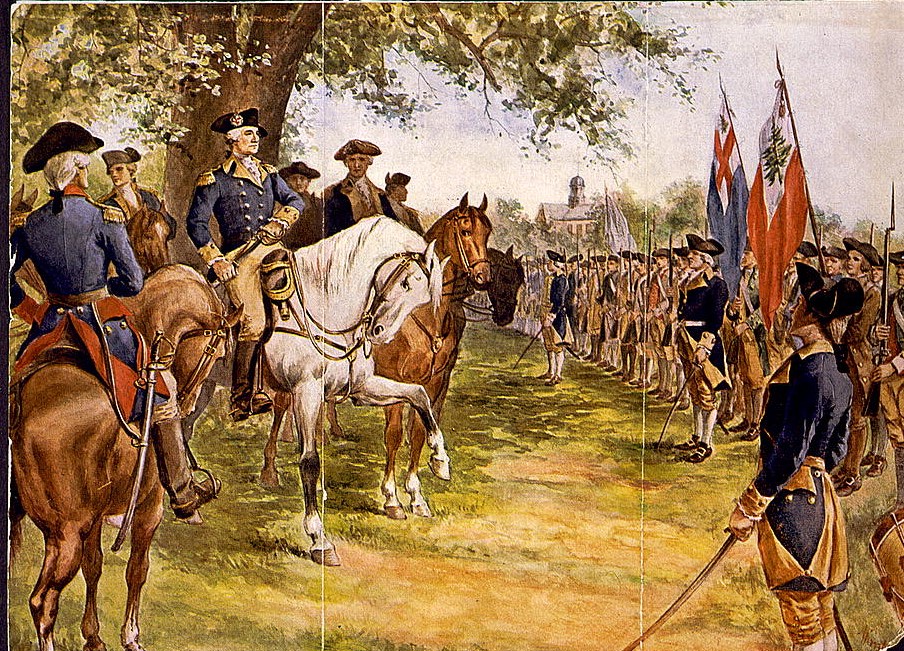
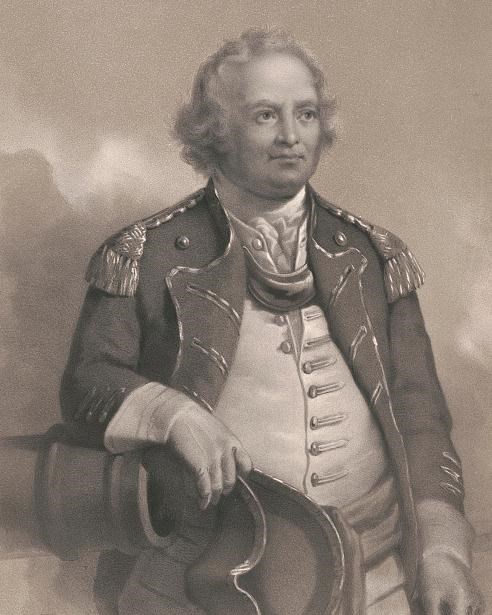
Washington assumes command at Cambridge, Courtesy Library of Congress
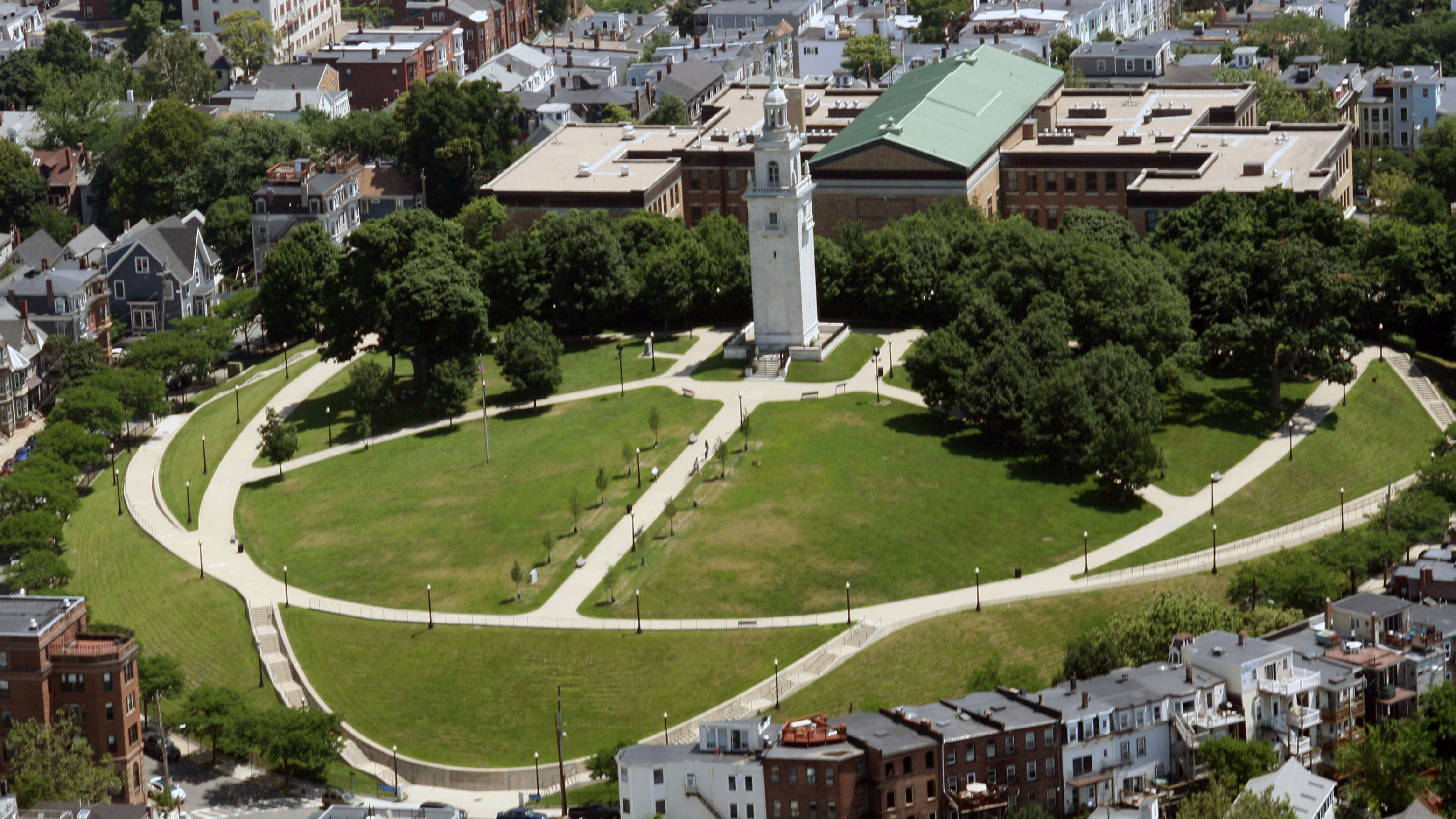
On July 3, Washington appeared before his troops on Cambridge Common, dressed in a blue coat with buff facings, signifying his Virginian roots. There is no official transcript of a speech he may have delivered that day, but contemporary accounts describe a solemn and determined atmosphere. One observer, Reverend William Emerson, noted in his diary, “General Washington… is a tall and noble-looking man, commanding the respect of all who see him.”
Washington immediately set to work imposing discipline, organizing supply chains, and creating a chain of command. Though former commander of the army, Major General Artemus Ward, worked hard on instilling discipline, he was not a man that instilled a lot of confidence. Washington was appalled by the state of the army, writing in frustration to Congress: “The Army… is in a very improper condition to carry on a vigorous War.” He introduced regular drills, uniform codes, and standardized procedures, striving to turn the disparate bands of militiamen into a functioning army. As historian David McCullough noted, “It was Washington’s presence alone that gave the army cohesion.”
Despite his military inexperience—Washington never commanded an army of this size—he brought a unifying vision and moral authority. His appointment was also politically astute, bridging the regional divide between New England and the southern colonies. A Virginian leading New England troops sent a clear message of unity in the face of British oppression.
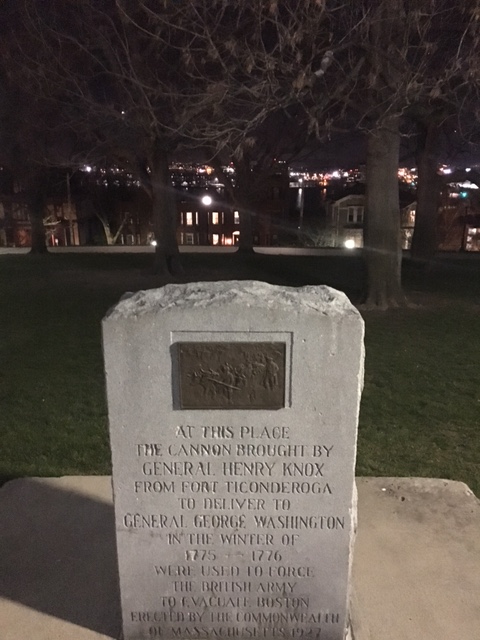
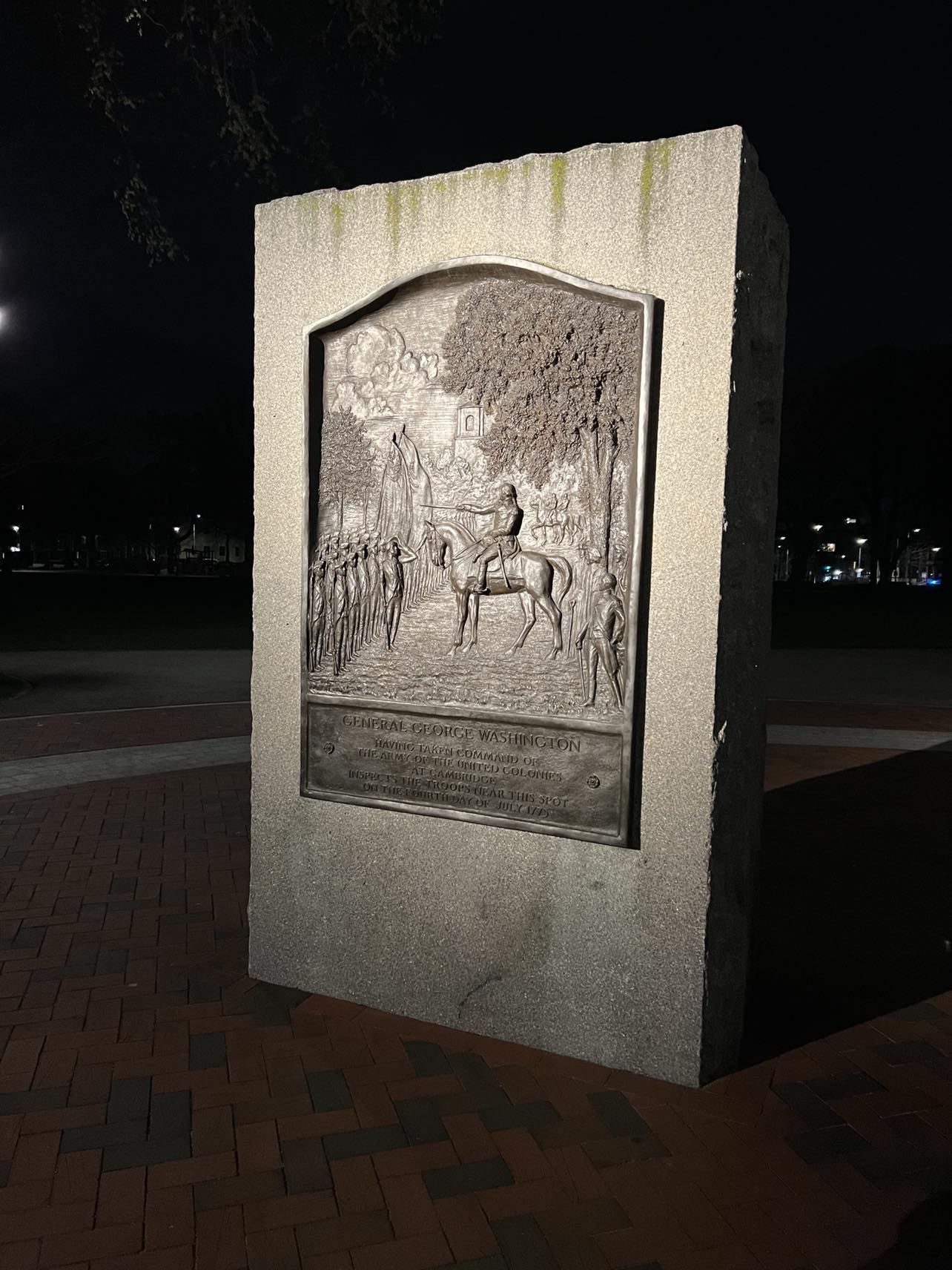
Marker commemorating Washington on the Cambridge Common, photo by William Griffith
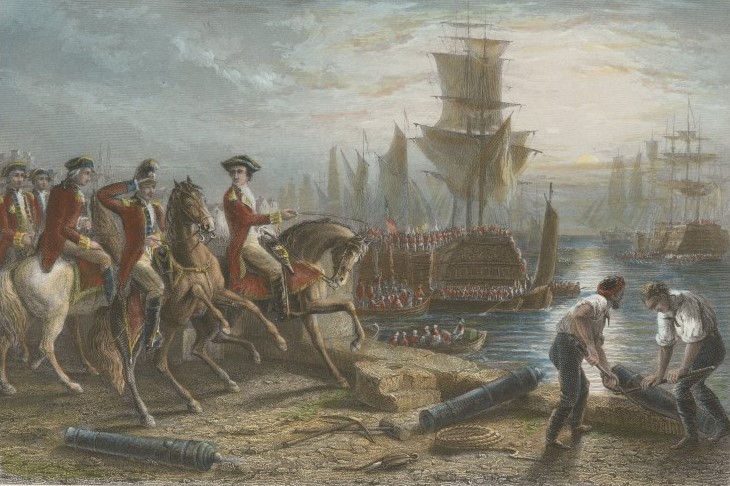
The Cambridge encampment remained Washington’s headquarters until March 1776, when he successfully forced the British evacuation of Boston by fortifying Dorchester Heights with cannons brought from Fort Ticonderoga. This early strategic victory, achieved without major bloodshed, was a major morale boost and affirmed Congress’s faith in their commander.
In retrospect, July 3, 1775, was the beginning of an enduring legacy of leadership and a love of Washington by his men and officers. Through discipline, vision, and personal integrity, he began shaping a ragtag collection of volunteers into the Continental Army, laying the groundwork for American independence.
We are excited to announce that ERW historians Rob Orrison and Mark Maloy will be leading a four day tour of Boston and sites associated with the opening of the American Revolution. Part of BGES’ Field University Program, this tour is part of a series of tours that BGES is hosting focusing on the American Revolution.
From the BGES website: “Long considered the “Cradle of the Revolution,” Boston, Massachusetts, was home to many of the era’s leading figures—Dr. Joseph Warren, Samuel Adams, Paul Revere, John Adams, and many more. Its streets and wharves fostered the revolutionary spirit that would ignite a continent. In December 1773, tensions escalated dramatically when dozens of Bostonians and others boarded three ships at Griffin’s Wharf and dumped East India Company tea into the harbor in defiance of the Tea Act. Parliament soon responded with the punitive “Intolerable Acts,” placing Massachusetts under military control.
The powder keg exploded on April 19, 1775, when British Regulars and American colonists clashed on Lexington Green, spilling the first blood of the American Revolution. That day, a running battle raged from Concord to Cambridge—an opening salvo immortalized as the “shot heard ‘round the world.”
Join us during this 250th anniversary year for a multi-exploration of Boston and the nearby villages of Lexington and Concord. We’ll visit the pivotal sites and relive the moments that launched the Revolution, concluding with the dramatic engagements along the now-famous Battle Road.”
To purchase tickets, visit: https://blueandgrayeducation.org/tours/cradle-of-the-revolution-boston-to-lexington-and-concord/ Blue and Gray Education Society is a 501c3 created in 1994 to promote understanding of battlefields and other historic sites through the conduct of field study tours and seminars. BGES has sponsored many education and interpretive focused projects across the country.
Following the initial skirmishes at Lexington and Concord on April 19, 1775, colonial militias from throughout New England converged around Boston, with the area of Cambridge and Roxbury serving as the epicenters of the camps. These New England militia effectively layed siege to the city where British General Thomas Gage concentrated after April 19th. The British, cut off from the countryside, relied heavily on supplies brought in by sea. At the same time, American forces were eager to secure resources and deny the British any additional supplies from nearby coastal areas.
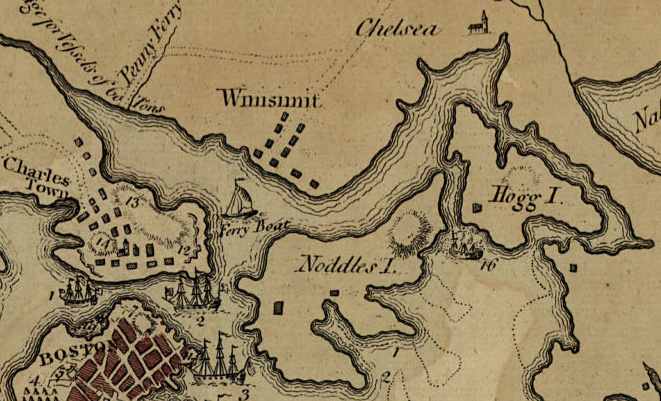
The location of the HMS Diana is marked with “16” on the map
One such resource-rich area was Noddle’s Island and Hog Island both located in Boston Harbor. These islands contained valuable livestock and hay, which the British had been attempting to secure to feed their troops and horses. American intelligence reported that the British were planning to remove these resources, prompting a proactive operation by the colonial forces to beat them to it.
In early May, Dr. Joseph Warren led a group inspecting the islands and recognized their imporance. As part of the Massachusetts Committee of Safety, Warren led the effort for a reslolution to be passed to either capture or destroy the supplies on the islands. On May 14th, the Committee stated “Resolved, as their opinion, that all the live stock be taken from Noddle’s Island and Hog Island, and from that part of Chelsea near the sea coast, and be driven back; and that the execution of this business be committed to the selectmen of the towns of Medford, Malden, Chelsea, and Lynn, and that they be supplied with such a number of men, as they shall need, from the regiments now at Medford.” Soon the commander of the New England army around Boston, General Artemas Ward, put a plan in motion to quickly strike both islands.
The American expedition was led by Colonel John Stark and Colonel Israel Putnam, both future generals in the Continental Army. The colonial forces, primarily composed of New Hampshire and Massachusetts militias, planned a nighttime amphibious raid to remove the livestock and destroy hay supplies that might benefit the British. On the night of May 27, colonial forces quietly moved onto Hog Island and began driving off livestock and burning haystacks. British forces, stationed in Boston and alerted to the colonial activity, responded by dispatching marines and the British schooner HMS Diana, a lightly armed but maneuverable vessel well-suited for operations in the shallow waters of the harbor.
As the colonists worked to transport livestock to the mainland, they encountered resistance from British marines who had landed on Noddle’s Island and began advancing toward their position. A sharp skirmish ensued, during which the American militia used the terrain to their advantage, fighting from behind trees, stone walls, and other natural cover. The colonial forces managed to repel the British marines, inflicting casualties and forcing a retreat.
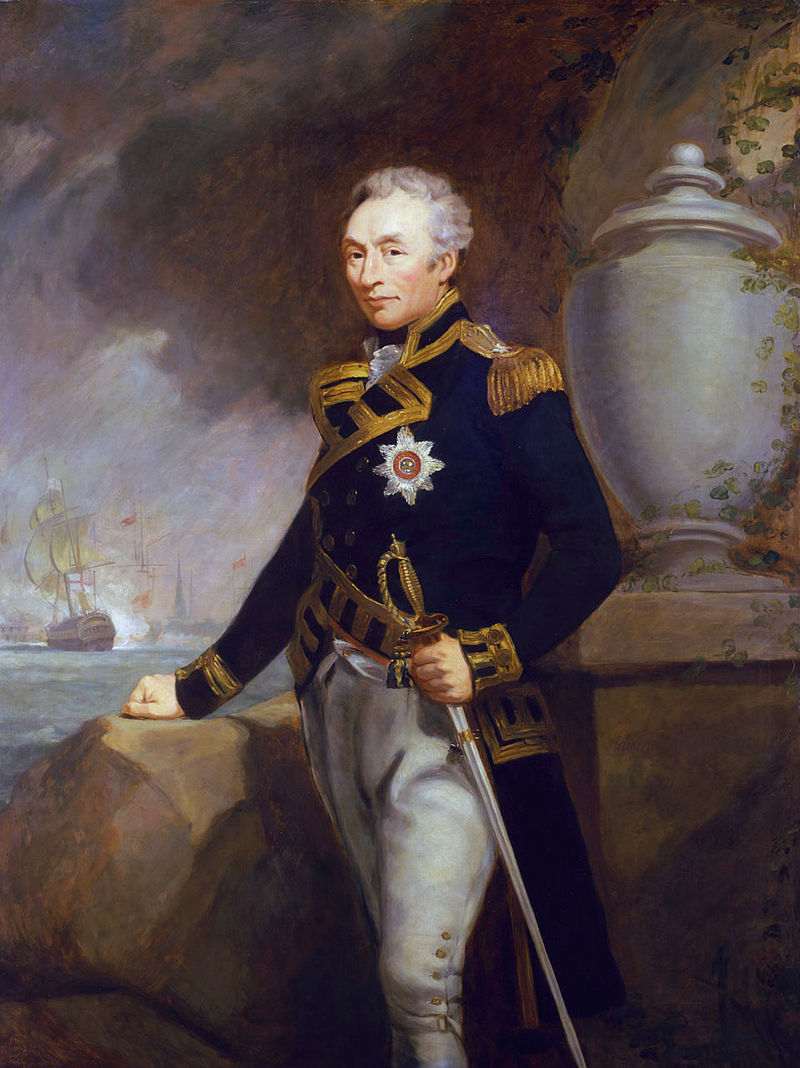
Lieutenant Thomas Graves (nephew of Vice Admiral Samuel Graves) commander of the HMS Diana. Shown in his rear admiral uniform in ca. 1801. Often confused with Lord Thomas Graves, British commander during the Battle of the Capes
The turning point of the engagement came with the involvement of the HMS Diana. The schooner attempted to support the marines by moving up the narrow Chelsea Creek to engage the colonial militia and cut off their withdrawal. However, as the tide receded and the ship ventured too far inland, it became grounded in the shallow, muddy waters.
Seeing an opportunity, the colonists brought up field artillery from shore and opened fire on the stranded vessel. Over the course of the battle, they subjected the Diana to intense musket and cannon fire. Unable to refloat the ship due to the falling tide and increasing colonial pressure, the British crew was forced to abandon it. American forces quickly boarded the vessel, stripped it of usable supplies, weaponry and its 76 foot mast, and then set it ablaze, destroying the schooner completely.
The Battle of Chelsea Creek resulted in a clear American victory, both strategically and psychologically. The destruction of the HMS Diana marked the first loss of a Royal Navy vessel in the Revolutionary War, dealing a symbolic blow to British morale. For the colonists, it was a tangible demonstration of their ability to challenge British authority not only on land but at sea.
Major General Israel Putnam said after the fight on Chelsea Creek “I wish we could have something of this kind to do every day,”
Tactically, the victory helped to solidify American control of the Boston-area islands and limited the British army’s ability to forage for supplies. This contributed to the worsening conditions inside besieged Boston and increased pressure on General Gage. The morale boost for the colonial militias was significant; it reinforced the notion that British troops and naval forces were not invincible and that well-coordinated militia operations could succeed.
In addition, the battle was notable for showcasing early instances of American military ingenuity and leadership. Figures like Israel Putnam and John Stark went on to distinguish themselves in later battles, and the ability of the militia to effectively coordinate a land-sea operation foreshadowed the more sophisticated tactics that would develop over the course of the war. A few months later on August 1st, the mast of the HMS Diana was raised on Prospect Hill as a liberty pole. A symbol that was seen by not just the Americans around Cambridge but also the British in Boston. This location was also where legend states that George Washington ordered the first American flag, the Grand Union, to be raised on January 1, 1776.
While over shadowed by Lexington, Concord, or Bunker Hill, the Battle of Chelsea Creek played a crucial role in the early war. It helped secure the outer perimeter of the Siege of Boston, denied the British critical supplies, and emboldened the colonial cause at a time when confidence was still fragile. The success of the operation, including the destruction of the Diana, offered a dramatic image of colonial resistance and ingenuity that resonated beyond New England.
Today, the location of Noddle’s and Hog Island are gone. Nineteenth century and modern infill has completely reshaped the area from mudflats and tidal marshes to buildable land. Modern day East Boston, Winthrop and Logan Airport cover the area. The community of Somerville contines to commemorate the raising of the Grand Union flag on January 1 Diana‘s mast with a flag raising ceremony. Though mostly forgotten, the fighting along Chelsea Creek continued to embolden men like Joseph Warren and Israel Putnam and encourage their agressiveness a few weeks later on the Charlestown peninsula.
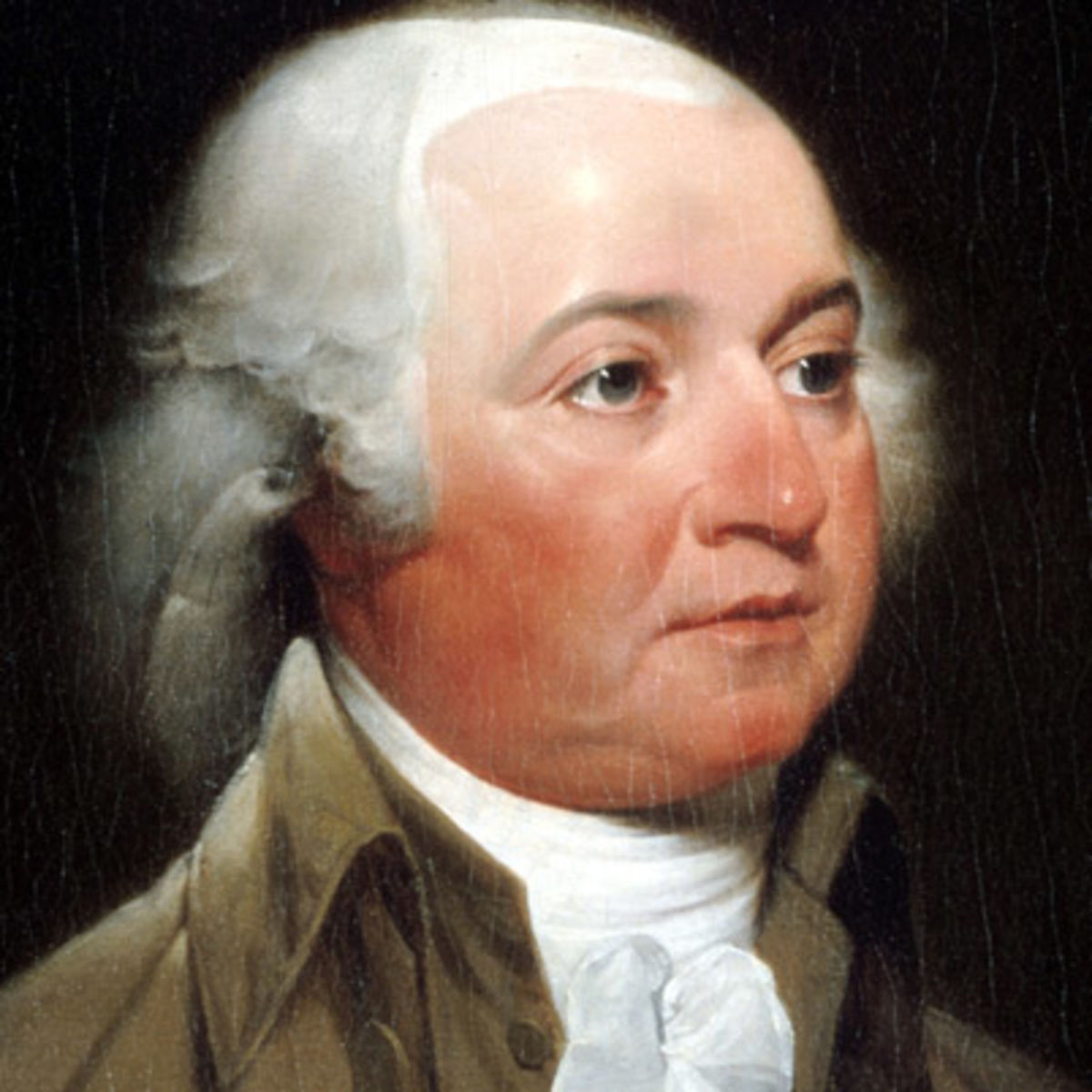
“[T]he Battle of Lexington on the 19th of April, changed the Instruments of Warfare from the Penn to the Sword,” John Adams wrote years after the event. He was well acquainted with the pen as an instrument of warfare. By the spring of 1775, he was twelve letters into a thirteen-letter volley that would become known as the “Novanglus letters”—a series that appeared in the Boston Gazette starting January 23.[1]
The final of those letters appeared, by happenstance, on April 19—the same day as the battles of Lexington and Concord. The thirteenth letter of the series never appeared because of the suspension of printing in Massachusetts following the battle.[2]
Adams was, at the time of the battle, preparing to return to Philadelphia for the next session of the Continental Congress. Before his departure, however, he resolved to ride out to the battlefield so he could see with his own eyes the results of the bloodshed that had occurred. He felt it would make him a more reliable witness when he reported on the event to Congress.
On April 22, Adams rode by horseback from his home in Quincy to Cambridge, where the local militia had concentrated. There, Adams met with military leaders, generals Artemis Ward, William Heath, and Joseph Warren. He also informally inspected the troops, “the New England Army,” as he characterized them.[3]
“There was great Confusion and much distress,” Adams recounted: “Artillery, Arms, Cloathing were wanting and a sufficient Supply of Provisions not easily obtained. Neither the officers nor Men however wanted Spirits or Resolution.”
But how long would such spirit and resolve last, Adams wondered? This questions would inform his strategy when he eventually arrived in Philadelphia.
From Cambridge, Adams rode west toward “Lexington and along the Scene of Action for many miles. . . .” Rubble from the battle still laid strewn along the road from Concord to Lexington and from Lexington back into Boston—a route Adams traced in reverse. He did not write down details of what he saw, but they made a deep impression, as would soon become evident in his attitudes about independence.
To help make sense of what he saw, he “enquired of the Inhabitants” about “the Circumstances” of the battle. “These were not calculated to diminish my Ardour in the Cause,” he admitted. “They on the Contrary convinced me that the Die was cast, the Rubicon passed, and as Lord Mansfield expressed it in Parliament, if We did not defend ourselves they would kill Us.”
Just after his visit to the battlefield, illness debilitated Adams, which delayed his departure for Congress. He did manage to catch up to his fellow delegates en route. Along the way, they saw first-hand how the events at Lexingon and Concord had galvanized public opinion, although it would yet be some months before Congress itself followed public opinion.
But for Adams, events had indeed crossed the Rubicon. He began his unceasing, inexorable push toward independence.
Yet it was a two-pronged approach for Adams, who not only operated on that larger existential level but also on a more immediate, pragmatic one. After all, the sword, not the pen, was now the main weapon. He began advocating for measures that would transform “the New England Army” into a Continental one. His nomination of George Washington to lead the fledgling force, for example, was a masterful stroke to diversify the army and, thus, ensure more colonies had skin in the game.
Congress’s slow pace toward independence would frustrate Adams almost to no end over the fifteen months that would follow. However, the bloodshed of Lexington and Concord made an impression on Adams that would drive him onward, inexorably, toward July 1776 and beyond.
[3] Quote from Adams come from John Adams autobiography, part 1, “John Adams,” through 1776, sheet 18 of 53 [electronic edition]. Adams Family Papers: An Electronic Archive. Massachusetts Historical Society. http://www.masshist.org/digitaladams/
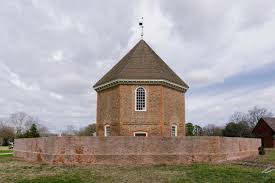
Powder Magazine, Colonial Williamsburg, VA in 2025
Today marks the 250th anniversary of the Virginia Powder Alarm in Williamsburg, VA. To commemorate the anniversary, join us this Sunday, April 27th at 7pm on our Facebook page as we welcome ERW historians Rob Orrison, Mark Maloy with Maureen Wiese and J. Michael Moore to discuss the events leading up to the April 21, 1775 Powder Incident in Williamsburg, VA. A few days after Lexington and Concord (unknown to the Virginians at the time), Governor Lord Dunmore removed powder from the magazine in Williamsburg. This event led Patrick Henry to lead militia towards Williamsburg and possible standoff with the Governor. As news arrived on April 28 of the bloodshed outside of Boston, tensions rose even higher.
Join us as we discuss another 250th anniversary event that led to the beginning of the American Revolution. This podcast will be recorded and posted on our Facebook page on April 27th at 7pm. Then it will be posted to your You Tube and Spotify pages.
ERW Welcomes Matt Beres, Executive Director of the Arlington Historical Society
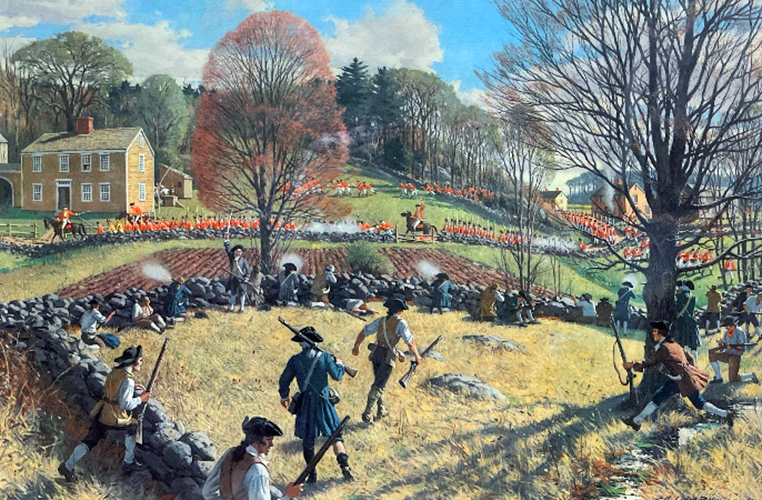
On the morning of April 19, 1775, the first shot of America’s War for Independence was fired on the Lexington Green. Later that morning, Major John Buttrick, commanding the local Provincial forces, gave the order to fire on the British Regulars at the North Bridge. This act would later be remembered as the “Shot Heard ‘Round the World,” a phrase immortalized by Ralph Waldo Emerson.
As Lt. Col. Smith’s British Regulars began their retreat back to Boston, Governor Thomas Gage sent a relief column of Regulars, led by General Hugh Percy. Meanwhile, Provincial militias and minute companies from surrounding towns marched toward the conflict, firing on both sides of the main road leading back to Boston. The Battle was just beginning.
While Lexington is famous as the site of the “first shot” and Concord for the “Shot Heard ‘Round the World,” Menotomy (present-day Arlington) is known as the site of the largest battle of the day, where fierce fighting erupted between the retreating British forces and the growing Provincial forces. The following stories are from this Battle.
David Lamson
Earlier that day, a convoy of provisions and supplies, protected by a detachment of British Regulars, arrived behind the main force heading toward Lexington and faced difficulties crossing the Brighton Bridge. Before their arrival, the Committee of Safety had removed the planks, and the combination of heavy wagons and repairs to the bridge caused the convoy to become separated from the main force, rendering it vulnerable.
An alarm rider from Cambridge alerted locals, prompting men from the ‘exempt’ or ‘alarm’ list—those unfit for regular Militia or Minute companies—to gather at Cooper’s Tavern to plan to capture the convoy. Among them was David Lamson, a biracial French and Indian War veteran, whose experience and bravery made him a natural leader. The group quickly appointed him as their Commanding Officer.
According to a story derived from Lamson himself, they positioned themselves behind a stone wall near the First Parish Meeting House. As the convoy approached, they ordered it to surrender. When the drivers urged their horses forward, Lamson’s men fired, killing the driver and several horses, and wounding two Regulars. In panic, the remaining six Regulars fled toward Spy Pond, and discarded their weapons.
It is said they then surrendered to an old woman, Mother Bathericke, who was in the field picking flowers. The old woman forced them to the house of Ephraim Frost, Captain of the Menotomy Militia, and stated, “… you tell King George that an old woman took six of his grenadiers prisoners.”
Samuel Whittemore
Aiden Lassell Ripley (1896-1969), Retreat from Lexington at the Foot of the Rocks. A.2.509. Arlington Historical Society Collections
Around 4:00 pm, the retreating British Regulars arrived at the village Menotomy. It was here where Samuel Whittemore, the oldest known combatant of the Revolutionary War, earned his fame. During the conflict, Whittemore took cover behind a stone wall. He reportedly fired at five soldiers but was soon overwhelmed. He suffered a gunshot wound to the cheek and a bayonet stab wound. When the Regulars continued their retreat, the locals carried him to Cooper’s Tavern, where Dr. Tufts of Medford treated his injuries.
Remarkably, Whittemore survived for another 18 years after suffering these life-threatening wounds. He lived long enough to see the birth of a new and independent nation.
Jason Russell
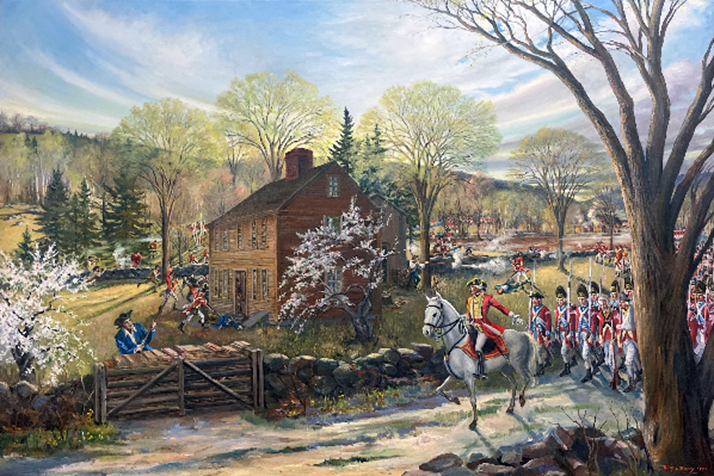
Later during their retreat, Gen. Percy ordered his men to enter the residences along Concord Road (now Massachusetts Avenue) to eliminate the Provincials who were firing from inside these houses. One notable example was the site of Jason Russell House.
Ruth L. Berry, 1975. Jason Russell House in Battle With British Soldiers 1990.19.1. Arlington Historical Society Collections
Jason Russell was a middle-aged farmer who reportedly had a leg disability. He barricaded his property and refused to leave, asserting, “An Englishman’s house is his castle.”
As British Regulars surrounded his home, several Provincials from different towns sought refuge inside. Tragically, Jason Russell and several others lost their lives on his property.
Today, the c. 1740 house, still bearing musket ball holes in the remaining structure from the fight, is at the heart of the Arlington Historical Society’s regional history museum, offering guided tours and engaging exhibits that highlight the lasting impacts of the American Revolution and Arlington’s broader history.
We are just days away from the events in Lexington and Concord. Be sure to follow ERW here on our blog and social media pages. We will have blog content and live videos from Boston, Lexington and Concord from April 18-20, 2025. ERW will be at all the sites and events commemorating the 250th anniversary of the events leading up to and including the first shots of the war.
Also be sure to follow our good friends Alex Cain and J.L. Bell on their blogs as well, https://www.historicalnerdery.com/ and https://boston1775.blogspot.com/ These two great historians have a wealth of information on Boston, Lexington, Concord and all the events of 1775.
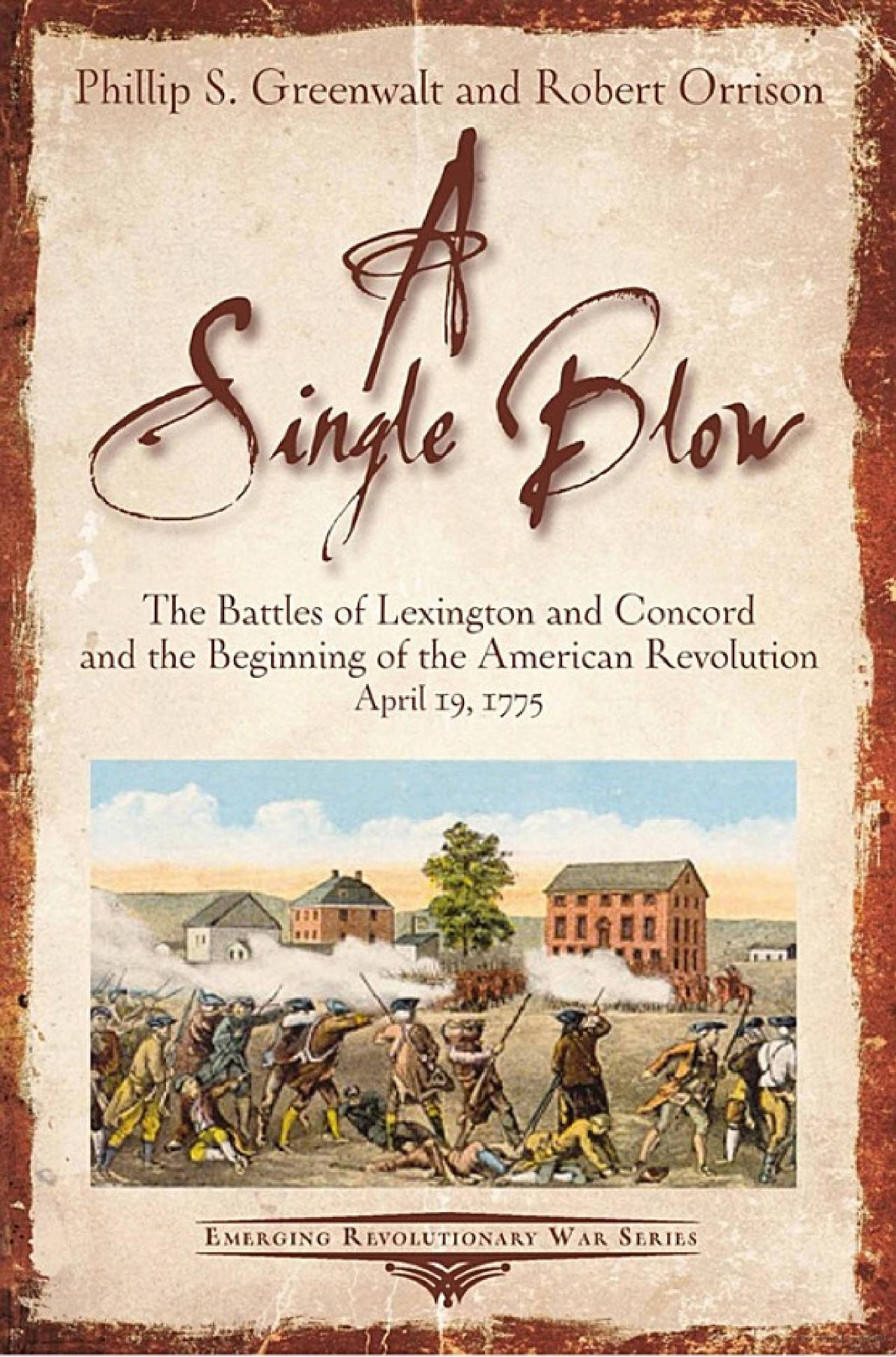
If you havent already, pick up a copy of our first ERW title, “A Single Blow: The Battles of Lexington and Concord and the Beginning of the American Revolution” by Phillip Greenwalt and Rob Orrison. Published by Savas Beatie (https://www.savasbeatie.com/a-single-blow-the-battles-of-lexington-and-concord-and-the-beginning-of-the-american-revolution-april-19-1775/ ), this book not only accounts the events of 1775 but also provides several tour guides for you to visit these locations. ERW fully believes that the best place to learn the history is where it took place.
We look forward to bringing you some great content this weekend…be prepared to have some behind the scenes looks, some guest historians and over all a fun time learning more about our great shared history.
April 19, 2025 is a date many of us have been looking forward to for a long time. Those involved in the planning and execution of all the events and programming have put in countless hours preparing for America to commemorate its beginning in the towns of Lexington and Concord. As we are a week away from the commemoration, join us as we also celebrate our FIVE year anniversary of our Rev War Revelry podcast. On Sunday, April 13th at 7pm we welcome a host of historians and experts as we talk about the history and memory of f April 19, 1775. This Rev War Revelry will run LIVE on our Facebook page. Join in on the live chat with questions and comments.
Then on April 18-20, join ERW on our Facebook page as we will regularly post live videos from locations such as the Paul Revere House, Old North Church, Charlestown, Warren Tavern (a favorite of ERW!), Lexington, Concord, Arlington and many others. We plan on following Revere from Old North to Lexington over night April 18-19 so feel free to stay up with us as we commemorate this momentous occasion in our history.
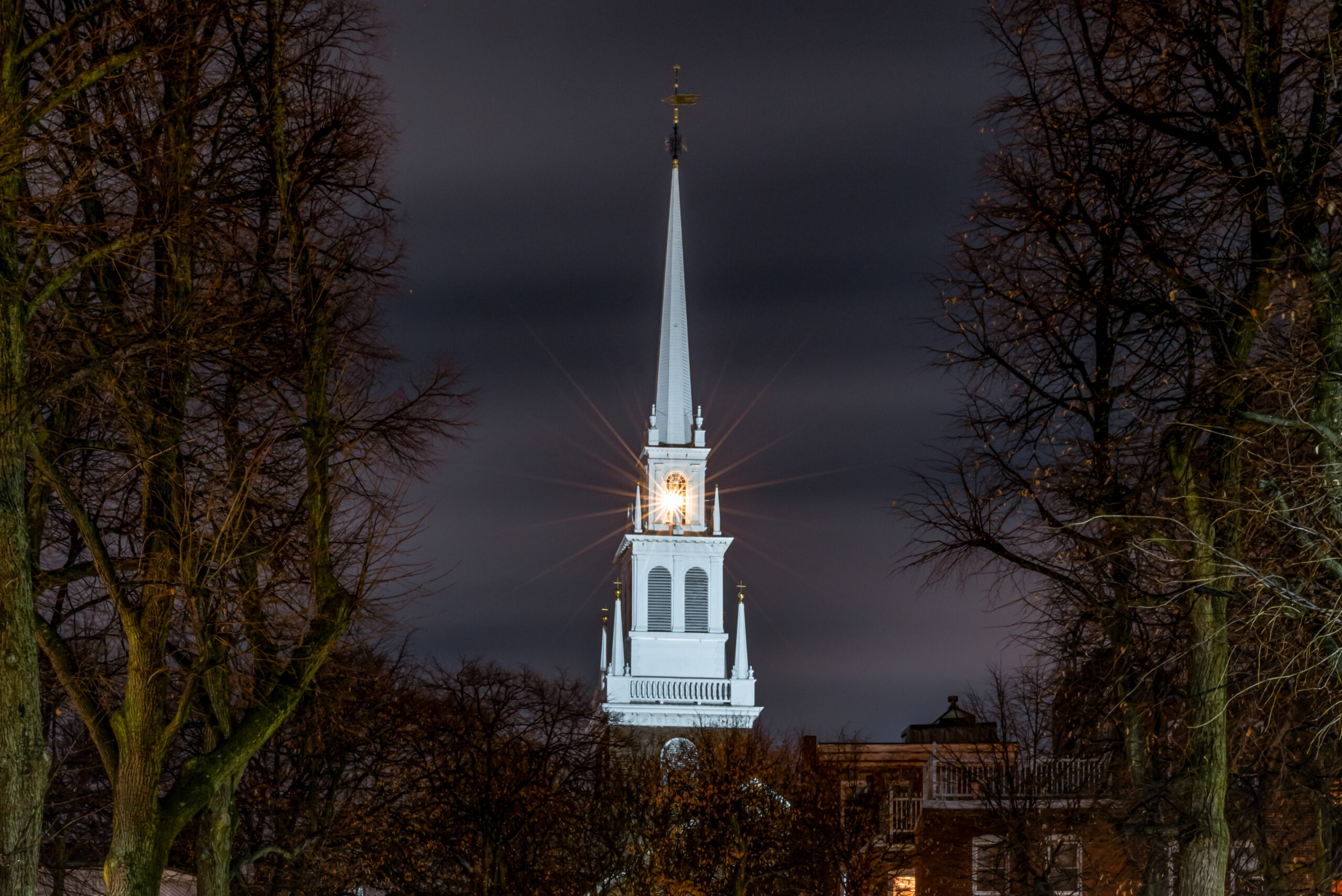
“He said to his friend, “If the British march By land or sea from the town to-night, Hang a lantern aloft in the belfry arch Of the North Church tower as a signal light,– One, if by land, and two, if by sea;”
These famous words from Henry Wadsworth Longfellow’s poem about Paul Revere’s ride recount the important role the Old North Church played in the events leading up to the first shots of the Revolutionary War. Join us just a few weeks before the 250th anniversary as we sit down with Emily Spence, Director of Education at Old North Church in Boston. We’ll discuss the history of the church, what occurred on April 18, 1775 and what happened during the war. We’ll also discuss the exciting events the Old North Church will be doing on the 250th anniversary. This will be a pre-recorded video and you will be able to watch it when we post it at 7 p.m. on our Facebook page.
Patrick Henry’s famous speech, delivered on March 23, 1775, before the Virginia Convention at St. John’s Church in Richmond, has become one of the most iconic calls to action in American history. His fiery declaration—“Give me liberty, or give me death!”—was a passionate plea for resistance against British tyranny and a rallying cry for colonial unity in the face of increasing oppression. While Patrick Henry’s speech electrified the American colonies and inspired many to embrace the revolutionary cause, Great Britain’s response to such sentiments, and to the broader colonial rebellion, was both dismissive and aggressive. The British government’s approach to colonial dissent during this period sheds light on their underestimation of the revolutionary movement and the rigidity of their imperial policies.
At the time of Henry’s speech, tensions between Great Britain and its American colonies had been escalating for over a decade. Following the French and Indian War (1754–1763), Britain sought to tighten its control over its colonies and recover war debts by imposing taxes such as the Stamp Act (1765) and the Townshend Acts (1767). These measures were deeply unpopular among colonists, who argued that taxation without representation was a violation of their rights. The colonies’ resistance to British authority—through boycotts, protests, and the formation of groups like the Sons of Liberty—was met with increasing hostility from Britain. By 1775, the situation had deteriorated to the brink of open conflict.
From the British perspective, Patrick Henry’s speech, and similar revolutionary rhetoric, would have been seen as treasonous and inflammatory. The British government viewed the colonies not as equal partners in the empire but as subordinate territories meant to serve the interests of the Crown. Henry’s call to arms was a direct challenge to this hierarchical structure, and British officials were likely to dismiss it as the rantings of a radical minority. However, the speech also highlighted the growing unity and resolve among the colonists, which British leaders largely failed to grasp. This underestimation of colonial sentiment was one of the key reasons why Britain’s response to the American Revolution was ultimately ineffective. Loyalist James Parker wrote ““You never heard anything more infamously insolent than P. Henry’s speech: he called the K—— a Tyrant, a fool, a puppet, and a tool to the ministry,”
The British response to colonial dissent, including the sentiments expressed in Henry’s speech, was characterized by a combination of punitive measures and military force. In the years leading up to the speech, Britain had already implemented harsh policies, such as the Coercive Acts (1774), known in the colonies as the Intolerable Acts. These laws were designed to punish Massachusetts for the Boston Tea Party and to reassert British authority over the colonies. Instead of quelling dissent, these measures only served to galvanize colonial resistance and unify the colonies against British rule.
St. John’s Church, ca 1865 – courtesy Library of Congress
After Henry’s speech, Britain’s strategy remained focused on suppressing the rebellion through force rather than addressing the colonies’ grievances. By April 1775, just weeks after Henry’s address, British troops marched to Lexington and Concord to seize colonial military supplies, leading to the first battles of the Revolutionary War. This military action demonstrated Britain’s refusal to engage in meaningful dialogue with the colonies and its commitment to maintaining control through coercion. Though considered by many as a spark of revolution, Henry’s motion and speech did not reach Great Britain until after the fighting broke out at Lexington and Concord. Though combined, hearing Virginia’s martial push with rebellion in New England proved this was not a localized issue.
One of the reasons Britain failed to adequately respond to the ideological challenge posed by Henry’s speech was its inability to understand the depth of colonial dissatisfaction. British officials often dismissed colonial leaders as self-interested agitators and underestimated the widespread support for revolutionary ideas. This miscalculation led to a reliance on military solutions, which further alienated the colonies and made reconciliation increasingly unlikely.
In addition to military measures, Britain attempted to divide the colonies and weaken their resolve. Propaganda campaigns and offers of pardons were used to sway public opinion and encourage loyalty to the Crown. However, these efforts were largely unsuccessful, as revolutionary leaders like Patrick Henry were able to inspire unity and resilience among the colonists.
Ultimately, Britain’s response to the sentiments expressed in Patrick Henry’s “Give me liberty, or give me death” speech reflected a broader pattern of misjudgment and inflexibility. By dismissing the legitimate grievances of the colonies and relying on punitive measures and military force, Britain failed to address the underlying causes of the American Revolution. Henry’s speech symbolized the growing determination of the American colonies to fight for their independence, and Britain’s inability to adapt to this reality ensured that conflict was inevitable. In the end, Henry’s passionate plea for liberty became a rallying cry for a new nation, while Britain’s response marked the beginning of its eventual loss of the American colonies.