I handed over a couple of one dollar bills to pay for my coffee. The image of George Washington caught my eye, and I smiled. It would be nice to relax for a moment and pick-up Valiant Ambition by Nathaniel Philbrick, the Revolutionary War history book I was reading. Settling into a comfortable chair, I soon immersed myself in the drama of the Battle of Princeton. Guided by the book’s text, my imagination created a vivid image of the unfolding conflict. George Washington – looking splendid on a large horse – galloped along, leading his men and shouting “It’s a fine fox-chase, my boys.”[i]
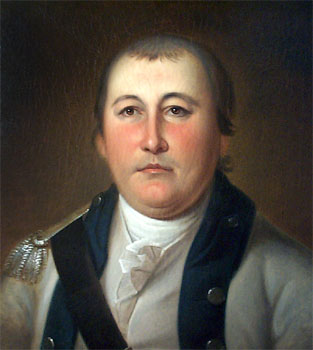
Startled, I closed the book. It seemed too difficult to accept that the “Father of His Country”, the dignified George Washington, and the reserved and diplomatic leader of the 1790’s could be riding recklessly, shouting in a full, commanding voice, and – on other occasions – struggling to keep his temper controlled when dealing with difficult subordinates. Then I felt foolish. My image of George Washington was based on the Gilbert Stuart presidential painting from 1797 that we’d studied in high-school art class!
The past few months of John Champe’s life were probably the most memorable. In the fall he was asked to go on a mission to capture the recent traitor Benedict Arnold. The mission was ordered by George Washington himself and only known to Washington and “Lighthorse” Harry Lee. Champe, a trusted member of Lee’s Legion, was promised a promotion for undertaking the daring mission. He successfully fled from the American camp, gained the trust of British General Sir Henry Clinton and Arnold and was given a commission in Arnold’s Loyalist regiment. He worked with patriots in New York and recruited others to help him in his plan to kidnap Arnold. Now it was December and the next day was the day to kidnap Arnold and return him to Washington.
Then the day before the kidnapping was planned, Clinton set into motion a plan to finally use Arnold militarily. Arnold would take his Loyalist troops and some British regulars and invade the Virginia Capes. Virginia had largely dodged the hardships of war and Clinton believed this would be a great opportunity for Arnold to prove himself. With only Virginia militia located in the colony, Arnold should have no problem wreaking havoc on the Commonwealth.
These new developments ruined Champe and Lee’s plans. When Arnold got orders from Clinton, he moved his headquarters – one day before Champe was to carry out his plan. Furthermore, Champe was also moved to another part of New York and was not able to get word to Lee that the plan was off. Lee and his dragoons waited and waited at Hoboken with no sight of Champe. Soon Lee returned to camp without any word on what happened to Champe. Lee and Washington worried that the worst had happened and Champe was “discovered.”[i]
Grave at John Champe, Prickett Cemetery, Fairmont, WV
Champe soon found himself on a transport in New York harbor with Arnold’s “American Legion.” The destination was unknown to most of the men. Soon though Champe learned that he was to be part of an invasion force against his native state! The thoughts that must have gone through his mind; he had risked everything to capture Arnold – labeled a deserter and now he would have to go into battle against his fellow Virginians. The two week trip to the Virginia Capes must have afforded Champe plenty of time to ponder how close he was coming to succeeding and now what he was called upon to do.
Champe was involved in most of Arnold’s campaign against Virginia. He was part of the force that captured Richmond and found himself in several battles and skirmishes against his fellow Virginians. Arnold was replaced by Gen. William Philips and soon Cornwallis’s army joined Philips in Virginia in May 1781. Sometime after this, Champe was able to “escape” the British army and headed west to the Blue Ridge Mountains. Champe then worked his way south and finally by July he was back with Lee who was then with Nathaniel Greene’s army in the Carolinas. Lee was delighted to see his devoted cavalryman. Surely Champe and Lee had a lot to discuss.
Though Champe was promised a promotion, it was believed by Lee and Washington that it would be too dangerous for Champe to take the field again. If he was captured, the British would surely execute him as a spy. Champe was offered an unknown sum for a reward and headed back home to Loudoun County. His legendary adventure was over.
Sergeant Major John Champe Memorial, Aldie, VA
After the war, Champe did not seek fortune or fame from his exploits. He led a simple life and was a middle class farmer. He struggled to support his family and continuously looked for cheaper and more fertile land to the west. It was due to his desire for new land that he was on a trip looking at land near Morgan Town (modern day Morgantown, WV) in 1798 where he became ill and died. Washington did not forget Champe. In 1798 Washington was appointed by President John Adams commander of the American army in preparation for war with France. Washington called on Champe to be an officer in his army, only finding out that he had recently died.[ii]
Though Champe disappeared mostly from the history books in 1781, his family fought for nearly 100 years to gain the compensation that was due to Champe. Champe was never paid a pension nor given bounty lands that were owed to him for his service. Plus, his promised promotion was never given and they argued that the owed pension should be based off of the rank that was promised him personally by Washington. Unfortunately, the mission was so secret, that very few could confirm it. In petitions filed with Congress in 1818 and 1839, Champe’s widow was finally given a life time pension, though in an amount not reflecting his rank. Finally in 1847, a Congressional act provided for compensation in the amount of $1,200 to the heirs of John Champe and granted him the promotion that was promised to him by Washington. [iii]
Champe has remained a local hero in Loudoun County. In 1861, a local Confederate unit went off to war as the “Champe Rifles” (8th VA Infantry). In the early 20th century, the location of his home was marked with a small obelisk (reportedly made by stone from the foundation of the home). Today the monument sits on the south side of Route 50 a few miles west of Aldie.
In 2001, his grave was finally properly marked with a head stone and a full ceremony. Most recently Champe has been bestowed the highest honor a local hero can be given, a high school in his honor. John Champe High School was opened in Aldie in 2012 and one hopes that his name and legacy will be no longer be forgotten.
Lyrics from Sergeant Champe, ca. 1781
Come sheathe your swords! My gallant boys, And listen to the story, How Sergeant Champe, one gloomy night, Set off to catch the tory
[i]The Revolutionary War Memoirs of General Henry Lee; DeCapo Press, 1998, 409.
Emerging Revolutionary War is honored to share the open letter below from the Society of Cincinnati. This open-letter has not been shared with the public. Thank you to Meg Martin, of Civil War Trust / Campaign 1776 for passing it to ERW.
Symbol of the Society of the Cincinnati, est. 10 May 1783, by Continental officers of the American Revolution. (Courtesy of the George Washington Papers).
Members of the Society of the Cincinnati — the nation’s oldest historical society, whose members are descendants of the officers of the American and French forces that won the Revolutionary War — are calling on the Institute for Advanced Study of Princeton, New Jersey, to halt the development of a critical part of the Princeton battlefield. They are appealing to the Institute to work with the Society and the Civil War Trust, which are working together to preserve the remaining battlefields of our War for Independence.
Eight hundred and fifty members of the Society have signed an Open Letter to the Board of Trustees of the Institute for Advanced Study appealing for the Institute to halt construction that will destroy the site of the charge personally led by George Washington that won the battle. The victory was a turning point in the Revolutionary War.
The signers of the Open Letter include descendants of George Washington, Nathanael Greene and other generals, colonels and other officers of the Continental Army.The signers include men whose ancestors were killed at the Battle of Princeton and others who were wounded in that turning point of the Revolutionary War.
The Institute for Advanced Study, an independent scholarly organization, owns the land over which George Washington led the charge that won the battle and saved the American cause from imminent defeat. “Defeat at Princeton would probably have spelled the end for Washington’s army and with it, our bid for independence,” says Jonathan Woods, president general of the Society of the Cincinnati. “The Declaration of Independence, which the nation will celebrate in a few weeks, would have become a footnote in the history of the British Empire.”
The Society of the Cincinnati, which has its international headquarters in Washington, DC, has allied itself with the Civil War Trust and other members of the Save Princeton Coalition in an effort to save the Princeton battlefield and the other endangered battlefields of the Revolutionary War. The Civil War Trust has made repeated overtures to the Institute for Advanced Study to discuss the purchase of the land by the Trust for a price well in excess of its appraised value. More than 20,000 concerned citizens have signed petitions and sent letters to Institute officials and Governor Chris Christie, urging that the Institute for Advanced Study find alternatives to destruction of this hallowed battlefield site. A copy of the Open Letter is attached.
CONTACT: Jack D. Warren, Jr. Executive Director, The Society of the Cincinnati Office: 202-785-1716 Cell: 202-531-9278 jwarren@societyofthecincinnati.org
*From our friends at Civil War Trust and Campaign 1776*
If you have been following the ongoing saga regarding the Institute of Advanced Study’s plans to build 15 faculty houses on the historically hallowed ground of Princeton Battlefield, there is another update to track.
“The British Are Coming.”
Living historians portraying the British 17th Regiment of Foot at the Battle of Princeton. The 17th Regiment, under Lt. Col. Charles Mawhood, bore the brunt of General George Washington’s famous counterattack during the January 3, 1777 Battle of Princeton. Image taken March 2016. (Source: US Civil War Trust).
The rectitude of the decision John Champe made on that October night to “desert” his men and “join” the British must have weighed heavily on his mind as he approached the Hudson River. The mission, offered by “Lighthorse” Harry Lee, to capture the traitor Benedict Arnold was a serious one. The only hesitation Champe felt was how his reputation and honor would be injured by his desertion. No one but Lee and Washington could know the truth, the success of the mission counted on secrecy.[i]
As Champe reached the Paulus Hook area of the Hudson River, the details are murky. Some accounts have Champe jumping into a boat along the shore and pushing off into the river and rowing to a British war ship. Other claims have Champe clearing a British patrol along the river and escorted by the patrol to a nearby ship. [ii] Either way, Champe eluded his American pursuers and accomplished the first goal of his mission, to reach the British lines.
Lee, already having established a spy network, lined up a system of couriers to communicate with Champe. By October 25th, Lee had heard from Champe and wrote to Washington that “my friend got safe to New York; he was before Sir Henry Clinton and has passed all the forms of the garrison; he accidentally met General Arnold in the street which has paved a natural way for further acquaintance; the party entertains high hope of success…”[iii]
Clinton and Arnold expected many other American officers to be inspired by Arnold and
Sir Henry Clinton
join the British army. Champe, a modest officer in a fabled unit was just the kind of man that Clinton wanted to attract. The fact that Champe was fleeing his own men who were in hot pursuit of him made the deception complete. Clinton questioned Champe about the condition of the American army and morale. Champe informed Clinton that other officers were sure to desert and Washington’s ranks were thinning with men heading home. Clinton soon trusted him to be a deserter and attached him to a unit of Loyalists that Arnold was raising.[iv]
Champe became close to Arnold and spent a lot of time with him. Champe spent a lot of time at Arnold’s headquarters at the King’s Arms Tavern on Broadway in New York City. He would take the next several weeks to study Arnold and his habits. Champe also watched for other deserters joining the British army in New York. The fear by Washington was that Arnold was acting with other American officers in defecting. Soon Champe realized that Arnold had acted alone in his treason.
Finally in early December Champe informed Lee that his plan was to kidnap Arnold one night as Arnold took his nightly walk in a garden next to his headquarters. Champe was even able to recruit fellow patriots to assist him in the kidnapping of Arnold. On the selected night, Champe would have a boat waiting for him at a nearby landing. He also had loosened some of the fence boards around the garden area so he could sneak Arnold out of the garden. After getting Arnold onto the boat, Champe would take him to Hoboken (western side of the Hudson River). There Lee and three of his dragoons would wait for Champe and his cargo. Washington insisted to Lee and then to Champe that Arnold was not to be harmed. Champe was sure of his success and spent days and weeks in planning the capture of Arnold. [v]
As the evening approached, everything was in place. He had earned the confidence of Clinton and Arnold. He was now a sergeant in the British army and spent countless hours preparing and making the necessary connections to fellow patriots in New York. The boat was prepared and waiting, Lee would be at Hoboken with his dragoons. Everything was in place to bring home the traitor Arnold.
[i]The Revolutionary War Memoirs of General Henry Lee; DeCapo Press, 1998, pg. 399.
[ii] “Sergeant John Champe and Certain of His Contemporaries”, William and Mary College Quarterly, April 1937, pg. 153.
On Wednesday, June 8, a signing ceremony marked the beginning of an agreement between First Parish in Concord, owner of the Wright Tavern, and the Concord Museum. Starting this fall, the Concord Museum will provide educational programming to school groups in the Wright Tavern and open the historic building to the public for commemorative events in October and April each year. On hand for the signing were representatives of the Concord Museum and First Parish as well as members of the Wright Tavern Exploratory Committee (WTEC), appointed last fall to develop a sustainable, strategic plan to showcase the Wright Tavern as a National Historic Landmark.
Plaque on the Wright Tavern (ERW collection photo)
“Opening the historic Wright Tavern to public and educational access will provide a true sense of place when learning about the historical events of the American Revolution,” said Mel Bernstein, member of WTEC and Chairman of the American Revolution Round Table of the Minute Man National Historical Park.
No building in this historic community was of greater consequence to the beginnings of the American Revolution than the Wright Tavern, built in 1747. The First Provincial Congress met in Concord at the Wright Tavern in October 1774, electing John Hancock as the Congress’s president and making provision for the collection of taxes. The Second Provincial Congress met there again in March and April 1775. Presided over by John Hancock with Samuel Adams and Dr. Joseph Warren in attendance, the Provincial Congress met in defiance of Royal and Parliamentary authority — creating a Massachusetts army, raising taxes, and performing other roles necessary to form its own government, independent of British authority. Then, in the early hours of April 19, 1775, Concord’s Minute Men assembled in the Wright Tavern before setting off to repel the advancing British troops at the North Bridge.
Since 1886, First Parish in Concord has owned and maintained this historic structure. “The Wright Tavern is certainly one of the most important Revolutionary War-era buildings in Concord,” explained Tim Jacoby, Chair of the First Parish Trustees of Parish Donations. “Although the building is owned by the church, we truly feel it belongs to the people of Concord and to the American people. This agreement with the Concord Museum will establish greater public accessibility to the Tavern.”
In 1961, the Wright Tavern was designated a National Historic Landmark by U.S. Secretary Fred Seaton, declaring it “an historical site of exceptional value in commemorating and illustrating the history of the United States.”
Margaret Burke, Executive Director of the Concord Museum, said: “The Museum is thrilled with this partnership to bring the importance of the Wright Tavern to the fore. Concord is home to invaluable historical and cultural resources, and this is a wonderful example of how organizations within the town are working together to promote this history and make it relevant to residents and visitors.”
Leah Walczak, the Concord Museum’s Director of Education and Public Programs, explained the role the Wright Tavern will play in educating visiting school groups: “The Museum currently provides specialized programming to over 10,000 school children each year. Along with hands-on history education using objects from the Museum’s collections, this agreement will allow us to provide programs within the setting of one of the finest historic buildings in Concord.”
This partnership was brought about through the work of the Wright Tavern Exploratory Committee, which convened from September 2015 through January 2016. Members included: John Boynton, Chair of the Exploratory Committee and a First Parish Trustee; Doug Baker, Sacristan and Curator of First Parish; Mel Bernstein, Chair of the American Revolution Round Table of Minute Man National Historical Park; Jim Cunningham, Project Manager for Barrett Farm Restoration, and Treasurer of Save Our Heritage; Sue Gladstone, Director of Development for the Concord Museum; Jayne Gordon, Public Historian for Robbins House, Thoreau Farm, and the Concord Museum; Tim Jacoby, Chair of the First Parish Trustees; Bob Morris, Chair of the Friends of Minute Man National Historical Park; and Tom Wilson, First Parish Treasurer.
A generous gift to the Museum from John and Johanna Boynton is funding this historic partnership.
*About the Concord Museum The Concord Museum is where all of Concord’s remarkable past is brought to life through an inspiring collection of historical, literary, and decorative arts treasures. Renowned for the 1775 Revere lantern and Henry Thoreau’s Walden desk, the Concord Museum is home to a nationally significant collection of American decorative arts, including clocks, furniture, and silver. Founded in 1886, the Museum is a gateway to historic Concord for visitors from around the world and a vital cultural resource for the town and the region. Visit www.concordmuseum.org.*
*For More Information, contact:
Barbara Rhines, Director of Marketing and Public Relations
978-369-9763, ext. 229
Email: brhines@concordmuseum.org
Brig. Gen. Daniel Morgan, the “Old Wagoner,” as he was known, commanded a light infantry corps assigned to Maj. Gen. Nathanael Greene’s southern army. Morgan met with Greene in Charlotte, North Carolina on December 3, 1780. Implementing a Fabian strategy, Greene split his army to harass the British while buying time to recruit additional soldiers. Greene ordered Morgan to use his 600-man command to forage and harass the enemy in the back country of South Carolina while avoiding battle with Lt. Gen. Charles Lord Cornwallis’ British army.
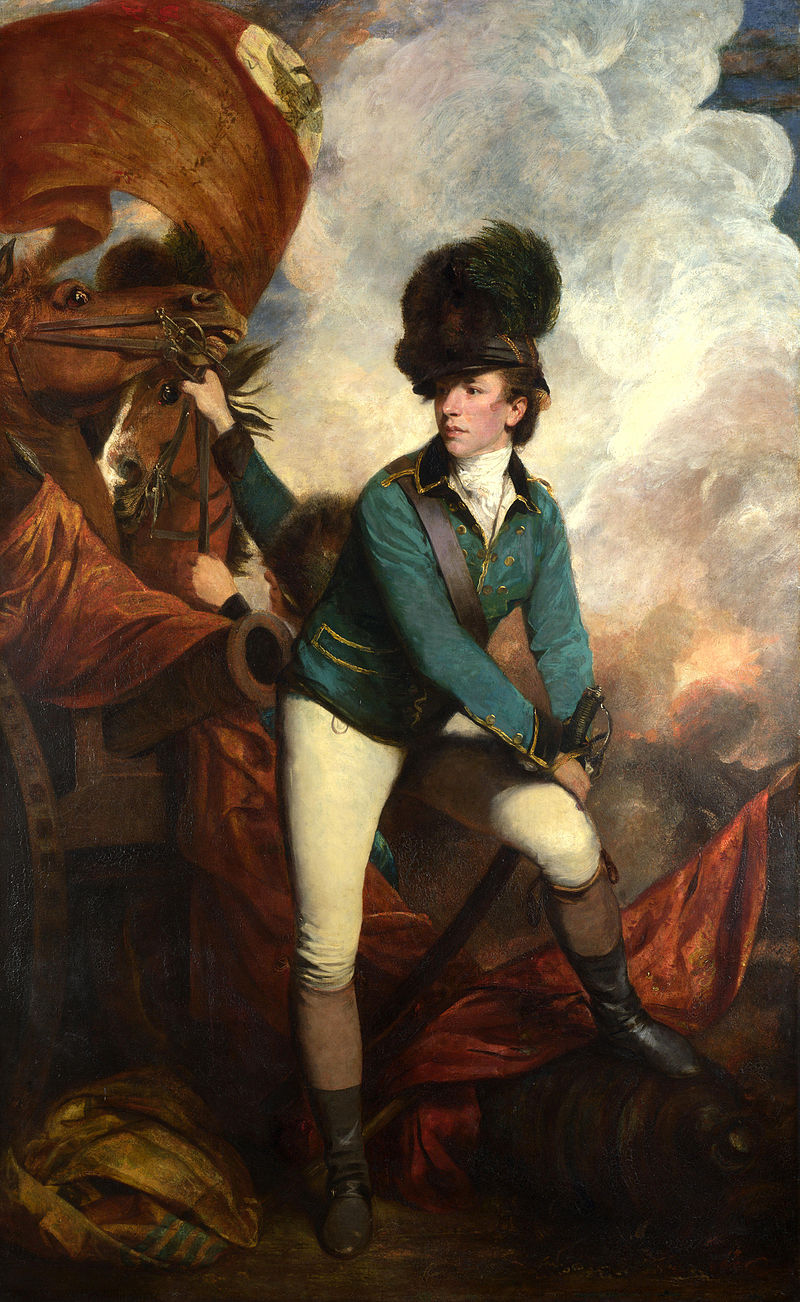
Once Cornwallis realized what was going on he dispatched Lt. Col. Banastre Tarleton’s British Legion to track down Morgan’s command and bring it to battle. Tarleton commanded a combined force of Loyalist American troops. The Legion consisted of fast-marching light infantry and dragoon units. At its peak strength, the Legion numbered approximately 200 infantry and 250 dragoons. It was known for its rapid movements and for its ruthless policy of giving the enemy no quarter. Patriot forces feared Tarleton and his Legion, and for good reason.
By January 12, Tarleton’s scouts had located Morgan’s army in the South Carolina back country, and Tarleton began an aggressive pursuit. Morgan hastily retreated to a position at the Cowpens, a prominent crossroads and pasturing grounds for cattle. The field was about 500 yards long and about as wide, dotted with trees, but devoid of undergrowth, which served as a food source for grazing battle.
Once Morgan learned that Tarleton was pursuing him, he spread the word for local militia units to rendezvous with him at the Cowpens. Through the night, South Carolina militiamen drifted into camp. Morgan visited their camps, encouraging them to stand and fight. Morgan’s words were particularly effective; the grizzled veteran knew how to motivate these men. They would need to be prepared, because they faced a stern task the next day.
January 17, 1781 dawned clear and very cold. After his scouts reported Tarleton’s approach, Morgan rode among his men, crying out, “Boys, get up! Benny’s coming!” Morgan designed a defense in depth that was intended to draw the British Legion in and then defeat them by pouncing on their exposed flanks. He knew that his militia had a reputation of being unreliable, and his ability to maneuver was limited, so he elected to design and implement a defense in depth that took advantage of the terrain features of the Cowpens.
Banastre Tartleton, British commander at Cowpens
Tarleton was overconfident. He believed that Morgan’s command was hemmed in by the nearby Broad River and also believed that the cleared fields of the Cowpens were ideal ground for his dragoons, and concluded that Morgan must be desperate to fight in such a place.
Morgan had prepared three defensive positions. Selected sharpshooters out front and hiding behind trees manned the first line. They picked off a number of Tarleton’s dragoons as they advance, specifically targeting officers. Traditional accounts indicate that they downed 15 of Tarleton’s dragoons this way. Confused, the dragoons retreated.
Having accomplished their initial goal, the sharpshooters then fell back about 150 yards or so to join the second line, which consisted of Brig. Gen. Andrew Pickens’ militiamen. Morgan asked these men to stand long enough to fire two volleys, after which they were to fall back to the third—and main line—manned by Col. John Eager Howard’s Continentals, another 150 yards or so in the rear of the second line. Thus, Morgan had designed a textbook example of a defense in depth.
Andrew Pickens, commanded some of the South Carolina militia at Cowpens
Some of the militia got off two volleys and then most of the militia fell back to a spot behind the third line. Tarleton orders his dragoons to pursue the retreating militiamen, and as the dragoons bore down on them with their sabres drawn, Col. William Washington’s Continental cavalry suddenly thundered onto the field, seemingly from nowhere. They routed the surprised Loyalist dragoons, who fled the field with heavy losses.
The infantry then engaged. With their drums beating and their fifes shrilling, the British infantry advanced at a trot. Recognizing that the moment of crisis had arrived, Morgan cheered his men on, rode to the front and rallied the militia, crying out, “form, form, my brave fellows! Old Morgan was never beaten!”
William Washington, commander of American cavalry at Cowpens and a distant relation to George Washington
Tarleton’s 71st Highlanders, a veteran unit made of Scotsmen, which had been held in reserved, now charged the Continental line, their skirling bagpipes adding to the cacophony of battle. Howard ordered his right flank to face slight right to counter a charge from that direction, but in the noise and chaos, was misunderstood as a call to retreat. As other companies along the line began to pull out, Morgan rode up to ask Howard if he had been beaten. Howard pointed at the orderly ranks of his retreat and assured Morgan that they had not been beaten. Morgan then put spurs to his horse and ordered the retreating units to face about and, on his order, to fire in unison. Their deadly volley dropped numerous British soldiers, who, sensing victory, had broken ranks in a determined charge. The combination of this volley and a determined bayonet charge by the Continentals turned the tide of battle in favor of the Americans.
At the moment, the rallied and re-formed militia and Washington’s cavalry attacked, leading to a double envelopment of the British, who began surrendering in masses. Tarleton and some his men fought on, but others refused to obey orders and fled the field in a panic. Finally, Tarleton realized that he had been badly beaten and fled down the Green River Toad with a handful of his men. Racing ahead of his cavalry, William Washington dashed forward and engaged Tarleton and two of his officers in hand-to-hand combat. Only a well-timed pistol shot by his young bugler saved Washington from the upraised saber of one of the British officers. Tarleton and his remaining forces escaped and galloped off to Cornwallis’ camp to report the bad news.
And bad news it was: Tarleton’s Legion lost 110 dead, over 200 wounded and 500 captured. By contrast, Morgan lost only 12 killed and 60 wounded. His perfectly designed and perfectly implemented defense had worked even beyond the Old Wagoner’s wildest dreams and highest hopes.
Knowing that Cornwallis would pursue him, Morgan buried the dead and then withdrew to the north to live and fight another day. Morgan reunited with Greene’s army and the combined force headed for North Carolina. Morgan, whose health was fragile, soon retired from further duty in the field, but he had left his mark. Cowpens was his finest moment, and set a precedent for Greene to follow two months later at Guilford Courthouse.
Battle of Cowpens (Courtesy of Campaign 1776/CWT)
*Suggestions for additional reading: for a superb book-length microtactical treatment of the Battle of Cowpens, see Lawrence E. Babits, A Devil of a Whipping: The Battle of Cowpens (Chapel Hill: University of North Carolina Press, 1998). This book is the primary resource consulted in drafting this article.
We are happy to share this post from our friends at The Friends of Minute Man National Historical Park
Minute Man National Historical Park needs your help.
The Friends of Minute Man National Park have a chance to win $250,000 to preserve the 1775 Parker’s Revenge battle site and to transform the adjacent, historic Hargrove Barn for classroom use.
Twenty national park units – out of more than 400 – have been selected to compete for funding in a nationwide, online voting campaign which just kicked off. This effort – “Partners in Preservation: National Parks” – is a partnership between the National Trust for Historic Preservation and American Express. We are competing against other National Parks such as, Yosemite, Grand Canyon and Zion.
We are asking our supporters to register and vote by going to the National Geographic voting portal: www.voteyourpark.org/minuteman and cast their votes every day between now and through July 5.
All voters will be entered in a sweepstakes to win a trip to Yellowstone National Park courtesy of National Geographic.
It is a tremendous honor to have been selected as one of the 20 participating national park areas. NOW, WE ARE URGENTLY REQUESTING THAT YOU VOTE FOR MINUTE MAN EVERY DAY THROUGH JULY 5th.
And, please, “Spread the Alarm” by forwarding this message to your family, friends and associates to maximize our impact.
Many, many thanks for your help and perseverance through July 5!
Bob Morris Nancy Nelson
President Superintendent
Friends of Minute Man National Park Minute Man National Historical Park
Robert Morris explaining the recent archaeological investigations at Parker’s Revenge along Battle Road.
Recently, ERW members Phil Greenwalt and Rob Orrison spent the 241st anniversary of the opening of the American Revolution in the outskirts of Boston in Concord, Massachusetts. It was a whirlwind trip of research, photos and most importantly meeting the stakeholders in historic preservation and public history in the region. We already knew how active Concord was in promoting and preserving its history, but each time you visit you are blown away by their efforts and their appreciation for their past.
While in Concord, our more than gracious host was Jayne Gordon. Jayne has been involved in almost every public history project or initiative in the Concord area. A native of the area, everyone in Lexington and Concord knows Jayne. Jayne took the time to introduce us to many people and organizations in the area. I wanted to focus on two organizations that are doing great work in the region to promote local history with a national impact.
The Robbins House
Formerly the Drinking Gourd Project, The Robbins House is introducing people to the story of African Americans in the region. The all-volunteer board and staff are breaking new ground. Facing misconceptions of slavery in 18th century Concord head on, Robbins House President Maria Madison has led the charge to change the narrative.
The Robbins House is an early 19th century house that was inhabited by the first generation
The Robbins House
of descendants of formerly enslaved African America Revolutionary War veteran Caesar Robbins. Using the story of Caesar Robbins as a base, Maria and her fellow volunteers interpret the role of African Americans in 18th and 19th century Concord. Most forget that 18th century Massachusetts was a colony that supported and practiced slavery. The Robbins House also interpret stories of how literary icons, such as Ralph Waldo Emerson and David Henry Thoreau, dealt with slavery and prejudice. Again, most visitors (including me!) have their preconceived notions challenged. The Robbins House also provides exhibits on other aspects of African American history of Concord, as well as lectures, programs and self-guided tours of Concord.
The Robbins House’s location next to the famous North Bridge provides an interesting juxtaposition on freedom and liberty. Just a few hundred yards away the dream of American freedom and independence began and the Robbins House is filling the void of how that liberty equated to a large portion of the American population. On your next visit to Concord, it is a worth your time and support. I really enjoyed my time meeting with Maria and look forward to future conversations and visits. Visit their website at for more information www.robbinshouse.org.
Friends of Minuteman National Park
Many of our readers are aware of the recent “Parker’s Revenge” project and preservation project with the Civil War Trust’s “Campaign 1776.” Also, I bet all of our readers are aware of Minuteman National Historical Park, but how many know about the great efforts of the Friends of Minuteman National Historical Park? I must admit, until my recent visit I include myself if that “unknowing” category. Jayne introduced us to Robert Morris, President of the “Friends,” and Bob spent a morning going over the organization and their recent efforts to promote new historic research, archaeology and restoration of the area known as “Parker’s Revenge” along the Battle Road.
This ridge is now considered where Capt. Parker and his Lexington militia attacked the British on their retreat back to Boston
“Parker’s Revenge” occurred on the afternoon of April 19, 1775 along the road between Concord and Lexington. Captain Parker, who earlier that day confronted the British on the Lexington Green, regrouped his militia and prepared for an attack on the British column as it made its way back to Boston. As they marched through Lincoln and approached Fiske Hill, Parker’s men opened up a deadly fire from behind rocks. Up until last year, historians have always interpreted the event to take place along the Battle Road next to the modern Minuteman National Historical Park Visitor Center. But now, thanks to fundraising and manpower efforts of the “Friends”, the history of “Parker’s Revenge” is being rewritten. With new archaeology, the area of “Parker’s Revenge” will be reinterpreted a few hundred yards west of the current location. Bob and his team of volunteers also plan to work with the National Park Service to assist in restore the historic landscape in the area.
The “Friends” also fundraise to support interpretation projects, grounds projects, and support the large volunteer corps at the park. One of the most important tasks for the organization is advocating on behalf of the national park. My morning spent with Bob and Jayne walking the newly discovered “Parker’s Revenge” battlefield was a highlight of my trip. Being one of the first people to walk the “new” battlefield and hear how the project developed was a special treat.
I highly recommend you follow along the many projects the “Friends” have on going to support Minuteman National Historic Park. They are always looking for new members, no matter where you may live. Visit their website at www.friendsofminuteman.org
Again, I cannot thank Jayne Gordon enough for showing me around Concord and sharing her passion for history. I appreciated my short time with Maria Madison of the Robbins House and Robert Morris of the Friends of Minuteman National Park. Both are breaking new ground and supporting preservation and interpretation of the events surrounding spring 1775. These are the people on the front lines and that meshes well with one of the established goals of Emerging Revolutionary War is to share and promote these public history organizations. They are instrumental in telling the story of the American Revolution.
I grew up in a suburb of Reading, Pennsylvania. Reading is the county seat of Berks County, and is located about sixty miles northwest of Philadelphia. Reading is an old town; Richard and Thomas Penn, the sons of William Penn, founded the town in 1743. It is situated on the banks of the Schuylkill River, and has always been an important logistics center as a result. German immigrants settled much of Berks County, and many in the area spoke the language. Today, Reading remains the gateway to the so-called Pennsylvania Dutch region.
There’s a part of the east side of the city, situated at the base of Mt. Penn, the dominating high ground that overlooks the city, called Hessian Camp. This is what a local newspaper writer said about that part of town a few years ago: “Reading’s Hessian Camp section is arguably the city’s finest neighborhood. Mansions line the curvy, hilly streets…The neighborhood, tucked into the side of Mount Penn, is hidden from the hustle and bustle of the downtown.” My mother’s favorite aunt and uncle lived in Hessian Camp.
Historical marker for the “Hessian Camp”
A historical marker erected by the Commonwealth of Pennsylvania in Hessian Camp stands out. As a child, I thought it an odd name, so I started asking questions. I eventually learned that it was the site of a Hessian prisoner of war camp during the Revolutionary War. That satisfied my youthful curiosity, but as an adult who has traveled back to Reading regularly since moving away in 1983, I retained my interest in it and remained curious about it. Consequently, I decided to tackle it and see what I could learn of it. Eventually, the story took shape.
After George Washington crossed the Delaware River and surprised Hessian mercenaries at the Battle of Trenton, the Hessian prisoners of war were take inland for detention. Due to the heavy German presence in Reading, it was a perfect place to house these men because so many of the locals spoke the language and could converse with these men. They also hoped that the Hessians would desert and take up residence—and perhaps their loyalty—with the Patriot cause. Further, as a result of Reading’s location, it would require a determined campaign to free the prisoners of war.
The initial prisoners of war were housed in a temporary prison along the banks of the Schuylkill River. They spent a cold, rough winter, and many died of disease and/or cold. After the Battle of Saratoga, when it became obvious that more Hessian prisoners of war would be heading to Reading for detention, the local citizenry demanded that the POW’s be moved to a more remote location. The original campsite was about 12 acres in size, and housed about 1,000 detainees—about the same as the permanent population of Reading. There was plenty of fresh water from a spring and plenty of lumber to construct huts, so the site was chosen.
There are two surviving accounts from German POW’s housed in Reading. Johann Bense, from the Duchy of Brunswick, arrived in Reading on June 16, 1781:
On the bank of the Schuylkill, we had been camping on a meadow in the open air for 8 weeks and were plagued by the great heat during the day and by rain and cold during the night. On August 9, we marched from the Schuylkill via Reading onto a high, rocky mountain.
We were supposed to build barracks there. But because we did not want to agree to that right away, but rather made ourselves straw huts, we were treated very severely. A sharp command from the corporal forced us to build the barracks and it was our good fortune because all our straw huts were consumed by fire on October 21, 1781.
Therefore, those who had not yet completed their barracks, had to do more now to get them ready. Through that, the men got some freedom to go into the country and work and so they kept their supplies. They are read out twice a month [report for roll call twice a month].
On April 26, 1782, we received money, linen trousers, shirts, and 1 pair of shoes from Lieutenant du Roi [of the Regiment Prinz Friederich]. Now, our situation was pretty good.
It did not last long, however, that they locked us up and all who were in the country and worked there, had to come in [to the city].
In the month of July, they read us an order from Congress. Any one of us wanting to be free, and that immediately, should give 80 silver talers [one British pound was worth 5 5/6 talers] as ransom and if he did not have that much money, a citizen should pay it for him with whom he should work in bondage for 3 years.
But if we wished to enter service with them [in the American army], each would get 8 silver talers as gratuity and after the end of the war, he would be given 100 acres of land. This now was voluntary, to be sure, but because our men did not want to agree to that, we were treated very harshly.
Since a few of us deserted, 356 men [of ours] were suddenly taken to the Reading jail and because there was not enough room, they had to lie in the court yard in the rain and the cold. They had to buy wood and water.
Two hundred of our men were sent to the prison in Lancaster; the artisans were also taken there. Afterwards another 100 men were taken into prison, among them was myself. Because a few non-commissioned officers deserted, 42 sergeants and non-commissioned officers were also taken to jail. These had to lie in the cellar and below in the dungeon [at Lancaster]. Many of our men who could not stand it entered [American] service or sold themselves as indentured slaves for 3 years. The rest, who had been prisoners since September 11, were let out on December 16 but each had to give 1 taler.
The non-commissioned officers were let out after 17 days but because some deserted right away again, those having been in jail before were quickly taken back to prison and had to remain there up to the exchange.
Some of our men took up service on a pirate ship which was captured immediately at its departure from Philadelphia, and taken to New York. In the last year of our captivity, we thus were the most wretched and most miserable men. None of us could go out and none of the inhabitants were allowed to see us…
On February 13, we had our first news of peace [from a Hessian Quartermaster]. We continued being in doubt until finally in March a French ship arrived in Philadelphia with the same message. It was made known to us at the barracks on the 26th that there was peace with France, Spain, Holland, and England and now we were daily hoping for our release. . . On April 16 in the afternoon, the non-commissioned officers came out of the city jail and [returned] to the barracks.
On April 21, which was also the second day of Easter, at 12 Noon, 13 cannon shots were fired for the 13 free colonies. The whole city was illuminated in the evening and fires were made on April 24. In the morning the English Commissary Maclean came to give us each a blanket. Other staff officers came and we prisoners found out we would march to New York.
Bense departed Reading on May 3, 1783, and by May 10, had arrived in New York City. He eventually returned home to the Duchy of Brunswick,
The second account comes from a letter by Sgt.-Maj. Samuel Vaupel, who served in the Leib Company, Erbprinz Regiment of Hessen-Hanau. He reported to his commanding officer, Lt. Col. Lentz, in New York:
Your Excellency, I have a report to humbly send you, also a resolution from the Board of War of Congress and the address of Captain Thomas Bowen. From these, your Excellency will see in what a depressing situation we are in….We were told everyone must choose to either buy himself free or join the American service. The king would not help us, and our prince did not want us… Nobody [from the ranks] responded to this reading and speech. It was immediately ordered that now nobody could leave camp and the proclamation read three times daily. But our people pretty much stuck together.
On August 7, 1782, we were visited by Major-General [Benjamin] Lincoln and Brigadier-General [Moses] Hazen from Lancaster. The Corps had to form up and we were reviewed but they didn’t speak. They rode our regimental street and around the barracks, then went on to Reading.
On the morning of the 10th instant, Brigadier-General Hazen returned with a German Captain [Anthony] Selin from his regiment. The troops had to turn out again and form a circle. The General spoke, which was translated by the above mentioned captain. We should choose to either make ourselves free by paying 80 Dollars or join the American army; the King of England did not care enough about us to exchange us or pay for our provisions; they cannot provide for us any longer when they have problems feeding their own men; and if we continue refusing to make our decision, serious measures will be taken.
After the speech we NCOs said that we could not agree to these conditions, and asked if he would allow two NCOs from our Corps to go to New York to report these conditions to our commanding officer. If he says all hope is gone and doesn’t need us any longer, then every man can do as he wishes. The general’s answer was: He wanted to report it to Congress, but we have not heard anything as of now and don’t expect to.
The above mentioned Captain Selin is Swiss-born and cannot be described badly enough; he was introduced to us as our commander. The new captain called together all the NCOs and gave orders that nobody will dare go 10 paces beyond the post without being termed a deserter and when the provost guard calls and they don’t stop, the guard should fire on them
The water is located just outside the post, but nobody may go for it alone. The NCO of the guard has to call for water and one of his armed guards goes along to the well. This captain has ordered the guard to allow nobody out of camp, not even a woman or child, without permission. [Some of for-hire soldiers were allowed to have wives and children with them.]
He also said he has forbidden the local residents into the camp. It is not permitted to openly bring us an apple. Since all this did not help, the above mentioned captain announced the NCOs were to blame for the lack of enlistments – that they discouraged the men from enlisting.
This lasted until September 7, when he unexpectedly came to the barracks at daybreak and gave the order to march; our people were to go to the mountain with sack and pack. We all packed our things and when we were formed up on the barracks mountain, the captain went from right to left without saying anything. Finally, with the Brunswickers, he began pulling young people from the ranks.
When he came to our regiment he only said the married men and NCOs should step forward. The remainder dressed ranks, were turned right and joined up with the Brunswickers to march to the jail in Reading.
There were 142 men of our regiments and 158 Brunswickers, 300 in all. They filled up the jail and the remainder had to camp in the jail yard. The first day these people had to pay 2 pence for a pail of water and also had to pay for firewood to cook with. They were in this jail through the 10th instant.
On the 11th instant 102 men from the regiment and 84 Brunswickers were taken to the jail in Lancaster.
On the 24th instant, 21 men from the regiment and 25 Brunswickers were again taken to the jail in Lancaster. There is now nobody from the regiment in the Reading jail except the baker Muller from the Lt. Colonel’s Company.
Private Wiskermann of the Leib Company was employed in Reading by a rich widow. On September 2, the captain had him brought in from the widow and asked him to enlist, buy himself free, or be sent to an underground prison or dungeon as the English call it. He decided he would rather be free and the above mentioned madam, named Mifflin, ransomed him.
Fourteen men from the regiment who were employed at an iron smelter, have returned to the barracks. On September 23, 10 of these men were taken to the Reading jail. The other 4 men remained sick in the barracks; the other 10 men were taken, with others, on September 24 to Lancaster. They also had to each pay the jail keeper in Reading 1/4 Dollar for the one night lodging.
Concerning us here in the barracks, we expect daily and hourly to go to the jail. Captain Selin indicated, when the others went to jail, that at the slightest incident or attempt at desertion, the others would also go into the jail. We have to hear daily from this captain how our tyrannical prince no longer needs us and that we will not get any more clothing or money from him. We collectively humbly beg your Excellency to have mercy on us and rescue us from this unhappy and depressing situation.
Should this be impossible, we beg you to have the grace to send us uniforms, blankets, and money. Otherwise it will be impossible to withstand the coming winter as our blankets are torn and so little firewood is issued that we can’t make the fires small enough. . . nobody is allowed out to gather firewood.
Sergeant-Major Vaupel ransomed himself on or about December 8, 1782. His fate is unknown. The fates of the poor German soldiers sent to fight in North America remains a fascinating mystery.
Other than large, handsome houses, there is nothing left of the Hessian campsite in Reading. The historical marker and the name of the neighborhood are the only reflection of the former occupants of the area. However, the presence of those prisoners of war was among the earliest things to draw my interest in the Revolutionary War.
A map showing the location of the Hessian POW camp in Reading, PA.


 Continue reading “Finding The “Correct” Image of General Washington”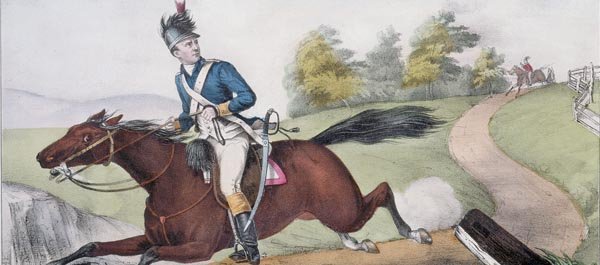


 went off to war as the “Champe Rifles” (8th VA Infantry). In the early 20th century, the location of his home was marked with a small obelisk (reportedly made by stone from the foundation of the home). Today the monument sits on the south side of Route 50 a few miles west of Aldie.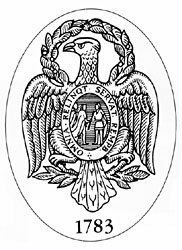








 Emerging Revolutionary War Era