The Battle of the Kegs (January 5th, 1778)

Francis Hopkinson
Francis Hopkinson, Signer of the Declaration and Satirical Lyricist

The Philadelphia Campaign did not end well for the Continental Army after three separate defeats at Brandywine, Paoli, and Germantown followed by the British occupation of the new nation’s capital.   Among other things, however, it would produce an amusing little ditty commemorating an attack on the British on January 5, 1778 for American audiences eager to poke fun at the British.

When informed that the British had occupied his adopted hometown, Benjamin Franklin reportedly waved off his concern and replied, “No, Philadelphia has captured Howe.”[i]  Franklin was more militarily astute than many politicians observing the war.  When his army captured Continue reading “The Battle of the Kegs (January 5th, 1778)”

Hamilton Recaptures Fort Sackville: Norman MacLeod’s Campaign Journal, December 17, 1778

(An occasional series highlighting British Lieutenant Governor Henry Hamilton’s march south from Detroit to recapture Vincennes (Indiana) on its 240th anniversary through the entries in Captain Norman MacLeod’s diary.)

Fort Sackville Map Inset, (Nova Scotia Archives and Record Management, Wikimedia Commons)
Fort Sackville Map Inset, Nova Scotia Archives and Records, (Wikimedia Commons)

As Lieutenant Governor Henry Hamilton’s army arrived on the lower Wabash, the river widened and deepened, enabling his much-fatigued army to spread out and make better progress to Vincennes and Fort Sackville.  All along the way, the governor’s efforts to grow his army through the addition of Indian allies had largely succeeded, not only increasing his numbers but improving his intelligence about the American forces awaiting him.  Those were paltry, indeed.

Continue reading “Hamilton Recaptures Fort Sackville: Norman MacLeod’s Campaign Journal, December 17, 1778”

Norman MacLeod’s Campaign Journal, November 27, 1778

(An occasional series highlighting British Lieutenant Governor Henry Hamilton’s march south from Detroit to recapture Vincennes (Indiana) on its 240th anniversary.)

As fall progressed, cold set in and the weather began to catch up with Hamilton’s advancing army.  By November, it regularly dealt with freezing rain, snow, mud, and ice on the river and nearby trails.  MacLeod’s November 27th entry alludes to a few of those logistical challenges and the rather low opinion that the captain had of American soldiers, which began to place higher in MacLeod’s thinking as the army neared the territory so recently conquered by George Rogers Clark.

“Embarked at eight as usual, met with Great fields of ice this day But pretty good water.  So that we made us of our Oars only in two Rapids where most of the men was obliged to drag especially those in Boats because they draw more water than the Perogues, besides this the channels in the River are as if cut Purposely for no other Craft than Perogues.  We arrived at K [one or two words illegible] at 4 oClock called [sic; camped?] 10 miles from Weatono.  Us as our tents were Pitched five Savages from that Plase Arrived in camp, who acquainted us that there was no less than 200 of their nation ready to Join us the moment we arrived at the above Place.  They further told us that the Rebels had abandoned Au Post.  How true this is alittle more time we discover.  But it agrees with my own opinion for I never once thorough they would make a Stand either there or at the Illinois with So numbers especially on hearing that the Lieut. Govr. was coming who they know had all the Indians read at [hi]s call.”

William A. Evans and Elizabeth S. Sklar, eds., Detroit to Fort Sackville, 1778-1779: The Journal of Norman MacLeod, (Detroit: Friends of the Detroit Public Library/Wayne State University Press, 1978), 87.  The spelling and grammar errors are all from the original as transcribed by Evans and Sklar.  Evans and Sklar suspect “Weatono” is MacLeod’s reference to “Ouiatenon.”

George Washington Passed By Here

One of my favorite places to visit are the Laurel Highlands of southwestern Pennsylvania. The area abounds in history, and its scenery is, in my view, unparalleled. Rugged mountains overlook beautiful valleys of hardwoods, streams and waterfalls. Rocky outcroppings emerge from the forest. Powerful rivers wind through the region

It is a center of industrial history: railroading and mining, transportation like canals, the National Road, and other scenic highways. There is even a bit of Civil War history in the region. But my favorite topic to explore is its French and Indian War history. Which brings me to the person who started it all, George Washington.

Continue reading “George Washington Passed By Here”

George Washington’s Greatest Speech?

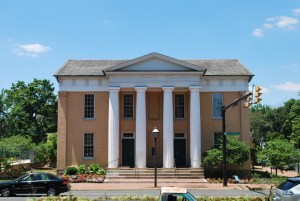
On the morning of March 15, 1783, George Washington strode into the “New Building” or “Temple” as the structure was referred as, to address the assembled officers of the Continental Army. He asked General Horatio Gates if he could have the floor to say a few words and when he unfolded his pieces of paper on the podium, the words lost their importance.

Why? Continue reading “George Washington’s Greatest Speech?”

Norman MacLeod’s Campaign Journal, October 13, 1778

Sketch of Wabash River, 1778
Sketch of the Wabash River Made During Hamilton’s 1778 Campaign (Wikimedia Commons)

In the summer of 1778, Lieutenant Colonel George Rogers Clark of the Virginia militia launched one of the most daring American military operations of the Revolutionary War when he invaded the “Illinois country” and captured Cahokia and Kaskaskia in modern-day Illinois and Vincennes in southern Indiana, effectively neutralizing British power on the Illinois, Wabash, and Mississippi Rivers.  Henry Hamilton, Lieutenant Governor of Quebec and Britain’s Superintendent for Indian Affairs in Detroit, could not allow such audacity to succeed, lest Britain’s influence with the western Indian nations wane.  Learning of Fort Sackville’s fall at Vincennes on the Wabash River, he set out to recapture it.

Continue reading “Norman MacLeod’s Campaign Journal, October 13, 1778”

Summer Lecture on Summer of 1787

This past July I had the pleasure to attend and present at the American Battlefield Trust Teacher Institute. One of the keynote speakers was David O. Steward, the author of Summer of 1787: The Men Who Invented the Constitution. During his talk, there were a few points that stuck out to me and I share them with you.summer of 1787 stewart

  • 72 elected, 55 attended, and 35 delegates were probably there all summer.
  • Out of the 55 that attended, 39 affixed their signatures to the document

In reference to George Washington, Stewart candidly remarked he had “more influence by keeping his mouth shut” almost as if by his calm, quiet demeanor, he was displaying that “I trust in you and I’ll try and make it work” with whatever the delegates designed in that hot and stuffy room in Philadelphia.  Continue reading “Summer Lecture on Summer of 1787”

Captain John Asbhy

Part Two

Captain John Ashby and his fellow Virginians would face their greatest test of the war on the afternoon of September 11th, 1777 at the Battle of Brandywine. Following a wide flank march the bulk of the Crown forces emerged on Washington’s right flank, ready to trap and smash the Continental Army. Washington reorganized his line, drawing men north in a desperate attempt to meet the new threat. The Third Virginia was ordered into position far in advance of the American lines – their objective was to hold a wooded hill near the Birmingham Friends Meeting House in order to buy time for the rest of the American troops to take up position. Ashby and his fellow officers arranged their men among the buildings and woodlot of the Samuel Jones farm and awaited the attack that was certain to come.

The Battle of Brandywine, September 11, 1777 (American Battlefield Trust)

Continue reading “Captain John Asbhy”

Missionary Extraordinaire: David Zeisberger

Over the summer, I took a family excursion to several Revolutionary War sites in Ohio, some of which I recently wrote about.  In particular, I wanted to trace the experience of several Moravian missionaries and their congregations in the no-man’s land of the frontier.  Traveling a back road along the Tuscarawas River between the villages of Gnadenhutten and New Schoenbrunn, we stumbled across the graves of David Zeisberger (1721-1808) and several notable missionaries at the crossroads of Goshen.

IMG_2559
Moravian Cemetery at Goshen, Ohio.  (Author Photo)

Continue reading “Missionary Extraordinaire: David Zeisberger”

Captain John Ashby

Emerging Revolutionary War welcomes guest historian Travis Shaw. 

Part One

As he looked northward across the open ground in front of his position, Captain John Ashby could see the advance guard of the British army moving steadily closer. They came on in a loose, open line, taking time to return the fire of Ashby’s men. Made up of red-coated light infantry and their German counterparts, the rifle-armed Jaegers, the advance guard were the cream of the Crown forces – men chosen for their fitness, marksmanship, and ability to endure hardship. Ashby and his men were veterans, so they must have known they’d be in for a fight. As the battle intensified around him, one wonders if Captain Ashby’s thoughts turned to home. The Brandywine Valley of Pennsylvania was a long way from his native Virginia Piedmont.

The Crooked Run Valley in northern Fauquier County looks much as it did when John Ashby lived there two centuries ago (Author_s photo)
The Crooked Run Valley in northern Fauquier County looks much as it did when John Ashby lived there two centuries ago (Author’s photo)

John Ashby was born in 1740 in northwestern Fauquier County, among the foothills of the Blue Ridge Mountains. The son of Robert Ashby and Rosanna Berry, he grew up at Yew Hill, the family estate that lay just a few miles from the Gap that bears the family’s name to this day[1]. John’s uncle and namesake, Captain “Jack” Ashby commanded a company of Virginia rangers during the French and Indian War, where he made the acquaintance (and drew the ire) of a young George Washington[2]. Continue reading “Captain John Ashby”