Announcing the First Emerging Revolutionary War Symposium!

Mark your calendars for September 28, 2019!  Emerging Revolutionary War is excited toPrint announce that we are partnering with Gadsby’s Tavern Museum and The Lyceum of Alexandria, VA to bring to you a day long Symposium focusing on the American Revolution.

GTHomepageExterior(1).jpg
Gadsby’s Tavern Museum

Alexandria is George Washington’s hometown and we feel is a great place for us to start this new endeavor. Historic “Old Town” Alexandria is home to dozens of museums and historic sites as well as great pubs, restaurants and shops. Gadsby’s Tavern Museum is the premier 18th century tavern museum in the country and is host to the famous annual George Washington Birthnight Ball.  The Lyceum: Alexandria’s History Museum will be our host location. Today The Lyceum serves as the City’s history museum and is a center of learning through lectures, demonstrations and exhibits.

This year’s theme is “Before They Were Americans”  and will highlight several topics

Lyceum_017_720x483_72_RGB
The Lyceum

about the years leading up to the American Revolution. Our speakers include: Phillip Greenwalt, Katherine Gruber, William Griffith, Stephanie Seal Walters and Dr. Peter Henriques as the keynote. Registration will open on July 1, 2019 through AlexandriaVA.gov/Shop or by calling 703-746-4242. Stay tuned as we highlight each of our speakers and their topics.


Signers in St. Michael’s Churchyard

St. MichaelsWhile Charleston, South Carolina, absolutely overflows with history dating all the way back to colonial times, I had the chance to explore a particularly historic churchyard recently. St. Michael’s Episcopal Church sits on the corner of Meeting Street and Broad Street, and tucked into its small graveyard are not one but two signers of the U.S. Constitution: Charles Cotesworth Pinckney and John Rutledge.

“Their years of public service, 1762-1825, saw both State and Nation well on the road to greatness,” says a plaque on the wall outside the churchyard.  Continue reading “Signers in St. Michael’s Churchyard”

John Wayne, Colonel James Smith, and the Black Boys Rebellion

AlleghenyUprisingposterAllegheny Uprising, starring John Wayne and Claire Trevor, is an overlooked Revolutionary War movie.  I first watched the 1939 film as a kid on a local UHF station, but never quite realized how closely it tracked with the memoir of a colonial and Revolutionary War soldier, Colonel James Smith.  So, I decided to take a look.

For a significant portion of the last century, no actor signified “the American Century,” more than John Wayne. But, in the 1930s, he was a former-stuntman-turned-B-grade-actor churning out movies as a contract player for RKO Pictures.  Born in Iowa as Marion Morrison, Wayne’s family made its way to California during World War I and he eventually attended the University of Southern California as a pre-law student.  When an injury sidelined his football career, he did odd jobs in Hollywood for a friend-of-a-friend, eventually taking on bit parts and extra work before getting his first starring break in The Big Trail, a 1930 epic that flopped horrendously.  Morrison needed a more impressive name for the movie—Marion Morrison apparently not being heroic enough for the character he would portray. So, Morrison, still in his 20s, suggested Anthony Wayne after the Revolutionary War general himself.  The studio passed on “Anthony,” but settled on John Wayne.  Newly named, Morrison went back to work, settling for the lead in a bunch of forgettable westerns.

Continue reading “John Wayne, Colonel James Smith, and the Black Boys Rebellion”

ERW Weekender: In the Footsteps of James Madison

Emerging Revolutionary War welcomes guest historian Kate Bitely 

In the Foot Steps of James Madison.

A view of the front yard of Montpelier
A view from the front yard of Montpelier (author collection)

Spring is finally here in Virginia and if you are looking for a place to explore that offers a great outdoor experience, get in the car and head to Montpelier, in Orange Virginia. James Madison’s plantation home offers visitors a glimpse of what life was like in colonial America.   Be sure to start your trip with the feature film in the welcome center that provides highlights of Montpelier’s lengthy history dating back to the mid 1700’s.  The preserved property has something to offer everyone including hikes, gardens, and a breath-taking view of the blue ridge mountains. The grounds are filled with opportunities to learn about our nation’s early history and the impact it still has on our country today. Continue reading “ERW Weekender: In the Footsteps of James Madison”

“You are a fine fellow”: The April 24, 1777 Attack on Boonesborough

Emerging Revolutionary War welcomes historian Daniel T. Davis. 

1777.

Boone
An elder Daniel Boone (courtesy of the LoC)

The conflict ignited at Lexington and Concord finally reached beyond the Allegheny Mountains as the British stepped up their raids on American settlements in Kentucky. With so many troops dedicated to the colonies, Henry Hamilton, the Lieutenant Governor at Detroit, relied on Native tribes allied with the Crown to carry on the war effort. In March, Shawnees began to harass Harrodsburg, Logan’s Station and Boonesborough. Founded as part of the Col. Richard Henderson’s proprietary colony of Transylvania along the banks of the Kentucky River, Boonesborough derived its name from one of the most famous long hunters of the day and resident, Daniel Boone. Continue reading ““You are a fine fellow”: The April 24, 1777 Attack on Boonesborough”

ERW Weekender: The George Washington House

IMG_1065

In September 1751, a 19-year old, tall, strapping, young Virginian accompanied an ailing older half-brother on a journey to Barbados, in the West Indies. Unbeknownst to this teenager, the journey to the Caribbean Island would be his last venture out of the colonies and/or country that inhabited the east coast of North America.

This young man’s name? George Washington.

The island he visited? Barbados.

Continue reading “ERW Weekender: The George Washington House”

George Rogers Clark Recaptures Fort Sackville, Part II

Vincenes (Army Center of Military History)
Hamilton Surrenders Fort Sackville (U.S. Army Center for Military History)

By February 23, 1779–two hundred and forty years ago—Virginia Lieutenant Colonel George Rogers Clark had marched his little army from the Mississippi across the flooded plains of what would become southern Illinois to the French town of Vincennes on the Wabash River, in modern Indiana.  His men were tired, hungry, and waterlogged, but they had made it safely across the Wabash and delivered themselves to the same shore as the town and Fort Sackville, then defended by the much-hated British Lieutenant Governor Henry Hamilton.  His river scouts had managed to find a small, dry hillock covered by a grove of trees and within sight of the town and Clark’s force, about 170 strong, lay in the grove drying their clothes by the sun, occasionally taking a wandering citizen from the town prisoner.   Clark later reported:

Continue reading “George Rogers Clark Recaptures Fort Sackville, Part II”

Alexander Hamilton’s “First” Duel

glc07167engweb_
Lt. Col. Alexander Hamilton at Yorktown, VA by Alonzo Chapel

Alexander Hamilton has reappeared as a modern pop star with the wide success of the Broadway musical “Hamilton.” Due to this success, most people today know that Alexander Hamilton met his end in a duel with Aaron Burr on the banks of the Hudson River. But this was not Hamilton’s first involvement in a duel, nearly 26 years earlier Hamilton found himself embroiled in a feud with one of highest ranking Continental officers, Maj. Gen. Charles Lee.

It all started on June 28, 1778 at the Battle of Monmouth. The beginning of the battle had gone against the Americans and Lee, who was in command of the vanguard was ordering a retreat in front of the British. Washington, seeing the retreat rode ahead and encountered Lee. What was said between the men has been debated since that day, but what is not indisputable is that Lee took offense. Continue reading “Alexander Hamilton’s “First” Duel”

Phillis Wheatley: American Poet

Phyllis Wheatley Book Frontspiece
Title Page from Phillis Wheatley’s Book of Poetry

The American Revolution was loaded with contradictions, perhaps none more glaring than the notion of fighting for individual liberty while slavery was so deeply embedded in the rebelling colonies.  To truly understand the American Revolution, it’s necessary to wrestle with that reality.  The stories of some individuals help shed light on the experience of enslaved Americans during the war.

Phillis Wheatley was born in West Africa, likely in 1753, and then imported into the British colonies in 1761.  John Wheatley of Boston purchased her to assist his wife Susanna and daughter Mary as a house servant.  Like many slaves, she was given the last name of her owners; her first may have come from the name of the ship that brought her across the Atlantic.  Susanna and Mary noticed something in young Phillis and taught her to read and write, introducing her to the Bible and religion.  She published her first poem in 1767 and the 1770 poem “An Elegiac Poem, on the Death of the Celebrated Divine George Whitefield,” gave her some degree of fame.

Continue reading “Phillis Wheatley: American Poet”

Book Review: Young Washington by Peter Stark

erw-book-reviews-11Peter Stark, Young Washington: How Wilderness and War Forged America’s Founding Father, Kindle ed., (New York: HarperCollins, 2018).

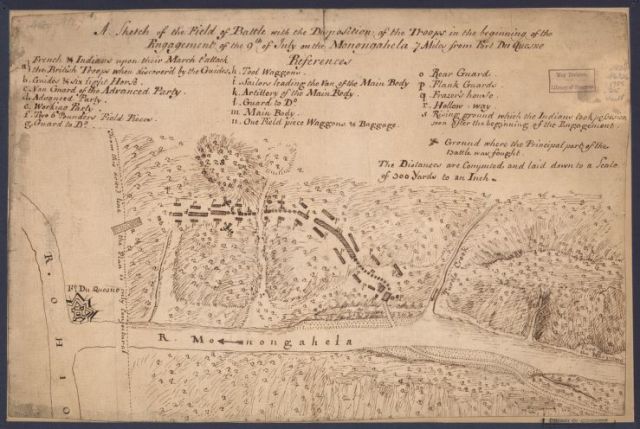
While traveling in southwestern Pennsylvania, outdoor writer Peter Stark discovered the region’s deep history and the central role it played in transforming George Washington from a callow young man on the make to the kind of leader who could forge a nation. Stark was not accustomed to thinking about Washington on those terms.  He decided to study the younger man in greater detail, retracing Washington’s steps as a surveyor and explorer, messenger for Virginia’s colonial governor, defeated commander at Fort Necessity, aide to General Braddock, commander in the Virginia militia, honorary brigadier during the Forbes Campaign, frustrated suitor of his neighbor and best friend’s wife, and prickly colonial frustrated with ill treatment at the hands of the British empire.  While Stark includes chapters that cover Washington’s early life and the circumstances that brought him to the frontier, Young Washington revolves around the period of Washington’s service just before and during the French and Indian War. Continue reading “Book Review: Young Washington by Peter Stark”