This Sunday, August 6th at 7pm join ERW series editor Dan Welch and authors Rob Orrison and Mark Wilcox as they discuss one of the worst defeats in American history, the Battle of Camden. How did the hero of Saratoga end up the scapegoat in the south? Learn how a coincidence led to a great British victory. And how did the Patriots recover from such a large defeat and find a path to victory a year later? Orrison and Wilcox will also discuss their upcoming book “All That Can be Expected, The Battle of Camden”. Grab a drink and join us to learn more about the Battle of Camden!
All Rev War Revelries can be found LIVE on our Facebook page, or a week later on our You Tube and Spotify channels.
Emerging Revolutionary War welcomes back guest historian Kate Bitely.
In the heart of Fredericksburg, Virginia, you will find a well-preserved, Georgian-style home that once belonged to Betty Washington Lewis, the sister of George Washington. Historic Kenmore, as the home is known today, was constructed in the 1770s and originally sat on 861 acres near downtown Fredericksburg. Today, the historic house museum is open for daily tours where guests can explore the gardens, the main living floor of the home, several historic structures on the priority, and a visitor center filled with riveting artifacts and information.
Nearly 290 years ago, Betty Washington was born at Pope’s Creek in Westmoreland County, Virginia. As a young child, she lived in a few properties owned by the Washington family before relocating to Ferry Farm, located in Stafford County, Virginia, where Betty, George and their siblings grew up. On February 22, 1750, Betty married Fielding Lewis, a widowed distant cousin, and a father of two young children. In 1752, the family purchased 1300 acres in the Fredericksburg area and allocated a portion of the land as the future site for their home Millbrook, which was eventually renamed to Kenmore in the 1800’s. In total, Betty and Fielding welcomed eleven children, but only six survived to adulthood.
Fielding Lewis was a well-known member of his community. He built his wealth initially as a merchant, but was later elected as a member of the House of Burgesses and served as a colonel in the Revolutionary War. During the war, however, Lewis used his finances to personally pay for munitions and supplies for Patriot troops which ultimately drained much of the family’s resources.
The Lewis family were staunch Patriots. In 1775, when the Lewis’s were moving into their home, the spirit of independence was strong throughout the colonies. Given the Washington’s status, heritage and devotion to service, Betty and her family would become one of the biggest supporters for the Patriot cause, willing to risk their home, finances, reputation, and their safety in favor of breaking away from England. The impressive residence served as a visual representation of their wealth, which became significantly more important during the Revolutionary War.
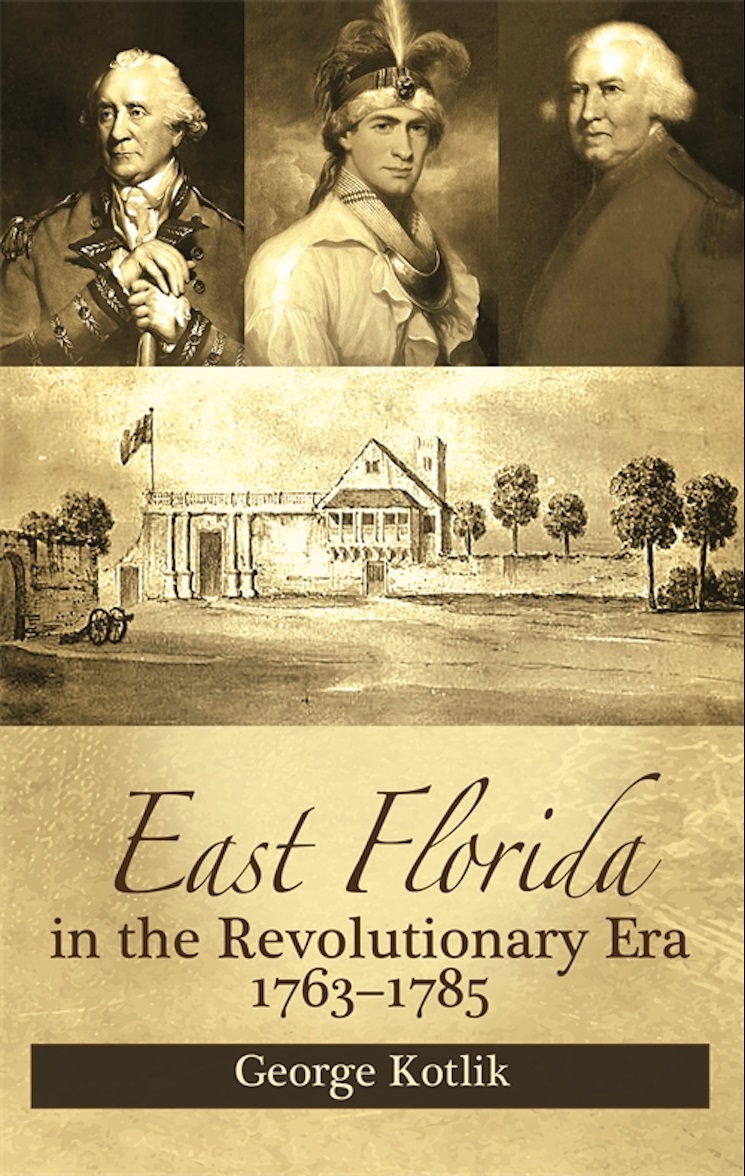
Thirteen of the Great Britain’s North American colonies moved toward independence in 1775, declaring the fact officially the following year with the issuance of the Declaration of Independence. Perched below these thirteen rebellious provinces was the colony of East Florida. Earned after the Seven Year’s War by Great Britain from Spain, the most populous city an oldest permanently established European metropolis was St. Augustine, which was also the capital of the colony. This colony, through the eight years of the American Revolutionary War, had a tenuous connection with their neighbors to the north. Largely forgotten in the pantheon of history describing this period, from the time of Britain gaining possession in 1763 through the end of the Revolutionary era in this historian’s estimation, in 1785.
Entitled, East Florida in the Revolutionary Era, 1763-1785 and penned by George Kotlik, a historian specializing in 18th century North American history, the publication offers “an accessible and detailed narrative of the East Florida during the American Revolution.” (pg. 8).
What ensues in the following pages is a brief yet complete overview of the military, political, social, and economic history within those years of East Florida. Some of the names in the pages are well known to enthusiasts of the American Revolutionary War era whereas others will be new names to add to the repertoire for further study. From Governor Patrick Tonyn, British general and last governor for England of East Florida to bringing attention to the William Augustus Bowles, a Maryland born Loyalist, sympathetic to the Muscogee Native Americans of East Florida who tried in vain from the last decade of the 18th century, to establish an independent state for the tribe, with British support. These are just two of the historical personas that Kotlik discusses in his narrative, the rest await you within the pages of the book!
Although no major military actions happened within the confines of the colony that does not mean the role of East Florida in relation to the American Revolution should not be marginalized. “Militias were raised, a general assembly was postponed, St. Augustine experienced a heightened British troop presence, planters between the St. Johns and St. Marys Rivers suffered at the hands of George raiding parties, and a constant threat of a Spanish or American invasion” all affected the psyches and lives of East Floridians. (pg. 104-105).
The hope from Kotlik is to provide the launching point for further discussion into the role of East Florida specifically and Florida in general during the revolutionary period. “Such a lack of coverage is a reminder for scholars to to emphasize East Florida’s presence in the war that made America.” (pg. 111). With this history in hand, Kotlik has provided the necessary overview for further exploration.
Publisher: NewSouth Books, University of Georgia Press, 2023 156 pages plus images
The summer of 1776 was tense on the Kentucky frontier. Since the spring, Shawnee raids from north of the Ohio had increased, with tribesmen raiding the white settlements with the intention of driving the settlers east, back across the mountains.
By the late spring, hardly more than 200 Americans remained in Kentucky, most forting up in the settlements south of the Kentucky River at Harrodsburg, Logan’s Station, and Boonesborough as war parties ranged nearby. Years later, an old settler remembered the rancid conditions of long confinements in “a row or two of smoky cabins, among dirty women and men with greasy hunting shirts.” By the summer, conditions in the forts were almost unbearable as supplies of salt and meat began to run low.
On the quiet Sunday afternoon of July 14, 1776, 13-year-old Jemima Boone, daughter of frontiersman Daniel Boone, slipped out of the log gates of Boonesborough with her friends Elizabeth (Betsy) and Frances (Fanny) Calloway. Tired of the confinement of the fort, the three girls untied the lone canoe of the settlement and pushed out into the Kentucky River for an old-style joy ride. Jemima would remember years later that her father had warned her to stay near the cabins and never cross to the other side of the river.
Betsy Calloway, 16, guided the canoe but it was soon caught up in the current and taken downstream toward the northern bank. A small mixed war party of Shawnees and Cherokees were watching the settlement from the woods across the river. They had been in the area for at least a week when they spotted the girls in the canoe. As the craft got close to the shore a warrior jumped into the river and grabbed the towline. Understanding immediately the danger they were in all three girls began to scream. The warriors brought the canoe to shore and quickly made signs to the girls of what would happen if they continued screaming. But the sounds had already alerted the settlers in the fort.
It was Sunday, the Sabbath and, as was his normal custom, Daniel Boone was lying down for his Sunday afternoon nap when he heard the commotion from out in the fort. Running out of his cabin in his bare feet, Boone joined with Richard Calloway, father of Betsy and Fanny, and several other men of the settlement as they eventually made their way to the opposite shore of the river and began tracking the war party as it made its way towards the crossing of the Licking River at the upper Blue Licks.
One of the Cherokee men in the party was named Scolacutta but known to the Americans as Hanging Maw. He knew Daniel Boone and his family and spoke a bit of English. He recognized Jemima as Boone’s daughter. Hanging Maw laughed at the joke they were playing on old Boone, Jemima remembered many years later, and confirmed they were headed for the Shawnee towns north of the Ohio. If the party managed to get across the big river, the rescue of the girls would most likely become impossible. As they were forced along the trail, the three girls dug their heels into the earth or dropped bits of material from their clothing; anything to give signs to anyone who may be following that they were on the right path.
By the morning of the second day, Boone and his party were roughly 10 miles behind the kidnappers. Now with a pretty good idea of where the war party was heading and understanding that, continuing to follow the tracks would slow them down considerably, Daniel Boone made the decision to break from the trail and speedily head for the Blue Licks. It was certainly a gamble but the men with Boone trusted his judgment. The Kentuckians moved out, setting a jogging pace.
As they got closer to the war party, the rescuers began finding the signs left for them by the kidnapped girls. They also came across muddled waters at a creek crossing, a dead snake along the trail and finally the carcass of a recently butchered buffalo calf. They knew they were getting close. Boone figured the warriors would stop to cook at the next water they came across. At a branch known today as Bald Eagle Creek, east of the current town of Sharpsburg, KY, the trail ended. Boone divided his party, with four men going up stream and four heading down.
After two days of hard travel with no sign of pursuit, the warriors began relax a bit. They would soon cross the Licking River and link up with other war parties so they began feeling confident. They made camp and began to roast the buffalo meat. The terrified girls were exhausted by being on the march. The camp was in a small, open glen. As the warriors lolled about the girls were sitting near the cook fire. Suddenly, Jemima Boone heard a noise in the brush. The sound caught the attention of one of the Shawnees who looked up but, seeing nothing, returned to his work. Glancing up along the nearby ridge, Jemima suddenly caught sight of her father. The girl remembered he was “creeping upon his breast like a snake.” Around 100 yards or so apart, the father and daughter locked eyes. Boone gave a quick signal for the girl to remain quiet.
The rest of Boone’s party were gathered up on the ridge when, in a fit of excitement, one of them fired his rifle down into the camp. Before she heard the shot, Fanny Calloway saw blood spurt from the chest of the warrior standing next to the campfire. He managed to hobble off into the brush. “That’s Daddy!” Jemima cried as she and the other girls hit the ground with shots filling the air from the rescue party above. Boone’s party rushed down into the camp among the startled warriors. Those tribesmen not hit by rifle fire managed to escape into the woods. All at once the terrible ordeal was over, for both father and daughter. “Thank Almighty Providence, boys,” Boone said, “for we have the girls safe. Let’s all sit down by them now and have a hearty cry.” Jemima Boone would long remember that “there was not a dry eye in the company.”
The story of the kidnapping and rescue would be retold in the Boone and Calloway families for generations. In the 19th century, historian Lyman Draper collected accounts of the story from at least forty people. This would become one of the most famous episodes in the life of Daniel Boone and provide the inspiration for author James Fenimore Cooper in his novel “The Last of the Mohicans”.
Emerging Revolutionary War welcomes the contribution of Eric Olsen, Park Ranger/Historian at Morristown National Historical Park
Military history tends to be a lot of “so and so’s” brigade advanced on the left wing, while “what’s his face’s” division withdrew.” Lots of movements of large faceless masses of soldiers. Personally, I prefer the little personal stories of individuals in the face of battle. Here is one such story from the battle of Monmouth in June 1778.
Sir Henry Clinton
I recently ran across this little tidbit in a July 7, 1778, letter written by the Adjutant General of the Hessian forces in America, Major Carl Leopold Baumeister. He described an incident during the battle of Monmouth involving the British commander in chief, Sir Henry Clinton. “General Clinton in the thickest fire, was saved by one of his adjutants, Captain Sutherland, when a rebel colonel aimed at him, but missed. Captain Sutherland’s horse was wounded. Another adjutant, Lloyd, stabbed the colonel.”
The story sounded vaguely familiar. Then I recalled something I’d read written by a British officer named Thomas Anbury. He was a prisoner of war, part of Burgoyne’s captured “Convention Army.” Anbury and the other prisoners were being held near Charlottesville, Virginia. At a place called Jones’s Plantation, Anbury related the following story on May 12, 1779,
“A very singular circumstance took place in that battle [Monmouth], which fully marks the coolness and deliberation, though in the heat of action, of Sir Henry Clinton: As he was reconnoitering, with two of his Aide de Camps, at the short turning of two roads, they met with an American officer, exceedingly well mounted upon a black horse, who, upon discerning them, made a stop, and looked as if he wished to advance to speak to them, when one of Sir Henry Clinton’s Aid de Camps fired a pistol at him, and he instantly rode off. Sir Henry was much displeased at his Aide de Camp, and censured him for being so hasty, adding, he was confident that the man wished to speak to him, and perhaps, might have given intelligence that would have been very essential, remarking, that when he was in Germany last war, and reconnoitering with Prince Ferdinand, a man rode up in a familiar manner, and gave such intelligence as decided the fate of the day.”
To read more about the Battle of Monmouth, check out “A Handsome Flogging, the Battle of Monmouth, June 28, 1778 by William Griffith, part of the Emerging Revolutionary War Series.
Parson Weems’ Fable; by Grant Wood, Amon Carter Museum of American Art, Fort Worth, Texas
George Washington’s lifetime family associations, primarily his Ball family relations, were relied on byWashington’s first biographer Parson Weems. James Bish’s new book “I Can’t Tell A Lie” looks into the Washington and Ball family associations, along with Weems’ family associations. Relying on these close associations, he identifies the sources for Weems’ many anecdotes regarding Washington. Mr Bish will also focus on the many Revolutionary War connections including The Prayer at Valley Forge, Dr James Craik, Col. William Grayson, John Cadwalader, Henry Lee II and Henry Lee lll.
Be sure to grab a drink, join us to learn a new theory about the Cherry Tree, Washington’s Prayer at Valley Forge and other Parson Weems’ anecdotes, in this interesting work about Parson Mason Weems and George Washington.
We interact with history at a personal level in many ways. We enjoy careers in the field, read, tour locations, work as living historians (or interact with them), dig through archives, trace our roots, visit museums, or simply stumble across some connection in the course of living our daily lives. But, a fortuitous bit of family history struck on a recent weekend, just shy of the 241st anniversary of a battle.
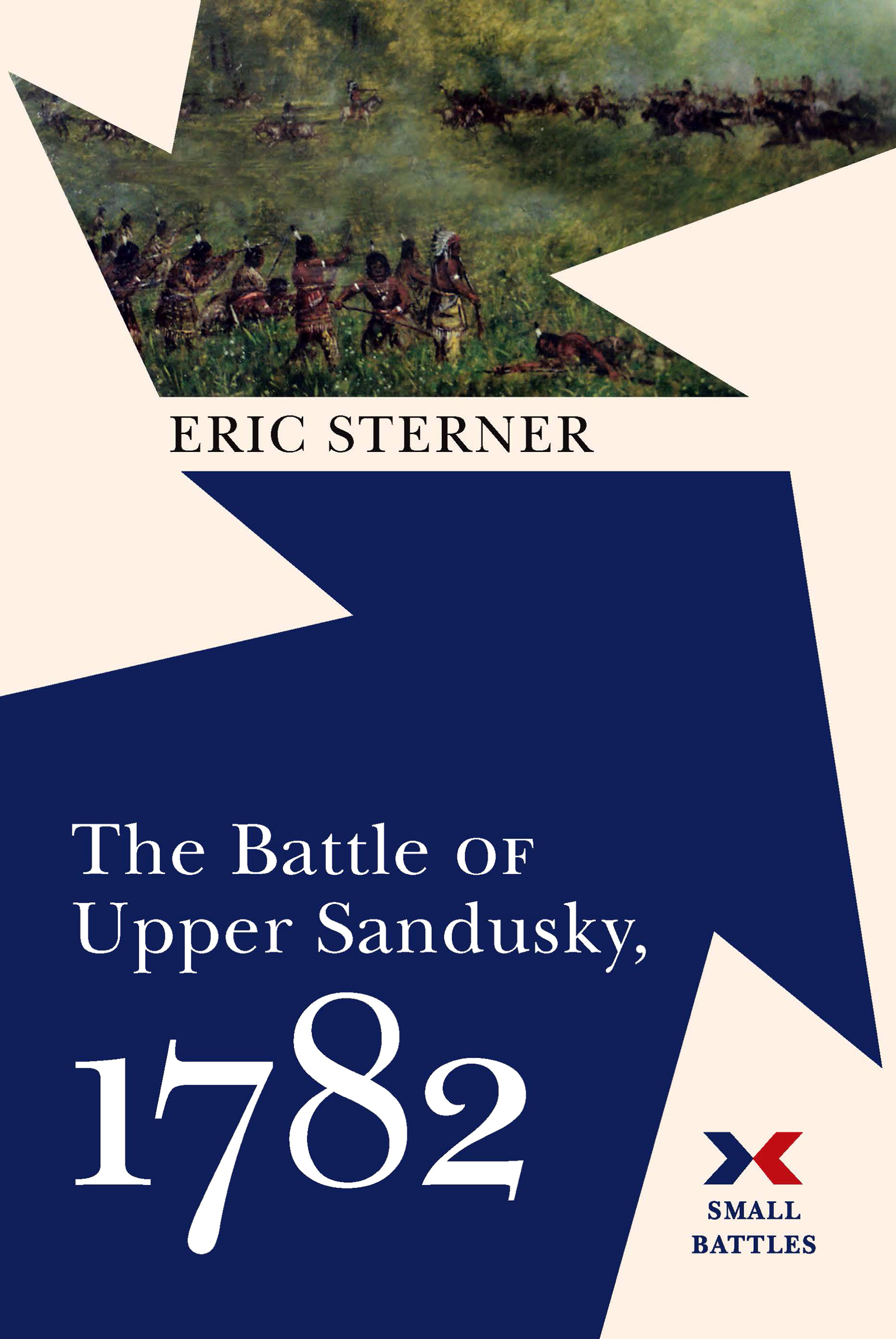
My wife and oldest daughter spent a Sunday morning with my in-laws to visit and record some family stories and memories. They came back with a box of material. The first document they perused was a 19thcentury application for membership in the Daughters of the American Revolution. I was in a different room and suddenly heard yelling as my wife came to find me. I assumed a snake had gotten into the house or we’d won the lottery without playing. It turned out that the DAR applicant, a direct forebear of both my wife and daughter, was descended from Nicholas Dawson, who had fought in the Crawford Campaign, which happened to be the subject of my second book, The Battle of Upper Sandusky, 1782. (Shameless bit of self-promotion: it just went on sale). Talk about coincidence.
Many volunteer actions on the frontier during the American Revolution lacked troop rosters. But, to stimulate volunteering for the Crawford campaign the county lieutenants for Pennsylvania’s Washington and Westmoreland counties offered to count the time on campaign against a volunteer’s legal militia obligations. So, they created rosters, some of which partially survived. The Pennsylvania Archives published that material. Sure enough, Nicholas Dawson shows up as a miscellaneous volunteer, meaning only that the roster didn’t include his company assignment. The ever-helpful Fold3 database also holds pension debt certificates issued to Dawson on January 18and 20, 1785.
Lieutenant General Henry Clinton, New York Public Library
With the Charleston in British hands, Clinton believed that all he had to do was establish outposts in South Carolina stationed with British regulars. This be believed would put down what was left of the rebellion in the state. These posts assisted the recruitment and training of the thousands of Loyalist troops he believed would now rally around the King’s Colors. To take the best advantage of his Regular troops, Clinton determined to establish three major outposts in the South Carolina backcountry. Clinton established these posts at Augusta (Georgia), Ninety-Six, and Camden. While these posts were to be centers for the British army, the local Loyalist militias were to serve as the pacification forces in South Carolina while the main British force was freed up for larger strategic goals.
To recruit, enlist, and train the large, expected influx of Loyalist militia, Clinton named Maj. Patrick Ferguson as Inspector of Militia. Ferguson was ordered to enlist younger men, preferably unmarried, into companies that would form battalions. He was instructed to recruit from Georgia to North Carolina and offer short enlistments if necessary. Clinton believed that having the colonists maintain their own law and order (via Great Britain’s authority) would cause less apprehension with those that were mostly undecided about to whom they should throw their support, the Patriots or the British.
By mid-May, the British army set out for their destinations in the back country. Clinton’s second in command, Lieut. Gen. Charles Lord Cornwallis, marched to Camden while Ferguson moved to Ninety-Six. Without much resistance, Clinton’s plan to conquer South Carolina was working perfectly. Patriot leaders scrambled to find ways to organize their resistance. The only organized Continental force remaining in South Carolina was a small force of Virginians under Col. Abraham Buford that was on its way to Charleston when the city surrendered. Ordered by Brig. Gen Isaac Huger to reverse course and make his way north toward Hillsborough, North Carolina. There along with the North Carolina militia, he could be the core of American defense in North Carolina.
On May 27, Cornwallis ordered Lieut. Col. Banastre Tarleton with 300 of his dragoons and mounted infantry in pursuit of Buford. Tarleton’s British Legion was mostly composed of Loyalist recruits, so many in his force were from America. Tarleton pushed him men and horses hard, many horses falling out along the way. Buford was aware of a possible British pursuit but underestimated the speed in which Tarleton closed the gap. On May 29, Tarleton caught up with Buford in a region near the South and North Carolina border called the “Waxhaws.”
Lieutenant Colonel Banastre Tarleton, New York Public Library
The events that took place next are still debated today. Tarleton under a flag of truce tried to get Buford to surrender. Writing to Buford, Tarleton wrote “Resistance being vain, to prevent the effusion of human blood, I make offers which can never be repeated.” Tarleton was already creating an image of himself as an aggressive and brutal fighter. Buford, however, refused, replying, “I reject your proposals, and shall defend myself to the last extremity.” With that, Buford continued his march north towards North Carolina as did Tarleton’s pursuit. Around 3:00 p.m. the lead elements of Tarleton’s force wiped out Buford’s small rearguard, forcing Buford to stop and deal with Tarleton.
Buford decided to create a single battle line east of the Rocky River Road. Tarleton, ever the aggressive commander, ordered his horsemen to charge the Virginians. Here, Buford made what would be a devastating blunder. He ordered his men to not fire until the British cavalry was within ten yards of the American line. This would not allow the Americans a chance to fire another volley before the British charge was upon them. The Virginians fired, taking out some of the British dragoons and horses (Tarleton himself became briefly trapped under his horse), but most charged through Buford’s line, wielding their sabers and cutting down the Virginians. Total chaos ensued, and many of Buford’s men attempted to flee. Some tried to surrender by throwing their arms to the ground, but American accounts state that the British were offering “no quarter” and killing everyone that tried to surrender. Other accounts report that Buford sent a white flag to Tarleton, but probably because he was injured, it was never received, and the fighting continued. Accounts differ widely between the Americans and British on the fighting, but the fact cannot be argued that Buford’s command was destroyed.
Waxhaws Grave and Monument, photo and flags courtesy of the author
American casualties were estimated at 350, 113 men killed, 147 wounded, 50 captured, and 2 six-pound artillery pieces and 26 wagons captured. Buford himself was able to escape the field. Tarleton only suffered 5 killed and 12 wounded, a complete victory. What has become known as “Buford’s Massacre” was not referred to as a massacre at all in many period accounts. Tarleton himself blamed the “slaughter” on the fact that his men thought he was killed in the battle and sought revenge. The disparity in numbers and the reports of indiscriminate British slaughter of Americans led to the creation of “Tarleton’s Quarter.” Patriot leaders quickly pounced on this and began to spread stories about Tarleton’s brutal tactics. This proved to be a public relations coup for the Patriot cause, as it energized their side and led to a more robust recruitment of militia and partisan forces to take on the British who now faced no organized opposition in South Carolina or Georgia.
Stay Tuned for the Emerging Revolutionary War Series newest book releases “To the Last Extremity: The Battles for Charleston, 1776-1782” by Mark Maloy and “All That Can Be Expected: The Battle of Camden and the British High Tide in the South, August 16, 1780” by Rob Orrison and Mark Wilcox to learn more abou the 1780 Southern Campaign. Both releases are published by Savas Beatie Publshing: https://www.savasbeatie.com/american-revolution/
The Battle of Waxhaws, fought on May 29, 1780, was a lopsided British victory by Lieutenant Colonel Banastre Tarleton’s British cavalry over American Colonel Abraham Buford’s Continental forces in Waxhaws South Carolina. Buford lost 316 of 350 men with the British losing less than 20. Known popularly as “Buford’s Massacre,” Continental leaders used the battle as a propaganda tool against the Crown forces in the south. But, was it really a massacre?
Join us as we welcome historian and author Dr. Jim Piecuch as we discuss his research and theory about the Battle of Waxhaws and its aftermath. Dr. Piecuch has written several books on the Southern Campaign of the American Revolution including his book “Blood Be Upon Your Head: Tarleton and the Myth of Buford’s Massacre.” This Rev War Revelry will be pre-recorded and posted on May 28th at 7pm. Grab a drink and a good seat and enjoy this great presentation on one of the most controversial battles of the American Revolution.
The Mary Ball Washington Monument and grave site, Fredericksburg, VA
Happy Mother’s Day to all the moms out there! In honor of Mother’s Day, Emerging Revolutionary War welcomes will be welcoming historians and staff from the Washington Heritage Museums to tonight’s Rev War Revelry. WHM manages and operates the home and grave site of Mary Ball Washington, the mother of George Washington located in Fredericksburg, VA.
The relationship between George Washington and his mother has been of interest in historians. Their relationship was complicated and much debated by Washington contemporaries and historians today. Mary never remarried when her husband passed (rare for the time period) and mostly lived on her own in Fredericksburg. She also was not afraid to complain about her lack of resources and once applying to the Virginia General Assembly for financial support (to much frustration from George Washington). We will cover many of the myths and interpretations of Mary and her relationship with her son.
So grab a drink and join us as we discuss Mary Ball Washington, her relationship with her son George and what the Washington Heritage Museums are doing today to interpret and preserve her story. Our revelry tonight is previously recorded so we could spend time with the mom’s in our life, but as always we will respond to any comments and questions posted.








 Emerging Revolutionary War Era