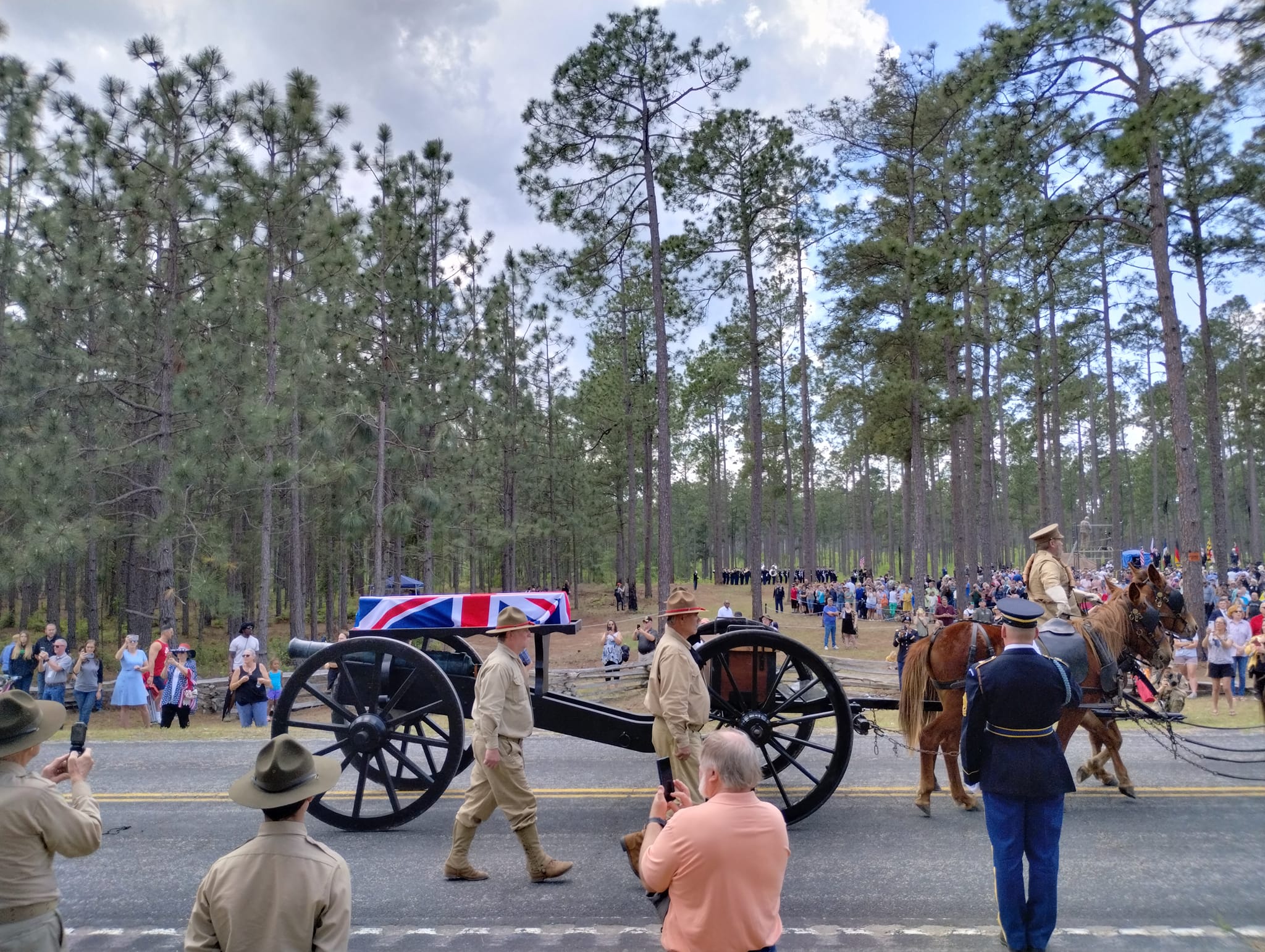
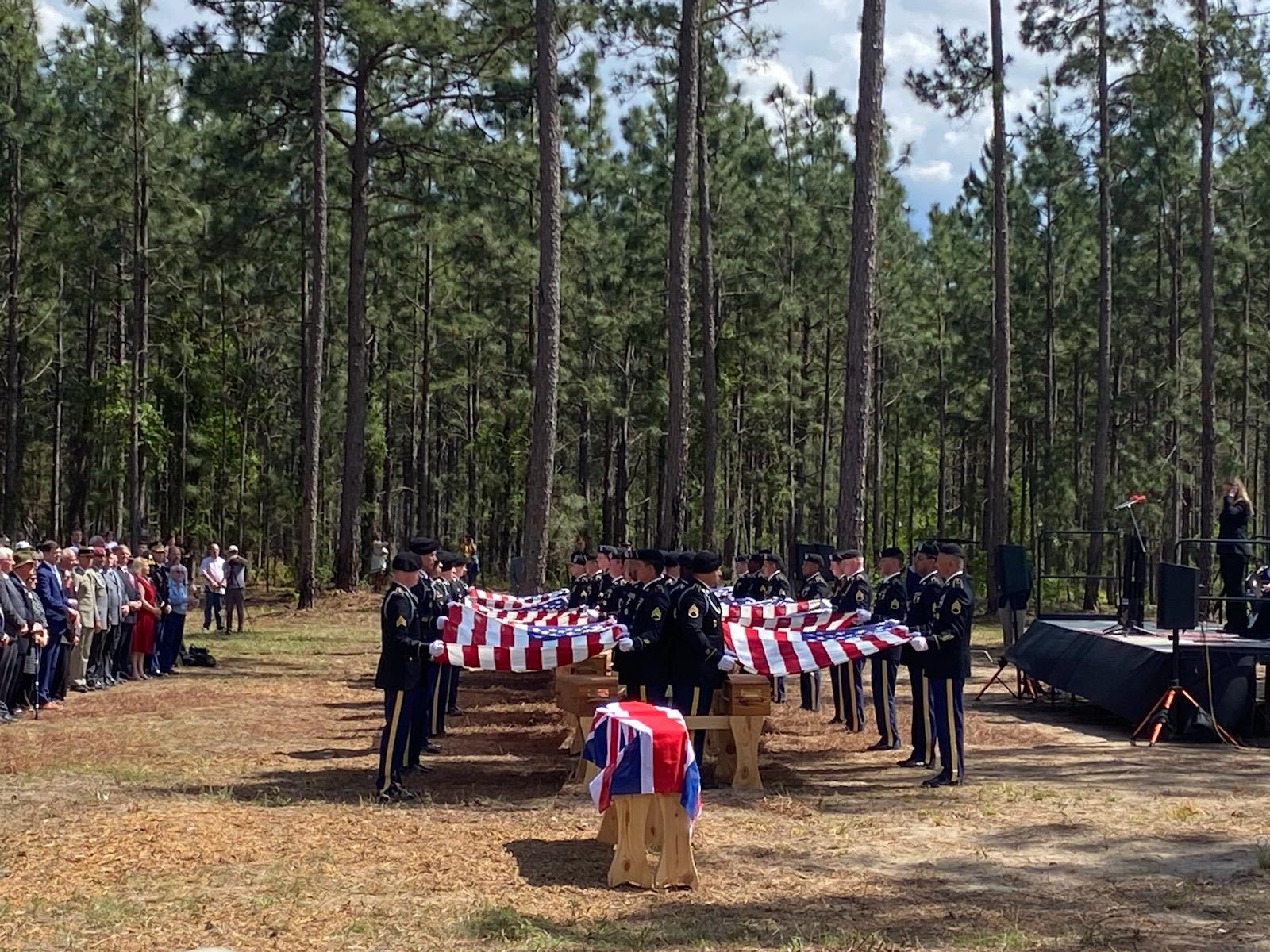
Join us as we discuss the excavation and successful recovery of the remains of 14 veterans of the August 16, 1780, Battle of Camden with James Legg and Steven Smith, Ph.D., the lead archeologists of the Camden Re-Burial Project which began in September 2022. We will discuss the indepth research conducted and the precise archaeological work that was done on the battlefield. Also learn about the reburial ceremony and where the soldiers were finally laid to rest.
This is a great opportunity to learn about a rare discovery on a American Revolutionary War battlefield. The Camden battlefield is a great archaeological site that is revealing multiple stories and helping historians piece together a better understanding of the battle. Grab a drink and join us on our Facebook page for a great evening of archaeology and history!
Emerging Revolutionary War welcomes a guest post from historian Keith J. Muchowski. Keith is a librarian and professor at New York City College of Technology (CUNY) in Brooklyn. He blogs at thestrawfoot.com.
The plaque dedicated King Juan Carlos I in June 1976 today tucked in a corner of the visitor center. Courtesy Author
King Juan Carlos I arrived in Brooklyn’s Fort Greene Park on Saturday June 5, 1976 to great fanfare. The thirty-eight-year-old monarch had ascended to the Spanish throne just seven months previously, two days after the death of Francisco Franco. The new leader was determined to reform his nation after three and a half decades of strongman rule. Juan Carlos I’s ancestor, King Carlos III, had helped the colonists achieved their independence nearly two centuries previously with his supply of money, matériel, and men. Many of those Spaniards made the ultimate sacrifice; well over one hundred of them alone perished in British prison ships moored off Brooklyn Wallabout Bay during the war.[i] Now King Juan Carlos I was in the outer borough to recognize them, dedicate a tablet to his fallen countrymen, and help his American hosts celebrate the bicentennial of their independence. The entombed Spaniards were among the over 11,500 men commemorated by the Prison Ship Martyrs Monument. The king’s visit in the mid-1970s was the latest in a series of public commemorations of the prison ship dead dating back over a century and a half. Some of the institutions that did so much to recognize the martyrs, such as the Society of St. Tammany, are today long gone. Others however very much remain. The Society of Old Brooklynites, a civic organization founded in 1880 when Brooklyn was still an independent municipality, has been holding events since the late nineteenth century.
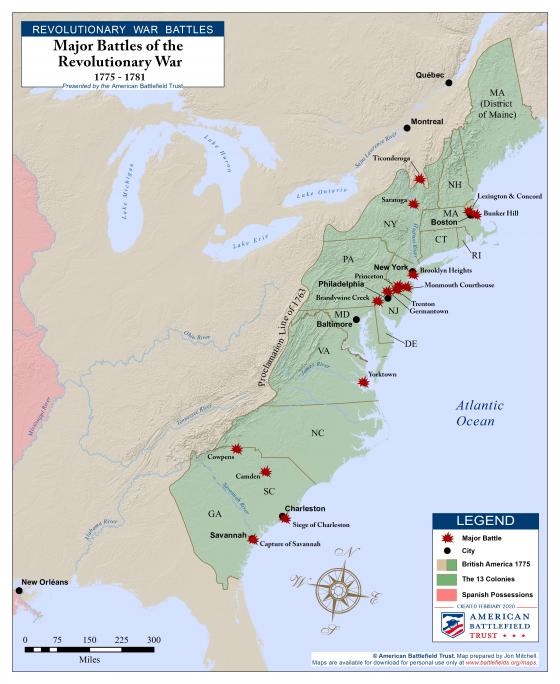
This Sunday, August 6th at 7pm join ERW series editor Dan Welch and authors Rob Orrison and Mark Wilcox as they discuss one of the worst defeats in American history, the Battle of Camden. How did the hero of Saratoga end up the scapegoat in the south? Learn how a coincidence led to a great British victory. And how did the Patriots recover from such a large defeat and find a path to victory a year later? Orrison and Wilcox will also discuss their upcoming book “All That Can be Expected, The Battle of Camden”. Grab a drink and join us to learn more about the Battle of Camden!
All Rev War Revelries can be found LIVE on our Facebook page, or a week later on our You Tube and Spotify channels.
Lexington and/or Concord or both? Same question, Trenton or Princeton or both? Guilford Court House? Yorktown Battlefield? Ask any historian or history enthusiast of the American Revolutionary War period what their favorite battlefield is and you may get one of the places above. Or some other hallowed ground.
This Sunday, at 7 p.m. EDT, join Emerging Revolutionary War on our Facebook page for a panel discussion on our favorite battlefields of the American Revolution. Discussion will also include the successes, pitfalls, or failure of preservation and what one can see or not see at these sites. We look forward to a lively conversation and your comments on what is the battlefield of choice.
Parson Weems’ Fable; by Grant Wood, Amon Carter Museum of American Art, Fort Worth, Texas
George Washington’s lifetime family associations, primarily his Ball family relations, were relied on byWashington’s first biographer Parson Weems. James Bish’s new book “I Can’t Tell A Lie” looks into the Washington and Ball family associations, along with Weems’ family associations. Relying on these close associations, he identifies the sources for Weems’ many anecdotes regarding Washington. Mr Bish will also focus on the many Revolutionary War connections including The Prayer at Valley Forge, Dr James Craik, Col. William Grayson, John Cadwalader, Henry Lee II and Henry Lee lll.
Be sure to grab a drink, join us to learn a new theory about the Cherry Tree, Washington’s Prayer at Valley Forge and other Parson Weems’ anecdotes, in this interesting work about Parson Mason Weems and George Washington.
The Battle of Waxhaws, fought on May 29, 1780, was a lopsided British victory by Lieutenant Colonel Banastre Tarleton’s British cavalry over American Colonel Abraham Buford’s Continental forces in Waxhaws South Carolina. Buford lost 316 of 350 men with the British losing less than 20. Known popularly as “Buford’s Massacre,” Continental leaders used the battle as a propaganda tool against the Crown forces in the south. But, was it really a massacre?
Join us as we welcome historian and author Dr. Jim Piecuch as we discuss his research and theory about the Battle of Waxhaws and its aftermath. Dr. Piecuch has written several books on the Southern Campaign of the American Revolution including his book “Blood Be Upon Your Head: Tarleton and the Myth of Buford’s Massacre.” This Rev War Revelry will be pre-recorded and posted on May 28th at 7pm. Grab a drink and a good seat and enjoy this great presentation on one of the most controversial battles of the American Revolution.
The Mary Ball Washington Monument and grave site, Fredericksburg, VA
Happy Mother’s Day to all the moms out there! In honor of Mother’s Day, Emerging Revolutionary War welcomes will be welcoming historians and staff from the Washington Heritage Museums to tonight’s Rev War Revelry. WHM manages and operates the home and grave site of Mary Ball Washington, the mother of George Washington located in Fredericksburg, VA.
The relationship between George Washington and his mother has been of interest in historians. Their relationship was complicated and much debated by Washington contemporaries and historians today. Mary never remarried when her husband passed (rare for the time period) and mostly lived on her own in Fredericksburg. She also was not afraid to complain about her lack of resources and once applying to the Virginia General Assembly for financial support (to much frustration from George Washington). We will cover many of the myths and interpretations of Mary and her relationship with her son.
So grab a drink and join us as we discuss Mary Ball Washington, her relationship with her son George and what the Washington Heritage Museums are doing today to interpret and preserve her story. Our revelry tonight is previously recorded so we could spend time with the mom’s in our life, but as always we will respond to any comments and questions posted.
Charleston, South Carolina is one of the most beautiful and historic cities in the United States. Numerous sites, battlefields, and buildings from the period of the Revolution still exist.
Join us this Sunday at 7pm as we discuss ERW’s newest release “To The Last Extremity: The Battles for Charleston” by Mark Maloy. In To the Last Extremity: The Battles for Charleston, historian Mark Maloy not only recounts the Revolutionary War history of Charleston, he takes you to the places where the history actually happened. He shows you where the outnumbered patriots beat back the most powerful navy in the world, where soldiers bravely defended the city in 1779 and 1780, and where thousands suffered under occupation. Through it all, brave patriots were willing to defend the city and their liberty “to the last extremity.”
We will talk to Mark about his research, his favorite and most compelling stories and why this book is a “must have” for any history buff. Join us this Sunday, April 16 at 7pm on our Facebook page to join in on the conversation. As always, if you can not join us live you can catch the talk at any time on our You Tube or podcast channel.
In 1774, frontiersman James Harrod led a surveying party from western Pennsylvania to the region south of the Ohio River known as Kentucky. The group laid out a small fort, started their first buildings, and staked out claims to larger farms beyond the town’s walls but left the area with the start of Dunmore’s War between Virginia and the Shawnee Native Americans living north of the Ohio.
Old Fort Harrod Interior
Harrod returned in the spring of 1775 with a group of settlers. Greater numbers made a larger fort and town necessary. Harrod’s return to the area coincided with the outbreak of the American Revolution, which quickly led renewal of intense fighting between Native Americans and whites living on the American frontier. British support for the Native Americans, particularly after 1777, made Kentucky an extraordinarily dangerous place to live. Together with Boonesborough and Logan’s Station, Harrodstown, also known as Harrodsburg, constituted the bulk of white settlement in Kentucky during the war’s early years.
“[T]he poor Kentucky people, who have these twelve months past been confined to three forts, on which the Indians made several fruitless attempts. They [the Indians] have left us almost without horses sufficient to supply the stations, as we are obliged to get all our provisions out of the woods. Our corn the Indians have burned all they could find the past summer, as it was in cribs at different plantations some distance from the garrisons, & no horses to bring it in on. At this time we have not more than two months bread,–near 200 women & children; not able to send them to the inhabitants; many of those families are left desolate, widows with small children destitute of necessary clothing.”
Despite continuing violence on the frontier, the prospect of land and escaping the war in the east led immigration into Kentucky to outpace population outflows while military success under George Rogers Clark ensured that the frontier settlements survived and increased.
Harrodsburg became the capital of Kentucky County when Virginia asserted ownership of the area and is still the seat of Mercer County. To commemorate Kentucky’s frontier history, the state established Old Fort Harrod State Park, which encompasses a recreated fortified town complete with period buildings, furnishings, and crops. Living historians and artisans demonstrate the 18th century skills needed to survive and flourish far from the eastern seaboard. Several exhibits help explain the frontier experience before, during, and after the American Revolution. Additionally, the park incorporates several later buildings as a museum of local history and monuments to George Rogers Clark and Abraham Lincoln’s family.
Old Fort Harrod exterior curtain wall with blockhouse
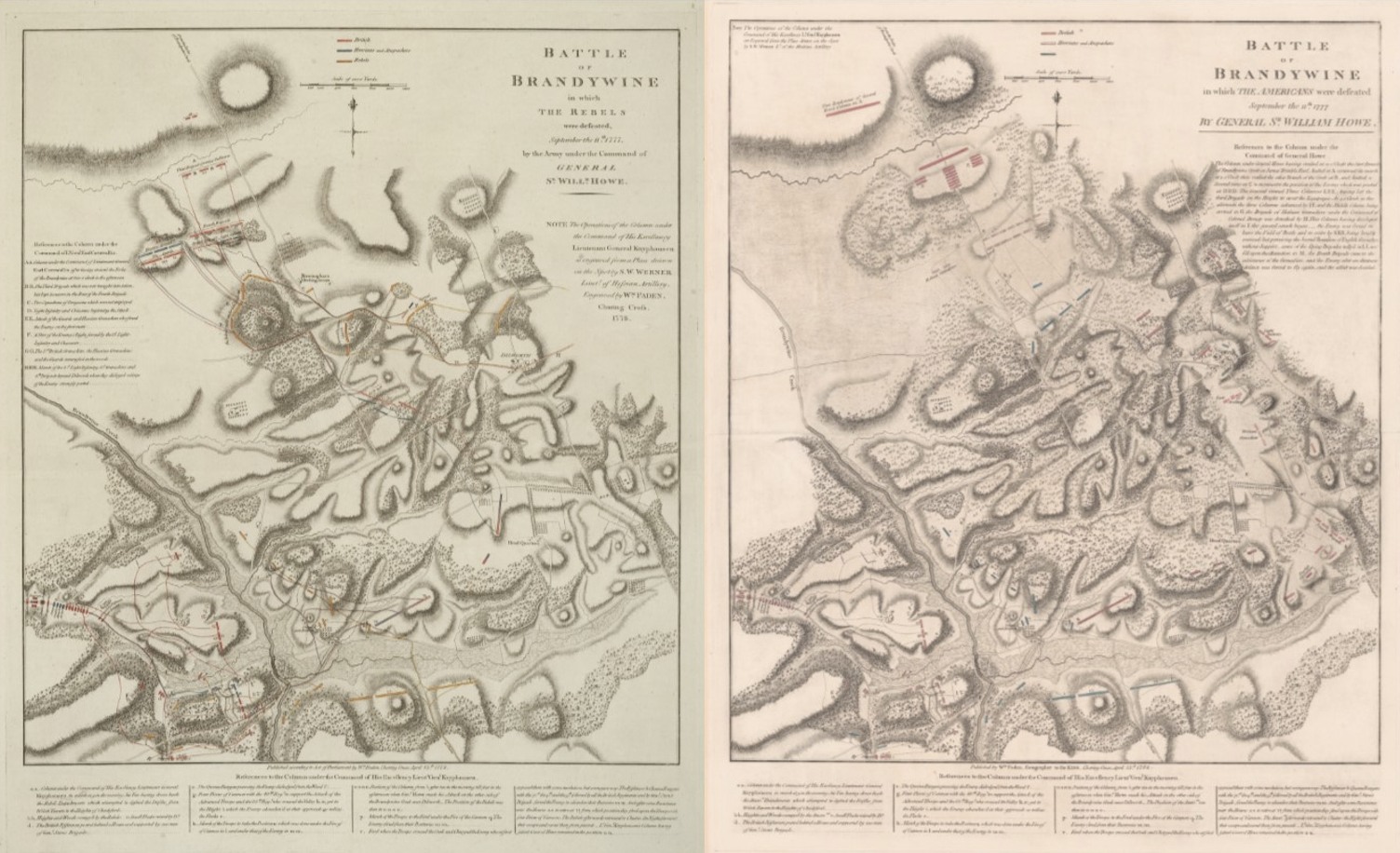
British cartographer William Faden is well known for his maps depicting major battles of the Revolutionary War. Unusually, he produced two maps of the Battle of Brandywine, one in 1778 and the other in 1784. Each map shows troop movements and positions along with other aspects of the overall battlefield landscape, but each conveys significantly different information.
Join us this Sunday night at 7p.m. on our Facebook page as we chat with Andrew Outten, historical programs manager for the American Revolution Institute of the Society of the Cincinnati. Andrew will discuss the Battle of Brandywine, key differences between the two maps, and recent discoveries pertaining to those differences. Should be a great night sharing new research so grab a drink and join us for our January 8th Rev War Revelry!






 Emerging Revolutionary War Era