Baron Ludwig von Closen, aide–de–camp to French General Rochambeau, wrote in July 1781:
“I had a chance to see the American Army, man for man. It is really painful to see those brave men, almost naked with only some trousers and little linen jackets, most of them without stockings, but, would you believe it, very cheerful and healthy in appearance … It is incredible that soldiers composed of men of every age, even children of fifteen, of whites and blacks, unpaid and rather poorly fed, can march so fast and withstand fire so steadfastly’.”
During the American Revolution, African-Americans, both freed and enslaved, fought for the patriots. Some wielded muskets in militia outfits whereas others were part of the Continental army. African-Americans were there from the Siege of Boston through the end of the conflict. In fact, until the Korean War the American Revolution was the last time a United States military force was integrated in time of war.
Although publications have been printed about the 1st Rhode Island or comparative studies between Africans that served for the British or patriots. However, the field needed a dedicated study of African-Americans that served in the Continental army. Enter John U. Rees.
A lifelong Bucks County, Pennsylvanian who has studied and written about the soldiery of the American Revolution for the past three decades. He is published many times over and this Sunday, he will join Emerging Revolutionary War at 7 p.m. on “Rev War Revelry.”
The discussion will include his new book, “They Were Good Soldiers’: African-Americans Serving in the Continental Army, 1775-1783.” Which is now available for purchase online. ‘They Were Good Soldiers’: African Americans Serving in the Continental Army, 1775-1783 begins by discussing the inclusion and treatment of black Americans by the various Crown forces (particularly British and Loyalist commanders, and military units). The narrative then moves into an overview of black soldiers in the Continental Army, before examining their service state by state. Each state chapter looks first at the Continental regiments in that state’s contingent throughout the war, and then adds interesting black soldiers’ pension narratives or portions thereof. The premise is to introduce the reader to the men’s wartime duties and experiences. The book’s concluding chapters examine veterans’ post-war fortunes in a changing society and the effect of increasing racial bias in the late eighteenth and early nineteenth centuries.
Besides the book dialogue, a general conversation about the roles of African-Americans in the American Revolutionary period. So, find your favorite brew, bring your questions and insights, and join John Rees and ERW on Sunday evening on our Facebook page.
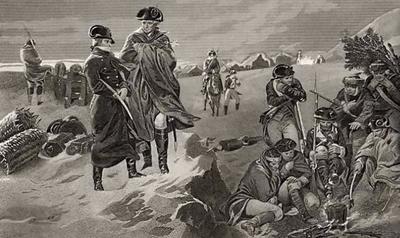
In Morristown, New Jersey during one of the winters that the Continental army bedded down in that geographically critical hamlet, General George Washington ordered the inoculation of his forces for smallpox. This was the first instituted innoculation of American forces and the requirement proved effective. Smallpox would claim more lives–both British and American–during the American Revolution than any other single cause or disease.
With the world today facing a pandemic, the historians at Emerging Revolutionary War invite you to take a step back into time, to the 18th century, as they discuss diseases during the war, including at such winter encampments as Morristown and Valley Forge, in the southern colonies and the campaigning that traversed the Carolinas and Georgia, along with an outbreak of yellow fever that changed the course of American political history and played a major role in the permanent placement of the United States capital.
Join us at our usual time, 7 p.m. EST, on our Facebook page, as the next installment of “Rev War Revelry” discusses diseases and investigates illnesses of the Colonial America during the American Revolutionary era. Since alcohol was considered medicinal, there is no excuse to not bring your favorite brew as you watch, listen, chime in, and comment.
Emerging Revolutionary War welcomes guest historian Dwight Hughes
The recent disastrous conflagration aboard the USS Bonhomme Richard (LHD-6) in San Diego harbor brings to mind the original warship by that name and its fiery fate, a tale excellently told in a previous post by Eric Sterner (“I Have not Yet Begun to Fight!” or Words to that Effect (September 23, 1779)). “Bonhomme Richard” means “good man Richard” in French. So, who is Richard? What was good about him? Why is his name on a man-of-war?
The United States Navy likes to carry forward the labels of famous vessels. This is one of the oldest and most revered monikers in navy history, originally assigned in 1779 by Captain John Paul Jones to a rather decrepit French merchantman armed with a motley collection of guns. The French government donated the former Duc De Duras to Jones to sail against their mutual enemies, the British.
John Paul Jones
Jones famously engaged the powerful frigate HMS Serapis on September 23, 1779 in English waters off Flamborough Head, Yorkshire. The ships grappled together and blasted away at point blank range. Both were battered and ablaze in sinking condition with many casualties when the British captain surrendered. With Bonhomme Richard going down fast, the Americans took over Serapis and managed to save her.
John Paul Jones became the “Father of the U. S. Navy” (or one of them). Bonhomme Richard entered legend as the warship that won and sank. She and her successors also represent those rare U. S. Navy vessels whose names are rendered in a foreign language.
This Sunday, at 7 p.m. EST, Emerging Revolutionary War invites you to a “Rev War Revelry” dedicated to General Peter Muhlenberg. This Continental Army officer is the subject of a new biography, by historian Michael Cecere, who, along with Gabe Neville, will be joining us for the evening.
Gabe Neville, the author of the blog, The 8th Virginia Regiment in the Revolutionary War, returns to “Rev War Revelry” for a second time. General Muhlenberg, at the time a colonel, was the first commanding officer of the 8th Virginia Regiment. Click here to access Gabe’s blog.
Michael Cecere, the author of the biography, is an active American Revolutionary reenactor, author, and high-school history teacher in Virginia. He is making his debut on “Rev War Revelry.” For more information on this and his other works, click here.
We hope you can join us, this Sunday, as we discuss the life and military career of Peter Muhlenberg, the 8th Virginia Regiment, and the broader military history of the American Revolution.
This Sunday, at 7 p.m. join Emerging Revolutionary War on our Facebook page for a happy hour historian discussion on the play. 1776. Joining ERW historians, will be historian Liz Williams from Historic Alexandria.
And making her debut on “Rev War Revelry” will be Rebecca Grawl from “DC by Foot” and a “Tour of Her Own.” Welcome Rebecca!
For those unfamiliar, the play, “1776” premiered on Broadway in 1969 but has a longer history than just that debut. One can easily guess the synopsis of the production; centering around the pivotal year in American history that same year. A revival of the play is on tap for next spring.
A few weeks ago we had a discussion on “Hamilton” so we hope you are ready for another discussion about American Revolutionary history on the stage and screen. Remember to grab your favorite brew and a place of comfort and sit back and enjoy your Sunday night with Emerging Revolutionary War as the historians harangue, mildly, the history and play “1776.”
This Sunday, at 7 p.m. join Emerging Revolutionary War on our Facebook page as we interview William “Billy” Griffith, author of the latest volume in the Emerging Revolutionary War Series.
His book, A Handsome Flogging, The Battle of Monmouth, June 28, 1778 was just released by Savas Beatie, LLC this month. The book is so new that Amazon still has it listed for pre-sale, but don’t worry, you can purchase the book directly from Savas Beatie by clicking here.
Billy Griffith is a full-time contributor to ERW and is also the author of The Battle of Lake George: England’s First Triumph in the French and Indian War, which was released in 2016 by HistoryPress. A native of Branchburg, New Jersey, he has a family connection to the the Monmouth area; he graduated with a degree in history from Shepherd University and holds a graduate degree in military history from Norwich University. He currently works as a full-time Gettysburg Licensed Battlefield Guide. We would be remiss if we did not include his other passion, besides American military history, the New York Yankees. Feel free to join the Facebook Live to disparage his love of the Evil Empire!
ERW looks forward to seeing you, hearing your questions, comments, and what personalized message you want inscribed on your copy of Billy’s latest publication. Although this happy hour historian discussion centers on an author interview, it is still a “happy hour” so bring your favorite brew; we can guarantee the two historians on the program will be imbibing theirs!
Unless you have been living under Plymouth Rock, the play Hamilton has come across your radar screen in one form or another. Late last month Disney+ announced they would begin hosting the play on their streaming channel. Over the Independence Day weekend many historic sites had programs, watch parties, etc about the production.
So, why is Emerging Revolutionary War doing something similar this Sunday, at 7p.m. on our Facebook page? We wanted to do our own take on it, by presenting a mix of historians and fans of the play for an hour long discussion. For those that have been our faithful followers and thank you for your commitment, you will know how excited one of our historians is for this particular Zoom history.
If you guessed, Mark Maloy, you are correct! In fact, he is the one that made sure our title followed the correct vernacular for a Hamilton-esque post.
Joining Mark on Sunday will be the triumvirate of great historians, two that have been a part of past “Rev War Revelry’s” and one making her inaugural appearance.
Felicia Abrams is the Manager for Onsite Education at the Jamestown-Yorktown Foundation and a member of the Virginia Association of Museums. She will be joined by another great historian and co-worker, Kate Gruber, the Curator of Special Exhibits for the Jamestown-Yorktown Foundation.
Liz Williams, Director of Gadsby’s Tavern in Historic Alexandria will also be returning to the revelry this Sunday evening.
ERW invites you to attend our historian happy hour on Hamilton this Sunday, on our Facebook page. If you have not seen it, now is the time to catch up do you can have your questions and comments ready for Sunday evening. Don’t forget your favorite brew too!
As this posting goes live today, July 2, there is a link to the American Revolutionary War era. This was the day that John Adams, future president of the United States, believed would be the date Americans would celebrate as their independence day.
Yet, the day reserved for that celebration would fall two days later, on July 4, the date that John Hancock affixed his signature as president of the Continental Congress.
However, join Emerging Revolutionary War historians and three guest historians this Sunday, July 5, at 7 pm EST, on our Facebook page, as another date to talk “All Things Independence Day” including John Adams and Independence Hall.
Joining ERW to discuss John Adams and Thomas Jefferson, which will be the volume in the Emerging Revolutionary War Series, is Emerging Civil War co-founder and Stevenson Ridge historian-in-residence, Dr. Chris Mackowski.
Savannah Rose, a National Park Service ranger at Independence National Historical Park and the new layout coordinator for the Emerging Revolutionary War Series. You can see her work with the upcoming A Handsome Flogging, on the engagement at Monmouth Course House, which just shipped from the printer this week.
Rounding out the triumvirate of guest historians will be Dan Welch, who you may remember from his dramatic reading of “A Midnight Ride” the poem about Paul Revere’s Ride. Dan is also a seasonal historian with the National Park Service at Gettysburg National Military Park.
As you round out your holiday weekend, we hope that you include “Rev War Revelry” as one of the events you attend to commemorate Independence Day weekend. We look forward to toasting you as we enjoy our favorite brews and discuss “All Things Independence.”
This Sunday, at 7 pm, EST on our Facebook page, join Emerging Revolutionary War historians as they discuss “Epic Moments of the American Revolution.”
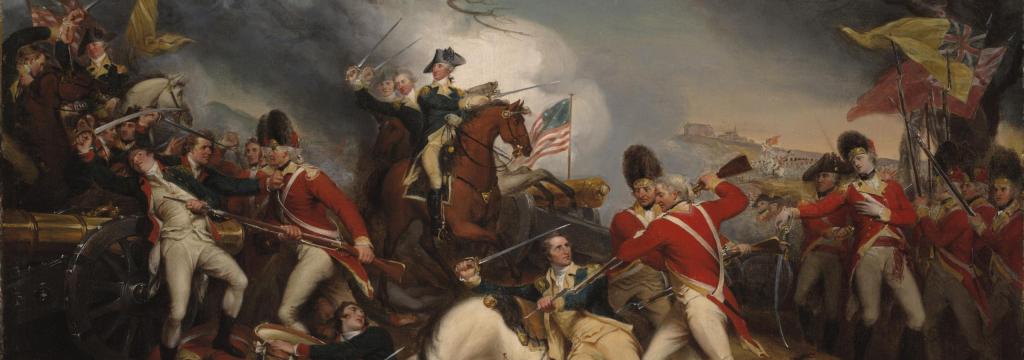
What is an epic moment? This umbrella term will be discussed by using examples from the eight-year conflict that spawned American independence. As ERW historian Mark Maloy relates, one such moment came in early 1777 at Princeton, New Jersey, as explained by a participant in that engagement:
“I saw [Washington] brave all the dangers of the field and his important life hanging as if it were by a single hair with a thousand deaths flying around him.” – Pennsylvania officer at Princeton”
Moments of bravery, of personal sacrifice, be it in a battle, skirmish, raid, siege, political moment or on a mission of importance, the American Revolution has a multitude of them. During the hour-ish long historian happy hour, the panel will describe the ones that they deem as important or noteworthy. Bring your own as well, as we encourage comments, opinions, and dialogue via the comments section of our Facebook live.
Looking forward to sharing a brew and an epic moment from the War of Independence with you, this Sunday, on Emerging Revolutionary War‘s “Rev War Revelry.”
There are important stories often hidden in the threads of our American history. It won’t be a surprise to many that these stories desperately need to come to light. But sometimes research is scarce, with limited or hard-to-find resources to fully tell these stories to their fullest. One such example are the stories of the enslaved and free African-American people who helped build the nation, starting back even before the colonies fought for independence. America’s fight for freedom from Britain is oxymoronic considering an entire population of blacks were still kept in chains after the war. But their contributions to that fight should not go unnoticed.
The history of the construction of the British defense fortifications, including the Star Fort, at Ninety Six, South Carolina, has many layers of these diverse stories that make up the fabric of the site’s history. Lt. Colonel Nisbet Balfour set up an outpost at Ninety Six after the fall of Charleston in early 1780. In terms of fortifications – specifically the stockades and protections around the town and the jail – during this initial occupation, Balfour wrote to Cornwallis on June 24, 1780, “As to this post, it is so situated, that three small redoubts, well Abbattis [sic], I think, can easily defend it…”
Balfour also encouraged using slave labor, stating that “we have carpenters enough, and ammunition.” Balfour’s plan to construct fortifications was similar to a more extensive defense system suggested by Patrick Ferguson in his “Plan for Securing the Province of So. Carolina, &c.” dated May 16, 1780. Ferguson also recommended using slaves to construct the fortifications.
In fact, in that same June 24 letter to Cornwallis, Balfour writes that most of the labor that was used to construct the Ninety Six fortifications was from roughly 200 enslaved blacks that the British took from area plantations. Who were these 200 men? Were they promised freedom in exchange for their labor? We may never know. While research is underway to uncover the stories of these 200 individuals, very little primary resources remain. But we can still acknowledge that the British defense of Ninety Six relied heavily on the forced labor of these black men.
Work continued into the fall and winter of 1780 on the defense structures at Ninety Six, this time under Lt. Colonel John Harris Curger, including several field fortifications called abatis: defensive obstacles formed by felled trees with sharpened branches facing the enemy. The trunks are put deep into the ground, usually 4-5 feet, and is typically hard manual labor in the hard red clay of South Carolina. In a letter on December 29, 1780, Lt. Colonel Isaac Allen wrote to Cornwallis’s aide, Lt. Henry Haldane, of the hard work of the men constructing the abatis. And yes, those men were enslaved men. “I… have orderd [sic] the Abattiss [sic] cut, but Kings work like Church work goes on slow. The Poor naked Blacks can do but little this cold weather.”
The Star Fort at Ninety Six, South Carolina. Photo: NPS/Ninety Six NHS
Next up in the defense plan was the Star Fort itself, a large earthen redoubt whose remains are still the best-preserved earthen fort from the American Revolution. Once again, those approximately 200 enslaved men were used in its construction. Upon the completion of the fort, additional work included a network of ditches and trenches both for communication and transport of supplies.
By spring of 1781, the defenses were ready. Lt Colonel Cruger’s military force was nearly 600 but this was supplemented by a large number of Loyalist civilians in the town as well as several hundred enslaved African Americans from the surrounding country. Most likely, though it’s not known for sure, these were the roughly 200 men who helped build those very physical defenses.
But the hidden story of the enslaved at Ninety Six does not stop there, nor is their story solely on the shoulders of the British. During the Siege of Ninety Six in May and June of 1781, there are several instances that beg for more research. The first is from the morning of May 23, when Patriot forces had been digging trenches towards the Star Fort throughout the night. An attack by Loyalist militia from the fort pushed the Patriots back and they managed to capture not only the tools the Patriots were using, but “several Negro laborers abandoned by the Americans.” (Greene, 128)
It should come as no surprise that the Patriots were also using slave labor. James Mayson, a wealthy Patriot supporter living just a few miles from Ninety Six, described later how foraging parties were dispatched to the countryside to get food and supplies for Greene’s army, which included slaves “not earlier recruited by the British.”
As the Siege dragged on into June, there is one more hidden story that deserves additional research to discover the identities of the enslaved men who risked their lives for the British military garrisoned at the Star Fort. As the heat of the early Carolina summer sapped water supplies, Lt Colonel Cruger needed to get water from a nearby stream, Spring Branch, to keep their supply up. But Patriot marksmen were at the ready to prevent this from happening. Turning to the enslaved in their midst, a handful of them were ordered to strip out of their clothing and go at night to the stream to file buckets. They apparently succeeded. A British lieutenant by the name of Hatton would later recall that their naked bodies were indistinguishable “in the night from the fallen trees, with which the place abounded.”
These are just snippets of hidden stories at just one site of the American Revolution. And that’s only during one specific time in Ninety Six’s history; additional stories exist for both before and after the war, during the French and Indian War, and during the Regulator movement, as well as stories of enslaved Natives from the time of early settlement in the region.
How many stories are yet untold? Who were these men and women who currently remain nameless? For these stories aren’t just tidbits of historical facts – they represent real people who experienced real emotions and a real existence at the time when our nation was first figuring out what it wanted to be. The stories of black Loyalists and Patriots deserve to be told and in doing so, will add a new layer of complexity and understanding to the story of America during the Revolutionary War and beyond.
Bibliography
Government Documents Greene, Jerome A. Historic Resource Study and Historic Structure Report, Ninety Six: A Historical Narrative. National Park Service: Denver Service Branch of Historic Preservation, 1978.
Manuscripts & Papers Ann Arbor. University of Michigan. William L. Clements Library. Patrick Ferguson, “Plan for Securing the Province of So, Carolina, &c,” May 16, 1780.
Ann Arbor. University of Michigan. William L. Clements Library. Nathanael Greene Papers. James Mayson to Greene, May 29, 1781.
Washington. Manuscript Division of the Library of Congress. British Public Record Office. Cornwallis Papers. Balfour to Comwallis, June 24, 1780. BPRO 30/11/2 (1)
Washington. Manuscript Division of the Library of Congress. British Public Record Office. Amherst Papers. Thomas Anderson. “Journal of Thomas Anderson’s” 1st Delaware regiment [May 6, 1780-April 7, 1782].”
Books and Pamphlets Haiman, Miecislaus. Kosciuszko in the American Revolution. New York: Polish Institute of Arts and Sciences in America, 1943. Reprint; Boston: Gregg Press, 1972.
Mackenzie, Roderick. Strictures on Lt. Col. Tarleton’s “History of the Campaigns of 1780 and 1781, in the Southern Provinces of North America.” London: Printed for the Author, 1787.
Stedman, Charles. The History of the Origin, Progress, and Termination of the American War, Volume 2. London: Printed for the Author, 1794.
Ward, Christopher. The War of the Revolution, Volume 2. New York: The Macmillan Company, 1952.
Weigley, Russell F. The Partisan War: The South Carolina Campaign of 1780-1782. Columbia: University of South Carolina Press, 1970.






 Emerging Revolutionary War Era