An Irish Catholic Hero of the Revolution

One of the great unsung heroes of the American Revolution was an Irish Catholic colonel in the Continental Army who called Alexandria, Virginia home.  His name was John Fitzgerald and he would be by George Washington’s side during some of the most dramatic moments of the Revolutionary War.  Unfortunately, today in his adopted hometown, people are working to erase his gallant memory.

The_American_Soldier_-_U.S._Center_of_Military_History
George Washington conferring with an aide-de-camp. (U.S. Army Center of Military History)

In 1769 John Fitzgerald sailed from the emerald green fields of County Wicklow, Ireland to the southern British colonial town of Alexandria, Virginia.  Fitzgerald left a country that was firmly under the domination of British and Protestant rule.  Despite making up a majority of the residents of the country, Irish Catholics were treated as second class subjects in Ireland.  What Fitzgerald would find in colonial Virginia would not have been that much different as many British colonists had anti-Catholic sentiments.  Fitzgerald would find it illegal for him to openly worship in Virginia.  He would be forced to celebrate Catholic mass in his private home.

Despite the prejudices he faced, Fitzgerald became a merchant in Alexandria and would soon become good friends with the prominent local citizen, George Washington.  As tensions began to build between Great Britain and the American colonies, Fitzgerald would become an early proponent of the patriot cause.  As early as 1774, Fitzgerald had joined the local patriot militia, the Fairfax Independent Company, as an officer.

In early 1776, Fitzgerald became a captain in the 3rd Virginia Regiment of the Continental Line, and was promoted to major that fall.  In November, Fitzgerald was promoted to Lieutenant Colonel and joined Washington’s headquarters as an aide-de-camp.  Fitzgerald joined his staff at one of the darkest moments of the entire war.  Fitzgerald joined as what was left of Washington’s army was retreating across the state of New Jersey.  Washington’s army was dissolving before his very eyes. From 24,000 men that August, by December Washington only counted about 3,000 men.  In this trying time, Fitzgerald would be by Washington’s side as the revolution seemed near an end.  He would then join Washington and his men as they crossed the Delaware River on Christmas night and took part in the pivotal battles at Trenton and Princeton. (Read about these important battles in my book “Victory or Death: The Battles of Trenton and Princeton”)

Continue reading “An Irish Catholic Hero of the Revolution”

George Rogers Clark Recaptures Fort Sackville, Part II

Vincenes (Army Center of Military History)
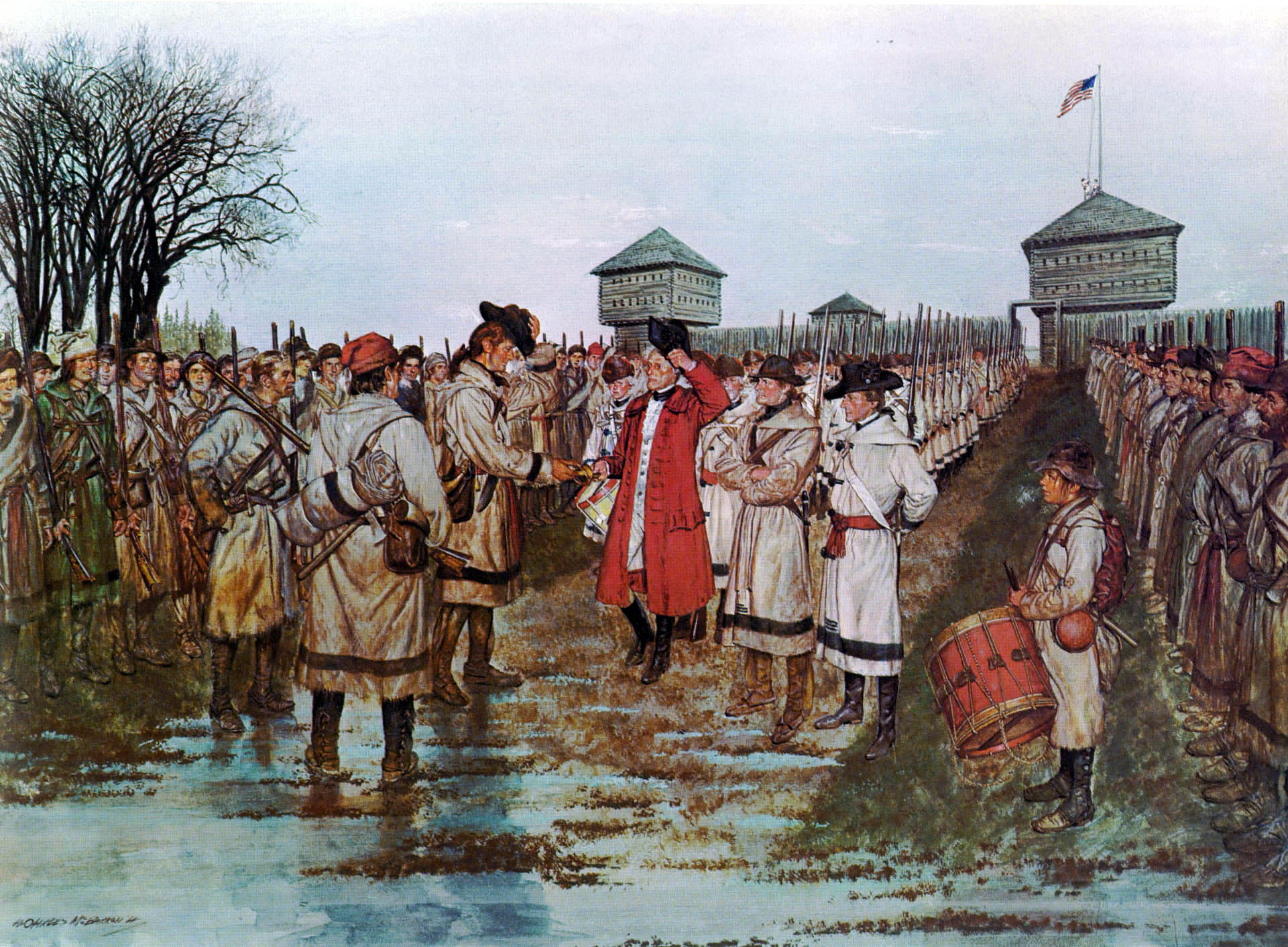
Hamilton Surrenders Fort Sackville (U.S. Army Center for Military History)

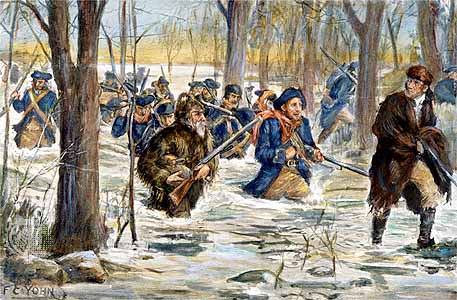
By February 23, 1779–two hundred and forty years ago—Virginia Lieutenant Colonel George Rogers Clark had marched his little army from the Mississippi across the flooded plains of what would become southern Illinois to the French town of Vincennes on the Wabash River, in modern Indiana.  His men were tired, hungry, and waterlogged, but they had made it safely across the Wabash and delivered themselves to the same shore as the town and Fort Sackville, then defended by the much-hated British Lieutenant Governor Henry Hamilton.  His river scouts had managed to find a small, dry hillock covered by a grove of trees and within sight of the town and Clark’s force, about 170 strong, lay in the grove drying their clothes by the sun, occasionally taking a wandering citizen from the town prisoner.   Clark later reported:

Continue reading “George Rogers Clark Recaptures Fort Sackville, Part II”

George Rogers Clark Recaptures Fort Sackville, Part I

March to Vincennes (Wikimedia Commons)
March to Vincennes by Frederick Coffay Yohn, 1875-1933 (Wikimedia Commons–Most of Clark’s men would not have dressed in the blue uniforms visible here, but would have dressed in fur and buckskin like the individual in the middle of the picture.)

Last fall, I posted several pieces following British Lieutenant Governor Henry Hamilton’s campaign in the Illinois territory as seen through the eyes of Captain Norman MacLeod.  MacLeod led an advance party stuck with the logistical and diplomatic mission of moving 33,000 pounds of supplies and trade goods south from Detroit in order to mobilize the local Indian tribes as British allies.  Hamilton’s campaign culminated with the successful capture of Fort Sackville (Vincennes, IN) on December 17, 1778.  Since it’s the 240th anniversary of the campaign, I thought I’d continue the series by shifting to the American perspective, particularly that of Virginia Lieutenant Colonel George Rogers Clark and one of his Captains, Joseph Bowman.  This is not a campaign history by any stretch.  It’s meant more to be considered in combination with portions of MacLeod’s diary that appeared last fall.  Taken together, they might give rise to a few different ideas about the Americans and British fighting the Revolution on the frontier.

Although he planned to recapture the entire Illinois territory, Hamilton decided to winter at Fort Sackville and resume his campaign in the spring.  He dismissed the bulk of his force, settling in at the fort with just under 100 men.  Normally, this would have been a prudent choice.  Hamilton did not expect Clark to retake the field until spring brought about the customary campaign season and dispersing his army eased the logistical burden of maintaining so many men idle in the wilderness.  Hamilton had under-estimated the meddle of his adversary.

Continue reading “George Rogers Clark Recaptures Fort Sackville, Part I”

Alexander Hamilton’s “First” Duel

glc07167engweb_
Lt. Col. Alexander Hamilton at Yorktown, VA by Alonzo Chapel

Alexander Hamilton has reappeared as a modern pop star with the wide success of the Broadway musical “Hamilton.” Due to this success, most people today know that Alexander Hamilton met his end in a duel with Aaron Burr on the banks of the Hudson River. But this was not Hamilton’s first involvement in a duel, nearly 26 years earlier Hamilton found himself embroiled in a feud with one of highest ranking Continental officers, Maj. Gen. Charles Lee.

It all started on June 28, 1778 at the Battle of Monmouth. The beginning of the battle had gone against the Americans and Lee, who was in command of the vanguard was ordering a retreat in front of the British. Washington, seeing the retreat rode ahead and encountered Lee. What was said between the men has been debated since that day, but what is not indisputable is that Lee took offense. Continue reading “Alexander Hamilton’s “First” Duel”

Review: American Dialogue by Joseph Ellis

erw-book-reviews-11

American Dialogue-cover“The study of history is an ongoing conversation between past and present from which we all have much to learn,” write Joseph Ellis in his new book, American Dialogue: The Founders and Us. The book serves as Ellis’s attempt to sit with several of the Founders and carry on that conversation, with “us,” the readers, as spectators. As John Adams so often did with his own books, we can engage in the conversation by writing notes in the margins and underlining passages, and we can even read the original works of the Founders ourselves. Knowing they were writing as much to history as to each other, they left behind a rich documentary legacy.

Ellis’s book plumbs these writings to explore four salient points that trouble the American present. “By definition, all efforts to harvest the accumulated wisdom of the past must begin from a location in the present…” he admits. The present he writes from and that we read from, he says, is “inescapably shaped by our location in a divided America that is currently incapable of sustained argument and unsure of its destiny.” Continue reading “Review: American Dialogue by Joseph Ellis”

Phillis Wheatley: American Poet

Phyllis Wheatley Book Frontspiece
Title Page from Phillis Wheatley’s Book of Poetry

The American Revolution was loaded with contradictions, perhaps none more glaring than the notion of fighting for individual liberty while slavery was so deeply embedded in the rebelling colonies.  To truly understand the American Revolution, it’s necessary to wrestle with that reality.  The stories of some individuals help shed light on the experience of enslaved Americans during the war.

Phillis Wheatley was born in West Africa, likely in 1753, and then imported into the British colonies in 1761.  John Wheatley of Boston purchased her to assist his wife Susanna and daughter Mary as a house servant.  Like many slaves, she was given the last name of her owners; her first may have come from the name of the ship that brought her across the Atlantic.  Susanna and Mary noticed something in young Phillis and taught her to read and write, introducing her to the Bible and religion.  She published her first poem in 1767 and the 1770 poem “An Elegiac Poem, on the Death of the Celebrated Divine George Whitefield,” gave her some degree of fame.

Continue reading “Phillis Wheatley: American Poet”

Revolution on the Ohio Frontier: Fort Laurens

img_2465
The Museum at Fort Laurens, Ohio

For much of the American Revolution, the British waged war on their rebelling colonists in the Ohio River Valley via proxy, relying on western Indian nations (Shawnee, Wyandot, Mingo, Chippewa, Ottawa, and others) to attack isolated American settlements and villages across the Ohio River.  The Continental Congress, already unable to meet the needs of its own army along the coasts, could offer little in the way of assistance. So, frontier defense largely fell upon the local militia.  They adopted a two-pronged strategy: 1) build forts and blockhouses along the frontier, giving settlers a place of safe haven when Indian raiding parties were about, and 2) preemptive raids against Native American villages in an attempt to disrupt their preparations for raids against the settlers.

In 1777, however, Congress realized that more aggressive measures were required: the war would have to be carried against the heart of British power at Detroit, from where the British coordinated, supplied, and rewarded Native American raids. With that in mind, Congress and Continental authorities at Pittsburgh began planning an offensive to capture the British post between Lakes Huron and Erie.  First, they would need to secure the continued neutrality of the Delaware Indian nation in the Muskingum River Valley, which today is in Eastern Ohio. Second, they would need to build a substantial network of forts capable of sustaining an overland offensive. Building a new fort in Delaware territory would serve both goals.

Continue reading “Revolution on the Ohio Frontier: Fort Laurens”

“You shall be carried to the gaol of Fredericktown” (Part 1)

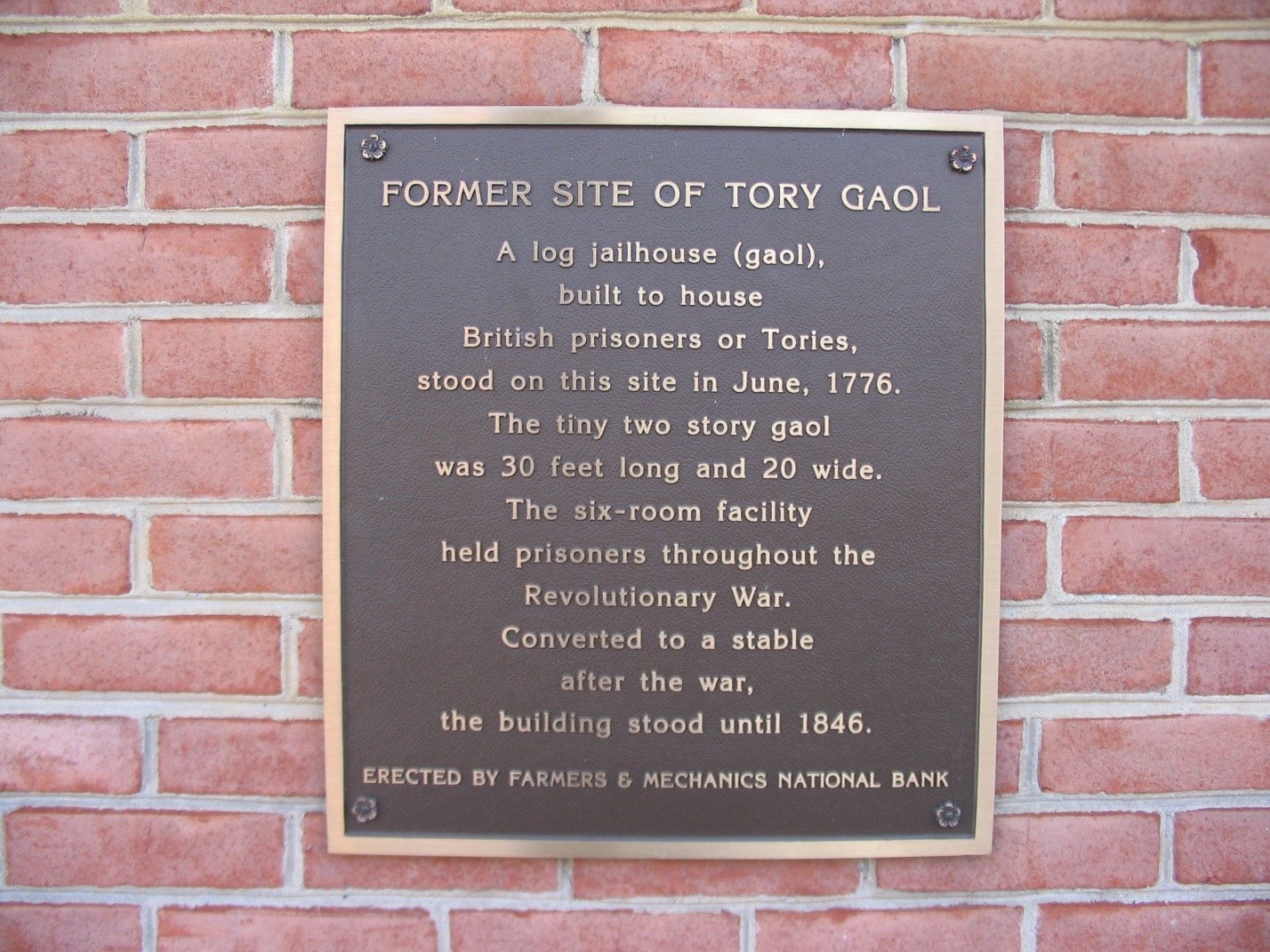
In the western Maryland city of Frederick there is an innocuous looking brick building that stands in the historic downtown. The non-descript 20th century structure, near the corner of Market and 2nd Streets, is easily overlooked in a city full of stately Federal and Victorian-era homes. A closer look, however, gives a few tantalizing details of Frederick’s Revolutionary War past. A bronze plaque bears the following inscription:
tory gaol

(Photo by Craig Swaim/HMDB.org)

Former Site of Tory Gaol

 A log jailhouse (gaol),
built to house
British prisoners or Tories,
stood on this site in June, 1776.
The tiny two story gaol
was 30 feet long and 20 wide.
The six-room facility
held prisoners throughout the
Revolutionary War.
Converted to a stable
after the war,
the building stood until 1846.

At the start of the American Revolution Frederick was a prosperous market town, ideally situated in the fertile Monocacy River Valley. Roads radiated out in nearly every direction, connecting the growing town to major seaports like Baltimore and Georgetown, Maryland as well as frontier outposts like Cumberland, Maryland and Winchester, Virginia. Nearby farmland attracted settlers throughout the mid-eighteenth century, particularly German immigrants travelling south from neighboring Pennsylvania.[i] By 1745 a town had been laid out which served as the county seat for the entirety of western Maryland.

When war began in 1775 the people of Frederick were among the first in Maryland to join the patriot cause. Two companies of riflemen were raised in Frederick County in the summer of 1775, and departed Frederick for Boston on July 18th. Marching along with companies of Virginia they reached their destination in only 22 days, becoming the first southern troops to join the New Englanders besieging Boston.[ii]

Although support for war with Britain reached a fever pitch in the summer of 1775, some Fredericktonians still held out for reconciliation or even sought open collaboration with the British. In a scene that would be repeated in countless communities throughout the colonies, these Loyalists would suffer for their political convictions. In November 1775 a Pennsylvania-born Loyalist named John Connolly was stopped as he travelled through Frederick County with some Scottish associates. He was detained near Elizabethtown (modern Hagerstown) while the local Committee of Safety rifled through his belongings, and the search soon turned up incriminating evidence. Connolly was on his way through Maryland with hidden papers, including a commission from Lord Dunmore – then the Royal Governor of Virginia – to raise a regiment of natives and frontiersmen to harass the western settlements.[iii]  George Mason wrote to General Washington, describing the plot:

” Majr Connelly was taken above Frederick Town in Maryland, in his way to the Indian Country and with him a Doctr Smith from Charles County & one Cameron, they are all now fast by the heels in the Goal of Frederick Town. Connelly we are told, had with him a Commission from Genl Gage to raise a number of Indians, & with them to penetrate, thro the Country towards Alexandria, in the spring, where he would be met by Lord Dunmore. Commissions for the other two were to be furnished hereafter.”[iv]

The hapless Loyalist and his would-be conspirators were detained in Frederick before eventually being sent on to Philadelphia.

Concern over Loyalist plots like Connolly’s was such that in December 1775 the Maryland Convention authorized £200 for the construction of a jail specifically for confining Loyalists. Located on 2nd Street, the building consisted of “a strong log jail…thirty feet long, twenty broad, to be lined with two-inch planks, two stories, with split logs and plank floors, the upper story divided into three rooms, with a stove in each.”[v] Construction was completed in May of the following year, and almost immediately prisoners were brought there for incarceration. The first group of “tories” imprisoned in Frederick were from North Carolina, but more quickly followed.[vi] By the summer of 1776 there were 27 Loyalist and British prisoners being held in Frederick’s “Tory Gaol” – so many that it was considered “a dreadful place…to be confined in, and so crowded at present that we fear it may be dangerous to their health.”[vii] Prisoners were transferred to the county jail opposite the courthouse in an attempt to relieve the overcrowding.
runaway ad

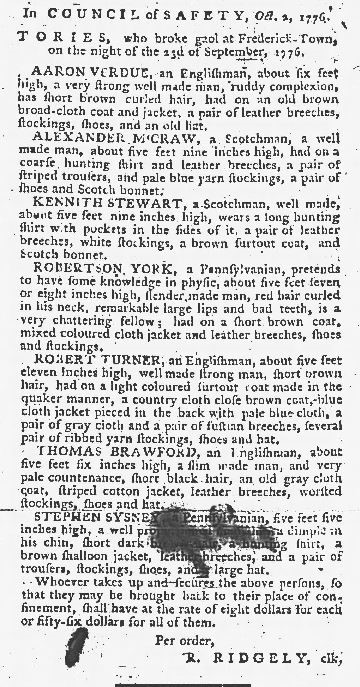
Advertisement for Loyalists who escaped the jail in Frederick on September 23, 1776 (Maryland Gazette. October 3, 1776)

            As the war dragged on, Frederick continued to house an ever growing number of prisoners. In large part this was due to the town’s location far enough from the main theaters of the war to be relatively secure, but also centrally located between north and south. A group of more than 100 prisoners captured at Saratoga arrived in Frederick in December 1777 and were temporarily confined in the county jail while permanent quarters were being erected at forty miles to the west at Fort Frederick. On Christmas day these disgruntled British and German POWs set the jailhouse on fire and attempted to escape in the ensuing chaos but were gradually beaten back by guards under the command of Lt. William Beatty.[viii] The failed jail breakers were rounded up and sent to the Tory Gaol, where they stayed under the threat of execution if they attempted another escape.

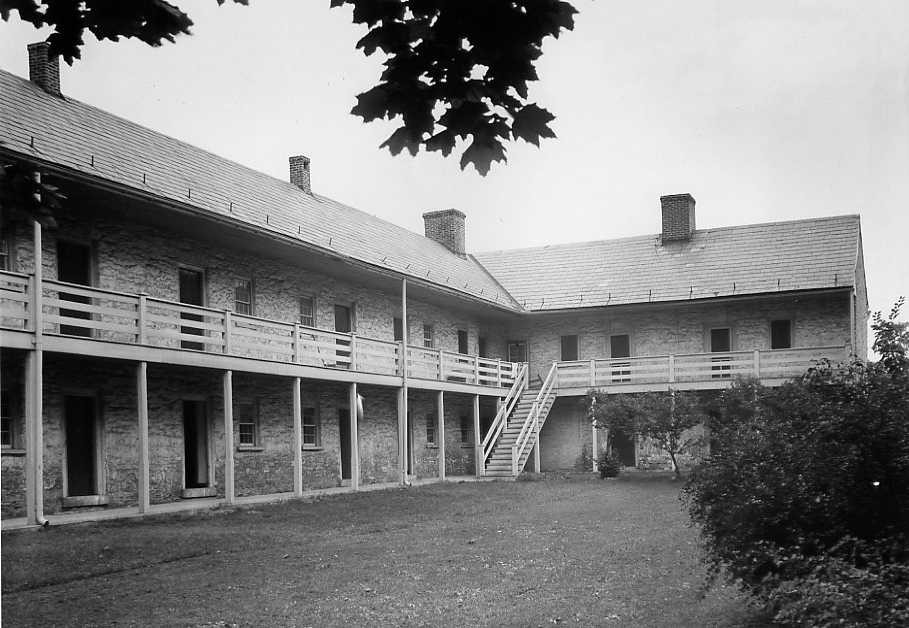
The issue of prison overcrowding was partially resolved in 1781 with the completion of the Frederick Barracks. Begun in 1777, the large stone buildings were designed to house Maryland volunteers, but they were soon put to use holding German prisoners. As a result the buildings – one of which still stands today – earned the lasting sobriquet “Hessian Barracks”.[ix]
barracks

The so-called “Hessian Barracks” on the south side of Frederick. Built between 1777 and 1781 to house American soldiers, they were used to house British and German prisoners during the Revolutionary War. Prisoners from the Quasi War and War of 1812 were also held here. Later they served as a barracks and hospital during the Civil War. The existing structure is currently owned by the Maryland School for the Deaf. (Library of Congress)

In the next installment, we’ll take a look at the most infamous Loyalist plot to be uncovered in Maryland during the war and the trial that resulted…


[i] Tracey, Grace and Dern, John. Pioneers of Old Monocacy: The Early Settlement of Frederick County, Maryland, 1721-1743.

[ii] Scharf, Thomas. History of Western Maryland. pp 130-131.

[iii] Connolly, John. “A Narrative of the Transactions, Imprisonment, and Sufferings of John Connolly, an American Loyalist and Lieut. Col. in His Majesty’s Service” The Pennsylvania Magazine of History and Biography

Vol. 12, No. 3 (Oct., 1888), pp 310-324

[iv] Journal and Correspondence of the Maryland Council of Safety, August 29, 1775 to July 6, 1776. p 93

[v] Scharf. p 138

[vi] Steiner, Bernard. Western Maryland in the Revolution. pp 34-35.

[vii] Ibid. p 35

[viii] Scharf. p 141.

[ix] Maryland Historical Trust. https://mht.maryland.gov/nr/NRDetail.aspx?NRID=46

An Interesting “What If?” Question: Benedict Arnold and the Monmouth Campaign

So recently I have been working on a Monmouth Court House project. Last night an alternate scenario popped into my head. I wanted to ask you, the readers, your opinion. During the spring of 1778, what if Charles Lee, recently exchanged from a year and a half imprisonment, had been appointed as military governor of Philadelphia instead of Benedict Arnold? What if Arnold had then been ordered to join Washington’s army? He obviously would have never gotten the chance to fall in love with Peggy Shippen (we know what happened next), but his widely known aggressiveness and leadership capabilities also could have played a significant role in the upcoming Monmouth Campaign. What do you think may have happened? Would Arnold have influenced Washington’s decision making? Could he have potentially commanded the Continental Army’s vanguard that opened the fighting at Monmouth like Lee did? How would he have behaved if he once again commanded American troops in the field? This is all counterfactual history, of course, but just something to have fun with and think about.


Coryell’s Ferry: Site of Another Important Delaware River Crossing, June 1778

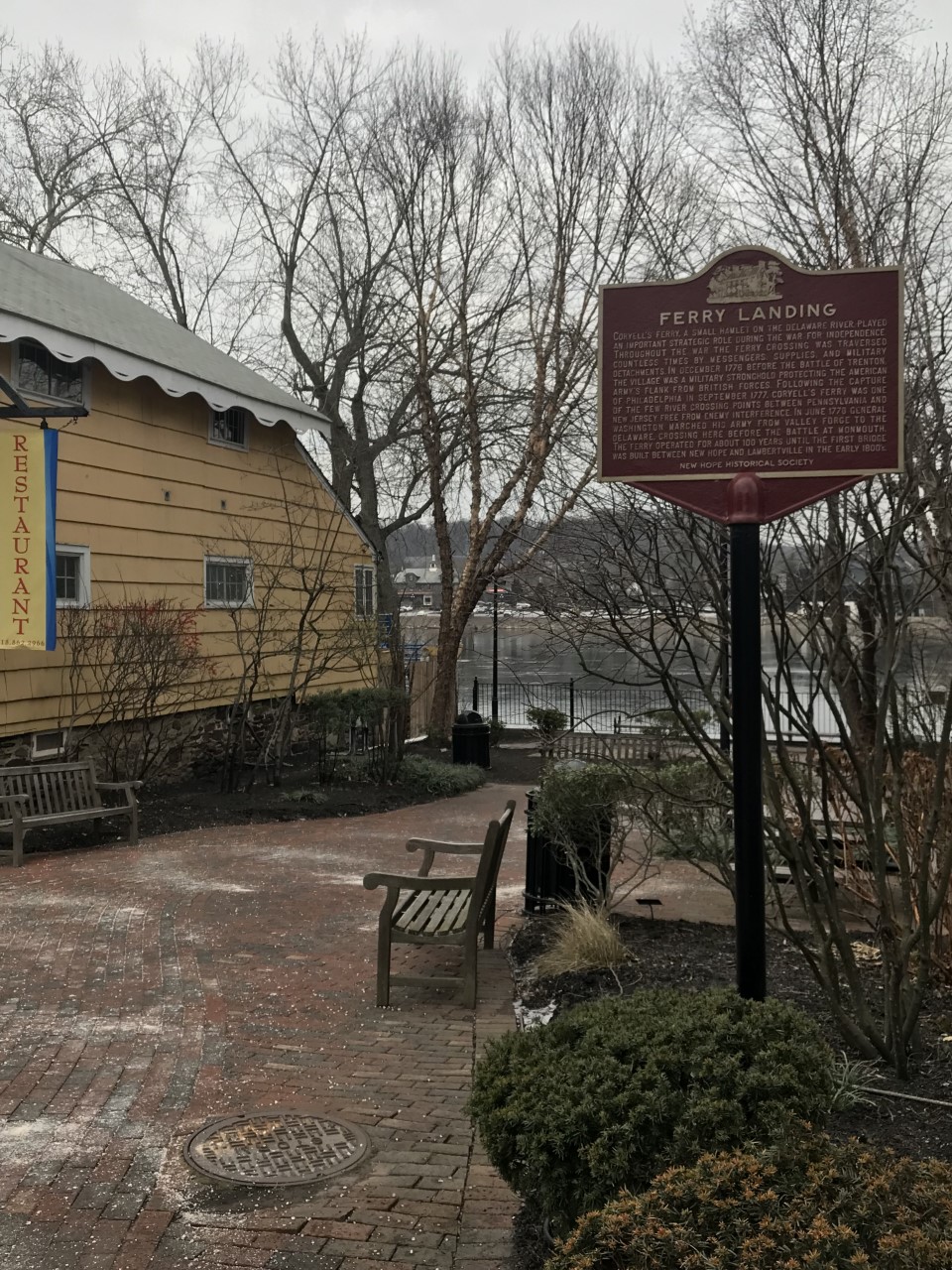
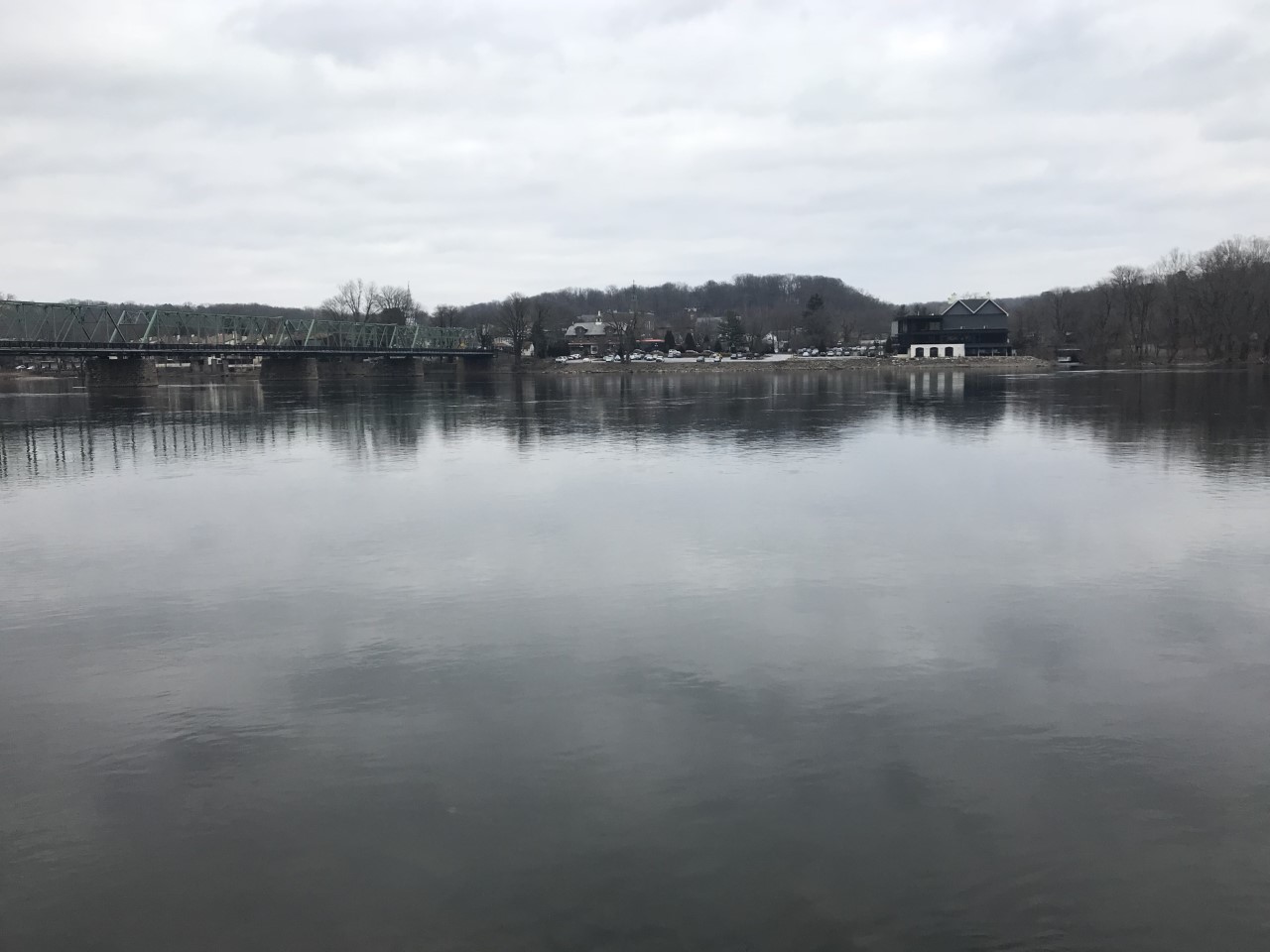
While visiting home in New Jersey this past week I was able to travel to many different sites associated with the Monmouth Campaign of June 1778. One of those sites in particular was Coryell’s Ferry (or Landing), which straddled the Delaware River in present-day New Hope, Pennsylvania and Lambertville, New Jersey.

coryell's landing
Ferry Landing Park in New Hope, PA. The site of Coryell’s Ferry.

France’s official entrance into the war on the Americans’ side in early 1778 forced the British to alter their overall military strategy. His Majesty’s Forces began withdrawing from the American interior and were consolidated along the coast between New York City and Newport, Rhode Island. From there, reinforcements were ordered to be dispatched to Florida and the Caribbean to counter France’s impending threat in that region. Philadelphia, which had been occupied since the previous September, was deemed unnecessary to hold any longer. By June 17, 1778, British Lt. Gen. Henry Clinton’s army of over 20,000 men had crossed the Delaware at Cooper’s Ferry (present-day Camden, New Jersey) and was marching northeast towards New York City.

Three days later the Continental Army was in full pursuit with Washington’s advanced column being led across the river by Maj. Gen. Charles Lee at Coryell’s Ferry (some thirty miles northeast of Philadelphia). By June 22, Washington and the last elements of his army were in New Jersey as well. What exactly was to happen next was not yet known. Clinton could either transport his army to New York City via South Amboy or from Sandy Hook. Until it could be discerned what the British general’s intentions were, Washington planned to “govern ourselves according to circumstances.” In six days the two armies would collide in desperate battle near the small village of Monmouth Court House.

coryell's landing 2
Lambertville, NJ from the Pennsylvania side of the Delaware River. The Continental Army crossed here between June 20-22, 1778.