African Americans Serving in the American Revolution

If you tuned into our “Rev War Revelry” with historian and author John U. Rees on Sunday, you may have heard him mention a few links and a blog where he adds information that did not make it into the book. Or has come to light since the publication of his history “They Were Good Soldiers: African-Americans in the Continental Army, 1775-1783.”

John was nice enough to provide the following as a follow-up for those interested in reading more into the subject.

African Americans Serving in the Armies of the Revolution
(PDF, click here).

Book:

“They Were Good Soldiers”,  

Additional post-publication updates and information: 

List of soldiers and women featured in the book. 

African American soldier-servants. 

African American women with the army. 

Author interviews pertaining to the book. 

Entries for blog:

“More ‘Good Soldiers’”: 

Revised percentages for 1778 army “Return of Negroes.” 

Officers’ observations of black Continental soldiers. 

Ranney’s painting “Cowpens” and black cavalry soldiers. 

List of soldiers and women featured in the book. 

Black Continental soldiers at the Battle of Monmouth. 

Printed 19th century remembrances of black veterans 

Articles

Articles the book was based on including African Americans in Southern Continental regiments plus transcribed pension files used for that study.  

Jeffrey Brace, African slave and Continental soldier 

Other authors:  

Black soldier motivations (Scoggins) 

Loyalist Ethiopian Regiment (Copeland) 

Black soldiers at New Windsor cantonment (Thorenz) 

Hannah Till, wartime servant to Washington (Cole) 

Thomas Carney, Maryland Continental (Calder) 

Black Hessians (Jones) 

Military role of black Loyalists (Braisted) 

Author Discussion ERW Facebook Live:

To watch the interview with John, click over to Emerging Revolutionary War’s Facebook page and click on the “Videos” tab. To access the page, click here.

Continental Soldiers
The two of soldiers on the left, drawn in 1781 by French Sublieutenant Jean-Baptiste-Antoine de Verger, Royal Deux-Ponts Regiment, are a private of the Rhode Island Regiment, and a soldier of Hazen’s Canadian Regiment. The next in line is a Virginia rifleman, while the last man is a Continental artileryman. Howard C. Rice and Anne S.K. Brown, eds. and trans., The American Campaigns of Rochambeau’s Army 1780, 1781, 1782, 1783, vol. I (Princeton, N.J. and Providence, R.I.,: Princeton University Press, 1972), between pages 142-143 (description on page xxi). Anne S.K. Brown Military Collection, Brown University.  

“Rev War Roundtable with ERW” Tavern Talk

When the idea was formulated, back in April, to do a Sunday evening Zoom/Facebook live type history hour, the emphasis behind this “happy hour” was to style it as a more informal chat. Our goal was to create a virtual adaptation of what would occur if the same historians met at a tavern/bar/pub to casually chat about American history.

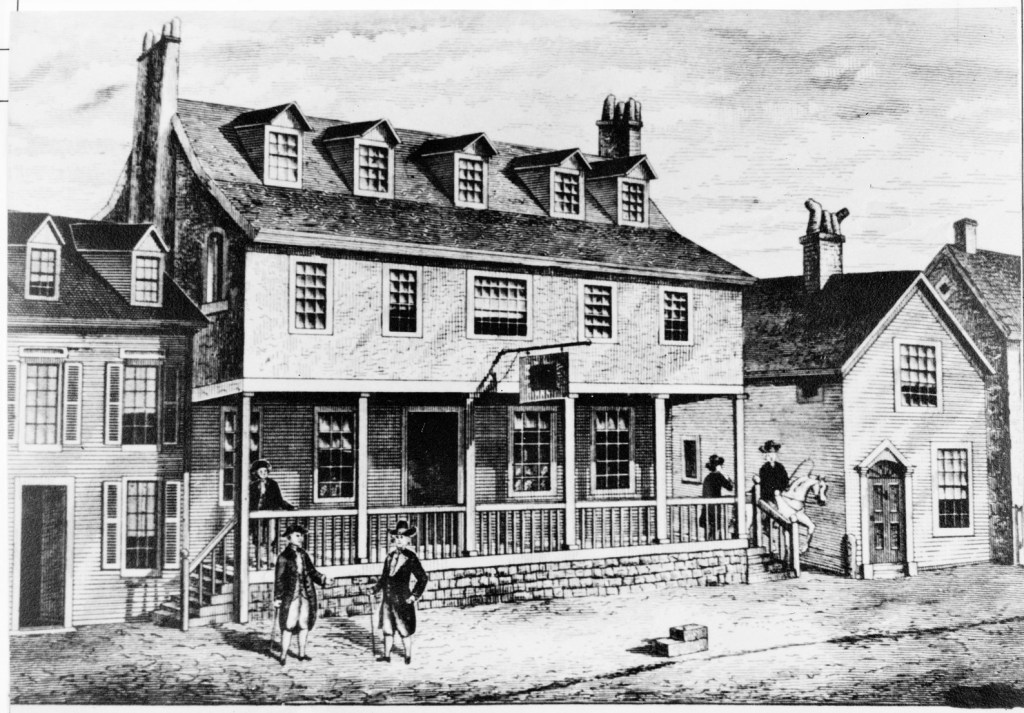
Speed up to this Sunday, June 7th, Emerging Revolutionary War will welcome three guest historians, who all have a connection to a historic tavern to join co-founder Rob Orrison on a talk about 18th century taverns. Yes, a “tavern talk about taverns.”

Joining Orrison on the hour-long happy hour chat will be:

Liz Williams, Executive Director of Gadsby’s Tavern in Alexandria, Virginia, part of The Office of Historic Alexandria, in which she has been employed with since 2004. She is a graduate of Mary Washington College in Fredericksburg, Virginia with a degree in Historic Preservation and a graduate degree in Tourism Administration from George Washington University. She has also worked at various historic sites in the Virginia and Washington D.C. area.

An ERW favorite and returning to the “Rev War Revelry” is Stacey Fraser, the Collections and Outreach Manager with Lexington (MA) Historical Society. One of the sites she oversees the collection of is Buckman Tavern, which played a role in the April 19, 1775 engagements that rolled through Lexington and Concord, Massachusetts.

The third guest historian is Sarah Kneeshaw, the Education and Public Programs Coordinator at Fraunces Tavern Museum. The tavern was built in 1719 in New York City by the De Lancey family. She joined the staff at the downtown New York City site (which is directly across from Federal Hall where George Washington was inaugurated president in April 1789) in 2016. Sarah holds a bachelor’s degree in Anthropology from Fordham University and also attained a graduate degree in Museum Studies from John Hopkins University. She is a native of Staten Island.

Thus, this Sunday, set a side an hour-ish, starting at 7pm EST, to hear these four historians discuss taverns, their importance, and roles in the 18th century social, military, and political history of the burgeoning United States. With your preferred drink, be it an 18th century tavern concoction or not, in hand, we look forward to your questions, comments and insights.

Rediscovery number 27587

March Presentations

Emerging Revolutionary War (ERW) would like to highlight from time to time some of the lectures, presentations, talks, and events that our historians are apart of.

This month, ERW historians are giving the following presentations:

Bert Dunkerly

March 27th: “The Brown’s Island Explosion Victims” at the Virginia Forum, Richmond, Virginia

Kate Gruber

March 13th: “Tenacity: Women in Jamestown and Early Virginia” Shenandoah Lyceum Lecture Series, Harrisonburg, Virginia. For more information click here.

Travis Shaw

March 29th: “Lord Dunmore.” Aldie, Virginia

Annis Boudinot Stockton, Mythmaking, and the American Revolution (cont.)

Emerging Revolutionary War welcomes back guest historian Blake McGready for part two of the series. To read part one, click here.

While her poetry avoided wartime setbacks and conjured stories of revolutionary unity, Stockton’s poems did confront the violent realities of what she called “a most cruel and eventful war”. Her choice allusions demonstrate how, in her mind, wartime violence bound the revolutionaries together. Following the death of General Joseph Warren at the battle of Bunker Hill she lamented, “That heart, which, studious of his countries good / Held up her rights and seal’d them with his blood!” In 1776 Stockton wrote of revolutionary soldiers who “fought and bled to save their native land / From bowing to a tyrant’s stern command,” and honored great men dying on battlefields “Made fertile by the blood of heroes slain.” Whereas historians have noted how the war’s violence was often deliberately excluded from the popular imagination, by contrast, Stockton’s war and violence were inseparable.[i]

Continue reading “Annis Boudinot Stockton, Mythmaking, and the American Revolution (cont.)”

Annis Boudinot Stockton, Mythmaking, and the American Revolution

Emerging Revolutionary War welcomes guest historian Blake McGready. A short bio is at the end of this post.

In December 1776, Richard Stockton of Princeton, New Jersey, a signer of the Declaration of Independence, disavowed the American Revolution and swore allegiance to King George III. After British forces imprisoned Stockton, he accepted his captor’s amnesty offer. Revolutionaries considered Stockton’s decision an act of cold betrayal and condemned his perfidy. And yet, following his death in 1781, most biographies avoided or ignored Stockton’s questionable political commitment; one tribute claimed his conviction inspired “the utmost confidence of his associates and the country at large.” Stockton owed much of this comeback to his wife, Annis Boudinot. As a prolific and published poet, she helped erase much of her husband’s political infidelity in her writings. At the time of his death she praised him in one tribute, “Can we forget how patiently he bore / The various conflicts of the trying hour / While meekness, faith, and piety refin’d.” She carefully forgot that her husband abandoned the revolutionaries during “the trying hour.”[i]

Annis Boudinot (Mrs. Richard) Stockton by James Sharples Senior, from life, 1796-1797. Courtesy, Independence National Historical Park.
Continue reading “Annis Boudinot Stockton, Mythmaking, and the American Revolution”

August in Lexington, Massachusetts

From our friends at the Lexington Historical Society, a few events to mark on your calendar if going to be in that area of the country. Click here for more information about the events below.

On Thursday, August 8th at 7:00 p.m. at the Lexington Depot
I Am An Honest Woman: Female Revolutionary Resistance 

Most women had limited opportunities for political action during the American Revolution. While some of the lower classes could take to the streets, “genteel” women had to find more subtle ways to support the Patriot cause, while maintaining the illusion of domestic contentment. Dr. Emily Murphy, National Park Service curator and living historian, will discuss the “Daughters of Liberty” and their political accomplishments. These women were able to take an active role in the Revolution by politicizing traditional female activities, like spinning flax into linen to create homespun fabric in protest of British imports. A group of 50 protesting Bostonian men would incite a riot, but who would cross a crowd of dutiful housewives showing off their domestic skills?

Saturday, August 31, 12:00 – 4:00 p.m., across from Battle Green on Harrington Road
Lexington’s Spinning Protest

On the exact 250th anniversary of the 1769 spinning protest in Lexington, come to a reenactment of that important event! There will be spinners in period dress, interpreters sharing information about the craft of spinning, the political climate of the time and the British goods boycott that sparked the 1769 spinning bee. Plus, a preview of our 2020 Buckman Tavern exhibit on women and political protest. Free and open to the public.

Announcing the First Emerging Revolutionary War Symposium!

Mark your calendars for September 28, 2019!  Emerging Revolutionary War is excited toPrint announce that we are partnering with Gadsby’s Tavern Museum and The Lyceum of Alexandria, VA to bring to you a day long Symposium focusing on the American Revolution.

GTHomepageExterior(1).jpg
Gadsby’s Tavern Museum

Alexandria is George Washington’s hometown and we feel is a great place for us to start this new endeavor. Historic “Old Town” Alexandria is home to dozens of museums and historic sites as well as great pubs, restaurants and shops. Gadsby’s Tavern Museum is the premier 18th century tavern museum in the country and is host to the famous annual George Washington Birthnight Ball.  The Lyceum: Alexandria’s History Museum will be our host location. Today The Lyceum serves as the City’s history museum and is a center of learning through lectures, demonstrations and exhibits.

This year’s theme is “Before They Were Americans”  and will highlight several topics

Lyceum_017_720x483_72_RGB
The Lyceum

about the years leading up to the American Revolution. Our speakers include: Phillip Greenwalt, Katherine Gruber, William Griffith, Stephanie Seal Walters and Dr. Peter Henriques as the keynote. Registration will open on July 1, 2019 through AlexandriaVA.gov/Shop or by calling 703-746-4242. Stay tuned as we highlight each of our speakers and their topics.


Women’s History Month: The Story of Anna Maria Lane

Emerging Revolutionary War welcomes guest historian Paige Backus. 

image2
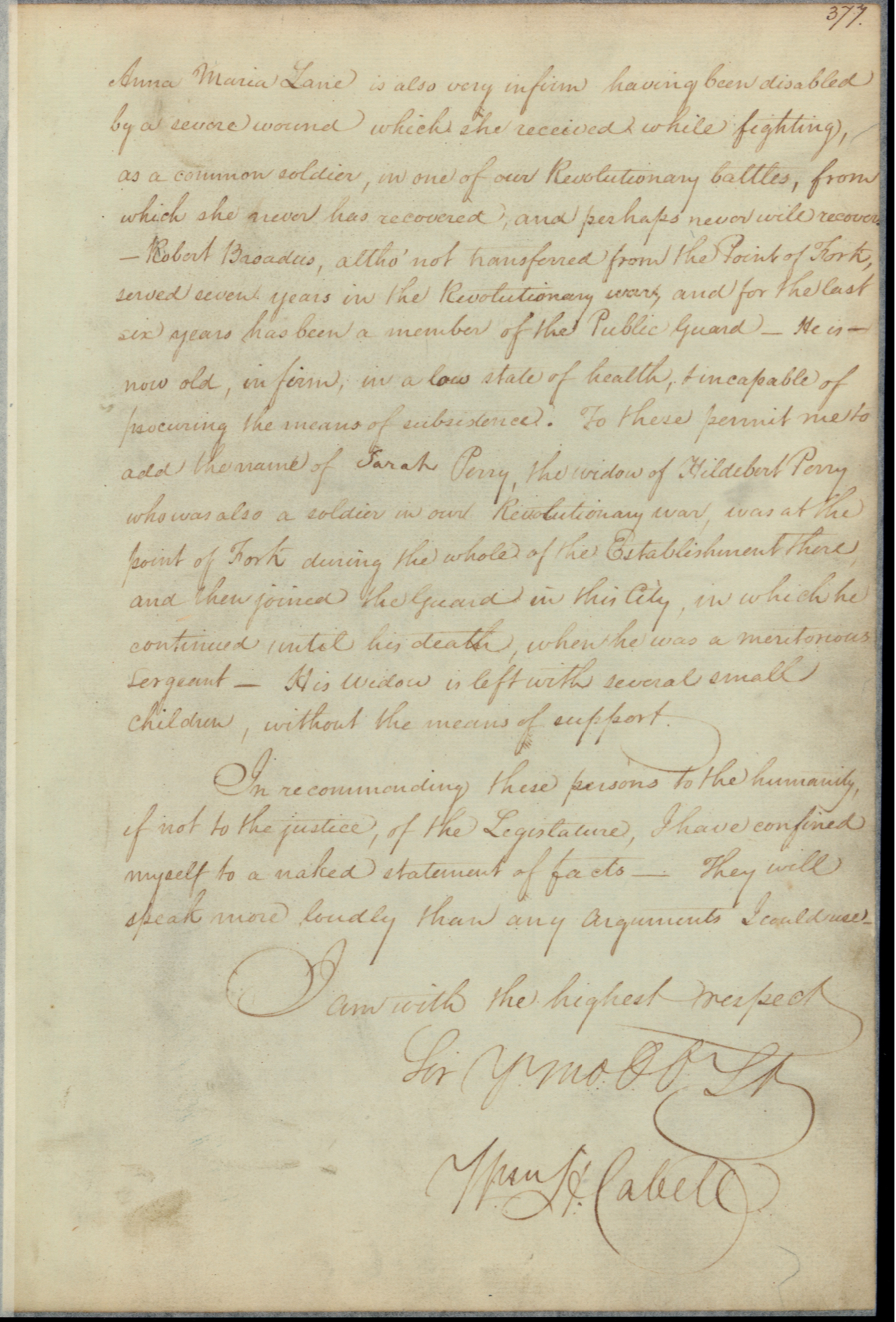
Aron, Paul. “Fighting as a Common Soldier”. Colonial Williamsburg: Trends and Traditions (Spring 2017). Accessed March 12, 2019. Click here for URL.

Women’s History Month is dedicated to celebrating extraordinary women and encouraging the women of today to be the same.  Throughout American history, there are multitudes of women who certainly were put into extraordinary situations and rose to the challenge to make their place in history. Throughout the American Revolution, women were generally not allowed to serve in the armies so they accompanied their husbands to war as camp followers assisting with the cooking, cleaning, nursing and other domestic tasks needed by the army. This is no small feat considering that women were exposed to the hardships and challenges of war, working without the modern technology we take for granted today, and doing it all in skirts. However, one woman named Anna Maria Lane not only followed her husband into war, but she joined him in battle becoming the only known woman in Virginia to serve as a soldier during the American Revolution. Continue reading “Women’s History Month: The Story of Anna Maria Lane”