This Weekend’s Rev War Revelry: Arnold Along the James

Join us this Sunday, March 5, at 7:00 p.m. on our Facebook page for our latest installment of the Rev War Revelry series. This weekend’s chat will focus on the exploits of British General Benedict Arnold in Virginia during 1781, including the capture and burning of Richmond. We will be joined by Virginia historians John Pagano and Mark Wilcox, who will help bring to life the story of when Arnold turned his sword against the people he once called his comrades and countrymen. We hope to see you there!

Reading Sam Adams…part 2

My recent comments about Stacy Schiff’s The Revolutionary Samuel Adams got me thinking about some of John Adams’s thoughts about his second cousin. In particular, John shared a neat story about Sam’s secretiveness—a problem that has bedeviled biographers, including Schiff, because Sam didn’t leave behind a trove of documentary evidence the way other Founders did.

“I have seen him . . .” said John, “in Philadelphia, when he was about to leave Congress, cut up with his scissors whole bundles of letters, into atoms that could never be reunited, and throw them out at the window, to be scattered by the winds. This was in summer, when he had no fire. In winter he threw whole handfuls into the fire. As we were on terms of perfect intimacy, I have joked him, perhaps rudely, upon his anxious caution. His answer was, ‘Whatever becomes of me, my friends shall never suffer by my negligence.’”[1]

John admired Sam, 13 years his senior, a great deal. The two were hardly acquainted growing up, but as John started off his legal career in Boston, Sam—a great cultivator of talent—pegged him as someone to develop. As tensions in Boston grew between the Sons of Liberty, British officials, and far-off Parliament, Sam brought John into the inner circle because of John’s sharp legal mind. The decision paved John’s eventual path to national politics.

“Mr. Adams was an original,” John said of Sam, saying he was “born and tempered a wedge of steel. . . .”[2]

In his common appearance, he was a plain, simple, decent citizen, of middling stature, dress and manners. He had an exquisite ear for music, and a charming voice, when he pleased to exert it.—Yet his ordinary speeches in town meetings, in the house of representatives and in congress, exhibited nothing extraordinary; but upon great occasions, when his deeper feelings were excited, he erected himself, or rather nature seemed to erect him, without the smallest symptom of affectation, into an upright dignity of figure and gesture, and gave a harmony to his voice, which made a strong impression on spectators and auditors, the more lasting for the purity, correctness and nervous elegance of his style.[3]

John spoke on several occasions of Sam’s “an air of dignity and majesty.” He admired Sam’s “harmonious voice and decisive tone” and his “self-recollection, a self-possession, a self-command, a presence of mind that was admired by every man present. . . .”[4] He also listed “his caution, his discretion, his ingenuity, his sagacity, his self-command, his presence of mind, and his intrepidity” as traits that “commanded the admiration” of friend and foe alike—friends who applauded him and foes who could not help but respect Sam Adams’s considerable populist powers.[5]

It is little doubt why John later said, “Without the character of Samuel Adams, the true history of the American Revolution can never be written.”[6]


[1] “From John Adams to William Tudor, Sr., 5 June 1813,” Founders Online, National Archives, https://founders.archives.gov/documents/Adams/99-02-02-6054. 

[2] “From John Adams to William Tudor, Sr., 5 June 1813,” Founders Online, National Archives, https://founders.archives.gov/documents/Adams/99-02-02-6054. 

[3] “From John Adams to William Tudor, Sr., 15 April 1818,” Founders Online, National Archives, https://founders.archives.gov/documents/Adams/99-02-02-6883.

[4] “From John Adams to William Tudor, Sr., 15 April 1818,” Founders Online, National Archives, https://founders.archives.gov/documents/Adams/99-02-02-6883.

[5] “From John Adams to Jedidiah Morse, 1 January 1816,” Founders Online, National Archives, https://founders.archives.gov/documents/Adams/99-02-02-6563. 

[6] “From John Adams to William Tudor, Sr., 15 April 1818,” Founders Online, National Archives, https://founders.archives.gov/documents/Adams/99-02-02-6883.

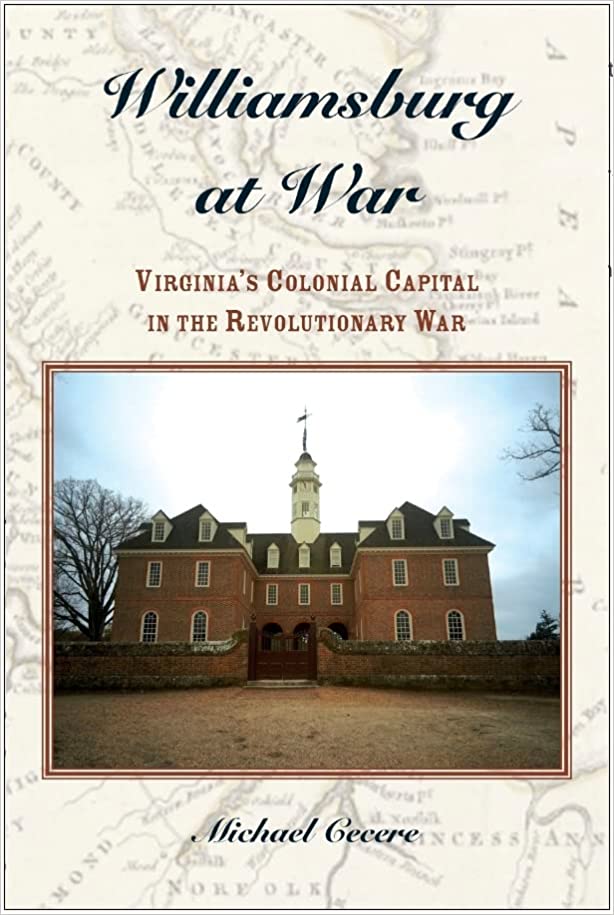
Book Talk with Mike Cecere: “Williamsburg at War”

Join us on Sunday night at 7 p.m. on our Facebook page as we welcome historian and author Mike Cecere to discuss his latest book: “Williamsburg at War: Virginia’s Capital in the Revolutionary War.” Williamsburg witnessed many crucial events during the Revolution and war. From the Stamp Tax Resolves of 1765, meetings at the Raleigh Tavern in 1769 and 1774, the gunpowder incident and formation of troops in 1775, the unanimous decision of the 5th Virginia Convention to support American independence in May 1776, the steady support of the continental army throughout the war, two brief enemy occupations in 1781, and finally, as a staging area for the Siege of Yorktown in 1781, Williamsburg played a significant role in the Revolution and Revolutionary War.

Can’t make it this Sunday? You can see a recorded version on our YouTube page or on our podcast!

Reading Sam Adams…

I’m currently reading Stacy Schiff’s new biography The Revolutionary Samuel Adams. It’s a snappy-to-read, deeply researched book—all the more challenging to write because Sam Adams made careful effort not to leave much of a paper trail about himself.  

Schiff uses her introduction to sketch out this fundamental problem, and in doing so, she creates a compelling flash portrait of Adams that the rest of the book fleshes out. Adams the historiographical sphinx is well served by this portrait. Sam Adams simultaneously led from the front yet operated in the shadows, an apparent contradiction that Schiff nonetheless portrays fully and effectively. 

As the book goes on, Schiff manages to pull from a deep well of primary sources, even if there’s not a mountain from Sam himself. She handles those sources adroitly and comfortably, plucking this bit from here and that bit from there the way a conductor works an orchestra.  

The result is an admiring but not fawning portrait of Adams—a man without whom, said cousin John, “the true history of the American Revolution can never be written.”[1] 

Troubling to me in the text is that, in the late 1760s and early 1770s, the Adams-led Sons of Liberty often employed mob violence—real and threatened—to achieve their aims. Propaganda efforts were often tethered to reality by only thinnest of meager threads, if at all. Men were intimidated, bullied, tarred and feathered, humiliated, assaulted, and run out of town for opposing or even just disagreeing with them. Houses were ransacked. Livelihoods destroyed. Reputations ruined. I could not help but think of the Klan in the Reconstruction-era South—a comparison no-doubt tantamount to sacrilege when talking about a group of Bostonians popularly and fondly remembered as patriots.  

Yet Schiff merrily skates over such rough terrain, sharing vivid details about incidents without exploring the moral morass this tension suggests. Her hero acts in decidedly less-than-heroic ways, arguing that the ends justify the means. We as readers are left to ponder this ambiguity ourselves. Such work on the reader’s part isn’t a bad thing, but it does strike me as somewhat of an abdication on the biographer’s part when the rest of the narrative is so cheerfully pro-Adams. 

Overall, The Revolutionary Samuel Adams is an excellent work so far, and I highly recommend it for anyone who wants a fuller understanding of how the wheels of Revolution started turning—and who started them. 


[1]“From John Adams to William Tudor, Sr., 5 June 1813,” Founders Online, National Archives, https://founders.archives.gov/documents/Adams/99-02-02-6054.  

Old Fort Harrod State Park

In 1774, frontiersman James Harrod led a surveying party from western Pennsylvania to the region south of the Ohio River known as Kentucky.   The group laid out a small fort, started their first buildings, and staked out claims to larger farms beyond the town’s walls but left the area with the start of Dunmore’s War between Virginia and the Shawnee Native Americans living north of the Ohio. 

Old Fort Harrod Interior

            Harrod returned in the spring of 1775 with a group of settlers.  Greater numbers made a larger fort and town necessary.  Harrod’s return to the area coincided with the outbreak of the American Revolution, which quickly led renewal of intense fighting between Native Americans and whites living on the American frontier.  British support for the Native Americans, particularly after 1777, made Kentucky an extraordinarily dangerous place to live.  Together with Boonesborough and Logan’s Station, Harrodstown, also known as Harrodsburg, constituted the bulk of white settlement in Kentucky during the war’s early years. 

“[T]he poor Kentucky people, who have these twelve months past been confined to three forts, on which the Indians made several fruitless attempts.  They [the Indians] have left us almost without horses sufficient to supply the stations, as we are obliged to get all our provisions out of the woods.  Our corn the Indians have burned all they could find the past summer, as it was in cribs at different plantations some distance from the garrisons, & no horses to bring it in on.  At this time we have not more than two months bread,–near 200 women & children; not able to send them to the inhabitants; many of those families are left desolate, widows with small children destitute of necessary clothing.”

Despite continuing violence on the frontier, the prospect of land and escaping the war in the east led immigration into Kentucky to outpace population outflows while military success under George Rogers Clark ensured that the frontier settlements survived and increased. 

Harrodsburg became the capital of Kentucky County when Virginia asserted ownership of the area and is still the seat of Mercer County.  To commemorate Kentucky’s frontier history, the state established Old Fort Harrod State Park, which encompasses a recreated fortified town complete with period buildings, furnishings, and crops.  Living historians and artisans demonstrate the 18th century skills needed to survive and flourish far from the eastern seaboard.  Several exhibits help explain the frontier experience before, during, and after the American Revolution.   Additionally, the park incorporates several later buildings as a museum of local history and monuments to George Rogers Clark and Abraham Lincoln’s family.

Old Fort Harrod exterior curtain wall with blockhouse

Old Fort Harrod State Park

100 S. College Street

Harrodsburg, KY  40330

The Final Battle: The Battle of Eutaw Springs with Bert Dunkerly – This Sunday’s Rev War Revelry!

Join us this Sunday, February 5th at 7pm as we welcome back historian and author Robert Dunkerly. The Battle of Eutaw Springs took place on September 8, 1781, and was among the last in the War of Independence. It was brutal in its combat and reprisals, with Continental and Whig militia fighting British regulars and Loyalist regiments. Although its outcome was seemingly inconclusive, the battle, fought near present-day Eutawville, South Carolina, contained all the elements that defined the war in the South. Shrouded in myth and misconception, the battle has also been overshadowed by the surrender of Yorktown.

Eutaw Springs represented lost opportunities for both armies. The American forces were desperate for a victory in 1781, and Gen. Nathanael Greene finally had the ground of his own choosing. British forces under Col. Alexander Stewart were equally determined to keep a solid grip on the territory they still held in the South Carolina lowcountry.

In one of the bloodiest battles of the war, both armies sustained heavy casualties with each side losing nearly 20 percent of its soldiers. Neither side won the hard-fought battle, and controversies plagued both sides in the aftermath. Join us as we talk about the Battle Eutaw Springs with ERW”s own Bert Dunkerly, co-author of the book Eutaw Springs: The Final Battle of the American Revolution’s Southern Campaign live on our Facebook page on February 5th at 7pm, or you can watch/listen to the replay anytime on our You Tube page and podcast channel.

Book Talk with Gene Procknow: “William Hunter – Finding Free Speech”

Join us on Sunday, January 22 at 7 p.m. on our Facebook page as we welcome author Gene Procknow to discuss his new book: “William Hunter – Finding Free Speech: A British Soldier’s Son Who Became an Early American.” During the American Revolution, Hunter accompanied his father on a campaign to fight the American Rebels. Witnessing first-hand the terrors of combat and twice experiencing capture, Hunter wrote the only surviving account written by a child of a British soldier during the American Revolution. Previously unknown, the journal is one of the most important document discoveries in recent years. He later became a prominent newspaper editor and representative. Join us as we learn more about this fascinating story from early American history.

Can’t make it this Sunday? You can see a recorded version on our YouTube page or on our podcast!

Looking toward May and warmer weather…

For those in certain geographical areas of the United States winter weather and temperatures are upon us. The barometer fluctuates between highs and lows and wind whips through open spaces. Similar to the winter encampment at Valley Forge in 1777-1778. Much like the soldiers of the Continental army, looking toward warmer weather in the spring so should you! And it includes a visit to Valley Forge as well!

Join Emerging Revolutionary War historian Phillip S. Greenwalt and other historians in the Pursuit of History: Forging the Continental Army as part of the HistoryCamp.org event weekend. Starting on May 19, 2023 the event rolls through the weekend, Check out the full event page, including the book package where you can secure a copy of The Winter that Won the War, the Winter Encampment at Valley Forge 1777-1778, a volume in the popular Emerging Revolutionary War Series published by Savas Beatie, LLC.

To learn more and book your spot, click here.

A “Passion for Superiority,” The Continental Army Officer Corps, and Middle School “Mean Girls”

John Adams woke on the morning of May 21, 1777, feeling light of heart. A spell of bad weather had finally broken, and the bright spring dawn cheered his spirits. He took a few minutes before beginning his day to pen a letter to his “Dearest Friend,” his wife, Abigail.[1]

“The Charms of the Morning at this Hour, are irresistible,” he told her. “The Streakes of Glory dawning in the East: the freshness and Purity in the Air, the bright blue of the sky, the sweet Warblings of a great Variety of Birds intermingling with the martial Clarions of an hundred Cocks now within my Hearing, all conspire to chear the Spirits.” Adams’s letters are filled with such descriptions, which are one of the many reasons they’re a delight to read. But then he got down to business.

As the Second Continental Congress’s de facto Secretary of War, he had spent the previous evening, May 21, at the War Department meeting with General Benedict Arnold. Arnold had been embroiled in controversy with several lower-level officers, one of whom claimed “Money is this man’s God, and to get enough of it he would sacrifice his country.” (The charge was untrue at the time but proved ironically prophetic.)

Adams told Abigail that he’d heard Arnold “fought like Julius Caesar” and came to believe Arnold’s side of the tale. “He has been basely slandered and libeled,” Adams concluded.

His political perch gave Adams a view of the Continental Army that might surprise us today. In his usual candor, he told Abigail:

“I am wearied to Death with the Wrangles between military officers, high and low. They Quarrell like Cats and Dogs. They worry one another like Mastiffs. Scrambling for Rank and Pay like Apes for Nutts.”

As he continued, he made an observation that touched close to home. Adams was notoriously vain—a vice he recognized and continually struggled with—so he was deeply familiar with the human tendency to compare oneself with one’s peers. Particularly early in his legal career, Adams measured himself against other young lawyers and pined for the chance to distinguish himself. It was, he said to Abigail, a “Passion for Superiority”:

“I believe there is no one Principle, which predominates in human Nature so much in every stage of Life, from the Cradle to the Grave, in Males and females, old and young, black and white, rich and poor, high and low, as this Passion for Superiority …. Every human Being compares itself in its own Imagination, with every other round about it, and will find some Superiority over every other real or imaginary, or it will die of Grief and Vexation[. . . .] I never saw it operate with such Keenness, Ferocity and Fury, as among military Officers. They will go terrible Lengths, in their Emulations, their Envy and Revenge, in Consequence of it.”

Adams had seen that sort of cattiness “among Boys and Girls at school, among Lads at Colledge, among Practicers at the Bar, among the Clergy in their Associations, among Clubbs of Friends, among the People in Town Meetings, among the Members of an House of Reps. [Representatives], among the Grave Councillors, on the more solemn Bench of justice, and in that awfully August Body the Congress, and on many of its Committees — and among Ladies every Where. . . . .” No where was it worse than among the “Mean Girls” of the army’s officer corps.

“So much for Philosophy,” Adams decided, and then inquired about his children and Abigail’s asparagus. Then he concluded with a note that resonates with all of us here at Emerging Revolutionary War:

“I would give Three Guineas for a Barrell of your Cyder — not one drop is to be had here for Gold. And wine is not to be had under Six or Eight Dollars a Gallon and that very bad. I would give a Guinea for a Barrell of your Beer. The small beer here is wretchedly bad. In short I can get nothing that I can drink, and I believe I shall be sick from this Cause alone. Rum at forty shillings a Gallon and bad Water, will never do, in this hot Climate in summer where Acid Liquors are necessary against Putrefaction.”

Cheers!


[1] All quotes from: Letter from John Adams to Abigail Adams, 22 May 1777 [electronic edition]. Adams Family Papers: An Electronic Archive. Massachusetts Historical Society. http://www.masshist.org/digitaladams/

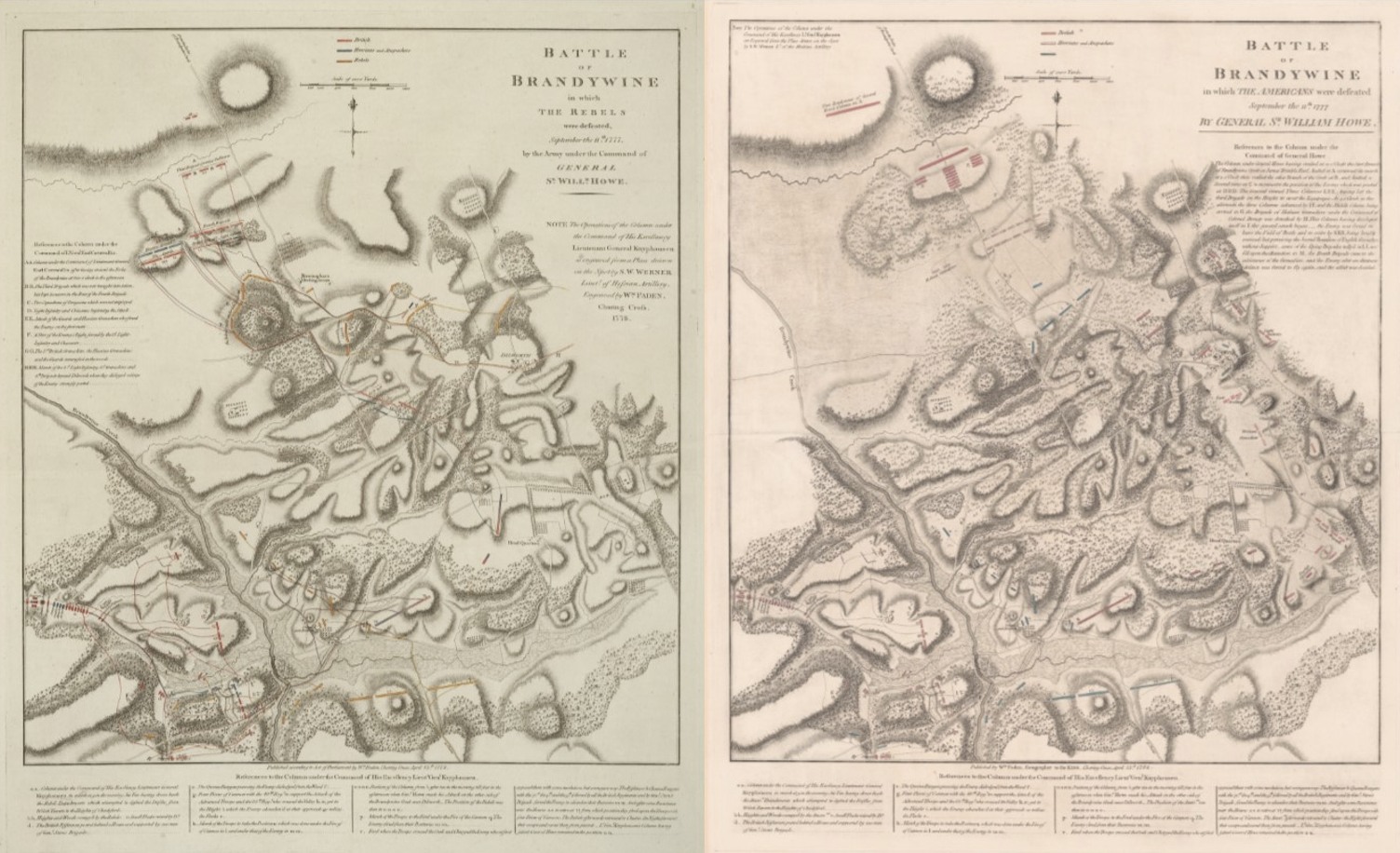
Rev War Revelry This Sunday: William Faden’s 1778 & 1784 Maps of the Battle of Brandywine with Andrew Outten

British cartographer William Faden is well known for his maps depicting major battles of the Revolutionary War. Unusually, he produced two maps of the Battle of Brandywine, one in 1778 and the other in 1784. Each map shows troop movements and positions along with other aspects of the overall battlefield landscape, but each conveys significantly different information.

Join us this Sunday night at 7p.m. on our Facebook page as we chat with Andrew Outten, historical programs manager for the American Revolution Institute of the Society of the Cincinnati. Andrew will discuss the Battle of Brandywine, key differences between the two maps, and recent discoveries pertaining to those differences. Should be a great night sharing new research so grab a drink and join us for our January 8th Rev War Revelry!