Along the wooded ridges of central Pennsylvania, a brutal war raged that was far removed from the orderly movements of large armies in the east. The attack on Phillip’s Rangers is a good example of this warfare.
Native Americans, supplied and encouraged by the British, raided far and wide on the frontier. These included Seneca, Shawnee, Delaware, and Mingo peoples. By the 1780s, many of these groups had been pushed out of their traditional homes to the east, and many viewed war with the Americans as the only way to protect what land they had left.
Setting aside one day to give national thanks to God for the blessings of the prior year and beseech him for future blessings had been frequently practiced in England, but it merged with several Puritan traditions in New England during the 17th century. By the time of the American Revolution, Thanksgiving was a well-established custom. The Second Continental Congress turned a regional tradition into a national one when offered its first Thanksgiving Proclamation on November 1, 1777, recommending that the individual states of the new United States set apart December 18th as a day of Thanksgiving and praise. During the Revolution, Congress continued the practice, issuing its last proclamation in 1784.
When we think of Pennsylvania in the Revolution, we often focus on sites like Independence Hall, Valley Forge, or Brandywine. The southeastern corner of the state was its most populated region, the center of its industry and commerce, and the main theater of military action. On the surface it seems the Revolution only occurred in this one corner of the large state, yet other events took place on its far flung frontier.
Billy Griffith, Kevin Pawlak, Rob Orrison and Mark Maloy at George Washington’s HQ in Newburgh, NY
Just over two weeks ago, ERW historians Billy Griffith, Phillip Greenwalt, Mark Maloy, Rob Orrison and Kevin Pawlak took a long weekend trip up to upstate New York. This was the fourth year that ERW authors have gotten together to take a “field trip” to see sites related to the French and Indian War and the American Revolution.
The trips not only serve as chances for research, but also to make new connections with public historians working in the American Revolution era. Along the way, we posted several videos from locations to give our followers an idea of some of the great places to visit out there. Again, our goal is to not just share this history, but to get people to visit these great sites.
Sites visited on the first day included the Stony Point Battlefield, where Americans under Gen. Anthony Wayne over ran a surprised British outpost. Reading about this action almost rings empty until you stand on the ground. Looking at the steep terrain that Wayne’s men climbed after traversing through a wetland, it is hard to imagine how the Continentals were able to take the British fort with so few casualties. Later that day we made a quick stop at George Washington’s headquarters in Newburgh. Here Washington lived from April 1782 to August 1783 and where he learned of the cease fire with the British, wrote his now famous circular letter to the colonial governors on his vision for the new government. Most importantly, here Washington responded to the Newburgh Conspiracy of his officers looking to possibly over throw the civil government. This site is also important in the history of the museum field as it is the first publicly owned historic site in the United States, opened in 1850 as a museum. A worthwhile nearby site, the New Windsor Cantonment site, preserves the camp site of the Continental Army during the 1782-1783 time period. Several of the buildings are rebuilt, including the Temple of Virtue, where Washington made his impassioned speech to his officers (with the assistance of his glasses) to diffuse their discontent with Congress.
The morning of the second day of the trip was spent visiting sites around Lake George, NY, including some much over looked French and Indian War sites. That afternoon sites along the upper Hudson including the site of the murder of Jane McCrea, Fort Edward and sites in Albany.
Park Interpreter Bob Hoar explains the terrain of the battlefield
Early Sunday morning, a quick trip to the Bennington Battlefield State Park was highlighted with a great personal tour by Bob Hoar. The battlefield is well preserved and interpreted. Bob also shared some of his research into reinterpreting the battlefield using first person accounts and the landscape. Again, understanding the landscape of these places creates such a better understanding.
The majority of the day on Sunday was spent at Saratoga National Historical Park, posting several Facebook Live videos from various points across the battlefield. Also a special visit to the surrender site in Schuylerville which was recently preserved and opened as a memorial by the Friends of Saratoga Battlefield. A great preservation victory that adds to the overall story of Saratoga.
One of the highlights of the trip took place on Monday, where we received a behind the
Curator Matthew Keagle gave a behind the scenes tour of Fort Ticonderoga’s amazing collection storage.
scenes tour by Fort Ticonderoga staff. We started by learning about the military interpretive program by Ron Vido, Military Programs Supervisor. Anyone who has visited Fort Ticonderoga knows about their quality interpretive staff and programs. Ron also shared with us their plans to slowly restore the Carillon Battlefield (1758), which will be a great addition to the understanding of North America’s bloodiest battle before the Civil War. That afternoon we were treated to a behind the scenes tour of Fort Ticonderoga’s collections storage by Curator Matthew Keagle. The Fort has been collecting 18th century items for nearly 100 years. Their collection is one of the largest collection of 18th century military artifacts in the United States. From a Continental knapsack to an original copy of Baron von Steuben’s drill manual, the collection on display is only a small portion of what the museum owns. Matt also shared the museum’s ongoing work to digitize their collection for the purpose of research. The day was capped off by a visit to one of the best preserved battlefields in the United States, Hubbardton. Fought as part of the Saratoga Campaign, this is Vermont’s only battlefield. The landscape at the foot of the Green Mountains is amazing and the viewsheds are near pristine. A nice state park and visitor center are there to help explain the events of July 7, 1777.
Thank you to all the people that assisted us in this trip and all the sites that were nice enough to host us. We will be posting more on the blog in the future focusing on some of the stories around these amazing sites. Again, we encourage you to take the time to visit all these places. History books are great, but there is no substitute for being in the footsteps of history
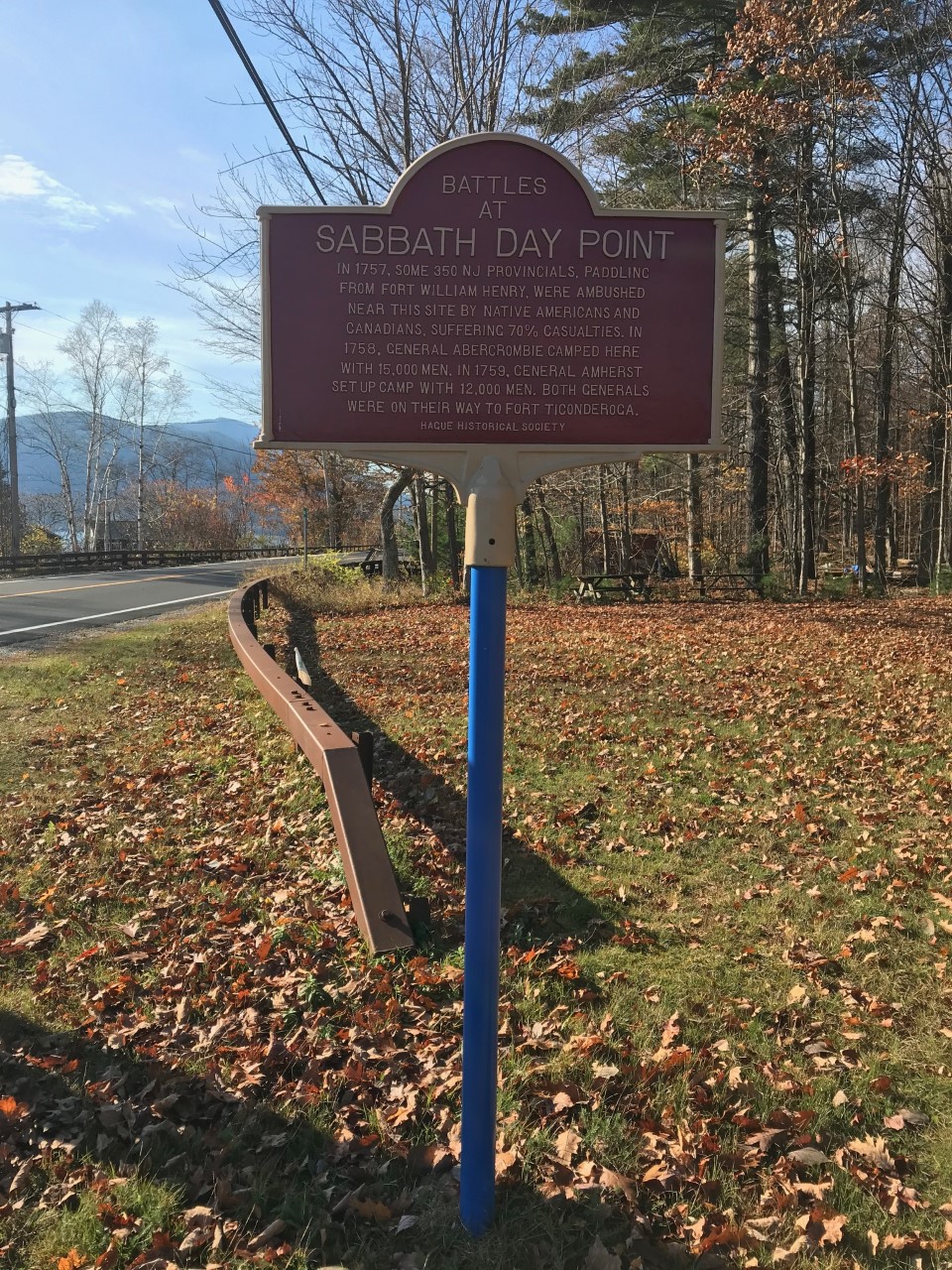
Last week during Emerging Revolutionary War’s annual getaway, we made our way north along the western shore of Lake George in New York’s Adirondack Mountains. Our destination was Fort Ticonderoga. The group made a quick stop at a new historical marker placed near Sabbath Day Point (about twenty miles or so north of the lake’s southern shore), which explained the military activity the site witnessed during the French and Indian War. The area was a strategic landing spot along the western shore of the lake and was constantly being utilized by the British and their French adversary. One tragic event in particular transpired here during late July 1757.
Hague Historical Society Marker at Sabbath Day Point
The summer of 1757 was an active month for British and French operations along the Lake Champlain-Lake George-Hudson River corridor—one of the most significant water highway systems in North America. The French and their Indian allies, under the command of the Marquis de Montcalm and situated at Fort Carillon (Ticonderoga) to the north of Lake George, were preparing to launch a campaign to besiege and destroy Fort William Henry along the southern shore. Patrols in this area were constant as both sides attempted to collect intelligence on enemy movements, numbers, and logistics.
At Fort William Henry, Lt. Col. George Monro of the 35th Regiment of Foot was in command of the British garrison of 2,500 regulars and provincials. Throughout July, word from prisoners and escapees from Canada continued to come in that Montcalm was amassing a force of 8,000 French regulars, Canadians, and Indians to march on his position. Desiring more intelligence, Monro ordered Col. John Parker of the 1st New Jersey Regiment (the “Jersey Blues”) to conduct a reconnaissance north towards Carillon with 350 men from his own unit and some from the 1st New York Regiment. The mission was simple on paper: gather intelligence on the enemy and cause as much damage to him as possible to hamper any advance.
On July 23, Parker and his detachment sailed north from Fort William Henry in twenty-two whaleboats. For many of the men, they would never step foot on land again. Waiting in ambush for them near Sabbath Day Point were hundreds of Canadians and Indians. The French were prepared to oppose any patrols along the northern end of the lake.
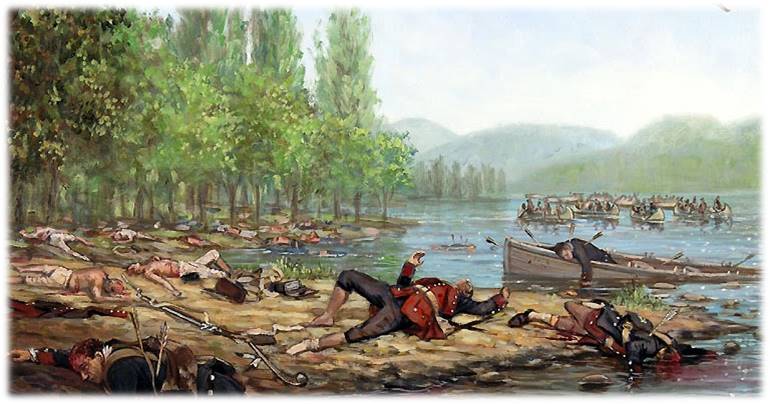
After spending the night on an island south of Sabbath Day Point, the British reconnaissance force continued onward during the morning of July 24. Sources are conflicting in regard to what happened next, but three of the boats, either separated from the group or ordered forward as an advanced party, were attacked by the Indians at the point. The boats were pulled up along the shore to serve as a decoy to lead Parker’s men closer to land. When the rest of the British column came rowing towards the ambush site, the entire shoreline was set ablaze with musket fire.
The New Jerseyans’ and New Yorkers’ fates were sealed as the French Indians began to push their canoes into the water and encircle the panic-stricken detachment, cutting off their escape. Many of the British were shot dead or pulled into the lake as their boats were overturned. “The Indians jumped into the water and speared them like fish…,” recorded Louis-Antoine de Bougainville, Montcalm’s aide-de-camp, “The English, terrified by the shooting, the sight, the cries, and agility of these monsters, surrendered almost without firing a shot.” The fighting, which was most likely over in a matter of minutes, left over 100 of Parker’s force dead. Another 150 were taken prisoner and brought to the French camps outside of Fort Carillon. Col. Parker and the men onboard four of the whaleboats managed to escape the terror and reported back to Monro the following day.
“Massacre at Sabbath Day Point” by Mark Churms
For the prisoners, the horrors of that day continued when they reached Carillon, dragged onshore by ropes tied around their necks. Along with the captured Jerseymen, the French allied Indians had also taken another prize—the detachment’s rum supply. In the Ottawa camp outside the fort, the drunken Indians performed a cannibal ritual, cooking and eating three of the prisoners. Father Pierre Roubaud, a Jesuit missionary with the Abenaki at Carillon, watched in horror as the Ottawa indulged in “large spoonfuls of this detestable broth… The saddest thing was that they had placed near them about ten Englishmen, to be spectators of their infamous repast.” Roubaud attempted to stop the horrid supper, but a young Ottawa refused and told him, “You have French taste; I have Indian. This is good meat for me.” Eventually, the wretched act ceased, and preparations were made for the prisoners to be transported to Montreal where they would be ransomed back to the British.
Nine days after the action at Sabbath Day Point, Father Roubaud returned to the site of the ambush as Montcalm’s army marched and rowed along the western shore on its way to capture Fort William Henry. Seeing the dead of Parker’s command strewn about the trees and shoreline, the priest recalled, “Some were cut into pieces, and nearly all were mutilated in the most frightful manner.” This was the true nature of warfare in North America during the French and Indian War, and a tragic chapter in New Jersey’s colonial history.
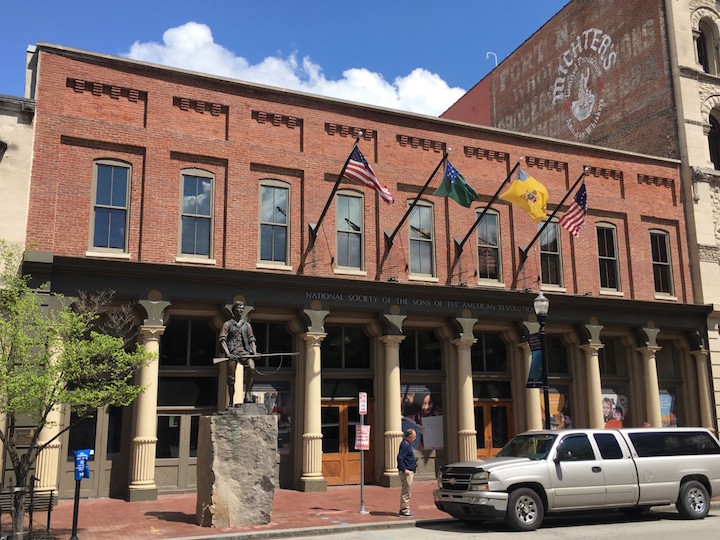
In Louisville, Kentucky, earlier this month, I paid a visit to the Louisville Slugger Factory and Museum downtown. Across the street, I was pleasantly surprised to see a marvelous statue of a minuteman.
The plaque on the back reads
Sons of Liberty—1775
To Honor the History of Philadelphia Continental Chapter 1901
Pennsylvania Society Founded 1893
By its Compatriots 2009
The statue stands outside the headquarters of the National Society of the Sons of the American Revolution. “Located along Main Street’s Museum Row in downtown Louisville,” the society’s website says, “the Sons of the American Revolution is the leading male lineage society that perpetuates the ideals of the war for independence.”
The statue was publicly unveiled in November 2015. According to the Louisville Courier Journal, “The 800-pound, 8-foot high bronze statue of the Minuteman holding a musket rests upon 19,000 pounds of quarried Kentucky limestone, material specifically requested by the artist James Muir.”
A few weeks ago, heading to the airport after the first Emerging Revolutionary War symposium, fellow ERW historian Rob Orrison made a pit stop in a residential neighborhood in Prince William County, Virginia.
To the average traveler to the Ronald Reagan International Washington National Airport this slight detour would not be normal. Yet, for two historians of early American history, these detours are rarely common.
This particular detour took us to a portion of the King’s Highway that has been preserved by the Prince William County Historic Preservation Division. Along this stretch soldiers in the French Army under Comte de Rocambeau and Continentals under General George Washington traversed on their way to Yorktown to entrap the British under General Lord Charles Cornwallis.
Thus, one king’s soldiers, King Louis XVI took a route named for monarch to assist rebels in trapping the ground forces of another king, that of Great Britain by using a road named for the British monarch. Interesting to think about the naming of the road in those terms.
Portions of this route are still preserved today, other sections have been modernized and blacktopped to be Route 1.
Below are a few photos I snapped, including the size 14 Nike shoe belonging to yours truly, re-enacting marching down the thoroughfare like the patriots of 1781.
While the Second Continental Congress met
in the early summer of 1776, colonists in the far away backcountry of South
Carolina faced a threat from a perennial foe, the Cherokees. While delegates
debated a declaration of independence, war parties struck settlements between
the Broad and Saluda Rivers in the Ninety Six District. In response to these
raids, militia Major Andrew Williamson mustered his Ninety Six regiment.
Augmented by militia from the Carolinas and Virginia, he commenced a campaign
against the Cherokee villages along the eastern face of the Blue Ridge.
General Andrew Pickens of South Carolina
Williamson struck at Esseneca on August 1.
The colonials sustained twenty casualties but forced the warriors to abandon
the village. Over the course of the next week, Williamson moved further into
enemy territory. Rather than engage his force, the Cherokees retreated before
the advance. Williamson burned a number of towns including Oconee, Estatoe and
Toxaway.
The regiment reached Tamassee on August 12.
Once again, Williamson found the village abandoned. He decided to send out
scouting parties to examine the nearby hills. One of the patrols was led by a
company commander from the Long Canes region of South Carolina, Captain Andrew
Pickens. He took with him about sixty men. To cover more ground, Pickens
divided his group and continued on with thirty five militiamen.
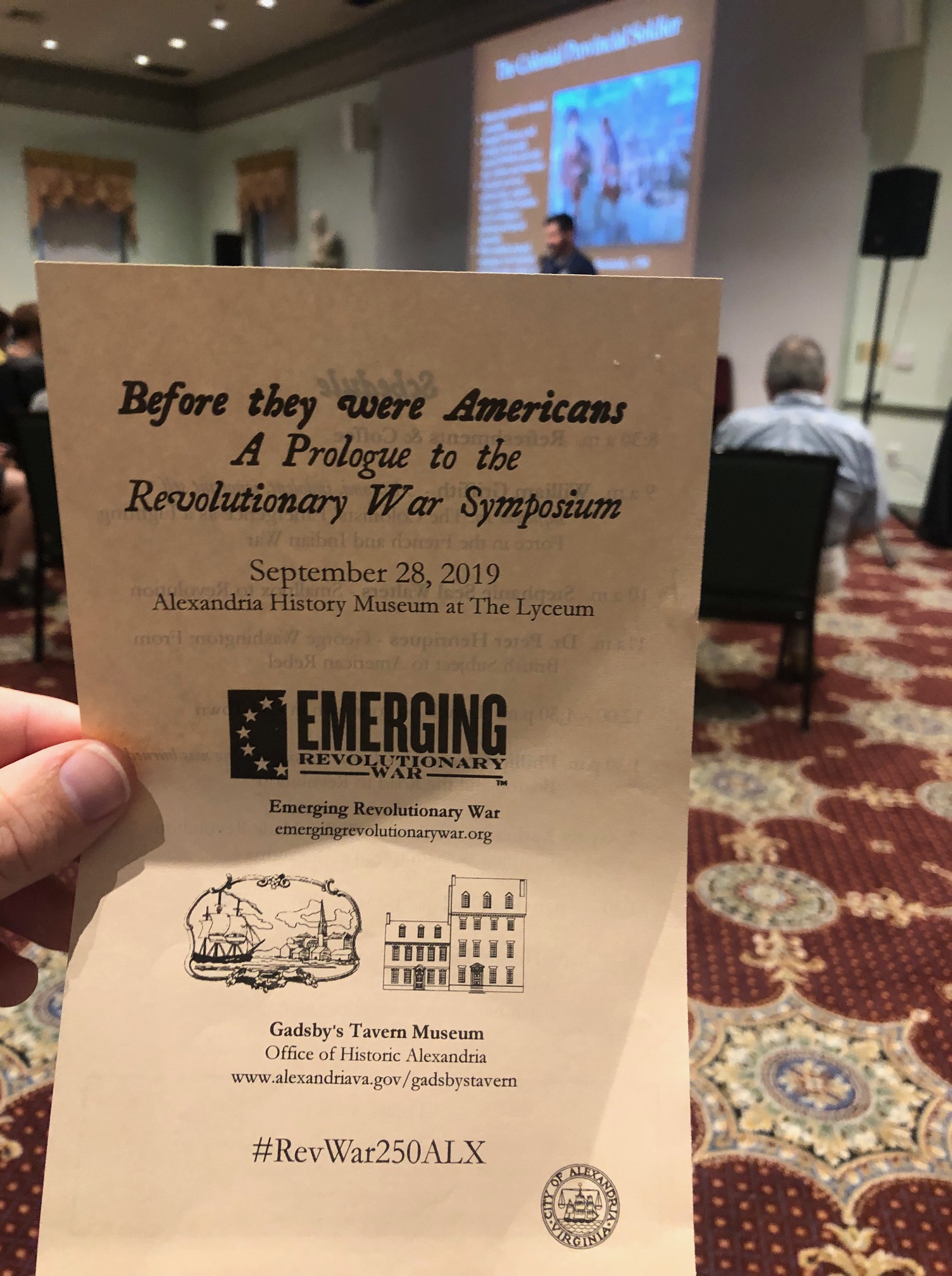
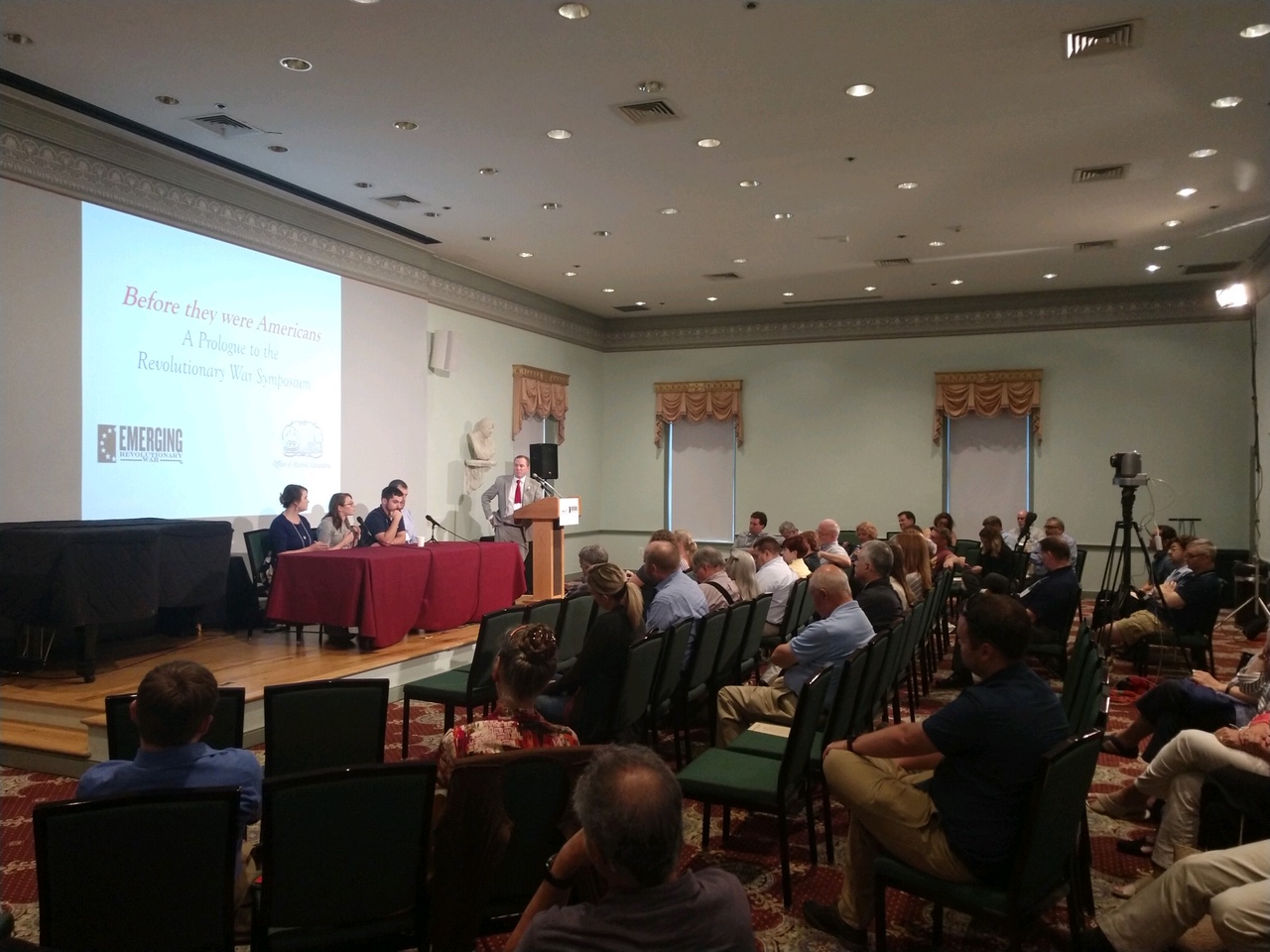
One week has passed since the first annual Emerging Revolutionary War symposium. Held in conjunction with Historic Alexandria, Virginia at the Lyceum, the theme was “Before they were Americans.”
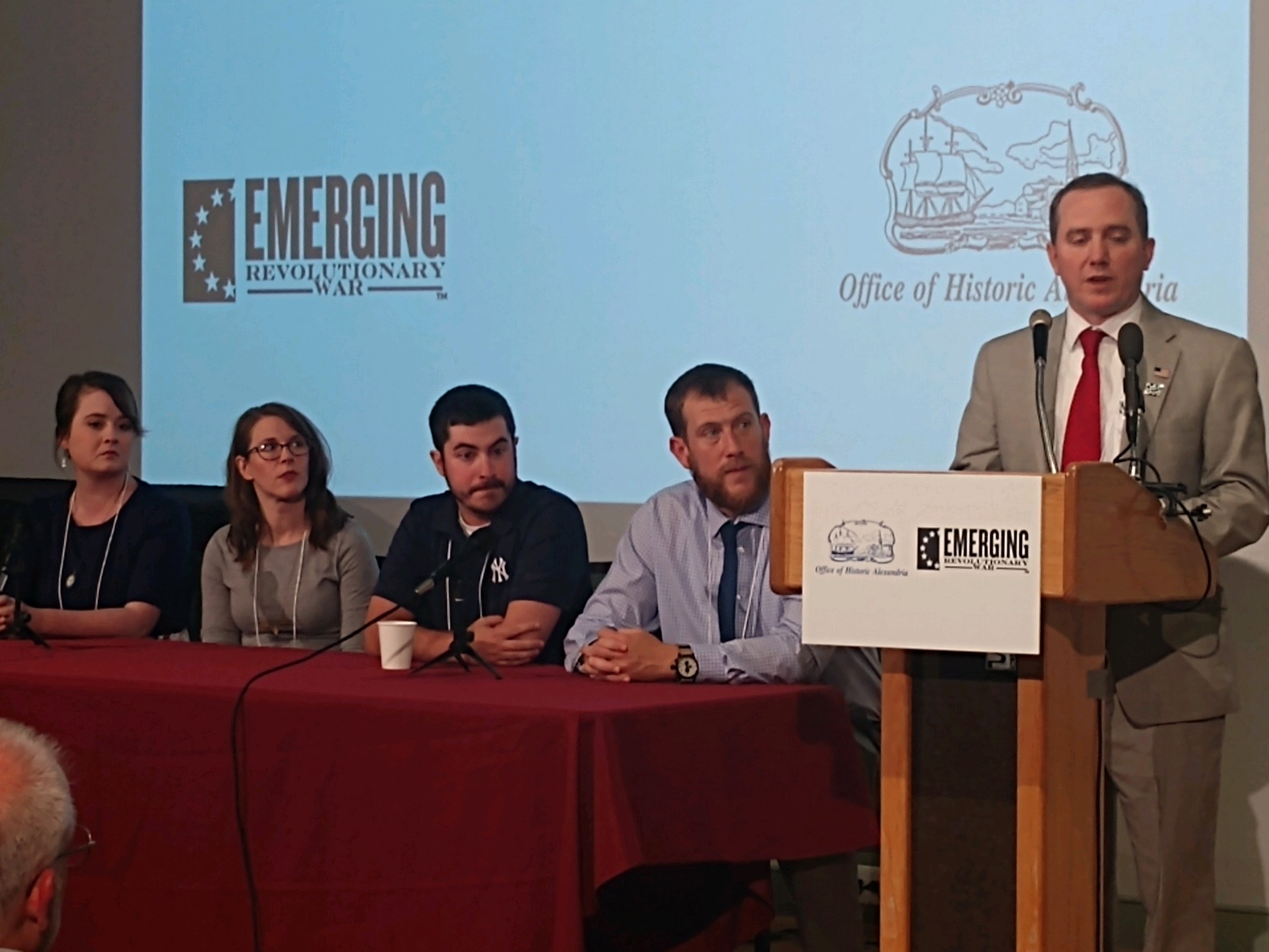
With a day of lectures, keynoted by Dr. Peter Henriques, professor emeritus of George Mason University the topics ranged from the French and Indian War, to George Washington, to material culture, smallpox, and Boston on the Road to Revolution. The day ended with a panel of historians in a Q&A session.
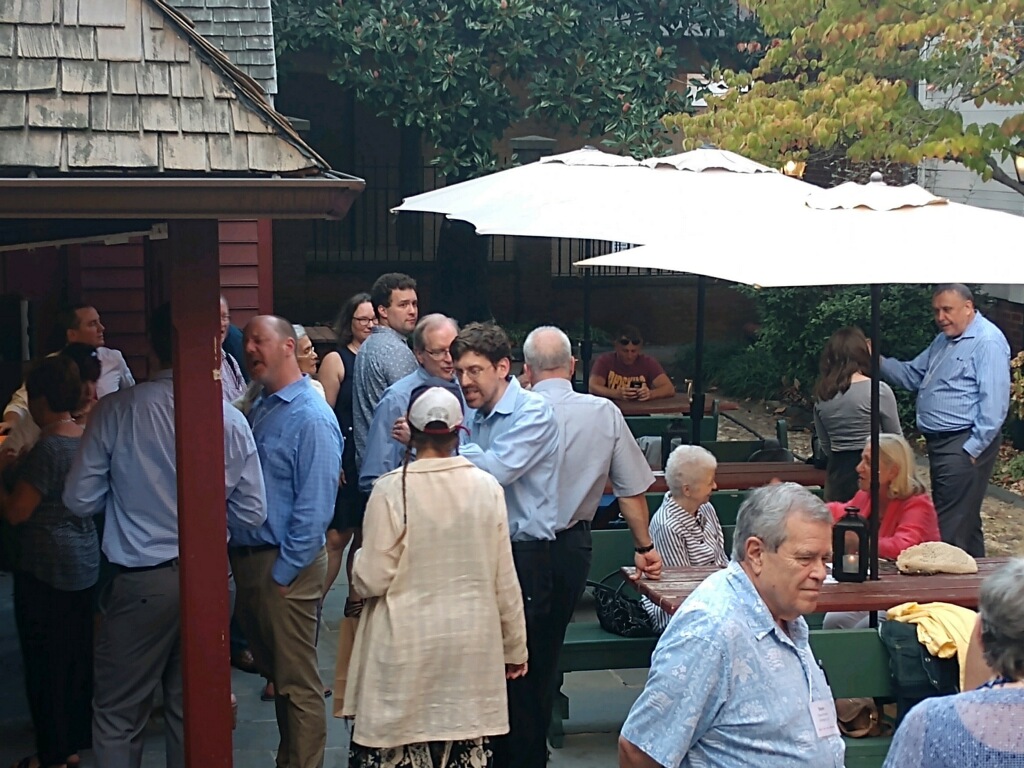
Over 70 people attended and many joined members of Emerging Revolutionary War and Historic Alexandria at Gadsby’s Tavern, an 18th century tavern with a great connection to American history, including a a ballroom used by Washington to celebrate his birthdays!
Plans are already in motion for the second annual Emerging Revolutionary War symposium to be held in late September of 2020 back in Alexandria, Virginia. Stay tuned to this blog and our Facebook page for information as that day draws near.
In the meantime, check out some of the photos below, taken by ERW historian Rob Orrison, who along with Liz Williams of Historic Alexandria were the driving forces behind making this symposium possible. A big thank you to all who attended and we hope to see you next year!
Dr. Peter Henriques discusses George Washington’s route to becoming a revolutionary
The panel discussion with ERW historian Mark Maloy as the MC
Crowd listens intently during the panel discussion at the end of the lectures at the first annual ERW symposium
Attendees and speakers gather at Gadsby’s Tavern after the successful conclusion of the symposium
Bonhomme Richard (Naval History and Heritage Command)
During the night of September 23/24, 1779, Captain John Paul Jones led his frigate, Bonhomme Richard, into its legendary fight with Serapis. In the midst of a battle that was not going well for the Americans, British Captain Richard Pearson asked if Jones was ready to strike his colors and surrender. Jones offered one of the most famous replies in American naval history: “I have not yet begun to fight!” Or did he? Continue reading ““I Have not Yet Begun to Fight!” or Words to that Effect (September 23, 1779)”→









 Emerging Revolutionary War Era