Liberty’s Words Ringing Hollow: Prince Whipple’s 1779 Petition for Freedom in New Hampshire

Emerging Revolutionary War welcomes guest historian Dr Lawrence Howard

Many people have not been taught that slavery was practiced in early America’s northern colonies, later states. Though fewer people were enslaved in the north than in the south, where the plantation economy was highly reliant on enslaved labor, people were also held in bondage in the north. Also not often taught is the contribution such enslaved persons made to the success of America’s Founding, though recent scholarship seeks to amend this. This article explores the 1779 Petition to the New Hampshire Government, written by Prince Whipple – born in Africa in 1750 and purchased by William Whipple of Portsmouth, New Hampshire at a young age. In this petition, twenty black men requested emancipation from slavery. The African American petitioners echoed some of the same political ideas that the delegates to the Second Continental Congress had staked their own lives on just three years earlier in the Declaration of Independence, announcing American political independence from Britain.

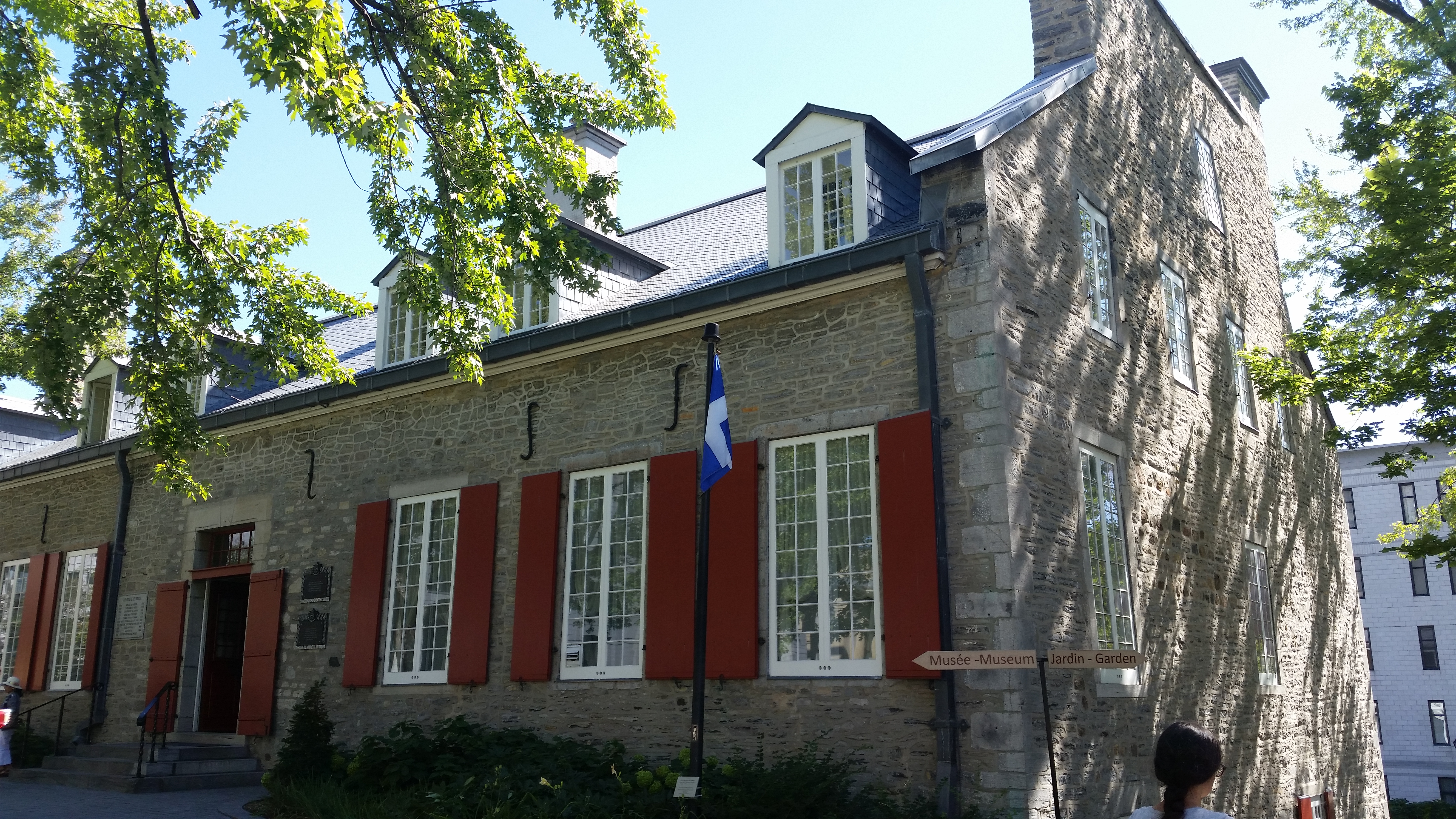
Moffatt-Ladd House, Portsmouth, NH, Author’s photo.

Continue reading “Liberty’s Words Ringing Hollow: Prince Whipple’s 1779 Petition for Freedom in New Hampshire”

ERW Recaps Ken Burns’ “American Revolution” -Nightly at 10pm!

There is a lot of anticipation on the upcoming Ken Burns’ documentary on the American Revolution. The series will run on PBS starting this Sunday at 8pm and running through Friday. Emerging Revolutionary War invites you to join us each night at 10pm on our Facebook page as we recap each episode with our Emerging Revolutionary War historians. These will be live streams, so join in on the discussion via the chat.

We have seen various previews of the documentary and we are excited about the potential this series might have on generating more public interest in the American Revolution and the 250th anniversary events over the next six years.

Be sure to join us and we hope to see you at 10pm on Sunday night!

“Void of Common Sense” George Washington and Guy Fawkes Day, 1775

In November 1775, as the American colonies were deep in rebellion against Britain, General George Washington faced not only the British army but also the task of shaping a new American identity. One revealing moment came on November 5, 1775, when Washington, then commander-in-chief of the Continental Army, issued an order forbidding his soldiers from celebrating Guy Fawkes Day, also known as Pope’s Day in colonial New England. This event—often overlooked in histories of the Revolution—offers insight into Washington’s leadership, his moral sensibilities, and his vision for the cause of American independence.

Guy Fawkes Night at Windsor Castle, 1775

Guy Fawkes Day had long been an English and colonial holiday commemorating the failed Gunpowder Plot of 1605, when Catholic conspirator Guy Fawkes attempted to blow up Parliament and assassinate King James I. In Protestant England and its colonies, November 5 became a day of noisy anti-Catholic demonstrations, bonfires, and the burning of effigies of the Pope and Fawkes. In Boston and other colonial towns, rival street gangs—often from the North and South Ends—would parade effigies, fight, and engage in destructive celebrations. It was, in short, a day of raucous Protestant triumphalism and sectarian hatred.

By 1775, however, the American Revolution had changed the stakes. The Continental Army, drawn from thirteen diverse colonies, was fighting not merely as British subjects in revolt but as Americans united against tyranny. Washington recognized that this unity could not rest on religious prejudice. Moreover, the colonies were seeking crucial support from Catholic France and from Catholic Canadians in Quebec. Anti-Catholic displays risked alienating potential allies. Thus, on November 5, 1775, Washington issued a General Order that firmly condemned the planned festivities.

John Fitzgerald, an Irish Catholic immigrated to Alexandria in 1773. He became good friends with Washington and like many other Catholics, provided great service to Washington. For a time he served as an aide-de-camp to Washington.

Washington’s order read, in part, that “at such a juncture, and in such circumstances, to be insulting their religion is so monstrous, as not to be suffered or excused.” He called on his troops to remember that “we are contending for the rights of mankind” and that the cause required dignity and respect for all faiths. The general’s tone combined moral rebuke with strategic foresight. By discouraging Pope’s Day, he sought to replace narrow sectarian loyalties with a broader, inclusive patriotism.

This moment also reflects Washington’s character and leadership style. He understood the importance of discipline and order in an army composed largely of volunteers. The elimination of destructive, drunken celebrations helped reinforce his insistence on professionalism. But more importantly, Washington saw the American cause as grounded in universal principles of liberty and justice—principles incompatible with the kind of bigotry Pope’s Day embodied.

In retrospect, Washington’s handling of Guy Fawkes Day in 1775 stands as an early statement of religious tolerance in American political life. His decision to forbid anti-Catholic celebrations prefigured later American commitments to freedom of conscience and the separation of church and state. What might have seemed a minor disciplinary order was, in fact, a symbolic act of leadership: it transformed an old English custom of division into an American lesson in unity. Through it, Washington began to shape not just an army, but a nation.

Early Preservation at Fort Ticonderoga

Emerging Revolutionary War welcomes back guest historian Evan Portman

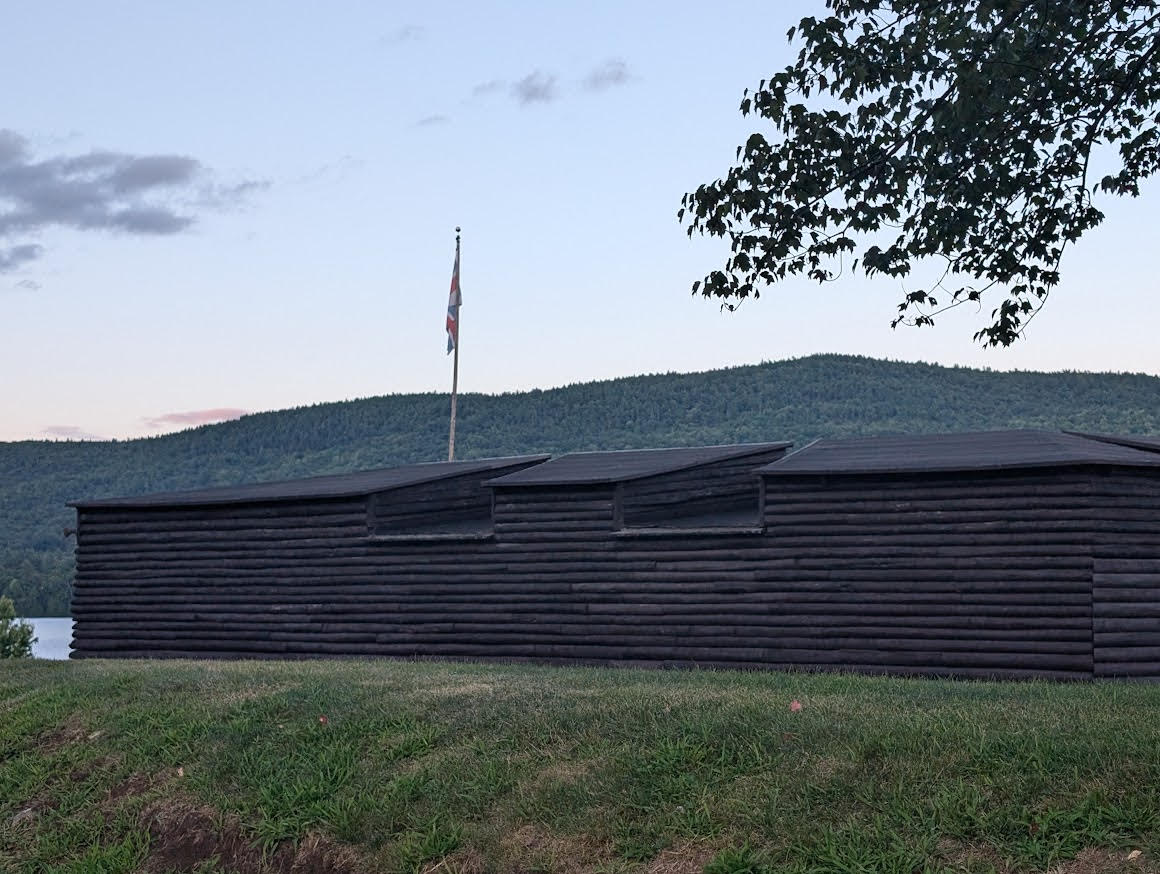
Most historians credit Ann Pamela Cunningham with kickstarting the historic preservation movement with her purchase of Mount Vernon in 1858. However, preservation of historic sites began long before the Mount Vernon Ladies’ Association. In fact, the storied walls of Fort Ticonderoga became the object of a preservation movement 38 years before the Ladies’ Association purchased George Washington’s ancestral home.

Fort Ticonderoga—known as the Gibraltar of North America—played an integral role in both the French and Indian War and the American Revolution. The fort was originally constructed by the French in 1755 on a portage known to the Iroquois as ticonderoga, meaning a “land between two waters.” Fort Carillon, as it was known to the French, stood strategically between Lake Champlain and Lake George, thereby controlling both the Hudson River Valley and St. Lawrence River Valley. On July 8, 1758, an outnumbered French army successfully defended the fort against British forces in the bloodiest battle of the French and Indian War.[1] However, the following year British General Jeffery Amherst captured the fort and renamed it Fort Ticonderoga.[2]

By the American Revolution, the fort had fallen into disrepair but was still guarded by a small British garrison. In 1775, it was the scene of one of the most famous dramas in American history. On May 10, Col. Benedict Arnold and Col. Ethan Allen led a combined force of the Green Mountain Boys and Massachusetts and Connecticut militiamen across Lake Champlain to capture the fort. “Come out you old Rat!” Allen famously cried to the fort’s commander, Capt. William Delaplace, and demanded he surrender the garrison “in the name of the Great Jehovah and the Continental Congress.”[3] Delaplace agreed, and Ticonderoga quickly fell into American hands.

Continue reading “Early Preservation at Fort Ticonderoga”

William Billings: Patriot, composer, leather-tanner

Emerging Revolutionary War welcomes guest historian David Stowe.

William Billings looked like an oaf, wrote poetry, snuffed small fistfuls of tobacco in company, taught himself to write music, was a street-cleaner, was an artist.

-David McKay and Richard Crawford, William Billings of Boston (1980)

I knew I wanted to write a book about William Billings. I just wasn’t sure which kind would be possible. I’ve been writing about the quirky Boston composer since my second book, How Sweet the Sound (2004) and always find more to say about him. His colorful adaptation of a Hebrew psalm to the American Revolutionary cause helped fuel my interest in what became Song of Exile: The Enduring Mystery of Psalm 137 (2016).

So how did I come to write a historical novel about him? 

Partly because I came to the end of my sources and didn’t have nearly enough to tell the story I thought he deserved. There were many parts of Billings’s experience, including the most important ones, I’d never have access to. But his life was too rich and interesting to leave alone. So I was left with no choice but to make it up.

There were some other, possibly better reasons. One had to do with audience. 

Continue reading “William Billings: Patriot, composer, leather-tanner”

An Englishman’s Journal of the Revolutionary War: The Journals of Nicholas Cresswell 1774-1777

Emerging Revolutionary War welcomes guest historian Kenneth Bancroft

“Nothing but War is talked of…This cannot be redressing grievances, it is open rebellion…1

250 years ago on October 20, 1775 a 25 year old Englishman wrote these words in Alexandria, Virginia, noting that “everything is in confusion…soon they will declare Independence.”2.Nicholas Cresswell had arrived in America a year and a half prior to that entry in a journal that he kept to chronicle his venture to “shape his course in the world” and set up a new life inVirginia, “as I like the situation of that Colony the best.”3 He was aware of grumblings from colonials, but his focus was on land and his adventure had him traveling and trading with the Native Americans in the Ohio country and experiencing the slave culture in the colonies, especially the horrific sugar plantations in Barbados.

But what his journal is most known for is his observations and critique of the revolutionary world from Virginia to New York in 1774 through 1777. Cresswell’s misfortune, among others, was that he arrived in America seeking opportunity just as the Imperial Crisis over the Intolerable Acts had began. News of, and reaction to the closure of the port of Boston frequently disrupted his schemes and social life. As an Englishman still loyal to the Crown, his Revolutionary War journal offers a unique outsider look at the costs of the conflict in the country and towns as opposed to the more common tomes of soldier life.

“No prospect of getting home this winter, as I am suspected of being a Spy.”4 Cresswell’s tenure in America was tenuous. Unsuccessful in trying to establish himself with land and basically broke, he blamed his misfortune on the “Liberty Mad”5 political climate that considered him a ‘Tory’ who would not commit to the cause. His penchant for getting into drunken political arguments did not help and kept getting him in trouble with local Committees of Safety.

“Am determined to make my escape the first opportunity.”6 By that point Cresswell knew it was time to forgo his quest and return to England, but the question was how, especially with non- importation measures and the war closing ports. What followed next for Cresswell was an amazing account of encounters with revolutionary notables and locations such as Thomas Jefferson, Patrick Henry, and British General Howe in Philadelphia, Williamsburg, and New York respectively. Ultimately, Cresswell was able to secure passage back to England where he reluctantly picked up where he left off by order of his father to “shear or bind corn.”7

1 Nicholas Cresswell, The Journals of Nicholas Cresswell, 1774-1777, (North Charleston, South Carolina: reprinted 2024), 97.

2 Ibid, 97.

3 Ibid, 3.

4 Ibid, 101.

5 Ibid, 47.

6 Ibid, 143.

7 Ibid, 214.

The Journals of Nicholas Cresswell was first published in 1924 and offers a candid account of the American Revolution from a viewpoint not typically explored. Its accounts of mustering militia, salt shortages, political pulpits, and anti-Tory riots and fights add color to our revolutionary origins. Add to that Cresswell’s experiences with the Native Americans in the Ohio country and the plantations in Barbados which further inform our understanding of our colonial past. Join Cresswell’s journey! To read more about Cresswell’s journey click here. The blog is an online platform and resource to follow his daily posts as they occurred 250 years ago. Keyword search features and research links are featured as well. Follow along on Facebook, too, at Nicholas Cresswell Journals.

Sovereign Love: Remembering Major Andre

Emerging Revolutionary War welcomes back guest historian Avellina Balestri

As I have increased research and work on my American Revolution trilogy All Ye That Pass By, I have noticed a trend towards making this particular season between the anniversary of Nathan Hale’s hanging (September 22, 1776) and John Andre’s hanging (October 2, 1780) into a strange sort of macabre festival I have dubbed “Hangemtide.” I suppose one could consider it a sort of Halloween for historical enthusiasts, as the autumnal chill starts to creep into the air, greenery dies, and horror releases hit the market. But a strange pseudo-religious reality I have observed is a tendency to treat these hangings as secular passion plays of a kind, connected by a secular Advent calendar of daily memorials, with the overarching takeaway being a strange sense of catharsis for the salvation of a newborn nation.

As a Catholic, I very well know the thematic beats, and I can sense them in an unsettling way in these commemorations. We must have our scapegoat; a man, or two, must die so the nation might live in our origin myth. But though the narrative may comfortably place Hale as the first Christ-figure, it uncomfortably assures that Andre is the second. We as the audience, while intended to shed tears for the first, are meant to bay for the blood of the second. Perhaps we may pity him in passing moments, but never so much that we truly desire him to be spared. His death is a foregone conclusion of the ritual which must be affirmed. We are recalling the traditional readings on Passion Sunday, and hardly realize it. We have, perhaps, lost the much greater plot of Christianity, that in the death of each, the other perishes, and in every death, we partake, in the killing and the dying, and in every human catastrophe, there is planted the original Passion Tree, no less in the past than in the present. History is not safe from our iniquity, nor from grace breaking in upon it, oftentimes painfully.

Touching back upon the historical events being remembered according to our national needs, I have often gently chided friends involved in “Hangentide” that I am ever on call to be the defense lawyer Major Andre never got should they wish to shuttle me into the past on circuit. I do not intend to make that defense the core of my current thesis, but put simply, I believe that if he had received a proper legal defense, Andre may well have had his sentence reduced based on extenuating circumstances. But that was not to be, because it could not be, not in the narrative as it is presented to us over and over again. This was a necessary death; a payment to Justice itself. It is language used to mask what was essentially a revenge hanging for both Hale’s execution at the hands of Crown forces and Arnold’s betrayal of the revolution for hard cold coin. The true foundation stone of “Hangemtide” is a satisfaction we are meant to share in nearly 250-year-old retribution. It is meant to, in some way, bring the country together through our most primal tribal instinct. But does it?

Continue reading “Sovereign Love: Remembering Major Andre”

Founders and Drinkers

Emerging Revolutionary War welcomes back guest historian Michael Aubrecht

As someone who enjoys the occasional cocktail I am admittedly curious as to the rumored excessive-drinking habits of our Founding Fathers.

After conducting a casual examination, I think it would be fair to say that their wealth, power, and the period in which they lived in made alcohol a mainstay in their daily lives. Most of these gentlemen were the political playboys of their day and we already know that many of them had a penchant for wine, women and song. Today most people assume that the common table wine was the preferred beverage of colonial times and that most folks simply enjoyed it as a compliment to meals.

According to research conducted by Stanton Peele, the Founders had a much broader palette when it came to engaging in the Spirit of ‘76. Simply put, these boys liked to party:

How do we know the Founding Fathers as a group drank a lot? Well, for one thing, we have records of their imbibing. In 1787, two days before they signed off on the Constitution, the 55 delegates to the Constitutional Convention partied at a tavern.

According to the bill preserved from the evening, they drank 54 bottles of Madeira, 60 bottles of claret, eight of whiskey, 22 of porter, eight of hard cider, 12 of beer and seven bowls of alcoholic punch. That’s more than two bottles of fruit of the vine, plus a few shots and a lot of punch and beer, for every delegate. Clearly, that’s humanly impossible.

Continue reading “Founders and Drinkers”

“Rev War Revelry” Fighting for Philadelphia

Fort Mercer. Fort Mifflin. The Whitemarsh Campaign. Names of battles and maneuvers that “receive but scant attention in the literature of the American Revolution.” Until now. Award-winning author and historian Michael C. Harris returns to Emerging Revolutionary War to discuss his latest book.

Finishing the trilogy, started with Brandywine, continued with Germantown, and now Fighting for Philadelphia. Just released by Savas Beatie this month!

Enjoy this pre-recorded “Rev War Revelry” and get a synopsis of why this book is needed on your bookshelf. Join Emerging Revolutionary War Sunday at 7 p.m. EDT.

Major John Van Dyk, and the Bones of Major John André. Part III

Emerging Revolutionary War welcomes back Jeffrey Collin Wilford
Part I, click here. Part II, click here.

Major Andre’s Reckoning

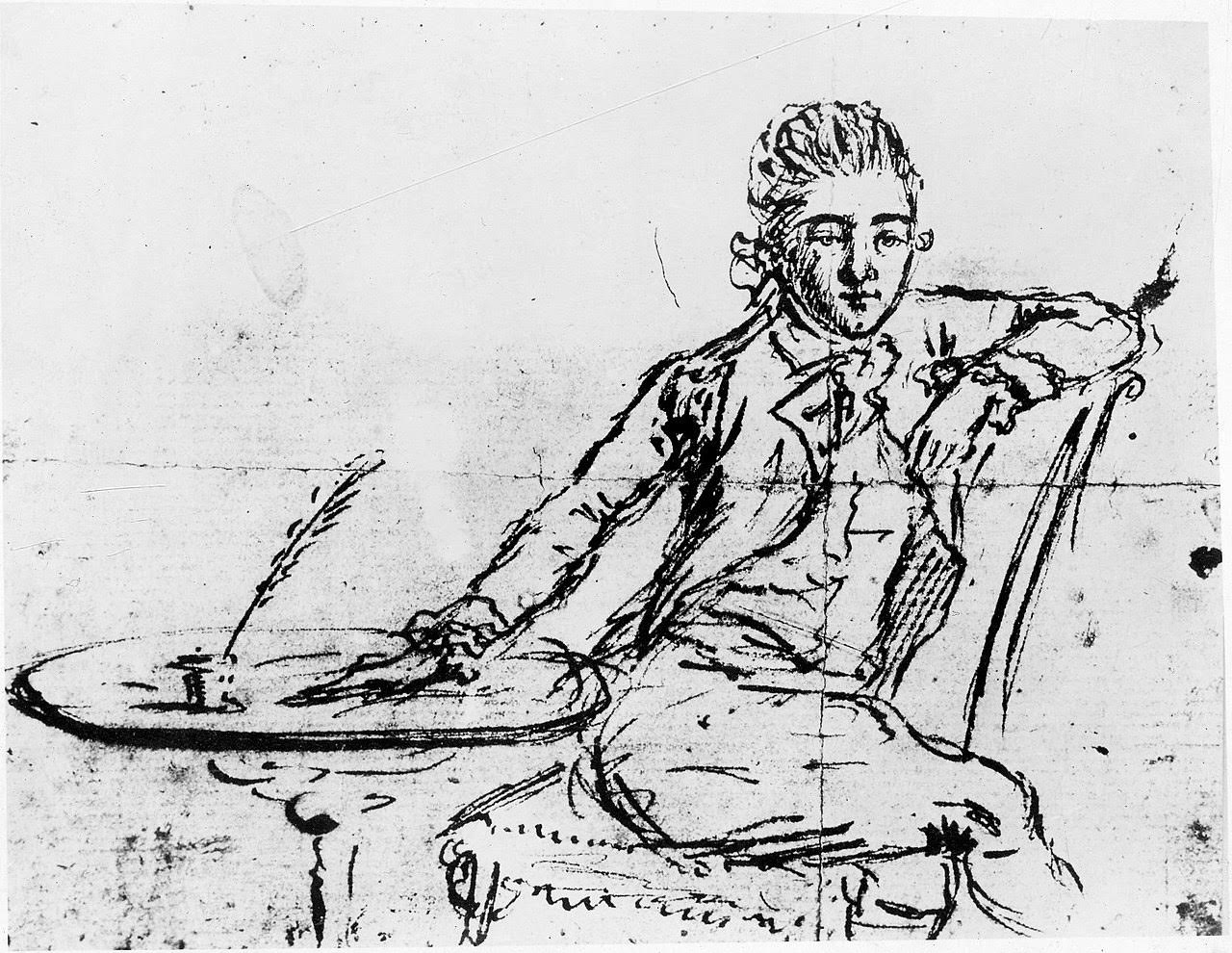
Along the way from Tarrytown, New York, to West Point, Benjamin Tallmadge conversed almost nonstop with the freshly captured British prisoner John André and learned much about the youthful officer. It was perhaps Major Tallmadge’s background as George Washington’s chief intelligence officer as well as recollections illuminated by the light of André’s charisma, that helped begin to paint a picture of an honorable soldier. After countless hours of conversation during their journey north  he became convinced that André’s “Head was in fault, & not his heart.” Tallmadge commented later that André was “a most delectable Companion. It often drew tears from my Eyes to find him so pleasant & agreeable in Conversation on different Subjects, when I reflected on his future fate, & that too, as I believed, so near at hand—” In the short time the two spent together Tallmadge seemed to have grown extremely fond of the British Major. 

One can sympathize with Tallmadge’s point of view. After all, André was merely another victim of the traitor Arnold. He had intended to meet him on board the Vulture but when Arnold failed to show he was forced to go ashore with Smith.  After the Vulture was scared off by artillery and Arnold convinced him to don civilian clothes, plying him with incriminating materials and sending him through enemy territory, the stage was set.  In his testimony, he said it was General “Clinton’s directions not to go within an Enemy post or to quit my own dress.“ Even so, by his own admission, it was the ruling of the military Proceedings that “he changed his Dress within our Lines and under a feigned Name and in a Disguished [sic].”

Perhaps Tallmadge’s sympathies toward André were accentuated by his hatred for Arnold. Tallmadge’s characterization of André becomes clearer in a simple personal act from his testimony when he stated that “André kept reviewing his shabby Dress, & finally remarked to me that he was positively ashamed to go to the Head Qrs of the American Army in such a plight. I called my Servant, & directed him to bring my Dragoon Cloak, which I presented to André. This he refused to take for some time, but I insisted on it, & he finally put it on & rode in it to Tappan.”

By the time they made Tappan, André was under heavy guard and imprisoned at Mabie’s Tavern. Just a few hundred feet away, Washington convened 14 of his top military officers who, over two days of testimony, found André guilty and sentenced him to death. On October 1st André personally requested from Washington the honor of a firing squad over a “gibbet.” Knowing the favor could not be granted, Washington opted to ignore the request. 

On October 2nd, just before noon, André appeared on the stoop of Mabie’s Tavern. Four officers were present to escort the convicted spy to his final judgment.  One of the four officers was Captain Lieutenant John Van Dyk, with just six months separating this moment from his own capture by the British off the coast of New Jersey. “There were about six steps which led into the stoop of the house, on the light of these, one American officer with myself were standing when Major André came out of the front door of the house in regimentals, hooking his arm with the two American officers (his attendants) one on his right and left. He ran down the steps of the stoop as quickly and lively as though no execution was to take place, and immediately fell into the centre of the guard, a place assigned him.”

 André exits Mabie’s Tavern on the day of execution.
   (copyright: New York Public Library)

Escorting André with his four guards was also Major Benjamin Tallmadge. “I walked with him to the place of execution, and parted with him under the gallows, entirely overwhelmed with Grief, that so gallant an officer, & so accomplished a Gentleman should come to such an ignominious End.” Echoing that sentiment in writing nine days after his execution was Alexander Hamilton, saying “Never perhaps did any man suffer death with more justice, or deserve it less.”

Mabie’s Tavern today (Wilford)

When André had turned the corner to see the gallows before him, Van Dyk recorded his statement. “Gentlemen, I am disappointed, I expected my request…would have been granted.” According to Van Dyk, preparations were made and André’s final words when asked if he had any were “I have nothing more to say, gentlemen, but this, you all bear me witness, that I meet my fate as a brave man.” With that came the untimely end of Major John André who was then cut down and not allowed to fall to the ground and “every attention and respect was paid to Major André that it is possible to pay a man in his situation.” He was placed in a simple coffin and buried in a shallow grave close to the site. Over the following 40 years, a peach tree grew above the grave, ostensibly from a peach given to André by a woman as he marched to his execution. 

When the Duke of York requested the return of his remains in 1821 it was not without fear of a backlash, specifically from the residents of Tappan. Many felt it was an affront to the memory of George Washington. British consul James Buchanan found that the protestations dissipated quickly after he agreed to buy those who were against the idea a drink at the local inn. The bones were then dug up with the root of the peach growing through the skull’s eye socket. They were placed in a mahogany ossuary and shipped by way of a British mail ship called a packet to New York City where they awaited their return to London.  

Captain, now Colonel, John Van Dyk, 67 years old and working for the New York Customs House near the docks of the North (Hudson) River heard about the impending exhumation and, using his connections with influential New Yorker John Pintard, requested a dialog with Buchanan. Through the British consul, he obtained a penned introduction to the captain of the packet where André’s bones lay. Van Dyk made his way to the North River and found the captain just leaving to go back aboard the packet. Upon handing him the introduction from Buchanan, the captain requested that he return at 10 o’clock the following morning and a barge would be waiting to take him to the ship.

Coincidentally, that same day Dr. Valentine Mott, considered by many to be the greatest surgeon of his time, was treating one of Van Dyk’s children and heard of Van Dyk’s plan. Naturally, he was invited along for the next morning’s visit. That day, the two reached the docks just before 10 o’clock and met the barge which took them to the ship.  “We went together on board the Packet. The bones were in a superb urn, and we were permitted to handle them. I mentioned the circumstances, as I have related them above, to the Captain [about André’s execution] — bid him goodbye, and we came on shore.” Van Dyk’s motivations for wanting to visit the remains of André are lost to history and probably best understood by those who experienced the emotions of that fateful day in  American history.  

André chest: © 2025 Dean and Chapter of Westminster

Amidst a boat of mail destined for England, John André left New York for the last time, traveling back to London where his remains were repatriated. His ossuary was emptied of its contents and his remains were buried in Westminster Abbey with the inscription “universally beloved and esteemed by the Army in which he served, and lamented even by his foes, now lay alongside medieval kings, Renaissance statesmen, and Georgian poets.” Arnold and his wife Peggy lived the rest of their lives post-Revolution in London, reviled by most, and are buried just 3 miles away at St. Mary’s Church in Battersea, in a vault that sits behind a wall in a basement kindergarten classroom.  

Bibliography

“New York City Inhabitants, Occupations & Address 1775.” New York Ancestors History & Genealogy Project. Accessed October 5, 2024. https://nyahgp.genealogyvillage.com/new_york_city_inhabitants_occupations_address_1775.html

“The London Gazette, Issue 12419, Page 3.” The Gazette. Accessed October 4, 2024. https://www.thegazette.co.uk/London/issue/12419/page/3

Mount Vernon Ladies’ Association. “John André.” George Washington’s Mount Vernon. Accessed October 4, 2024. https://www.mountvernon.org/library/digitalhistory/digital-encyclopedia/article/john-André/.

“Benedict Arnold.” American Battlefield Trust. Accessed October 4, 2024. https://www.battlefields.org/learn/biographies/benedict-arnold

“From Hero to Traitor: Benedict Arnold’s Day of Infamy.” National Constitution Center, September 21, 2022. 

https://constitutioncenter.org/blog/from-hero-to-traitor-benedict-arnolds-day-of-infamy.

“Proceedings of a Board of General Officers, 29 September 1780.” Founders Online, National Archives. https://founders.archives.gov/documents/Washington/03-28-02-0182-0009 

[Original source: The Papers of George Washington, Revolutionary War Series, vol. 28, 28 August–27 October 1780, edited by William M. Ferraro and Jeffrey L. Zvengrowski, 291–296. Charlottesville: University of Virginia Press, 2020.]

“To George Washington from Major John André, 24 September 1780.” Founders Online, National Archives. https://founders.archives.gov/documents/Washington/03-28-02-0182-0003 

[Original source: The Papers of George Washington, Revolutionary War Series, vol. 28, 28 August–27 October 1780, edited by William M. Ferraro and Jeffrey L. Zvengrowski, 277–283. Charlottesville: University of Virginia Press, 2020.]

“From George Washington to Samuel Huntington, 17 October 1779.” Founders Online, National Archives. https://founders.archives.gov/documents/Washington/03-22-02-0616 

[Original source: The Papers of George Washington, Revolutionary War Series, vol. 22, 1 August–21 October 1779, edited by Benjamin L. Huggins, 745–746. Charlottesville: University of Virginia Press, 2013.]

“To George Washington from Major John André, 1 October 1780.” Founders Online, National Archives. https://founders.archives.gov/documents/Washington/03-28-02-0182-0014 

[Original source: The Papers of George Washington, Revolutionary War Series, vol. 28, 28 August–27 October 1780, edited by William M. Ferraro and Jeffrey L. Zvengrowski, 303–311. Charlottesville: University of Virginia Press, 2020.]

Van Dyk, John. “Major André, Letter of Col. Van Dyk to John Pintard, August 27, 1821.” Historical Magazine 7, no. 8 (August 1863): 250-252.

Van Dyk, John. “Major André.” Martinsburg Gazette, August 20, 1835.

Miller, Tom. “The 1849 Dr. Valentine Mott Mansion – No. 1 Gramercy Park West.” Daytonian in Manhattan (blog), January 9, 2012. https://daytoninmanhattan.blogspot.com/2012/01/1849-dr-valentine-mott-mansion-no-1.html

Nolan, John. “The Death and Resurrection of Major John André.” Journal of the American Revolution, August 13, 2018. https://allthingsliberty.com/2018/08/the-death-and-resurrection-of-major-john-André/

“John André.” Westminster Abbey. The Dean and Chapter of Westminster. Accessed October 4, 2024. 

https://www.westminster-abbey.org/abbey-commemorations/commemorations/john-André/

Diamant, Lincoln, and Carl Oechsnew. “André’s Map.” Hudson River Valley National Heritage Area, Hudson River Valley Institute, 2005. https://www.hudsonrivervalley.org/documents/401021/1055071/Andrésmap.pdf/34027eeb-a4e9-4077-ac3b-57c46cc6e23a.

Stokes, I. N. Phelps. The Iconography of Manhattan Island 1498-1909. Vol. 1. New York, 1915-1928.

“Benedict Arnold.” SmugMug. Accessed October 4, 2024. 

https://benedictarnold.smugmug.com/.

Clements Library. “André-Clinton Letter.” Spy Letters of the American Revolution. University of Michigan. Accessed January 30, 2025. https://clements.umich.edu/exhibit/spy-letters-of-the-american-revolution/gallery-of-letters/andre-clinton-letter/.