

ERW welcomes back historian Keith J. Muchowski for a two part series in honor of the 250th anniversary of the New York Campaign and the Battle of Long Island.
Continue reading ““Mostly Members of the Old Flatbush Families”: The Kings County Historical Society and the Battle of Long Island in Memory”Tag: American Revolution
Rev War Revelry: 18th Century Military Strategy on the eve of the New York Campaign of 1776
Although the New York Campaign of 1776 was not General Nathanael Greene’s finest moments during the American Revolutionary War, he did rebound and become one of the premier military strategists by the end of the conflict. His views, learned on the field of battle, the bustle of various headquarters, and the countless miles of riding and marching on campaign was summed up when he wrote the following.
“Don’t be surprised if my movements don’t correspond with your Ideas of military propriety. War is an intricate business, and people are often saved by ways and means they least look for or expect.”
Military strategy, tactics, and the war that unfolded will be the topic of discussion on our Facebook page for Sunday, July 26, and the next “Rev War Revelry.” If you miss it, check out our YouTube and podcast channels as the program will be uploaded there next week. This program will also mark the debut of the newest full-time contributor and historian with Emerging Revolutionary War, Ben Powers. Although this “Revelry” will be taped, we wanted to give a bit more background about Ben, what he has written and projects moving forward. That way you can fill the comment section with questions about both military strategy and our newest blog historian. Ben had the following to say.
“I’m honored to share a few exciting milestones in my work with Emerging Revolutionary War.
Over the past several months, I’ve had the privilege of contributing a growing body of research to ERW, including:
• “Nathaniel Greene: Washington’s Strategist or Pioneering Operational Artist” (November 2025)
• “The Attack and Defense of the Chew House: British Professionalism at Germantown” (March 2026)
• “Brave, Meritorious, Unrewarded Kirkwood”: Unrecognized Valor in the Continental Army (April 2026)
• Review of The Wandering Army: The Campaigns That Transformed the British Way of War by Huw J. Davies (April 2026)
• “Embattled Farmers or Continentals?” (July 19, 2026)
In June, Emerging Revolutionary War welcomed me as a regular contributor. I am grateful to the editors and readers for the opportunity to participate in the outstanding scholarship and public history the organization produces.
I’m also pleased to be working with the ERW team on an upcoming volume to the Emerging Revolutionary War Series that will center on Race to the Dan/Guilford for the 250th. This is a long-term project, but I am looking forward to the journey.
Whether you’re interested in Revolutionary War history, military leadership, or operational art, I hope you’ll join us for the conversation.
Thank you to everyone who has read, shared, commented on, or challenged my work. As we celebrate America’s 250th anniversary, I look forward to continuing to learn, write, and contribute to the field.”
Embattled Farmers or Continentals?
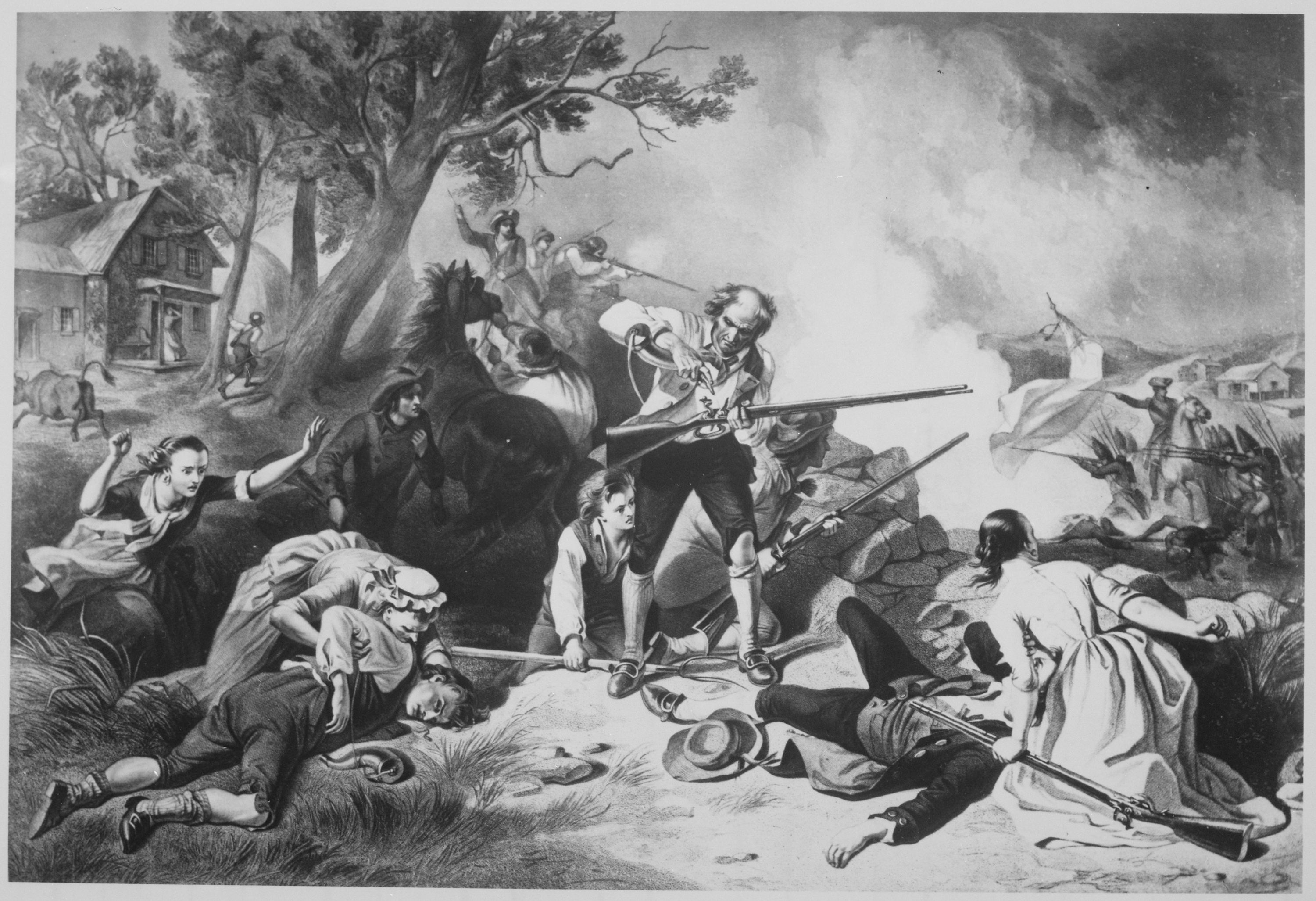
There is a sense in the American military tradition that the Republic has relied on citizen-soldiers in times of crisis to bolster its army rather than maintain a large standing force. While the modern American military, post-1945, has increased in size and power to accommodate the global commitments incurred in the wake of World War II, for the bulk of American history, the United States sought to make do with a small professional force, bolstered with militias called to arms and volunteers when war threatened. While this arrangement for national defense was in part driven by fiscal concerns, as a large standing army incurs a cost to the treasury, another aspect concerned how the United States perceived itself. The early Republic, and before its establishment, the thirteen original colonies, inherited from England a distrust of standing armies and a faith in community militias. Historian John Galvin’s The Minutemen posits that the colonial militia, especially in New England, had a long tradition of active training participation, evolving organization, and combat experience prior to the commencement of hostilities on 19 April 1775, and that it was the progenitor of the American citizen-soldier who won the American Revolution.[1] In contrast, James Kirby Martin and Mark Edward Lender argue in A Respectable Army: The Military Origins of the Republic, 1763–1789 that commitment to militia duty was honored largely in the breach in the American colonies prior to the revolution, that the militia performed unevenly during the War for Independence, and that ultimately the Continental Army achieved the victory that cemented America’s freedom.[2] Martin and Lender conclude that the American tradition of a sturdy yeoman militiaman is more legend than fact and used to justify maintaining a small regular army during the early days of the republic.
The notion of the American militiaman responding to an alarm to defend his own appears repeatedly in the literature on the Revolutionary War. John Shy, in his 1962 paper on colonial military systems, described the notion underlying the efficacy of the militia system as “only when free men must themselves fight to maintain their liberty are they likely to remain free.”[3] According to Fred Anderson Berg in his encyclopedia of Continental Army forces, the militia systems of the American colonies evolved from English tradition, and were geographically organized around townships and counties, and were designed to serve for short periods, without pay, and in proximity to their homes. The intent was for them to be an “in extremis” force designed to protect their own neighborhoods. Anderson’s entry on the militia in the American Revolution paints their performance in a favorable light and does nothing to contradict the idea that militia units contributed significantly to securing American Independence.[4] David Hackett Fischer reinforces these points in his analysis of the events of April 1775, providing a brief summary of the martial qualities of the men of Massachusetts Bay Colony, specifically noting that at least once a generation between 1689 and 1763, the militia answered the call to arms in operations against indigenous peoples or French colonial opponents, either separately or in combination.[5] Despite these descriptions of militia origins, motivations, or performance, none of the writers delved into what made militia troops effective, as John Galvin did in his book The Minutemen, The First Fight: Myths and Realities of the American Revolution. Galvin first appears as an unlikely proponent of the militia tradition. He spent his career as a professional soldier, having graduated from the United States Military Academy, served multiple tours in Vietnam, and ultimately retired as a General Officer as the Supreme Commander of Allied Forces in Europe.[6] Upon closer examination, his motivation for doing so becomes apparent. Galvin was a native of Massachusetts and keenly interested in the military history of his home state. He grew up learning the myth that when the King’s troops departed Boston to collect military supplies stored in Concord, every day farmers left their homesteads, banded together against the invaders, and chased them back to whence they came. The take did not make sense to Galvin precisely because of his military training and combat experience. Such a performance in battle suggested organization, command & control, and logistical forethought rather than a spontaneous response to a threat.[7]
Galvin set out to learn the facts behind the myth and discovered that the Massachusetts troops that responded to the alarm of 19 April 1775 enjoyed substantial advantages. He learned, contrary to legend, that the colonists benefited from significant logistical and preparation and training, political support, and a highly organized administrative structure that turned the colony’s country structure into a regimental system capable of rapidly assembling combat power when required. Gavin found that this level of sophistication was the product of an evolving system of alarm companies and other community-based defensive systems dating back to the late 17th century, combined with a renewed emphasis on readiness dating from the fall of 1774, when Massachusetts Committees of Safety began preparing in earnest for what they felt was an inevitable clash with the British troops occupying the colony.[8] This combination of tradition, commitment, and anticipation resulted in a system that could be activated as required, with each participant trained and equipped for action, knowledgeable of their leadership, with an overarching command structure prepared to lead once the men took the field.[9]
Galvin paints a picture of a highly prepared and motivated militia force and documents how the Massachusetts colonists achieved this level of readiness. In contrast, James Kirby Martin and Mark Edward Leander postulate that the militia tradition had to be modified to enable the Americans to field a long-service professional force capable of meeting the British Army in sustained combat.[10]
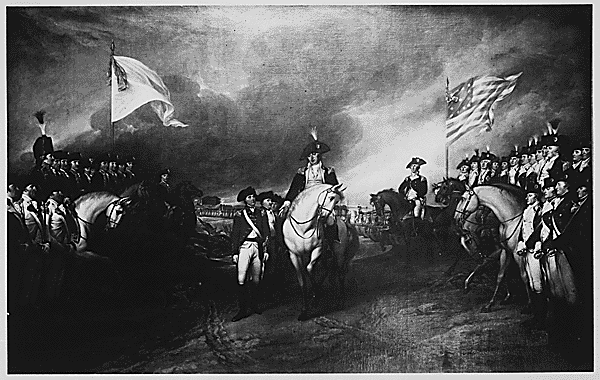
Surrender of Cornwallis. Painting by John Trumbull. (Library of Congress)
In A Respectable Army, The Military Origins of the Republic, 1763-1789, Lender and Martin do not seek to contradict Galvin, but to show that the Massachusetts militia structure was not replicated throughout all thirteen colonies in the spring of 1775, nor were even the Massachusetts militia inclined to remain in the field for prolonged operations.[11] The authors make an effective case that the militia earned an uneven reputation throughout the war, with experienced officers such as Nathaniel Greene arguing that men “coming from home with all the tender feelings of domestic life were not sufficiently fortified with natural courage to withstand the shocking scenes of war.”[12] Greene’s point is that long service in the field, under discipline and consistent training, molded men into effective combat soldiers. Lender and Martin argue that this is precisely the hardening that the Continental Army provided. The authors point out that after the opening battles of the war, the militia’s performance against British regulars was uneven at best. Militia forces provided the bulk of Washington’s troops during the ill-fated battles around New York City in the summer and fall of 1776, in which the British and Hessian troops under Howe forced Washington to evacuate the city and retreat across New Jersey to Pennsylvania by the end of the year. Despite retrieving his fortunes with lightning strikes at Trenton and Princeton in December 1776 and January 1777, Washington’s fortunes were at a low ebb, and he sought to rebuild his Army into a more professional force capable of holding its own in the field. Lender and Martin document that he was able to do just that, relying more on long-service volunteers than short-service militia to achieve his ends. The reality of Continental Army service clashed with the myth of the virtuous citizen-soldier: Washington’s troops were not yeomen protecting home and hearth, but men on the margins of society hoping to improve their fortunes through military service. They were available to serve precisely because they did not have a large stake in the day-to-day running of their home communities.[13]
Galvin presents a contrasting argument to Martin and Lender regarding the militia’s contribution to victory in the American Revolution. While Galvin’s arguments are well-documented, his focus is narrowly oriented toward the Massachusetts colony and the events of April 1775. He does not extrapolate his conclusions to the militia’s overall contribution throughout the war, whereas Martin and Lender demonstrate that militia quality was uneven, combat performance was lacking, and that the military leaders of the United States sought to create a more professional force to achieve military success.
Bibliography
Berg, Fred Anderson. Encyclopedia of Continental Army Units: Battalions,
Regiments and Independent Corps. Harrisburg, PA: Stackpole Books,
1972.
Fischer, David Hackett. Paul Revere’s Ride. New York: Oxford University
Press, 1994.
Galvin, John R. The Minute Men: A Compact History of the Defenders of the
American Colonies, 1645–1775. New York: Hawthorn Books, 1967.
Martin, James Kirby, and Mark Edward Lender. A Respectable Army: The
Military Origins of the Republic, 1763–1789. Arlington Heights, IL:
Harlan Davidson, 1982.
Shy, John. A People Numerous and Armed: Reflections on the Military
Struggle for American Independence. New York: Oxford University
Press, 1976.
[1] John R. Galvin, The Minute Men: A Compact History of the Defenders of the American Colonies, 1645–1775 (New York: Hawthorn Books, 1967), 59-67.
[2] James Kirby Martin and Mark Edward Lender, A Respectable Army: The Military Origins of the Republic, 1763–1789 (Arlington Heights, IL: Harlan Davidson, 1982), 45.
[3] John Shy, A People Numerous and Armed: Reflections on the Military Struggle for American Independence (New York: Oxford University Press, 1976), 31.
[4] Fred Anderson Berg, Encyclopedia of Continental Army Units: Battalions, Regiments, and Independent Corps(Harrisburg, PA: Stackpole Books, 1972), 76-77.
[5] David Hackett Fischer, Paul Revere’s Ride (New York: Oxford University Press, 1994), 151.
[6] Galvin, The Minute Men, vii.
[7] Galvin, The Minute Men, 3-5.
[8] Galvin, The Minute Men, 73.
[9] Galvin, The Minute Men, 206.
[10] Martin and Lender, A Respectable Army,
[11] Martin and Lender, A Respectable Army, 46.
[12] Martin and Lender, A Respectable Army, 45.
[13] Martin and Lender, A Respectable Army, 212.
From Muster Roll to Lost Note: The Paper Trail of Edmund Fowler’s Revolutionary War Compensation
Emerging Revolutionary War welcomes guest historian Marc Lee.
At first glance, it is an unremarkable accounting ledger filled with columns of figures and financial calculations. Yet hidden among its entries is the story of a Revolutionary War soldier whose compensation claim continued to circulate through Connecticut’s bureaucracy years after the fighting had ended. The surviving manuscript, together with wartime muster rolls and treasury records, allows us to follow Edmund Fowler’s claim from military service to a replacement for a lost note, revealing how the Revolution’s paperwork could outlive the war itself.[i]
The document at the center of this story is an Invoice of Officers’ and Soldiers’ Notes, Payable June 1783, a manuscript created as Connecticut settled the financial obligations left by the Revolutionary War. Rather than recording the service of a single soldier, the ledger summarizes military notes issued to officers and enlisted men, listing an aggregate amount exceeding £10,700 and bearing a notation that the account was “charged July 9, 1784.” At first glance, it appears to be little more than a routine accounting record.[ii]
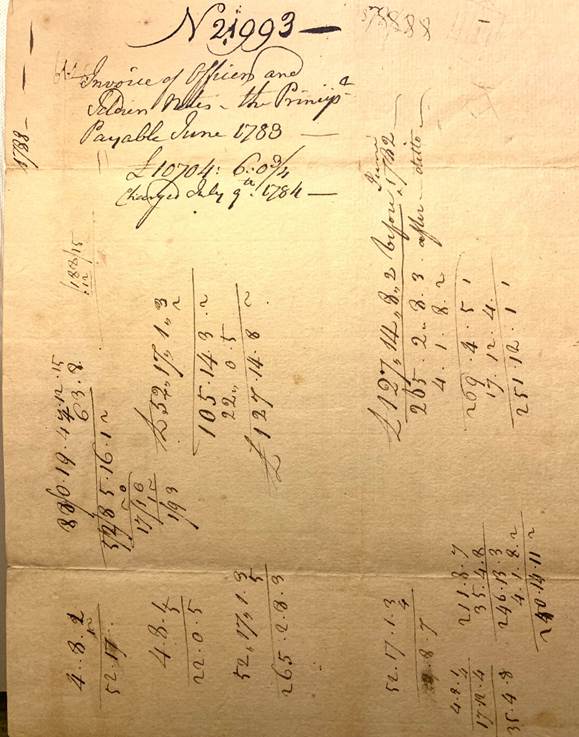
A closer examination tells a different story. The manuscript remained in active use long after it was first prepared. While the principal heading and endorsements were written in one hand, later calculations were added in a different ink and by a different hand, indicating that officials returned to the account years after the notes first became payable.[iii]
Those physical clues reveal an important reality about the Revolution’s aftermath. Paying veterans was not accomplished through a single transaction. Military service had to be verified, financial obligations reconciled, and documentary evidence maintained as claims moved through the state’s accounting system. What appears to be an ordinary ledger therefore preserves part of the administrative machinery that transformed wartime service into recognized financial compensation.
Among the many entries associated with Connecticut’s officers’ and soldiers’ notes is one that allows this broader process to be examined on a human scale. Through a series of surviving military and treasury records, the documentary trail of Revolutionary War veteran Edmund Fowler can be followed from his wartime muster rolls to the postwar administration of his compensation claim, offering a rare glimpse into how one soldier’s service continued to generate paperwork long after the fighting had ended.[iv]
The ledger identifies many officers and enlisted soldiers, but one name stands out because his surviving records extend well beyond this single document. Edmund Fowler appears in a series of Connecticut military records that preserve different stages of his wartime service, allowing his postwar compensation to be traced across several distinct record groups.[v]
Continue reading “From Muster Roll to Lost Note: The Paper Trail of Edmund Fowler’s Revolutionary War Compensation”Adams and Jefferson and the 200th Anniversary of America’s 50th Birthday
July 4, 2026 is not only the 250th anniversary of America’s birth, it’s also the 200th anniversary of the near-simultaneous deaths of Thomas Jefferson and John Adams. It’s one of the greatest coincidences in American history: the two Founders most responsible for independence died on the 50th anniversary of Independence Day.
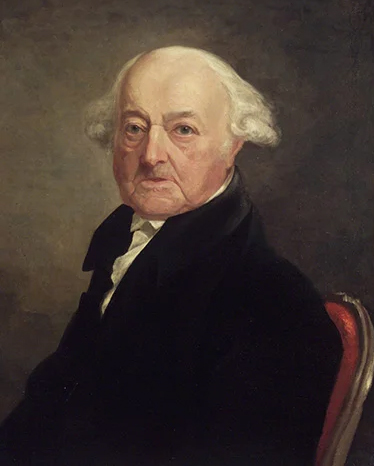
Jefferson was 83; Adams 90.
Nearly toothless, nearly blind, Adams could hardly get around. He lacked the vigor that had once let him walk miles a day for exercise. Jefferson had been slowly wearing down from an aggravated prostate problem and, by 1826, was taking large daily doses of laudanum as treatment.
Both knew they were well into their twilights. When asked to appear at commemoration ceremonies for the 50th anniversary of the Declaration, both declined. Aware their respective conditions prohibited robust orations, let alone travel to get anywhere. Adams cited his “feeble state” while Jefferson his “ill health.”
Jefferson did muster a beautiful message to be read aloud in his absence. He knew it was likely his last public message and so summoned all his powers of eloquent penmanship.
“[T]he mass of mankind has not been born with saddles on their backs, nor a favor, few booted and spurred, ready to ride the legitimately, by the grace of God.”
Adams, true to form, kept things blunt in his written message: “Independence forever. Not one word more.”
On July 4, 1826, Jefferson went first. He had been in declining health for days and by July 3, had been fading in and out of consciousness, barely hanging on. Late in the day, he woke to ask his granddaughter, “Is it the fourth yet?” Jefferson understood the symbolic power his death would have if it came on such an auspicious occasion. He had no way of knowing that his revolutionary partner/rival/friend in Quincy, Massachusetts was also on death’s door. Adams had collapsed quite suddenly on the morning of the fourth—apparently a heart attack—deteriorating throughout the day.
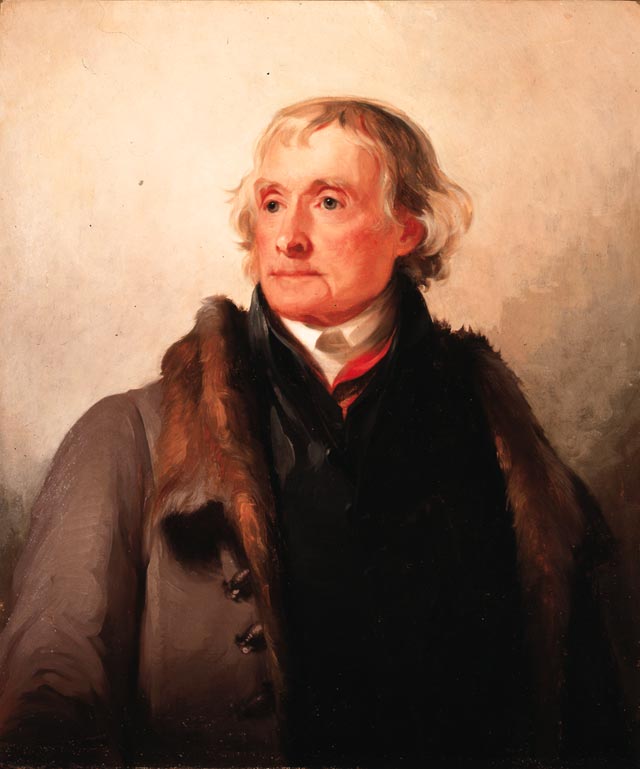
Jefferson lingered into July 4 and died at 12:50 p.m.—a bust of Adams watching over him from across his study. Adams died at 6:00 that evening, unaware that his old friend had preceded him by just a few hours. He was pleased to think that Jefferson, his junior, would outlast him. “Thomas Jefferson survives,” he said.
The statement had a powerful, dramatic flare, that makes such a perfect, tidy ending to the story. Although not literally accurate, Adams knew, even then, that Jefferson’s optimistic, aspirational vision of American history had triumphed over his own more realistic take on events. Adams hated the romanticized version of the American founding that had sprung up. How ironic that his death and Jefferson’s and the Declaration 50th anniversary all coincided—as romantic a flourish as possible for the end of the Revolutionary Era.
Chris Mackowski is the author of Atlas of Independence: John Adams and the American Revolution, part of the Emerging Revolutionary War Series from Savas Beatie.
Thomas Jefferson on July 4, 1776
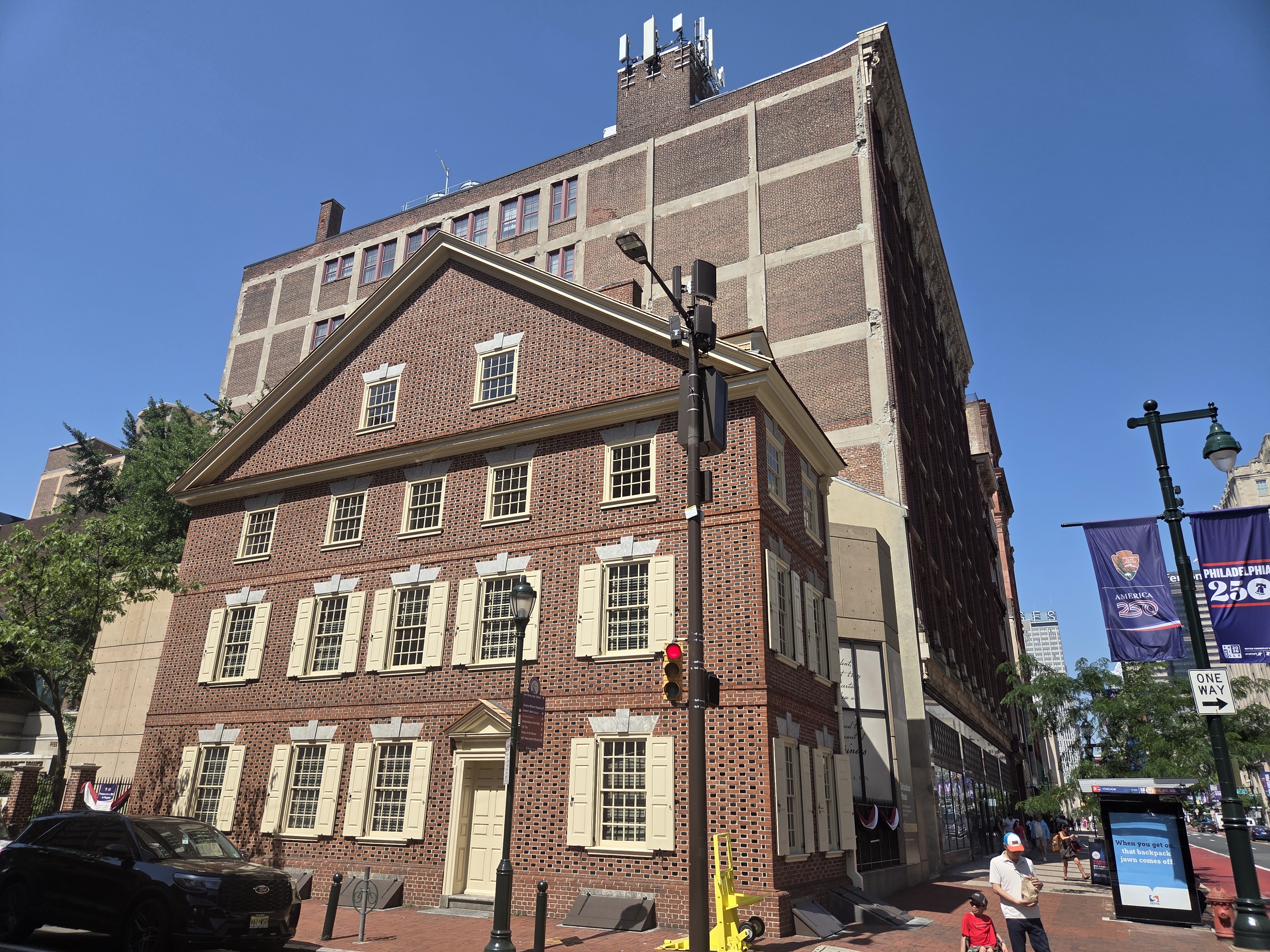
July 4, 1776 was not an unusual day when it began for Thomas Jefferson. It started off as any normal Thursday. Jefferson documented that he woke up around at dawn on the second floor of the Jacob Graff House at the corner of Market and 7th Streets. He spent the morning shopping in nearby Philadelphia stores. He documented the temperature that day at an ironic high of 76 degrees (much cooler than the expected 100+ degree heat on July 4, 2026). As he perused the stores on Philadelphia that morning, he purchased seven thermometers as well as women’s gloves. Jefferson also noted donating one shilling six pence to charity.
Jefferson was on hand as the Second Continental Congress convened at 9:00am in the Assembly Room of the Pennsylvania State House. The day before, Jefferson sat through discussion on editing his draft of the Declaration of Independence. He would also spend this morning listening to others editing down his document by one-third. Jefferson took great offense to the edits and preserved his original draft for posterity.
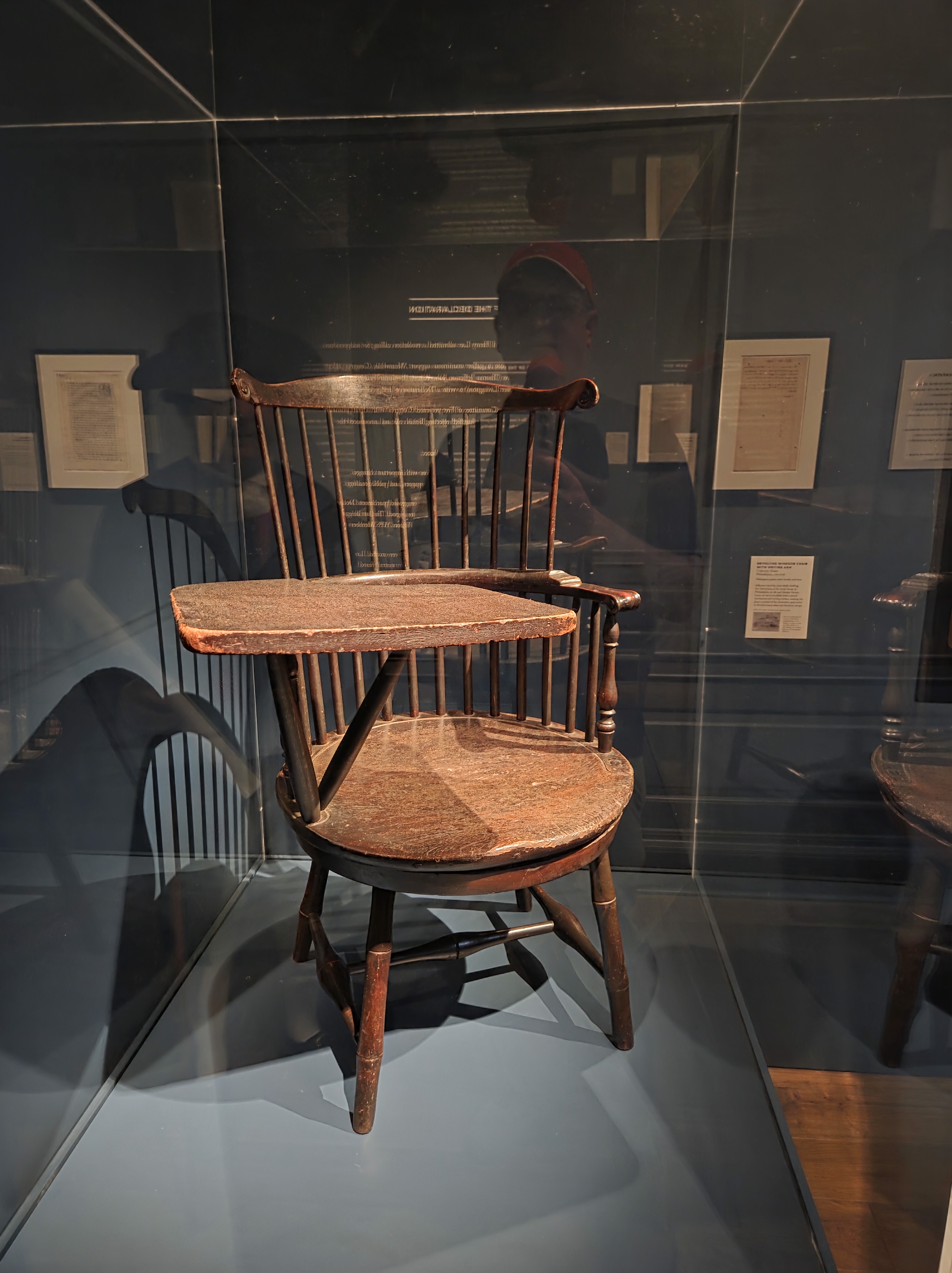
Philosophical Society
After some time spent finishing the edits to Jefferson’s Declaration, the Congress approved the document later that morning. Congress then ordered local printer John Dunlap to print 200 copies of the Declaration now known as the “Dunlap Broadsides.” Dunlap worked quickly to set his printer’s type and began printing the copies the night of July 4th. For Jefferson and the other members of Congress, the rest of the day was spent on various items around defense, relations with native tribes and other committee work. No noted celebration of the occasion of passing the Declaration. Congress also directed John Adams, Benjamin Franklin and Thomas Jefferson to design a new “Great Seal” for the new nation. [2]
It was not until later in life did men such as Adams and Jefferson give the day its prominence in American ethos. Though Adams called on Americans to celebrate July 2, today we celebrate the day that the Declaration was adopted. Both days are surely worth their own celebrations.
[1] – Jefferson the Virginian by Dumas Malone, pg. 229.
[2] – Letters of Delegate of the First and Second Continental Congresses,1774-1789. edited by Edmund C. Burnett
The Anticipation of Late June 1776
Do you remember those 1970s-era TV commercials for Heinz ketchup? A young boy, with his glass ketchup bottle turned upside down over a hamburger, waits for the ketchup to flow. In the background, Carly Simon sang, “Anticipation”: “It’s making me wait. It’s keeping me way-yay-yay-yay-yay-yay-yayting.”
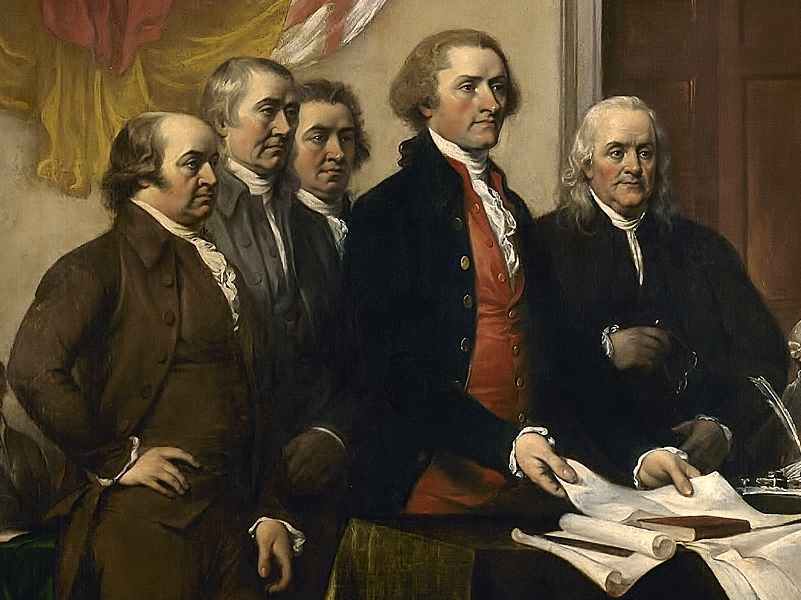
Had Carly Simon been alive 250 years ago, I have no doubt her song would have been playing in the background for Thomas Jefferson on June 29, 1776. The day before, June 28, he and his four colleagues on the “Committee of Five” had formally submitted their draft of the Declaration of Independence. Congress accepted the draft, but delegates were not yet ready to take up the document as a piece of business. They would not do so until July 1.
What might those days of limbo have felt like?
Continue reading “The Anticipation of Late June 1776”“Separation Day”
Have you ever heard of the popular saying, “No good deed goes unpunished?”
I wonder if there is a reverse to that, especially when it comes to stumbling into history?
Earlier in June, my uncle needed to go out of town and wanted someone to watch his house and two cats. He resides outside of Wilmington, Delaware. Thinking mid-June would be a good time to catch some of the historical sites in Philadelphia on the brink of the 250th in July, and with World Cup soccer games being played in the same city, even better.
I planned to go into the “City of Brotherly Love” one day, but thought the other day I would just drive around Wilmington and New Castle and see what I could discover. A day with no set plans. And that is when I stumbled into “Separation Day” in New Castle.
Continue reading ““Separation Day””Congress Establishes the Board of War and Ordnance
The United States Army traces its birthday back to June 14, 1775—the date the Second Congressional Congress voted to adopt the New England army then encircling the British in Boston.
Almost a year later to the day—June 12, 1776—the Congress voted to establish the Board of war and Ordnance, the precursor to today’s Department of Defense.[1] One could therefore make the argument that June 12, 2026, is the 250th birthday of the department. At the very least, one could directly trace the department’s ancestry back that far.
Congress voted to establish the board in response to pressure from Gen. George Washington, who desperately needed help managing the logistics of feeding, clothing, arming, equipping, and otherwise supplying the army. He spent at least as much time begging (in a dignified but humble way) various colonies for support as he did planning and executing military strategy and tactics. Supply worries were never far from his mind. “The reflection upon my Situation, & that of this Army, produces many an uneasy hour when all around me are wrapped in Sleep . . .” he wrote a confidant.[2]
But because everything about the Continental government was voluntary, that meant colonies—soon to be states—did not have to comply with Washington’s requests, let alone any Congressional resolutions. Colonies chronically undershot troop quotas and financial contributions.
Naivety ran high in those heady, early days of the war. Colonies believed militia, rather than a trained professional army, could somehow win the war. Their “patriotic spirit” would be enough to overcome the discipline and experience of the British army and its hired mercenaries. Even members of Congress, tied more regularly to military affairs through Washington’s correspondence, bought into the idea.
“You think the present army assisted by the militia is sufficient to oppose the force of Great Britain, formidable as it appears on paper,” one of Washington’s key confidents, Gen. Nathaniel Greene, told Congress in early June. He assured them they were “greatly deceived.”[3]
The creation of the Board of War did much to make the scales fall from Congressional eyes. It did so by bringing key members of Congress more directly into the management of the war.
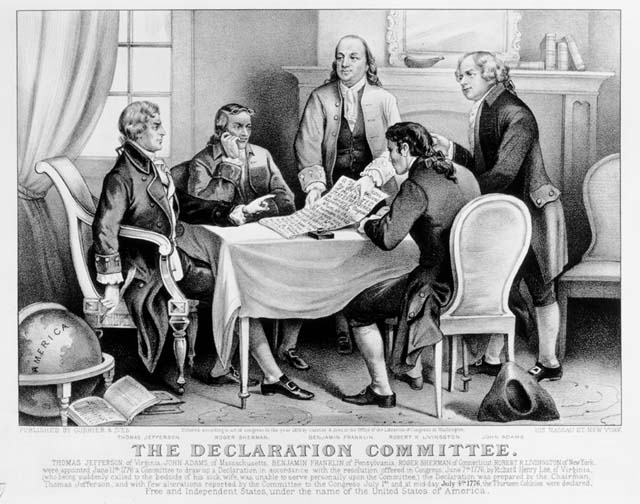
Continue reading “Congress Establishes the Board of War and Ordnance”250 Years Ago Today: Drafting the Declaration’s Drafting Committee
“You do it.”
“No, you do it.”
“No, you do it.”
“No. YOU do it. You’re a Virginian, and you write ten times better than me.”
“Okay.”
To read John Adams’s telling of the tale, that’s basically how he, as chair of the drafting committee, drafted Thomas Jefferson to draft the Declaration of Independence.[1] Jefferson’s version, of course, sounds a little different: “[T]hey unanimously pressed on myself alone to undertake the draught. I consented; I drew it. . . .”[2]
While we may never know the details of the discussion, we do know that the drafting committee first met 250 years ago today, on June 11, 1776. Along with Adams and Jefferson—representing Massachusetts and Virginia—the committee included Benjamin Franklin of Pennsylvania, Robert Livingston of New York, and Roger Sherman of Connecticut.
Livingston and Sherman tend to end up as footnotes to the story of the committee. Livingston, an ally of John Dickinson, was added to the committee as a concession to those cool, conservative men. Sherman, meanwhile, had a knack for footnote-ism. Aside from serving as an asterisk on the drafting committee, he’s also famous as a trivia answer for being the only person to sign all four Founding documents: the charter of the Continental Association, the Declaration of Independence, the Articles of Confederation, and the U.S. Constitution.
Franklin’s presence on the committee surprised no one. As the most famous man in America—and, by extension, in the Congress—his celebrity would provide a useful boost to the committee’s final work. It helped, too, that much of his fame came from his pen, which made him a natural fit for the committee.
Adams had the legal mind and the deepest knowledge of government and politics. He was not slouch as a writer, either. But Jefferson had earned his very place in Congress because of his felicity of expression with a pen. His Summary View of the Rights of British Americans (1774) earned him wide recognition in his native Virginia and appointment to the Second Continental Congress. The ideas he expressed also clearly marked him as a radical aligned with the independence movement. Adams admired Jefferson for being “prompt, frank, explicit and decisive” even if he was also notoriously silent for most of his time in Congress.
Jefferson didn’t want to be in Philadelphia to begin with, and in fact, he absented himself from August 1, 1775 until May 14, 1776, citing his wife’s ill health and obligations at home. When he returned to Congress, he did so only from a begrudging sense of obligation. “I am here in the same uneasy, anxious state in which I was in the fall without Mrs. Jefferson, who could not come with me,” he wrote.[3]
Yet Jefferson and his “masterly Pen,” as Adams called it, returned to Philadelphia just in time to put that pen to use. On the drafting committee. Jefferson really wanted to be putting that pen to use writing the constitution for the state of Virginia. He would even go so far as to draft a Constitution of his own and send it to Williamsburg since he couldn’t be there himself, but the document never received consideration. George Mason would end up leading that effort.
By all accounts, the members of the drafting committee saw the task as a throwaway assignment. When Congress eventually voted in favor of independence on July 2, John Adams thought that would be the day the nation would forever commemorate; no one thought of the first public reading of the Declaration on July 4 as being much more than a formality.
Only later, once the document assumed a position in American myth, did the members begin to attach significance to their participation in the drafting process—ergo the dueling versions Adams and Jefferson recalled in their (much) later years. Adams laid out his version in 1822; Jefferson in 1823.
Jefferson took about two weeks to write the first draft, then showed it to Franklin and Adams, “requesting their corrections; because they were the two members of whose judgments and amendments I wished most to have the benefit before presenting it to the Committee. . . .”[4] (Apparently, this established the practice of treating Livingston and Sherman as footnotes.) Adams and Franklin suggested a few important refinements. For instance, Franklin deftly turned “We hold these truths to be sacred and undeniable” into the subtler but more powerful “We hold these truths to be self-evident.” Adams’s handwriting on the original document shows him adding a reference to “their Creator” in an astute instance of knowing his audience. Overall, though, Adams “was delighted with its high tone, and the flights of Oratory with which it abounded,” he later wrote.[5] (Walter Isaacson’s recent The Greatest Sentence Ever Written offers a wonderful exploration of the writing and editing process.)
On June 28, Jefferson would submit his final draft, which Congress would take up for discussion and approval on July 3 (after a painful editing-by-committee process that made Jefferson nearly despondent).
Like all great myths, the details of the committee’s work—from its origins to its final revisions—are brilliantly gauzy enough that we can see what we want to if we squint just right. The real story never quite comes into focus. That’s the frustrating reality for historians but the bewitching charm for everyone else.
And it’s a perfect metaphor for the entire Founding, isn’t it: Adams and Jefferson, both there at the beginning, both explaining a different interpretation of events. Their visions continue to duel today—and if we’re wise, we’ll listen to what both of them have to say.
Chris Mackowski is the author of Atlas of Independence: John Adams and the American Revolution, part of the Emerging Revolutionary War Series from Savas Beatie.
[1] Adams’s full account can be found here: “From John Adams to Timothy Pickering, 6 August 1822,” Founders Online, National Archives, https://founders.archives.gov/documents/Adams/99-02-02-7674.
[2] Jefferson’s account can be found here: “From Thomas Jefferson to James Madison, 30 August 1823,” Founders Online, National Archives, https://founders.archives.gov/documents/Jefferson/98-01-02-3728.
[3] “From Thomas Jefferson to Thomas Nelson, 16 May 1776,” Founders Online, National Archives, https://founders.archives.gov/documents/Jefferson/01-01-02-0153. [Original source: The Papers of Thomas Jefferson, vol. 1, 1760–1776, ed. Julian P. Boyd. Princeton: Princeton University Press, 1950, pp. 292–293.]
[4] “Thomas Jefferson to James Madison, 30 August 1823,” Founders Online, National Archives, https://founders.archives.gov/documents/Madison/04-03-02-0113. [Original source: The Papers of James Madison, Retirement Series, vol. 3, 1 March 1823 – 24 February 1826, ed. David B. Mattern, J. C. A. Stagg, Mary Parke Johnson, and Katherine E. Harbury. Charlottesville: University of Virginia Press, 2016, pp. 114–116.]
[5] “From John Adams to Timothy Pickering, 6 August 1822,” Founders Online, National Archives, https://founders.archives.gov/documents/Adams/99-02-02-7674.
 Emerging Revolutionary War Era