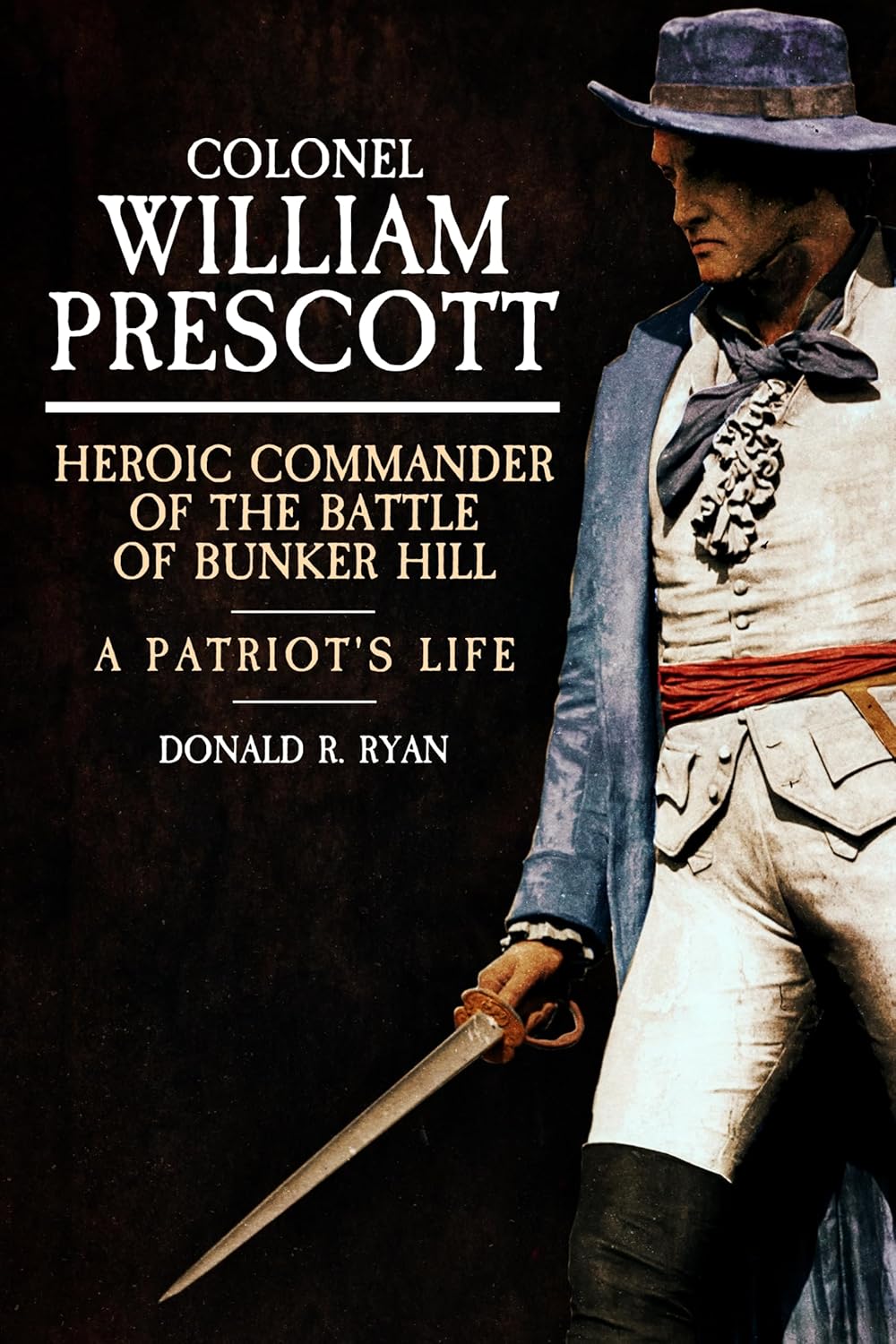
Depicted in various paintings, still standing watch over Breed’s Hill, his name is synonymous with the heroic American defense of the earthen redoubt that graced the aforementioned hill. Although forced to evacuate the work when overwhelmed by the third British advance and out of ammunition, Prescott had shown his value as a competent battlefield leader. Especially of the militia.
Yet, as America approached the 250th anniversary of the country, there had not been a single dedicated biography that covered his entire life. Prescott is mentioned in plenty of great historical works on the battle, the region, and the lives of other patriots who fought that day. But the Massachusetts native deserved more. Entered Donald R. Ryan.
Ryan, a volunteer historian and guide for Boston National Historical Park, took on the task of researching, locating, and even contacting living descendants of Prescott. You can now hold in your hands and read his excellent work on this great military figure, best known for his role in one of the most iconic battles of the American Revolution.
Before you do get your copy and settle in to read, tune in on Sunday evening, as Ryan will appear on our popular “Rev War Revelry” to discuss his book. Emerging Revolutionary War will go live at 7 p.m. EDT. and stream to our Facebook page.
Cannot make the live program on Sunday evening? Don’t fret, the program will be posted to our podcast and YouTube channels in the days after. Either way, hope you tune in to learn about Col. Prescot!
Emerging Revolutionary War welcomes back guest historian Bjorn Bruckshaw
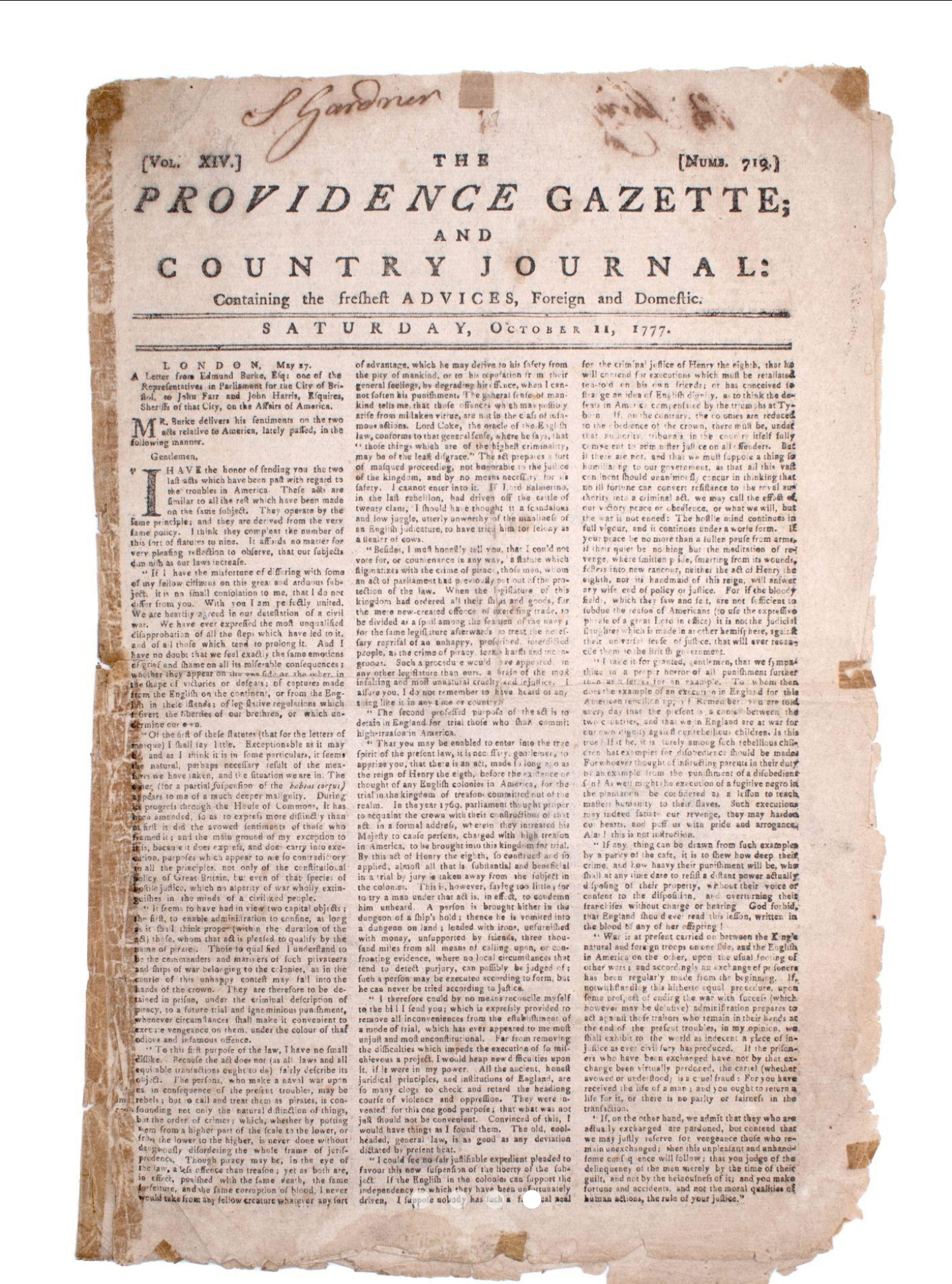
On a chilly but sunlit afternoon in Providence, smoke began to rise over Market Square—not from hearth fires meant to warm the town, but from a blaze built in defiance. As the smell of burning tar and tea drifted through the streets, cheers and shouts of defiance echoed through the square. Nearby, a man moved quickly from shop to shop, brush and lampblack in hand. One by one, he painted over a single word on storefront signs: TEA. This was no act carried out in secret. According to the Providence Gazette, he was “a spirited Son of Liberty,” and he worked in full view of the town as a crowd gathered around the growing fire.¹
Just beyond him, the protest had already begun.
Earlier that day, a town crier had moved through Providence announcing that a quantity of India tea would be burned in the Market Square that afternoon, calling upon “all true friends of their country, lovers of freedom, and haters of shackles and hand-cuffs” to assemble and cast the tea into the flames.² By the appointed hour, the square was filled. This was no spontaneous outburst. It was organized, deliberate, and intended to be seen.
At the center of the gathering, flames climbed upward as a barrel of tar was placed upon the fire. Into it were thrown not only tea—hundreds of pounds of it—but also printed copies of Lord North’s speech and other “obnoxious English papers.” ³ the destruction was more than economic protest. It was a public repudiation of British authority itself. And then came the moment that set Providence apart.
These were not men disguised as Mohawk Indians, shrouded in secrecy under the cover of night as in Boston. This was something different—an open, public act carried out in daylight. At its center stood the women of Providence, dressed in everyday clothing, without disguise, stepping forward with the same patriotism and candor to cast the tea into the flames before the gathered town.⁴
In that moment, the Providence Gazette captured one of the most remarkable features of the event, noting that the tea was “fed to the fire by the women of the town.”⁵ Women, long central to colonial resistance through boycotts and the management of household consumption, now stood in the public square, actively participating in the destruction itself. This was not quiet resistance confined to the home. It was visible, communal, and unmistakable.
The prominence of women in the Providence protest did not go unnoticed beyond Rhode Island. In Virginia, the event was reported in the Virginia Gazette, where the destruction of tea was described in strikingly gendered and satirical terms. The article referred to the event as the “funeral of Madam Souchong,” personifying the tea as a female figure while simultaneously reinforcing contemporary stereotypes about women.⁶ In doing so, the report transformed the protest into a symbolic spectacle, revealing how acts of resistance in one colony could be interpreted—and reshaped—by observers in another.
Rhode Island had already established itself as one of the most defiant colonies in British North America. Its long-standing resistance to imperial regulation, fueled by its maritime economy and frequent clashes with customs enforcement, made it a persistent source of frustration for British authorities. Loyalist observers took note. Writing during the conflict, Peter Oliver described resistance in New England as the work of “lawless men” driven by mob influence, portraying their actions as rooted in disorder rather than lawful opposition.⁷ British officials expressed similar concerns in the aftermath of the Gaspee Affair, viewing the destruction of the customs schooner as a “daring insult to the authority of the Crown” and evidence that resistance in Rhode Island had reached a dangerous level.⁸ In June 1772, that defiance became unmistakable when local patriots burned the Gaspee, a British vessel sent to enforce imperial law.
The British response only deepened colonial fears. Officials threatened to transport suspected participants to England for trial, raising concerns about the erosion of traditional rights and legal protections.⁹ In Rhode Island, the lesson was clear: British authority was not only intrusive but increasingly dangerous.
Emerging Revolutionary War welcomes back guest historian Michael Aubrecht
If one was to define the life and legacy of Colonel Johann Gottlieb Rall (Rahl) they may use the term “victim of circumstance.” His is the ironic tale of a military man, whose stubborn nature and bad luck resulted in an untimely death. As the commander of the Hessian Troops garrisoned at Trenton New Jersey, Rall was the unfortunate recipient of General George Washington’s surprise attack that followed his brilliant crossing of the Delaware River on Christmas night in 1776.
There have been many different versions of this story, but a reexamination of the events by modern military historians has yielded a more redeeming conclusion to Rall’s defeat. Whereas it was once believed that the Hessian troops were celebrating the holiday and simply too intoxicated to properly defend the garrison and themselves, experts now believe that Rall and a sober regiment of German soldiers may have underestimated the resolve of their adversaries.
One aspect of this story that hasn’t changed took place prior to the attack…
A young boy had been given a spy report from a local Loyalist with directions to deliver it to a Hessian colonel who was in occupation of the City of Trenton. The note, written in English, was intended to inform the commander that the Continental Army was crossing the river and planning to attack. It is said that the colonel did not want to be interrupted during his Chess game (some say cards), so he put the unread note in his pocket. The story concludes with the note being found, still in his pocket, unopened, after he died in battle.
As both a Chess and Rev-War aficionado, I decided to do a little research into this specific part of the story to see what information was available. What I found was completely different than I had originally anticipated.
Emerging Revolutionary War welcomes guest historians Lori Amos Doss & Jarred A. Marlowe, bios follow part one.
Part 1: From Charlotte County to Washington’s Guard
James Johnston was born in Charlotte County, Virginia, around 1756, though no exact record of his birth has survived. Like many Revolutionary War soldiers, much of his early life remains in shadow. Even the identities of his parents are uncertain, despite Johnston referring to them in later accounts. What we do know begins in November 1776, when he made the decision to leave home and enlist in the Continental Army for a three-year term.
He joined the 14th Virginia Regiment under Colonel Charles Lewis and soon marched north to join George Washington’s army at Morristown, New Jersey. At that stage of the war, the Continental Army was still finding its footing. Enlistments were short, supplies were inconsistent, and discipline varied widely from unit to unit. Yet within a matter of months, Johnston distinguished himself.
On May 1, 1777, he was selected for the Commander in Chief’s Guard, an elite corps formed to protect Washington personally, as well as the army’s funds and official documents. This was one of the most trusted assignments in the army. Officers were instructed to select men known for their honesty, sobriety, and reliability. Washington also had a preference for appearance, requesting soldiers who were well built, neat, and presentable. Johnston’s selection tells us a great deal about how he was viewed by those who knew him. He was not simply capable. He was dependable.
Halifax in northeastern North Carolina is one of the state’s most significant historic sites. This small town in rural Halifax County can rightly claim to be North Carolina’s Independence Hall.
Royal Governor Josiah Martin had fled the capital at New Bern in 1775. Relocating to Fort Johnston on the Cape Fear River, he fled again to a warship and tried to run the colony from offshore. With the departure of the Royal Governor, legislators met in Halifax to run the colony. Following the battle of Moores Creek in February, 1776, their efforts took on new urgency. While they had survived a failed Loyalist uprising and an aborted British invasion, they knew war would return.
At Halifax in April, delegates from across North Carolina met to take part in the Fourth Provincial Congress. Previous Provincial Congresses had met to take on the role of running the state with the Royal Governor’s departure. Some of the prisoners captured at Moores Creek arrived and placed in the jail, tangible proof that war had come to North Carolina.
Many felt it was too late for compromise and the only recourse was independence. At the time the Continental Congress in Philadelphia was debating that very topic. On April 12, 1776, the 83 delegates of the Provincial Congress unanimously ratified the Halifax Resolves. It was the first official act by any of the thirteen colonies calling for independence from Great Britain. While Virginia’s delegates in the Continental Congress in Philadelphia proposed it, North Carolina was the first colony to authorize it.
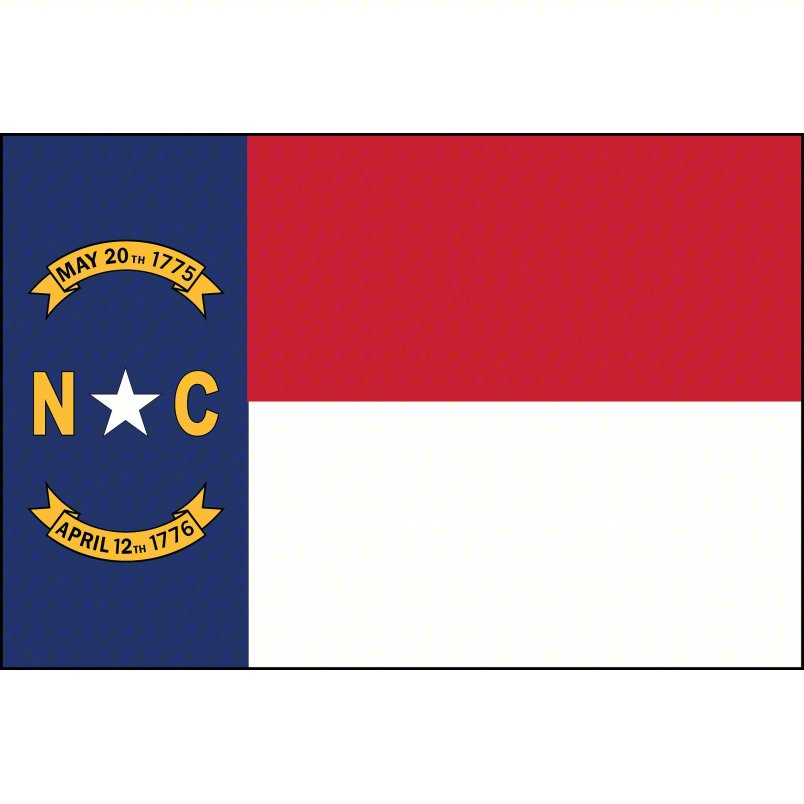
The date of April 12, 1776 is one of two on the state flag, the other, May 20, 1775 refers to the Mecklenburg Declaration, another Revolutionary event (though one whose accuracy is debated).
Since the 1960s a state historic site has preserved and interpreted the events in Halifax. A new visitor center with expanded exhibits opened last month to commemorate the 250th anniversary of the Resolves.
The exhibits cover a wide range of topics, including Halifax’s economy, Native American and African American perspectives on the Revolution, the village’s role in the war effort, and its early preservation and interpretation. A highlight is an original copy of the Halifax Resolves on display. Exhibits explore the document in detail, discussing what it calls for and how the delegates debated it.
The museum is outstanding, with a mixture of attractive panels, artifacts, and videos and sound. Outside, the site of the original courthouse, where the Resolves were discussed, is marked. Archaeologists verified the site and markers describe how it was located. The historic site also includes many other late eighteenth and early nineteenth century buildings. Guided tours are available.
Halifax State Historic Site is just five miles off Interstate 95, not far from the Virginia state line. The museum and grounds are well worth a visit if you’re passing by.
“Without the character of Samuel Adams, the true history of the American Revolution can never be written,” John Adams once said of his cousin.
Well, someone better tell the United States Postal Service!
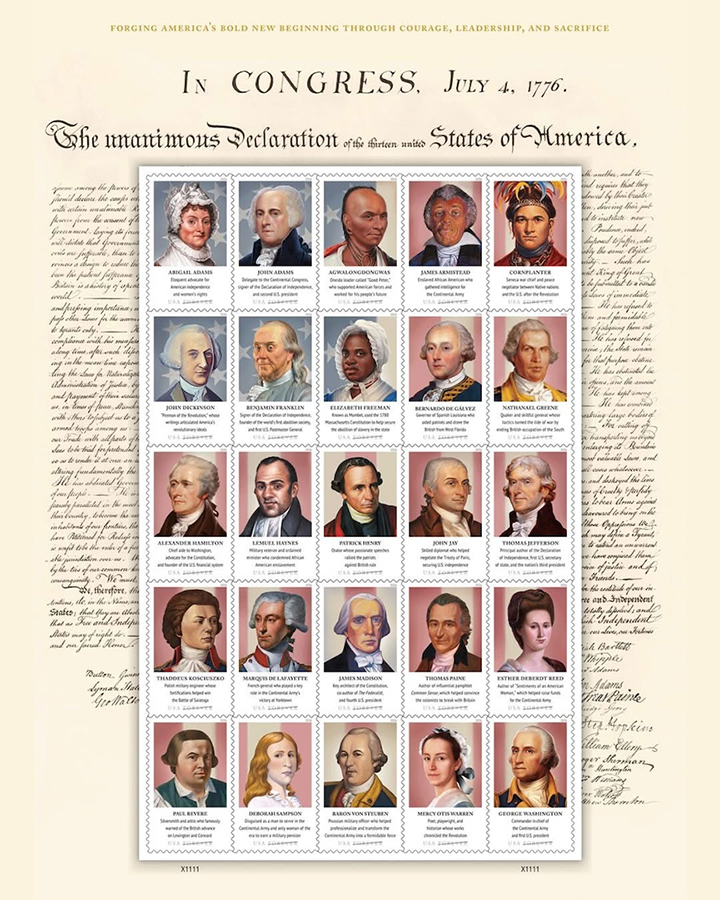
On April 10, the USPS issued a new set of stamps, “Figures of the American Revolution,” as part of its ongoing initiative to commemorate America’s 250th birthday. (See the USPS’s full press release below.) The set features 25 of the most important people related to the American Founding.
Sam Adams, apparently, isn’t one of them.
Never mind Sam’s instrumental role as an organizer in Boston’s Sons of Liberty or his role in managing public opinion. Never mind the Committees of Correspondence he helped organize throughout Massachusetts and across the colonies. Never mind his masterful use of propaganda to implant events like the Boston Massacre or the Boston Tea Party in American imagination—let alone the effective use of those events as tools of protest. Never mind the central leadership role he played at the First Continental Congress. Never mind Boston’s centrality in the start of open hostilities with Great Britain.
And yet, somehow, Sam didn’t leave enough of a stamp on the American Revolution!
In fairness to the Postal Service, a collection like the Figures of the American Revolution is like a retrospective “greatest hits” collection from a band: decisions have to be made about what gets included and what gets left off.
So, if you were to add Sam Adams to the collection, who’s currently on the sheet that you would remove to make room for him?
The figures appear in alphabetical order. Here’s the full list:
EDITOR’S NOTE: Emerging Revolutionary War has been pleased to co-sponsor a series of Monday-evening programs to commemorate the America 250th at St. Bonaventure University, where contributor Chris Mackowski teaches. In March, the line-up of programs featured a student research panel. We are pleased to present today the work of one of the “emerging scholars” from that panel, Alex Payne.
Alex is a junior Theology and Franciscan Studies and History double-major from Shinglehouse, PA, with a minor in classics.
———
Sailor’s ballads in the late 17th and early 18th centuries communicated revolutionary sentiment that influenced the ideological origins of the American Revolution. Sailors’ ballads from revolutionary Atlantic history show how labor culture intersected with protest, emerging revolutionary sentiment, and identity formation. These protest and revolutionary ballads are what I refer to as “records of thought” of oppressed people. By “records of thought,” I mean oral traditions in the form of songs sung by people who were religiously and civilly oppressed that have been written down and transmitted through centuries.
The starting point of the record of thought of oppressed people is with the “Diggers’ Song” attributed to Gerard Winstanley. Winstanley was the leader of the Diggers, similar to but separate from the Leveller movement that emerged during the English Civil Wars between 1641–1659. The Diggers, known to history as radical land reformists, were led by Winstanley. They believed in an agrarian socialism and would “dig up” the land that was unjustly and inhumanly taken from the English commoners. The oppression they endured is found in the record of thought appropriately named “The Diggers’ Song.” This ballad was sung on St. George’s Hill in Surrey around 1649 by 20–30 men. It reads:
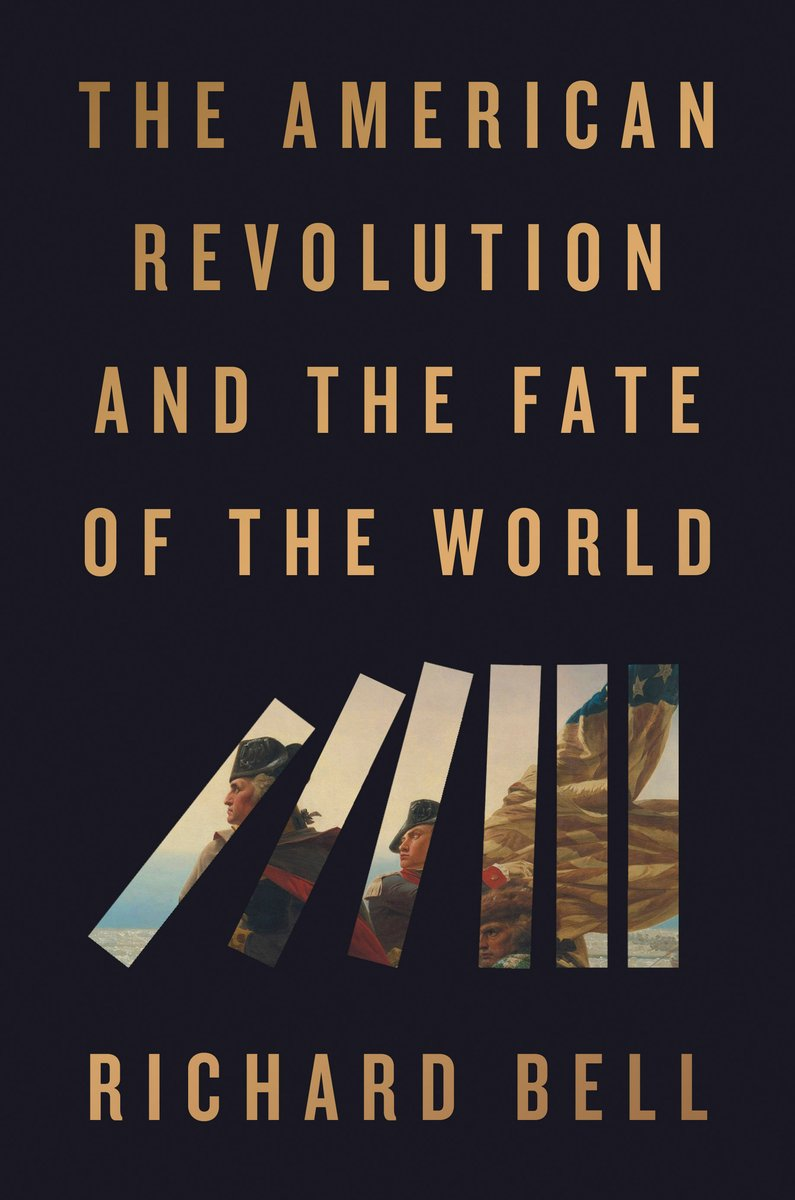
Dr. Richard Bell, historian and professor of history at the University of Maryland, will discuss his new book, “The American Revolution and the Fate of the World.” Published by Penguin Random House, this “revelatory and enthralling book, award-winning historian Richard Bell reveals the full breadth and depth of America’s founding event. The American Revolution was not only the colonies’ triumphant liberation from the rule of an overbearing England; it was also a cataclysm that pulled in participants from around the globe and threw the entire world order into chaos.”
We look forward to you tuning in to this Sunday evening, 7 pm EDT on our Facebook page for this discussion with Dr. Bell!
The American Revolution lasted eight years, 1775-1783. Why then do we celebrate 1776 and not the end of the war? Continental Congress presented the Declaration of Independence to the world on July 4, 1776. That’s the big deal.
There was something different about this revolution against British authority. The colonies were better organized. The people, policymakers, and military worked in harmony, though imperfect, toward freeing themselves from the bonds of the British Empire. Lexington and Concord had loudly proclaimed the shots heard round the world in April 1775.
By the second year, the colonial armies already had two significant military achievements in the winter and early spring. The militia turned back the invading southern British army at the battle of Moore’s Creek Bridge, North Carolina, in February. This victory contained the Redcoats in the southern theater to South Carolina. Up north, the British army withdrew from Boston in March, giving the colonists a physical and moral achievement. The leaders of the Glorious Cause, however, knew violence and blood wouldn’t be enough to win the war as failed Scottish and Irish uprisings had demonstrated all too well.
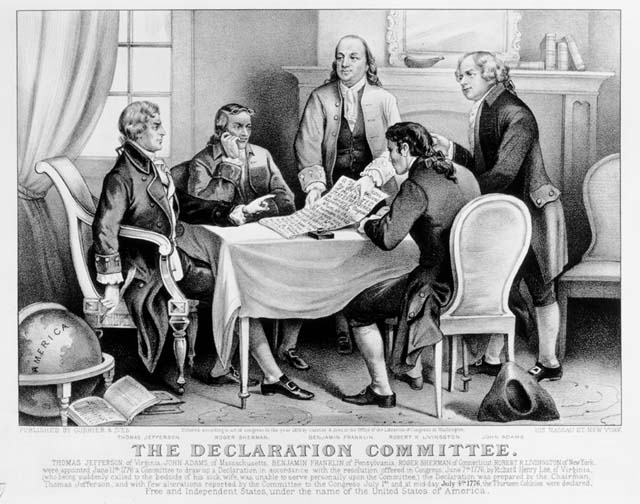
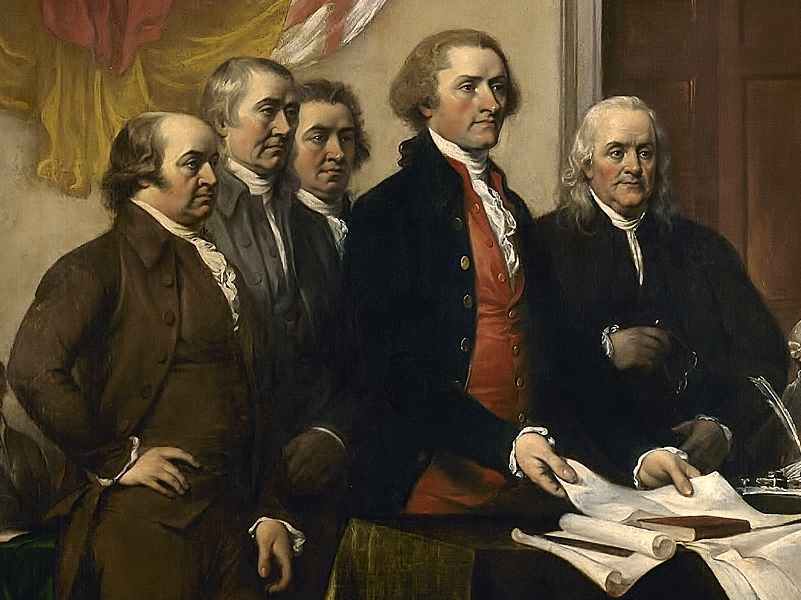
It was now up to the Continental Congress to fire a political shot. Congress tasked a committee of five to draft a declaration in June 1776. The members included Thomas Jefferson, John Adams, Benjamin Franklin, Roger Sherman, and Robert R. Livingston. Jefferson was the principal author. By July 1776, a final version was signed and submitted. It was only two paragraphs, but its words were, and still are, heard round the world.
The Declaration of Independence succinctly describes two of the five “Ws” of the war. Why we were fighting, or the main political goal, was first to be put forth. The colonists demanded a political divorce from British rule. As the committee wrote, at times “…it becomes necessary for one people to dissolve the political bands which have connected them with another …” Instead, the colonies wanted to form their own government based on a constitutional republic. It would be equal in standing to all other sovereign nations. That was the Why.
Then our founding fathers pulled the trigger and laid out the What, the reasons or “unalienable rights” we were fighting for against the crown. “We hold these truths to be self-evident, that all men are created equal, that they are endowed by their creator with certain unalienable rights, that among these are life, liberty, and the pursuit of happiness.” The King and Parliament hadn’t given these rights to any of their colonies or even their own citizens.
In fact, quite the reverse, British rule had subjugated the American colonies in “a long train of abuses and usurpations.” Redcoats threw colonists in jail without due process. Colonists were hung without a trial or after an unfair trial. Parliament levied taxes on colonial goods at a whim. We were subjects. We were here to serve the crown. Facing such despotism, the colonies had every right to abolish political ties with the British Empire and pursue life, liberty, and happiness.
It’s these three rights that we will soon be celebrating by commemorating the 250th Anniversary of the document that declared those rights, the Declaration of Independence.
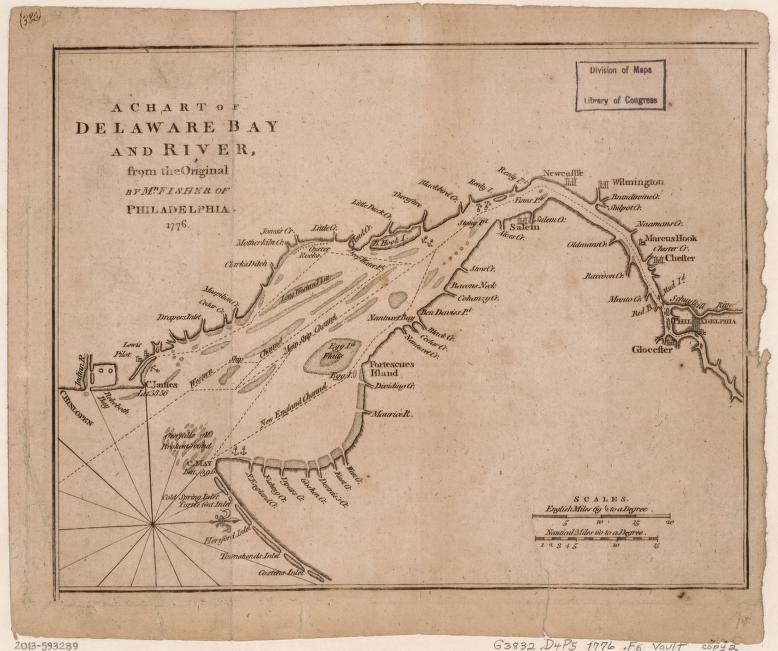
A Chart of the Delaware Bay and River, 1776 (LOC).
While the Americans recovered their strength and restocked their vessels upstream after the fighting on May 8, Hamond and his sailors worked to refloat the Roebuck. With a higher tide and deeper water sometime between 2 and 4 am, Roebuck finally floated free.[i] When the sun rose on Thursday the 9th fog blanketed the river and neither side could see one another. The American ships were already on the move, though, falling back down the river under a light breeze and oars to reengage the British vessels, probably in the hope that Roebuck was still grounded.[ii] In the fog, though, they paused to wait.
The mist finally burned off enough to see and around 8 o’clock that morning, Wallace and Liverpool spied the American galleys some two miles upriver.[iii] Hamond made the signal to weigh anchor and pursue them upstream. Even at full sail, though, the British couldn’t catch the Americans as “they industriously plied their Oars and Sails to avoid us.”[iv] They eventually found a point of land on the western shore Hamond could not reach, particularly in the face of an ebbing tide. Both sides anchored and waited. The prospect of continuing to advance up the Delaware, which grew ever narrower and more shallow did not appeal to Hamond. He and Captain Bellew held a quick conference and decided to drop back down the river, hoping to draw the galleys after them toward water more favorable to the British.
Around 2 pm, Hamond detected the Americans getting underway. So, Roebuck and Liverpool raised their anchors and clapped on more sail, still hoping to entice them to chase the British into deeper water. The small squadrons began exchanging long range fire around 4 pm, lasting through afternoon all while slowly moving down the Delaware. The cannon were heavy enough to be heard in Philadelphia.[v] The winds were generally moderate, but an occasional shower passed through.[vi] As they had through most of the day, the Americans stuck to the shallows closer to shore. Throughout, the two sides kept their distance. The Americans were satisfied chasing the British away and Hamond could not tempt them into a close-in fight. Finally, with darkness deepening, the firing ceased. The Americans preferred not to descend below New Castle.


 Emerging Revolutionary War Era