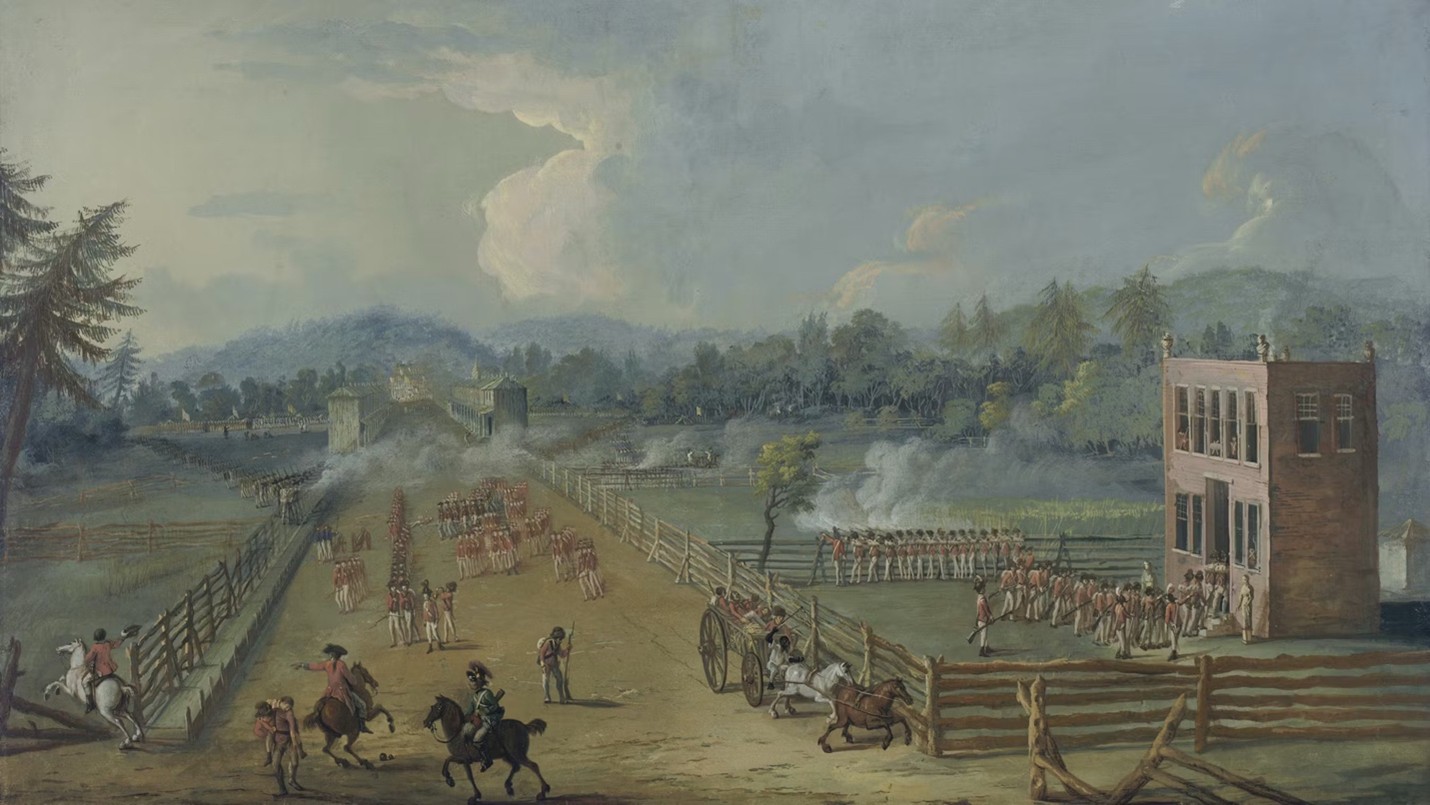
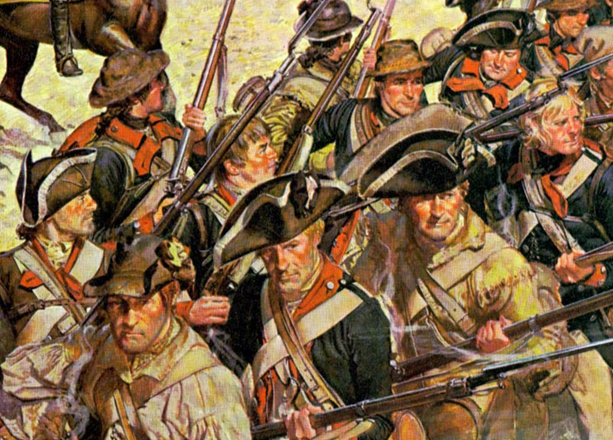
Was the Battle of Germantown an American failure or a British success? Did the Continental Army lose due to an overly complicated plan, environmental factors such as fog, and poorly applied military judgment, or was the British Army’s resistance a decisive factor? The defense of the Chew House demonstrates that the British were professional, tenacious, and courageous, rather than the fortunate recipients of the fruits of an American blunder. Led by Lieutenant Colonel Thomas Musgrave, the men of the 40th Regiment of Foot established a strongpoint that disrupted American momentum and derailed the attack. Musgrave and the 40th Regiment of Foot transformed the Chew House into an obstacle that delayed the American advance long enough for British forces to reform and counterattack. This episode reveals the significance of British leadership and discipline under severe conditions, thereby reframing the context of the Battle of Germantown.¹
Germantown occurred at a time when the Continental Army was undergoing a transformation from an amateur to a professional military. American officers engaged in self-directed study of “books upon martial science” and were known to carry such texts among their baggage and haversacks when on campaign.² In this manner, Continental officers sought to emulate their European counterparts.³ One officer known to have made a detailed study of the art and science of war was Washington’s Chief of Artillery, Henry Knox.⁴ At the time of Germantown, the officers of the Continental Army had been at war for over two years and had learned many practical lessons; however, many officers, including Washington, continued to hold Knox’s auto-didactic military education in high esteem. The gap between knowing theory and its practical application would become apparent, to the detriment of the Continentals, at Germantown.
In contrast, the British Army officer corps had been fully engaged in a minor military enlightenment through the latter half of the eighteenth century. While British officers engaged in self-study programs similar to Knox’s, they could more readily share the results of their study within an established army, comparing and contrasting ideas and adopting best practices.⁵ The British Army was able to synthesize the best practices from both theory and combat experience into regulations that informed the training and operational deployment of all its formations.⁶
Early interpretations of the battle frequently emphasized confusion and poor execution, particularly the American decision to attack the Chew House. Yet the battle was “very much more than a contest… for the possession of a country house.” More recent scholarship describes the plan for the attack on Germantown as a sophisticated maneuvering scheme that nearly succeeded. Its subsequent failure owes more to British action than American incompetence.
On this date in 1776, Major Joseph Ward, serving as a staff officer for Major General Artemas Ward, second in command of the Continental Army that had just evicted the British from Boston, sat down at his desk to pen the following letter. The recipient was John Adams, a fellow Massachusettsan then serving in the Second Continental Congress in Philadelphia, Pennsylvania. Ward continued his correspondence of keeping Adams apprised of military affairs around Boston. In this letter, however, he makes the case for the colonies to “cut the Gordian knot” and declare independence, months before Richard Henry Lee’s proposal to call for independence in late June 1776.
Boston 23 March 1776
Sir,
The 17th Instant the Pirates all abandoned their Works in Boston and Charlestown and went on board their Ships, and on the 20th they burnt and destroyed the works on Castle Island. They now lye in Nantasket Road waiting for a fair wind; we keep a vigilant eye over them lest they should make an attack on some unexpected quarter. The particulars with regard to the Seige, the Stores taken, &c. you will receive from better authority, therefore it is unnecessary for me to mention them. Our Troops behaved well, and I think the flight of the British Fleet and Army before the American Arms, must have a happy and very important effect upon the great Cause we engaged in, and greatly facilitate our future operations. I wish it may stimulate the Congress to form an American Government immediately. If, after all our exertions and successes, while Providence offers us Freedom and Independence, we should receive the gloven cloven foot of George to rule here again what will posterity, what will the wise and virtuous through the World say of us? Will they not say, (and jusly) that we were fools who had an inestimable prize put into our hands but had no heart to improve it! Heaven seems now to offer us the glorious privilege, the bright preeminence above all other people, of being the Guardians of the Rights of Mankind and the Patrons of the World. It is the fault of the United Colonies (a rare fault among men) they do not sufficiently know and feel their own strength and importance. Independence would have a great effect upon the Army, some now begin to fear that after all their fatigue and hazards in the Cause of Freedom, a compromise will take place whereby Britain may still exercise a power injurious to the Liberty Peace and Safety of America: Cut the Gordian knot, and the timid and wavering will have new feelings, trimming will be at an end, and the determined faithful friends of their Country will kindle with new ardour, and the United Colonies increase in strength and glory every hour.
Yesterday I saw your Brother, who informed that Mrs. Adams and your Children were well.
General Ward, on account of his declining health, has wrote his Resignation to the President of the Congress. I expect the greatest part of the Army will march for New York, or the Southern Colonies as soon as the Fleet is gone to Sea; and the Troops that remain here will be employed in fortifying the most advantageous Posts to defend the Town and harbour. I do not much expect the Enemy will make any attempts to regain possession of Boston, for I think they are sufficiently convinced that they cannot penetrate the Country in this part of America; ’tis probable they will try their fortune to the Southward and if they fail there the game will be up with them. We hear many accounts about Commissioners coming from Britain to treat with the Colonies separately, or with the Congress. Many fear we shall be duped by them, but I trust the congress is too wise to be awed by the splendor or deceived by the cunning of British Courtiers.
I know not of one discouraging circumstance attending either our civil or military affairs in this part of the Continent. I have lately heard with pleasure that the Farmer is become an advocate for Independence.Wishing the Congress that Wisdom which is from above, I am Sir with much Respect Your most Humble Servant,Joseph Ward
Emerging Revolutionary War welcomes guest historian Dr. Nathan Provost
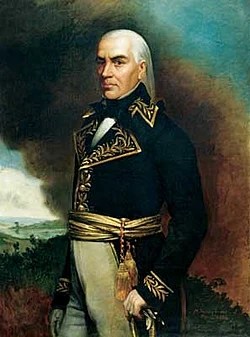
With the recent rumblings about Venezuela, it is important to remember that Venezuela’s independence began with a veteran of the American Revolutionary War. Francisco de Miranda was born on March 28, 1750, in Caracas, Venezuela. At the time, Venezuela and much of the Americas were under Spanish control. Born into a life of luxury, Miranda attended prestigious institutions of higher education, including the Royal and Pontifical University of Caracas. He later continued his education in Spain, eventually raising enough money to purchase his rank of Captain in the Princess Regiment. His first experience of combat was in North Africa against the Moors of North Africa. Upon returning to Spain, Miranda waited for another military operation to accompany. An ambitious young soldier, he sought adventure, wanting to see the world through military service. In 1780, Miranda reported to the Regiment of Aragorn; their destination was Havana, Cuba. Their objective was to concentrate with Major General Bernardo de Galvez’s men at Pensacola, Florida.
Francisco de Miranda
Spain was no ally of the recently independent United States; rather, their alliance with France was much more significant. After France entered the conflict following the American victory at Saratoga, Spain declared war on Great Britain in 1779. Spain had its own goals, hoping to reclaim territory in Florida lost during the Seven Years’ War. The Spanish were fortunate to possess a brilliant military officer, Bernardo de Galvez. He already captured what is now Baton Rouge, Louisiana, and Mobile, Alabama. All that was left was Pensacola on the Florida Coast. Galvez took several warships and many more transports filled with 3,701 men to lay siege to Pensacola, Florida. Inclement weather and Choctaw resistance interrupted their initial movements, but Galvez pressed on and established his army outside the walls. The number of troops was insufficient to make any headway against the British fortifications, despite the construction of a series of entrenchments and artillery positions. Then, on March 24, much-needed Spanish reinforcements arrived, among whom was Francisco Miranda.
Upon landing, Miranda noted Galvez was there to meet them. Miranda observed several entrenchments already constructed, but a few hundred men were already out of commission since the siege began. Upon learning this information, he knew that Galvez desperately needed these reinforcements. It was not until April 24 that all the soldiers disembarked at Pensacola. During the siege, Miranda personally inspected the siege lines and terrain and reported back on this reconnaissance to Galvez. Miranda and his men, entrenched outside the fort, often came under fire from the British artillery. There were also several skirmishes outside the breastworks in which the Spanish sustained some casualties. In one particular episode, Miranda and five companies of his men engaged in a firefight with some Native Americans. The fighting lasted roughly an hour and a half, with six of the Spanish wounded, but a Frenchman deserted the Natives and went over to the Spanish after the fight. In each of these skirmishes.
Emerging Revolutionary War welcomes back guest historian Drew Palmer. He is the founder of Revolutionary Maryland; click here to learn more about that blog.
(Vallejo Image Galleries)
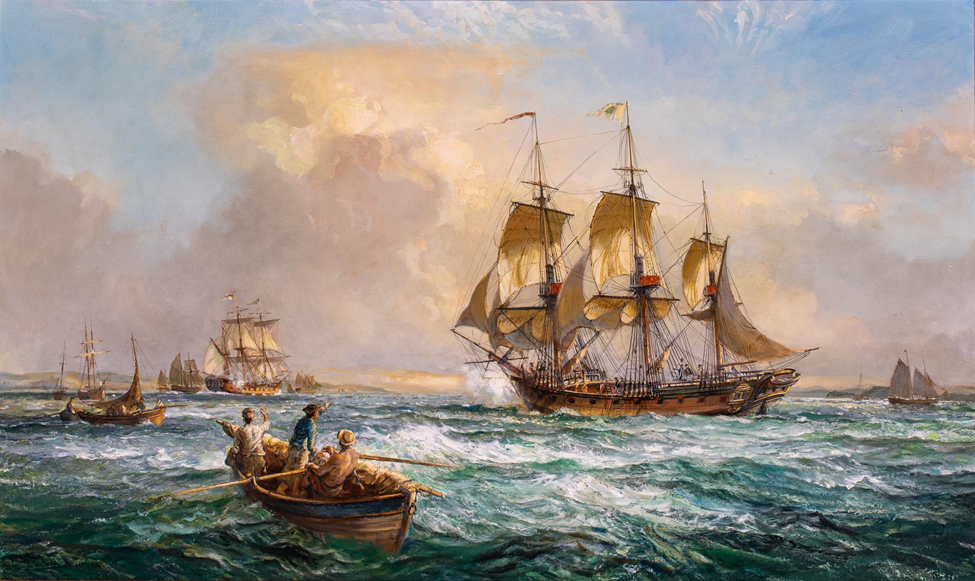
In the early evening of March 5, 1776, two armed boats left Annapolis to patrol the Chesapeake Bay. Captain John Pitt and Joseph Middleton were patrolling to prevent any British ships nearby from entering Maryland’s waters. As they patrolled, they discovered an alarming sight: three British warships heading directly towards Annapolis. Middleton and Pitt rushed off to the Maryland Council of Safety’s chambers in Annapolis to report the startling news.1 In the coming days, Maryland was tested for the first time in the growing Revolutionary conflict.
The American rebellion had become a full-scale war by the spring of 1776. In early March, the siege of British-held Boston was about to end. Hundreds of miles south in Philadelphia, the Declaration of Independence was only four months away. In Maryland, politicians worked hard to maintain Maryland’s isolation from the worst of the conflict. In Virginia, a raiding war had already begun. Only two months before, the town of Norfolk, Virginia, was bombarded, leading to the destruction of the town. Along with Norfolk’s destruction, British attacks and raids were carried out throughout the lower Chesapeake Bay, along with a blockade. 2
Participating in British operations in the lower Chesapeake was Captain Mathew Squire of the British Royal Navy. For several months, Squire’s vessel, the Otter, served as the headquarters of the exiled Virginia Governor, Lord Dunmore. From the Otter, British attacks and raids were launched on Patriot strongholds in the lower Chesapeake. By March, Squire had gained a reputation as a competent officer and ruthless raider of American shipping.3 Squire was heavily involved in the bombardment of Norfolk and an attempted attack on Hampton, Virginia. Though Squire’s area of operation had been centered on the lower Chesapeake, new intelligence pulled him northward into Maryland.
Timothy Newell kept a very vivid diary of life in Boston in 1775 and 1776. He started the entry below on this date, 250 years ago, by copying the “sundry papers lent me…relative to the Siege and Evacuation of Boston in 1775…”
To the Commanding Officer at Roxbury
March 8, 1776
As His Excellency Gen Howe is determined to leave the Town with the troops under his command, a number of the respectable Inhabitants, being very anxious for its preservation and safety, have applied to General Robertson for this purpose, who at their request have communicated the same to his Excellency Gen Howe, who has assurred him, that he has no intention of destroying the Town, unless the Troops under his command are molested, during their embarkation, or at their departure by the armed force without; which declaration he gave General Robertson leave to communicate to the Inhabitants. If such an opposition should take place, we have the greatest reason to expect the Town will be exposed to entire destruction. As our fears are quieted, with regard to General Howe’s intentions, we beg we may have some assurances, that so dreadful a calamity may not be brought on by any measures without. As a testimony of the truth above we have signed our names to this Paper, carried out by Mess Thomas and Jonathan Amory, and Peter Johonnet, who have at the earnest entreaties of the Inhabitants, through the Lieu Governor solicited a flag of truce for this purpose.
John Scollay 2. Timothy Newell 3. Thomas Marshall 4. Samuel Austin
*The General Robertson mentioned above was Brigadier General James Robertson, who commanded the 4th Brigade during the Siege of Boston
Emerging Revolutionary War welcomes guest historian Madeline Feierstein to the blog. A bio follows the article.
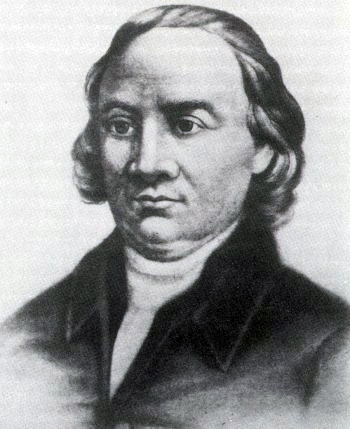
John Morton (1725-1777) had a storied political career. From election to the Pennsylvania Assembly at the prime age of 31, he soared to his state’s delegation at the First and Second Continental Congress. It is made even more astounding by the fact that he is the only Founding Father with roots in New Sweden. While his political activities and civic service are well-documented, one wonders if his personal identity and family traditions left a lasting impact.
New Sweden was the Kingdom of Sweden’s attempt at a colonial settlement in the “New World.” Situated along the Delaware River, it was difficult to entice enough settlers to relocate to this wilderness. Despite its eventual absorption into the Dutch colony of New Netherland, its Swedes and Finns left behind an enduring legacy: the log cabin.
John Morton’s great-grandfather, under the original Swedish Mårtenson/Finnish Marttinen, emigrated to New Sweden in 1654. His father died the year John was born (1725), and his mother passed the same year that he died (1777).[1] Stepfather John Sketchley, a land surveyor of English extraction, appeared to have much influence on young John’s life and career. Morton married fellow Finnish heritage descendant Anne Justis and the couple had eight children who lived to adulthood. Researchers debated whether Morton knew of his Finnish roots, or if he self-identified as solely Swedish.[2] The historic high concentration of ethnic Finns alongside Swedes in the Delaware River Valley, combined with their efforts to preserve traditions, can lead one to believe that he had significant exposure to his roots – if not by his neighbors then through his wife.
By the time independence was on the table in Philadelphia, Morton had represented Pennsylvania as a native son for decades. As a descendant of New Sweden, however, his lineage predates William Penn’s control of the colony in 1681. Due to New Sweden’s brief dominance of the area, much of the original settlers’ foundations in the state have been claimed for Penn. The work of the Swedish Colonial Society and the American Swedish Museum revolves around educating on the existence and imprint of this culture on the American landscape.
Pennsylvania hotly debated the topic of independence from Great Britain. Morton saw both sides to the argument but cautiously supported disunion, believing that this division would “heal wounds” aggravated against his state by tyrannical rule. [3] Morton himself has been dubbed the “tie breaker,” due to his deciding vote – which carried his state and the rest of the Congress in favor of separation. His signatures lies under that of another famed Pennsylvanian: Benjamin Franklin.
As an American, Morton helped craft the Articles of Confederation. Sadly, he did not see his new nation come to fruition. Morton also has the accolade of being the first Founding Father to die. Passing from a lung condition (likely tuberculosis), his grave in Chester, Pennsylvania remained unmarked until an obelisk was installed by his descendants in 1845. No mention of his New Sweden roots are noted on the gravesite or monument.
While his name is etched into history as the anglicized John Morton, his familial homestead stands at Prospect Park, where a collection of New Sweden’s history has been carefully preserved. More strides have been made internationally, with Morton continuing to act as a cultural and diplomatic link between his ancestral lands and the United States. In Finland, the U.S. Embassy named a prominent room after John Morton, as well as the University of Turku with its John Morton Center for North American Studies.
Madeline Feierstein is an Alexandria, VA historian and founder of the educational and historical consulting company Rooted in Place, LLC. A native of Washington, D.C., her work has been showcased across the Capital Region. Madeline is a writer for Emerging Civil War and the National Museum of Civil War Medicine. She leads significant projects to document the sick, injured, and imprisoned soldiers that passed through Civil War Alexandria. Madeline holds a Bachelor of Science in Criminology from George Mason University and a Master’s in American History from Southern New Hampshire University. Explore her research at www.madelinefeierstein.com.
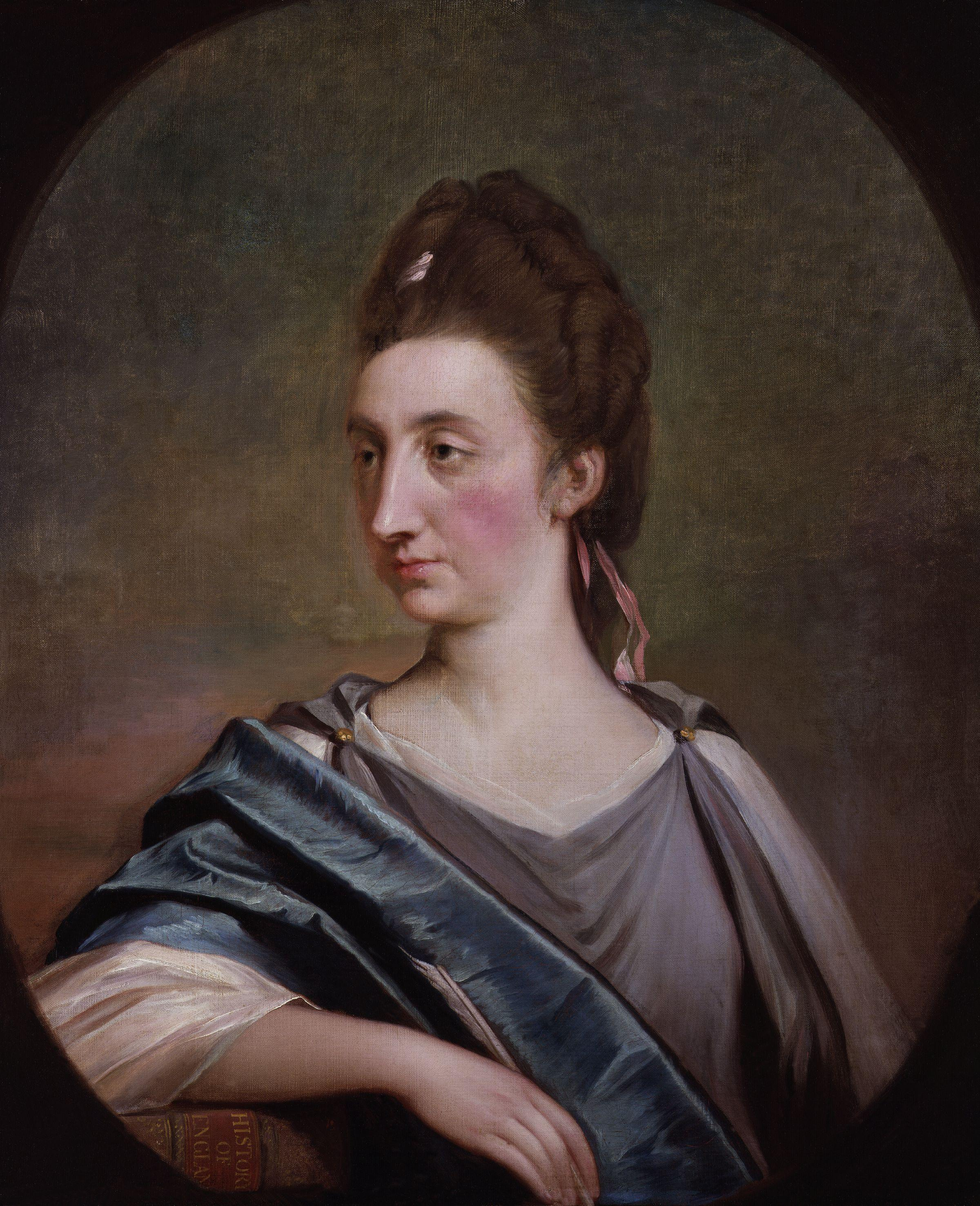
For good reason, much has been done, discussed, developed, and disseminated regarding the voluminous correspondence between Abigail and John Adams. Yet, her spouse was not the only recipient of the wisdom and insight that Abigail possessed. She also became friends with and communicated with Catherine Sawbridge Macaulay Graham in England.
Catharine Sawbridge Macaulay Graham
Graham was a prominent English historian and writer, “at the forefront of radical transatlantic politics in the eighteenth century.” She was a prolific pamphleteer and considered one of England’s first major historians. She was a supporter of and wrote extensively on the American and French Revolutions. Through the cause of the former, she struck up a correspondence with Abigail Adams. Below is a letter from Abigail to Catherine in 1774 that highlights the current events in Massachusetts and also how close the two ladies on either side of the Atlantic Ocean had become in their letter writing. It is truly a remarkable letter that provides emotion and description of a friendship and life in Massachusetts on the cusp of revolution.
Madam
In the last Letter which Mr. Adams had the honour to receive from you, you express a Desire to become acquainted with our American Ladies.1 To them Mrs. Macaulay is sufficiently distinguished by her superior abilities, and altho she who is now ventureing to address her cannot lay claim to eaquil accomplishments with the Lady before introduced,2 yet she flatters herself she is no ways deficient in her esteem for a Lady who so warmly interests herself in the cause of America—a Cause madam which is now become so serious to every American that we consider it as a struggle from which we shall obtain a release from our present bondage by an ample redress of our Grieveances—or a redress by the Sword. The only alternative which every american thinks of is Liberty or Death.
“Tender plants must bend, but when a Goverment is grown to strength like some old oak rough with its armed bark it yealds not to the tug, but only nods and turns to sullen state.”
Should I attempt to discribe to you the complicated misiries and distresses brought upon us by the late inhumane acts of the British parliment my pen would faill me. Suffice it to say, that we are invaded with fleets and Armies, our commerce not only obstructed, but totally ruined, the courts of Justice shut, many driven out from the Metropolis, thousands reduced to want, or dependant upon the charity of their neighbours for a daily supply of food, all the Horrours of a civil war threatning us on one hand, and the chains of Slavery ready forged for us on the other. We Blush when we recollect from whence these woes arise, and must forever execrate the infamous memory of those Men whether they are Americans or Brittons, whose contagious Ambition first opened the pandoraen Box, and wantonly and cruelly scatterd the fatal ingrediants—first taught us filled with grief and anxiety to inquire
Are these thy deeds o Britton? this the praise
That points the growing Lusture of thy Name
These glorious works that in thy [better?] Days
fild the bright period of thine early fame
To rise in ravage and with arm prophane
From freedoms shrine each sacred Gift to rend
and mark the closing annals of thy reign
With every foe subdued, and every Friend.
You will think Madam perhaps from the account I have given you, that we are in great confusion and disorder—but it is far otherways. Tho there are but few who are unfealing or insensible to the general calimity, by far the greater part support it with that firmness, that fortitude, that undaunted resolution which ever attends those who are conscious that they are the injured not the injurer, and that they are engaged in a righteous cause in which they fear not to “bare their bold Breasts and pour their generous Blood.” Altho by the obstruction of publick justice, each individual is left at a loose, to do that which is right in his own Eyes, yet each one strives to shew his neighbour that the restraints of Honour and of conscience are more powerful motives, than the judiciary proceedings of the Law. Notwithstanding the inveterate Malice of our Enimies who are continually representing us, as in a state of anarchy and confusion, torn up with intestine broils, and guilty of continual riots and outrage, yet this people never saw a time of greater peace and harmony among themselves, every one uniting in the common cause, and strengthning each other with inconceivable constancy and sumpathetick ardor.
I mean always to Except those whose venal Souls barter freedom for Gold, and would sell their Country, nay gladly see an innocent land deluged with Blood, if they could riot upon its Spoils, which heaven Avert!—Tis with anxious Hearts and eager expectations that we are now waiting for the result of the united Supplications of America. Yet having so often experienced their Enefficacy we have little reason to hope. We think we have more to expect from the firm and religious observance of the association which accompanied them3—for tho it was formerly the pride and ambition of American[s] to indulge in the fashions and Manufactures of Great Brittain now she threatens us with her chains we will scorn to wear her livery, and shall think ourselves more decently attired in the coarse and plain vestures of our own Manufactury than in all the gaudy trapings that adorn the slave.—Yet connected as we are by Blood, by commerce, by one common language, by one common religion as protestants, and as good and loyal subjects of the same king, we earnestly wish that the three fold cord of Duty, interest and filial affection may not be snapped assunder. Tis like the Gordean knot. It never can be untied, but the sword may cut it, and America if she falls to use the words of the revered and ever honourd Mr. Pitt, will fall like a strong Man, will embrace the pillars of State and pull down the constitution along with her.
I must intreet your pardon Madam for Detaining you so long from the important Services in which you are engaged, but having taken up my pen I could not refrain giving utterance to some of those Emotions which have agitated my Bosom and are the cause of many anxious hours to her who begs leave to subscribe herself Dear Madam your great admirer & humble Servant,
Emerging Revolutionary War welcomes guest historian Drew Palmer. A biography follows at the end of this post.
What does it look like when veteran soldiers do not want to fight anymore? When morale plummets and the realities of war take their toll on men. This is exactly what happened to 150 men in the Maryland Line of the Continental Army in the late summer of 1780.
The 1st Maryland Regiment holds the line at the Battle of Guilford Courthouse, March 15, 1781
The continental regiments of Maryland that made up what became known as the “Maryland Line” or “Old Line State” had earned the reputation as a reliable, brave, and disciplined fighting force as early as 1776 after their actions in the Battle of Long Island.1 At the Battle of Camden on August 16, 1780, the 1st and 2nd Maryland Brigades offered a stout defense as Gen. Charles Cornwallis’s British force crashed into Continental soldiers from Maryland and Delaware. In the end, though, Maj. General Horatio Gates’s Southern Continental Army was completely routed from the field, with many of the Maryland Continental troops taken prisoner and held in the small village of Camden after the battle.2
The village of Camden, South Carolina, was an unpleasant place to be after the battle. The crowded conditions and brutal summer climate of South Carolina began to produce sickness amongst Cornwallis’s men and the American prisoners that were held in Camden. To prevent further sickness from spreading, Cornwallis decided to split the American prisoners held at Camden into divisions of around 150 men. These divisions were guarded by small detachments of the British army and marched from Camden to Charlestown, South Carolina.3 One detachment of the British 63rd Regiment of Foot escorted 150 prisoners of the 1st Maryland Brigade captured at Camden. The division made it to Thomas Sumter’s abandoned plantation at Great Savannah, about 60 miles northwest of Charleston. As the Maryland prisoners and their British guards halted for the night, militia commander Francis Marion received word from a Loyalist deserter that the Marylanders were nearby and decided to ambush the British element in hopes of freeing the Maryland prisoners.4 In the early morning hours of August 25, 1780, Marion’s militia attacked.
Emerging Revolutionary War welcomes back guest historian and park ranger Eric Olsen. Ranger Olsen works for the National Park Service at Morristown National Historical Park. Click here to learn more about the park.
What do poor health, a dead mother, a need to shop for new clothes, a pregnant wife, army business, a wife’s mental illness, family financial problems, and a desire to see family and old friends all have in common?
They are all reasons officers gave for asking for furloughs during the winter encampment of 1779-1780.
While the regulations and the various orders issued give us a general idea of the problems related to furloughs, we can get a different viewpoint by looking closer at the different Divisions, Brigades, and individuals who made up the army. The individual soldiers’ correspondence can also give us a more personal take on the furlough story. This paper will be far from comprehensive. It will just cover the furloughs that turn up in the surviving documentation. To make it easier to follow I have grouped the numbers and correspondence regarding furloughs by divisions and brigades.
Situated one block from where independence was declared, the structure was home to two presidents as the building served as the third residence of United States presidents. Built in 1767 by Mary Masters, the home was familiar with tenants of great importance. During the American Revolutionary War, British general Sir William Howe during the British occupation of the city. Months later Benedict Arnold, then a general in the Continental Army, moved in as he served as the military governor of Philadelphia.
After the war and a disastrous house fire, Robert Morris, the great financier, purchased the property and rehabilitated the structure. When the United States capital moved to Philadelphia, Morris offered the residence to President George Washington, and the Morris family moved next door to another property. Washington insisted that Morris receive rent for the use of one of his dwellings.
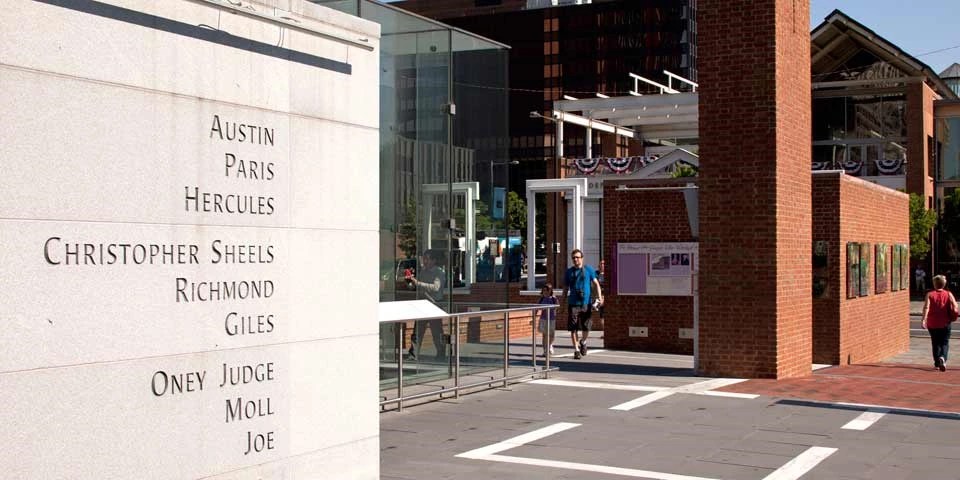
Months later, in November 1790, more people arrived to inhabit the house. Though unlike those previously mentioned, these souls did not come willingly. Washington brought eight enslaved African Americans from Mount Vernon to serve the needs of the first family, their guests, and maintain the house. One of the enslaved, Ona Judge, took the opportunity of being in a northern state to abscond from the Washingtons, never to be caught and returned. To avoid the Pennsylvania law, the Gradual Abolition of Slavery Act of 1780, which read that any enslaved person residing within the state boundaries for six months or longer owned by a non-resident would gain their freedom. Washington rotated the enslaved back to Mount Vernon in Virginia.
Besides Ona, who left the President’s House in May 1796 to gain her freedom and made her way to Portsmouth, New Hampshire. She did correspond with George and promised to return to the Washingtons’ under the condition that she would be freed upon their deaths. Belonging to Martha Washington, though, George did not have the legal right to agree to that promise. Judge created a life in New Hampshire, marrying and having three children before she passed away on February 25, 1848.
After Washington’s two-terms as president expired, John Adams, the second president of the United States, moved into the residence. On November 1, 1800, near the end of his four years, Adams relocated to the yet-unfinished White House in the new capital of the United States at Washington, D.C.
A century and a half later, the house’s remaining walls were accidentally demolished. Through the advocacy of historians and African American remembrance groups, the site was commemorated, with some of the foundation displayed under plexiglass covering. Information panels discussed those enslaved who served the house. A ghost structure showed the outline of the original structure, and the entire area was administered by the National Park Service.
The site became the center of attention again in January 2026 with the removal of those panels discussing the African American and enslaved experiences in the house that served presidents and hosted dignitaries. Their stories, though, remain as part of the fabric of the complete history of the United States. Very much including the role slavery and the enslaved played in the early American republic.
President’s House, with list of the enslaved to the left (courtesy of the NPS)
As this blog post publishes, the plight of the panels, the history of African-Americans in general, and the enslaved at the President’s House remain a topic of conversation and controversy. Continue to check the National Park Service website (click here) or other history-focused webpages for updates. Emerging Revolutionary War encourages dialogue and discussion on this topic.


 Emerging Revolutionary War Era