We are just days away from the events in Lexington and Concord. Be sure to follow ERW here on our blog and social media pages. We will have blog content and live videos from Boston, Lexington and Concord from April 18-20, 2025. ERW will be at all the sites and events commemorating the 250th anniversary of the events leading up to and including the first shots of the war.
Also be sure to follow our good friends Alex Cain and J.L. Bell on their blogs as well, https://www.historicalnerdery.com/ and https://boston1775.blogspot.com/ These two great historians have a wealth of information on Boston, Lexington, Concord and all the events of 1775.
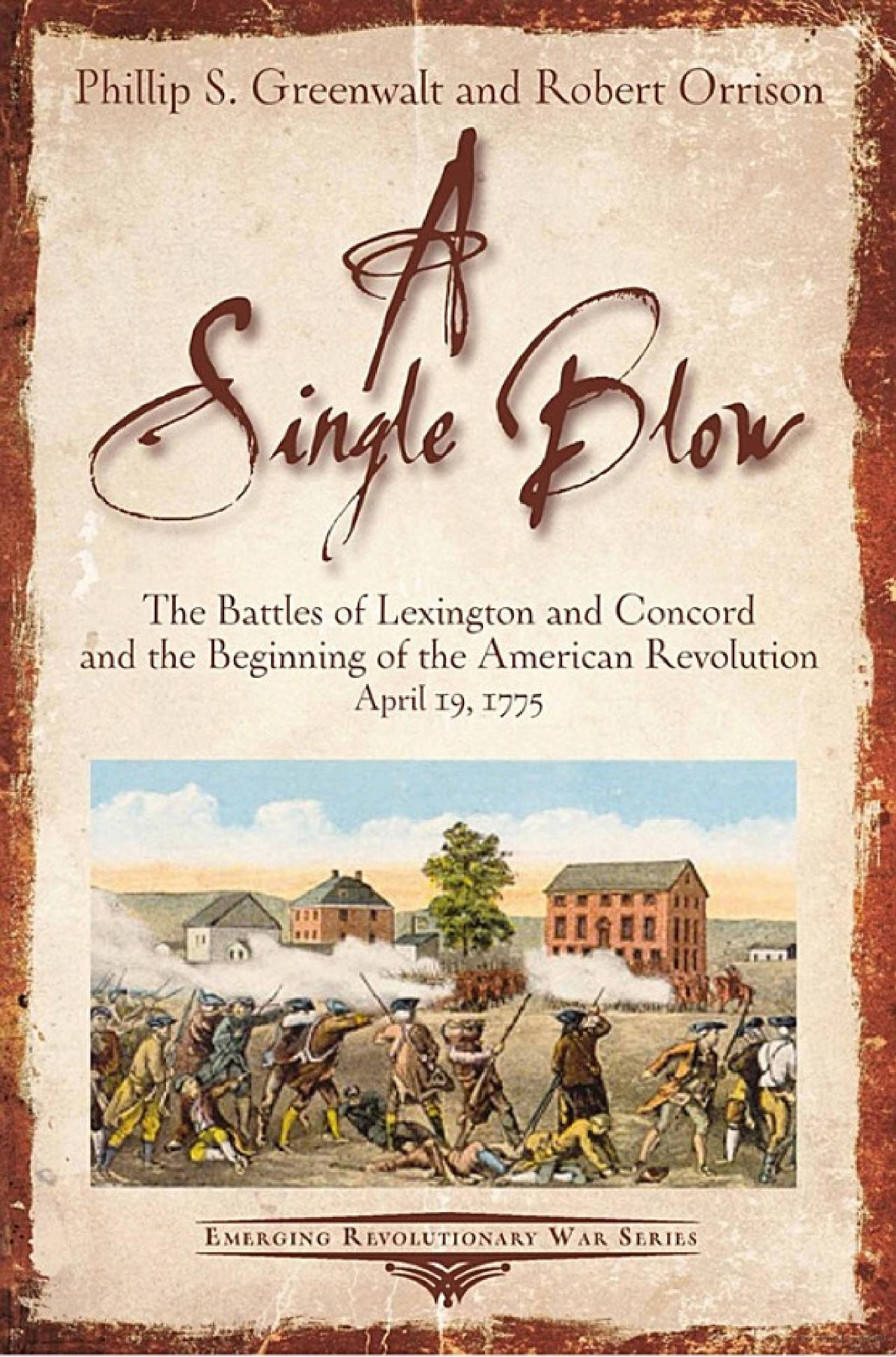
If you havent already, pick up a copy of our first ERW title, “A Single Blow: The Battles of Lexington and Concord and the Beginning of the American Revolution” by Phillip Greenwalt and Rob Orrison. Published by Savas Beatie (https://www.savasbeatie.com/a-single-blow-the-battles-of-lexington-and-concord-and-the-beginning-of-the-american-revolution-april-19-1775/ ), this book not only accounts the events of 1775 but also provides several tour guides for you to visit these locations. ERW fully believes that the best place to learn the history is where it took place.
We look forward to bringing you some great content this weekend…be prepared to have some behind the scenes looks, some guest historians and over all a fun time learning more about our great shared history.
“He said to his friend, “If the British march By land or sea from the town to-night, Hang a lantern aloft in the belfry arch Of the North Church tower as a signal light,– One, if by land, and two, if by sea;”
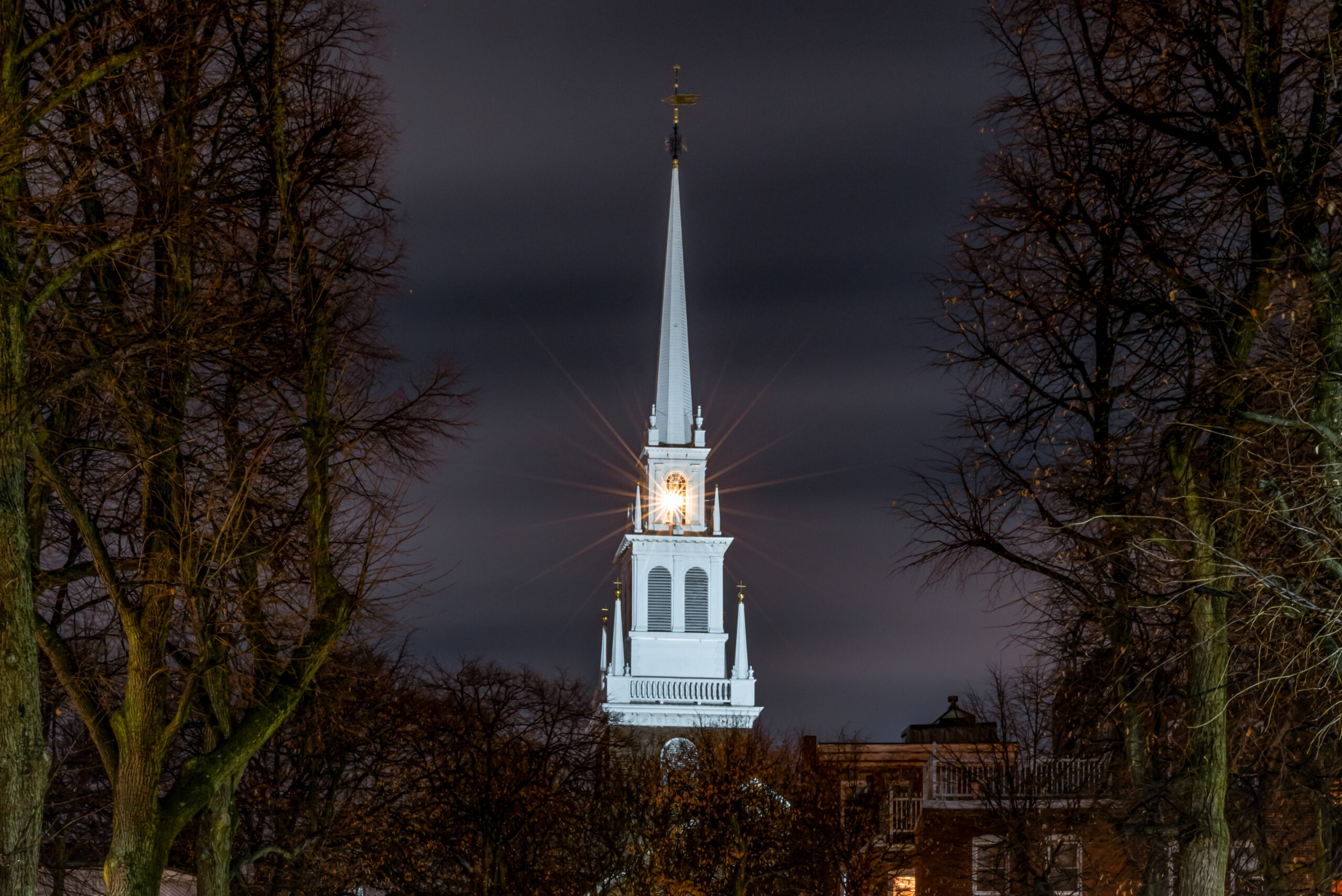
These famous words from Henry Wadsworth Longfellow’s poem about Paul Revere’s ride recount the important role the Old North Church played in the events leading up to the first shots of the Revolutionary War. Join us just a few weeks before the 250th anniversary as we sit down with Emily Spence, Director of Education at Old North Church in Boston. We’ll discuss the history of the church, what occurred on April 18, 1775 and what happened during the war. We’ll also discuss the exciting events the Old North Church will be doing on the 250th anniversary. This will be a pre-recorded video and you will be able to watch it when we post it at 7 p.m. on our Facebook page.
“To-morrow an oration is to be delivered by Dr. [Joseph] Warren,” Samuel Adams wrote on March 5, 1775, the fifth anniversary of the infamous Boston Massacre. “It was thought best to have an experienced officer in the political field on this occasion, as we may possibly be attacked in our trenches.”
Around every anniversary of the Boston Massacre, the people of the city and surrounding countryside sat to reflect on the events of that frigid March night and the current situation between themselves and their mother country. Chosen to deliver the 1775 commemorative oration, his second time doing so, was one of Boston’s most prominent physicians and chairman of the committee of safety, Dr. Joseph Warren. Because March 5 fell on a Sunday, the event was held the following day.
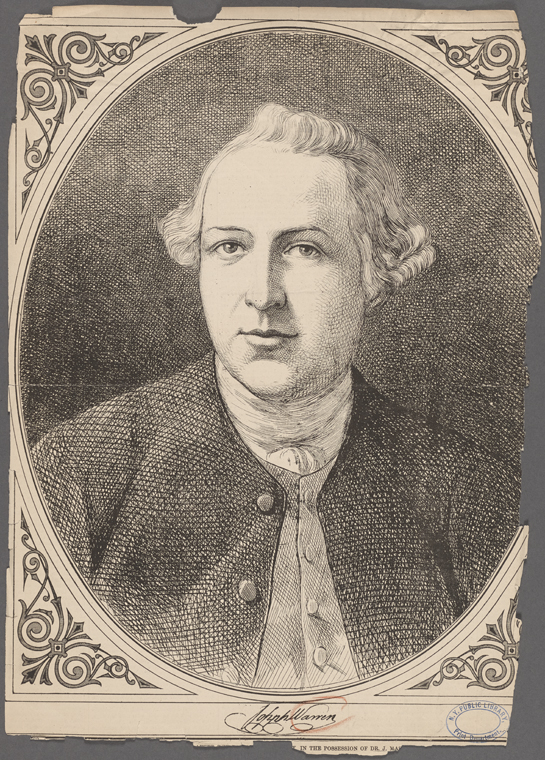
Dr. Joseph Warren. NYPL.
Warren was known to be a passionate and fiery speaker, able to invoke the raw emotion necessary to drive his listeners to action. The political climate surrounding that year’s event was never more incendiary. While no one could have known it at the time, though many anxiously anticipated something coming, the first shots of the Revolutionary War at Lexington and Concord were only a little more than a month in the future. The events on March 6 within the walls of the Old South Meeting House did nothing to ease those anxieties.
Accounts vary on the numbers and makeup of the attendees, but thousands flocked to the commemoration, including a large group of British Army officers garrisoned in the city. The presence of His Majesty’s soldiers was a sure sign that the building would be thick with rigid tension. The sight of the scarlet-coated men seated and standing around the pulpit did not deter the organizers. John Adams showed civility towards the officers, while his cousin Samuel saw an opportunity to enflame sentiments.
Old South Meeting House, Boston, MA. Courtesy of Robert Orrison.
Dr. Warren, 33 years old in March 1775, took the stage garbed in a toga, a symbol of the free men of Rome. His oration only touched upon the events five years prior, but the remainder oozed with patriotic fervor and a call to resist Great Britain’s rule until grievances were met. “I mourn over my bleeding country,” Warren lamented. “With them I weep at her distress, and with them deeply resent the many injuries she has received from the hands of cruel and unreasonable men.” As if a premonition of his own demise in battle at Bunker Hill several months later, he declared, “Our liberty must be preserved. It is far dearer than life.” The speech in its entirety can be read here.
Met with some low hisses and sighs of disapproval from the front rows, Warren’s oration was nonetheless received with emotion and the admiration of his fellow colonists. It was not until he stepped down from the pulpit that pandemonium began to ensue. Samuel Adams rose to appoint a speaker for next year’s commemoration. In doing so he also took the opportunity to reinforce the belief that the events on March 5, 1770 were not an accident, but a “Bloody Massacre.” Even Warren had refused to use this rhetoric. In response, the British officers began to jeer, shouting “Fie! Fie!” and “To Shame!” The already uneasy crowd mistook the shouts as “Fire! Fire!” and many began rushing for the windows, scrambling down the outside gutters and walls. As if this was not enough, the 43rd Regiment of Foot, returning from exercise, happened to be marching by with fife and drum. Their presence threw the crowd “into the utmost consternation,” who may have believed another “bloody massacre” was about to unfold.
Cooler heads prevailed, and any serious confrontation was avoided. Had it not been, one officer attested that it “wou’d in all probability have proved fatal to [John] Hancock, Adams, and Warren, and the rest of those Villains, as they were all up in the Pulpit together.”
March 6, 1775, proved to be another example of the swiftly deteriorating climate in Massachusetts. The influence of the “rebel” leaders continued to grow, while the image of a tyrannical monarch and his blood-thirsty soldiers was reinforced. Open hostilities seemed inevitable. Any day could bring bloodshed. As history exited the Old South Meeting House that day, it continued its accelerated journey down the road from Boston and on to Lexington Green.
On September 1, 1774 Massachusetts was on the brink of war. General Thomas Gage, now Governor of Massachusetts was growing more worried about Whig access to gunpowder and weapons. He made a fateful decision to send a small expedition to retrieve the provincial powder stored in Charlestown. This powder in Gages’ mind, was owned by the King. Local leaders felt otherwise and now this grab for powder by Gage nearly sparked war in 1774.
As word of the Boston Tea Party reached the other colonies, the response was mixed. Most colonists believed Bostonians should pay for the ruined tea, but they were also overwhelmingly shocked by the harshness of the Coercive Acts. Support from across the 13 colonies began to pour into Boston. Using an already established “Committee of Correspondence” network created in the early 1770s, colonial leaders began to discuss a proper reaction. Boycotts on imports of British goods and tea especially were accepted broadly. But most importantly, 12 colonies (Georgia abstained) sent representatives to a “Continental Congress” in Philadelphia in September 1774. Unlike the previous Stamp Act Congress, the First Continental Congress was attended by the majority of American colonies. The Congress encouraged boycotts and also petitioned the King and Parliament to rescind the Coercive Acts. In response to their planned attendance, Governor Gage dissolved the Massachusetts Provincial Assembly before the Continental Congress met and called for new elections. This did not deter them from sending representatives (John Adams, Samuel Adams, Thomas Cushing, and Robert Treat Paine) to Philadelphia.
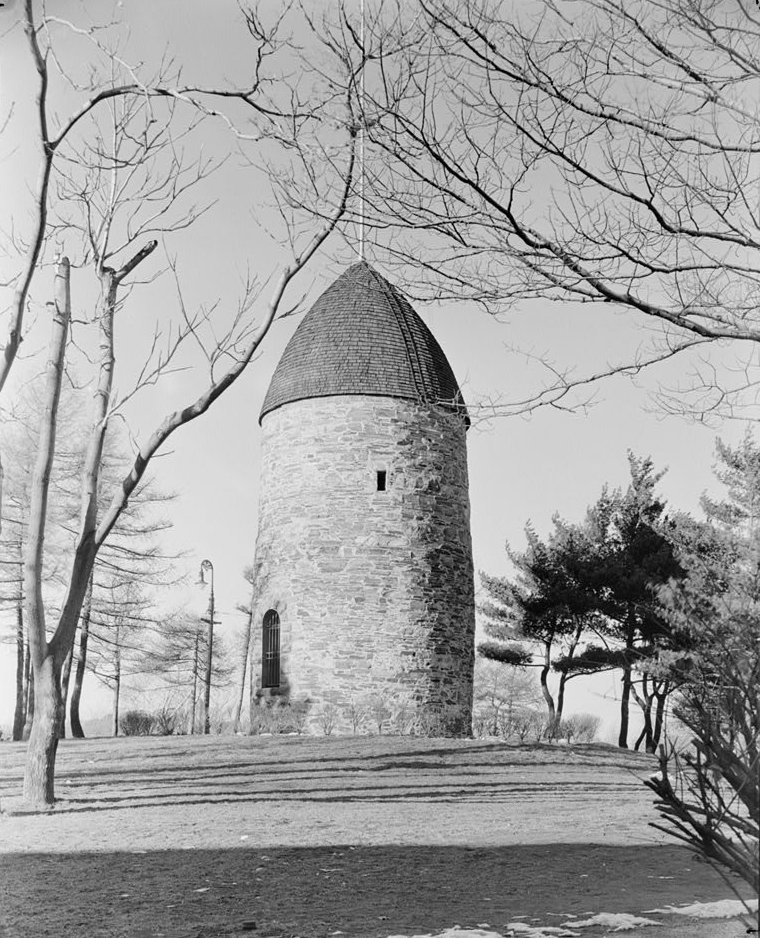
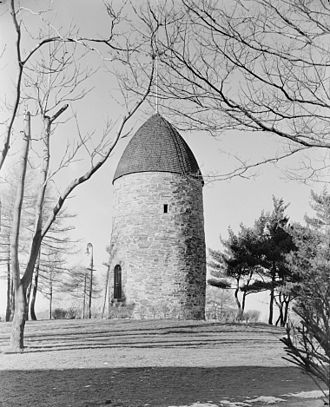
Charlestown (now Somerville) Powder House, ca. 1935
Back in Massachusetts, Gage became wearier of his situation and the possibility of open conflict with colonists. He was active in paying informants and gaining information from local Tories (those loyal to the British government). These sources informed Gage that the people of the countryside were beginning to arm themselves. In an effort to deny them use of the official Royal arms and powder stored across the colony, he began to collect these government-owned supplies. In colonial America, most men served in the local militia. Local towns had powder magazines to store the powder that would be used for training the militia or if the militia was called to defend a portion of the colony. Many of these powder magazines also stored a portion of gunpowder that belonged to the colonial government—the King’s powder.
One such large powder magazine that stored a large quantity of British gunpowder was in nearby Charlestown, now known as Somerville. This powder magazine was the largest in the colony. William Brattle, the commander of the Middlesex County militia and a Royal appointee, notified Gage that he believed the local militia were making plans to steal the Royal gunpowder. Gage moved quickly; he ordered the Middlesex County sheriff to secure the keys. Then early on the morning of September 1, nearly 300 British Regulars made their way to the powder house and removed all of the gunpowder that rightfully belonged to the governor and his agents. By that afternoon, the British troops, powder, and two cannon were in Boston at Castle William (a fort on an island in Boston Harbor).
Word spread quickly that the British came and stole the powder and, in the process, had shot and killed colonials. Now Boston was on fire, and the British navy was bombarding the city. All of this of course was not true, but the word spread like wildfire just the same. Misinformation abounded, and now thousands of locals and militia were gathering in Cambridge looking for revenge. Many loyal to the colonial government were forced to flee to Boston for protection. As time went on, it was evident that the rumors of a battle and Boston burning were untrue. The incident, however, showed how quickly the countryside could mobilize against the governor. Word was quickly sent to Philadelphia where the delegates to the First Continental Congress was aghast at the news. They debated on what to do, and the Massachusetts delegation specifically were on edge for more information. Word eventually arrived that the situation that was first reported was not accurate and no fighting had broken out. John Adams wrote;
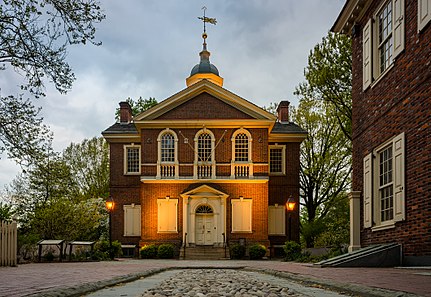
Carpenters Hall, Philadelphia where the First Continental Congress convened on September 5, 1774.
“When the horrid news was brought here of the bombardment of Boston, which made us completely miserable for two days, we saw proofs of both the sympathy and the resolution of the continent. War! war! war! was the cry, and it was pronounced in a tone which would have done honor to the oratory of a Briton or a Roman. If it had proved true, you would have heard the thunder of an American Congress.”
Gage, somewhat shaken by the event, began to concentrate his military strength in the city of Boston and fortified the city against a possible attack. He sent word to England that he needed more men to enforce the Coercive Acts. The “Powder Alarm” proved that, within a day, thousands of armed colonials could assemble. The message he sent London shocked the King: “If you think ten thousand men sufficient, send twenty; if one million is thought enough, give two.” Soon after on September 9th, Whig (Patriot) leaders such as Dr. Joseph Warren and others passed the Suffolk Resolves. These strongly worded resolves called for a boycott of British goods and heavily impacted policies adopted by the First Continental Congress. Parliament badly miscalculated the colonial reaction to the Coercive Acts and the pendulum was beginning to swing to independence. The Powder Alarm quickly taught General Gage that the resistance to Royal authority was not just a small group of rebels, but a growing majority of the population.
You can still today visit the the famous Powder House today. It stands in Nathan Tufts Park at 850 Broadway, Somerville, Massachusetts (GPS: N 42.400675, W 71.116998). There is plenty of street parking available. Take the trails in the park to the Powder House located in the center of the park.
This Sunday, August 3rd at 7pm we welcome back to Rev War Revelry historian and author Alex Cain. Alex is a well known expert on everything Lexington, MA (among many other topics) and hosts a well researched blog: https://www.historicalnerdery.com/ . Alex’s book, We Stood Our Ground: Lexington in the First Year of the American Revolution is highly recommended by ERW for a detailed account of Lexington and its role in the beginning of the American Revolution.
The events of Boston leading up 1775 are well documented, but it was in the countryside around Boston where the populace became militarized. Towns such as Lexington was just as influential in the push to revolution as Boston. Join us as we discuss the role of Lexington, Massachusetts before it was made famous in April 1775.
Be sure to visit our Facebook page or You Tube Channel this Sunday at 7pm as we release this prerecorded Rev War Revelry. Alex will also be joining us this October for our ERW Bus Tour of Lexington and Concord, there a few tickets left so be sure to register to experience Lexington with Alex!
Emerging Revolutionary War welcomes guest historian, Nathaniel Parry, a brief bio follows this post.
The American Revolution was a victory of liberty over tyranny made possible by a mixture of courage, grit, and virtue. It was also, however, a morally ambiguous affair with some of the main participants motivated as much by ambition as they were by idealism. While many of the founding generation prided themselves on their virtue, vice also played an important role in their rebellion against the British, and to fully appreciate this reality, it is useful to examine the role of alcohol, which turns up at many of the revolution’s key moments.
In ways sometimes subtle and often quite important, alcohol provided the impetus for the nation’s founding, belying the pristine image of an honorable rebellion of virtuous patriots against liberty-hating tyrants. From John Hancock celebrating the repeal of the Stamp Act in 1766 by “treat[ing] the Populace with a Pipe of Madeira Wine,” as one newspaper reported,[i] to militiamen wetting their whistles at Buckman Tavern before the Battle of Lexington and Concord,[ii] to General George Washington ordering “an extra ration of liquor to be issued to every man”[iii] in celebration of Britain’s recognition of America’s independence in 1783, alcohol pops up again and again during the revolutionary era. This was a reflection of the fact that drinking was an integral part of daily life in early America.
John Hancock and the Liberty Affair
With heavy drinking habits widespread among all classes and regions, the rum distillery industry flourished in the colonies, made possible by cheap imports of molasses from the West Indies. By one count, there were more than 150 rum distilleries in New England before the revolution, and throughout the colonies some five million gallons of rum were being produced.[iv] In order to ensure access to the cheapest molasses available and to bypass restrictive English regulations such as the Navigation Acts and 1733 Molasses Act, smuggling became rampant in the colonies, a problem that Parliament sought to address with the adoption of the Sugar Act in 1764. An attempt to crack down on smuggling and increase revenue, the Sugar Act had the effect of increasing the price of manufacturing rum and negatively affected the exporting capacity of New England distillers, leading to consternation among merchants. It also heavily taxed the formerly duty-free wine from Madeira, Portugal, which was popular throughout the colonies. This angered both merchants and consumers.[v]
The Charlestown, now Somerville, Powder Magazinewas the focus of the September 1, 1774 Powder Alarm. The historic structure still stands today.
Join ERW this Sunday at 7pm as we welcome back historian and author J.L Bell. We will discuss the events in Boston and Massachusetts in 1774 after the passing of the now popularly called “Intolerable Acts” in response to the Boston Tea Party. A time of political, social and economic upheaval for everyone in the colony, the events that transpired had big impacts across all the colonies and set the stage for April 19, 1775. J.L. Bell is a renowned historian who operates a very comprehensive blog focused on Boston 1775 (https://boston1775.blogspot.com/ )
Grab a drink and sit back and learn about the events that rapidly progressed during 1774 towards warfare and bloodshed. J.L. Bell will provide a great insight into how things quickly deteriorated in Massachusetts and how that impacted all the colonies as a whole. Unlike previous revelries, this revelry will run live on our You Tube channel at: https://www.youtube.com/@emergingrevolutionarywar8217 . Due to new rules and regulations with Facebook, we can no longer stream our revelries live on Facebook. We hope that will change in the future. We will post the You Tube video to our Facebook page after the live broadcast. We hope to see you this Sunday, June 9, 2024 at 7pm on our You Tube Channel!
On May 13, 1774, the newly Royally appointed Governor of Massachusetts arrived in Boston. General (and now Governor) Thomas Gage was well known to the American colonists. Gage served as a Major in the 44th Regiment of Foot in the French and Indian War, most notably in the Battle of the Monongahela. When several of Gage’s officers fell, he took up temporary command of the 44th during the battle. During that time Gage got to know George Washington and both men respected each other. After the war, Gage received a promotion to Brigadier General and was appointed the military governor of Montreal.
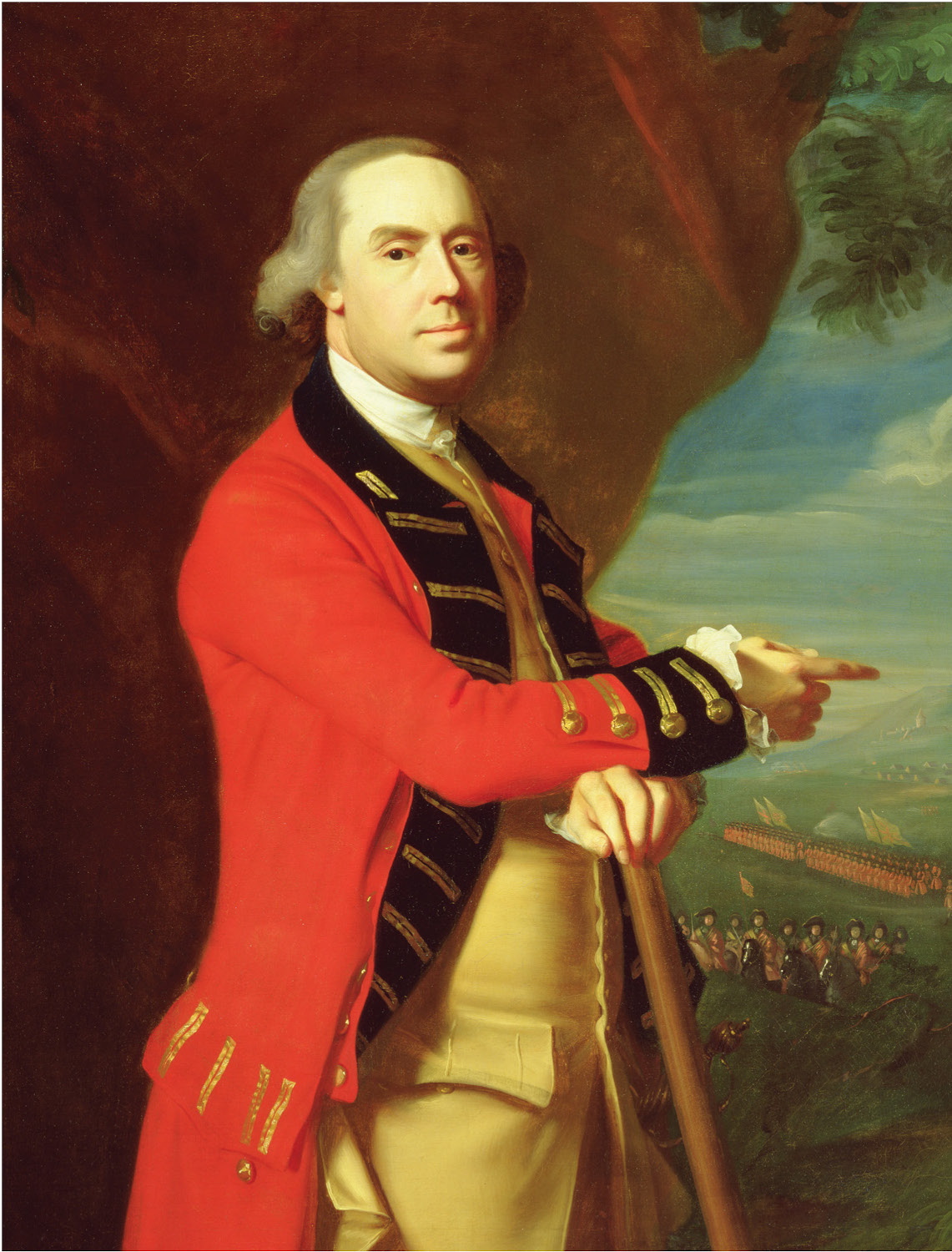
Portrait of Thomas Gage by John Singleton Copley
Soon after, Gage became the commander in chief of all British forces in North America. He moved to New York city to administer the King’s forces in the American colonies. Gage’s popularity increased as he focused on creating peace with the Indian population along the new western border of the colonies through various treaties. Gage and his American born wife, Margaret, were well accepted into New York society. Gage always believed that the democratic spirit that pervaded the colonies were a threat to British rule. With many of the colonists accustomed to electing their own representation, he believed this created more division with the home country than making them British citizens. Gage had long believed that democracy was too rooted in colonial society. In 1772 he wrote “democracy is too prevalent in America.”
As tensions began to increase within the American colonies, Gage’s response exasperated the situation. He contracted many of the British military posts back to the colonial cities along the eastern seaboard (which in part led to the Boston Massacre in 1770). He believed a show of military strength would help put out the fires of discontent. Further, he concluded that the unrest was mostly pushed by a very small minority, not the vast majority of colonials. He underestimated how the masses would respond to his hard hand. Now Gage, who was in Great Britain when the news of the Boston Tea Party arrived, was seen as a great fit to handle the crisis in Boston. His military back ground and experience as a civil leader (and liked by many in the colonies) made him on paper an ideal candidate for Governor of Massachusetts in this unsettled time.
Many in Boston welcomed Gage when he arrived that May. Mostly because they had become so disenchanted with former Governor Thomas Hutchinson, who was completely not up to the task that faced him in 1773. The recently passed Boston Port Act (passed in March 1774, this act closed the port of Boston until the loss of the tea was paid for) grew tensions in Boston, but large segments of the population believed that those that destroyed the tea should pay for it. Soon, it was the next piece of news from Great Britain that shook the foundation of something the majority of Bay Staters took pride in, self-rule.
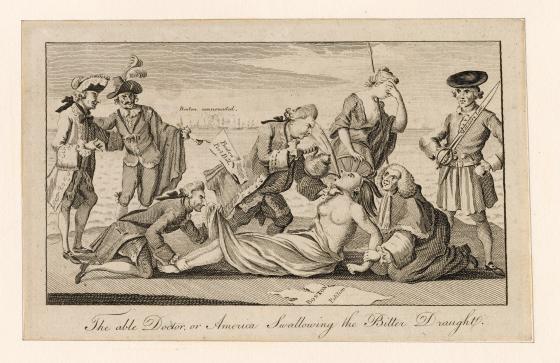
“The able doctor, or America swallowing the bitter draught,” 1774. This illustration depicts the British forcing a Native American woman (a symbol of the American colonies) to drink tea.
Word arrived of two new laws recently passed on May 20, 1774, Parliament passed the Massachusetts Government Act and Impartial Administration of Justice Act. These two acts were punitive in measure and sought to bring the colony under direct Royal control. The Government Act stated “Parliament passes this act turning the Massachusetts Council into a body of crown appointees“ (similar to other Royal colonies like Virginia) when up to then they were elected. Also, it restricted the traditional “town meeting” to just one a year. Town meetings were an essential local governing tool to not just govern localities but also to provide open communication across the colony. The Justice Act gave the governor the power to a trial to another colony or to Great Britain if he determined “that an indifferent trial cannot be had within the said province.” Judgment by one’s peers was a long-standing tradition in Massachusetts and in British law dating back to the Magna Carta. These measures essentially dissolved important aspects of the Massachusetts Charter of 1691.
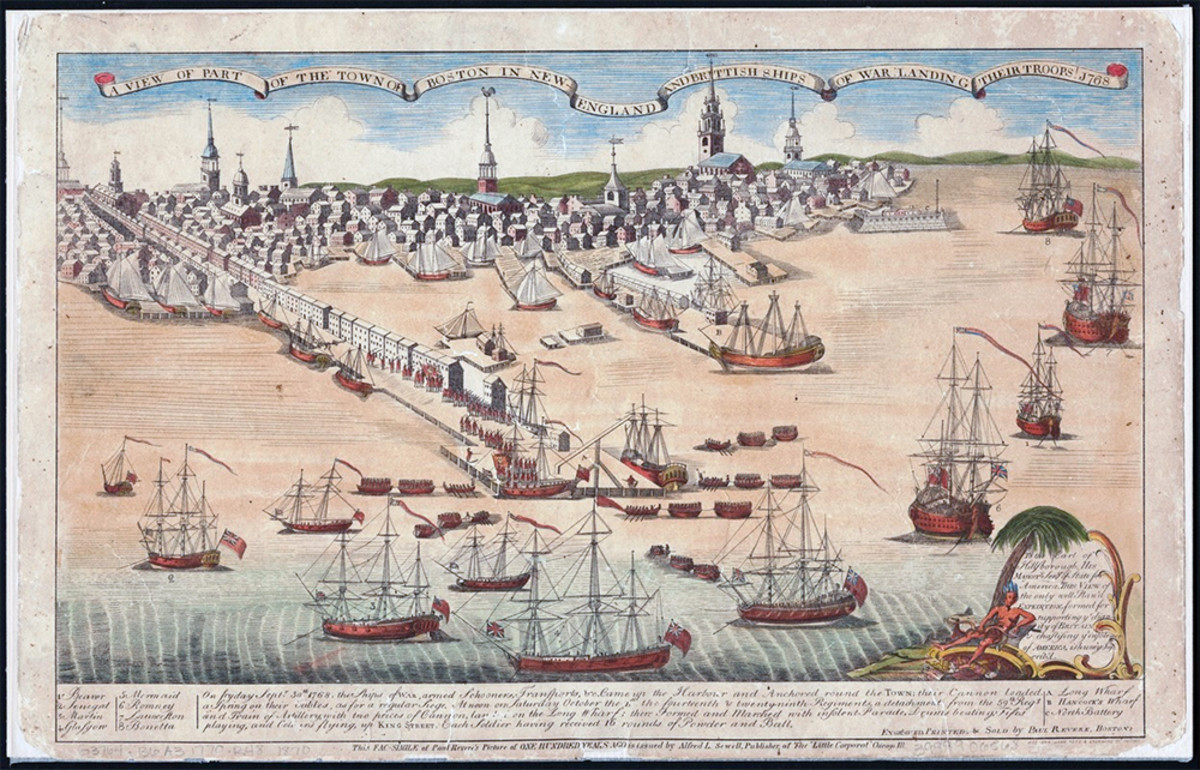
Furthermore, Gage inflamed the situation more in Boston by bringing with him more British Regular troops. By the end of 1774, Gage had more than 4,000 soldiers in and around Boston. Gage could see the situation worsening but was unable to determine how to best deal with what confronted him. Whig leaders such as Dr. Joseph Warren, Paul Revere and Samuel Adams used these newly passed acts as proof that Great Britain was infringing on their rights and liberties. Using groups like the Sons of Liberty, Whig leaders began to gain great influence as many of the colonists began to turn against Great Britian. Soon many of these community organizations began to arm themselves and coordinate with the other colonies via committees of correspondence. Gage, feeling the situation was becoming dangerous wrote back to authorities in Great Britain “Affairs here are worse than even in the Time of the Stamp Act, I don’t mean in Boston, for throughout the Country. The New England Provinces…are I may say in Arms.” Events were beginning to build towards armed revolution, not just in Massachusetts, but across a more unified American colonies.
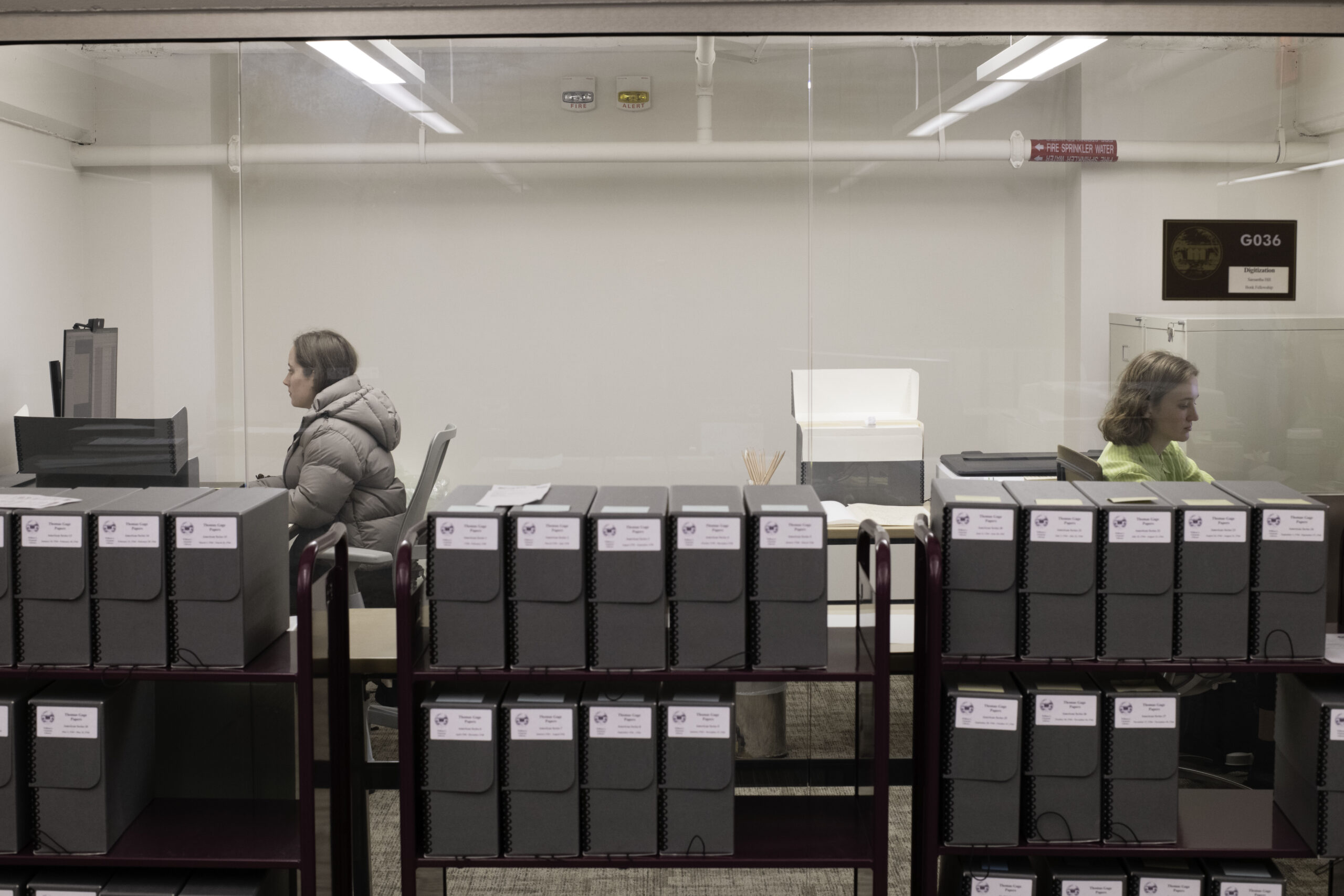
William L. Clements Library at the University of Michigan is now digitizing Gate’s papers with help from a grant of the National Endowment for the Humanities. Over the next year or so, this great resource on the colonial America will become accessible via the library’s website.
Yes, this may be the first college student protest recorded in what became the United States of America.
No, this was not just about butter or butter substitutes.
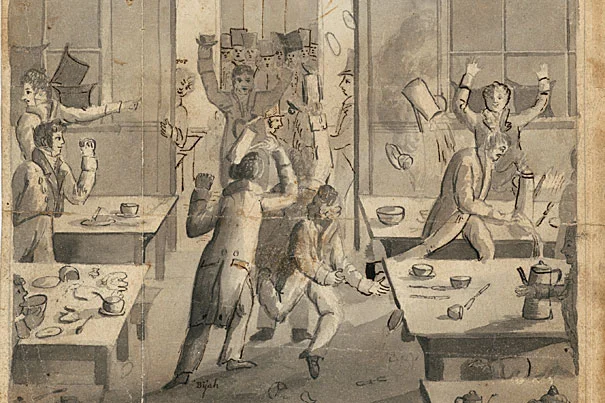
At Harvard College, in 1766, three students, all seniors at the institution, Asa Dunbar, Daniel Johnson, and Thomas Hodgson had had enough of the lack of fresh food being served to the student body. Dunbar, who may be best known as the grandfather of Henry David Thoreau, led the protest, stating that the butter served by the college was “stinketh” and he incited the student body to reject this rancid fare by jumping onto his chair and yelling
“Behold our butter stinketh! Give us therefore butter that stinketh not!”
Dunbar faced disciplinary action, being punished for insubordination and instigating a potential riot. After he received his punishment, the student body enacted another protest, by walking out of the hall, cheering loudly in Harvard Yard, and continuing into Cambridge to dine instead. To give some credit to the college, the adminstration acknowledged the butter ws rancid. With restrictions due to economic difficulties the availability of fresh food was limited however.
As Massachusetts moved closer to open rebellion in their remonstrances against British Parliament and the British crown their example was mirrored by the student body of Harvard. After a month of impassed including “insulting proceedings” the royal governor of Massachusetts, Sir Francis Bernard personally addressed the student body in the chapel on campus and the protests and insubordination of the student body concluded.
A depiction of a student protest courtesy of The Harvard Gazette
Concluding, with a Butter Rebellion, a Tea Party, what food or drink would the colonists focus on next? For me, I think I will sip my Samuel Adams brew. Leave the butter and tea to the Massachusettans.
(Yes, I know that Samuel Adams beer was not around at the time of the American Revolution but I thought it was fitting. And beer and history go together anyways right?)
With three ships sitting at Griffins Wharf in Boston Harbor laden with tea, the Sons of Liberty were quickly running out of time on December 16, 1773. At the stroke of midnight, twenty days would have past since the first ship arrived in the harbor. At that time, customs officials would seize the cargo, the tax would be paid, and the British government would have been successful in forcing the colonists to pay a tax they did not consent to. The British would have demonstrated their power over the colonists. The colonists’ rights as Englishmen were at stake. Whereas the tea cosignees had resigned in New York and Philadelphia, the ones in Boston refused to resign and the Governor was refusing to allow the ships to leave the harbor.
On December 16, the leaders of Boston held a meeting they referred to as the “Body of the People.” Because of the large amount of interest in the issue, more than 5,000 people attended this meeting at the Old South Meeting House in Boston (the largest venue in the city). At the meeting was William Rotch, the owner of the ship Dartmouth which was the first ship to enter the harbor and would be the first to be seized by the customs officials on December 17. Rotch wanted to protect his property and see if the Governor would allow him to sail out of the harbor. The meeting recessed to let him go to the Governor outside of Boston and request the ability to leave the Harbor. Governor Hutchinson said he could not allow the Dartmouth to leave. After the meeting had reconvened in the Old South Meeting House, Rotch returned to Boston at about 6 p.m. and told the crowd that the Governor would not let the tea return. This news was responded to with loud cries and shouting.
At that moment, Samuel Adams declared “This meeting can do nothing further to save the country.” After saying this, people heard Indian war whoops coming from the crowd and outside the building. Another person declared “Boston Harbor a teapot this night!” The people then began exiting the building and heading down to Griffins Wharf a few blocks away. Down at the wharf, men (some disguised as Mohawk Indians) began boarding the three ships. Approximately one hundred men boarded the ships and quickly got to work pulling up the large tea chests to the decks and dumping the tea into the cold water below. Crowds gathered and watched the men work for nearly two hours as they methodically worked to destroy all the tea on board the ships.
The men were careful to not destroy any other property except the tea. They also refused to steal any of the tea, punishing anyone who made an attempt. It was low tide and the tea started to pile up out of the water and needed to be mashed down into the water and mud.
British regulars were stationed at nearby Castle William, but they were not called down to the ships out of fear of insitigating a similar event as the Boston Massacre that occurred three years earlier. The British navy, posted in the harbor also made no attempt to stop the destruction. Some Royal Navy sailors watched the events on Griffins Wharf with some trepidation.
Once all 342 chests of tea had been tossed overboard, the destroyers left and the crowd dispersed. In all, they had destroyed 46 tons of tea on the ships.
The event would have major repurcussions as the British determined to repsond to the event with brute force and would ultimately result in the Revolutionary War less than two years later. John Adams wrote: “This Destruction of the Tea is so bold, so daring, so firm, intrepid and inflexible, and it must have so important Consequences, and so lasting, that I cant but consider it as an Epocha in History.”
Learn more about the events happening to commemorate the 250th anniversary of the Boston Tea Party by visiting https://www.december16.org/.
You can learn more about Boston in the Revolutionary War by reading Rob Orrison and Phill Greenwalt’s book A Single Blow, part of the Emerging Revolutionary War book series.





 Emerging Revolutionary War Era