Major John Van Dyk and the Bones of Major John André. Part I

Emerging Revolutionary War welcomes historian and educator Jeffrey Collin Wilford to the blog. A brief biog is at the bottom of this post. A list of sources will be at the bottom of the concluding Part III.

Major John André and John Van Dyk: Continental Artillery Soldier 

Much has been written about the betrayal of America by Benedict Arnold. However, one small but candidly morbid fact buried in the story has not. It relates to the disposition of British Major John André’s remains as they lay in a wooden ossuary on a British mail ship on the banks of the Hudson River while awaiting their return to England in 1821. The only recorded recollection of this event was in a letter written by a 67-year-old former Revolutionary War soldier and published in a Virginia newspaper in 1825. This man also happened to be one of the four officers who escorted André to the gallows in Tappan, New York, on October 2, 1780. 

John Van Dyk lived a storied life, serving America as a militiaman, Continental Artillery soldier, customs officer, New York City assessor, and assistant alderman. He came from an old Dutch family that had settled in the original New Amsterdam colony, which would eventually become Manhattan. There is ample evidence that, in 1775, he was actively involved in significant acts of disobedience against British rule with other “Liberty Boys,” as the New York Sons of Liberty preferred to call themselves. 

One of these acts was stealing muskets and cannons from the Royal Armory and Fort George.  Under the encouragement of Isaac Sears and Marinus Willett,  he was one of a crowd of colonists who broke into the Royal Arsenal at City Hall on April 23, 1775, stealing  550 muskets, bayonets, and related munitions. The angry mob had been spurred to act by the attacks on their fellow countrymen the week previous at Lexington and Concord in Massachusetts. Every person who took a musket was required to sign for it, signaling a promise to return it if it was needed to fight against British occupation. That call came on July 4, 1775, when the New York Provincial Congress ordered them recalled to outfit newly commissioned  Colonel Alexander McDougall’s 1st New York Regiment. It was relayed that anyone who refused would be deemed an enemy of the state. In all, 434 muskets were returned. 

Exactly four months later, Captain John Van Dyk was one of sixty or so men who, under Liberty Boys Colonel John Lasher and Colonel John Lamb, executed the orders of the New York Provincial Congress to remove the cannon from Fort George at the southern tip of Manhattan and drag them back to the area of City Hall. With tensions high in the city, the state leaders feared they would be turned against the colonists if they were left in the hands of the British. One of the militia members assisting in the removal effort was 19-year-old King’s College student Alexander Hamilton of the Hearts of Oak independent militia. By this time, civil unrest had relegated the British colonial government to operating from naval ships anchored in New York Harbor, which made keeping the cannon secure from a more agitated population nearly impossible. 

Just before midnight on August 23, 1775, a skirmish ensued between  Lasher and Lamb’s men removing the cannon, and a British barge near the shore. It had been sent to monitor the rebels’ activity by Captain George Vandeput from the HMS Asia, a 64-gun British warship anchored near shore. Musket shots rang out, presumably started by the British, which resulted in the killing of a King’s soldier on the barge. As a result, the Asia turned broadside and opened fire with their cannons in a barrage on the city that lasted for three hours. A city whose population had already been diminished by the fear of a coming conflict, shrunk even further due to the terror experienced that night.  

John Van Dyk spent most of the next eight years as an officer in General Henry Knox’s artillery while under the command of Colonel John Lamb.  During the war, he saw action at Brooklyn, Harlem Heights, White Plains, Trenton, Brandywine, Germantown, Crosswicks Creek, Monmouth, and Short Hills. He was also at both Morristown winter encampments and Valley Forge. In 1780 he was captured by the British off the coast of New Jersey and confined on the prison ship HMS Jersey in Brooklyn before being released that summer.  

Van Dyk had spent months out of commission in late 1779 and early 1780 with what, according to his symptoms, was probably malaria or yellow fever.  He petitioned General Knox, who, in turn, appealed to General Washington for leave to recuperate. Making his way to West Point to meet with General Washington he was instructed by the Commander-in-Chief’s aide-de-camp to be evaluated by Dr. John Cochran, physician and surgeon general of the army of the Middle Department. On Cochran’s recommendation, General Washington wrote to President Samuel Huntington asking that the Continental Congress grant Van Dyk’s petition for an 8-month Furlow to sea to convalesce, which was common at the time as it was believed the fresh sea air was helpful to healing. Approved, it would take six months before he boarded the brig General Reed with a crew of 120 and 16 guns, a privateer out of Philadelphia commanded by  Samuel Davidson. Once aboard ship he was temporarily made a Lieutenant of Marines. 

Only two days into the voyage, on April 21, 1780, things took an immediate turn for the worse when they were intercepted and captured by the 28-gun HMS Iris and the 16-gun sloop HMS Vulture. The Iris was the former American warship USS Hancock, captured in July of 1777 and renamed by the British. Van Dyk was brought to Brooklyn and placed on the prison ship Jersey in Wallabout Bay, one of the most notorious and deadly places for holding American prisoners of war. Conditions were so poor that, while approximately 6,800 American soldiers died in battle during the Revolution, over 11,000 prisoners died on the Jersey alone! Fortunately for John Van Dyk, American officers were often traded off the Jersey for British officers who were in the custody of American forces. Within two months he was released and traveled to his temporary home of Elizabethtown, New Jersey to finish recuperating before rejoining Lamb’s artillery in Tappan, New York. 

John Van Dyk had experienced many horrors of war in the years and months leading up to the morning of September 21, 1780, when British Major John André, an Adjutant General to British General Sir Henry Clinton, left New York City and sailed up the Hudson River. This pivotal incident would brand one of Washington’s closest generals a traitor and lead to the death of the esteemed and well-liked André. Ironically, Major André traveled on the very same sloop that had assisted in the capture of Captain Van Dyk just six months earlier. 

Bio:

Jeffrey Wilford has been an educator in Maine for over 30 years where he holds certifications in history and science. He received a bachelor’s degree in communications with an emphasis in journalism from California State University – Fullerton and a master’s degree in education, teaching and learning, from the University of Maine. In addition to his career teaching, he has worked as a general assignment newspaper reporter and an assistant to the press secretary of former Maine Governor and US Congressman Joseph Brennen. He lives in Maine with his wife Nicolette Rolde Wilford.

Financial Assistance for a Veteran

Peter Kiteridge was born into slavery in Boston, Massachusetts and worked in the household of the Kittredge family, from Andover, Massachusetts. Although slavery is most often associated with the southern colonies, and later the southern states, it was an established institution across the the thirteen original colonies at the time of the American Revolution. Despite being born into the institution legalized in the colony in which he lived, African American Peter Kiteredge cast his lot with those fighting for the cause of independence. The Kitteridge family had as well. Many in the extended family of Kittredges were physicians, and Dr. Thomas Kittredge went on to serve as as surgeon for Colonel James Frye’s regiment (Essex County Regiment) that was raised in Andover. In May 1775, the regiment became part of the Army of Observation. During the war, Peter Kittredge served in Captain William H. Ballard’s company of Colonel James Frye’s regiment. Peter joined the army in 1775 or 1776, according to his memory over thirty years later, and served for five years in the army before later becoming a sailor.

Read more: Financial Assistance for a Veteran
Black Continental Soldier (T. Payton, 1997)

By the early 1800s, Peter Kiteridge was struggling both with his finances and his health. In this letter dated April 26, 1806, he noted that he is a freeman and in need of financial assistance. This document reveals much more about Peter, including the time between when he was a slave and when he went into military service. But the heart of Kiteridge’s letter was his request for assistance from the Selectmen of the town of Medfield. Due to a “complaint” that he had suffered since the war, perhaps the lingering effects of a disease contracted during his time in the service, Peter was unable to continue to work, and he asked for help to support his wife and four children. Because he later signed this petition with an “X” we can assume that his years as a slave left him illiterate. By the turn of the century, however, he was not the only veteran of the Revolutionary War that needed financial assistance. As this generation of servicemen aged, a growing demand for what later became known as veteran pensions increased. Today, veteran pension records, and petitions for assistance such as this, provide scholars a wealth of information on those that lived and served during this turbulent period.

Below you will find the full petition of the Medfield Selectman of April 26, 1806 courtesy of the Gilder Lehrman Collection.

“Gentlemen

I beg leave to state to you my necessitous circumstances, that through your intervention I may obtain that succour, which suffering humanity ever requires. Borne of African parents & as I apprehend in Boston, from whence while an infant I was removed to Rowley and from thence again to Andover into the family of Doct. [Thom] Kiteridge, with whom as was then the lot of my unfortunate race, I passed the best part of my life as a slave. [struck: At the age of twenty five] In the year of our Lord 1775 or 6 & in the twenty fifth of my age I entered into the service of the U.S. as a private soldier where I continued five years [inserted: and] where I contracted a complaint from which I have suffered in a greater or less degree ever since & with which I am now afflicted. After leaving the army to become a sailor for two years; when I quited the sea & resided for some time in Newtown, from whence I went to Natick where I remained for a short time & then removed to Dover where I [struck: remained] [inserted: carried] as a day labourer during the period of seven years. Eight years past I removed to the place where I now live, & have untill this time, by my labor, assisted by the kindness of the neighbouring inhabitants been enabled to support myself and family. At present having arrived [2] at the fifty eight year of my life and afflicted with severe and as I apprehend with incurable diseases whereby the labour of my hands is wholly cut off, and with it the only means of my support. – My family at this time consists of a wife and [struck: three] four children, three of whome are so young as to be unable to support themselves and the time of their mother [struck: has] is wholy occupied in taking cair [sic] of myself & our little ones – thus gentlemen, in this my extremity I am induced to call on you for assistance; not in the character of an inhabitant of the town of Westfield, for I have no such claim, but as a stranger accidently fallen within your borders, one who has not the means of subsistence, & in fact, one, who must fail through want & disease unless sustained by the fostering hand of your care.

I am Gentlemen your mos obedient, most humble servant.

Peter Kiteredge
His X Mark

Attent. Ebenezer Clark
Paul Hifner

To the policemen Selectmen of the
Town of Medfield.
[docket]
Medfield 26 April 1806
[docket]
Peter Kittridge
application –
[address]
To the gentlemen Select
[Men] of the Town of
Medfield – “

Disaster on the Eastern Frontier

Part Two
For Part One, click here.

The British and loyalists would not have to wait long. Word of the landing reached the Massachusetts government within a matter of days, and preparations for a counterattack began almost immediately. There was such a hurry to respond that the General Assembly voted to carry out the operation with state forces rather than wait for Continental assistance.[1] Despite the initial rush it still took a month to assemble a force of over 1,000 militiamen, as well as the food, arms, and other supplies to sustain them. All of these troops and their supplies would be transported by a fleet of 21 transports, accompanied by nearly twenty state and Continental navy vessels and privateers. Among the warships the largest was the Frigate Warren of 32 guns which served as the flagship of Commodore Dudley Saltonstall. The Connecticut born officer was given overall command of the naval forces – no small task given the lack of experience with large scale fleet actions among his subordinates. Command of the land forces was given to Massachusetts Brigadier Solomon Lovell. Lovell has seen experience early in the war outside of Boston, but was also relatively untested in battle. The inexperience and poor communication between Saltonstall and Lovell was to have a decisive impact on the coming expedition. Notable among the other officers in the expedition was Paul Revere, who commanded the Massachusetts artillery. The expedition was also joined by a band of the local Penobscot Indians allied to the Continental Congress.

The New England fleet entered the Penobscot Bay on July 25th and immediately attempted a landing. Clearly outnumbered and with their works incomplete, General McLean and his men were determined to resist the Americans, but expected the worst. Saltonstall’s fleet sailed in close to the shore and exchanged cannon fire with both the British defences and the three remaining Royal warships, now under the command of Captain Henry Mowatt. In the confusion and smoke the Americans lowered seven launches full of marines and militiamen, but as they neared the shore they were met by a hail of musket fire[2]. At least one of the attackers – a Native American – was killed and the boats returned to the safety of the fleet. It was an inauspicious start to the battle for the New Englanders and already the relationship between the two commanding officers was becoming strained. General Lovell knew little about sailing or naval operations. He questioned the Commodore as to why he couldn’t just sail his fleet into the harbor and blast the British to pieces while his troops landed under their covering fire. The Connecticut seaman replied curtly, exclaiming “You seem to be damn knowing about the whole matter! I am not going to risk my shipping in that damned hole!”[3]

On the 26th a second militia landing on the peninsula was repulsed after the lead boat carrying militia Major Daniel Littlefield was swamped by British chain shot, drowning the Major and two privates.That same day, however, the Americans scored a small victory when a force of 200 Continental marines and artillerymen landed on Nautilus Island and captured the small British battery there[4]. More artillerymen were landed and soon the Americans had a battery from which they could harass the British shipping. With the Americans making some headway Captain Mowatt withdrew the remaining British ships deeper into the harbor, creating a defensive line across the Bagaduce River.

Castine harbor, looking out roughly where Captain Mowatt anchored the British transports and warships (Author_s photo)
Castine Harbor, looking out roughly where Captain Mowatt anchored the British transports and warships (Author’s photo)

Continue reading “Disaster on the Eastern Frontier”

From Campaign 1776: Ten Crucial Days

Emerging Revolutionary War is pleased to share the following information from our friends at Campaign 1776 managed by the Civil War Trust. 

unnamed

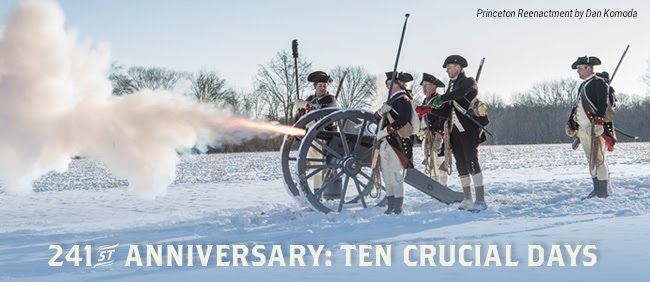
“As many of you may know, this winter marks the 241st anniversary of the American victories at the battles of Trenton and Princeton. The Continental Army’s triumphs in the Ten Crucial Days campaign proved instrumental to rekindling Patriot morale and keeping the cause for American independence alive in the wake of early defeats. Continue reading “From Campaign 1776: Ten Crucial Days”

Review: Standing in Their Own Light: African-American Patriots in the American Revolution

ERW Book Reviews (1)

Emerging Revolutionary War welcomes guest historian Bill Backus to the blog. 


Fighting for Independence, Patriots commonly argued they were combating an attempt by the English Crown to reduce the American colonies to slavery.  The irony that most leaders crowing against “English slavery” owned enslaved African-Americans is one of the greatest contradictions of American history.  In a struggle about slavery, enslaved people played an important role.  In her new book, Standing in Their Own Light: African-American Patriots in the American Revolution, Professor Judith L. Van Buskirk explores African-American participation in the Patriot cause.

9780806156354_p0_v1_s550x406
“Standing in Their Own Light” by Judith L. Van Buskirk

The foundation for Van Buskirk’s study is the pension claims for nearly 500 soldiers made decades after the war.  To obtain a pension, veterans had to prove in a county court that they had served in the military during the war.  In addition to their recollection of when they enlisted, with whom they fought with, and where they campaigned, aspiring pensioners routinely recruited serving comrades and officers to offer testimony on their behalf.  While the pension records are an important source for historians, these documents were intended to prove wartime service and thus offered only a cursory examination of their military career.  The limitations of using these sources become apparent throughout the study

The book is divided into six chapters.  Van Buskirk first examines slavery prior to the American Revolution with South Carolina standing in for the Deep South, Virginia for the Upper South, Pennsylvania for the Middle Atlantic, and Massachusetts for New England.  In the second chapter, Van Buskirk utilizes the pensions to explore the life of an African-American patriot soldier, from enlistment, to camp life, and battle.  The subsequent two chapters explore two case studies of attempts to recruit, African-American soldiers: the segregated 1st Rhode Island Infantry and the story of the Laurens family connection of the recruit of African-Americans in South Carolina.  The final two chapters explore the pensions after the war.

The study on the 1st Rhode Island is outstanding. On May 14,1781, a detachment of the regiment on picket duty was ambushed outside of Peekskill, New York, by a local loyalist unit.  In the space of a few minutes, the Continentals lost eight killed, including both its colonel and major killed or mortally wounded, four wounded and twenty-four captured. The majority of the killed were black while those captured tended to be white.  Stories of the field officers either bayonetted or shot while in their beds added a salacious detail to this American disaster.  While its unknown if race played a crucial factor, the Battle of Pines Bridge foreshadowed the bloody battles involving African-American soldiers 80 years later in the Civil War.

While inconclusive , enough evidence survives in various pension claims that some of the first soldiers who entered the British fortifications at the Battle of Stoney Point weren’t officers, but black enlisted men.   Finally how subsequent generations of Americans used black soldiers involved in the Revolutionary War is another important contribution to the literature.

The limitation of the source material becomes evident in several places throughout the study.  For example in exploring the Battle of Stoney Point, Van Buskirk prefaces many observations with “probably” and “likely”.  At other sections, Van Buskirk generalizes the service of the men, an example being Jacob Francis and his military career.  Van Buskirk fleshes out Francis’ pension claim with an overly generalized overview of a battle experience in a Revolutionary Era army.  Sources for 18th century battles can be somewhat sparse compared with other events, but the qualifying terms that Van Buskirk uses diminishes some of the conclusions that she reaches

These quibbles aside, Standing in Their Own Light: African-American Patriots in the American Revolution is a tremendous addition to the historiography of the American Revolution, such as the sections about the 1st Rhode Island and black patriots after the war. Anyone interested in African-American history or the Continental Army should pick up this book.


 *Bio*

A native of Connecticut, Bill Backus graduated from the University of Mary Washington with a bachelor’s degree in Historic Preservation. Currently working as a historian for multiple Civil War sites in Northern Virginia, Bill has worked for the National Park Service at Vicksburg National Military Park and Petersburg National Battlefield. Bill currently resides in historic Brentsville, Virginia, with his wife, Paige, and their dog, Barley.


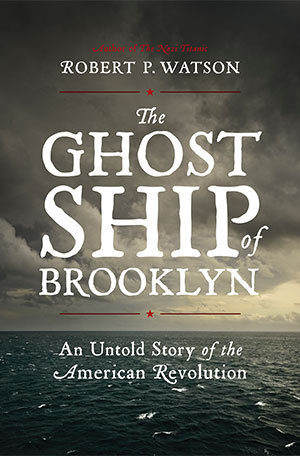
Review: The Ghost Ship of Brooklyn, An Untold Story of the American Revolution by Robert P. Watson

ERW Book Reviews (1)

Andersonville. Bataan. Auschwitz. All conjure up images of disillusion, devastation, and death.

All are infamously known as harsh prisoner-of-war camps. When those words are read, images flash through your mind and memory of hollow faces attached to gaunt bodies staring blankly in the direction of the cameraman.GhostShip_300x456

With Robert P. Watson’s new history, The Ghost Ship of Brookly, An Untold Story of the American Revolution, one can add another word to the lexicon of prison camp vernacular.

Jersey.

Or a few more words specifically, the HMS Jersey.  Continue reading “Review: The Ghost Ship of Brooklyn, An Untold Story of the American Revolution by Robert P. Watson”

The Battle of Groton Heights, September 6, 1781: The Fort Griswold Massacre

Part Three
Click here for parts one and two.

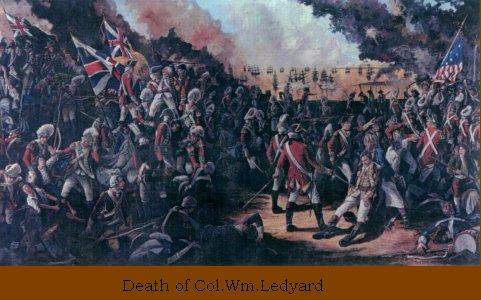
With British soldiers pouring into the fort, Colonel Ledyard ordered a ceasefire, and prepared to surrender Fort Griswold to the victorious British. However, the British disregarded the ceasefire and continuing pouring fire into the American garrison, killing or wounding nearly all of the fort’s defenders. “I believe there was not less than five or six hundred men of the enemy on the parade in the fort,” claimed American soldier Rufus Avery. “They killed and wounded nearly every man in the fort as quick as they could.”

battleofgrotonheights_giclee_p3y8

Maj. Stephen Bromfield, the ranking British officer after Montgomery fell, called out, “Who commands this fort?” Ledyard stepped forward and responded, “I did, sir, but you do now.” Another American, Jonathan Rathbun, watched Bromfield run Ledyard through the heart and lungs with Ledyard’s own sword:

     “…the wretch who murdered him [Ledyard], exclaimed, as he came near, “Who
    commands this fort?” Ledyard handsomely replied, “I did, but you do now,” at the same
moment handing him his sword, which the unfeeling villain buried in his breast! Oh, the
hellish spite and madness of a man that will murder a reasonable and noble-hearted
    officer, in the act of submitting and surrendering!”

Continue reading “The Battle of Groton Heights, September 6, 1781: The Fort Griswold Massacre”

Reporting Success on a Monday!

With the start of the work week, some folks loath logging onto the computer to check work email, news, and updates. If you are one of those folks, keep reading, as the news we are about to share is positive and exciting.

campaign-1776-logo-220This past Thursday, July 27, 2017, Campaign 1776, the initiative of the Civil War Trust, announced the preservation of 184 acres at two sites in New York state. One tract of land was pivotal to the United States success in the Saratoga Campaign in 1777 and where a U.S. fleet was saved during the War of 1812.
The Battle of Fort Ann, fought on July 8, 1777 was a four-hour affair and was influential in the course of the larger Saratoga Campaign as it affected the British’s attempt to secure the strategically important Hudson River Valley. The delay around Fort Ann and every delay on the route of General John Burgoyne’s push south aided the Patriot cause tremendously.

Fast-forward to the War of 1812 and Sackets Harbor, New York provided as safe-haven for the United States fleet operating on the Great Lakes. Horse Island and the harbor that gained prominence during the May 29, 1813 offensive by the British, is where 24 acres were saved by Campaign 1776. The battlefield, which was one of 19 sites that benefited from $7.2 million in grants announced earlier in July and the first War of 1812 site anywhere in the country to be awarded money since the National Park Service expanded the grant opportunities in 2014.

Not just one success, but two for this Monday morning! For the full report, courtesy of our friends at Civil War Trust, click here.


Part Two: The Battle of Groton Heights, September 6, 1781: The Fort Griswold Massacre

For Part One, click here.

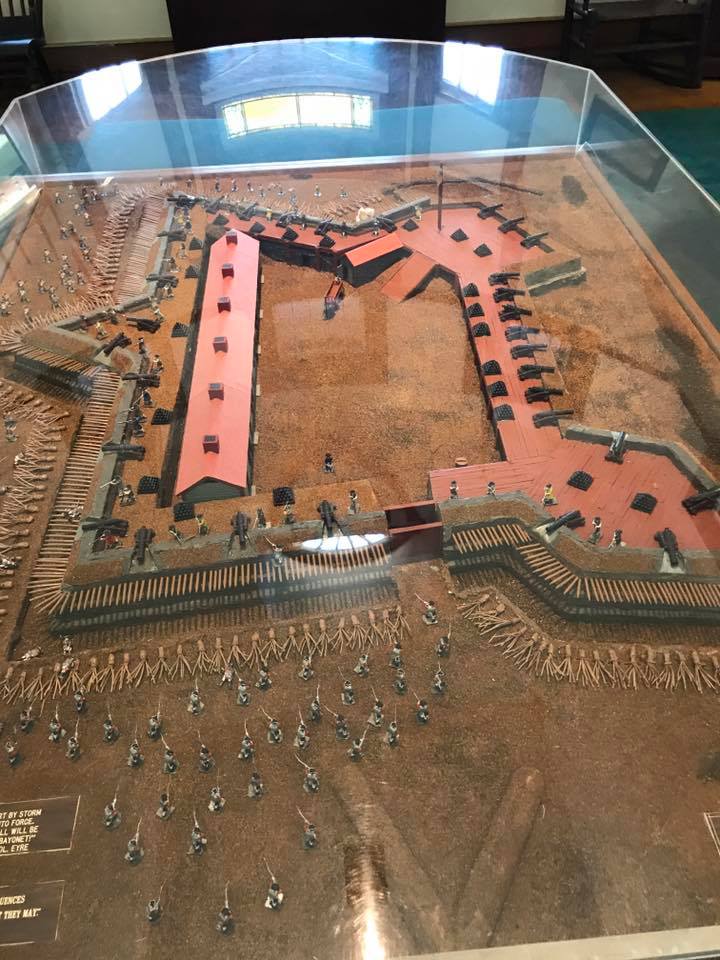
Lt. Col. Edmund Eyre’s battalion of 800 Regulars and Loyalists landed on the east bank of the Thames River, facing tangled woodlands and swamps. The New Jersey Loyalists, in fact, had so much difficulty moving the artillery that they did not participate in the assault on Fort Griswold.

19554343_10159163061815413_6728549902399513958_n
Model of Fort Griswold (author collection)

Eyre sent a Captain Beckwith to the fort under a flag of truce to demand its surrender. Ledyard called a council of war and consulted with his officers. The Americans believed that a large force of militiamen would answer the call, and that this augmented force could defend the fort. Ledyard responded by sending an American flag to meet the British flag bearer. The American told Beckwith, “Colonel Ledyard will maintain the fort to its last extremity.” Displeased by the response, Eyre sent a second flag, threatening no quarter if the militia did not surrender. Ledyard gave the same response even though some of the Americans suggested that they should leave the fort and fight outside instead.  Continue reading “Part Two: The Battle of Groton Heights, September 6, 1781: The Fort Griswold Massacre”

Mercer’s Grenadier Militia

RevWarWednesdays-headerThis is part two in the series by guest historian Drew Gruber. For part one, click here.

On the morning of October 3, 1781, British Colonels Tarleton and Thomas Dundas led another expedition north towards Gloucester Courthouse and away from the protection of their fortifications at Gloucester Point. Their command that day included some of the most renowned fighting men then in service. Cavalry and mounted infantry from Tarleton’s own British Legion, combined with a detachment of Colonel Simcoe’s Queen’s Rangers, elements of the 17th Dragoons, men from the 23rd Regiment (Royal Welch Fusiliers), German Jaegers and part of the 80th Regiment of Foot provided an impressive host for their American and French adversaries. Captain Johann Ewald, commander of the Jaegers commented after the war that he was sent out with “one hundred horse of Simcoe’s and the remainder of the jagers and rangers, which amounted to only sixty man in order to take a position between Seawell’s planatation and Seawall’s Ordinary. I was to form a chain there to protect a foraging of Indian corn.”[1]

Continue reading “Mercer’s Grenadier Militia”