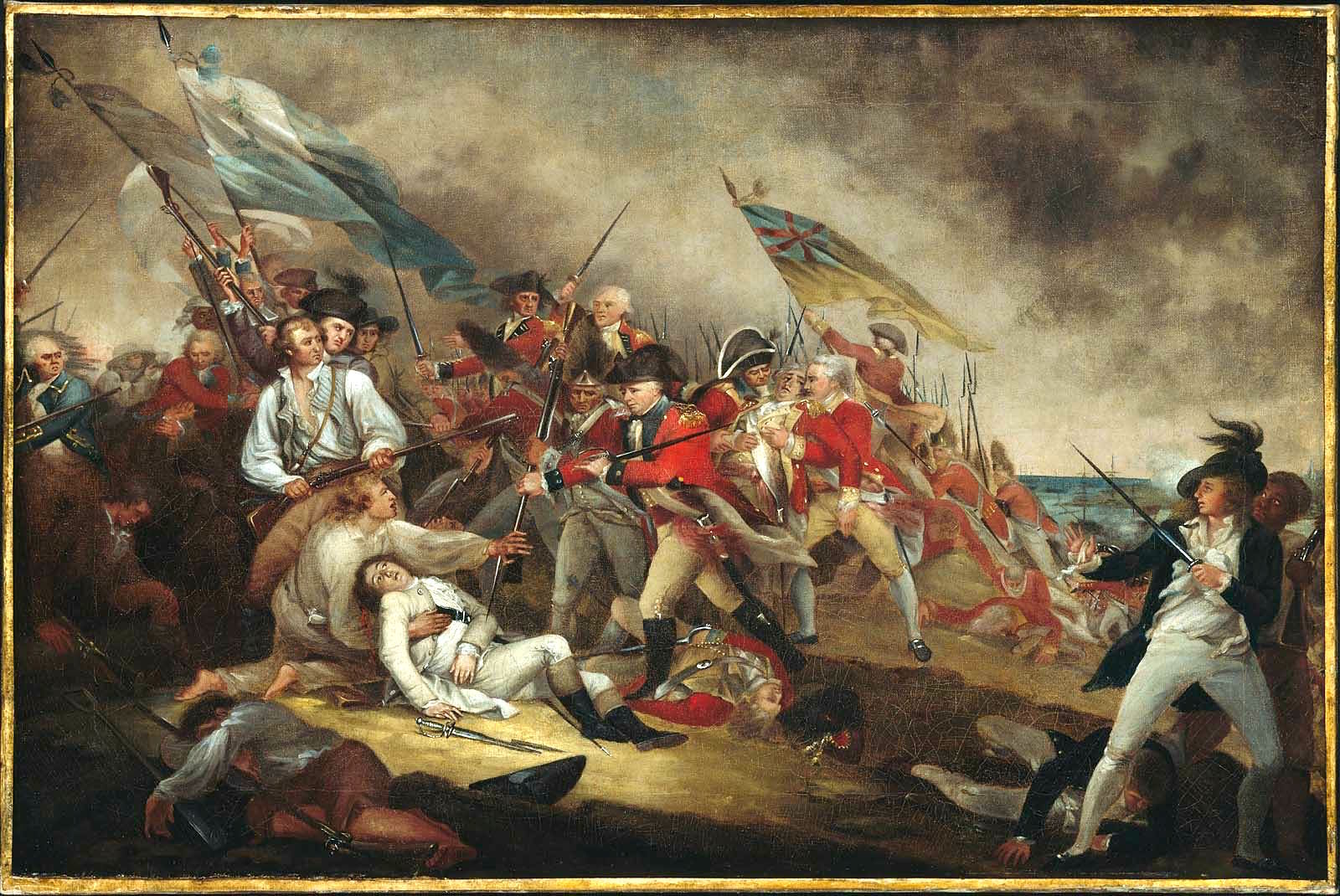
On Tuesday, the 250th anniversary of the Battle of Bunker Hill, fought on Breed’s Hill on Charlestown Peninsula, will be remembered. On June 17, 1775, the last major engagement before George Washington arrived in Massachusetts to take command was fought between militia under Colonel William Prescott and British forces under General William Howe. Although a defeat for the patriots, resulting in the death of Dr. Joseph Warren, the victory was a pyrrhic one for the British.
Join Emerging Revolutionary War historians as they discuss the engagement, the personas, and the ramifications of the Battle of Bunker Hill. Also, stay tuned until the end for an announcement as well.
So, two days before the 250th, grab your favorite beverage and tune into our Facebook page at 7 p.m. EDT and have your questions ready. If you are unable to attend the live on Sunday evening, don’t fret, the video will be posted to YouTube by the anniversary and to our podcast channel as soon as possible
Following the initial skirmishes at Lexington and Concord on April 19, 1775, colonial militias from throughout New England converged around Boston, with the area of Cambridge and Roxbury serving as the epicenters of the camps. These New England militia effectively layed siege to the city where British General Thomas Gage concentrated after April 19th. The British, cut off from the countryside, relied heavily on supplies brought in by sea. At the same time, American forces were eager to secure resources and deny the British any additional supplies from nearby coastal areas.
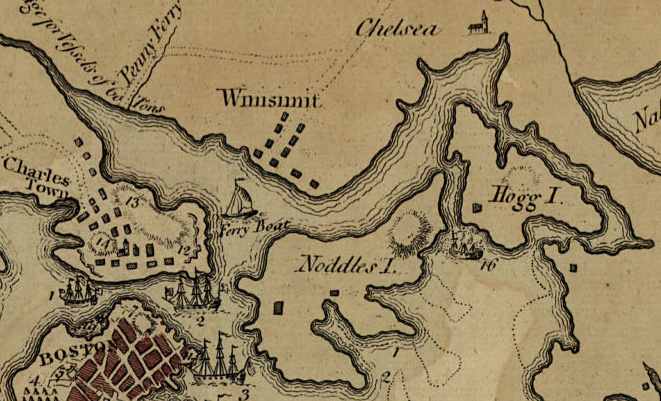
The location of the HMS Diana is marked with “16” on the map
One such resource-rich area was Noddle’s Island and Hog Island both located in Boston Harbor. These islands contained valuable livestock and hay, which the British had been attempting to secure to feed their troops and horses. American intelligence reported that the British were planning to remove these resources, prompting a proactive operation by the colonial forces to beat them to it.
In early May, Dr. Joseph Warren led a group inspecting the islands and recognized their imporance. As part of the Massachusetts Committee of Safety, Warren led the effort for a reslolution to be passed to either capture or destroy the supplies on the islands. On May 14th, the Committee stated “Resolved, as their opinion, that all the live stock be taken from Noddle’s Island and Hog Island, and from that part of Chelsea near the sea coast, and be driven back; and that the execution of this business be committed to the selectmen of the towns of Medford, Malden, Chelsea, and Lynn, and that they be supplied with such a number of men, as they shall need, from the regiments now at Medford.” Soon the commander of the New England army around Boston, General Artemas Ward, put a plan in motion to quickly strike both islands.
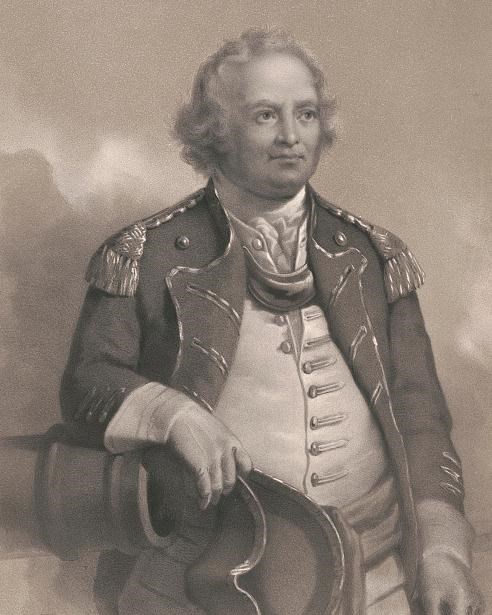
The American expedition was led by Colonel John Stark and Colonel Israel Putnam, both future generals in the Continental Army. The colonial forces, primarily composed of New Hampshire and Massachusetts militias, planned a nighttime amphibious raid to remove the livestock and destroy hay supplies that might benefit the British. On the night of May 27, colonial forces quietly moved onto Hog Island and began driving off livestock and burning haystacks. British forces, stationed in Boston and alerted to the colonial activity, responded by dispatching marines and the British schooner HMS Diana, a lightly armed but maneuverable vessel well-suited for operations in the shallow waters of the harbor.
As the colonists worked to transport livestock to the mainland, they encountered resistance from British marines who had landed on Noddle’s Island and began advancing toward their position. A sharp skirmish ensued, during which the American militia used the terrain to their advantage, fighting from behind trees, stone walls, and other natural cover. The colonial forces managed to repel the British marines, inflicting casualties and forcing a retreat.
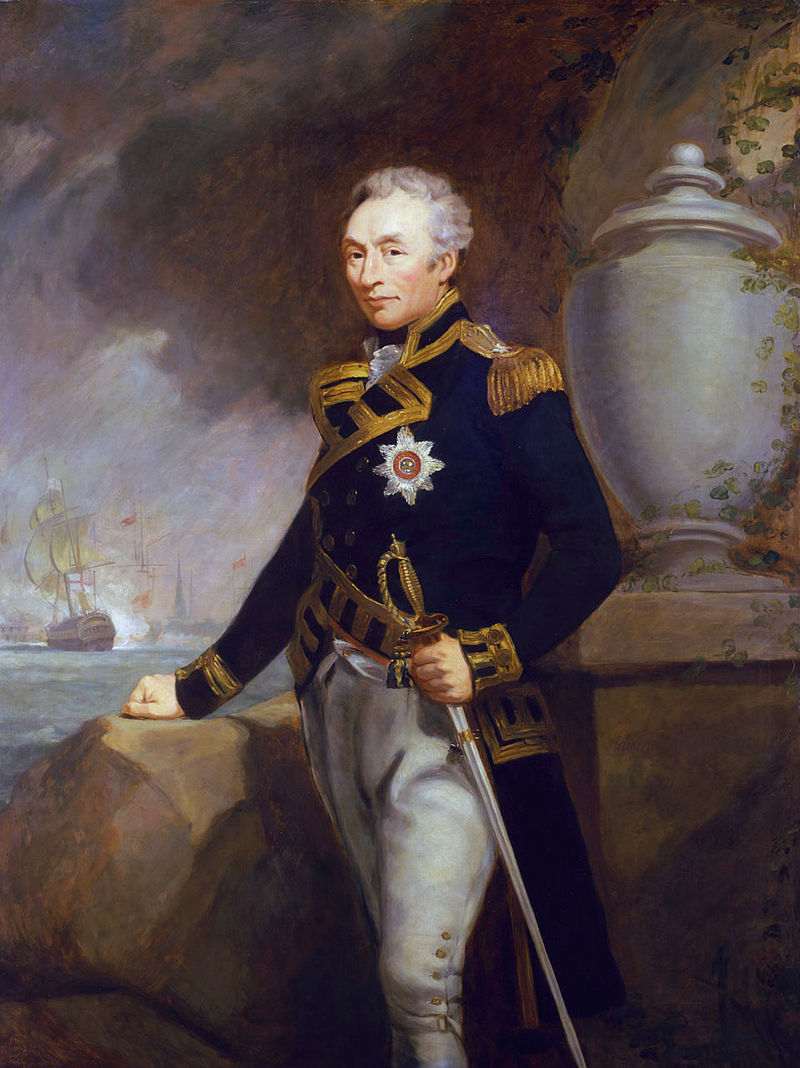
Lieutenant Thomas Graves (nephew of Vice Admiral Samuel Graves) commander of the HMS Diana. Shown in his rear admiral uniform in ca. 1801. Often confused with Lord Thomas Graves, British commander during the Battle of the Capes
The turning point of the engagement came with the involvement of the HMS Diana. The schooner attempted to support the marines by moving up the narrow Chelsea Creek to engage the colonial militia and cut off their withdrawal. However, as the tide receded and the ship ventured too far inland, it became grounded in the shallow, muddy waters.
Seeing an opportunity, the colonists brought up field artillery from shore and opened fire on the stranded vessel. Over the course of the battle, they subjected the Diana to intense musket and cannon fire. Unable to refloat the ship due to the falling tide and increasing colonial pressure, the British crew was forced to abandon it. American forces quickly boarded the vessel, stripped it of usable supplies, weaponry and its 76 foot mast, and then set it ablaze, destroying the schooner completely.
The Battle of Chelsea Creek resulted in a clear American victory, both strategically and psychologically. The destruction of the HMS Diana marked the first loss of a Royal Navy vessel in the Revolutionary War, dealing a symbolic blow to British morale. For the colonists, it was a tangible demonstration of their ability to challenge British authority not only on land but at sea.
Major General Israel Putnam said after the fight on Chelsea Creek “I wish we could have something of this kind to do every day,”
Tactically, the victory helped to solidify American control of the Boston-area islands and limited the British army’s ability to forage for supplies. This contributed to the worsening conditions inside besieged Boston and increased pressure on General Gage. The morale boost for the colonial militias was significant; it reinforced the notion that British troops and naval forces were not invincible and that well-coordinated militia operations could succeed.
In addition, the battle was notable for showcasing early instances of American military ingenuity and leadership. Figures like Israel Putnam and John Stark went on to distinguish themselves in later battles, and the ability of the militia to effectively coordinate a land-sea operation foreshadowed the more sophisticated tactics that would develop over the course of the war. A few months later on August 1st, the mast of the HMS Diana was raised on Prospect Hill as a liberty pole. A symbol that was seen by not just the Americans around Cambridge but also the British in Boston. This location was also where legend states that George Washington ordered the first American flag, the Grand Union, to be raised on January 1, 1776.
While over shadowed by Lexington, Concord, or Bunker Hill, the Battle of Chelsea Creek played a crucial role in the early war. It helped secure the outer perimeter of the Siege of Boston, denied the British critical supplies, and emboldened the colonial cause at a time when confidence was still fragile. The success of the operation, including the destruction of the Diana, offered a dramatic image of colonial resistance and ingenuity that resonated beyond New England.
Today, the location of Noddle’s and Hog Island are gone. Nineteenth century and modern infill has completely reshaped the area from mudflats and tidal marshes to buildable land. Modern day East Boston, Winthrop and Logan Airport cover the area. The community of Somerville contines to commemorate the raising of the Grand Union flag on January 1 Diana‘s mast with a flag raising ceremony. Though mostly forgotten, the fighting along Chelsea Creek continued to embolden men like Joseph Warren and Israel Putnam and encourage their agressiveness a few weeks later on the Charlestown peninsula.
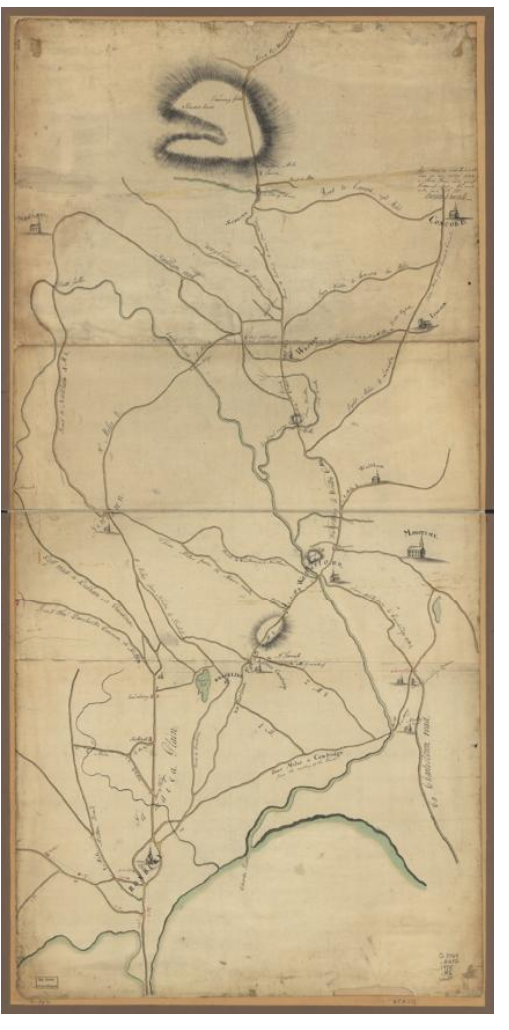
The spy network of Dr. Joseph Warren and the Sons of Liberty is well documented and written about. Few things happened in and around Boston that Warren, Paul Revere or Sam Adams were not aware of. In the winter of 1775, British General Thomas Gage also established a spy network (one of the more famous British spies was supposed “Patriot” Dr. Benjamin Church was not revealed as spy until October 1775). Gage was using all the resources at his disposal to figure out what the Whigs were doing and to find out where weapons (and four cannon that were stolen from the British in Boston) were located. On February 22nd, Gage sent out two officers, Captain John Brown and Ensign Henry De Berniere, to covertly ride out towards Worcester to locate stores and to map the road network for a possible British excursion. A few weeks later, on March 20th Gage sent out Brown and De Berniere again to map out routes towards Concord. Keeping in mind of potential geographic features that could endanger the future British column.
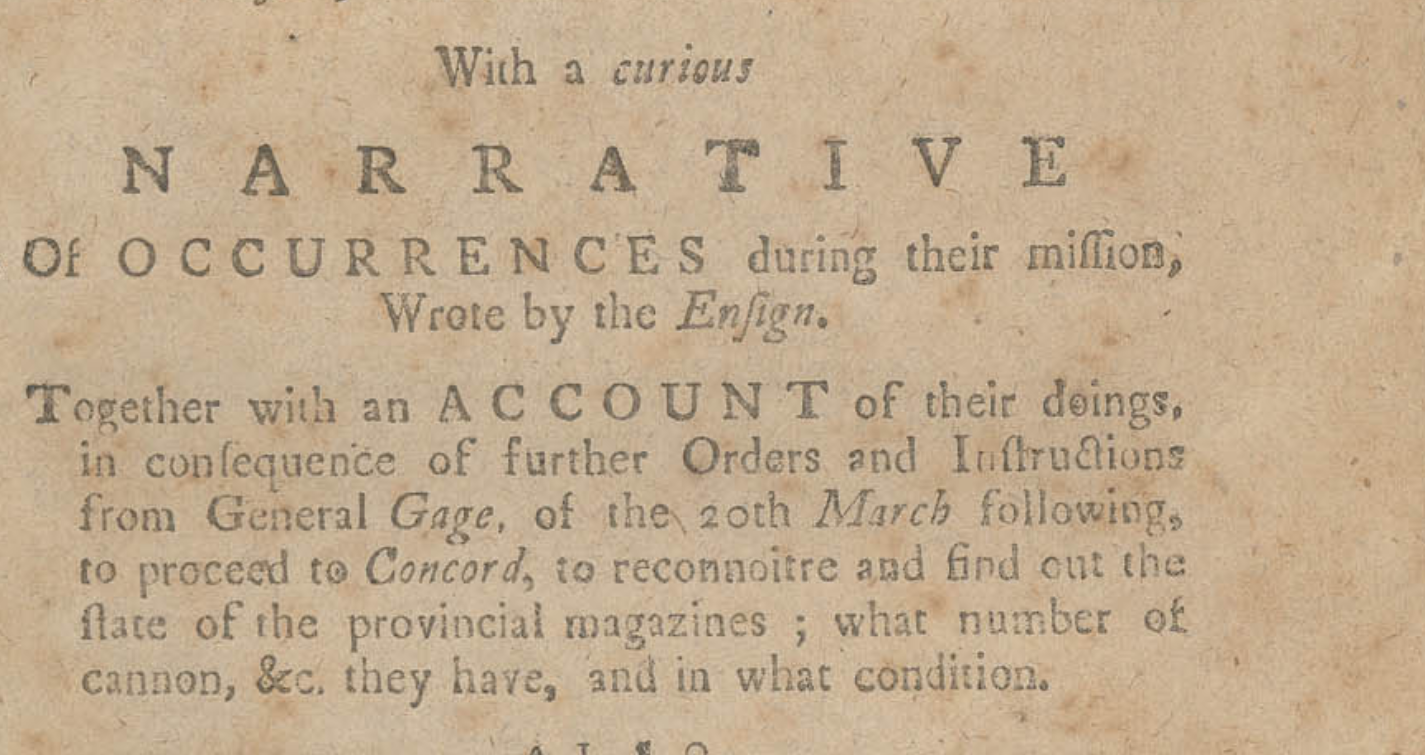
The following is an account of the March 20th mission by Ensign De Berniere. This account was found in Boston after the British evacuated and published by Boston printer J. Gill in 1779. Today it is located in the Massachusetts Historical Society. This mission was the precursor for the April 18-19th British raid to Concord that ignited the war.
Map, Roxbury to Concord. Roads & distances; by Brown and De Berniere, Library of Congress
Account of the proceedings of the aforesaid officers, in consequence of further orders and instructions from General Gage, of the 20th March following ; with occurrences during their mission.
Scan of the original print by J. GILL, in Court Street. 1779, Massachusetts Historical Society
THE twentieth of March Captain Brown and myself received orders to set out for Concord, and examine the road and situation of the town ; and also to get what information we could relative to what quantity of artillery and provi- sions. We went through Roxbury and Brookline, and came into the main road between the thirteen and four- teen mile-stones in the township of Weston ; we went through part of the pass at the eleven mile-stone, took the Concord road, which is seven miles from the main road. We arrived there without any kind of insult being offered us, the road is high to the right and low to the left, woody in most places, and very close and commanded by hills frequently. The town of Concord lies between hills that command it entirely ; there is a river runs through it, with two bridges over it, in summer it is pretty dry ; the town is large and co- vers a great tract of ground, but the houses are not close together but generally in little groups. We were informed that they had fourteen pieces of cannon (ten
iron and four brass) and two cohorns, they were mounted but in so bad a manner that they could not elevate them more than they were, that is, they were fixed to one elevation ; their iron cannon they kept in a house in town, their brass they had concealed in some place behind the town, in a wood. They had also a store of flour, fish, salt and rice ; and a magazine of powder and cartridges. They fired their morning gun, and mounted a guard of ten men at night. We dined at the house of a Mr. Bliss, a friend to government ; they had sent him word they would not let him go out of town alive that morning ; however, we told him if he would come with us we would take care of him, as we were three and all well armed, — he consented and told us he could shew us another road, called the Lexington road. We set out and crossed the bridge in the town, and of consequence left the town on the contrary side of the river to what we entered it. The road continued very open and good for six miles, the next five a little inclosed, (there is one very bad place in this five miles) the road good to Lexington. You then come to Menotomy, the road still good ; a pond or lake at Menotomy. You then leave Cambridge on your right, and fall into the main road a little below Cambridge, and so to Charlestown ; the road is very good almost all the way.
In the town of Concord, a woman directed us to Mr. Bliss‘s house ; a little after she came in crying, and told us they swore if she did not leave the town, they would tar and feather her for directing Tories in their road.
[Left in town by a British Officer previous to the evacua tion of it by the enemy, and now printed for the information and amusement of the curious.]
BOSTON Printed, and to be sold, by J. GILL, in Court Street. 1779.
“To-morrow an oration is to be delivered by Dr. [Joseph] Warren,” Samuel Adams wrote on March 5, 1775, the fifth anniversary of the infamous Boston Massacre. “It was thought best to have an experienced officer in the political field on this occasion, as we may possibly be attacked in our trenches.”
Around every anniversary of the Boston Massacre, the people of the city and surrounding countryside sat to reflect on the events of that frigid March night and the current situation between themselves and their mother country. Chosen to deliver the 1775 commemorative oration, his second time doing so, was one of Boston’s most prominent physicians and chairman of the committee of safety, Dr. Joseph Warren. Because March 5 fell on a Sunday, the event was held the following day.
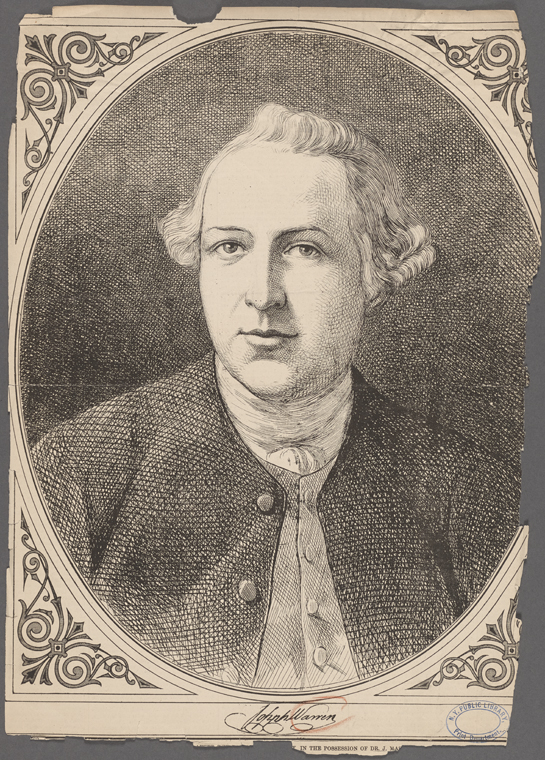
Dr. Joseph Warren. NYPL.
Warren was known to be a passionate and fiery speaker, able to invoke the raw emotion necessary to drive his listeners to action. The political climate surrounding that year’s event was never more incendiary. While no one could have known it at the time, though many anxiously anticipated something coming, the first shots of the Revolutionary War at Lexington and Concord were only a little more than a month in the future. The events on March 6 within the walls of the Old South Meeting House did nothing to ease those anxieties.
Accounts vary on the numbers and makeup of the attendees, but thousands flocked to the commemoration, including a large group of British Army officers garrisoned in the city. The presence of His Majesty’s soldiers was a sure sign that the building would be thick with rigid tension. The sight of the scarlet-coated men seated and standing around the pulpit did not deter the organizers. John Adams showed civility towards the officers, while his cousin Samuel saw an opportunity to enflame sentiments.
Old South Meeting House, Boston, MA. Courtesy of Robert Orrison.
Dr. Warren, 33 years old in March 1775, took the stage garbed in a toga, a symbol of the free men of Rome. His oration only touched upon the events five years prior, but the remainder oozed with patriotic fervor and a call to resist Great Britain’s rule until grievances were met. “I mourn over my bleeding country,” Warren lamented. “With them I weep at her distress, and with them deeply resent the many injuries she has received from the hands of cruel and unreasonable men.” As if a premonition of his own demise in battle at Bunker Hill several months later, he declared, “Our liberty must be preserved. It is far dearer than life.” The speech in its entirety can be read here.
Met with some low hisses and sighs of disapproval from the front rows, Warren’s oration was nonetheless received with emotion and the admiration of his fellow colonists. It was not until he stepped down from the pulpit that pandemonium began to ensue. Samuel Adams rose to appoint a speaker for next year’s commemoration. In doing so he also took the opportunity to reinforce the belief that the events on March 5, 1770 were not an accident, but a “Bloody Massacre.” Even Warren had refused to use this rhetoric. In response, the British officers began to jeer, shouting “Fie! Fie!” and “To Shame!” The already uneasy crowd mistook the shouts as “Fire! Fire!” and many began rushing for the windows, scrambling down the outside gutters and walls. As if this was not enough, the 43rd Regiment of Foot, returning from exercise, happened to be marching by with fife and drum. Their presence threw the crowd “into the utmost consternation,” who may have believed another “bloody massacre” was about to unfold.
Cooler heads prevailed, and any serious confrontation was avoided. Had it not been, one officer attested that it “wou’d in all probability have proved fatal to [John] Hancock, Adams, and Warren, and the rest of those Villains, as they were all up in the Pulpit together.”
March 6, 1775, proved to be another example of the swiftly deteriorating climate in Massachusetts. The influence of the “rebel” leaders continued to grow, while the image of a tyrannical monarch and his blood-thirsty soldiers was reinforced. Open hostilities seemed inevitable. Any day could bring bloodshed. As history exited the Old South Meeting House that day, it continued its accelerated journey down the road from Boston and on to Lexington Green.
We are excited to welcome historian and author J.L. Bell. Few know more about the events around Boston in 1775 than Bell. His blog, Boston 1775 (https://boston1775.blogspot.com/ ) is the most detailed and researched source on everything Boston 1775 (and before and after 1775). As we approach the 250th anniversary of Lexington and Concord, we will continue our on going discussion about the events leading up to the first shots at Lexington. Topics will include the military build up in Massachusetts including cannon (especially four stolen cannon), creation of minute companies and Gage’s military response. Leslie’s expedition to Salem in February as well as the newly created Provincial Congress and Dartmouth’s orders for Gage.
We have a lot to cover, so grab a drink and join us LIVE on our Facebook page on Sunday, February 2nd at 7pm. This will not be one you want to miss!
On September 1, 1774 Massachusetts was on the brink of war. General Thomas Gage, now Governor of Massachusetts was growing more worried about Whig access to gunpowder and weapons. He made a fateful decision to send a small expedition to retrieve the provincial powder stored in Charlestown. This powder in Gages’ mind, was owned by the King. Local leaders felt otherwise and now this grab for powder by Gage nearly sparked war in 1774.
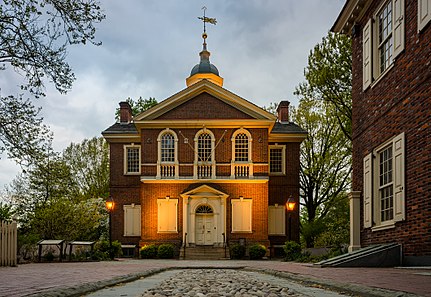
As word of the Boston Tea Party reached the other colonies, the response was mixed. Most colonists believed Bostonians should pay for the ruined tea, but they were also overwhelmingly shocked by the harshness of the Coercive Acts. Support from across the 13 colonies began to pour into Boston. Using an already established “Committee of Correspondence” network created in the early 1770s, colonial leaders began to discuss a proper reaction. Boycotts on imports of British goods and tea especially were accepted broadly. But most importantly, 12 colonies (Georgia abstained) sent representatives to a “Continental Congress” in Philadelphia in September 1774. Unlike the previous Stamp Act Congress, the First Continental Congress was attended by the majority of American colonies. The Congress encouraged boycotts and also petitioned the King and Parliament to rescind the Coercive Acts. In response to their planned attendance, Governor Gage dissolved the Massachusetts Provincial Assembly before the Continental Congress met and called for new elections. This did not deter them from sending representatives (John Adams, Samuel Adams, Thomas Cushing, and Robert Treat Paine) to Philadelphia.
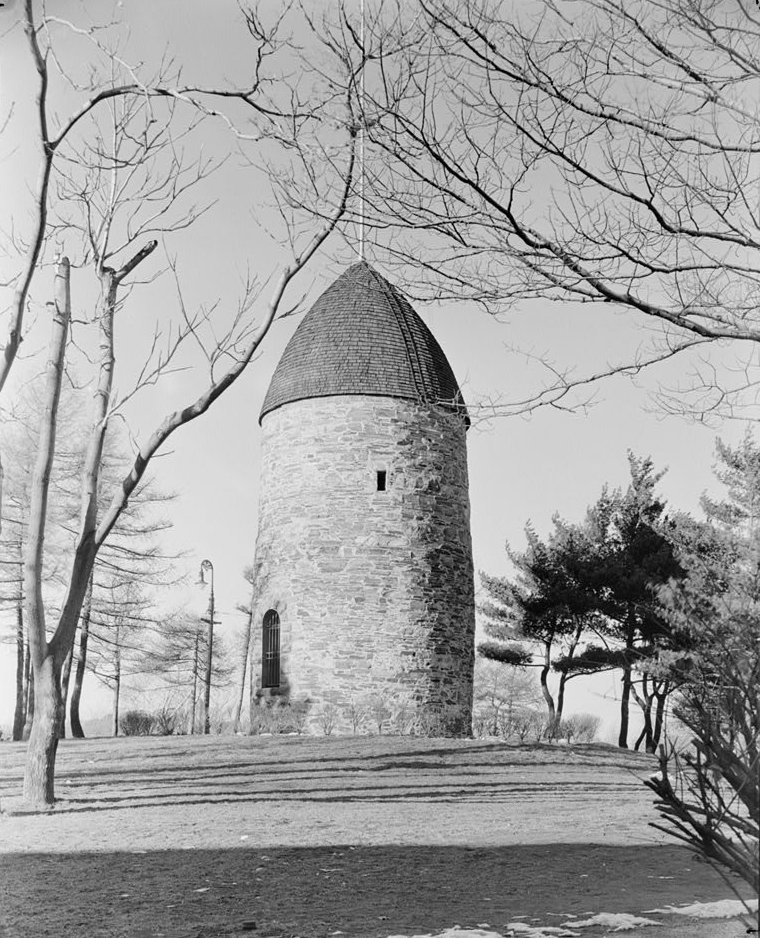
Charlestown (now Somerville) Powder House, ca. 1935
Back in Massachusetts, Gage became wearier of his situation and the possibility of open conflict with colonists. He was active in paying informants and gaining information from local Tories (those loyal to the British government). These sources informed Gage that the people of the countryside were beginning to arm themselves. In an effort to deny them use of the official Royal arms and powder stored across the colony, he began to collect these government-owned supplies. In colonial America, most men served in the local militia. Local towns had powder magazines to store the powder that would be used for training the militia or if the militia was called to defend a portion of the colony. Many of these powder magazines also stored a portion of gunpowder that belonged to the colonial government—the King’s powder.
One such large powder magazine that stored a large quantity of British gunpowder was in nearby Charlestown, now known as Somerville. This powder magazine was the largest in the colony. William Brattle, the commander of the Middlesex County militia and a Royal appointee, notified Gage that he believed the local militia were making plans to steal the Royal gunpowder. Gage moved quickly; he ordered the Middlesex County sheriff to secure the keys. Then early on the morning of September 1, nearly 300 British Regulars made their way to the powder house and removed all of the gunpowder that rightfully belonged to the governor and his agents. By that afternoon, the British troops, powder, and two cannon were in Boston at Castle William (a fort on an island in Boston Harbor).
Word spread quickly that the British came and stole the powder and, in the process, had shot and killed colonials. Now Boston was on fire, and the British navy was bombarding the city. All of this of course was not true, but the word spread like wildfire just the same. Misinformation abounded, and now thousands of locals and militia were gathering in Cambridge looking for revenge. Many loyal to the colonial government were forced to flee to Boston for protection. As time went on, it was evident that the rumors of a battle and Boston burning were untrue. The incident, however, showed how quickly the countryside could mobilize against the governor. Word was quickly sent to Philadelphia where the delegates to the First Continental Congress was aghast at the news. They debated on what to do, and the Massachusetts delegation specifically were on edge for more information. Word eventually arrived that the situation that was first reported was not accurate and no fighting had broken out. John Adams wrote;
Carpenters Hall, Philadelphia where the First Continental Congress convened on September 5, 1774.
“When the horrid news was brought here of the bombardment of Boston, which made us completely miserable for two days, we saw proofs of both the sympathy and the resolution of the continent. War! war! war! was the cry, and it was pronounced in a tone which would have done honor to the oratory of a Briton or a Roman. If it had proved true, you would have heard the thunder of an American Congress.”
Gage, somewhat shaken by the event, began to concentrate his military strength in the city of Boston and fortified the city against a possible attack. He sent word to England that he needed more men to enforce the Coercive Acts. The “Powder Alarm” proved that, within a day, thousands of armed colonials could assemble. The message he sent London shocked the King: “If you think ten thousand men sufficient, send twenty; if one million is thought enough, give two.” Soon after on September 9th, Whig (Patriot) leaders such as Dr. Joseph Warren and others passed the Suffolk Resolves. These strongly worded resolves called for a boycott of British goods and heavily impacted policies adopted by the First Continental Congress. Parliament badly miscalculated the colonial reaction to the Coercive Acts and the pendulum was beginning to swing to independence. The Powder Alarm quickly taught General Gage that the resistance to Royal authority was not just a small group of rebels, but a growing majority of the population.
You can still today visit the the famous Powder House today. It stands in Nathan Tufts Park at 850 Broadway, Somerville, Massachusetts (GPS: N 42.400675, W 71.116998). There is plenty of street parking available. Take the trails in the park to the Powder House located in the center of the park.
As we move towards to the 250th anniversary of the Boston Tea Party, we at ERW have gotten a lot of questions with a central theme…” why was it tea that led to revolution?” Was tea so central to colonial life that it was worth risking war or was it something else? The answer is somewhere in the middle and as with most history, there is nuance to the story (and yes, tea WAS a big part of everyday live in British America).
On May 10, 1773, Parliament passed the Tea Act, this act was a way for the British government to help bail out a major corporation, the British East India Company. The British East India Company was one of the largest global companies and faced immense debt and financial trouble. Furthering their troubles, they held a large amount of tea stored in warehouses in London. The British East India Company sought a way to offload this tea, which was considered some of the best tea in the world. The company’s success was directly tied to Great Britain’s international strategy, as the company spread British influence across the globe especially in India where they basically managed the British colony. The Tea Act reduced the cost on the tea (cutting out the “middleman” in Great Britain), and now the colonists could buy the tea directly from the British East India Company.
The British colonies in North America consumed on average of 1.2 million pounds of black tea annually. In 1773, about 1/3 of the population drank tea at least twice a day. It was a common luxury among most middle- and upper-class colonists. They preferred black tea but also drank green tea. Black tea varieties included Bohea, Congou and Souchong and common green tea varieties included Singlo and Hyson. All the tea that the British East India Company sold was grown and imported from China. Tea from China was preferred by most for better flavor, but it tended to be more expensive. The North American colonies consumed a lot of smuggled tea from the Dutch, the quality of the tea was not the same but much cheaper. A large market grew for smuggled tea with most British port officials looking the other way. All of this changed when the Tea Act was passed.
Nineteenthcentury lithograph depicting a tea plantation in Qing China
Many in Parliament believed the colonists would have little opposition to this new act. They could now purchase their preferred tea for a cheaper price than the smuggled tea from the Netherlands. Unfortunately for Royal leaders, this was not the case. As word reached the colonies Whig leaders such as Samuel Adams called it nothing more than a British authorized monopoly of the tea market, cutting into the pockets of colonial merchants (though their tea smuggling business was illegal to begin with). The Tea Act also highlighted a British policy that the colonists opposed for many years, the Townshend Acts. The Townshend Acts imposed duties on imported lead, glass, paper, paint, and tea. This “tax” was payable at ports and funded the salaries of colonial judges, governors, and other government officials. This angered many colonial leaders for two reasons. First, it levied another tax on the colonists without having their own representation in Parliament. Secondly, it made the government officials more beholden to the British government (and the tax) than the colonial governments.
Whig groups like the Sons of Liberty used local taverns as places for their meetings. The most famous being the Green Dragon Tavern in Boston. It no longer stands today.
As the news of the Tea Act reached the colonies, the reaction was mixed. Whig leaders in major cities such as Charleston, New York, Philadelphia and Boston saw it as a way to reinvigorate their cause of opposing British rule. Recently things were mostly quiet with little interest by the public for protest. But now the Whig spin machine went into full affect. The Tea Act was a direct affront to colonial self-rule and economic interest. The taxes paid for the tea went to British officials in the colonies and the cheaper priced (and better quality) tea would put many American merchants out of business. Whigs were able to control the message that the Tea Act was just another way for Parliament to make money off the colonists, who did not have representation in Parliament.
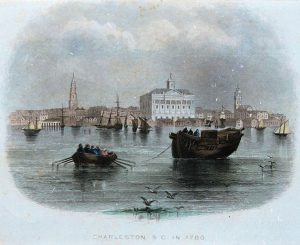
As part of the Tea Act, consignees were appointed to oversee the sale of tea and the collection of the taxes on behalf of the British East India Company. As the tea began to arrive in colonial ports, public pressure was put on consignees to resign. This pressure was successful in New York, Philadelphia and in Charleston. Each of these cities were able to either stop the tea from being offloaded or, as in the case of Charleston, they confiscated the tea and didn’t allow any duties to be paid on it. All of these were direct affronts to the law but the events in Boston proved to be the most dramatic.
Ca, 1780 view of Charleston Harbor, and the Exchange Building where the confiscated tea was locked away by Whig leaders.
Unlike in other port cities, the consignees in Boston refused to resign. Richard Clarke, leading merchant in Boston and one of consignees faced a mob at his warehouse trying to pressure him and the other consignees to resign. Encouraged by the Massachusetts Governor Thomas Hutchinson (who had two sons serving as tea consignees) to stand their ground, the consignees refused to resign. Soon news arrived that the first ship carrying the tea, the Dartmouth, was arriving in Boston soon.
Hosting several town meetings, some hosting thousands of people, Whig leaders such as Samuel Adams, Dr. Joseph Warren and John Hancock were able to organize a strong opposition to the tea. Of course, Boston was already a tinderbox due to the “Boston Massacre” in 1770 and the large contingent of British regular troops stationed in Boston. Bostonians were reminded daily of Royal influence. The Whigs protested to the Governor to order the ships to return to England, but Hutchinson refused to do so and claimed he didn’t have that authority. Many historians believed Hutchinson, who recently had resigned as Governor and was awaiting his replacement, had grown tired and frustrated with the likes of the Whigs and Sons of Liberty in Boston and was trying to press the issue.
On November 28, the Dartmouth arrived in Boston Harbor. Captain James Hall was turned away at the first wharf he sailed too and was redirected to Griffins Wharf. Everyone knew that once a ship entered the harbor, the captain had twenty days to unload the cargo and pay the custom duties. Soon two more ships arrived at Griffins Wharf with more tea. With the Governor refusing to allow the ships to leave the harbor and local patrols watching the ships to make sure the tea was not offloaded, the stage was set for December 16th, the last day the ship’s captains had to unload their cargo.
Dr. Joseph Warren is considered by many “the lost hero of the American Revolution.” Warren was the brainchild of the revolution movement in Boston. Warren was involved in almost every major insurrectionary act in the Boston area for a decade, from the Stamp Act protests to the Boston Massacre to the Boston Tea Party, and his incendiary writings included the famous Suffolk Resolves, which helped unite the colonies against Britain and inspired the Declaration of Independence.
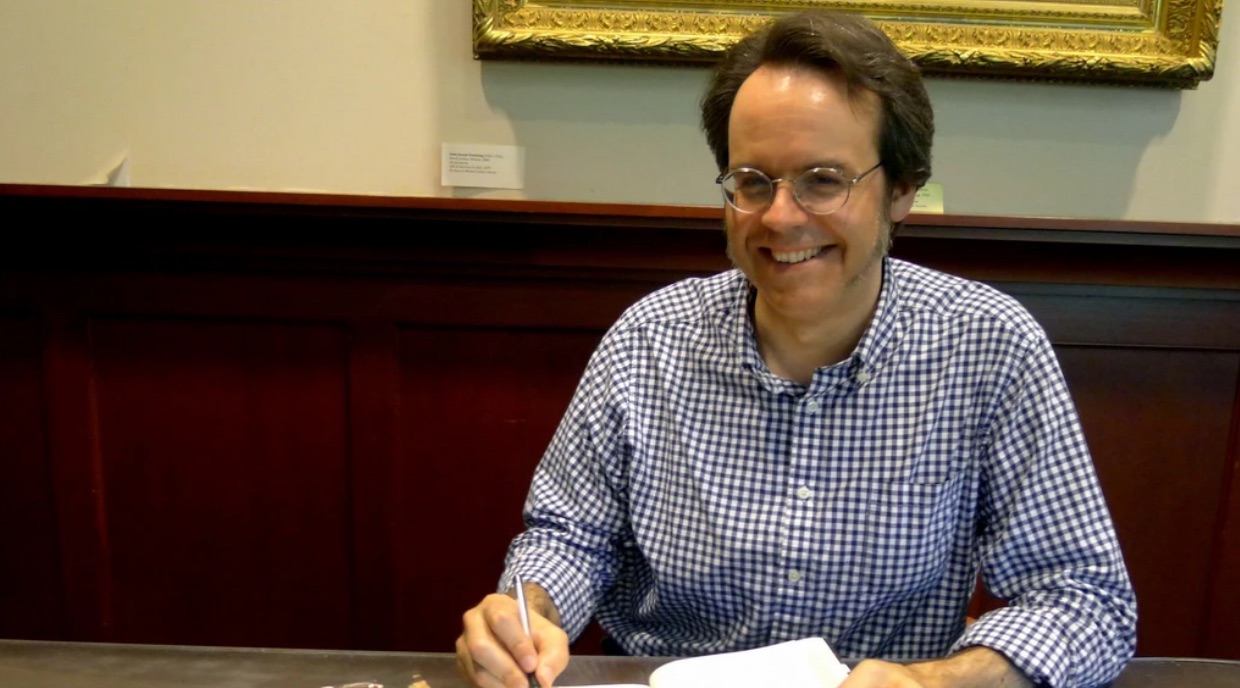
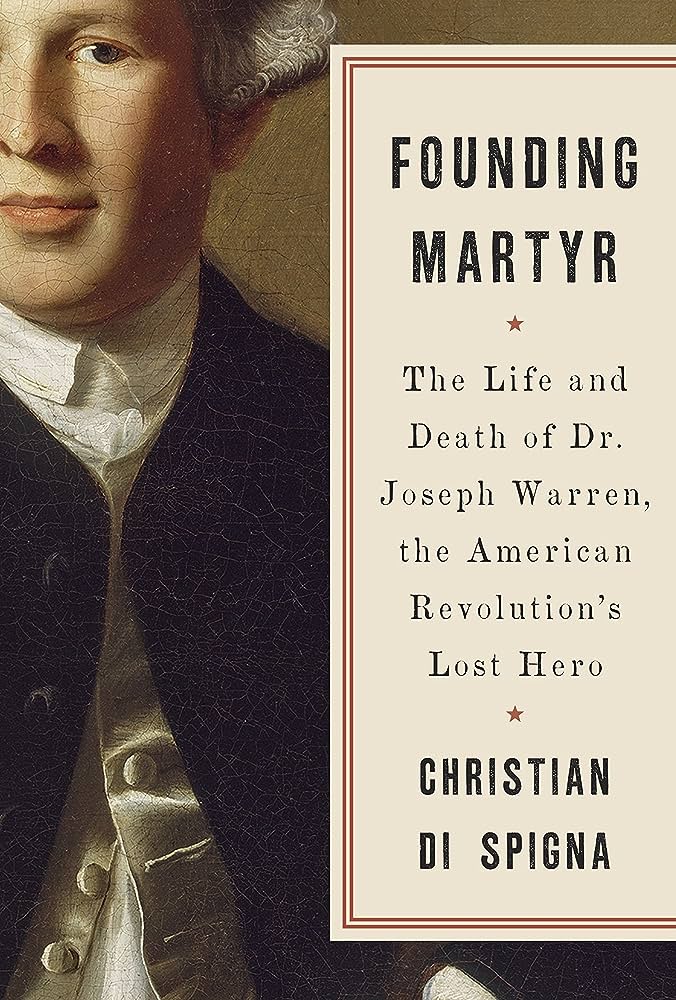
Joining Emerging Revolutionary War will be historian and author Christian Di Spigna. He is the author of Founding Martyr: The Life and Death of Dr. Joseph Warren, the American Revolution’s lost hero. He is the Executive Director of the Dr. Joseph Warren Foundation and is the vice chairman for the Revolution 250 committee of Massachusetts Freemasons. He also serves on the board of the Bunker Hill Monument Association.
As we approach the 250th commemoration of the Boston Tea Party, we will focus on Warren’s life, his role in the Boston Tea Party and his lasting impact on the Revolution. Grab a drink and join us as we talk with author and historian Di Spigna about Warren, the patriot who once said…
“When Liberty is the prize, who would shun the warfare? Who would stoop to waste a coward thought on life?”
See you Sunday at 7 p.m. EDT on Emerging Revolutionary War’s Facebook page!
Doctor. Major General. President of the Provincial Congress. Author of political tracts. A true patriot. Forgotten.
All these words, plus many more, are titles that depict the life of Dr. Joseph Warren. However, the last term is most synonymous with the Massachusetts doctor who fell in the Battle of Bunker Hill on June 17, 1775 in the early stages of the American Revolutionary War. That last word, forgotten, is exactly what author and historian Christian Di Spigna is hoping to expunge with his new biography, Founding Martyr.
Di Spigna, an early American history expert and Colonial Williamsburg volunteer, focuses his account of Dr. Warren on not the events immediately surrounding his death at Bunker Hill and subsequent martyrdom but “to fill in the more obscure parts of Warren’s life” which will lead to understanding more of the “key period in the formation of his character, his special networks, and ultimately his medical and political careers” (pg. 7). Continue reading “Review: Founding Martyr, The Life and Death of Dr. Joseph Warren, the American Revolution’s Lost Hero by Christian Di Spigna”→
On Wednesday, June 8, a signing ceremony marked the beginning of an agreement between First Parish in Concord, owner of the Wright Tavern, and the Concord Museum. Starting this fall, the Concord Museum will provide educational programming to school groups in the Wright Tavern and open the historic building to the public for commemorative events in October and April each year. On hand for the signing were representatives of the Concord Museum and First Parish as well as members of the Wright Tavern Exploratory Committee (WTEC), appointed last fall to develop a sustainable, strategic plan to showcase the Wright Tavern as a National Historic Landmark.
Plaque on the Wright Tavern (ERW collection photo)
“Opening the historic Wright Tavern to public and educational access will provide a true sense of place when learning about the historical events of the American Revolution,” said Mel Bernstein, member of WTEC and Chairman of the American Revolution Round Table of the Minute Man National Historical Park.
No building in this historic community was of greater consequence to the beginnings of the American Revolution than the Wright Tavern, built in 1747. The First Provincial Congress met in Concord at the Wright Tavern in October 1774, electing John Hancock as the Congress’s president and making provision for the collection of taxes. The Second Provincial Congress met there again in March and April 1775. Presided over by John Hancock with Samuel Adams and Dr. Joseph Warren in attendance, the Provincial Congress met in defiance of Royal and Parliamentary authority — creating a Massachusetts army, raising taxes, and performing other roles necessary to form its own government, independent of British authority. Then, in the early hours of April 19, 1775, Concord’s Minute Men assembled in the Wright Tavern before setting off to repel the advancing British troops at the North Bridge.
Since 1886, First Parish in Concord has owned and maintained this historic structure. “The Wright Tavern is certainly one of the most important Revolutionary War-era buildings in Concord,” explained Tim Jacoby, Chair of the First Parish Trustees of Parish Donations. “Although the building is owned by the church, we truly feel it belongs to the people of Concord and to the American people. This agreement with the Concord Museum will establish greater public accessibility to the Tavern.”
In 1961, the Wright Tavern was designated a National Historic Landmark by U.S. Secretary Fred Seaton, declaring it “an historical site of exceptional value in commemorating and illustrating the history of the United States.”
Margaret Burke, Executive Director of the Concord Museum, said: “The Museum is thrilled with this partnership to bring the importance of the Wright Tavern to the fore. Concord is home to invaluable historical and cultural resources, and this is a wonderful example of how organizations within the town are working together to promote this history and make it relevant to residents and visitors.”
Leah Walczak, the Concord Museum’s Director of Education and Public Programs, explained the role the Wright Tavern will play in educating visiting school groups: “The Museum currently provides specialized programming to over 10,000 school children each year. Along with hands-on history education using objects from the Museum’s collections, this agreement will allow us to provide programs within the setting of one of the finest historic buildings in Concord.”
This partnership was brought about through the work of the Wright Tavern Exploratory Committee, which convened from September 2015 through January 2016. Members included: John Boynton, Chair of the Exploratory Committee and a First Parish Trustee; Doug Baker, Sacristan and Curator of First Parish; Mel Bernstein, Chair of the American Revolution Round Table of Minute Man National Historical Park; Jim Cunningham, Project Manager for Barrett Farm Restoration, and Treasurer of Save Our Heritage; Sue Gladstone, Director of Development for the Concord Museum; Jayne Gordon, Public Historian for Robbins House, Thoreau Farm, and the Concord Museum; Tim Jacoby, Chair of the First Parish Trustees; Bob Morris, Chair of the Friends of Minute Man National Historical Park; and Tom Wilson, First Parish Treasurer.
A generous gift to the Museum from John and Johanna Boynton is funding this historic partnership.
*About the Concord Museum The Concord Museum is where all of Concord’s remarkable past is brought to life through an inspiring collection of historical, literary, and decorative arts treasures. Renowned for the 1775 Revere lantern and Henry Thoreau’s Walden desk, the Concord Museum is home to a nationally significant collection of American decorative arts, including clocks, furniture, and silver. Founded in 1886, the Museum is a gateway to historic Concord for visitors from around the world and a vital cultural resource for the town and the region. Visit www.concordmuseum.org.*
*For More Information, contact:
Barbara Rhines, Director of Marketing and Public Relations
978-369-9763, ext. 229
Email: brhines@concordmuseum.org







 All these words, plus many more, are titles that depict the life of Dr. Joseph Warren. However, the last term is most synonymous with the Massachusetts doctor who fell in the Battle of Bunker Hill on June 17, 1775 in the early stages of the American Revolutionary War. That last word, forgotten, is exactly what author and historian Christian Di Spigna is hoping to expunge with his new biography, Founding Martyr.
 Emerging Revolutionary War Era