Using the King’s Highway to Trap a King’s Army

A few weeks ago, heading to the airport after the first Emerging Revolutionary War symposium, fellow ERW historian Rob Orrison made a pit stop in a residential neighborhood in Prince William County, Virginia.

To the average traveler to the Ronald Reagan International Washington National Airport this slight detour would not be normal. Yet, for two historians of early American history, these detours are rarely common.

This particular detour took us to a portion of the King’s Highway that has been preserved by the Prince William County Historic Preservation Division. Along this stretch soldiers in the French Army under Comte de Rocambeau and Continentals under General George Washington traversed on their way to Yorktown to entrap the British under General Lord Charles Cornwallis.

Thus, one king’s soldiers, King Louis XVI took a route named for monarch to assist rebels in trapping the ground forces of another king, that of Great Britain by using a road named for the British monarch. Interesting to think about the naming of the road in those terms.

Portions of this route are still preserved today, other sections have been modernized and blacktopped to be Route 1.

Below are a few photos I snapped, including the size 14 Nike shoe belonging to yours truly, re-enacting marching down the thoroughfare like the patriots of 1781.

Symposium Recap

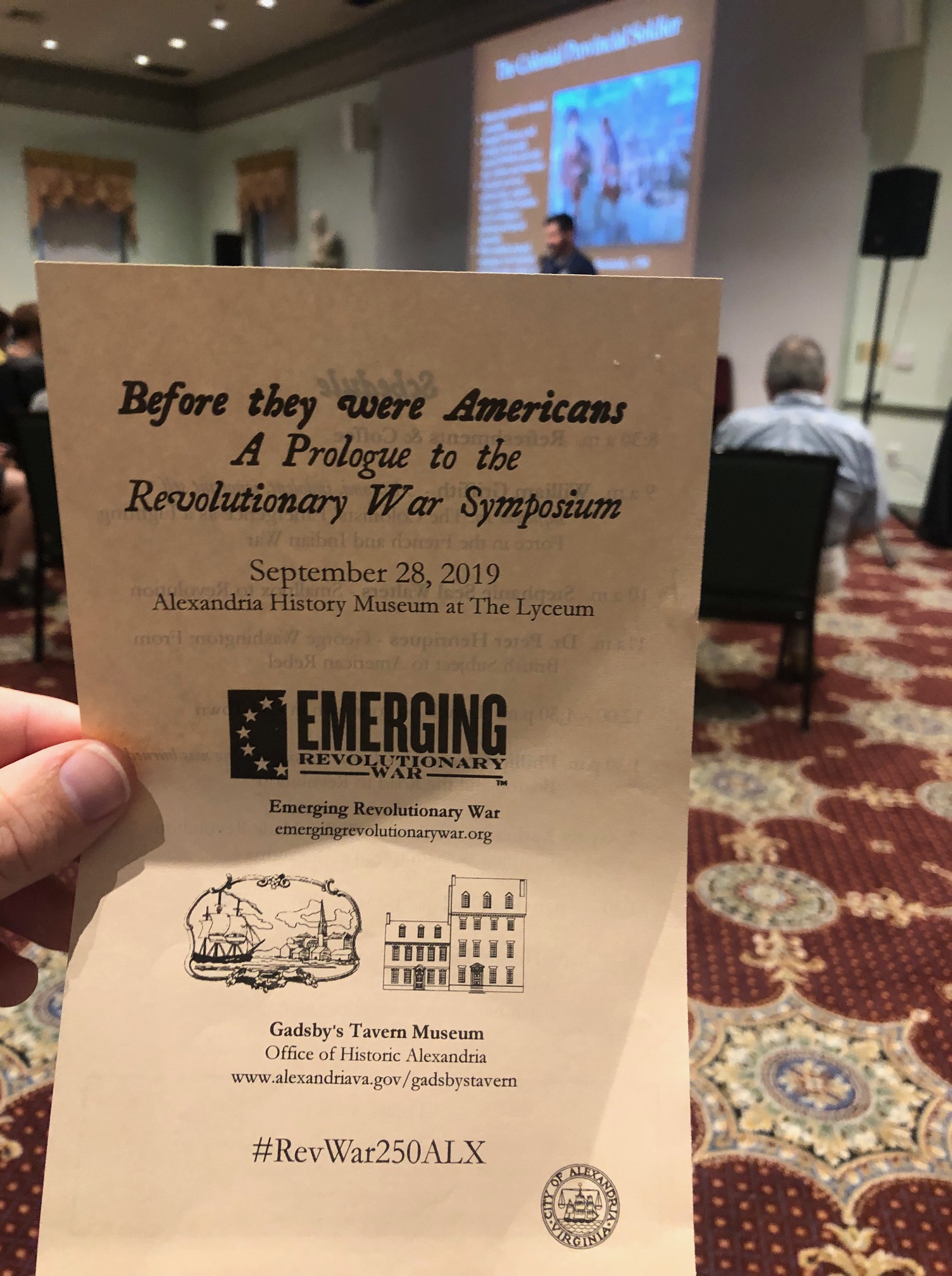
One week has passed since the first annual Emerging Revolutionary War symposium. Held in conjunction with Historic Alexandria, Virginia at the Lyceum, the theme was “Before they were Americans.”

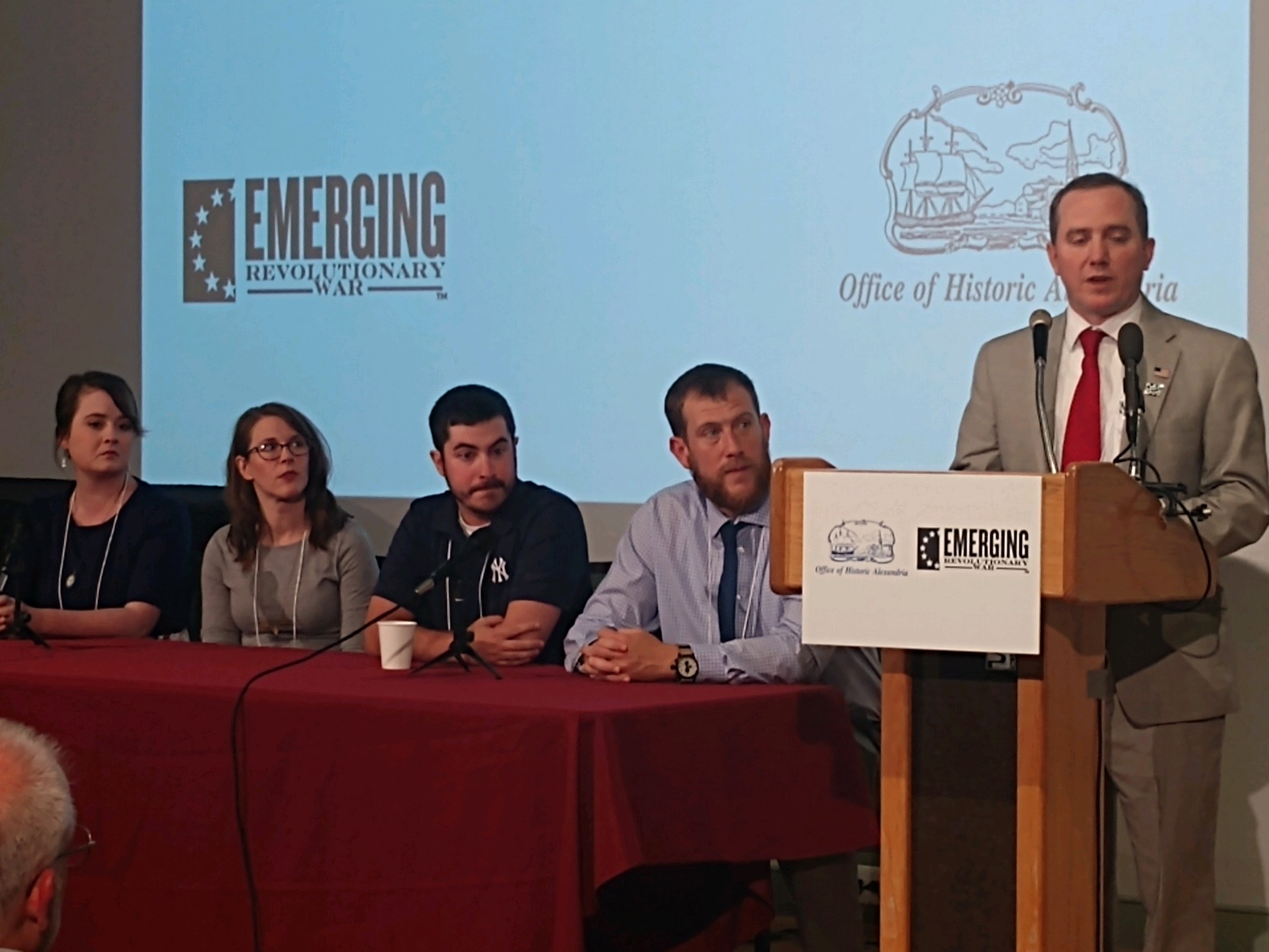
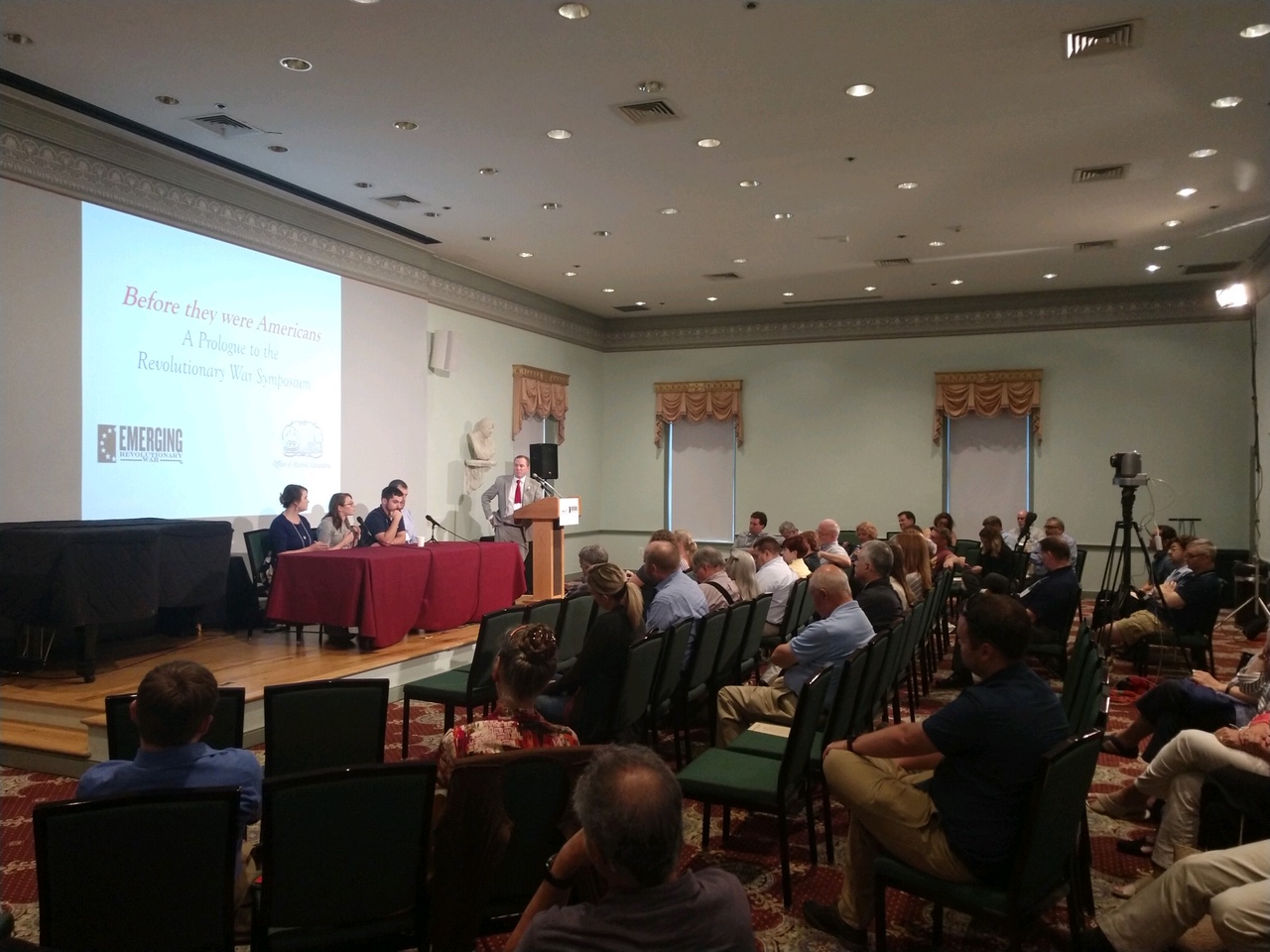
With a day of lectures, keynoted by Dr. Peter Henriques, professor emeritus of George Mason University the topics ranged from the French and Indian War, to George Washington, to material culture, smallpox, and Boston on the Road to Revolution. The day ended with a panel of historians in a Q&A session.

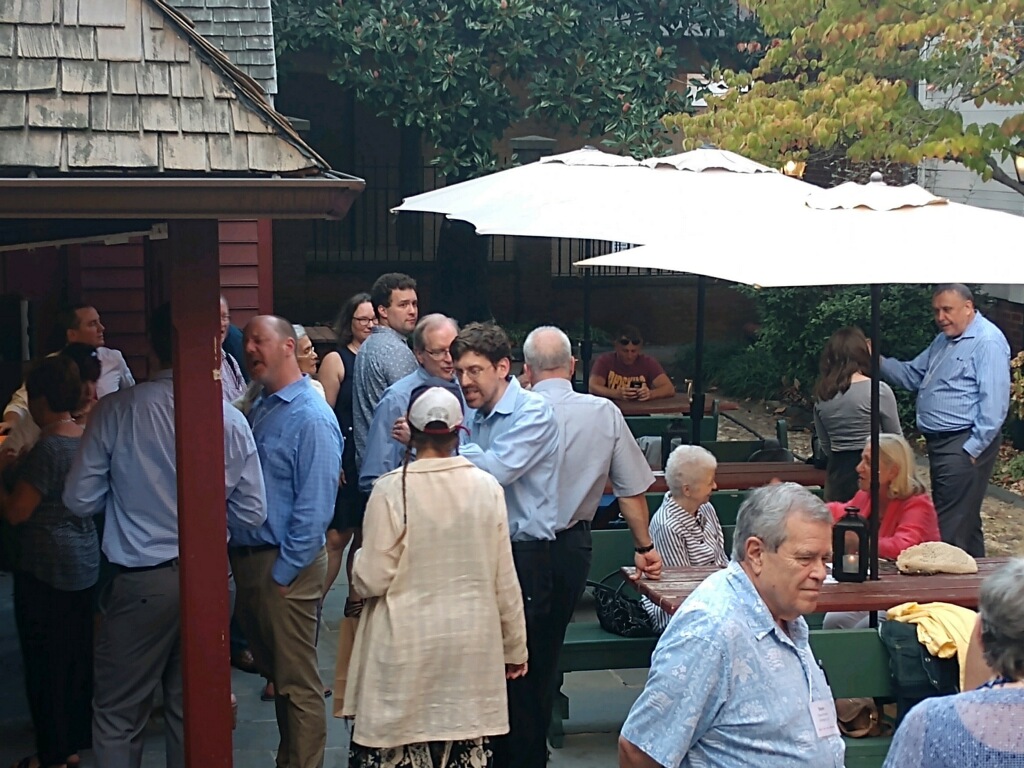
Over 70 people attended and many joined members of Emerging Revolutionary War and Historic Alexandria at Gadsby’s Tavern, an 18th century tavern with a great connection to American history, including a a ballroom used by Washington to celebrate his birthdays!

Plans are already in motion for the second annual Emerging Revolutionary War symposium to be held in late September of 2020 back in Alexandria, Virginia. Stay tuned to this blog and our Facebook page for information as that day draws near.

In the meantime, check out some of the photos below, taken by ERW historian Rob Orrison, who along with Liz Williams of Historic Alexandria were the driving forces behind making this symposium possible. A big thank you to all who attended and we hope to see you next year!

Sébastien Le Prestre de Vauban

Sebastien Le Prestre de Vauban, Seigneur de Vauban, and finally Marquis de Vauban, as one of his biographies begins, is probably not a household name to many enthusiasts of American history. Especially since he died on March 30, 1707 and never set foot in the Western Hemisphere. However, he did have a nephew, Jacques Anne Joseph Le Prestre de Vauban who served as General Jean-Baptiste Rochambeau’s aide-de-camp during the war. So, there is a family connection.

Sebastien_le_Prestre_de_Vauban
Sébastien Le Prestre de Vauban (courtesy of Wikipedia)

Yet, he left his mark on places like Yorktown, Virginia, fought 74 years after his death and half-a-world away. French engineers, critical to eventual American victory in the American Revolutionary War, plied de Vauban’s craft and studied his text and learned from his exploits. Continue reading “Sébastien Le Prestre de Vauban”

“De Kalb has died, as he has lived, the unconquered friend of liberty”

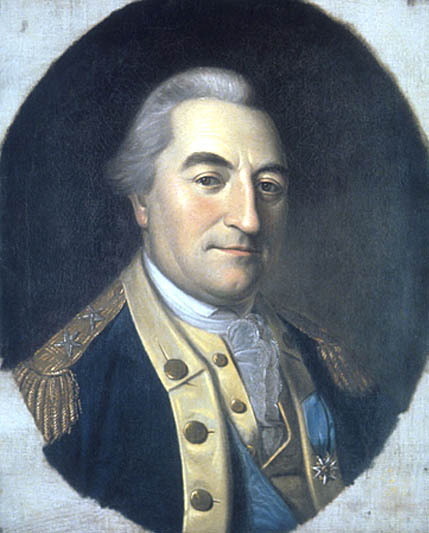
Johann_de_Kalb
Johann de Kalb (Charles Willson Peale)

On this date in 1780, Johann von Robias, Baron de Kalb, died of wounds received three days earlier during the Battle of Camden, South Carolina.

de Kalb, born on June 19, 1721 in the Principality of Bayreuth, was in charge of the American right wing during the engagement at Camden, leading the premier units, the Delawareans and Marylanders, of General Horatio Gates’ Southern Army.

When the left and center of the American line disintegrated, de Kalb’s force had to beat a hasty retreat before becoming completely surrounded. During this juncture of the fighting, the Baron’s horse was shot out from under him and the German was thrown to the ground. Before he could gain his feet, he was hit with three musket balls and bayoneted multiple times by approaching British soldiers. The wounds would prove mortal. Continue reading ““De Kalb has died, as he has lived, the unconquered friend of liberty””

George Washington’s “Favorite” Charles Lee

When you mention the name “Charles Lee” in many Revolutionary War circles, one immediately thinks of Maj. Gen. Charles Lee. Though there was another Charles Lee and it can be argued provided more contributions to the United States than the British born military general.

220px-Charleslee
Charles Lee, Courtesy of Department of Justice

Charles Lee was born in 1758 on his father’s plantation Leesylvania in Prince William County, Virginia. The 2,000-acre farm that sat on the Potomac River and neighbored other Potomac River families such as the Fairfaxes, Washingtons and Masons. Charles’ father, Henry Lee II, a political colleague and friend of George Washington, Charles was one of eight siblings and five males that would solidify the Lee family’s role as leaders in politics and society. Continue reading “George Washington’s “Favorite” Charles Lee”

On this date in….1776

A few random musings on the importance of this date in American Revolutionary history…

IMG_3597
President’s chair, Independence Hall, Independence National Historical Park (author collection)

This day was the date that the assembled Second Continental Congress voted on the draft of a document that was Richard Henry Lee, a delegate from Virginia had put forth in a measure, in June, to be voted on declaring;

“That these United Colonies are, and of right out to be, free and independent States, that they are absolved from all allegiance to the British Crown, and that all political connection between them and the State of Great Britain is, and ought to be, totally dissolved.”

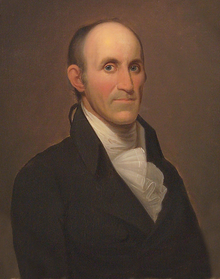
220px-Thomas_McKean_by_Charles_Willson_Peale
Thomas McKean by Charles Wilson Peale

On July 4, two days after this resolution passed, the final and formal version was approved by Congress. John Hancock, president of the Continental Congress affixed his signature boldly and largely at the bottom of the document. Eventually 55 other men would place their signature on the Declaration of Independence, with Thomas McKean, generally accepted, as the last to sign the document, possibly as late as January 1777.

Copies were made and four days later, on July 8, the first public reading occurred in Philadelphia. George Washington had the document read to the Continental Army in New York on the following day, July 9.

A18236.jpg
John Adams by Gilbert Stuart

For John Adams, future second president of the United States, the second day of July would and should be the day to remember American Independence, as he wrote;

“The most memorable Epocha, in the History of America. I am apt to believe that it will be celebrated, by succeeding Generations, as the great anniversary Festival…It ought to be solemnized with Pomp and Parade with shews, Games, Sports, Guns, Bells, Bonfires, and Illuminations from one End of this continent to the other from this Time forward forever more.”

And that is how many Americans choose to celebrate the anniversary of the Declaration of Independence, however, usually two days later on July 4th. Yet, it took another war; World War II, for July 4th to become a national paid holiday for workers of the Federal government when Congress approved it in 1941.

So, happy Independence Day!

*Feel free to add any interesting historical tidbits about the Second Continental Congress, the signers, or 1776 below!*


George Washington, Daniel Morgan, and Winchester, Virginia on Memorial Day

I’ve been intermittently visiting Winchester, VA for years, usually with an eye toward understanding its place in the Civil War.  Tradition has it that no town changed hands more frequently. But, the town also has a prominent, if sometimes overlooked, role in America’s colonial and Revolutionary War history.  In particular, it enjoyed a close relationship with George Washington and Daniel Morgan, helping shape both men.

W%oQ3yOcQbOrOlCK890IDQ
George Washington as a Teenage Surveyor, Winchester, VA

Winchester, or Frederick Town, as it was then known, was the largest village in the lower Shenandoah Valley when Lord Thomas Fairfax decided to relocate from England to his land grant in northern Virginia and became a way-station of sorts for people traveling along the Great Wagon road that ran from Pennsylvania to North Carolina in the 18thcentury.  So, when the Fairfax family hired a teenaged George Washington to help survey its grants in the Shenandoah, Winchester was a logical place for the surveying team to make its temporary home base.  (In truth, surveying teams were constantly moving to maximize their efficient use of time: the saddle might be considered home.)  While the teenager was less than impressed with most accommodations on the frontier, he was pleased with Fredericktown.  He recorded in his diary: Continue reading “George Washington, Daniel Morgan, and Winchester, Virginia on Memorial Day”

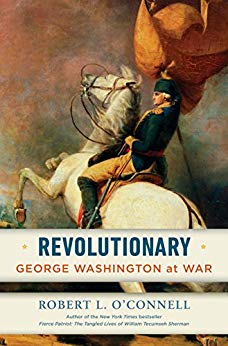
Book Review: Revolutionary: George Washington at War by Robert L. O’Connell

erw-book-reviews-11

Robert L. O’Connell, Revolutionary: Washington at War, e-book, (New York: Random House, 2019), $32 in hardback.

O'Connell's Washington

Robert L. O’Connell is best known for asking “big” questions.  Armed with a PhD in history and a lengthy career in the intelligence community, his books Of Arms & Men: A History of War, Weapons, and Aggression (1989) and Ride of the Second Horseman: The Birth and Death of War (1995) tackled the origins, nature, and future of warfare. In the last decade, however, he has turned his sights on more specific targets: Hannibal at Cannae, William Tecumseh Sherman, and, most recently, George Washington.  Released earlier this year, O’Connell’s Revolutionary: George Washington at War is just the latest work to tackle the martial aspects of George Washington’s life and career.

Continue reading “Book Review: Revolutionary: George Washington at War by Robert L. O’Connell”

ERW Weekender: The George Washington House

IMG_1065

In September 1751, a 19-year old, tall, strapping, young Virginian accompanied an ailing older half-brother on a journey to Barbados, in the West Indies. Unbeknownst to this teenager, the journey to the Caribbean Island would be his last venture out of the colonies and/or country that inhabited the east coast of North America.

This young man’s name? George Washington.

The island he visited? Barbados.

Continue reading “ERW Weekender: The George Washington House”

Alexander Hamilton’s “First” Duel

glc07167engweb_
Lt. Col. Alexander Hamilton at Yorktown, VA by Alonzo Chapel

Alexander Hamilton has reappeared as a modern pop star with the wide success of the Broadway musical “Hamilton.” Due to this success, most people today know that Alexander Hamilton met his end in a duel with Aaron Burr on the banks of the Hudson River. But this was not Hamilton’s first involvement in a duel, nearly 26 years earlier Hamilton found himself embroiled in a feud with one of highest ranking Continental officers, Maj. Gen. Charles Lee.

It all started on June 28, 1778 at the Battle of Monmouth. The beginning of the battle had gone against the Americans and Lee, who was in command of the vanguard was ordering a retreat in front of the British. Washington, seeing the retreat rode ahead and encountered Lee. What was said between the men has been debated since that day, but what is not indisputable is that Lee took offense. Continue reading “Alexander Hamilton’s “First” Duel”