Civil War Nurse Saves Mount Vernon & Valley Forge

Valley Forge consists of acres of undulating countryside where General George Washington and some 11,000 Continental Army troops spent the winter of 1777-1778. Today, it is one of the nation’s most hallowed shrines. Few, if any, modern visitors recognize the woman who fought to save it, nor her heroic work as a nurse during the American Civil War.

Read more: Civil War Nurse Saves Mount Vernon & Valley Forge

Anna Morris Ellis was born in Muncy, Pennsylvania, on April 9, 1824. On September 26, 1848, she married William Hayman Holstein. At 38 years old, Anna became involved in the Union army’s war effort during the American Civil War after the battle of Antietam in September 1862. Her husband returning home after serving a 90-day enlistment, told of wounded men lying in barns and fields around Sharpsburg, Maryland because there weren’t enough medical corpsmen. Despite an overhaul to the Union Army of the Potomac’s Medical Department by Dr. Jonathan Letterman earlier that summer, the combined evacuation of the Virginia Peninsula from their failed late spring and summer campaigns and the Second Manassas campaign outside of Washington, D.C. in August had left this medical department in a state of chaos, confusion, and wholly unprepared to meet the medical needs of such another large scale engagement as Antietam. Anna and her husband William immediately left for the Antietam battlefield in response to the distressing scenes he had painted for her. 
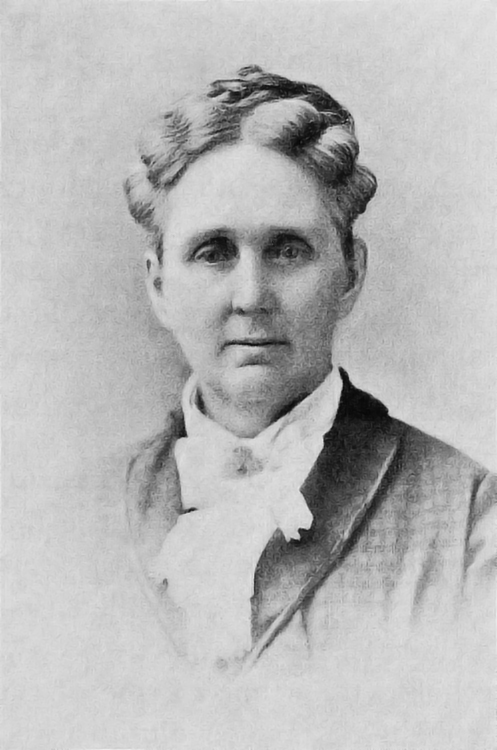
Anna Morris Ellis Holstein

The Holstein’s served for months around the Antietam battlefield, caring for the sick and wounded. Their role as post-battle caretakers continued just a month after the battle of Gettysburg when the large army field hospital of Camp Letterman opened just east of the borough on the York Road. This time, however, Anna was already numbed to the scenes of shattered limbs and the despondently ill wearied from disease. By this time her husband had secured a position with the U.S. Sanitary Commission which also setup at Gettysburg to aid the wounded and sick in the wake of the battle. That agency, along with the U.S. Christian Commission, offered supplies and personages to aid in the aftermath of not only Gettysburg, but other battles in the final years of the war.

Anna’s role for caring for those soldiers left behind by both armies was significant. She was made matron-in-chief of Camp Letterman by Dr. Cyrus Nathaniel Chamberlain, which, under her and Chamberlain’s care, attended to over 3,000 wounded soldiers. Anna continued to work at Camp Letterman until it closed on November 19, 1863. Later that day, both her and her husband sat on the platform near Abraham Lincoln while he delivered the Gettysburg Address. Following her work at Gettysburg, Anna continued to nurse the sick and wounded back to health. By the end of the Civil War in 1865 and into 1866, she worked as a matron in a hospital in Annapolis, Maryland, caring for returned prisoners of war that were sick or wounded.

In the post Civil War years, Anna turned to the preservation of the places and material culture from America’s first war for independence. She was no stranger to the importance of this era and the necessity of keeping the memory of those that served during that turbulent era alive for future generations. Anna’s great-grandfather was Capt. Samuel Morris. Morris was the captain of the First City Troop of Philadelphia when it served as George Washington’s body guard. Captain Morris was with Washington during the Ten Crucial Days and was on the field him at the battles of Trenton and Princeton. Morris even earned the sobriquet as leader of the “fighting Quakers.” Anna’s grandfather, Richard Wells, also served the American cause. He was commissioned to provision the U.S. fleet on the Delaware River during the revolutionary war.

One of her first missions was to save and restore George Washington’s Virginia estate, Mount Vernon. The home had fallen into significant disrepair, with the recent war years only aiding to its material decay. Both Anna and her husband, who also had strong ancestral ties to the War for Independence, were among the first to promote the struggles at Mount Vernon, the necessity for saving it, and the fundraising to back those plans. It was her skills in fundraising so successfully for Mount Vernon that led her to be named as regent for the Valley Forge Centennial and Memorial Association. Anna also was one of the founders, and also named regent as well, of the Valley Forge Chapter of the D.A.R.

By 1878, The Centennial and Memorial Association of Valley Forge, was incorporated in Montgomery County, Pennsylvania. Once incorporated, she led the charge as regent to save, acquire, restore and preserve General Washington’s Valley Forge Headquarters and surrounding acreage as parcels became available. Much needed funds for this charge would be needed, however. On June 19, 1878, to commemorate the 100th anniversary of the Continental Army marching out of Valley Forge, the Association held a large, organized event. With the funds generated from the anniversary commemoration, the Association was able to not only purchase General Washington’s Headquarters, but also additional acreage around the farm complex. They were also able to purchase original artifacts to place in the home, begin renovations to restore the home back to its 1777-78 appearance, and plant a tree from Washington’s Mt. Vernon on the property.

By 1893, when the Commonwealth of Pennsylvania assumed control of the camp sites and headquarters at Valley Forge, with Anna credited as the person “to whom the Nation is indebted more than any other” for her tireless efforts to ensure this national shrine was preserved and protected in perpetuity. Decades later, the National Park Service would assume ownership and operational leadership of the park from the state of Pennsylvania.

Anna and William’s home still stands in King of Prussia, Pennsylvania today at 211 Henderson Road. In 2021 the Pennsylvania Historical and Museum Commission placed a marker at the entrance drive to the home. Anna’s work at saving material culture from the Revolutionary War and ensuring the legacy of the veterans of that conflict lived on was vast. Hopefully this small summation of her activities inspires others to dig deeper into her efforts.
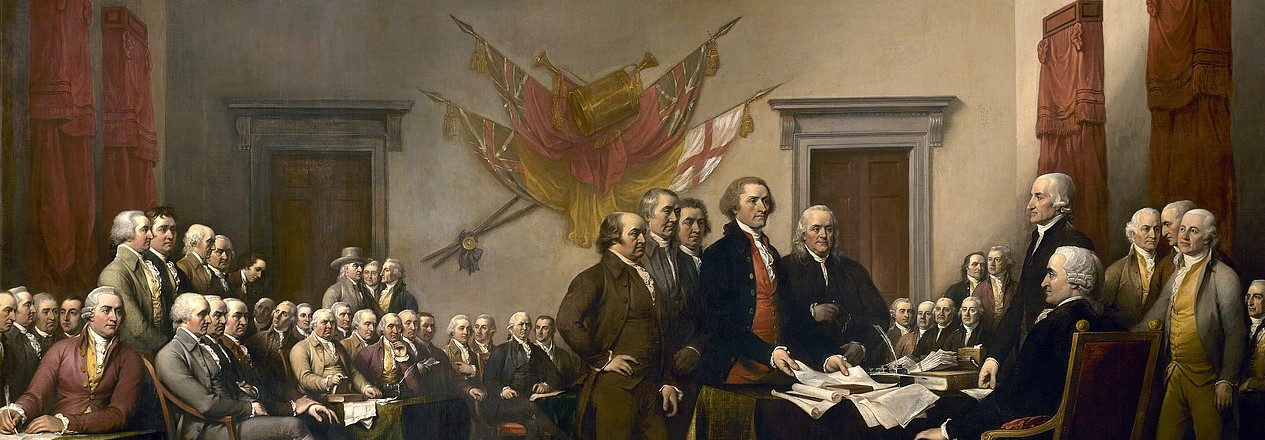
Rounding out the year with a round-up from our friends at Americana Corner

As 2022 winds down, Emerging Revolutionary War wanted to share one more round-up of what our good friends at Americana Corner were doing in this last month of the year. We hope to continue to partner with Americana Corner in the 2023 and bring new content and new enthusiasm for this critical period in American history to the forefront. To all our readers, thank you and we all at Emerging Revolutionary War hope you have a great ending to 2022 and a Happy New Year!

A few blog posts for light reading as you wind down December…

Washington Takes Command
December 27, 2022

When it came to finding the right man to command the new Continental Army assembled around Boston, George Washington was the logical choice. John Adams quickly nominated Washington and Congress unanimously approved. As Adams stated, “This appointment will have a great effect in cementing and securing the Union of these colonies.”

Read More

George Washington Enters Politics
December 20, 2022

As befitting a wealthy landowner in colonial Virginia, George Washington became active in the colony’s politics in the 1750s. He first ran for a seat representing Frederick County in the Virginia House of Burgesses in 1755 but lost the election. Interestingly, it was the only political race he would ever lose. Washington ran for that same seat in 1758 and was victorious, and he held this seat for seven years.

Read More

The Life of Martha Washington
December 13, 2022

Martha Washington was our nation’s first First Lady and lived in the shadow of her larger-than-life husband George. However, most Americans do not realize that she was a very capable woman and, when given the opportunity, managed her own affairs quite well.

Read More

George Washington’s Life at Mount Vernon
December 6, 2022

When George Washington resigned as Colonel and Commander of the Virginia Regiment in 1758, he returned to Mount Vernon to begin his life as a gentleman planter. Although in less than twenty years Washington would be called away by his country, his time between the French and Indian War and the American Revolution was a significant portion of this great man’s life.

Read More

On Ending Slavery: George Washington to John Mercer

Sitting down to write on September 9, 1786 from Mount Vernon, George Washington addresses his letter to Virginian, veteran of the late revolution, and plantation owner John Francis Mercer. Mercer’s family had strong ties to Virginia and the Washington family, John’s father was Washington’s attorney for many years during the eighteenth-century. Even though John had married, moved, and settled in Maryland, the two continued to correspond, although this most recent response by Washington took much longer usual. When Mercer’s letter arrived to Mount Vernon several weeks earlier, Washington was able to do little as he was fighting a “fever.” Now, he sat down to reply, and although there were many topics on his mind in which he wished to discuss with Mercer, Washington’s feelings toward slavery were first on his mind.

Read more: On Ending Slavery: George Washington to John Mercer

At the time Washington composed his thoughts to Mercer, particularly on his plan to never purchase another slave, Washington owned approximately 277 slaves. Yet, he expressed his desire to slavery abolished through the gradual abolition of slavery. Washington was a man of principle, displayed time and again during the war, and his aversion to the institution only grew as Washington the man grew as well. And, his was not alone. Many founders of era, including many from the upper South, looked for gradual solutions to ending the institution, despite the modern historical narrative. In the end, Washington ensured the emancipation of his slaves following his wife’s death in his will.

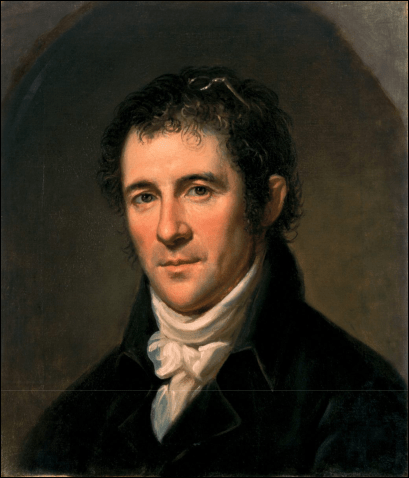
Gov. John F. Mercer, circa 1803.

Mount Vernon 9th. Sep 1786

Dear Sir,

Your favor of the 20th. ulto. did not reach me till about the first inst. – It found me in a fever, from which I am now but sufficiently recovered to attend to business. – I mention this to shew that I had it not in my power to give an answer to your propositions sooner. –

With respect to the first. I never mean (unless some particular circumstances should compel me to it) to possess another slave by purchase; it being among my first wishes to see some plan adopted by, [inserted: The Legislature by] which slavery in this Country may be abolished by slow, sure, & imperceptable degrees. – With respect to the 2d., I never did, nor never intend to purchase a military certificate; – I see no difference it makes with you (if it is one of the funds allotted for the discharge of my claim) who the the purchaser is [2] is. – If the depreciation is 3 for 1 only, you will have it in your power whilst you are at the receipt of Custom – Richmond – where it is said the great regulator of this business (Greaves) resides, to convert them into specie at that rate. – If the difference is more, there would be no propriety, if I inclined to deal in them at all, in my taking them at that exchange.

I shall rely on your promise of Two hundred pounds in five Weeks from the date of your letter. – It will enable me to pay the work men which have been employed abt. this house all the Spring & Summer, (some of whom are here still). – But there are two debts which press hard upon me. One of which, if there is no other resource, I must sell land or negroes to discharge. – It is owing to Govr. Clinton of New York, who was so obliging as to borrow, & become my security for £2500 to answer some calls of mine. – This sum was to be returned in twelve [3] twelve months from the conclusion of the Peace. – For the remains of it [struck: this sum], about Eight hundred pounds york Cy. I am now paying an interest of Seven prCt.; but the high interest (tho’ more than any estate can bear) I should not regard, if my credit was not at stake to comply with the conditions of the loan. – The other debt tho’ I know the person to whom it is due wants it, and I am equally anxious to pay it, might be put of a while longer. – This sum is larger than the other

I am. Dr Sir

Yr. Most Obedt. Hble Sert

Go: Washington

(Letter courtesy the Gilder Lehrman Collection)

Benjamin Henry Latrobe: Architect of the Republic

Emerging Revolutionary War welcomes guest historian Darien Ashley. A short bio follows this post.

The best architecture is that which reflects clearly the ideals and activities of the people which inhabit it. This is true for both private dwellings and public buildings. The objects of architecture serve as a lasting testament to identity. These objects, once created, continue to shape minds long after the architect is gone. A nation’s capital city is a site where man can establish glorious structures which convey a sense of who the people are, where they came from, and where they intend to go. The United States Capitol building is a prime example of a structure that continues to inform American identity long after its architects have passed. This article serves as an investigation of the life of one of the most important architects of not only the Capitol, but of the nation itself, Benjamin Henry Latrobe.

Guests to the United States Capitol building often get a shock from the fact that one of its primary architects, Benjamin Henry Latrobe, was an Englishman. Indeed, the man who designed the hallowed, old halls of Congress hailed from a Moravian religious settlement located on the outskirts of Leeds, England. However, Latrobe himself would have objected to the label “Englishman”. Indeed, throughout his life, Latrobe referred to the United States as “his” country and was quick to point out that his mother, Anna Margaretta Antes, was born and raised in Pennsylvania. Latrobe’s father, Benjamin Henry Latrobe Sr., met Anna after she had been sent to London to finish her education. Both of Latrobe’s parents held prominent positions within the Moravian ministry and raised their children to follow in their example.

Continue reading “Benjamin Henry Latrobe: Architect of the Republic”

ERW Weekender: The George Washington House

IMG_1065

In September 1751, a 19-year old, tall, strapping, young Virginian accompanied an ailing older half-brother on a journey to Barbados, in the West Indies. Unbeknownst to this teenager, the journey to the Caribbean Island would be his last venture out of the colonies and/or country that inhabited the east coast of North America.

This young man’s name? George Washington.

The island he visited? Barbados.

Continue reading “ERW Weekender: The George Washington House”

George Washington’s Greatest Speech?

On the morning of March 15, 1783, George Washington strode into the “New Building” or “Temple” as the structure was referred as, to address the assembled officers of the Continental Army. He asked General Horatio Gates if he could have the floor to say a few words and when he unfolded his pieces of paper on the podium, the words lost their importance.

Why? Continue reading “George Washington’s Greatest Speech?”

Independence and Contradiction: Our Founding Slaveholders

Emerging Revolutionary War welcomes guest historian Michael Aubrecht. A biography of Mr. Aubrecht is attached below. 

In 2011 an exhibit titled “Slavery at Jefferson’s Monticello: Paradox of Liberty” started running at the Smithsonian’s American History Museum from January 27, 2012 – October 14, 2012. This somewhat controversial exhibition explored slavery and enslaved people in America through the lens of Jefferson’s plantation and was a collaborative effort between the Thomas Jefferson Foundation at Monticello and the African American History and Culture Museum in Washington DC. It helped to instigate public discussion about the dichotomy between the Founders and freedom. The paradox of course is that Thomas Jefferson drafted the Declaration of Independence and called slavery an “abominable crime,” yet he was a lifelong slaveholder. The exhibition provides a glimpse into the lives of 6 slave families living at Monticello and reveals how the paradox of slavery in Jefferson’s world is relevant for generations beyond Jefferson’s lifetime.

founders-presidents-slaveowners
Founders, presidents, slave-owners

Continue reading “Independence and Contradiction: Our Founding Slaveholders”

War of Jenkins’ Ear and the Washington Connection

Propaganda, imperial ambitions, and one small ear caused a flare-up in the New World between the European powers of Great Britain and Spain. In one of the most comical, bewildering, and interesting causes for war, the conflict known as the War of Jenkins’ Ear began eight years after the incident itself. The connections that this conflict would have with the successful outcome of the American Revolutionary War is what is most striking. Continue reading “War of Jenkins’ Ear and the Washington Connection”

Emerging Revolutionary War Wishes You a Happy and Safe Thanksgiving Holiday

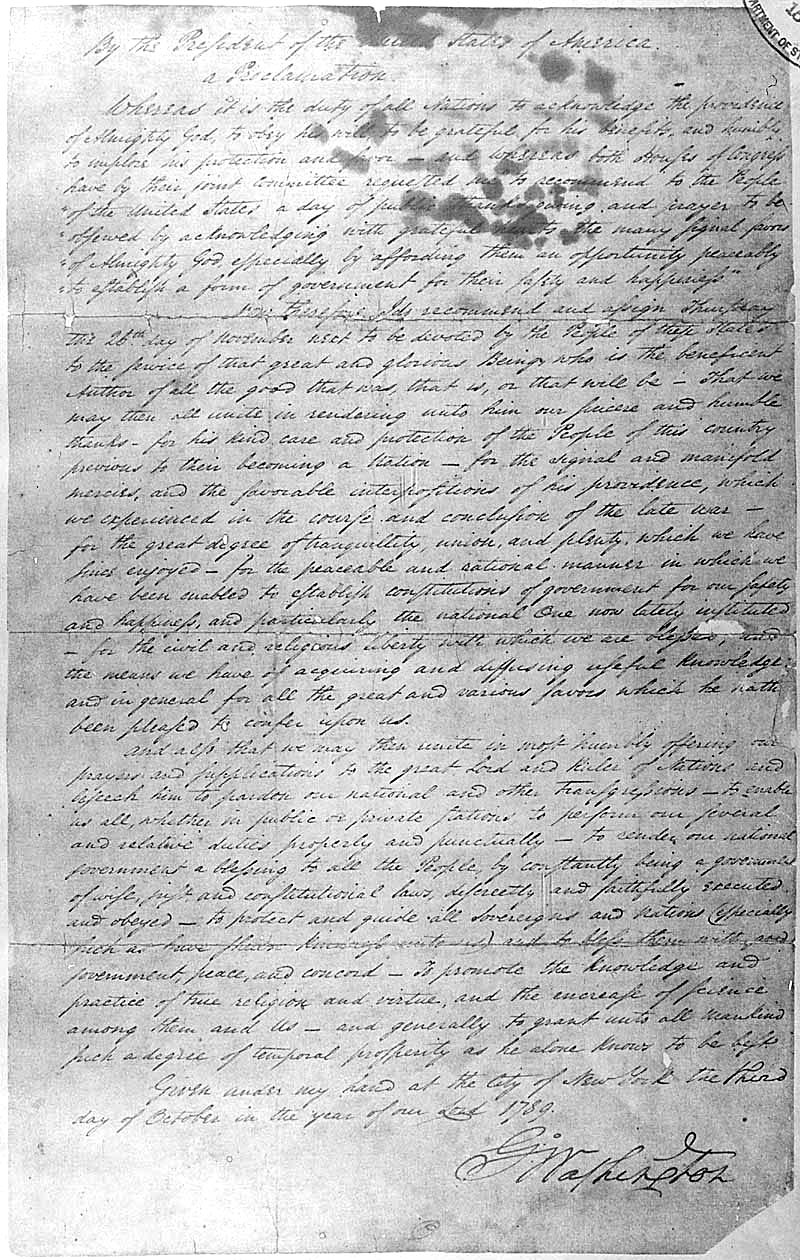
George Washington's Thanksgiving Proclamation, 1789. (courtesy of archives.gov)
George Washington’s Thanksgiving Proclamation, 1789.
(courtesy of archives.gov)

As president of the United States, George Washington wrote the following Thanksgiving Proclamation that was published and designated Thursday, November 26, 1789, as a national day of thanks.

Although the official holiday came later when the sixteenth president, Abraham Lincoln that made the national day of thanks as a national holiday.

Yet, Washington’s words, in their entirety below, still resonate today and give us a chance for reflection this Thanksgiving holiday.

Thanksgiving Proclamation

Issued by President George Washington, at the request of Congress, on October 3, 1789

By the President of the United States of America, a Proclamation.

Whereas it is the duty of all nations to acknowledge the providence of Almighty God, to obey His will, to be grateful for His benefits, and humbly to implore His protection and favor; and—Whereas both Houses of Congress have, by their joint committee, requested me “to recommend to the people of the United States a day of public thanksgiving and prayer, to be observed by acknowledging with grateful hearts the many and signal favors of Almighty God, especially by affording them an opportunity peaceably to establish a form of government for their safety and happiness:”

Now, therefore, I do recommend and assign Thursday, the 26th day of November next, to be devoted by the people of these States to the service of that great and glorious Being who is the beneficent author of all the good that was, that is, or that will be; that we may then all unite in rendering unto Him our sincere and humble thanks for His kind care and protection of the people of this country previous to their becoming a nation; for the signal and manifold mercies and the favor, able interpositions of His providence in the course and conclusion of the late war; for the great degree of tranquillity, union, and plenty which we have since enjoyed; for the peaceable and rational manner in which we have been enabled to establish constitutions of government for our safety and happiness, and particularly the national one now lately instituted; for the civil and religious liberty with which we are blessed, and the means we have of acquiring and diffusing useful knowledge; and, in general, for all the great and various favors which He has been pleased to confer upon us.

And also that we may then unite in most humbly offering our prayers and supplications to the great Lord and Ruler of Nations, and beseech Him to pardon our national and other trangressions; to enable us all, whether in public or private stations, to perform our several and relative duties properly and punctually; to render our National Government a blessing to all the people by constantly being a Government of wise, just, and constitutional laws, discreetly and faithfully executed and obeyed; to protect and guide all sovereigns and nations (especially such as have shown kindness to us), and to bless them with good governments, peace, and concord; to promote the knowledge and practice of true religion and virtue, and the increase of science among them and us; and, generally, to grant unto all mankind such a degree of temporal prosperity as He alone knows to be best.

Given under my hand at the City of New York the third day of October in the year of our Lord 1789.

Go. Washington”

Besides reflection, there are events going on at historic places, this Thanksgiving weekend, that will help you experience the American Revolutionary Era.

A few to note:

At Mount Vernon Estate & Gardens, the home of George Washington situated sixteen miles below Washington D.C., in Virginia, candlelight programs are scheduled for Friday and Saturday. Click here to learn more.

Check out what is going on at Plimoth Plantation in Plymouth, Massachusetts over the holiday weekend by clicking here.

At the Jamestown Settlement, in the Historic Triangle; Jamestown, Williamsburg, and Yorktown, a “Food and Feasts of Colonial Virginia” event begins on Thanksgiving Day. Click here to learn more about this event. On the same trip, Colonial Williamsburg has a plethora of activities ongoing over the weekend as well and can be discovered here.

Whether you head out to one of these events or enjoy your holiday weekend with friends and family, the ERW community wishes you and yours a “Happy Thanksgiving!”

Tragedy After Success

On October 19, 1781, General George Washington had one of the ultimate highs in his military career. With the help of the French army and navy, Washington forced the surrender of British Lord Charles Cornwallis’ forces at Yorktown, Virginia.

To best sum up the impact of this momentous victory for the Americans in their cause for independence, British Prime Minister Lord Frederick North exclaimed when receiving the news:

“Oh God, it’s all over.”

But, weeks before North learned of the calamity in the Tidewater of Virginia, Washington dealt with his own calamity. One very personal. The death of his stepson.

John Parke Custis, affectionately known as “Jackie” or “Jack” as he got older, was one of two children that Martha Custis Washington brought into the marriage with George Washington on January 6, 1759.

Jack Parke Custis
John Parke Custis

The other child, Martha Park Custis, known as “Patsy” had died in 1773 of an epileptic seizure.

Now, seventeen days after the successful completion of the Siege of Yorktown, Jack Custis would be dead.

Custis had joined his stepfather as a volunteer aide-de-camp for the Yorktown Campaign and contracted “camp fever” a catch-all term for a whole litany of illnesses. With the disease quickly causing his health to fail, Custis had one last wish before leaving the lines at Yorktown. He wanted to see the surrender, so faithful attendants lifted Custis in a stretcher to the top of one of the redoubts.

From there Custis had a complete view of the proceedings, the crowning achievement of his stepfather.

To remove him from the scene of pestilence and in a hopeful attempt to save 26-years old life, Custis was moved 30 miles up the Tidewater Peninsula of Virginia to Eltham Landing, where his uncle, Burwell Bassett owned a plantation. His mother, Martha and wife, Eleanor Calvert Custis was summoned to his bedside.

Before Washington could arrive at the bedstead, Jack died on November 5, 1781. He was the last of five children Martha had given birth too. Martha was, understandably, slipped into a “deep and solemn distress.” Even the general exhibited some rarely seen emotion, And”clasping his [Jack’s] bereaved widow to his bosom and proclaiming that henceforth he regarded Jacky’s two youngest children as his own.”

Jack was buried in the family plot near Williamsburg, Virginia at Queen’s Creek.

The funeral was a week later and afterward Washington accompanied Martha and Eleanor back to Mount Vernon. George and Martha Washington would spend considerable energy in the pursuing years raising their late son/stepson’s children. Jack’s widow, Eleanor, would leave the two youngest children in the care of the Washington’s and by war’s end had remarried to a Dr. David Stewart of Alexandria in which the couple would have 16 more children.

But, all that was in the future. In the meantime, after leaving Mount Vernon in mid-November, George Washington had a revolution to see through to its successful conclusion.

The loss of his stepson, whose limited service in the war does not diminish the anguish felt by his family, put Washington in the company of countless parents whose sons had given their lives in the same cause.

And the war had approximately two years left in America.


Sources Used:

Ron Chernow’s “Washington, A Life”

George Washington’s Mount Vernon website – http://www.mountvernon.org – accessed October 18, 2015