“Rev War Revelry” The Battle of Iron Works Hill and the Thirteen Crucial Days

When one thinks of December 1776 in American Revolutionary War history, one’s mind immediately goes to Washington crossing the Delaware River and the Battle of Trenton, fought on December 26th. Historians refer to that engagement as the beginning of the “Ten Crucial Days” that culminated with the American victory at the Battle of Princeton on January 3, 1777.

However, days prior, American militia under Colonel Samuel Griffin fought an engagement with Hessian troops under the command of Colonel Carl von Donop. The actions occurred on December 22 and 23, 1776. Although the American forces were pushed out of their positions, the end result was the occupation of Bordentown by Donop and his troops, approximately 10 miles from their fellow Hessian comrades at Trenton.

To discuss these engagements, collectively known as the Battle of Iron Works Hill, Emerging Revolutionary War welcomes historian Adam Zelinski to “Rev War Revelry.” Zelinski is a writer and published historian and has worked on various projects with the American Battlefield Trust and the American Revolution Museum in Philadelphia. He will also speak on some exciting news coming out of the Iron Works battlefield too.

Emerging Revolutionary War looks forward to you tuning in, this Sunday, at 7 p.m. EST on our Facebook page as we discuss another component of the 1776 campaign season as we prepare for our inaugural bus tour of the Trenton and Princeton battlefields next month (only 4 tickets left!). If you can’t make it on Sunday night, you will be able to find it later (along with all our videos) on our YouTube page.

“Rev War Revelry” The Battle of Princeton

On January 3, 1777, George Washington’s forces struck the British outside the town of Princeton, New Jersey. The battle culminated a ten-day period that would be crucial to the survival and eventual victory of American independence.

As Emerging Revolutionary War builds up to the first annual bus tour of the Trenton and Princeton in November, this “Rev War Revelry” will provide some of the background of this engagement. Joining Emerging Revolutionary War on this installment of the “Revelry” will be historian and Princeton Battlefield History Educator Will Krakower.

Join us, this Sunday, at 7pm EST on our Facebook page for this great discussion on the Battle of Princeton and the history around it.

“Rev War Revelry” Discusses George Washington and John Adams with Tom Hand, Founder of Americana Corner

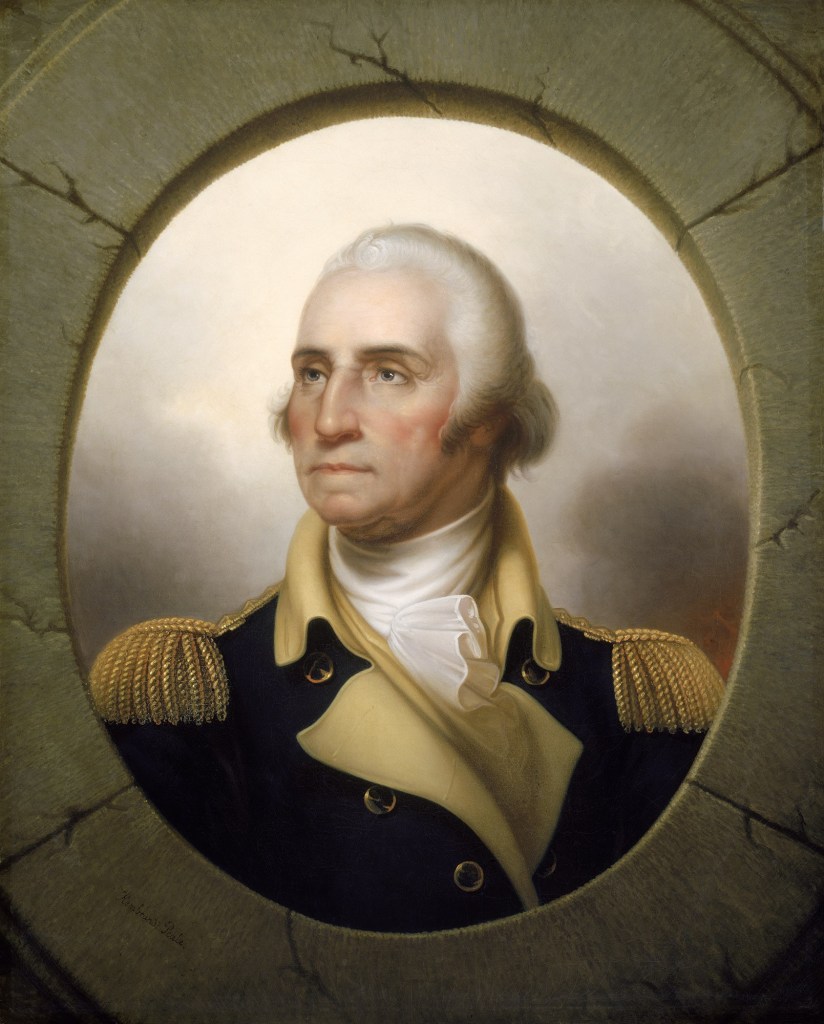
George Washington and John Adams, arguably, were America’s two most influential Founding Fathers. While General Washington was fighting for our country on the fields of battle, John Adams was fighting for it in the halls of the Continental Congress and overseas in the palaces of Europe.

As our first two Presidents, they guided our young nation through the formative first dozen years of life under the United States Constitution. They wisely and bravely set the example for others to follow.

Join Emerging Revolutionary War this Sunday at 7 p.m. EDT on our Facebook page for this week’s “Rev War Revelry” as we discuss the contributions of George Washington and John Adams to America’s fight for independence. Tom Hand will join ERW to discuss how these two men helped to shape our great nation.

Tom is the creator and publisher of Americana Corner, a site he started in 2020 to celebrate the positive stories, great events, and inspirational leaders who helped create and shape our country. Tom is a West Point graduate who founded Gilman Cheese Corporation after leaving the military.

Tom sold the business and now spends most of his time writing for Americana Corner and helping charities with a focus on early America. Tom serves on the Board of Trustees for the American Battlefield Trust and the National Park Foundation’s National Council.

Please join ERW historians and Tom Hand on September 5 for this lively discussion. We look forward to seeing you.

“Rev War Revelry” Author Interview: Andrew Waters

Like a modern-day Nathanael Greene or Edward Carrington, Andrew Waters spends his days trekking the waterways of the Carolina high country. Just like those famous military leaders, Andrew Waters does the surveying of these waterways and their tributaries for his day job; as a land and water conservationist.

During this career, Waters first learned about the “Race to the Dan” the pivotal retrograde movement in 1780 that saved Greene’s army from the pursuing British force under Lord Charles Cornwallis. Having the unique perspective from his training and an interest in the history of the time period, he had the perfect combination to pen a complete history of the “Race to the Dan.” Published by Westholme Publishing in October 2020, the title, To The End of the World, Nathanael Greene, Charles Cornwallis, and the Race to the Dan fills a much needed gap in the historiography of the the American Revolution in the southern theater.

This Sunday, at 7p.m. EDT, on Emerging Revolutionary War’s Facebook page, join us in an interview with Waters, discussing this book, Nathanael Greene’s leadership, and any questions you may have about this subject. Remember that favorite beverage and we look forward to you tuning as we welcome historian and author Andrew Waters to the next installment of the “Rev War Revelry.”

“Rev War Revelry” Ladies Night & Loyalist Women

Earlier this year, three great historians, in their words, “took over” the “Rev War Revelry” in a discussion that they dubbed “Ladies Night.” That particular Sunday night historian happy hour was well received, so Emerging Revolutionary War historians Kate Gruber and Vanessa Smiley have decided to have another “Ladies Night” but this time discuss the role of Loyalist women during and after the American Revolution.

Joining this dynamic duo will be Dr. Stephanie Seal Walters, who is currently the Digital Liaison in the Humanities for the University of Southern Mississippi. She earned her bachelor’s and graduate degrees in history from the University of Southern Mississippi and a doctorate in United States History from George Mason University. You may also recognize her from the first annual Emerging Revolutionary War Symposium held in Historic Alexandria, Virginia in September 2019.

We hope that you can tune in, on Sunday night, at 7pm EDT, to catch the next installment of “Rev War Revelry” on our Facebook page.

“Rev War Revelry” Visits Forts Lee & Washington

On both banks of the Hudson River, in 1776, sat two forts the patriots hoped would stop any British excursions up the waterway. Named for the top two military leaders of the Continental army–George Washington and Charles Lee–the fortifications both fell to the British by late November of that same year.

Join Emerging Revolutionary War this Sunday, at 7 p.m. EDT on our Facebook page as the forts become the focal point for this week’s “Rev War Revelry.” Joining ERW will be Charlie Dewey who will help break down and discuss the implications of these actions in November 1776.

Dewey, an officer in the New York Army National Guard and a graduate of the Virginia Military Institute has been a museum educator and special events coordinator for Fort Lee Historic Park since May 2018. He has been published in the Journal of the American Revolution along with being the author of various other scholarly articles on the Revolutionary time period.

Fort Washington, the last toehold of the Americans on Manhattan Island that fell and Fort Lee, the beginning of the long trek by Washington’s army across New Jersey late in 1776 have a unique part in American Revolutionary history. We look forward to you joining us this Sunday for this historian happy hour.

“Rev War Revelry” The Winter that Won the War, Valley Forge

In June 1778, the Continental army marched out of their winter encampment in Valley Forge, Pennsylvania and headed toward New Jersey in pursuit of the retreating British army. The past six months, from December 1777 to June 1778, ushered in a period of suffering, renewal, and change.

Valley Forge is imprinted into the psyche of Americans as the the toughest winter of the entire American Revolution. In fairness, it was one of many tough winters that the Continental army survived. However, the reasons why this winter stands out will be part of the discussion of this Sunday evening’s “Rev War Revelry” which can be found on Emerging Revolutionary War’s Facebook page at 7 pm. EDT.

This week’s historian happy hour includes a discussion with Philip S. Greenwalt author of the recently released Emerging Revolutionary War Series title, The Winter that Won the War. This is the fourth volume in the series, with previous ones covering Lexington and Concord, Trenton and Princeton, and Monmouth.

Greenwalt will discuss how the Valley Forge winter was the intersection of various issues and how the decisions made and the determination of survival by the army made this the winter that won the war.

Tune in as well to hear how you can purchase a copy of this book to take with you as you plan that summer trip to Valley Forge and the Philadelphia area!

“Rev War Revelry” War on the Chesapeake!

The Star-Spangled Banner and the burning of Washington City are the enduring legacies of the 1814 Chesapeake Campaign. These two events provide contrasting impressions of the American experience in the War of 1812. One conjures up an image of an American flag resiliently flying above Fort McHenry’s ramparts, denying the British entry into Baltimore. The other marks a low point in the American war effort, when politicians fled the nation’s capital followed by British soldiers, who burned many government buildings in the new nation’s capital city.

War along the Chesapeake Bay was not a limited episode in the War of 1812. There, Americans and British soldiers waged a hard and destructive war against one another. They fought pitched battles at Bladensburg and North Point. This campaign, remembered in popular memory for the creation of a national anthem and the burning of a nation’s capital, is more complex than just these two events.

Join Emerging Revolutionary War historians and guest historians John Nathan McDonald and George Best as we discuss the causes, movements, and impact of the 1814 Chesapeake Campaign. So, with your favorite beverage log onto our ERW Facebook page for the next historian happy hour as we discuss the obscure War of 1812 this Sunday, May 30, at 7 pm.

“Rev War Revelry” 18th Century Weaponry

Brown Bess. Grasshopper. Charleville. May seem like random names with no connection to the title of this post. On the contrary though, these names, be it nicknames or the actual name, of the firearm or artillery piece were all used by the soldiers and militia of the American Revolution.

This Sunday, at 7 p.m. EST, on Emerging Revolutionary War’s Facebook page, the next “Rev War Revelry” will dive into the weaponry that was prevalent during the era of the American Revolution. Joining ERW will be T. Logan Metesh of High Caliber History LLC of which he is the founder.

With over a decade of experience working for the Smithsonian Institution, National Park Service, and the National Rifle Association Museums, Metesh is a sought after consultant, writer, and museum professional. He will use his interpretive ability to present history and research on firearms and firearms development to this historian happy hour.

We look forward to welcoming Logan Metesh to the “Rev War Revelry” Sunday night chat and hope you will join us as well.

“Rev War Revelry”: The Battle of Alamance

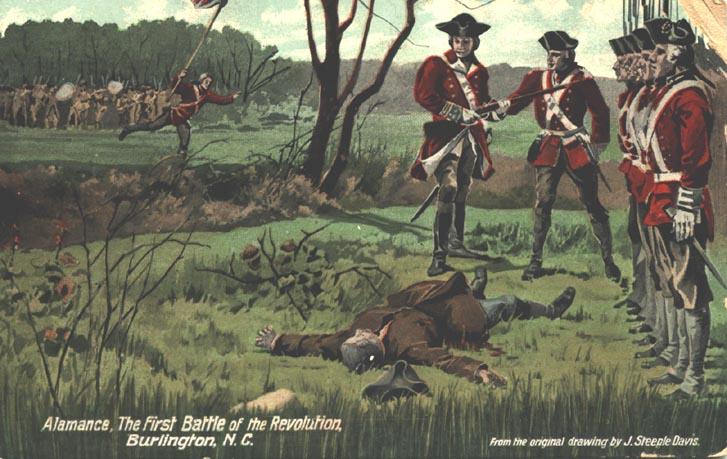
The month of May will mark the 250th anniversary of a little known event that occurred in the North Carolina piedmont called the Battle of Alamance. This battle was the result of an uprising of western North Carolinians who were opposed to the corruption in the colonial government and called themselves “Regulators.” The North Carolina colonial militia under the command of Royal Governor William Tryon marched from the east to quell the rebellion. The two North Carolina forces met at Alamance in May of 1771.

Emerging Revolutionary War welcomes Jeremiah DeGennaro, Historic Site Manager of Alamance Battleground to the “Rev War Revelry” historian happy hour. We will discuss the history of the Battle of Alamance, from what unfolded in North Carolina in 1771 to how this engagement has been remembered. Most recently, the battle was featured in an episode of the TV show, “Outlander.”

Some have suggested that this engagement was the “First Battle of the American Revolution.” But was it? Tune in on May 2 at 7 p.m. ET on the Emerging Revolutionary War’s Facebook page to hear the discussion on this and other questions. If you can’t make it on Sunday night, remember you can watch it later (and all our past “Rev War Revelry’s”) on our YouTube page.