In Louisville, Kentucky, earlier this month, I paid a visit to the Louisville Slugger Factory and Museum downtown. Across the street, I was pleasantly surprised to see a marvelous statue of a minuteman.

The plaque on the back reads
Sons of Liberty—1775
To Honor the History
of
Philadelphia Continental Chapter
1901
Pennsylvania Society
Founded 1893
By its Compatriots
2009
The statue stands outside the headquarters of the National Society of the Sons of the American Revolution. “Located along Main Street’s Museum Row in downtown Louisville,” the society’s website says, “the Sons of the American Revolution is the leading male lineage society that perpetuates the ideals of the war for independence.”
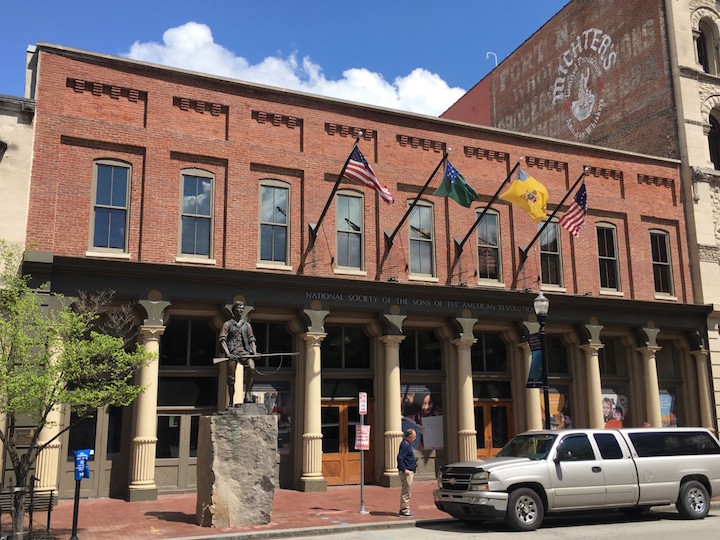
The statue was publicly unveiled in November 2015. According to the Louisville Courier Journal, “The 800-pound, 8-foot high bronze statue of the Minuteman holding a musket rests upon 19,000 pounds of quarried Kentucky limestone, material specifically requested by the artist James Muir.”



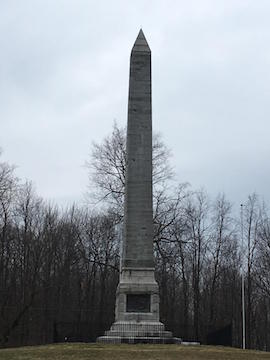
 I’m sure the men who’d embarked on the 1779 Sullivan-Clinton Campaign weren’t traveling along New York’s Southern Tier Expressway as they moved through the lands of the Iroquois Confederation. In the “Tory-Indian Town of Painted Post,” I’m sure members of the expedition didn’t decide on a detour down U.S. Rt. 15 south toward the Pennsylvania state line.
 part one of two
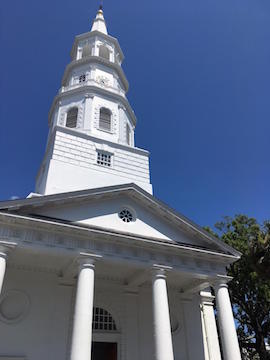 While Charleston, South Carolina, absolutely overflows with history dating all the way back to colonial times, I had the chance to explore a particularly historic churchyard recently.
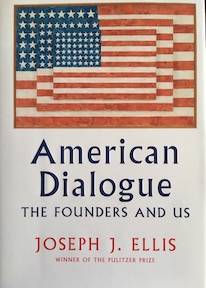 “The study of history is an ongoing conversation between past and present from which we all have much to learn,” write Joseph Ellis in his new book, American Dialogue: The Founders and Us. The book serves as Ellis’s attempt to sit with several of the Founders and carry on that conversation, with “us,” the readers, as spectators. As John Adams so often did with his own books, we can engage in the conversation by writing notes in the margins and underlining passages, and we can even read the original works of the Founders ourselves. Knowing they were writing as much to history as to each other, they left behind a rich documentary legacy.
 Emerging Revolutionary War Era