We are excited to announce our 2024 (fourth annual!) bus tour location will be Lexington and Concord on October 11-13, 2024. Join historians Phillip Greenwalt, Rob Orrison and Alex Cain as we tour the sites associated with the beginning of the American Revolution on April 19, 1775. The tour will cover events in Lexington, Concord and sites along the “Battle Road.” Tickets are $250 per person and includes a Friday night lecture, all day tour on Saturday and half day tour on Sunday (bus tour transportation and Saturday lunch included in cost).
Join us for our FOURTH annual tour as we take on the beginning of the American Revolution just a few months before the 250th anniversary. Learn about the dramatic events that led to the first shots for the Revolution and the bloody aftermath. We will visit Lexington Green, Buckman’s Tavern, North Bridge in Concord, Battle Road including Merriam’s Corner, Parker’s Revenge and the Jason Russell House. There is no better way to experience history than to stand in the footsteps of where it happened!
Join us this Sunday, October 15th at 7pm as we welcome Matthew Wilding, Director of Education and Interpretation at Revolutionary Spaces. Revolutionary Spaces manages the Old South Meeting House and the Old State House in historic Boston. We will discuss the history of the Old South Meeting House and its important role in the revolutionary movement in Boston (especially during the Boston Tea Party). We will also cover their plans for the 250th anniversary of the Boston Tea Party, including their new exhibit on the destruction of property in public protests.
Grab a drink and follow along as we start to gear up for the 250th anniversary of the Boston Tea Party with Emerging Revolutionary War!
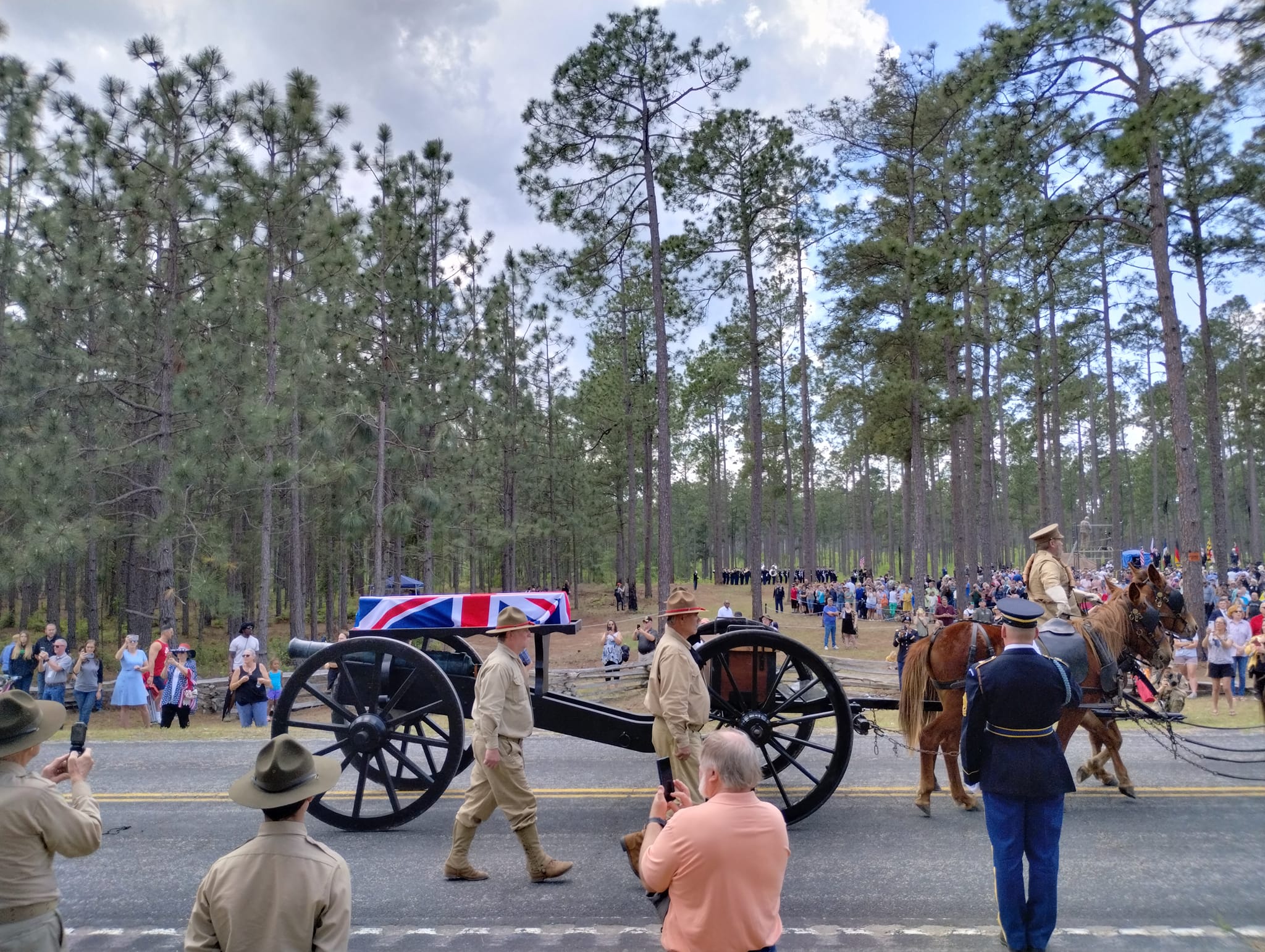
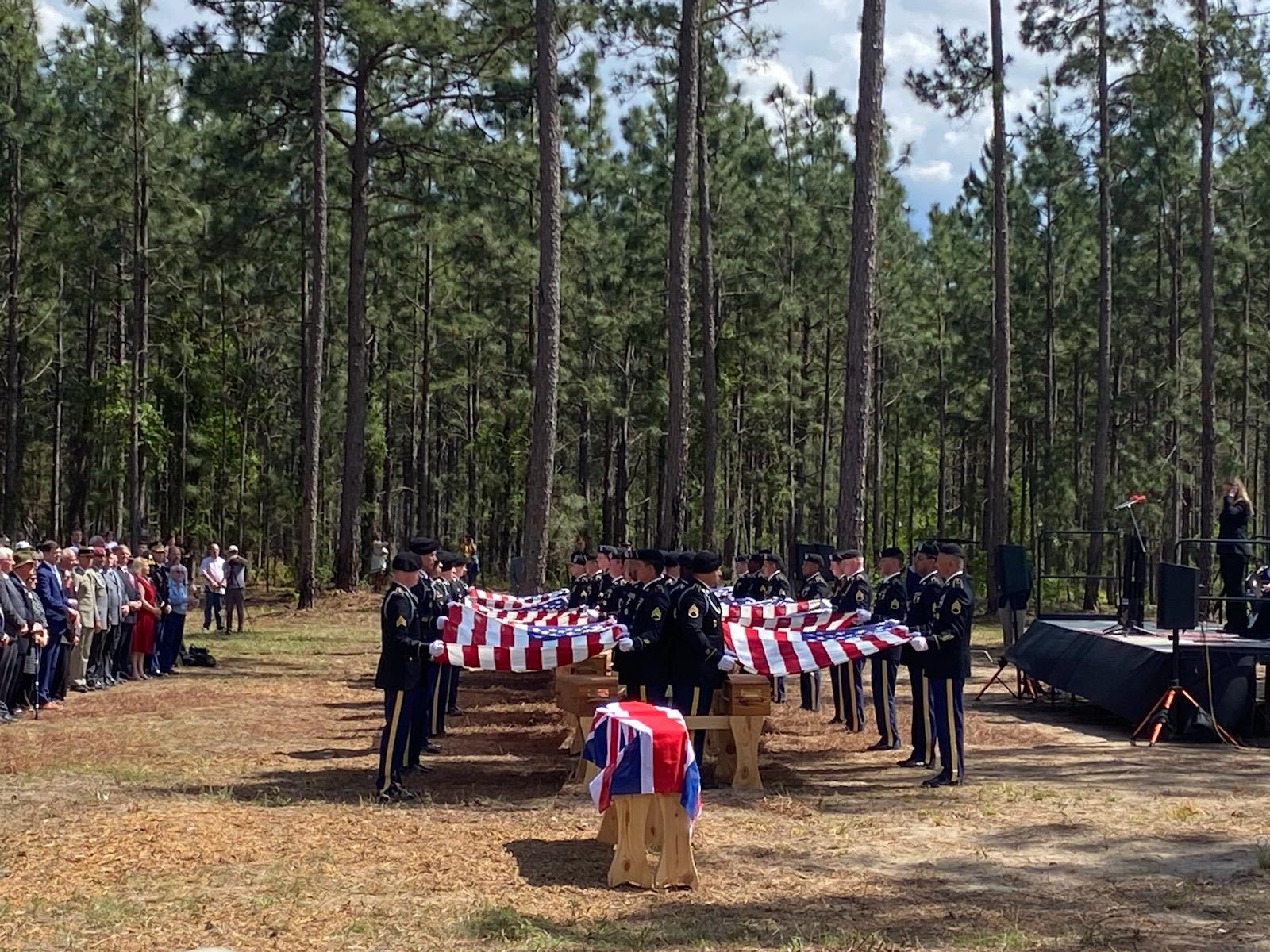
Join us as we discuss the excavation and successful recovery of the remains of 14 veterans of the August 16, 1780, Battle of Camden with James Legg and Steven Smith, Ph.D., the lead archeologists of the Camden Re-Burial Project which began in September 2022. We will discuss the indepth research conducted and the precise archaeological work that was done on the battlefield. Also learn about the reburial ceremony and where the soldiers were finally laid to rest.
This is a great opportunity to learn about a rare discovery on a American Revolutionary War battlefield. The Camden battlefield is a great archaeological site that is revealing multiple stories and helping historians piece together a better understanding of the battle. Grab a drink and join us on our Facebook page for a great evening of archaeology and history!
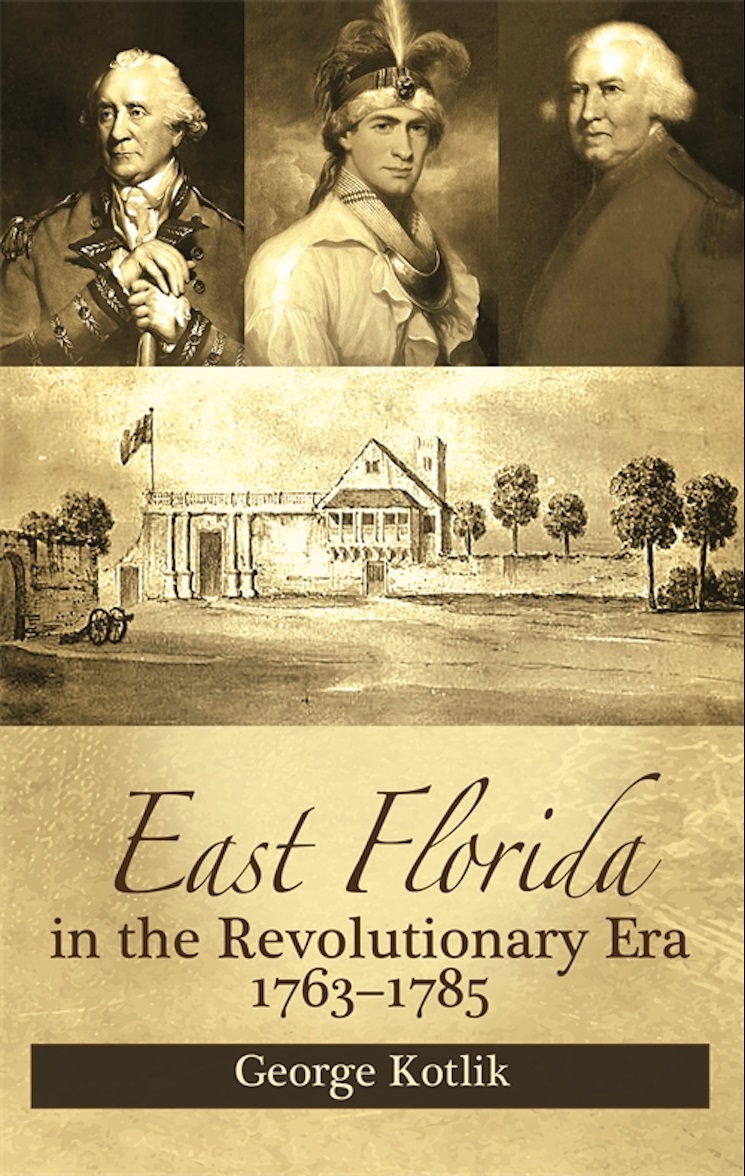
Thirteen of the Great Britain’s North American colonies moved toward independence in 1775, declaring the fact officially the following year with the issuance of the Declaration of Independence. Perched below these thirteen rebellious provinces was the colony of East Florida. Earned after the Seven Year’s War by Great Britain from Spain, the most populous city an oldest permanently established European metropolis was St. Augustine, which was also the capital of the colony. This colony, through the eight years of the American Revolutionary War, had a tenuous connection with their neighbors to the north. Largely forgotten in the pantheon of history describing this period, from the time of Britain gaining possession in 1763 through the end of the Revolutionary era in this historian’s estimation, in 1785.
Entitled, East Florida in the Revolutionary Era, 1763-1785 and penned by George Kotlik, a historian specializing in 18th century North American history, the publication offers “an accessible and detailed narrative of the East Florida during the American Revolution.” (pg. 8).
What ensues in the following pages is a brief yet complete overview of the military, political, social, and economic history within those years of East Florida. Some of the names in the pages are well known to enthusiasts of the American Revolutionary War era whereas others will be new names to add to the repertoire for further study. From Governor Patrick Tonyn, British general and last governor for England of East Florida to bringing attention to the William Augustus Bowles, a Maryland born Loyalist, sympathetic to the Muscogee Native Americans of East Florida who tried in vain from the last decade of the 18th century, to establish an independent state for the tribe, with British support. These are just two of the historical personas that Kotlik discusses in his narrative, the rest await you within the pages of the book!
Although no major military actions happened within the confines of the colony that does not mean the role of East Florida in relation to the American Revolution should not be marginalized. “Militias were raised, a general assembly was postponed, St. Augustine experienced a heightened British troop presence, planters between the St. Johns and St. Marys Rivers suffered at the hands of George raiding parties, and a constant threat of a Spanish or American invasion” all affected the psyches and lives of East Floridians. (pg. 104-105).
The hope from Kotlik is to provide the launching point for further discussion into the role of East Florida specifically and Florida in general during the revolutionary period. “Such a lack of coverage is a reminder for scholars to to emphasize East Florida’s presence in the war that made America.” (pg. 111). With this history in hand, Kotlik has provided the necessary overview for further exploration.
Publisher: NewSouth Books, University of Georgia Press, 2023 156 pages plus images
“The Shot Heard Round the World” on April 19, 1775, put the American colonies into a fever pitch and a war footing, but 18th-century travel limitations naturally caused that word to spread slowly. It did not reach the town of Mecklenburg, in Berkeley County, Virginia (now Shepherdstown, in Jefferson County, West Virginia) for 21 days. On May 10, Mecklenburg’s citizens learned of the fights between colonists and British soldiers at Lexington and Concord. Coupled with news of Virginia royal governor Lord Dunmore’s removal of powder from the magazine in Williamsburg, Mecklenburg’s citizens prepared to offer whatever aid they could to their fellow beleaguered colonists.
The rallying point for the Beeline March
The militia in Mecklenburg strapped on their accouterments and began to drill. On June 10, the drilling militia was welcomed to the property of Colonel William Morgan, just outside town, for a barbecue. Songs were sung and all those present made a pledge that they would return to the same spot in Morgan’s Grove fifty years from that day.
Following the patriotic fanfare, the men returned to drilling, wondering if they might have the chance to face the British. A decision made in far-off Philadelphia soon promised Berkeley’s militiamen that chance. On June 14, the Continental Congress declared that “six companies of expert riflemen, be immediately raised in Pennsylvania, two in Maryland, and two in Virginia.” Once formed and equipped, “each company…shall march and join the army near Boston, to be there employed as light infantry, under the command of the chief Officer in that army.”
The Virginia companies went to Daniel Morgan, who organized his company in Winchester, and Hugh Stephenson, the leader of the company rendezvousing at Mecklenburg. Joining soldiers signed one-year enlistments. Henry Bedinger, one of Stephenson’s men, recorded that “none were received but young men of Character, and of sufficient property to Clothe themselves completely, find their own arms, and accoutrements, that is, an approved Rifle, handsome shot pouch, and powder-horn, blanket, with such decent clothing as should be prescribed.” It took less than seven days to raise each company to the strength of 100 men. Only the delay in getting enough rifles to arm the entire Mecklenburg company prevented them from leaving immediately after filling the ranks.
Once mustered, Stephenson and Morgan agreed to meet in Frederick, Maryland, and march to Boston together. On July 15, Morgan’s men marched first, stealing a step on the Mecklenburg men, who left Morgan’s Grove on July 17. “Morgan having the start we used every exertion to overhaul him, in Vain, altho’ we marched (always in single file) from 30 to 36 miles a number of days,” said Bedinger.
Food and cheering citizens greeted Stephenson’s men along the march and kept their marching feet moving at the blistering pace needed to catch Morgan. Only two men failed to make the entire march (one was court-martialed, and the other was accidentally wounded). On August 11, after a march of over 500 miles in 25 days and just behind Morgan’s men, Stephenson’s company halted in front of General George Washington in Cambridge. When the Mecklenburg riflemen saw the general, they “presented their arms to him as he slowly rode by us looking attentively and affectionately at the soldiers from his native state. When he shook hands with our captain, it was said they both shed tears.”
Stephenson’s Company reporting to General Washington at Cambridge (My Ride to the Barbecue)
The march has gone down in history as the Beeline March due to the quick and direct nature of the expedition to augment the Continental forces in front of Boston. Fifty years later, the pledge made on June 10, 1775, was kept, though the numbers of Stephenson’s company were considerably smaller. Five decades after the march, only five participants still lived; just two returned to Morgan’s Grove to commemorate the feat. One of them was Michael Bedinger, who recorded his experiences in the Beeline March. At the anniversary ceremony, he sang “two patriotic songs…the very same that had been sung at that spot fifty years before.”
Today, two markers commemorate the Beeline March’s genesis. In Morgan’s Grove Park, a marker dedicated in 1988 marks the “Shepherdstown Rally Point” (Mecklenburg was later renamed Shepherdstown). Down the road from the park in Elmwood Cemetery, a 1932 monument erected by the Daughters of the American Revolution sits with the names of the commissioned and non-commissioned officers of Stephenson’s company.
For a burgeoning armed force that was seeking to stand up to one of the world’s most powerful military forces, the Beeline March showed the spirit of the American soldier in the early days of the Revolutionary War.
We interact with history at a personal level in many ways. We enjoy careers in the field, read, tour locations, work as living historians (or interact with them), dig through archives, trace our roots, visit museums, or simply stumble across some connection in the course of living our daily lives. But, a fortuitous bit of family history struck on a recent weekend, just shy of the 241st anniversary of a battle.
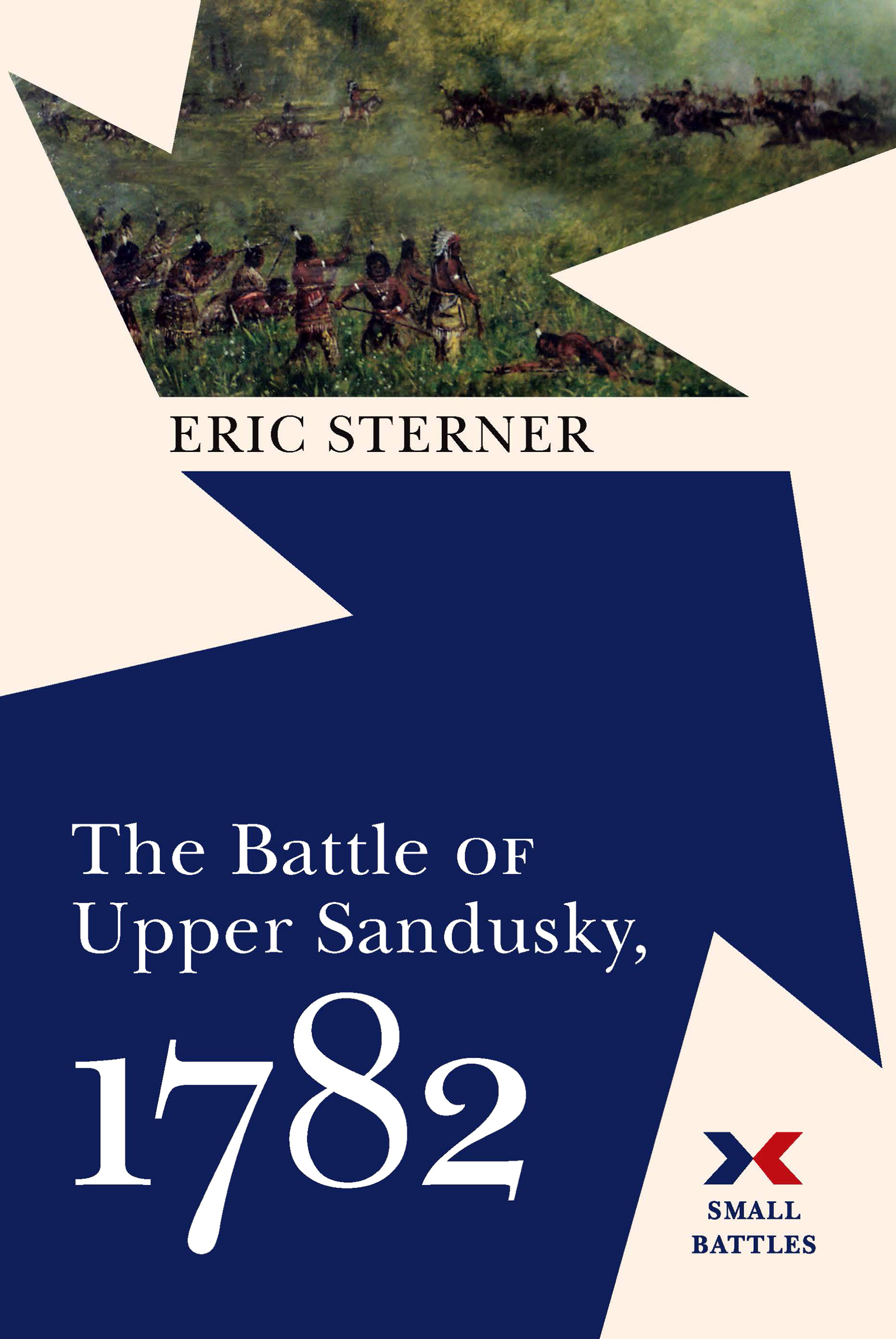
My wife and oldest daughter spent a Sunday morning with my in-laws to visit and record some family stories and memories. They came back with a box of material. The first document they perused was a 19thcentury application for membership in the Daughters of the American Revolution. I was in a different room and suddenly heard yelling as my wife came to find me. I assumed a snake had gotten into the house or we’d won the lottery without playing. It turned out that the DAR applicant, a direct forebear of both my wife and daughter, was descended from Nicholas Dawson, who had fought in the Crawford Campaign, which happened to be the subject of my second book, The Battle of Upper Sandusky, 1782. (Shameless bit of self-promotion: it just went on sale). Talk about coincidence.
Many volunteer actions on the frontier during the American Revolution lacked troop rosters. But, to stimulate volunteering for the Crawford campaign the county lieutenants for Pennsylvania’s Washington and Westmoreland counties offered to count the time on campaign against a volunteer’s legal militia obligations. So, they created rosters, some of which partially survived. The Pennsylvania Archives published that material. Sure enough, Nicholas Dawson shows up as a miscellaneous volunteer, meaning only that the roster didn’t include his company assignment. The ever-helpful Fold3 database also holds pension debt certificates issued to Dawson on January 18and 20, 1785.
The Battle of Waxhaws, fought on May 29, 1780, was a lopsided British victory by Lieutenant Colonel Banastre Tarleton’s British cavalry over American Colonel Abraham Buford’s Continental forces in Waxhaws South Carolina. Buford lost 316 of 350 men with the British losing less than 20. Known popularly as “Buford’s Massacre,” Continental leaders used the battle as a propaganda tool against the Crown forces in the south. But, was it really a massacre?
Join us as we welcome historian and author Dr. Jim Piecuch as we discuss his research and theory about the Battle of Waxhaws and its aftermath. Dr. Piecuch has written several books on the Southern Campaign of the American Revolution including his book “Blood Be Upon Your Head: Tarleton and the Myth of Buford’s Massacre.” This Rev War Revelry will be pre-recorded and posted on May 28th at 7pm. Grab a drink and a good seat and enjoy this great presentation on one of the most controversial battles of the American Revolution.
Charleston, South Carolina is one of the most beautiful and historic cities in the United States. Numerous sites, battlefields, and buildings from the period of the Revolution still exist.
Join us this Sunday at 7pm as we discuss ERW’s newest release “To The Last Extremity: The Battles for Charleston” by Mark Maloy. In To the Last Extremity: The Battles for Charleston, historian Mark Maloy not only recounts the Revolutionary War history of Charleston, he takes you to the places where the history actually happened. He shows you where the outnumbered patriots beat back the most powerful navy in the world, where soldiers bravely defended the city in 1779 and 1780, and where thousands suffered under occupation. Through it all, brave patriots were willing to defend the city and their liberty “to the last extremity.”
We will talk to Mark about his research, his favorite and most compelling stories and why this book is a “must have” for any history buff. Join us this Sunday, April 16 at 7pm on our Facebook page to join in on the conversation. As always, if you can not join us live you can catch the talk at any time on our You Tube or podcast channel.
Emerging Revolutionary War welcomes guest historian Werther Young.
I’m Too Sexy for My…Bavarian Fly
By Werther Young
Of all of the unique things that have managed to make it to the internet, a concise history of colonial men’s pants flies is surprisingly not one of them.
Our story begins in the Renaissance in, where else, France. King Henry III of France eschewed the old-fashioned dress and hose and embraced a new fashion, culottes, now known as “knee breeches.”
Henry III in his dress and hose
Henry III in his tony new culottes.
The fly of Henry’s pants was a simple affair, a rectangular panel sewn to the left side with buttonholes that buttoned over the right. This simple and practical design became known as the “French fly” and became almost universal in Western Europe over the next 60 years.
Ann Bonny the pirate, in French fly trousers, ca. 1721.
Over time, Ann Bonny’s “long” French fly was perfected into the “short” French fly. Anne’s fly extends from the inseam to the waistband. By merely sewing a few inches of the front seam together, the fly can be made shorter, removing a buttonhole and button or two.
These fly designs apparently did not reach into Eastern Europe, where presumably leather pants were as expensive as wool ones but lasted much longer, because they were never washed. Translating the French Fly into leather posed some problems, and so these leather pants had a different fly, essentially a hole in the center front with a panel buttoned over it that flipped or dropped up and down as necessary. This design caught on in the Alpine areas of central Europe, and especially in Bavaria under the label of “Lederhosen,” which is German for “leather pants.”
“Short” French Fly Breeches, ca. 1750.
The Bavarian fly migrated further north, as in the Deutsches Museum in Berlin can be found a pair of enlisted trousers from the mid-1700s, with a half drop front fly; that is, it opens only the right side. This is essentially a cheaper fly, because it needs only one button to close, and does the same thing.
By the middle 1700s, the French fly had been around for over 150 years, and someone in France started a different fashion (and outdoing the Huns) by putting the two -opening Bavarian fly on culottes, thus making the culottes “a la Bavarois,” French for “like the Bavarians.” This was runway level high fashion for the time, and quickly spread among the well to do as the latest thing, with a new name, the “drop front” or “fall front” fly. Unfortunately, translating the design from leather, which does not unravel, to fabric, which does, made the Bavarian fly extremely complicated and therefore expensive. This of course added to its cachet, so much so that by 1775, it had reached the aristocracy even in the backwater of Colonial America.
Lederhosen
Colonial Williamsburg has a fabulous collection of high-status men’s pants from the 18th century. A survey thereof shows the number of French flies waning into the 1770s, and the number of Bavarian drop front flies waxing beginning in 1775, reaching a height about 1800. Unfortunately, these are all very high-status garments, such as a pair of “button front breeches of cream-colored silk velvet, with repeat of small pink and green flowers self-covered buttons, those at knee embroidered with metallic silver thread. Silver galloon strap at knee.” But did the states and Continent really issue enlisted soldiers what amounts to hand made Givenchy trousers? Of course not.
The false idea that they did partially comes from a series of paintings done by Charles M. Lefferts in the early 1900s, later published as Uniforms of the Armies in the War of the American Revolution, 1775–1783. in 1926.
A Lefferts rendering of trousers a la Bavarois, 2d Maryland 1777.
Measuring this man’s height against the known length of his musket makes him about 6’4 inches tall, the height of actors Clint Walker, Chuck Connors, Clint Eastwood, and the average NBA basketball player. If you look below the point of his vest, he is wearing drop front pants over his massive thighs. Curiously, he is also wearing a 1760s style skirted vest and long regimental coat. Are we to believe that Maryland issued its men old fashioned vests and coats, but high fashion breeches? Since Lefferts was born in 1873, he had no first-hand knowledge of his subject, we must look to period images.
Alas, these are of little help. It is difficult to discern whether any of the men in period paintings are wearing French Fly pants, Bavarian drop front pants, or anything else. The most informative images, the von German drawings, are unfortunately from the side, and of no help.
Von German “American Soldier” New York Hist Soc.
Amerikanische Scharfschutz, Brown University
Since information is so scarce, we must turn to the other reason we believe that rev war soldiers wore drop front pants. Klinger’s Sketchbook ’76. Page 9 shows a pair of Bavarian drop front breeches, based on George Washington’s uniform in the Smithsonian, and Lt. Col. Tench Tilghman’s uniform from the Maryland Historical Society. This is odd, because Washington’s uniform is from the 1794, 15 years after the war and at the height of the drop front craze. Tilghman was the scion of a blue blood family, owned half of Baltimore, was an aide to Washington, and hobnobbed with Lafayette. Even if his uniform can be dated to the war years, it is not only a high-status uniform, but one of the highest status possible in America at the time; his not wearing Bavarian trousers would be of greater note. Neither are evidence that any of the 13 colonies nor the Continent paid to make their enlisted men such high fashion trousers.
On Sketchbook page11, Klinger bases his Bavarian drop front overalls on unspecified plates in “Bernard’s History of England” and the images above. While these may establish Bavarian drop front flies supplied by the King George, it certainly does not necessarily mean that the colonies were doing so.
Surprisingly, two pairs of enlisted overalls are known to exist, mistakenly labelled as “Pantaloons,” and residing in the Metropolitan Museum of Art’s Costume Department. These are exquisitely made, and probably military examples, but unfortunately European, and from 1793 and later.
No credible evidence exists that any of the 13 colonies nor the Continent issued its troops Bavarian drop front pants. This makes sense, as that design is difficult to make, does the exact same thing as the simple French fly, and fashionable pants do not really contribute much extra to Liberty. Additionally, with all but the highest status clothiers making French fly pants, retraining them to cut out and make the new design would seriously impede production, even assuming that patterns and training could be somehow provided from Georgia to Vermont at a time when the men could barely be supplied a musket or shirt. In the War of the Revolution, the colonists were by all indications wearing French fly breeches and overalls, not drop front ones a la Bavarois.
Peter Kiteridge was born into slavery in Boston, Massachusetts and worked in the household of the Kittredge family, from Andover, Massachusetts. Although slavery is most often associated with the southern colonies, and later the southern states, it was an established institution across the the thirteen original colonies at the time of the American Revolution. Despite being born into the institution legalized in the colony in which he lived, African American Peter Kiteredge cast his lot with those fighting for the cause of independence. The Kitteridge family had as well. Many in the extended family of Kittredges were physicians, and Dr. Thomas Kittredge went on to serve as as surgeon for Colonel James Frye’s regiment (Essex County Regiment) that was raised in Andover. In May 1775, the regiment became part of the Army of Observation. During the war, Peter Kittredge served in Captain William H. Ballard’s company of Colonel James Frye’s regiment. Peter joined the army in 1775 or 1776, according to his memory over thirty years later, and served for five years in the army before later becoming a sailor.
By the early 1800s, Peter Kiteridge was struggling both with his finances and his health. In this letter dated April 26, 1806, he noted that he is a freeman and in need of financial assistance. This document reveals much more about Peter, including the time between when he was a slave and when he went into military service. But the heart of Kiteridge’s letter was his request for assistance from the Selectmen of the town of Medfield. Due to a “complaint” that he had suffered since the war, perhaps the lingering effects of a disease contracted during his time in the service, Peter was unable to continue to work, and he asked for help to support his wife and four children. Because he later signed this petition with an “X” we can assume that his years as a slave left him illiterate. By the turn of the century, however, he was not the only veteran of the Revolutionary War that needed financial assistance. As this generation of servicemen aged, a growing demand for what later became known as veteran pensions increased. Today, veteran pension records, and petitions for assistance such as this, provide scholars a wealth of information on those that lived and served during this turbulent period.
Below you will find the full petition of the Medfield Selectman of April 26, 1806 courtesy of the Gilder Lehrman Collection.
“Gentlemen
I beg leave to state to you my necessitous circumstances, that through your intervention I may obtain that succour, which suffering humanity ever requires. Borne of African parents & as I apprehend in Boston, from whence while an infant I was removed to Rowley and from thence again to Andover into the family of Doct. [Thom] Kiteridge, with whom as was then the lot of my unfortunate race, I passed the best part of my life as a slave. [struck: At the age of twenty five] In the year of our Lord 1775 or 6 & in the twenty fifth of my age I entered into the service of the U.S. as a private soldier where I continued five years [inserted: and] where I contracted a complaint from which I have suffered in a greater or less degree ever since & with which I am now afflicted. After leaving the army to become a sailor for two years; when I quited the sea & resided for some time in Newtown, from whence I went to Natick where I remained for a short time & then removed to Dover where I [struck: remained] [inserted: carried] as a day labourer during the period of seven years. Eight years past I removed to the place where I now live, & have untill this time, by my labor, assisted by the kindness of the neighbouring inhabitants been enabled to support myself and family. At present having arrived [2] at the fifty eight year of my life and afflicted with severe and as I apprehend with incurable diseases whereby the labour of my hands is wholly cut off, and with it the only means of my support. – My family at this time consists of a wife and [struck: three] four children, three of whome are so young as to be unable to support themselves and the time of their mother [struck: has] is wholy occupied in taking cair [sic] of myself & our little ones – thus gentlemen, in this my extremity I am induced to call on you for assistance; not in the character of an inhabitant of the town of Westfield, for I have no such claim, but as a stranger accidently fallen within your borders, one who has not the means of subsistence, & in fact, one, who must fail through want & disease unless sustained by the fostering hand of your care.
I am Gentlemen your mos obedient, most humble servant.
Peter Kiteredge His X Mark
Attent. Ebenezer Clark Paul Hifner
To the policemen Selectmen of the Town of Medfield. [docket] Medfield 26 April 1806 [docket] Peter Kittridge application – [address] To the gentlemen Select [Men] of the Town of Medfield – “








 Emerging Revolutionary War Era