The start of a new year seems to be coupled with new resolutions and fresh beginnings, naturally. If your list includes looking for that one book to start 2019 with or looking to dive into the American Revolutionary Era with a reading list or you were casting around to settle on a new interest to begin the year with, Emerging Revolutionary War has you covered!
With 2018 coming to a close, Emerging Revolutionary War asked its cadre of historians to share their answers to the following question;
“What was the one book that most influenced you and sparked your interest in this time period of history?”
(An occasional series highlighting British Lieutenant Governor Henry Hamilton’s march south from Detroit to recapture Vincennes (Indiana) on its 240th anniversary through the entries in Captain Norman MacLeod’s diary.)
Fort Sackville Map Inset, Nova Scotia Archives and Records, (Wikimedia Commons)
As Lieutenant Governor Henry Hamilton’s army arrived on the lower Wabash, the river widened and deepened, enabling his much-fatigued army to spread out and make better progress to Vincennes and Fort Sackville. All along the way, the governor’s efforts to grow his army through the addition of Indian allies had largely succeeded, not only increasing his numbers but improving his intelligence about the American forces awaiting him. Those were paltry, indeed.
The British and loyalists would not have to wait long. Word of the landing reached the Massachusetts government within a matter of days, and preparations for a counterattack began almost immediately. There was such a hurry to respond that the General Assembly voted to carry out the operation with state forces rather than wait for Continental assistance.[1] Despite the initial rush it still took a month to assemble a force of over 1,000 militiamen, as well as the food, arms, and other supplies to sustain them. All of these troops and their supplies would be transported by a fleet of 21 transports, accompanied by nearly twenty state and Continental navy vessels and privateers. Among the warships the largest was the Frigate Warren of 32 guns which served as the flagship of Commodore Dudley Saltonstall. The Connecticut born officer was given overall command of the naval forces – no small task given the lack of experience with large scale fleet actions among his subordinates. Command of the land forces was given to Massachusetts Brigadier Solomon Lovell. Lovell has seen experience early in the war outside of Boston, but was also relatively untested in battle. The inexperience and poor communication between Saltonstall and Lovell was to have a decisive impact on the coming expedition. Notable among the other officers in the expedition was Paul Revere, who commanded the Massachusetts artillery. The expedition was also joined by a band of the local Penobscot Indians allied to the Continental Congress.
The New England fleet entered the Penobscot Bay on July 25th and immediately attempted a landing. Clearly outnumbered and with their works incomplete, General McLean and his men were determined to resist the Americans, but expected the worst. Saltonstall’s fleet sailed in close to the shore and exchanged cannon fire with both the British defences and the three remaining Royal warships, now under the command of Captain Henry Mowatt. In the confusion and smoke the Americans lowered seven launches full of marines and militiamen, but as they neared the shore they were met by a hail of musket fire[2]. At least one of the attackers – a Native American – was killed and the boats returned to the safety of the fleet. It was an inauspicious start to the battle for the New Englanders and already the relationship between the two commanding officers was becoming strained. General Lovell knew little about sailing or naval operations. He questioned the Commodore as to why he couldn’t just sail his fleet into the harbor and blast the British to pieces while his troops landed under their covering fire. The Connecticut seaman replied curtly, exclaiming “You seem to be damn knowing about the whole matter! I am not going to risk my shipping in that damned hole!”[3]
On the 26th a second militia landing on the peninsula was repulsed after the lead boat carrying militia Major Daniel Littlefield was swamped by British chain shot, drowning the Major and two privates.That same day, however, the Americans scored a small victory when a force of 200 Continental marines and artillerymen landed on Nautilus Island and captured the small British battery there[4]. More artillerymen were landed and soon the Americans had a battery from which they could harass the British shipping. With the Americans making some headway Captain Mowatt withdrew the remaining British ships deeper into the harbor, creating a defensive line across the Bagaduce River.
Castine Harbor, looking out roughly where Captain Mowatt anchored the British transports and warships (Author’s photo)
A reflection on the previous month’s exploration in South Carolina.
August 16, 1780 would prove to be a devastating day for the American Army in the south, known as the “Grand Army” by its commander, Maj. Gen. Horatio Gates, the Hero of Saratoga. The battle between this army and that of Lt. Gen. Charles, Earl Cornwallis, in the Pine Barrens near the South Carolina town of Camden, would end in the total rout of the Americans and the destruction of the reputation of its commander. It would also temporarily leave the southern colonies without a central army to oppose the British.
On November 1, members of the Emerging Revolutionary War Era staff took a road trip to Camden, SC to research the battle, walk the battlefield and meet with local historians in preparation for an upcoming addition to our book series, on the Battle of Camden. On the way down, we took the opportunity of visiting other sites of combat, actions that occurred prior to and after the fight at Camden. Continue reading “Visiting the Scene of Action: Battle of Camden”→
Emerging Revolutionary War welcomes back guest historian Travis Shaw.
Part One
I’d be willing to bet that Maine isn’t the first place to come to mind when you hear the word “frontier”. For many Americans I imagine they immediately think of the wild west. Wagon trains of pioneers crossing the prairies, and Native nations like the Sioux and Apache ranging the plains on horseback. A century before the age of Manifest Destiny, however, the region that is now the state of Maine marked the eastern frontier of the English colonies. It was a wild and sparsely settled place, caught between New England and the French colonies to the north. The few European settlers eked out a living from the thin, rocky soil or turned to lumbering and to the sea. They lived alongside and often fought against the region’s original inhabitants – the Wabanaki or “People of the Dawn.” For two centuries the Eastern Frontier was torn apart by war between various European powers and their respective Native allies. Nowhere is this more clearly evident today than in the small coastal town of Castine, Maine.
Castine is located near the mouth of the Penobscot River, more or less in the middle of the Maine coast (Google Maps)
As a young history buff, I remember well wearing out the pages of the original A Battlefield Atlas of American Revolution by Craig Symonds. Though I have no idea where that well worn out book is today, I am happy to see that Symonds has revised and re-released his encompassing atlas, published by Savas Beatie Publishing.
Symonds, using his experience as a lifelong teacher, approaches the war from the viewpoint of an educator. Breaking the war into four parts chronologically, Symonds provides a short narrative at the beginning of each section giving an overview of the action in each region and year. The battle descriptions for each map are thorough and give a great account of the action and the impact each event had on the overall campaign or war effort.
Symonds should be commended for covering lesser known campaigns and battles of the American Revolution such as Valcour Island, Fort Stanwix, Oriskany, Newport, Penobscot Bay and others. This enhances the work as it shows where these battles took place and speaks to the depth that Symonds took to comb the entire continent to include these minor yet important engagements in the atlas. For many readers, this will be the first time these actions have been visualized through maps.
As in his previous work, cartographer William Clipson provides easy to read and clear maps. The maps provide a good mix of detail and broadness to appeal to the casual history buff and dedicated researcher. As in his other atlases, the text flows well with the map as Symonds has numbers in the text that relate to specific parts of the map.
Though I enjoyed this book, there are two critiques of this volume. First, the size of the text which is very small and condensed. The font style and size selected could prove to be hard for some people to read. Secondly, a few of the maps have been cropped to the point where parts of the maps and text have been cut off, making them incomplete.
This book is a great addition to any library or better yet, in the glove box of your car as you visit these battlefields. It is a perfect companion in the field that allows one to understand the action and provides just enough of an overview to fill in for those battlefields that do not have any signage or interpretation. The information is detailed enough to give you a clear understanding of the battle and campaigns and the maps provide a great visualization of the action.
One of my favorite places to visit are the Laurel Highlands of southwestern Pennsylvania. The area abounds in history, and its scenery is, in my view, unparalleled. Rugged mountains overlook beautiful valleys of hardwoods, streams and waterfalls. Rocky outcroppings emerge from the forest. Powerful rivers wind through the region
It is a center of industrial history: railroading and mining, transportation like canals, the National Road, and other scenic highways. There is even a bit of Civil War history in the region. But my favorite topic to explore is its French and Indian War history. Which brings me to the person who started it all, George Washington.
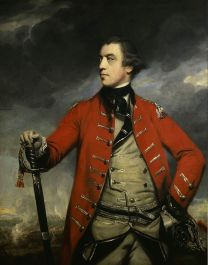
On this date in 1777, British General John Burgoyne surrendered to American General Horatio Gates around Saratoga, New York. This victory solidified French support for the fledgling American nation and became one of the turning points in the road to independence.
General John Burgoyne
Out of this momentous occasion came an anecdote about the British general officer. The short story has some truth in it, yet, whether the entire tale is accurate, well, I’ll leave that for you to decide!
Two years prior to the Battles of Saratoga and upon arriving in Boston, Massachusetts, General Burgoyne remarked “Well, let us get in, and we’ll soon find elbow-room” when he was told the numbers of militia besieging British regulars around the town.
After his capitulation, Burgoyne and his forces were marched toward Albany, New York, and multitudes of people turned out to see the vanquished British and German soldiery along the route. One resident supposedly yelled from her homestead doorway;
“Make elbow room for General Burgoyne.”
Not what he had envisioned in 1775 upon disembarking in North America. Yet, history does not relate what “Gentleman Johnny” Burgoyne thought exactly about the elbow room he received in the countryside of upstate New York!*
This slideshow requires JavaScript.
*“Gentleman Johnny” was a nickname acquired by Burgoyne was stationed in London with the Horse Guards, a fashionable cavalry regiment.”
**Information gathered from A.J. Langguth’s “Patriots” and The Patriot Resource, which can be found here.
This past July I had the pleasure to attend and present at the American Battlefield Trust Teacher Institute. One of the keynote speakers was David O. Steward, the author of Summer of 1787: The Men Who Invented the Constitution. During his talk, there were a few points that stuck out to me and I share them with you.
72 elected, 55 attended, and 35 delegates were probably there all summer.
Out of the 55 that attended, 39 affixed their signatures to the document
In reference to George Washington, Stewart candidly remarked he had “more influence by keeping his mouth shut” almost as if by his calm, quiet demeanor, he was displaying that “I trust in you and I’ll try and make it work” with whatever the delegates designed in that hot and stuffy room in Philadelphia. Continue reading “Summer Lecture on Summer of 1787”→


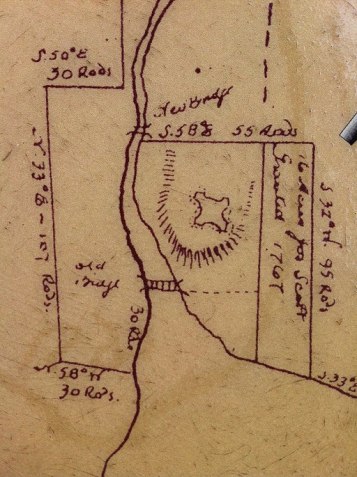

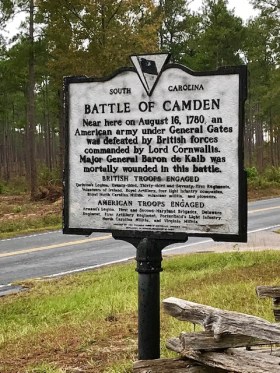 August 16, 1780 would prove to be a devastating day for the American Army in the south, known as the “Grand Army” by its commander, Maj. Gen. Horatio Gates, the Hero of Saratoga. The battle between this army and that of Lt. Gen. Charles, Earl Cornwallis, in the Pine Barrens near the South Carolina town of Camden, would end in the total rout of the Americans and the destruction of the reputation of its commander. It would also temporarily leave the southern colonies without a central army to oppose the British.



 Emerging Revolutionary War Era