Emerging Revolutionary War welcomes guest historian Nicholas Benevento.
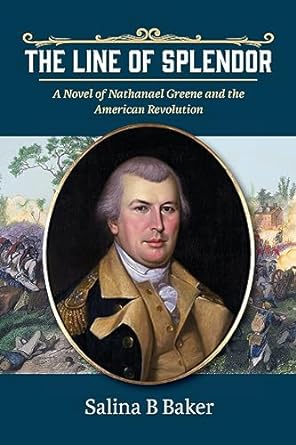
“The Line of Splendor: A Novel of Nathanael Greene and the American Revolution” is a historical novel written by Salina Baker. In her novel, she brings to life a figure who deserves more fame and recognition for his pivotal role in the Revolution. Nathanael Greene was a selfless general and leader who fought valiantly to defend his country and provide for his troops. He was a man who defied the odds and was placed in a position of power and leadership, a favorite of General George Washington. He was a man willing to put everything on the line for the independence and freedom of the United States.
Baker’s book picks up with Nathanael Greene’s life early in the 1770s when Nathanael is about the age of thirty. At this time, there were growing tensions in the American Colonies with Mother England. Shortly before the war broke out, Nathanael married his wife Caty in 1774, and Baker does a masterful job weaving their relationship into the story of his time in the war.
Baker’s work is a fascinating depiction of Nathanael Greene and the American Revolution. Readers of history often read facts and descriptions of events, which Baker provides. But she also takes the reader into the thoughts and conversations of Nathanael Greene, as well as other key figures in his life. Therefore, while this is a fiction novel, enthusiasts of this time period in American history would love this novel. Baker weaves in the history of the war, while also providing us with dialogue and feelings of Nathanael. Baker’s novel is a reminder to the reader that the generals and soldiers who fought in the Revolutionary War were not mythical figures who fought a war that would inevitably end in an American victory. These were real men with real emotions carrying their insecurities and flaws, while experiencing the highs and many lows of the war. Greene was central to many of the key battles early in the war, from the siege of Boston, to the debacle of New York, to the triumph of Washington’s crossing of the Delaware, to the trying times at Valley Forge. Greene held a tremendous weight on his shoulders throughout the war, especially when he led the Southern Army late in the war during the Southern Campaign.
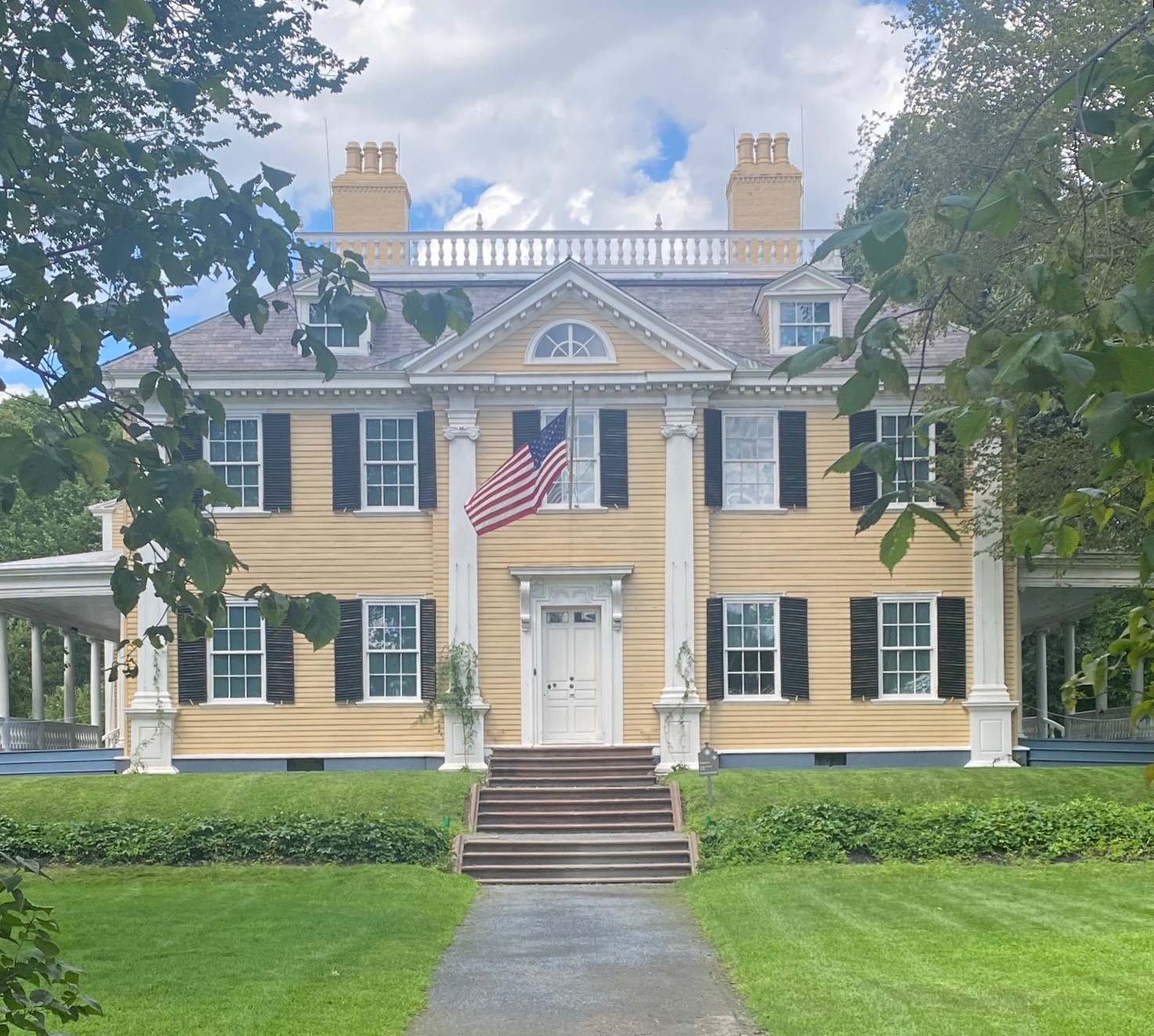
On June 15, 1775, George Washington was appointed by the Second Continental Congress as commander-in-chief of the Continental Army. Approximately a month later he rode into Cambridge, Massachusetts, to the house below, to assume command over that army. After he met the officers at Jonathan Hastings House near Harvard College campus, learning about operations and the siege. He was then directed toward an opulent residence standing about a mile away. Named the Vassall-Craigie-Longfellow residence, this place would become the focal point of the effort against the British in Boston. Washington moved in. He spent the next nine months in residence, overseeing the Siege of Boston and the British evacuation.
From this house, Washington began putting his footprints on the army and met some of the officers that became instrumental in securing American independence. This included the Rhode Islander Nathanael Greene and Massachusetts native and bookseller Henry Knox among others. Martha Washington, in December 1775, traveled over 440 miles from Mount Vernon to Cambridge to winter with her husband in this house. The making of Washington, the general, started here.
The power of place.
Today, the house preserved by the National Park Service today can be toured, click here for information.
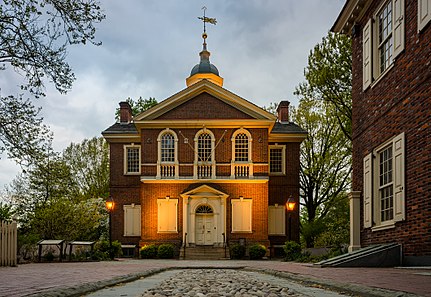
Join us this Sunday, July 7th at 7pm for our next Rev War Revelry as we continue to commemorate the 250th anniversary of the events that led to the American Revolution. We welcome Executive Director Michael Norris to discuss the historic Carpenters Hall in Philadelphia and the role it played in hosting the First Continental Congress. The First Continental Congress convened in Carpenters’ Hall in Philadelphia, Pennsylvania, between September 5 and October 26, 1774. Delegates from twelve of Britain’s thirteen American colonies attended. The Congress was a direct result of the Parliament’s reaction to the Boston Tea Party (December 1773). This gathering of colonial leaders intended to create a united front in their response to what they believed was Parliamentary over reach in the “Coercive Acts.”
Grab a drink and join us on our You Tube Channel: https://www.youtube.com/@emergingrevolutionarywar8217 Feel free to interact with the discussion by adding questions in the video chat. Once the video is over we will repost the video to our Facebook page and our Spotify account. We hope to see you then!
While driving near York, Pennsylvania, I decided to stop by Prospect Hill Cemetery to visit the grave of Union General William Franklin. The cemetery was massive, and after locating Franklin’s grave and snapping a few photographs, I continued up the hill where I saw a plot devoted to dead Union soldiers who died while being treated at the army hospital located in York during the war. They were men from all throughout the North. Many of them simply having volunteered to fight, marched away from home, got sick, and died.
An older grave caught my eye just a stone’s throw away from the Civil War graves – a notable one that I did not know was in the cemetery. It was the grave of another non-Pennsylvanian. In fact, he was a New Yorker, and died in York in June of 1778, while a sitting member of the Continental Congress. It was the final resting place of a signer of the Declaration of Independence – Philip Livingston.
Philip Livingston certainly is not one of the Founding Fathers we remember. In fact, we probably remember his brother, William, who served as New Jersey’s Governor during the war, more. But Philip had a very impressive resume and played a part in nearly every major political conference in the colonies held in the years leading up to and during the early days of the American Revolution.
Born in 1716, Livingston graduated from Yale and pursued a career in the import business. Quickly, he built on his status and influence after relocating to Manhattan. He attended the Albany Congress in 1754, and was a member of the Stamp Act Congress, New York’s Committee of Safety, and president of the New York Provincial Congress in 1775. The prior year, Livingston was appointed to the First Continental Congress and was forced to flee his Manhattan home with his family when the British occupied the city in 1776. While he participated in the Second Continental Congress, he also served in the New York Senate.
Unfortunately, Livingston would never get to see his dream of an independent American nation become a reality. Following the British capture of Philadelphia in 1777, the Continental Congress relocated to York, Pennsylvania. Livingston had been suffering from dropsy, and his health was quickly deteriorating. He died suddenly in York while Congress was in session on June 12, 1778, and was laid to rest on Prospect Hill.
Grave of Philip Livingston, Prospect Hill Cemetery, York, Pennsylvania
If you ever find yourself near York, take the time to visit the grave of a Founding Father who, far from home, died before the cause in which he pledged his life and sacred honor for could be won.
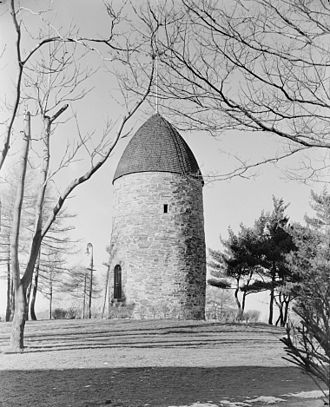
The Charlestown, now Somerville, Powder Magazinewas the focus of the September 1, 1774 Powder Alarm. The historic structure still stands today.
Join ERW this Sunday at 7pm as we welcome back historian and author J.L Bell. We will discuss the events in Boston and Massachusetts in 1774 after the passing of the now popularly called “Intolerable Acts” in response to the Boston Tea Party. A time of political, social and economic upheaval for everyone in the colony, the events that transpired had big impacts across all the colonies and set the stage for April 19, 1775. J.L. Bell is a renowned historian who operates a very comprehensive blog focused on Boston 1775 (https://boston1775.blogspot.com/ )
Grab a drink and sit back and learn about the events that rapidly progressed during 1774 towards warfare and bloodshed. J.L. Bell will provide a great insight into how things quickly deteriorated in Massachusetts and how that impacted all the colonies as a whole. Unlike previous revelries, this revelry will run live on our You Tube channel at: https://www.youtube.com/@emergingrevolutionarywar8217 . Due to new rules and regulations with Facebook, we can no longer stream our revelries live on Facebook. We hope that will change in the future. We will post the You Tube video to our Facebook page after the live broadcast. We hope to see you this Sunday, June 9, 2024 at 7pm on our You Tube Channel!
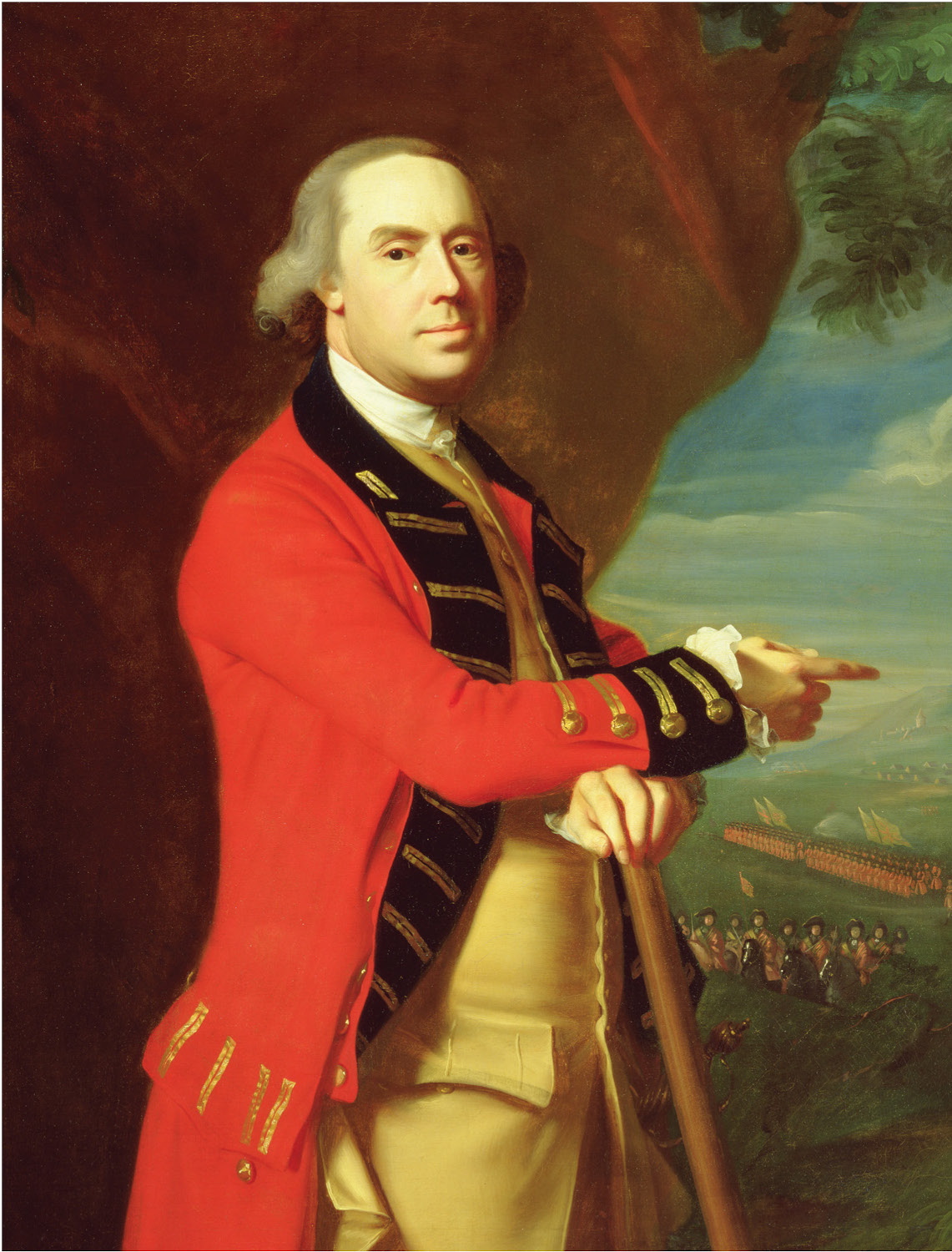
On May 13, 1774, the newly Royally appointed Governor of Massachusetts arrived in Boston. General (and now Governor) Thomas Gage was well known to the American colonists. Gage served as a Major in the 44th Regiment of Foot in the French and Indian War, most notably in the Battle of the Monongahela. When several of Gage’s officers fell, he took up temporary command of the 44th during the battle. During that time Gage got to know George Washington and both men respected each other. After the war, Gage received a promotion to Brigadier General and was appointed the military governor of Montreal.
Portrait of Thomas Gage by John Singleton Copley
Soon after, Gage became the commander in chief of all British forces in North America. He moved to New York city to administer the King’s forces in the American colonies. Gage’s popularity increased as he focused on creating peace with the Indian population along the new western border of the colonies through various treaties. Gage and his American born wife, Margaret, were well accepted into New York society. Gage always believed that the democratic spirit that pervaded the colonies were a threat to British rule. With many of the colonists accustomed to electing their own representation, he believed this created more division with the home country than making them British citizens. Gage had long believed that democracy was too rooted in colonial society. In 1772 he wrote “democracy is too prevalent in America.”
As tensions began to increase within the American colonies, Gage’s response exasperated the situation. He contracted many of the British military posts back to the colonial cities along the eastern seaboard (which in part led to the Boston Massacre in 1770). He believed a show of military strength would help put out the fires of discontent. Further, he concluded that the unrest was mostly pushed by a very small minority, not the vast majority of colonials. He underestimated how the masses would respond to his hard hand. Now Gage, who was in Great Britain when the news of the Boston Tea Party arrived, was seen as a great fit to handle the crisis in Boston. His military back ground and experience as a civil leader (and liked by many in the colonies) made him on paper an ideal candidate for Governor of Massachusetts in this unsettled time.
Many in Boston welcomed Gage when he arrived that May. Mostly because they had become so disenchanted with former Governor Thomas Hutchinson, who was completely not up to the task that faced him in 1773. The recently passed Boston Port Act (passed in March 1774, this act closed the port of Boston until the loss of the tea was paid for) grew tensions in Boston, but large segments of the population believed that those that destroyed the tea should pay for it. Soon, it was the next piece of news from Great Britain that shook the foundation of something the majority of Bay Staters took pride in, self-rule.
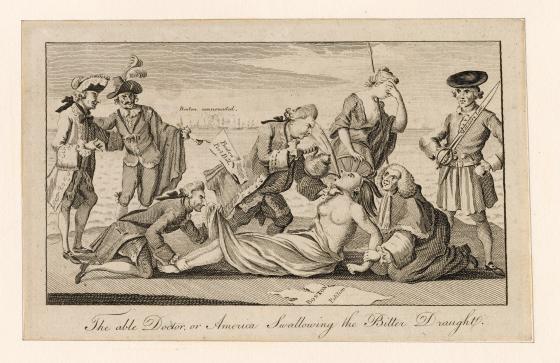
“The able doctor, or America swallowing the bitter draught,” 1774. This illustration depicts the British forcing a Native American woman (a symbol of the American colonies) to drink tea.
Word arrived of two new laws recently passed on May 20, 1774, Parliament passed the Massachusetts Government Act and Impartial Administration of Justice Act. These two acts were punitive in measure and sought to bring the colony under direct Royal control. The Government Act stated “Parliament passes this act turning the Massachusetts Council into a body of crown appointees“ (similar to other Royal colonies like Virginia) when up to then they were elected. Also, it restricted the traditional “town meeting” to just one a year. Town meetings were an essential local governing tool to not just govern localities but also to provide open communication across the colony. The Justice Act gave the governor the power to a trial to another colony or to Great Britain if he determined “that an indifferent trial cannot be had within the said province.” Judgment by one’s peers was a long-standing tradition in Massachusetts and in British law dating back to the Magna Carta. These measures essentially dissolved important aspects of the Massachusetts Charter of 1691.
Furthermore, Gage inflamed the situation more in Boston by bringing with him more British Regular troops. By the end of 1774, Gage had more than 4,000 soldiers in and around Boston. Gage could see the situation worsening but was unable to determine how to best deal with what confronted him. Whig leaders such as Dr. Joseph Warren, Paul Revere and Samuel Adams used these newly passed acts as proof that Great Britain was infringing on their rights and liberties. Using groups like the Sons of Liberty, Whig leaders began to gain great influence as many of the colonists began to turn against Great Britian. Soon many of these community organizations began to arm themselves and coordinate with the other colonies via committees of correspondence. Gage, feeling the situation was becoming dangerous wrote back to authorities in Great Britain “Affairs here are worse than even in the Time of the Stamp Act, I don’t mean in Boston, for throughout the Country. The New England Provinces…are I may say in Arms.” Events were beginning to build towards armed revolution, not just in Massachusetts, but across a more unified American colonies.
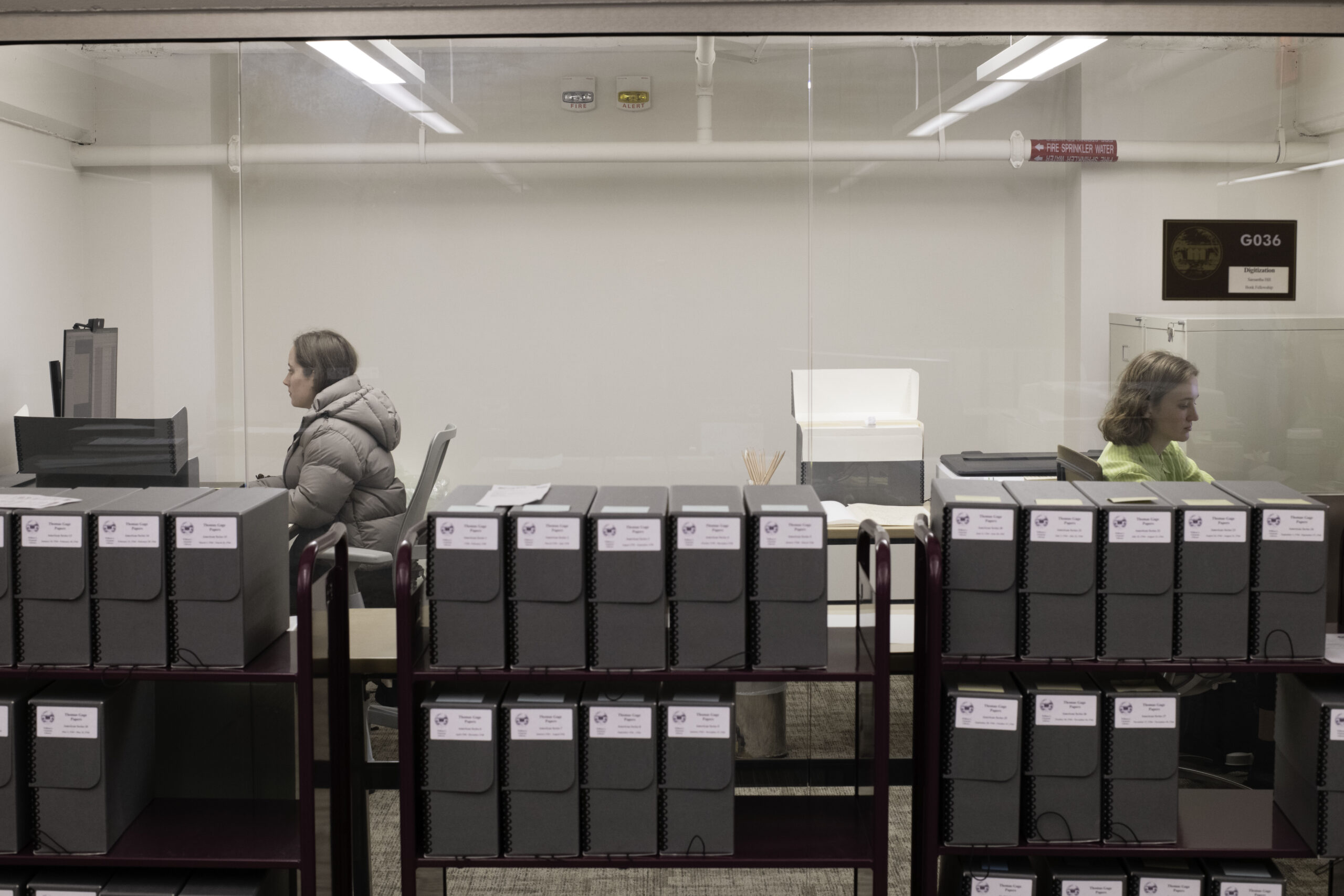
William L. Clements Library at the University of Michigan is now digitizing Gate’s papers with help from a grant of the National Endowment for the Humanities. Over the next year or so, this great resource on the colonial America will become accessible via the library’s website.
Yes, this may be the first college student protest recorded in what became the United States of America.
No, this was not just about butter or butter substitutes.
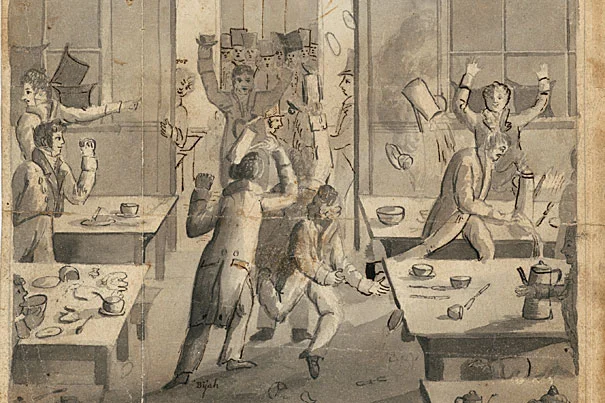
At Harvard College, in 1766, three students, all seniors at the institution, Asa Dunbar, Daniel Johnson, and Thomas Hodgson had had enough of the lack of fresh food being served to the student body. Dunbar, who may be best known as the grandfather of Henry David Thoreau, led the protest, stating that the butter served by the college was “stinketh” and he incited the student body to reject this rancid fare by jumping onto his chair and yelling
“Behold our butter stinketh! Give us therefore butter that stinketh not!”
Dunbar faced disciplinary action, being punished for insubordination and instigating a potential riot. After he received his punishment, the student body enacted another protest, by walking out of the hall, cheering loudly in Harvard Yard, and continuing into Cambridge to dine instead. To give some credit to the college, the adminstration acknowledged the butter ws rancid. With restrictions due to economic difficulties the availability of fresh food was limited however.
As Massachusetts moved closer to open rebellion in their remonstrances against British Parliament and the British crown their example was mirrored by the student body of Harvard. After a month of impassed including “insulting proceedings” the royal governor of Massachusetts, Sir Francis Bernard personally addressed the student body in the chapel on campus and the protests and insubordination of the student body concluded.
A depiction of a student protest courtesy of The Harvard Gazette
Concluding, with a Butter Rebellion, a Tea Party, what food or drink would the colonists focus on next? For me, I think I will sip my Samuel Adams brew. Leave the butter and tea to the Massachusettans.
(Yes, I know that Samuel Adams beer was not around at the time of the American Revolution but I thought it was fitting. And beer and history go together anyways right?)
Reverend John Gano served as a pastor of a Baptist Church in New York City before the Revolution. When the British occupied the city, his congregation split and dispersed. Although he resisted attempts to recruit him as a chaplain, the minister accepted an invitation to preach to a Continental regiment on Sundays until the Royal Navy cut him off from Manhattan. Recalled Gano, “I was obliged therefore, to retire, precipitately, to our camp.”[1] The preacher would become a chaplain after all. Gano joined Colonel Charles Webb’s Connecticut Regiment and followed it.
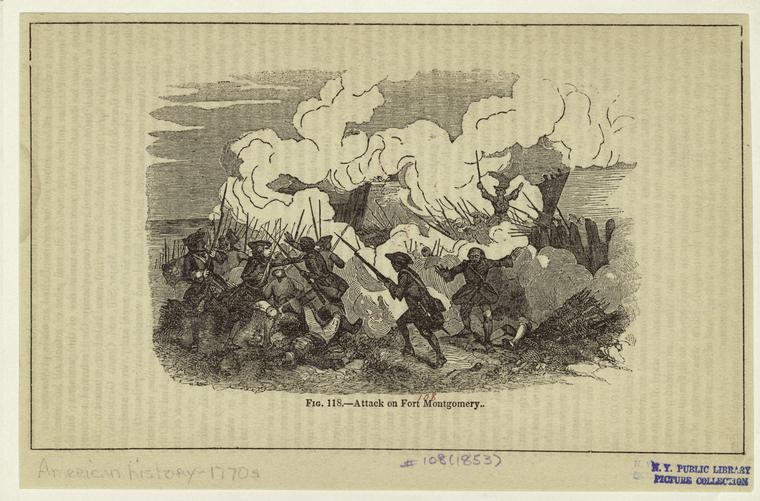
Gano stayed with the army, was there during the battles in New York and mistakenly found himself in front of his regiment at White Plains. He remained with the unit until enlistments expired at the beginning of 1777. The minister pledged to rejoin if Webb and his officers raised a new regiment, but instead found himself at Fort Montgomery on the Hudson, eventually succumbing to arguments from General James Clinton and Colonel “Dubosque” to join the men stationed there as a chaplain. (This was probably Colonel Lewis Dubois of the 5th New York.) He remained there until Sir Henry Clinton launched his autumn attack into the Hudson Highlands to support General Burgoyne’s campaign to Albany. Allowing for the uncertainties and errors of first-hand experiences and perspectives, the happenstance-chaplain provided an excellent first-hand account of the battles for Fort Montgomery and Fort Clinton on October 6, 1777.
“We had, both in Fort Montgomery, and Fort Clinton, but about seven hundred men. We had been taught to believe, that we should be reinforced, in time of danger, from the neighbouring militia; but they were, at this time, very inactive. We head of the approach of the enemy, and that they were about a mile and a half from Fort Clinton. That fort sent out a small detachment, which was immediately driven back. The British army surrounded both our forts, and commenced universal firing. I was walking on the breastwork, viewing their approach, but was obliged to quit this station, as the musquet balls frequently passed me. I observed the enemy, marching up a little hollow, that the might be secured from our firing, till they came within eighty yards of us. Our breast-work, immediately before them, was not more than waist-band high, and we had but a few men. The enemy, kept up a heavy firing, till our men gave them a well directed fire, which affected them very sensibly. Just at this time, we had a reinforcement from a redoubt, next to us, which obliged the enemy to withdraw. I walked to an eminence, where I had a good prospect, and saw the enemy advancing toward our gate. This gate, faced Fort Clinton, and Captain Moody, who commanded a piece of artillery at that fort, seeing our desperate situation, gave the enemy a charge of grape-shot, which threw them into great confusion. Moody repeated his charge, which entirely dispersed them for that time.
About sun-set, the enemy sent a couple of flags, into each of our forts, demanding an immediate surrender, or we should all be put to the sword. General George Clinton, who commanded Fort Montgomery, returned for answer, that the latter was preferable to the former, and that he should not surrender the fort. General Hames Clinton, who commanded in Fort Clinton, answered the demand in the same manner. A few minutes after the flags had returned, the enemy commenced a very heavy firing, which was answered by our army. The dusk of the evening, together with the smoke, and the rushing in of the enemy, made it impossible for us to distinguish friend, from foe. This confusion, have us an opportunity of escaping, through the enemy, over the breastwork. Many escaped to the water’s side and got on board a scow, and pushed off.”[2]
In his recent history of the Saratoga Campaign, Kevin Weddle cites General Clinton’s estimate of 350 American casualties: 70 killed, 40 wounded, and 240 captured, roughly half of the combined garrison of both forts. (Weddle estimates the American garrison at 700, not the 800 Gano believed). British losses amounted to forty killed and 150 wounded out of 2,150 in the assaulting forces.[3]
Gano spent the remainder of his service in the northeast, accompanying the men during General Sullivan’s campaign against the Iroquois, but otherwise spending the time in encampents. He finally returned to New York and reoccupied his house after war: “My house needed some repairs, and wanted some new furniture; for the enemy plundered a great many articles.”[4] After the war, the minister rebuilt his congregation in New York before relocating to Kentucky, where he died in 1804.
[1]Biographical Memoirs of the Late Rev. John Gano (New York: Printed by Southwick and Hardcastle for John Tiebout, 1806), 93.
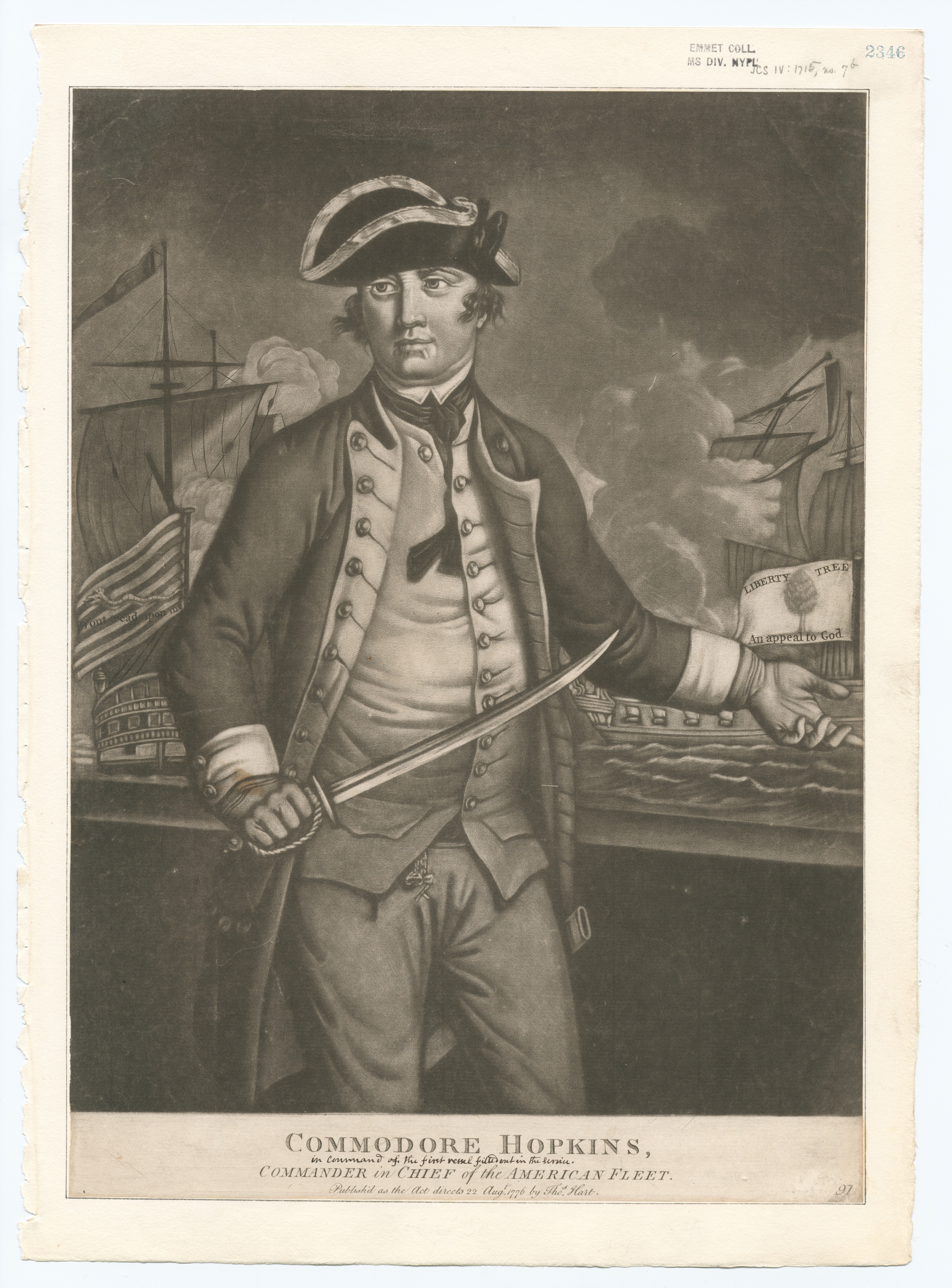
In March, 1776 Commodore Esek Hopkins led the bulk of the Continental Navy on a raid to the Bahamas, where it occupied the town of New Providence on Nassau Island for two weeks. Hopkins and his captains were drawn by a report of gunpowder stored in the town, which the patriot cause desperately needed.[1] Unfortunately for Hopkins, the colony’s governor had spirited away some 150 barrels the night before the American flotilla’s arrival. Not all was lost as the Marines quickly demanded and received the surrender of two small forts defending the town and its harbor. With those in hand, Hopkins and his men quickly got to work removing artillery, military stores, and other useful supplies.
While the American Marines and sailors managed to recover just 24 casks of powder, their haul in sizeable artillery pieces and mortars was impressive: 88 cannon ranging from 9- to 36-pounders; 15 mortars from 4-11 inches; 5,458 shells; 11,071 roundshot; 165 chain & double shot, plus fuses, rams, sponges, carriage trucks, mortar beds, copper hoops, and various stores not required for artillery.[2] It was a boon to be sure. The curious part of Hopkins’ inventory of captured war material, however, is that he sent it to Connecticut Governor Jonathan Trumbull, not a representative of the Naval Committee that had issued his orders. To John Hancock, president of the Continental Congress, he sent a report of his mission, but only mentioned “I have taken all the Stores onboard the fleet.”[3] Indeed, his report of the armaments aboard the British schooner Hawke, which the fleet captured on its return to American waters, was more complete. It took another day, until April 9, for Hopkins to forward the inventory of seized cannon. Congress merely resolved that an extract of his letter should be published for delegates to peruse.[4] Perhaps inadvertently, Hopkins exacerbated regional political conflicts and undermined his own command.
Welcome to the first “Rev War Revelry” of 2024! To kick off the new year, Emerging Revolutionary War is joined by Tom Hand, author, historian, and founder of Americana Corner. However, in the later stages of 20234, Tom added published book author to his lengthy list of accomplishments. His book, American Triumph is now available via his website.
The book, “masterly blends the personal experiences and historic milestones” of three luminaries of the early Republic, Benjamin Franklin, George Washington, and John Adams. The book, with a plethora of graphics, sidebars, and informational tidbits aims to provide a “captivating collection of stories” for the “everyday American.”
We look forward to a lively and friendly discussion with Tom. Hope you can tune in, to Emerging Revolutionary War’s Facebook page at 7 p.m. EDT this Sunday, January 7th.





 Emerging Revolutionary War Era