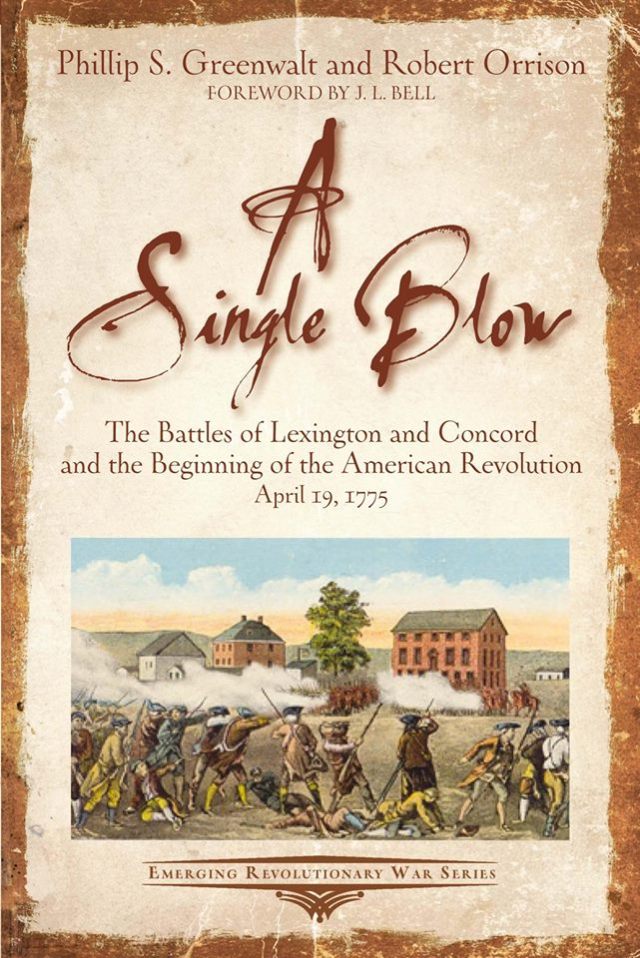
All the information on the upcoming release of one of the inaugural volumes of the Emerging Revolutionary War Series (ERWS) from Savas Beatie!

All the information on the upcoming release of one of the inaugural volumes of the Emerging Revolutionary War Series (ERWS) from Savas Beatie!

When one mentions the word “Orlando” what is the first thought to pop into your head?
Universal?
Or maybe two words; “Disney World or Walt Disney?”
In all likelihood, the name Francis Wayles Eppes, is not one of the people you would associate central Florida with. You may even be asking, who is Francis Wayles Eppes.

Born on September 20, 1801, Francis was the only surviving child of Thomas Jefferson’s daughter Maria and her husband, John Wayles Eppes. When his mother died in 1804, his grandfather, the third president of the United States at the time, took young Francis under his care and the child resided at Monticello, Jefferson’s Virginia estate.
As young Francis grew, he spent time at Poplar Forest, Jefferson’s estate near Lynchburg, Virginia, which was bequeathed to him by his grandfather after the grandson married Mary Elizabeth Randolph in 1822. Francis, prior to marriage, studied law at both Georgetown College and South Carolina College.
With the death of his father and grandfather within three years of each other; 1823 and 1826 respectively, Francis and his wife joined the movement south, leaving Virginia for sunny Florida.
Initially settling outside Tallahassee and was instrumental in the formation of one of the first Episcopalian churches in the Florida territory, when he donated $500 to a construction of St. John’s Episcopal Church. He was a vestrymen, delegate to the Episcopalian convention in Florida, and also secretary of the local diocese for many years.
After a long public service record in Tallahassee, including serving as intendant or mayor of the capital for a few terms and being an early proponent of a school of higher learning–Jefferson-esque–which became the precursor to Florida State University, Eppes relocated to central Florida in 1869.
Even in his 60’s, Eppes stayed active, becoming a citrus farmer and was part of the group that founded the Cathedral Church of St. Luke in Orlando, the first Episcopal church in the growing town.

A historian, writing about Eppes’s contributions of that era summarized the Virginian in the following words; “Through the 40’s, 50’s, and 60’s [1800s] there were few civic, religious, or educational affairs in which he did not have a prominent part.”
On May 30, 1881, Francis Wayles Eppes passed away at his home and would be buried in Greenwood Cemetery. He was 79 years old.

On New Year’s Day 1777, Robert Morris wrote to George Washington and said: “The year 1776 is over, I am heartily glad of it and hope you nor America will ever be plagued with such another.” While many of us have similar thoughts every New Year’s about the previous year, the year 1776 was exceptionally bad for the patriot cause, despite the Declaration of Independence being signed that summer. After losing New York and a string of battles, Washington had shocked the world at Trenton on the day after Christmas. This glimmer of hope was almost crushed by the fact that most of his army’s enlistments expired on January 1st.

Here is an exclusive excerpt about this pivotal moment from the forthcoming book Victory or Death by Mark Maloy, one of the inaugural books of the Emerging Revolutionary War Series:
“Washington’s men had sacrificed much in the past few weeks and suffered greatly. Many believed they had done their duty, and rightly so. But at this moment, they were needed more than ever before. All day on December 31, 1776, Washington’s generals appealed to the soldiers to reenlist. Washington authorized an exorbitant $10 bounty
to those men who agreed to remain, this being funded by financier Robert Morris in Philadelphia. Some of his generals, such as Gen. Thomas Mifflin, a politician and public speaker from Philadelphia, were successful in retaining some of the men, others were not as successful. However, the most affecting scene was when Washington himself personally appealed to the patriotism of the men who had campaigned by his side. Washington paraded Gen. John Sullivan’s and Gen. Nathanael Greene’s divisions just outside Trenton. He entreated the men to stay on just a few weeks more. He asked those who wished to reenlist to move forward, but at that point no one moved. Sergeant Nathaniel Root of the 20th Continental Regiment (Connecticut) remembered that the men were “worn down with fatigue and privation” and had their “hearts fixed on home.” Washington, pleading with his brave soldiers wheeled his horse in front of the men and declared to them, “My brave fellows, you have done all I asked you to do, and more than could be reasonably expected; but your country is at stake, your wives, your houses and all that you hold dear. You have worn yourselves out with fatigues and hardships, but we know not how to spare you. If you will consent to stay only one month longer, you will render that service to the cause of liberty and to your country which you probably never can do under any other circumstances. The present is emphatically the crisis which is to decide our destiny.” After considering their commander’s words, more than two hundred of these men stepped forward to stay on and fight, and some of these men would be killed in the coming battles. The combination of patriotic pleas and hard currency helped persuade many more to
stay. Washington retained a force of about 3,000 men from his army. These veterans would prove invaluable in the coming days.”
Emerging Revolutionary War welcomes guest historian Paige Gibbons Backus to the blog. This Weekend marks the 244th anniversary of the Boston Tea Party.

Boston Tea Party Ships and Museum
306 Congress St., Boston, MA 02210
http://www.bostonteapartyship.com
We all know the holidays are some of the heaviest travelled times of the year and over my Thanksgiving holiday, I had the opportunity visit Boston for a day. When in the city for only one day, what do we go and see? Do you go to the U.S.S. Constitution, Bunker Hill, Faneuil Hall, or the Paul Revere House? Do you go to the colonial meetinghouses, the historic cemeteries, or just walk around the historic sections of the city? One of the sites that I decided to visit was the Boston Tea Party Ships & Museum. I heard many good things about it from online reviews and professional colleagues about the interactive exhibits and experiences available there. Working at an immersive historic site myself, I was definitely curious to see what they had done to make their history exciting to audiences, and despite the museum’s shortcomings, make it interesting they did.
One of the highlights of the Boston Tea Party Ships is that they did a decent job creating an interactive experience for visitors. After purchasing tickets outside, visitors receive an identity card and a feather, and are then invited into a room meant to replicate the South Meetinghouse. From there, first-person actors serving as tour guides take visitors through the planning, implementation, and effects of the Boston Tea Party. For example, Sam Adams rallied the crowd weaving in the events leading to the Boston Tea Party, even teaching visitors how to show approval or displeasure in a public setting, (to which I was hissing before it was cool). He even called on visitors with various identity cards to voice their opinion, bringing in interesting, albeit reluctant, audience participation. After the visitors were riled up, we donned our feathers in our hair and were lead onto the ships to commence tossing the tea. Continue reading “Emerging Revolutionary War Weekender: The Boston Tea Party Ships & Museum”
Poor John Adams.
I think it would be fair to say that John Adams spent the last 25 years of his life feeling sorry for himself. He was a grumpy and vain old man searching for the respect he thought he deserved.
If Adams were to read the highly anticipated new book by Pulitzer Prize-winning author Gordon Wood, the old curmudgeon would be no happier. In fact, the final lines of the book, handed down like a final judgement, would only confirm what Adams believed would be the view of historians forever. “To be an American,” Wood wrote, “is not to be someone, but to believe in something. And that something is what Jefferson declared. That’s why we honor Jefferson and not Adams.”[i]
Continue reading “BOOK REVIEW – Friends Divided: John Adams and Thomas Jefferson”

If you have not made a trip to the new American Revolution Museum at Yorktown (the former Yorktown Victory Center) then you are missing out. Not only does the museum great exhibits on the causes of the war and the events leading up to Yorktown (with great technology), there is a changing exhibit gallery that allows for short term exhibits. The first exhibit opened in June and features the lives of four prominent Revolutionaries after the American Revolution. Continue reading “AfterWARd, the new exhibit at the American Revolution Museum at Yorktown. A visit with Curator Kate Gruber”

I know we’re getting close to the Cowpens battlefield when we pass Redcoat Drive and then Tory Trail. Unfortunately, my GPS takes us to the maintenance shed rather than the visitor center, but the park’s signage finally manages to get us where we need to go.
I know nothing about the battle of Cowpens, but my colleague Rob Orrison has strongly recommended I visit the battlefield. It involves some of the most colorful characters of the war, he tells me: Daniel Morgan and Banastre Tarleton. “The battle changed the course of the war in the Carolinas, in my humble opinion,” Rob adds.
That seems like a pretty ringing endorsement to me. My son and I, on our way back from Atlanta, decide to make the hop off I-85 for a visit. Continue reading “A Detour to Cowpens”
On August 27, 1776, in Brooklyn, New York, a small contingent of Maryland soldiers showed the world what valor and patriotism looked like. During one of the largest and bloodiest battles of the Revolutionary War, the actions of these brave soldiers would earn them the venerated name of the Maryland 400.

At the Battle of Long Island, the American Army was strung out in a long line across modern day Brooklyn facing south, with Washington and his headquarters located at Brooklyn Heights. However, Washington and the Americans had failed to guard the extreme left flank of the American line. As a result, British General William Howe divided his army in two, attacked the American main line head on to hold them in position, while British Generals Charles Cornwallis and Henry Clinton marched around the American flank and attacked from the east.

A version of this post appeared in the Emerging Civil War blog on August 17, 2018.

Those who know me know of my “interest” in famous Confederate partisan, John S. Mosby. Ok, some would say “love affair,” but either way, I grew up reading about Mosby and his exploits during the Civil War. It was not until later in my life that I started to read about the most interesting part of Mosby’s life—not his time in the war, but his time AFTER the war.
Mosby had a deep interest and passion in American history and you can see that on a trip that Mosby took north in April 1906 to one of the sacred sites of America’s founding: Boston, Massachusetts. In a 1906 letter to his friend Sam Chapman (a former member of Mosby’s Rangers), Mosby describes his visit and the many ironies (as a southerner) he experienced. Continue reading ““I hope my visit to Boston will do good…” Confederate Colonel John S. Mosby and American Revolution”
In 1940, during World War II, the British and French armies were completely surrounded by the Nazis at Dunkirk. The Allies made a successful evacuation, lived on to fight another day, and gained a newfound resolve to resist the Nazi war machine. The uncertainty and suspense of the evacuation at Dunkirk has recently been brought to life on the big screen with Christopher Nolan’s movie, “Dunkirk.” As people pack the theaters this summer to see the film, it’s good to remember that America had its own desperate, nation-saving evacuation during the Revolutionary War.

In the summer of 1776, Great Britain dispatched the largest expeditionary force it had had ever sent anywhere in the world up to that point in history. The British soldiers and sailors made their way into New York harbor to subdue the American rebels. Continue reading “America’s Dunkirk”