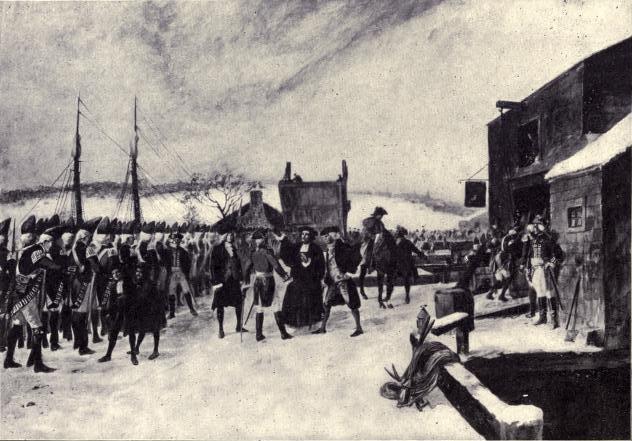
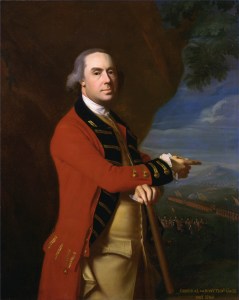
Dr. Joseph Warren is considered by many “the lost hero of the American Revolution.” Warren was the brainchild of the revolution movement in Boston. Warren was involved in almost every major insurrectionary act in the Boston area for a decade, from the Stamp Act protests to the Boston Massacre to the Boston Tea Party, and his incendiary writings included the famous Suffolk Resolves, which helped unite the colonies against Britain and inspired the Declaration of Independence.
Joining Emerging Revolutionary War will be historian and author Christian Di Spigna. He is the author of Founding Martyr: The Life and Death of Dr. Joseph Warren, the American Revolution’s lost hero. He is the Executive Director of the Dr. Joseph Warren Foundation and is the vice chairman for the Revolution 250 committee of Massachusetts Freemasons. He also serves on the board of the Bunker Hill Monument Association.
As we approach the 250th commemoration of the Boston Tea Party, we will focus on Warren’s life, his role in the Boston Tea Party and his lasting impact on the Revolution. Grab a drink and join us as we talk with author and historian Di Spigna about Warren, the patriot who once said…
“When Liberty is the prize, who would shun the warfare? Who would stoop to waste a coward thought on life?”
See you Sunday at 7 p.m. EDT on Emerging Revolutionary War’s Facebook page!
Every so often news stories arise about popular symbols of the American Revolutionary War that are used by various people to promote modern political agendas. One prominent symbol is the yellow flag with a coiled rattlesnake and the words “Don’t Tread on Me” below it. This flag, often referred to as the Gadsden flag, has a fascinating history dating back to the Revolutionary War.
The first real use of the snake representing the colonies begins before the Revolutionary War, during the French and Indian War, when Benjamin Franklin created a cartoon using a snake to represent the various colonies each separated from one another with the words “Join, or Die” under the image. This was an effort to get the various colonies to unite for common defense during that time period.
By the time of the Revolutionary War in 1775, the symbol had become a solitary rattlesnake, coiled and ready to strike often accompanied by the warning “Don’t Tread on Me.” Christopher Gadsden, a prominent South Carolina patriot, served in the Continental Congress and designed the yellow flag as a naval ensign. Beginning in 1776 the flag was hung up in the room where Congress met in Philadelphia and because it was designed by Gadsden, it became known as the Gadsden flag.
Emerging Revolutionary War welcomes guest historian Al Dickenson
Within the first few pages of his book, Brooklyn College professor Benjamin Carp illustrates all the key points about the 1776 burning of New York City. The points include how vital the city was to the war effort to both the rebels and Loyalists, a discussion on how the fire started (questioning if it was accidental or intentional, and if the latter, whose intention was it?), and furthermore, why has there never been a full investigation into the fire and its causes (Carp’s book is the first full-length work on the topic). In quick succession, readers understand what they will gain by reading this book, why the event in question is important for understanding the American Revolution, and Carp’s own thoughts on the matter.
Carp’s argument in The Great New York Fire of 1776 is that the rebels started the fire, and that the cause of the blaze was indeed arson, which previously had been in question (254). What Carp does not speak to, at least not without some speculation, is who precisely started the fire. While not totally disregarding George Washington’s potential involvement, Carp suggests the more likely culprits would be soldiers in Washington’s army. These men, and in many cases, boys, had yet to receive the disciple so desperately needed from Baron von Stueben’s efforts at Valley Forge, so it seems plausible they could start the inferno, which scorched up to a fifth of the city (244-245). As such, Carp puts his research skills to good use in this volume, sharing his thoughts on the possible origins of the fire and providing readers with a map of more than ten ignition points, illustrating how expansive the blaze was (104). Carp’s thesis is well supported by the primary material, which included letters, sermons, diaries, and other sources from the time.
Emerging Revolutionary War welcomes a guest post from historian Keith J. Muchowski. Keith is a librarian and professor at New York City College of Technology (CUNY) in Brooklyn. He blogs at thestrawfoot.com.
The plaque dedicated King Juan Carlos I in June 1976 today tucked in a corner of the visitor center. Courtesy Author
King Juan Carlos I arrived in Brooklyn’s Fort Greene Park on Saturday June 5, 1976 to great fanfare. The thirty-eight-year-old monarch had ascended to the Spanish throne just seven months previously, two days after the death of Francisco Franco. The new leader was determined to reform his nation after three and a half decades of strongman rule. Juan Carlos I’s ancestor, King Carlos III, had helped the colonists achieved their independence nearly two centuries previously with his supply of money, matériel, and men. Many of those Spaniards made the ultimate sacrifice; well over one hundred of them alone perished in British prison ships moored off Brooklyn Wallabout Bay during the war.[i] Now King Juan Carlos I was in the outer borough to recognize them, dedicate a tablet to his fallen countrymen, and help his American hosts celebrate the bicentennial of their independence. The entombed Spaniards were among the over 11,500 men commemorated by the Prison Ship Martyrs Monument. The king’s visit in the mid-1970s was the latest in a series of public commemorations of the prison ship dead dating back over a century and a half. Some of the institutions that did so much to recognize the martyrs, such as the Society of St. Tammany, are today long gone. Others however very much remain. The Society of Old Brooklynites, a civic organization founded in 1880 when Brooklyn was still an independent municipality, has been holding events since the late nineteenth century.
Join author Jason Bohm for a discussion of his new book published by Savas Beatie, Washington’s Marines: The Origins of the Corps and the American Revolution, 1775-1777, on Sunday night, August 20, 2023, at 7 pm. Bohm’s book examines the Marine Corps’ humble beginnings and what it achieved during the early years of the American Revolution. Jason Bohm’s eye-opening Washington’s Marines tells of the Corps’ origins and achievements in the early years of the Revolutionary War.
Grab a drink and join us to learn more about the early history of the United States Marine Corps!
All Rev War Revelries can be found LIVE on our Facebook page, or a week later on our YouTube and Spotify channels.
Major General Jason Q. Bohm is a Marine with more than 30 years of service. An infantryman by trade, he has commanded at every level from platoon commander to commanding general in peacetime and war. Bohm also served in several key staff positions, including as a strategic planner with the Joint Chiefs of Staff, Director of the Marine Corps Expeditionary Warfare School, House Director, Marine Corps Office of Legislative Affairs, U.S. House of Representatives, and Chief of Staff of U.S. Naval Striking and Support Forces, NATO. Bohm has a bachelor’s degree in marketing, a master’s degree in military studies, and a master’s degree in national security studies. Jason has written several articles for the Marine Corps Gazette and won various writing awards from the Marine Corps Association. He is the author of From the Cold War to ISIL: One Marine’s Journey (Naval Institute Press, 2019).
Major General Horatio Gates, “Hero of Saratoga” was tasked with saving the American effort in the south. Credit NPS
On August 15, Maj. Gen. Horatio Gates began to finalize his plans to move against Camden, SC. Gates, appointed as the new commander of the Southern Department the previous month, believed the British garrison in Camden was weak. Gates was receiving intelligence gathered by partisan commander Thomas Sumter who was acting in and around Camden. He informed Gates that the American army outnumbered the British post and that a large portion of the men at Camden were taken ill and not fit for duty (on this account, Sumter was correct). Sumter did not provide the intelligence that Lord Cornwallis was now in Camden with reinforcements and was taking personal command of the British force in Camden.
Modern day image of the area at Rugeley’s Mills, with modern day Flat Rock Road following the historic trace of the Great Wagon Road. Credit Rob Orrison
With this information, Gates felt confident in his ability to take on the British in Camden. He developed a plan that involved a three-part movement. He would leave his force south to Saunder’s Creek (about six miles north of Camden) and establish a strong defensive position. He also ordered Francis Marion and his men to the southeast. Gates wanted Marion to take command of the Williamsburg militia, watch the British movements, and destroy boats in the Santee River that a defeated Cornwallis might need to retreat from Camden to Charleston. The third prong he ordered a few days earlier on August 13. Gates, under the encouragement of Thomas Sumter, decided to send 100 Maryland Continentals and 300 Carolina militiamen (as well as two brass three pounders) to join Sumter and move down the western side of the Wateree. From this location Sumter could attack supplies and reinforcements going into Camden from Ninety Six to the west. Gates’s confidence was evident.
South Carolina militia Brig. Gen Thomas Sumter. Credit New York Public Library
As Gates made his final disposition to move south, Sumter’s militia along with his Continental detachment met some success west of Camden. The Wateree River flowed south just one mile west of Camden. Near the important Wateree Ferry that served the major route west from Camden, Loyalist Lt. Col. James Cary built a small fort on his farm near the ferry. Sumter was aware of the fort and decided to see if he could capture it. When Col. Thomas Taylor of Sumter’s command launched the attack, most of the defenders inside were asleep, and the others were deceived by Patriot militia dressed just like those occupying the fort. The Loyalists immediately surrendered. Sumter reported that his men killed 7 and captured 30 prisoners, including Cary. Also included in the loot were 38 wagons of supplies and nearly 300 head of cattle. After capturing Cary’s Fort, Sumter was also able to attack and capture a relief column from Ninety Six to Camden. Sumter’s spoils from this attack numbered nearly 70 prisoners and numerous wagons. Sumter also reaffirmed his earlier intelligence to Gates by writing that the British in Camden “do not exceed two thousand, and not as many as one thousand of the militia, who aregenerally sickly, and much dispirited.” Sumter’s intelligence, though not accurate, gave Gates encouragement on the upcoming movement toward Camden. At 10pm on August 15, Gates had his army on the road south towards Camden.
Gates was flush with optimism, at that same time Cornwallis had his army on the road north. Though the British forces were about half the size of Gates, they were more than Gates expected and consisted of some of the best men in the British army led by one of their most accomplished generals. Soon, due to a twist of fate, these two armies collided along the Great Wagon Road in the long life pine forest of South Carolina. The result was one of the worst days in the history of the United States Army.
Authors Rob Orrison and Mark Wilcox’s new book “All That Can Be Expected: The Battle of Camden and the British High Tide in the South, August 16, 1780” is due out August, 2023 and available at: https://www.savasbeatie.com/
On this date 266-years ago, the infamous Massacre at Fort William Henry took place along the southern shore of Lake George, New York. After a week-long siege by the Marquis de Montcalm’s army of French Regulars, Canadians, and Native Allies, the British and Provincial garrison inside and outside the walls of Fort William Henry capitulated. The terms of surrender that followed were more than honorable. British, Colonial Provincials (from Massachusetts, New Hampshire, New Jersey, and New York) and their camp followers would be allowed to withdraw, under French escort, to Fort Edward with full honors of war and were allowed to keep their muskets and a lone symbolic cannon. These men were not allowed to serve again for 18 months, and French prisoners were ordered to be turned over within the next three months.
On August 10, the column left the entrenched camp outside the fort (within modern-day Lake George Battlefield State Park) and entered the military road that would take them south to Fort Edward over a dozen miles away. What transpired next has been made famous by the novel and movie adaptations of James Fenimore Coopers The Last of the Mohicans. The French-allied Native Americans fell upon the column and the “Massacre” ensued. By the end of it, an estimated 185 men, women, and children had been killed, with countless others drug off in captivity.
Montcalm Trying to Stop the Massacre, 1877.
The British colonies were outraged. Those viciously attacked at the rear of the column were colonial provincials. The event became a rallying cry. What follows is a contemporary reaction from New York written in the wake of the Siege of Fort William Henry and reprinted in the Maryland Gazette on September 1, 1757. Its contents are extremely graphic in nature:
New-York, August 22
FORT WILLIAM HENRY, being on the third Instant besieged by a great Army of the French, was on the 9th Instant, after a vigorous Resistance, obliged to yield to the superior Force of the Enemy. Thus far is certain; but as to some Circumstances attending what follows, we wait for Confirmation. What at present is generally received among us, as Truth is, That the Enemy consisted of at least Eight Thousand Men; some make the Number much great, and carry it even to Fourteen or Fifteen Thousand: That the greatest Part were REGULAR TROOPS, to these were added about a Thousand FRENCH INDIANS, and that the Rest of their Army were CANADIANS. That our Garrison consisted of between two and three Thousand: That they sustained the Siege till they could hold no longer, and had burst the greatest Part of their Cannon, and spent almost all their Ammunition. How many of the Garrison were lost in the Siege, is not yet known (some say about One Hundred) nor the Number of the Enemy that were slain (but it is said about fourteen or fifteen Hundred:) That the Fort submitted upon a Capitulation, with Leave to march out with their Arms and Baggage, some Ammunition, one Piece of Cannon, and all the Honours of War. That the French IMMEDIATELY after the Capitulation, MOST PERSIDIOUSLY, let their INDIAN BLOOD-HOUNDS loose upon our People; whereupon a few ran off with their Arms, and light Cloathing that they had upon their Backs during the Siege, and were pursued by the Indians six or seven Miles on their Way to Fort-Edward; all the rest were despoiled of their Arms;—The most were stripped stark-naked; many were killed and scalped, Officers not excepted. All the English Indians and Negroes in the Garrison were seized, and either captivated or slain. The Throats of most, if not all the Women, were cut, their Bellies ripped open, their Bowels torn out, and thrown upon the Faces of their DEAD or DYING Bodies; and ‘tis said, that all the Women are murdered one Way or other: That the Children were taken by the Heels, and their Brains beat out against the Trees or Stones, and not one of them saved. Some of the Fugitives that reached New-York on this Day, affirm this, as what they saw, in the whole, or in great Part, executed before they escaped: The Report of such Cruelty and barbarity could hardly be believed, were we not assured of the terrible Massacre of several Hundreds of General BRADDOCK’s wounded men; of whom we hear not of one that survived the Carnage; were we not ALSO assured of the Murder of all the Sick and Wounded of the Garrison at Oswego, not withstanding the previous Capitulation.
‘Tis certain that the Growth of the British Colonies has long been the grand Object of FRENCH ENVY; and ‘tis said that their Officers have Orders from their Superiors, to check it at all Events, and to that End, to make the present War as bloody and destructive as possible! ‘Tis evident, that all their Measures tend the Way. Who can tell, that One of the Two Hundred that fell into their Hands in the last Month near Ticonderoga, has been spared? And is not every News-Paper still stained with the innocent Blood of Women and Children, and of unarmed Sufferers, who were plowing their Land, or gathering their Harvest, on our Frontiers?
To what a Pitch of Perfidy and Cruelty is that French Nation arrived! Would not an ancient Heathen shudder with Horror, on hearing so hideous a Tale! Is it the MOST CHRISTIAN KING that could give such Orders? Or could the most savage Nations ever exceed such French Barbarities! Besides this, was it ever known in the Pagan World, That Terms of Capitulation were not held inviolably sacred!
Surely, if any Nation under the Heavens was ever provoked to the most rigid Severities in the Conduct of a War, it is ours!—It is hard for an Englishman to kill his Enemy that lies at his Feet begging his Life: But will it not be STRICTLY JUST, and ABSOLUTELY NECESSARY, from henceforward, that we (for our own Security and Self-preservation, and to prevent the further shedding on innocent Blood) make some severe Examples of our inhuman Enemies when they fall into our Hands? Will not our armed Men be obliged for the future to reject all Terms of Capitulation, and not to as Quarter; but on the contrary, to fell their Lives as dear as they can! CONSIDER OF IT, my Countrymen, TAKE ADVICE, AND SPEACK YOUR MINDS….
This Sunday, August 6th at 7pm join ERW series editor Dan Welch and authors Rob Orrison and Mark Wilcox as they discuss one of the worst defeats in American history, the Battle of Camden. How did the hero of Saratoga end up the scapegoat in the south? Learn how a coincidence led to a great British victory. And how did the Patriots recover from such a large defeat and find a path to victory a year later? Orrison and Wilcox will also discuss their upcoming book “All That Can be Expected, The Battle of Camden”. Grab a drink and join us to learn more about the Battle of Camden!
All Rev War Revelries can be found LIVE on our Facebook page, or a week later on our You Tube and Spotify channels.
Emerging Revolutionary War welcomes back guest historian Kate Bitely.
In the heart of Fredericksburg, Virginia, you will find a well-preserved, Georgian-style home that once belonged to Betty Washington Lewis, the sister of George Washington. Historic Kenmore, as the home is known today, was constructed in the 1770s and originally sat on 861 acres near downtown Fredericksburg. Today, the historic house museum is open for daily tours where guests can explore the gardens, the main living floor of the home, several historic structures on the priority, and a visitor center filled with riveting artifacts and information.
Nearly 290 years ago, Betty Washington was born at Pope’s Creek in Westmoreland County, Virginia. As a young child, she lived in a few properties owned by the Washington family before relocating to Ferry Farm, located in Stafford County, Virginia, where Betty, George and their siblings grew up. On February 22, 1750, Betty married Fielding Lewis, a widowed distant cousin, and a father of two young children. In 1752, the family purchased 1300 acres in the Fredericksburg area and allocated a portion of the land as the future site for their home Millbrook, which was eventually renamed to Kenmore in the 1800’s. In total, Betty and Fielding welcomed eleven children, but only six survived to adulthood.
Fielding Lewis was a well-known member of his community. He built his wealth initially as a merchant, but was later elected as a member of the House of Burgesses and served as a colonel in the Revolutionary War. During the war, however, Lewis used his finances to personally pay for munitions and supplies for Patriot troops which ultimately drained much of the family’s resources.
The Lewis family were staunch Patriots. In 1775, when the Lewis’s were moving into their home, the spirit of independence was strong throughout the colonies. Given the Washington’s status, heritage and devotion to service, Betty and her family would become one of the biggest supporters for the Patriot cause, willing to risk their home, finances, reputation, and their safety in favor of breaking away from England. The impressive residence served as a visual representation of their wealth, which became significantly more important during the Revolutionary War.
Thirteen of the Great Britain’s North American colonies moved toward independence in 1775, declaring the fact officially the following year with the issuance of the Declaration of Independence. Perched below these thirteen rebellious provinces was the colony of East Florida. Earned after the Seven Year’s War by Great Britain from Spain, the most populous city an oldest permanently established European metropolis was St. Augustine, which was also the capital of the colony. This colony, through the eight years of the American Revolutionary War, had a tenuous connection with their neighbors to the north. Largely forgotten in the pantheon of history describing this period, from the time of Britain gaining possession in 1763 through the end of the Revolutionary era in this historian’s estimation, in 1785.
Entitled, East Florida in the Revolutionary Era, 1763-1785 and penned by George Kotlik, a historian specializing in 18th century North American history, the publication offers “an accessible and detailed narrative of the East Florida during the American Revolution.” (pg. 8).
What ensues in the following pages is a brief yet complete overview of the military, political, social, and economic history within those years of East Florida. Some of the names in the pages are well known to enthusiasts of the American Revolutionary War era whereas others will be new names to add to the repertoire for further study. From Governor Patrick Tonyn, British general and last governor for England of East Florida to bringing attention to the William Augustus Bowles, a Maryland born Loyalist, sympathetic to the Muscogee Native Americans of East Florida who tried in vain from the last decade of the 18th century, to establish an independent state for the tribe, with British support. These are just two of the historical personas that Kotlik discusses in his narrative, the rest await you within the pages of the book!
Although no major military actions happened within the confines of the colony that does not mean the role of East Florida in relation to the American Revolution should not be marginalized. “Militias were raised, a general assembly was postponed, St. Augustine experienced a heightened British troop presence, planters between the St. Johns and St. Marys Rivers suffered at the hands of George raiding parties, and a constant threat of a Spanish or American invasion” all affected the psyches and lives of East Floridians. (pg. 104-105).
The hope from Kotlik is to provide the launching point for further discussion into the role of East Florida specifically and Florida in general during the revolutionary period. “Such a lack of coverage is a reminder for scholars to to emphasize East Florida’s presence in the war that made America.” (pg. 111). With this history in hand, Kotlik has provided the necessary overview for further exploration.
Publisher: NewSouth Books, University of Georgia Press, 2023 156 pages plus images