Galloway’s Foreshadowing

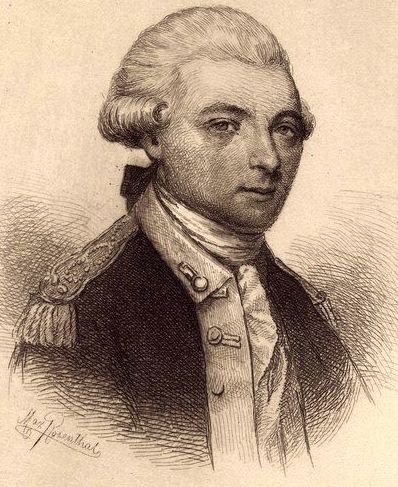
Joseph Galloway is best known as one of the preeminent and prominent Loyalists who remained in the American colonies through the majority of the American Revolution. Prior to the colonies declaring independence, especially during the First Continental Congress, Galloway was active in the debates that decided the path forward. Besides attending and being active in the discussions in Philadelphia he penned a pamphlet entitled A Candid Examination of the Mutual Claims of Great Britain and the Colonies.

Within the pages, he called African American slavery “the dangerous enemy within” and the “natural weakness” of the soon-to-be Southern states. If a division ensued, Galloway predicted that,

“If the colonies happen to vie and try their reciprocal strength with each other, the political force of the Northern Colonies will soon destroy the opulent force of the Southern.”

Furthermore, Galloway pointed to the colonies/states of Georgia, Maryland, North and South Carolina, and Virginia as vulnerable because of the institution of slavery. In a conflict without the overarching guidance by Great Britain, the division between Northern and Southern colonies/states would lead to a domestic civil war and the possibility that African American slaves would join the Northern effort in vanquishing their former owners.

Although Galloway was writing to prop support for remaining loyal to the British crown he foreshadowed accurately the rift that plagued the independent United States. In laying out his views, Galloway quite succinctly predicted what would happen in 78 years after independence was won by the United States.

Galloway left Philadelphia when the British evacuated the city in 1778 and left for England where he would position himself in a leading role for loyalists in exiles. He never returned to the United States. His succinct prediction of the future though proved eerily accurate.

Sources:

Disunion Among Ourselves, The Perilous Politics of the American Revolution by Eli Merritt

University of Michigan, Evans Early American Imprint Collection, click here for the link.

2024 ERW Bus Tour Announcement – Lexington and Concord!

We are excited to announce our 2024 (fourth annual!) bus tour location will be Lexington and Concord on October 11-13, 2024. Join historians Phillip Greenwalt, Rob Orrison and Alex Cain as we tour the sites associated with the beginning of the American Revolution on April 19, 1775. The tour will cover events in Lexington, Concord and sites along the “Battle Road.” Tickets are $250 per person and includes a Friday night lecture, all day tour on Saturday and half day tour on Sunday (bus tour transportation and Saturday lunch included in cost).

Lodging is not included in the ticket fee. Our host hotel is the Courtyard Marriott – Waltham, a room block is set aside for $239 a night. For reservations contact 781-419-0900 or visit https://www.marriott.com/events/start.mi?id=1699298201894&key=GRP

Join us for our FOURTH annual tour as we take on the beginning of the American Revolution just a few months before the 250th anniversary. Learn about the dramatic events that led to the first shots for the Revolution and the bloody aftermath. We will visit Lexington Green, Buckman’s Tavern, North Bridge in Concord, Battle Road including Merriam’s Corner, Parker’s Revenge and the Jason Russell House. There is no better way to experience history than to stand in the footsteps of where it happened!

To register, visit: https://www.eventbrite.com/e/760200178197?aff=oddtdtcreator

For more questions, please email emergingrevolutionarywar@gmail.com.

Rev War Revelry: “King Hancock” A Conversation with Historian and Author Dr. Brooke Barbier

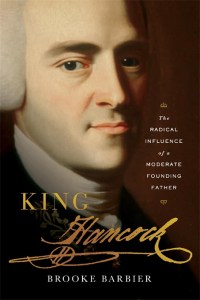
Join us on Sunday, November 26th at 7pm for a pre-recorded conversation with Dr. Brooke Barbier. As we edge closer to the 250th anniversary of the Boston Tea Party, there were many personalities who played major roles in the revolution movement in Boston. One of those key figures was John Hancock, one of the richest men in the North American colonies. Hancock played critical roles in the Sons of Liberty and the Masons to leverage his influence.

We are excited to welcome author and historian Dr. Brooke Barbier, who takes a new look at John Hancock in her new book “King Hancock The Radical Influence of a Moderate Founding Father.” Dr. Barbier dispells some myths and adds new insight into the life of Hancock. Join us for a great discussion on all things King Hancock!

This is a great way to cap off a week turkey, football and shopping!

Book Review: The Whiskey Rebellion: A Distilled History of an American Crisis (Yardley, PA: Westholme Publishing, 2023)

During the second half of the 18th century, the Forks of the Ohio, where the Monongahela and Allegheny Rivers come together to form the Ohio River, were a vortex of conflict that dramatically influenced the course of events in North America and the unfolding of a young United States.  In his latest book, The Whiskey Rebellion: A Distilled History of an American Crisis, historian Brady J. Crytzer adds to his already substantial body of work exploring the critical role the region played in American history.  It is a must read.

            In 1791, Congress passed a whiskey tax to raise revenue and pay off war debts.  Treasury Secretary Alexander Hamilton, whose brainchild the whiskey tax was, designed the tax to help consolidate capital for investment in the country’s infrastructure.  Small farmers, who constituted the bulk of distillers on the frontier, rebelled.  Their resentment of the tax was not driven merely by its existence, but also by its structure, which they argued discriminated against small farmers.   They had a point.  Whiskey, not just as commodity, was a medium of exchange because hard currency was scarce on the frontier.   Thus, in some ways, the whiskey tax resembled the stamp tax; one had to pay it to engage in normal commerce.  The tax could be levied both on stills and the amount of whiskey each distiller produced.  Large enterprises who ran their stills year-round could pay the tax.  Small farmers, however, primarily ran their stills for brief periods in order to convert grain crops to more readily transportable whiskey.   Moreover, the tax had to be paid in cash, which was scarce on the frontier.  As a result, the tax was regressive and more difficult for smaller farmer to pay than for large the large distillers.  

            Rebellion was in some ways the predictable outcome.  By 1791, the frontier was populated by people with a tradition of resisting governments they believed were run for the benefit of others.  Whether those elites were in far-off London or distant Philadelphia was immaterial.  Pittsburgh might be a federalist outpost as a frontier center for exercising the authority of the newly-established United States government, but the more populous surrounding countryside was dominated by small farmers and small communities.  They responded much in the same way Americans had before the Revolution: community meetings and remonstrances, isolated attacks on officials, intimidation of those cooperating with distant governments, destruction of property, the creation of new political institutions, and the old stand-by: tarring and feathering.  Events culminated in a two-day battle for General John Neville’s home and a large muster of rebels at the site of British Major General Edward Braddock’s defeat on the Monongahela River.

Continue reading “Book Review: The Whiskey Rebellion: A Distilled History of an American Crisis (Yardley, PA: Westholme Publishing, 2023)”

Rev War Revelry: “Tea: Consumption, Politics, and Revolution, 1773-1776” with author and historian James R. Fichter

Join us this Sunday night at 7pm as we welcome James R. Fichter to our popular Sunday night Rev War Revelry!

In Tea, James R. Fichter reveals that despite the so-called Boston Tea Party in 1773, two large shipments of tea from the East India Company survived and were ultimately drunk in North America. Their survival shaped the politics of the years ahead, impeded efforts to reimburse the company for the tea lost in Boston Harbor, and hinted at the enduring potency of consumerism in revolutionary politics.

Tea protests were widespread in 1774, but so were tea advertisements and tea sales, Fichter argues. The protests were noisy and sometimes misleading performances, not clear signs that tea consumption was unpopular. Revolutionaries vilified tea in their propaganda and prohibited the importation and consumption of tea and British goods. Yet merchant ledgers reveal these goods were still widely sold and consumed in 1775. Colonists supported Patriots more than they abided by non-consumption. When Congress ended its prohibition against tea in 1776, it reasoned that the ban was too widely violated to enforce. War was a more effective means than boycott for resisting Parliament, after all, and as rebel arms advanced, Patriots seized tea and other goods Britons left behind. By 1776, protesters sought tea and, objecting to its high price, redistributed rather than destroyed it. Yet as Fichter demonstrates in Tea, by then the commodity was not a symbol of the British state, but of American consumerism.

Grab your favorite drink and tune in. If you are not able to tune in on Sunday, the video will be placed on our YouTube and podcast channels.

Jefferson County, West Virginia: Home of Two Revolutionary War Generals

Though it is most commonly associated with its Civil War history, Jefferson County, West Virginia, boasts a large amount of Revolutionary War history, too. One does not have to travel far in the county to stumble on a Washington family home (there were ten, seven still stand) or find Washington family members buried in the Zion Episcopal Cemetery in Charlestown, the county seat (this cemetery supposedly boasts more Washington family graves than any other place in the United States).

Beyond Washington, though, Jefferson County can claim at least two other well-known Revolutionary War generals on its citizen rolls: Horatio Gates and Charles Lee. Both of their countryside estates still stand today but are privately owned.

Traveller’s Rest (Library of Congress)

Traveller’s Rest, built by Horatio Gates in 1773, stands west of Kearneysville in the western section of the county. Gates employed carpenter John Ariss for the wooden portions of the construction project, a man who also worked on many of the local Washington homes. Gates lived at Traveller’s Rest until his service in the Continental Army took him away from his home. Following his defeat at the Battle of Camden in 1780 and his subsequent sidelining by the Continental Congress, Gates returned to his plantation, where he lived quietly. In 1790, the former general freed his slaves, sold the house, and moved to New York, where he died in 1806.

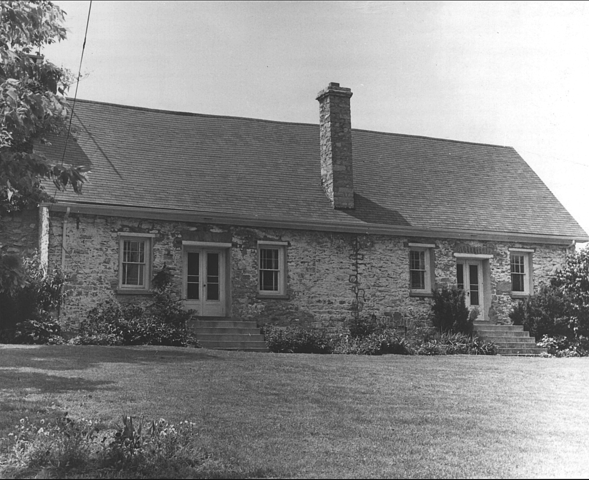
Three miles south of Gates lived Charles Lee at Prato Rio, a Portuguese phrase meaning “Stream on the meadow.” Lee did not build his home but purchased the 1733 structure in 1774 after some urging from Gates. Following his own sacking in the wake of the Battle of Monmouth, Lee returned to his home in 1779, a place he referred to as “The Hut.” Lee spent his last years there quietly surrounded by his three dogs, Father, Son, and Holy Ghost. Supposedly, when he learned of a possible visit from George Washington, Lee attached a note to his door that read, “No dinner cooked here to-day.”

Lee’s house was less conventional than Gates’ home. The inside contained no walls—only chalk lines delineated the different rooms. Lee remarked, “I can sit in any corner, and give orders, and overlook the whole, without moving my chair.”

Prato Rio (West Virginia State Historic Preservation Office)

While both homes can be seen from public roads today, they are not open to the public. Please respect the owners’ privacy.

Rev War Revelry: “For Britannia’s Glory and Wealth” with Author and Historian Glenn Williams, PhD

Join us this Sunday night at 7pm as we welcome Glenn F. Williams, PhD to our popular Sunday night Rev War Revelry! Glenn will examine the political and economic causes of the American Revolution beginning at the end of the Seven Years War / French and Indian War through the resistance movements. He will dispel or clarify some of the popular beliefs about the grievances that eventually led the thirteen colonies to break with the Mother Country. This will be a timely discussion as we approach the 250th anniversary of the Boston Tea Party. Glenn Williams is a retired U.S. Army officer that until recently also enjoyed a “second career” as a military historian. He retired as a senior Historian after 18 years at the U.S. Army Center of Military History and 3 1/2 years as the historian of the American Battlefield Protection Program of the U.S. National Park Service.

Grab your favorite drink and tune in, we will be live so feel free to drop your questions in the live chat. If you are not able to tune in on Sunday, the video will be placed on our You Tube and podcast channels.

Book Review: Steven P. Locke, War Along the Wabash: The Ohio Indian Confederacy’s Destruction of the U.S. Army, 1791 (Havertown, PA: Casemate Publishers, 2023).

The frontier is inextricably tied to the early development of the United States under its 1789 Constitution.  In The Treaty of Paris ending the Revolution, Britain legally ceded its territories north of the Ohio and east of the Mississippi Rivers up to the borders of Canada to the United States—the very same territory it had claimed from France at the end of the Seven Years War.  While European states might redraw borders, they did not consult the people actually living in the area.  Congress proclaimed the area the Northwest Territory and in the following years, native people, particularly the Native nations living in modern Ohio, Indiana, and Michigan fought a lengthy war with the new Unites States, inflicting one of its worst defeats on the United States Army and coming closer than any other Native American coalition to halting, or at least slowing, the spread of white society beyond the Appalachians.

            Steven P. Locke, in his new book, War Along the Wabash, chronicles the first major campaign of the United States Army in what has become known as the War of the Northwest Territory.  In 1791, frustrated by Indian attacks on frontier settlements that had not stopped after the American Revolution, Congress authorized the Washington Administration to raise an army and conduct a campaign against the Ohio Indians, the Miami, Seneca/Cayuga, Shawnee, Wyandot, Odawa, Ojibwe, Potawatomi, and Delaware.  Major General Arthur St. Clair, a veteran of the Revolutionary War, was Governor of the Northwest Territory and took personal command of the army created for the campaign.  His objective was simple enough, to launch his army from Fort Washington in modern Cincinnati to Kekionga, a cluster of Native American villages at the portage between the Maumee and Wabash Rivers in modern Fort Wayne.  Presumably, Americans ensconced in such a fort would be able to readily overawe the local tribes in their homes, force a Native American recognition of American “ownership” of the Ohio Country, and stop Indian raids along and across the Ohio River.  St. Clair received command on March 4, 1791 and was expected to march out of Fort Washington by July 10, hardly sufficient time to recruit, organize, train, and equip an army large enough for the task before him, particularly on the sparsely populated frontier.   Federal troops and supplies had to come all the way from the east coast by way of Pittsburgh and the Ohio River, while Kentucky provided militia and filled out some provisional levies. 

            Despite his intimate experience with the connection between military operations and logistical support, Secretary of War Henry Knox pressed St. Clair all summer to get his troops moving.  St. Clair, of course, could not.   The Americans had already launched mounted raids into Native American territory, which generally resulted in burned villages and despoiled crops.  According to Locke, the speed with which those raids proceeded highlights the cross-purposes under which St. Clair’s campaign would take place.  He could either move quickly with a largely mounted force over existing trails or take a more deliberate, plodding approach through the wilderness by building a road, which necessitated infantry and engineers.  St. Clair chose the latter, but the pressure from Knox and President Washington never ceased.  St. Clair responded by marching the army out of Fort Washington in September and slowly moving northward, building a road, camps, and forts as it moved a little over two miles a day, even before the army had fully assembled at Fort Washington. Indeed, in the first month, St. Clair was not usually with the army, consumed by logistical duties as he shuttled back and forth from Fort Washington or Kentucky gathering supplies and militia and then moving them forward over the newly built, yet still primitive, road. 

            By November 3, 1791, St. Clair had rejoined his army and reached the headwaters of the Wabash River with one regular infantry regiment, two levy regiments, and assorted militia, artillery, dragoons, teamsters, and camp followers.  Altogether, it was about 1,400 men.  Mistakenly believing he was closer to Kekionga than was the case and that the Indians would not attack, he did not build breastworks that night, but deployed his army in two lines with some militia thrown across a creek and various outposts scattered around his position.  He had detached his best federal regiment and sent it back down the trail to escort a supply train coming up to feed the army.  Thus, the United States Army was at its weakest point during the campaign when the Indians of the emerging Ohio Indian Confederacy struck early the next morning.  

            The Confederacy force of 1,100 warriors applied traditional tactics, quickly routing the forward militia and then moving along the flanks to the rear, essentially surrounding St. Clair and then pressing ever tighter.  Sniping from cover, the Indians seemed immune to American fire while inflicting heavy losses on the defenders.   St. Clair launched two bayonet charges to restore his lines.  As usual, the Native Americans gave way to the bayonet charges and then moved around the charging unit’s flanks as it separated from the main army, bringing each under a withering cross-fire.  In a sense, St. Clair carved up his own army and dished out pieces for the Confederacy to consume.  By the time St. Clair launched a third bayonet charge to clear his route of retreat, his army had collapsed.   He escaped with 500 men, leaving 900 dead, dying, or wounded on the battlefield, including dozens of women and children among his camp followers.  (Estimates of American losses vary widely among historians.)  The disaster was worse than General Braddock’s defeat on the Monongahela in 1755, or Custer’s in 1876.  War Along the Wabash is at its strongest when relating and analyzing the battle.  

            Locke tells the entire tale well, discusses the difficulties of raising an army from virtually nothing, includes small biographies of major “characters” as he introduces them, pays careful attention to logistics, which are often overlooked in campaign histories and were critical in the unfolding of St. Clair’s campaign, analyzes decisions and strategies, and discusses the fallout after St. Clair returned to Philadelphia to defend his decision-making.  While most of the story is from the American perspective, which is better documented, Locke makes a serious effort to address Native American perspectives and experiences as they assembled and fought the American army.  

All that said, he lapses into odd, avoidable errors from time to time.  In my Kindle edition, Locke writes on page 397 that there were approximately 400 commissioned officers in the army (nearly 1 in 3 of the total force) at the beginning of the battle, just 150 of whom remained at the end, meaning 250 commissioned officers were killed during the battle.  Yet, on page 429 he notes 69 out of 124 commissioned officers being killed or wounded during the three-hour battle.  Collectively—and there are more eyebrow-raising moments—such errors or inconsistencies distract from the book’s overall strengths, which are considerable.  

In 1793, during his campaign against the Ohio Indian Confederacy, Major General Anthony Wayne led his army up St. Clair’s trace and built a fort near the battlefield, identifiable by the large number of human remains and camp detritus, which he named Fort Recovery.  A town, still named Fort Recovery, grew up there, and the site of the battle largely lies under Wayne Street.   (Museums and parks around town commemorate both St. Clair’s defeat and Wayne’s subsequent campaign).  War Along the Wabash is an excellent starting point to understand St. Clair’s campaign and the defeat that often bears his name.  It will not be the last word, but it sets a high bar that future historians will have to work hard to surpass.  

Rev War Revelry: Old South Meeting House and the Boston Tea Party

Join us this Sunday, October 15th at 7pm as we welcome Matthew Wilding, Director of Education and Interpretation at Revolutionary Spaces. Revolutionary Spaces manages the Old South Meeting House and the Old State House in historic Boston. We will discuss the history of the Old South Meeting House and its important role in the revolutionary movement in Boston (especially during the Boston Tea Party). We will also cover their plans for the 250th anniversary of the Boston Tea Party, including their new exhibit on the destruction of property in public protests.

Grab a drink and follow along as we start to gear up for the 250th anniversary of the Boston Tea Party with Emerging Revolutionary War!

The Revolution in the Hudson Highlands

Few areas have such a concentration of Revolutionary War history, and natural beauty, as New York’s Hudson Highlands. Just twenty miles above the upper reaches of New York City, a traveler enters a different world, one of rugged mountains, spectacular views, and the mighty Hudson River.

The Hudson Highlands were a key area during the Revolution, linking New England to the rest of the states. Supplies, troops, and information flowed through here throughout the conflict. Both sides endeavored to control it. Journeying north a traveler finds several important historic sites from the Revolution.

Continue reading “The Revolution in the Hudson Highlands”