

For this week’s edition of #TrentonTuesday, check out the recent presentation by ERW author Mark Maloy for the American Battlefield Trust’s 2021 Virtual Conference. In it he gives a broad overview of the campaign and touches on some of the places we’ll be visiting this November as part of our 2021 bus tour. If you haven’t already, check out the book here. Enjoy!:
“Rev War Revelry” Discusses George Washington and John Adams with Tom Hand, Founder of Americana Corner
George Washington and John Adams, arguably, were America’s two most influential Founding Fathers. While General Washington was fighting for our country on the fields of battle, John Adams was fighting for it in the halls of the Continental Congress and overseas in the palaces of Europe.
As our first two Presidents, they guided our young nation through the formative first dozen years of life under the United States Constitution. They wisely and bravely set the example for others to follow.
Join Emerging Revolutionary War this Sunday at 7 p.m. EDT on our Facebook page for this week’s “Rev War Revelry” as we discuss the contributions of George Washington and John Adams to America’s fight for independence. Tom Hand will join ERW to discuss how these two men helped to shape our great nation.
Tom is the creator and publisher of Americana Corner, a site he started in 2020 to celebrate the positive stories, great events, and inspirational leaders who helped create and shape our country. Tom is a West Point graduate who founded Gilman Cheese Corporation after leaving the military.
Tom sold the business and now spends most of his time writing for Americana Corner and helping charities with a focus on early America. Tom serves on the Board of Trustees for the American Battlefield Trust and the National Park Foundation’s National Council.
Please join ERW historians and Tom Hand on September 5 for this lively discussion. We look forward to seeing you.

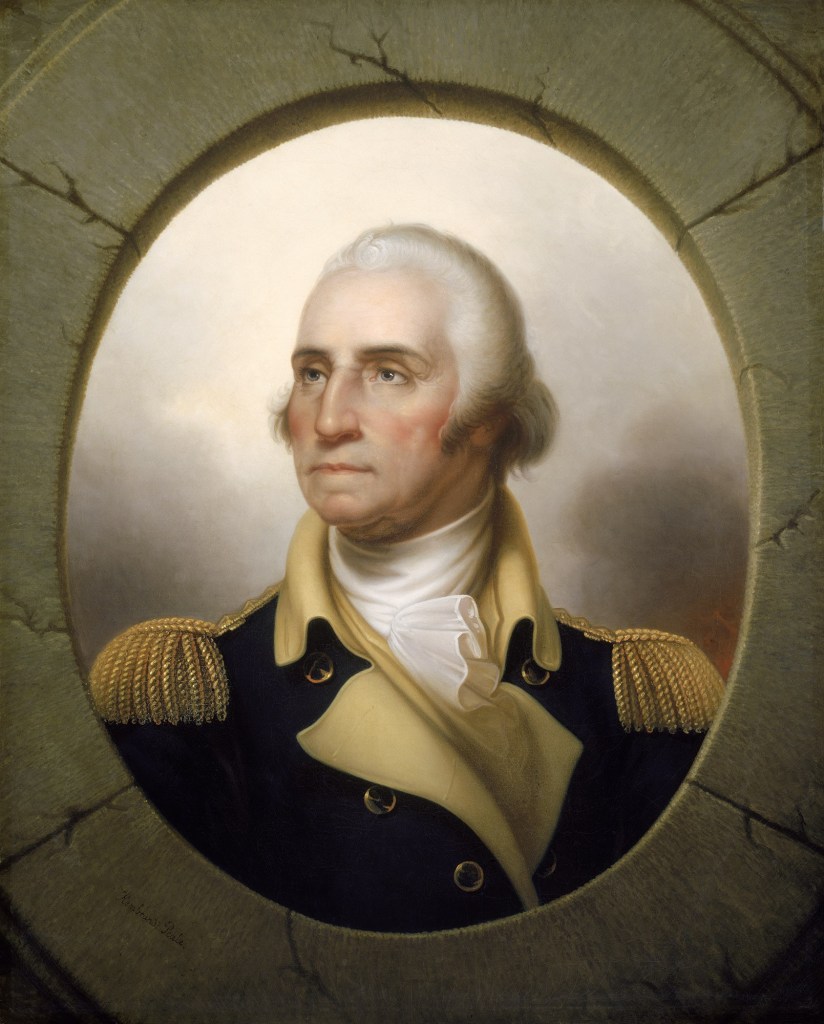
“I think the game is pretty near up.” George Washington at the Precipice
In another installment of #TrentonTuesday, we look at the desperate situation George Washington found himself at in December of 1776. With the Delaware River serving as a barrier between his army and the British and Hessians, Washington was hoping to stave off the entire dissolution of the army. He had already seen his army melt away from over 23,000 to just about 5,000 soldiers due to battle casualties, disease, and desertion. By January 1, 1777, the enlistments of many of those remaining soldiers would be up, and he would lose the basic core of his army. Washington wrote on December 18 to his brother John Washington about how his army had “less than 3,000 men fit for duty owing to the dissolution of our force by short enlistments—the enemies numbers by the best accounts exceeding ten, and by others 12,000 men.” He added that “between you and me I think our affairs are in a very bad way.”

He needed to recruit more soldiers. In the same letter to his brother, Washington wrote that “In a word my dear Sir, if every nerve is not strained to recruit the new army with all possible expedition I think the game is pretty near up.” Here was the commander-in-chief of the Continental Army writing that war was nearly lost.
Continue reading ““I think the game is pretty near up.” George Washington at the Precipice”Americana Corner
Here is what our friend, Tom Hand was up to in August on his blog, Americana Corner. Be sure to join us on Sunday, September 5th at 7pm as we host our next ERW Happy Hour where we will talk with Tom about his passion for early American history, some of his thoughts on our Founders and learn more about his project Americana Corner.
August 24th:
George Washington Discourages Debt and Foreign Entanglements
In his Farewell Address, President Washington shared his thoughts on several topics, including our national debt and the need for our country to remain fiscally prudent. Read it here.
August 17th:
George Washington Calls for Unity in Farewell Address
After eight years in office, President Washington was ready to step down. He had planned to retire at the end of his first term but was talked out of it. During this second run at saying goodbye to public life, Washington was determined to finally retire. Read it here.
August 10th:
Washington’s Farewell Address: One of Our Nation’s Most Significant Documents
George Washington’s Farewell Address is one of the greatest documents in our nation’s history. It was a letter written by President Washington to his fellow citizens as he neared the end of his second term as President. Read it here.
August 3rd:
Pickney’s Treaty Opens Up the Mississippi, Encouraging Westward Expansion
The Treaty of San Lorenzo, also known as Pinckney’s Treaty, was an agreement signed on October 27, 1795 between the United States and Spain. It settled a dispute between the two nations over the boundary of Spanish Florida and granted navigation rights on the Mississippi River to Americans. Read it here.
“These are the Times that Try Men’s Souls”
Today, we begin a series of #TrentonTuesdays. Every Tuesday for the next few weeks we’ll highlight interesting stories related to the Battles of Trenton and Princeton as we approach the inaugural Emerging Revolutionary War bus tour in November. Today we look at the story of Thomas Paine.
As Washington and his army marched quickly across the state of New Jersey from Fort Lee to Trenton in November and December of 1776, they were joined by a young writer. His name was Thomas Paine, and he was well known as the author of the famous patriot pamphlet “Common Sense” that was published earlier in 1776.

Paine, watching the American army melt away from more that 23,000 men in August of 1776, to less than 5,000 men by December, seemed to be witnessing the destruction of the nascent American nation. During the retreat Paine put quill to parchment to write another pamphlet that he would have published that December, titled “The American Crisis.” With Washington’s army on the verge of dissolution, it was an apt title. He started with a phrase that duly summed up the situation: “These are the times that try men’s souls.”
He goes on to exhort Americans to rally for the cause of liberty in spite of the hardships they faced, an exhortation that still evokes a sense of patriotism hundreds of year later. “The summer soldier and the sunshine patriot will, in this crisis, shrink from the service of their country; but he that stands it now, deserves the love and thanks of man and woman. Tyranny, like hell, is not easily conquered; yet we have this consolation with us, that the harder the conflict, the more glorious the triumph.”
Continue reading ““These are the Times that Try Men’s Souls””Unhappy Catastrophes: The American Revolution in Central New Jersey
It is that time again, for another Emerging Revolutionary War Sunday Night Happy Hour! This will be our 50th Sunday Night Happy Hour! There is no better way to celebrate than to talk about New Jersey in the American Revolution.

New Jersey was one of the most fought over areas during the American Revolution. Most know of the battles of Trenton, Princeton and Monmouth, but central New Jersey witnessed many small battles and important events during the Revolution. This area saw it all: from spies and espionage, to military encampments like Morristown and Middlebrook, to mutinies, raids, and full blown engagements like Bound Brook and Springfield. This part of New Jersey saw more action during the Revolution than anywhere else in the young nation. A full understanding of the war demands a study of these events and places.
We welcome historian and author Robert Dunkerly who has authored the latest ERW book titled “Unhappy Catastrophes: The American Revolution in Central New Jersey, 1776-1782” due out later this year. This talk coincides with our bus tour this November of Trenton and Princeton and will provide a good backdrop on the situation in New Jersey in 1776.
This Sunday, August 22nd at 7pm we will go live on our Facebook page. We look forward to this lively discussion and we encourage questions and comments via the chat box. “See” you this Sunday!
Peter Carried a Cannon, The Real Story
Emerging Revolutionary War welcomes back guest historian Karl G. Elsea
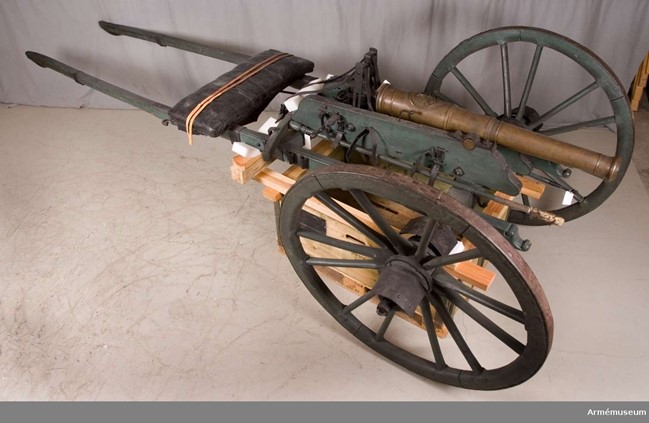
History can be fun; for example, when a war trophy in Sweden and the popular television series “Antiques Roadshow” can be combined to explain an American Revolutionary War legend. There are a number of books, articles, an actor impersonator, and even an U. S. Postal stamp from 1975 showing Peter Francisco carrying a cannon barrel to save it from falling into British hands at the Battle of Camden. Sadly, their stories of Peter carrying a barrel weighting 600 pounds, or even an amazing 1,100 pounds, are not close to true. Here is the likely story. The kind of barrel Peter actually carried is shown in the next picture. The barrel likely weighed between 200 and 300 pounds.
An original amusette is located at the Armémuseums’s magazine in Stockholm. This amusette was constructed in 1768 and captured by the Swedes in the battle at Berby in 1808. The following picture shows this amusette:
“Rev War Revelry” Author Interview: Andrew Waters
Like a modern-day Nathanael Greene or Edward Carrington, Andrew Waters spends his days trekking the waterways of the Carolina high country. Just like those famous military leaders, Andrew Waters does the surveying of these waterways and their tributaries for his day job; as a land and water conservationist.

During this career, Waters first learned about the “Race to the Dan” the pivotal retrograde movement in 1780 that saved Greene’s army from the pursuing British force under Lord Charles Cornwallis. Having the unique perspective from his training and an interest in the history of the time period, he had the perfect combination to pen a complete history of the “Race to the Dan.” Published by Westholme Publishing in October 2020, the title, To The End of the World, Nathanael Greene, Charles Cornwallis, and the Race to the Dan fills a much needed gap in the historiography of the the American Revolution in the southern theater.
This Sunday, at 7p.m. EDT, on Emerging Revolutionary War’s Facebook page, join us in an interview with Waters, discussing this book, Nathanael Greene’s leadership, and any questions you may have about this subject. Remember that favorite beverage and we look forward to you tuning as we welcome historian and author Andrew Waters to the next installment of the “Rev War Revelry.”
“No body ever heard of a quarter Master, in History”
In the spring of 1778, General George Washington chose Major General Nathanael Greene to be the quartermaster general of the Continental army, replacing General Thomas Mifflin who had resigned the previous November. Greene was hesitant and wrote the quote that graces the title of this post. He was leery of giving up a field command to take a thankless job that faced a mountain of difficulties and was more administrative. From the start of his tenure in this important post, Greene brought about effective change. His never ending responsibilities included allocating resources, installing the right people into positions, and untangling contracts, transportation woes, and developing a concept, such as supply depots on potential campaign routes were vast improvements over what his predecessor accomplished.

Greene though yearned to return to an active field command and through his close connection to Washington along with his due diligence as quartermaster, he was assigned command in the southern theater. His assignment was to replace Major General Horatio Gates as the head of Continental forces after the latter’s defeat at Camden, South Carolina in August 1780. Greene’s role in this position is well-documented and outside the scope of this post. One of the decisions he made, early on in his tenure as commander, paid huge dividends and is usually relegated to a passing few lines in most histories of the southern campaigns. What Greene wrote years earlier about “quartermaster in history” the quote that gives this piece its title, holds true in this instance as well.
On December 4, 1780, Greene wrote to Edward Carrington, then on assignment scouting the rivers and topography through North Carolina and southern Virginia, offering him a new assignment; that of quartermaster general for the southern army. After finishing his surveying of the rivers and water transportation, Carrington was ordered to head toward Greene’s forces, bringing supplies that had been gathered with him as well.
This decision, to place an officer of the caliber of Edward Carrington, in that position was a wise move. One that passes largely unheralded. A decision, though, that ultimately leads to success and eventual victory. In this case the momentous “Race to the Dan” that saved Continental forces, fatigued Lord Charles Cornwallis’ British forces, and played an early role in the latter’s move toward Virginia.
Continue reading ““No body ever heard of a quarter Master, in History””“Rev War Revelry” Ladies Night & Loyalist Women
Earlier this year, three great historians, in their words, “took over” the “Rev War Revelry” in a discussion that they dubbed “Ladies Night.” That particular Sunday night historian happy hour was well received, so Emerging Revolutionary War historians Kate Gruber and Vanessa Smiley have decided to have another “Ladies Night” but this time discuss the role of Loyalist women during and after the American Revolution.
Joining this dynamic duo will be Dr. Stephanie Seal Walters, who is currently the Digital Liaison in the Humanities for the University of Southern Mississippi. She earned her bachelor’s and graduate degrees in history from the University of Southern Mississippi and a doctorate in United States History from George Mason University. You may also recognize her from the first annual Emerging Revolutionary War Symposium held in Historic Alexandria, Virginia in September 2019.
We hope that you can tune in, on Sunday night, at 7pm EDT, to catch the next installment of “Rev War Revelry” on our Facebook page.

 Emerging Revolutionary War Era