The Gerrymander: A Gift from the Founding Fathers

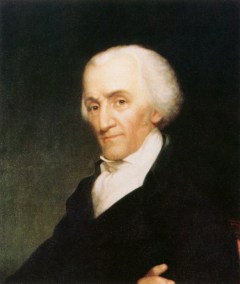
Elbridge-gerry-painting
Massachusetts Governor and U.S. Vice President Elbridge Gerry

Lately, the term “gerrymandering” is getting thrown around as some sort of new illness that afflicts the republic.  The process essentially involves drawing electoral district boundaries in ways that benefit one political party or the other and dates back to 1812 Massachusetts, when Governor Elbridge Gerry, a member in good standing of the founding generation, signed legislation radically redrawing electoral districts in the state to favor the Democratic-Republican Party.

Born in 1744, Gerry was a Massachusetts merchant and vocal opponent of British policy in the colonies who served in the Second Continental Congress, signed the Declaration of Independence, the Articles of Confederation, and attended the Constitutional Convention.   Like a few of his contemporaries, notably George Mason and Patrick Henry of Virginia, he refused to sign the Constitution due to its lack of an explicit Bill of Rights. Nonetheless, he went on to serve as an envoy to France in the Adams administration, then was elected to the U.S. House of Representatives, as Governor of Massachusetts, and then was Vice President under James Madison.  Only a few men had a better claim on the term “founding father.”

Continue reading “The Gerrymander: A Gift from the Founding Fathers”

Symposium Update

In the build-up to the September 28, 2019 symposium Before They Were Americans, today we are highlighting Liz Williams, Director of Gadsby’s Tavern Museum. The tavern consists of two buildings: a (circa) 1785 tavern and the 1792 City Tavern. Named after its tavern keeper from 1796 to 1808, Gadsby’s Tavern was an important center of economic, political, and social life in Alexandria after the American Revolution. Continue reading “Symposium Update”

On this date in….1776

A few random musings on the importance of this date in American Revolutionary history…

IMG_3597
President’s chair, Independence Hall, Independence National Historical Park (author collection)

This day was the date that the assembled Second Continental Congress voted on the draft of a document that was Richard Henry Lee, a delegate from Virginia had put forth in a measure, in June, to be voted on declaring;

“That these United Colonies are, and of right out to be, free and independent States, that they are absolved from all allegiance to the British Crown, and that all political connection between them and the State of Great Britain is, and ought to be, totally dissolved.”

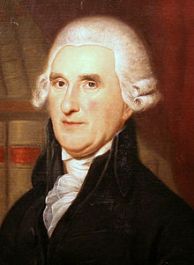
220px-Thomas_McKean_by_Charles_Willson_Peale
Thomas McKean by Charles Wilson Peale

On July 4, two days after this resolution passed, the final and formal version was approved by Congress. John Hancock, president of the Continental Congress affixed his signature boldly and largely at the bottom of the document. Eventually 55 other men would place their signature on the Declaration of Independence, with Thomas McKean, generally accepted, as the last to sign the document, possibly as late as January 1777.

Copies were made and four days later, on July 8, the first public reading occurred in Philadelphia. George Washington had the document read to the Continental Army in New York on the following day, July 9.

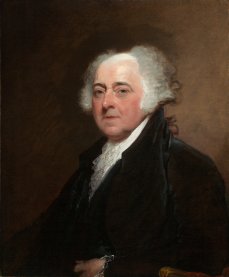
A18236.jpg
John Adams by Gilbert Stuart

For John Adams, future second president of the United States, the second day of July would and should be the day to remember American Independence, as he wrote;

“The most memorable Epocha, in the History of America. I am apt to believe that it will be celebrated, by succeeding Generations, as the great anniversary Festival…It ought to be solemnized with Pomp and Parade with shews, Games, Sports, Guns, Bells, Bonfires, and Illuminations from one End of this continent to the other from this Time forward forever more.”

And that is how many Americans choose to celebrate the anniversary of the Declaration of Independence, however, usually two days later on July 4th. Yet, it took another war; World War II, for July 4th to become a national paid holiday for workers of the Federal government when Congress approved it in 1941.

So, happy Independence Day!

*Feel free to add any interesting historical tidbits about the Second Continental Congress, the signers, or 1776 below!*


Press Release: US Founding Father may have contributed to forgotten ship wreck – study

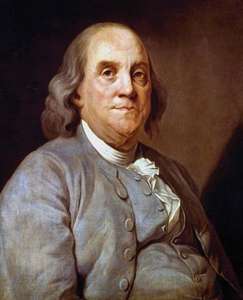
Benjamin Franklin, one of the Founding Fathers of the United States, could have contributed to a forgotten shipwreck narrative, according to new research.

benjamin franklin
Benjamin Franklin

Based on studies of Franklin’s early life as a printer, Dr Hazel Wilkinson claims there are clues which provide information about Benjamin Franklin’s activities during his first visit to London as an 18-year-old printer.

Dr. Wilkinson – from the University of Birmingham, in the UK – suggests a previously unobserved connection between the young Franklin and Richard Castelman, an English theatre manager with an intriguing past. Continue reading “Press Release: US Founding Father may have contributed to forgotten ship wreck – study”

“Shaking Leaves” and a “Damned Poltroon”?: Charles Lee, George Washington, and the 241st Anniversary of the Battle of Monmouth Court House

Two-hundred and forty one years ago, today, one of the most famous, yet controversial, exchanges between two commanding generals on a battlefield occurred in a field west of Monmouth Court House (present-day Freehold), New Jersey.

George Washington had arrived in Englishtown roughly an hour and a half ahead of the Continental Army’s main body and sat down for breakfast sometime around ten in the morning, June 28, 1778. Six miles away, Major General Charles Lee’s vanguard of roughly 5000 men was just about to throw itself at the British rearguard north of Monmouth Court House.

Charles Lee
Maj. Gen. Charles Lee. NYPL.

When those elements came into contact, what resulted was anything but a general engagement. Within an hour Lee’s men were retreating west with newly arrived British troops committed by Lieutenant General Henry Clinton right on their heels. Disaster loomed for the Americans as a result of miscommunication, misunderstanding, and poor generalship on the part of Lee’s subordinates. The American vanguard’s commander had specific orders from Washington to fall upon Clinton’s rear as it marched out of Monmouth, and now Lee was desperately attempting to stave off defeat. Continue reading ““Shaking Leaves” and a “Damned Poltroon”?: Charles Lee, George Washington, and the 241st Anniversary of the Battle of Monmouth Court House”

Unfinished Business?

While prepping for a few summer programs I was re-reading The Road to Guilford Courthouse, The American Revolution in the Carolinas by John Buchanan.

51tpuLN5M1L._SX331_BO1,204,203,200_
The Road to Guilford Courthouse by John Buchanan

In his prologue, Buchanan states the following premise:

“But that tragedy [the American Civil War] is of far less interest than the American Revolution. The Revolution was the most important event in American history. The Civil War was unfinished business. The armies of the Revolutionary War were small but the stage global, the characters larger than life. The American Revolution was the first of the great modern revolutions, arguably the most important, and certainly the only one that did not end in tyranny or one-party rule.” 

The Civil War is the most written about subject in American history, but is it the most important? Is it just the book-end of the American Revolution and was just wrapping up “unfinished business” as Buchanan writes.

Do you agree with the author? Disagree? Conversations and perspectives help shape our recollections and allows for fresh outlooks and critical observations into our shared past. So, feel free to comment below with your thoughts, opinions, and/or insights!


Rise and Fight Again for Southern Revolutionary History

From our friends at American Battlefield Trust (ABT). To learn more about the ABT, click here.

ABT

At stake are 31 acres associated with two Southern Campaign Revolutionary War battlefields, Hanging Rock in South Carolina and Guilford Courthouse in North Carolina.

At Hanging Rock, generous battlefield preservationists like you have already secured 141 acres. These 30 acres in the part of the battlefield where the initial Patriot attack began will add significantly to the land we have saved there already.

At Guilford Courthouse, the half-acre tract at stake may be small, but it’s part of a larger strategy to deal with the modern development crowding in on this battlefield from all points of the compass. Our plan is to buy up plots of battlefield land – including small ones and those with non-historic structures on them like this one – remove all non-historic structures and restore the battlefield. The Guilford Courthouse National Military Park has generously agreed to take responsibility for demolishing and removing the house on this plot, a considerable cost that we would typically need to cover. Continue reading “Rise and Fight Again for Southern Revolutionary History”

Press Release: Veterans Dig History in Groundbreaking Project at Saratoga Battlefield

From our friends at American Battlefield Trust (ABT), for more information about the ABT click here.

ABT


Iraq, Afghanistan and Vietnam veterans have returned to the battlefield.  But instead of the Middle East or Southeast Asia, they are mustering at Saratoga National Historical Park where they will be applying their military knowledge and newly learnt archaeological skills to conduct a field survey at the famous Revolutionary War battlefield.

Approximately 33 veterans will participate in the project created by the American Veterans Archaeological Recovery (AVAR) in cooperation with the American Battlefield Trust and the National Park Service (NPS).  Working together, they will attempt to verify revolutionary-era troop locations during the 1777 battle while aiding participants’ transition back to civilian life.  AVAR recruits veteran participants through social media, and specifically targets those who feel isolated and disconnected after leaving service; the organization predominantly recruits veterans from recent conflicts, such as Iraq and Afghanistan, with a young average participant age of 35. Continue reading “Press Release: Veterans Dig History in Groundbreaking Project at Saratoga Battlefield”

Battle of Fort San Carlos – Westernmost Battle of the American Revolution

St. Louis, Missouri is considered the gateway to the west for the United States beginning in the 19th century. In the 18th century, St. Louis was not on the radar of many in the burgeoning United States.

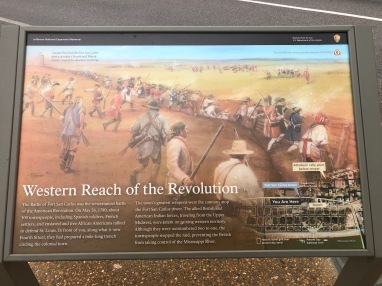
IMG_6914
Western Reach of the Revolution, wayside informational tablet at Gateway Arch National Park (author collection)

However, the westernmost engagement of the American Revolution unfolded in the town of St. Louis, crushing British designs to conquer the territory from the Spanish, who were allied with the French and thus the United States.

On May 26, 1780, a hodgepodge force of 300 townsfolk, free and enslaved blacks, French settlers, and Spanish soldiers rallied to defend their town from the advance of a combined British and Native American force. Continue reading “Battle of Fort San Carlos – Westernmost Battle of the American Revolution”

George Washington, Daniel Morgan, and Winchester, Virginia on Memorial Day

I’ve been intermittently visiting Winchester, VA for years, usually with an eye toward understanding its place in the Civil War.  Tradition has it that no town changed hands more frequently. But, the town also has a prominent, if sometimes overlooked, role in America’s colonial and Revolutionary War history.  In particular, it enjoyed a close relationship with George Washington and Daniel Morgan, helping shape both men.

W%oQ3yOcQbOrOlCK890IDQ
George Washington as a Teenage Surveyor, Winchester, VA

Winchester, or Frederick Town, as it was then known, was the largest village in the lower Shenandoah Valley when Lord Thomas Fairfax decided to relocate from England to his land grant in northern Virginia and became a way-station of sorts for people traveling along the Great Wagon road that ran from Pennsylvania to North Carolina in the 18thcentury.  So, when the Fairfax family hired a teenaged George Washington to help survey its grants in the Shenandoah, Winchester was a logical place for the surveying team to make its temporary home base.  (In truth, surveying teams were constantly moving to maximize their efficient use of time: the saddle might be considered home.)  While the teenager was less than impressed with most accommodations on the frontier, he was pleased with Fredericktown.  He recorded in his diary: Continue reading “George Washington, Daniel Morgan, and Winchester, Virginia on Memorial Day”