

Return to Command

Emerging Revolutionary War welcomes back guest historian Dan Davis

Like my last post at Emerging Revolutionary War on the “Race to the Dan”, the origins of this post lie in a conversation with blog co-founder, Phill Greenwalt. The topic of our discussion revolved around the aftermath of the British victory at the Battle of Camden. The engagement ultimately brought two American officers to the Southern Theater: Nathanael Greene and Daniel Morgan. Greene accepted the position as the new head of the Southern Department’s co two months to the day after the battle while commanding the post at West Point, New York. Morgan’s story, however, is much more fascinating.

In the spring of 1779, George Washington created a light infantry corps within the Continental Army. Such a command fit Morgan’s skillset. He previously commanded the army’s provisional rifle corps. Additionally, Morgan, then a colonel, had compiled a record that arguably warranted elevation to brigadier general. After fighting broke out at Lexington and Concord, Morgan led a rifle company to the aid to the American army besieging Boston. Morgan participated in Col. Benedict Arnold’s Canadian Expedition and was captured during the assault on Quebec. He also played a critical role in the Battles of Saratoga. Morgan’s home state of Virginia, however, had met its quota for general officers and a vacancy was not available.

On June 30, 1779, Morgan learned Brig. Gen. Anthony Wayne received command of the new corps. With his pride devastated, Morgan traveled to Philadelphia. There, on July 19, Congress read his resignation.

Continue reading “Return to Command”
The Other Great Artilleryman

Mention the words “artillery” and “American Revolution” and what name instantly pops into your mind? Henry Knox.

Rightfully so.

Yet, like George Washington, Knox needed competent officers under him to successfully organize, train, lead, and develop the artillery arm of the Continental Army.

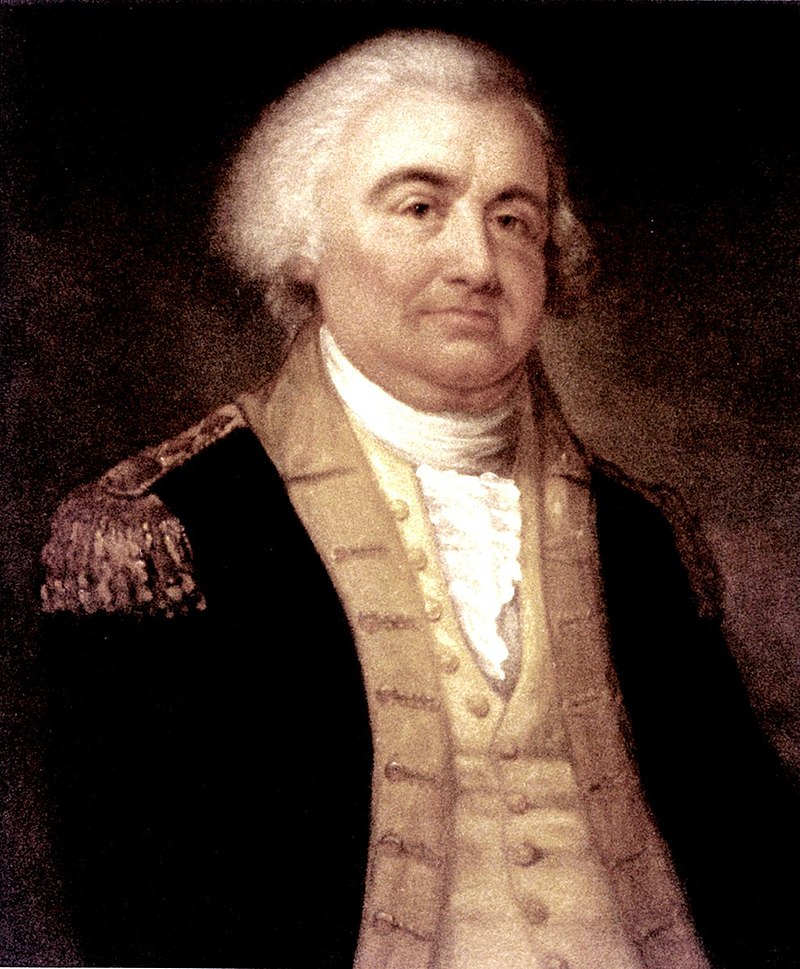
Enter John Lamb.

John Lamb
John Lamb

Born on the first day of 1735 in New York City, he was destined to rebel. The reason he was even born in New York City was due to the fact that his father, a convicted burglar had been sentenced for deportation to the colonies in the 1720s.

His early upbringing saw him become a prosperous wine merchant and he quickly ingratiated himself into the burgeoning patriot movement by becoming an integral part of the Sons of Liberty in New York City.  Continue reading “The Other Great Artilleryman”

Following in Father’s Footsteps

On June 12, 1781, William Pitt, referred to as the “Younger” to differentiate from his father, Lord Chatham, William Pitt, and former prime minister of Great Britain during the Seven Years’ War, stood up in the House of Commons.

Like his late father, Pitt spoke on a war, this time not in favor of a conflict but in opposition. Also like his father, he spoke with a passion and eloquence that marked him for future roles of higher prominence. He also stood to correct his father’s legacy in regards to the Americans which that day was referred to by other members in Parliament. His view on the current war, the American Revolution, is quite evident.

“A Noble Lord who spoke earlier has in the warmth of his zeal called this a holy war. For my part, although the Right Honorouble gentleman who made the motion, and some other gentlemen, have been more than once in the course of the debate reprehended for calling it a wicked or accursed war, I am persuaded, and I will affirm, that it is a most accursed, wicked, barbarous, cruel, unnatural, unjust, and most diabolical

The expense of it has been enormous, far beyond any former experience, and yet what has the British nation received in return? Nothing but a series of ineffective victories or severe defeats–victories only celebrated with temporary triumph over our brethren whom we would trample down, or defeats which fill the land with mourning for the loss dear and valuable relations, slain in the impious cause of enforcing unconditional submission. Where is the Englishman who on reading the narrative of those bloody and well-fought contests can refrain from lamenting the loss of so much British blood shed in such a cause, or from weeping on whatever side Victory might be declared?”

Approximately a year and a half later, in December 1783, the 24-year old William Pitt became the prime minister of Great Britain. His tenure as prime minister, which lasted into the 19th century, would like his father’s, be marked with a war against France.

Yet, for a brief moment, in late spring, in London, William Pitt, the Younger, stood up, without preparing, as he did not intend to speak that day, and gave a passionate but reasonable response to the issue of the war with America. His closing words ring through the centuries.

Who (in Pitt’s case Englishmen but substitute whomever you’d like) “can refrain from lamenting the loss…or weeping on whatever side Victory might be declared.”

A Connecticut Response to the Coercive Acts

On December 16, 1773, Bostonians dumped 340 chests holding 92,000 pounds or 46 tons of East India Company tea into the harbor. Due to the distance news had to travel across the Atlantic Ocean and then for the gears of government to crank a response, it was not until March of 1774 that Lord Frederick North, his administration, and Parliament passed the Coercive Acts.

The Coercive or Intolerable Acts as they were referred to in the American colonies were actually four acts in total, including the Boston Port Act, which closed the port to all commerce, the Massachusetts Government Act, restricting town meetings and changed the governor’s council to an appointed body, the Administration of Justice Act, which gave immunity to British officials from prosecution in Massachusetts, and lastly the Quartering Act, ordering colonists to house British troops when demanded.

Side note: A fifth act, the Quebec Act extended freedom of worship to Canadian Catholics and this decree was looped into the Intolerable Acts by the colonists.

Understandably the response in Massachusetts was one of defiance, protest, and angst and the acts are credited with promoting momentum toward independence. What was not truly appreciated by the British government was the outcry from other colonies.

On this date in 1774, the town of Farmington, Connecticut showed what the passage of the Coercive Acts meant. On May 19, a handbill, a small printed advertisement or notice, was distributed around the town inviting the inhabitants to a gathering to honor “the immortal Goddess of Liberty.”

Northwest View of Farmington from Round Hill – John Warner Barber, 1836
Continue reading “A Connecticut Response to the Coercive Acts”

The Post Script

At 3:00 in the afternoon on April 21, 1781 Virginia militia Colonel James Innes sat down to write a letter near Hickory Neck Church, just shy of the halfway point between Virginia’s old colonial capitol at Williamsburg and its new capitol at Richmond. Perhaps with a heavy heart and a weary hand, Innes picked up his pen to scrawl a letter to Governor Thomas Jefferson. The situation in Virginia was bleak. It had only been a year since, in apprehension of a British attack, the Virginia Assembly voted to move the seat of government from the Peninsula west to Richmond, and along with it the public stores for outfitting, equipping, and otherwise supporting Virginia’s patriot forces in the fifth and sixth years of the war with the British. The gamble hadn’t paid off. January 1781 saw Benedict Arnold’s forces sacking Richmond. Everywhere they went, it seems, a new combined force of British, Hessian, and Loyalist forces left destruction in its wake.

he approximate landing site of the the main body of British soldiers with Col. Simcoe’s detachment landing further downstream in an effort to catch the Virginians by surprise. “…On a signal given, they all, except the gun-boat turned and rowed rapidly towards the point where the landing was to take place…” (author collection)
Continue reading “The Post Script”

ERW Weekender: Ninety Six, The Site That Has It All

Emerging Revolutionary War welcomes historian Vanessa Smiley to the blog.

The thing about Ninety Six National Historic Site is that it’s unassuming exterior hides a wealth of history. It’s also nowhere near a major highway, meaning you have to want to get there if you’re thinking of visiting. And when you do get there, you will realize that there’s more history per acre than its demur entrance lets on. Located in the back country of South Carolina, Ninety Six has a history that speaks to the stories of Native Americans, the American frontier of the 18th century, and the American Revolution.

Entrance to the park
(courtesy of Ninety Six NHS, NPS)

The site at Ninety Six holds a treasure trove of study on these subjects. Native American, mostly Cherokee, activity was heavy in the area long before European settlers arrived. One of the earliest backcountry trading posts, established by Robert Gouedy in 1759, made Ninety Six a hotbed of trading activity thanks to its location at the crossroads of twelve different roads and paths, linking the area to nearly all parts of the colonies.

Continue reading “ERW Weekender: Ninety Six, The Site That Has It All”

Annis Boudinot Stockton, Mythmaking, and the American Revolution (cont.)

Emerging Revolutionary War welcomes back guest historian Blake McGready for part two of the series. To read part one, click here.

While her poetry avoided wartime setbacks and conjured stories of revolutionary unity, Stockton’s poems did confront the violent realities of what she called “a most cruel and eventful war”. Her choice allusions demonstrate how, in her mind, wartime violence bound the revolutionaries together. Following the death of General Joseph Warren at the battle of Bunker Hill she lamented, “That heart, which, studious of his countries good / Held up her rights and seal’d them with his blood!” In 1776 Stockton wrote of revolutionary soldiers who “fought and bled to save their native land / From bowing to a tyrant’s stern command,” and honored great men dying on battlefields “Made fertile by the blood of heroes slain.” Whereas historians have noted how the war’s violence was often deliberately excluded from the popular imagination, by contrast, Stockton’s war and violence were inseparable.[i]

Continue reading “Annis Boudinot Stockton, Mythmaking, and the American Revolution (cont.)”

Using the King’s Highway to Trap a King’s Army

A few weeks ago, heading to the airport after the first Emerging Revolutionary War symposium, fellow ERW historian Rob Orrison made a pit stop in a residential neighborhood in Prince William County, Virginia.

To the average traveler to the Ronald Reagan International Washington National Airport this slight detour would not be normal. Yet, for two historians of early American history, these detours are rarely common.

This particular detour took us to a portion of the King’s Highway that has been preserved by the Prince William County Historic Preservation Division. Along this stretch soldiers in the French Army under Comte de Rocambeau and Continentals under General George Washington traversed on their way to Yorktown to entrap the British under General Lord Charles Cornwallis.

Thus, one king’s soldiers, King Louis XVI took a route named for monarch to assist rebels in trapping the ground forces of another king, that of Great Britain by using a road named for the British monarch. Interesting to think about the naming of the road in those terms.

Portions of this route are still preserved today, other sections have been modernized and blacktopped to be Route 1.

Below are a few photos I snapped, including the size 14 Nike shoe belonging to yours truly, re-enacting marching down the thoroughfare like the patriots of 1781.

The Ring Fight and the Emergence of Andrew Pickens

While the Second Continental Congress met in the early summer of 1776, colonists in the far away backcountry of South Carolina faced a threat from a perennial foe, the Cherokees. While delegates debated a declaration of independence, war parties struck settlements between the Broad and Saluda Rivers in the Ninety Six District. In response to these raids, militia Major Andrew Williamson mustered his Ninety Six regiment. Augmented by militia from the Carolinas and Virginia, he commenced a campaign against the Cherokee villages along the eastern face of the Blue Ridge.

General Andrew Pickens of South Carolina

Williamson struck at Esseneca on August 1. The colonials sustained twenty casualties but forced the warriors to abandon the village. Over the course of the next week, Williamson moved further into enemy territory. Rather than engage his force, the Cherokees retreated before the advance. Williamson burned a number of towns including Oconee, Estatoe and Toxaway.

The regiment reached Tamassee on August 12. Once again, Williamson found the village abandoned. He decided to send out scouting parties to examine the nearby hills. One of the patrols was led by a company commander from the Long Canes region of South Carolina, Captain Andrew Pickens. He took with him about sixty men. To cover more ground, Pickens divided his group and continued on with thirty five militiamen.

“Judiciously Designed and Vigorously Executed”: The March to the Dan River

Emerging Revolutionary War welcomes back guest historian Daniel T. Davis. 

Last month, I heard Emerging Revolutionary War co-founder Phill Greenwalt remark “when you think about retreats, victory is a word that doesn’t come to mind.” The period of January 18 to February 14, 1781 is the exception to the rule. During this time frame, the American army under Maj. Gen. Nathanael Greene and the British under Charles, Lord Cornwallis, marched across the backcountry of the Carolinas. Known as the “Race to the Dan”, this episode between the engagements at Cowpens and Guilford Courthouse, is a largely forgotten but consequential even in the Southern Campaign of 1781.

13615353_10154159045361343_4661891239939243645_n
The Dan River (courtesy of Rob Orrison)

Continue reading ““Judiciously Designed and Vigorously Executed”: The March to the Dan River”