

 From our friends at American Battlefield Trust (ABT) comes the following announcement and call for assistance.
The first line of the announcement sums up the importance of this new initiative of the American Battlefield Trust:
“They secured our liberty. It’s time for us to honor their legacy.”
In a collaboration between the ABT, the National Park Service, and the South Carolina Battleground Trust, the joint initiative is to highlight the “tremendous significance of these places to American independence.” Their combined goal is to preserve 2,500 acres of American Revolutionary War battle lands in the Palmetto State.
As of the middle of this month, 308 acres of hallowed ground has been saved. The land protected are part of the battlefields of Camden and Eutaw Springs, which “bookend a period of incredible consequence to the American Revolution.”
This is a great start, but as that means, it is a beginning and the ABT will need all our help to make it happen. This new direction will bring preservation, education, and technology together into one investment and keep the effort going, until this land is saved for the present and future generations.
For those readers of ours that are already members, thank you. For those that are interested in learning more, click here.
To check out the various sites and history associated with the Liberty Trail, click here.
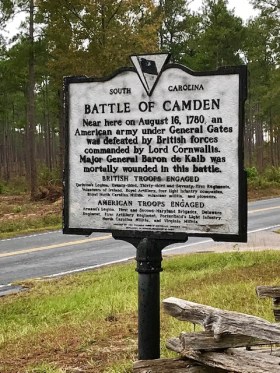 August 16, 1780 would prove to be a devastating day for the American Army in the south, known as the “Grand Army” by its commander, Maj. Gen. Horatio Gates, the Hero of Saratoga. The battle between this army and that of Lt. Gen. Charles, Earl Cornwallis, in the Pine Barrens near the South Carolina town of Camden, would end in the total rout of the Americans and the destruction of the reputation of its commander. It would also temporarily leave the southern colonies without a central army to oppose the British.

 Emerging Revolutionary War sent an email inquiry to our friends at American Battlefield Trust to elaborate a little further on what this name change means and the impact to their current and future preservation efforts.
  Emerging Revolutionary War Era