

“[T]he Battle of Lexington on the 19th of April, changed the Instruments of Warfare from the Penn to the Sword,” John Adams wrote years after the event. He was well acquainted with the pen as an instrument of warfare. By the spring of 1775, he was twelve letters into a thirteen-letter volley that would become known as the “Novanglus letters”—a series that appeared in the Boston Gazette starting January 23.[1]
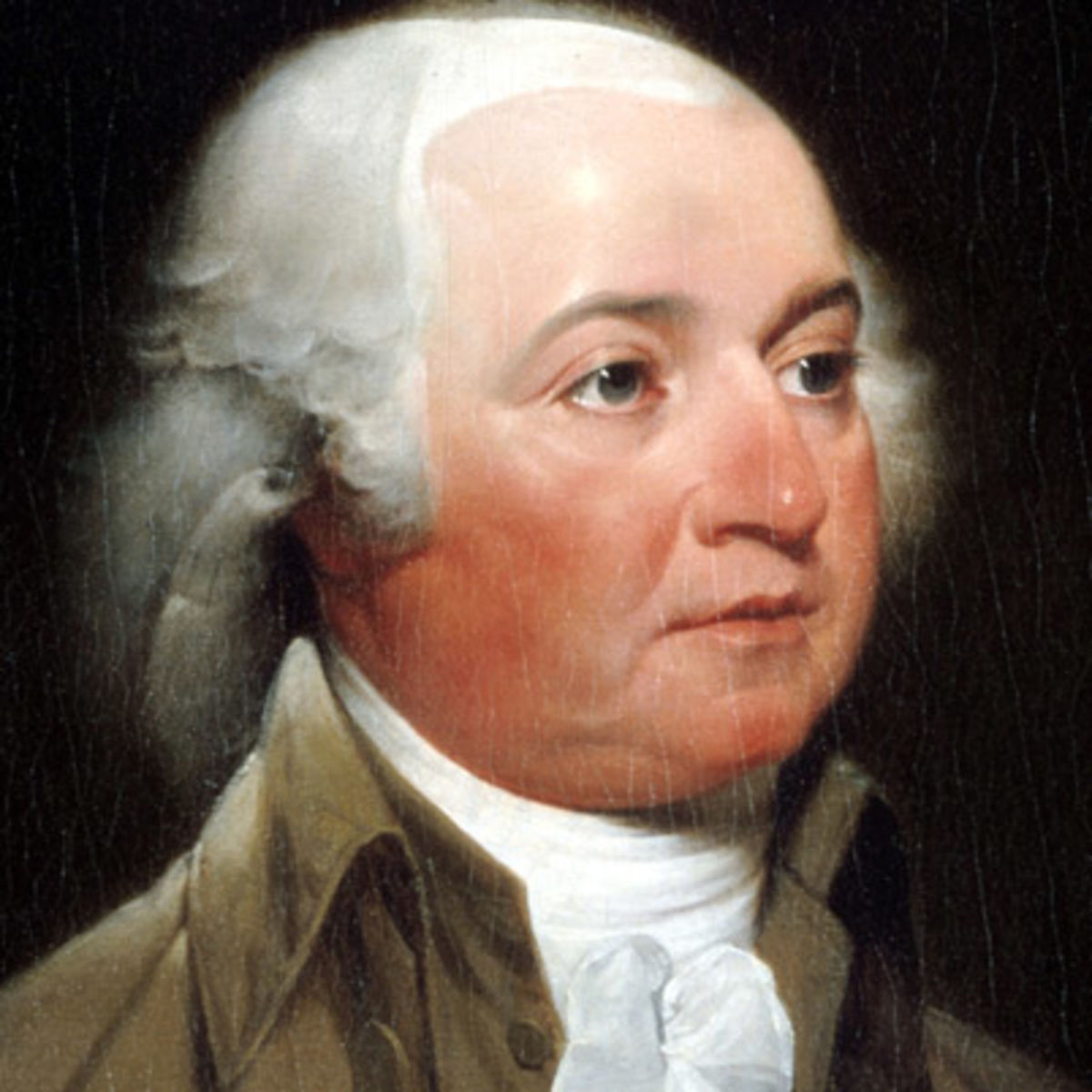
The final of those letters appeared, by happenstance, on April 19—the same day as the battles of Lexington and Concord. The thirteenth letter of the series never appeared because of the suspension of printing in Massachusetts following the battle.[2]
Adams was, at the time of the battle, preparing to return to Philadelphia for the next session of the Continental Congress. Before his departure, however, he resolved to ride out to the battlefield so he could see with his own eyes the results of the bloodshed that had occurred. He felt it would make him a more reliable witness when he reported on the event to Congress.
On April 22, Adams rode by horseback from his home in Quincy to Cambridge, where the local militia had concentrated. There, Adams met with military leaders, generals Artemis Ward, William Heath, and Joseph Warren. He also informally inspected the troops, “the New England Army,” as he characterized them.[3]
“There was great Confusion and much distress,” Adams recounted: “Artillery, Arms, Cloathing were wanting and a sufficient Supply of Provisions not easily obtained. Neither the officers nor Men however wanted Spirits or Resolution.”
But how long would such spirit and resolve last, Adams wondered? This questions would inform his strategy when he eventually arrived in Philadelphia.
From Cambridge, Adams rode west toward “Lexington and along the Scene of Action for many miles. . . .” Rubble from the battle still laid strewn along the road from Concord to Lexington and from Lexington back into Boston—a route Adams traced in reverse. He did not write down details of what he saw, but they made a deep impression, as would soon become evident in his attitudes about independence.
To help make sense of what he saw, he “enquired of the Inhabitants” about “the Circumstances” of the battle. “These were not calculated to diminish my Ardour in the Cause,” he admitted. “They on the Contrary convinced me that the Die was cast, the Rubicon passed, and as Lord Mansfield expressed it in Parliament, if We did not defend ourselves they would kill Us.”
Just after his visit to the battlefield, illness debilitated Adams, which delayed his departure for Congress. He did manage to catch up to his fellow delegates en route. Along the way, they saw first-hand how the events at Lexingon and Concord had galvanized public opinion, although it would yet be some months before Congress itself followed public opinion.
But for Adams, events had indeed crossed the Rubicon. He began his unceasing, inexorable push toward independence.
Yet it was a two-pronged approach for Adams, who not only operated on that larger existential level but also on a more immediate, pragmatic one. After all, the sword, not the pen, was now the main weapon. He began advocating for measures that would transform “the New England Army” into a Continental one. His nomination of George Washington to lead the fledgling force, for example, was a masterful stroke to diversify the army and, thus, ensure more colonies had skin in the game.
Congress’s slow pace toward independence would frustrate Adams almost to no end over the fifteen months that would follow. However, the bloodshed of Lexington and Concord made an impression on Adams that would drive him onward, inexorably, toward July 1776 and beyond.
[1] For more on the exchange between Adams and Daniel “Massachusettensis” Leonoard, see https://www.masshist.org/publications/adams-papers/view?&id=PJA02dg5.
[2] Ibid.
[3] Quote from Adams come from John Adams autobiography, part 1, “John Adams,” through 1776, sheet 18 of 53 [electronic edition]. Adams Family Papers: An Electronic Archive. Massachusetts Historical Society. http://www.masshist.org/digitaladams/



 Emerging Revolutionary War Era