Rev War Revelry: Women of the Revolution with Saratoga Historian Lauren Roberts

Join us this Sunday at 7 pm as we welcome Saratoga historian Lauren Roberts. Lauren will discuss with us the upcoming as we discuss their upcoming Women in War Symposium and Bus Tour hosted by the Saratoga County 250th Commission. The third Annual Women in War Symposium will be held on May 4, from 8:15 a.m. to 3:30 p.m. at the Old Saratoga American Legion Post, located at 6 Clancy St. As an enhancement to the Symposium, a bus tour of historic sites will be offered on May 5.

Lauren will also discuss some of the topics being covered at the Symposium and some of the diverse history in Saratoga that relates to the American Revolution. We all know about the Battle of Freeman’s Farm and Bemis Heights, but how many know about the “witch of Saratoga”? Grab a drink and join us this Sunday night at 7pm on our Facebook page for a fun and insightful discussion into the great work that Saratoga County is doing to commemorate “America’s Turning Point.”

Book Review: “A Republic of Scoundrels” edited by David Head & Timothy C. Hemmis

In an age where the names of Franklin, Jefferson, and Washington are household, the names of Wilkinson, Kemper, and Bowles seem to be consigned to the fringes of histories of the early American republic. With the formation of the fledgling United States of America, both the honorable and not-so-honorable helped shape the direction of expansion, and diplomacy, and reinforce societal values of the 18th and early 19th centuries. This collection of essays is akin to watching a true crime television documentary.

With a collection of essays, editors David Head and Timothy C. Hemmis, historians, and biographers provide snippets into the lives of these scoundrels of the early Republic. A few of the names are well known, including Benedict Arnold and Aaron Burr, a few will conjure up memories from the fringes of other histories, such as James Wilkinson, whereas others have escaped the main avenues of historical exploration. Throughout the various essays, “this collection seeks to reexamine the Founding generation” to “replace the hagiography of the Founding Fathers with something more realistic” (pg. xx).

First, an examination of the word “scoundrel” is needed. According to usage at the time and the 1755 dictionary of Samuel Johnson’s authoring, that word meant “a mean rascal; a low petty villain” (pg. xiii). Through 12 individuals, the various authors explain how each earned the moniker “scoundrel” and how that affected the development of the United States. Especially interesting was the role of various individuals in Western expansion and the domino effect on international diplomacy. Individuals such as Aaron Burr and James Wilkinson are better known but Philip Nolan and Thomas Green are not so much.

Others, such as Benedict Arnold and Charles Lee get a fresh look from two great Revolutionary-era historians, James Kirby Martin and Mark Edward Lender. Included in those discussed, William Augustus Bowles and Diego de Gardeoqui show how international actors played prominent roles in providing heartburn to the national government. One theme, the west and south of the original thirteen states provided the arena for scheming, opportunity, and risk.

In conclusion, the editors examine three main reasons a study like this is important, that the “unintended result of the American Revolution” was “many men decided they had their own ideas about what was important” (pg. 266). Secondly, the “vital importance of the American West as a zone of territorial expansion, economic opportunity, and foreign intrigue” and lastly simply “early America was…a time and place for scoundrels…” (pgs. 267-268).

Overall this essay-comprised book is a fun, fresh read that looks at those scoundrels that sought an opportunity to change the landscape of the early American republic and potentially change the course of United States history. Who does not like to read about plots, scheming, and resultant escapades?  

Publisher: Pegasus Books, December 2023

368 pages, including images

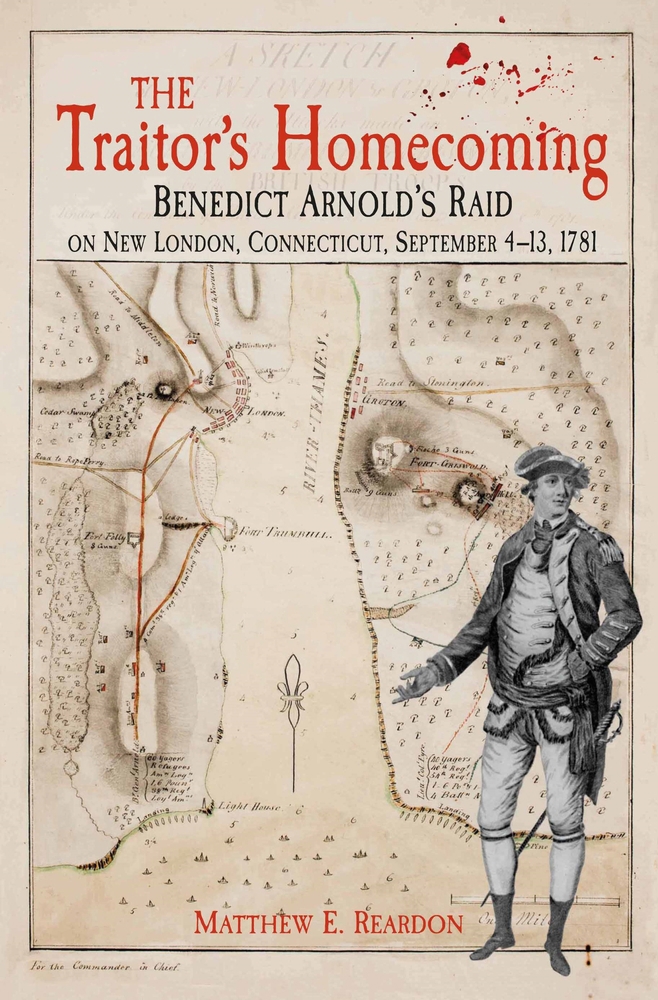
Rev War Revelry: “God Save Benedict Arnold” with Author Jack Kelly

Join us this Sunday evening at 7:00 p.m. on our Facebook page for an author interview with Jack Kelly to discuss his new book, God Save Benedict Arnold: The True Story of America’s Most Hated Man.

Benedict Arnold committed treason― for more than two centuries, that’s all that most Americans have known about him.

Yet Arnold was much more than a turncoat―his achievements during the early years of the Revolutionary War defined him as the most successful soldier of the era. GOD SAVE BENEDICT ARNOLD tells the gripping story of Arnold’s rush of audacious feats―his capture of Fort Ticonderoga, his Maine mountain expedition to attack Quebec, the famous artillery brawl at Valcour Island, the turning-point battle at Saratoga―that laid the groundwork for our independence.

Arnold was a superb leader, a brilliant tactician, a supremely courageous military officer. He was also imperfect, disloyal, villainous. One of the most paradoxical characters in American history, and one of the most interesting. GOD SAVE BENEDICT ARNOLD does not exonerate him for his treason―the stain on his character is permanent. But Kelly’s insightful exploration of Arnold’s career as a warrior shines a new light on this gutsy, fearless, and enigmatic figure. In the process, the book offers a fresh perspective on the reasons for Arnold’s momentous change of heart.

A “Passion for Superiority,” The Continental Army Officer Corps, and Middle School “Mean Girls”

John Adams woke on the morning of May 21, 1777, feeling light of heart. A spell of bad weather had finally broken, and the bright spring dawn cheered his spirits. He took a few minutes before beginning his day to pen a letter to his “Dearest Friend,” his wife, Abigail.[1]

“The Charms of the Morning at this Hour, are irresistible,” he told her. “The Streakes of Glory dawning in the East: the freshness and Purity in the Air, the bright blue of the sky, the sweet Warblings of a great Variety of Birds intermingling with the martial Clarions of an hundred Cocks now within my Hearing, all conspire to chear the Spirits.” Adams’s letters are filled with such descriptions, which are one of the many reasons they’re a delight to read. But then he got down to business.

As the Second Continental Congress’s de facto Secretary of War, he had spent the previous evening, May 21, at the War Department meeting with General Benedict Arnold. Arnold had been embroiled in controversy with several lower-level officers, one of whom claimed “Money is this man’s God, and to get enough of it he would sacrifice his country.” (The charge was untrue at the time but proved ironically prophetic.)

Adams told Abigail that he’d heard Arnold “fought like Julius Caesar” and came to believe Arnold’s side of the tale. “He has been basely slandered and libeled,” Adams concluded.

His political perch gave Adams a view of the Continental Army that might surprise us today. In his usual candor, he told Abigail:

“I am wearied to Death with the Wrangles between military officers, high and low. They Quarrell like Cats and Dogs. They worry one another like Mastiffs. Scrambling for Rank and Pay like Apes for Nutts.”

As he continued, he made an observation that touched close to home. Adams was notoriously vain—a vice he recognized and continually struggled with—so he was deeply familiar with the human tendency to compare oneself with one’s peers. Particularly early in his legal career, Adams measured himself against other young lawyers and pined for the chance to distinguish himself. It was, he said to Abigail, a “Passion for Superiority”:

“I believe there is no one Principle, which predominates in human Nature so much in every stage of Life, from the Cradle to the Grave, in Males and females, old and young, black and white, rich and poor, high and low, as this Passion for Superiority …. Every human Being compares itself in its own Imagination, with every other round about it, and will find some Superiority over every other real or imaginary, or it will die of Grief and Vexation[. . . .] I never saw it operate with such Keenness, Ferocity and Fury, as among military Officers. They will go terrible Lengths, in their Emulations, their Envy and Revenge, in Consequence of it.”

Adams had seen that sort of cattiness “among Boys and Girls at school, among Lads at Colledge, among Practicers at the Bar, among the Clergy in their Associations, among Clubbs of Friends, among the People in Town Meetings, among the Members of an House of Reps. [Representatives], among the Grave Councillors, on the more solemn Bench of justice, and in that awfully August Body the Congress, and on many of its Committees — and among Ladies every Where. . . . .” No where was it worse than among the “Mean Girls” of the army’s officer corps.

“So much for Philosophy,” Adams decided, and then inquired about his children and Abigail’s asparagus. Then he concluded with a note that resonates with all of us here at Emerging Revolutionary War:

“I would give Three Guineas for a Barrell of your Cyder — not one drop is to be had here for Gold. And wine is not to be had under Six or Eight Dollars a Gallon and that very bad. I would give a Guinea for a Barrell of your Beer. The small beer here is wretchedly bad. In short I can get nothing that I can drink, and I believe I shall be sick from this Cause alone. Rum at forty shillings a Gallon and bad Water, will never do, in this hot Climate in summer where Acid Liquors are necessary against Putrefaction.”

Cheers!


[1] All quotes from: Letter from John Adams to Abigail Adams, 22 May 1777 [electronic edition]. Adams Family Papers: An Electronic Archive. Massachusetts Historical Society. http://www.masshist.org/digitaladams/

Americana Corner

Emerging Revolutionary War checks in with Tom Hand and Americana Corner. Here is what has has been published on that blog for the month of October.

Benedict Arnold and the Perilous March to Quebec
October 4, 2022

Benedict Arnold’s expedition to the gates of Quebec City in the fall and winter of 1775 is widely regarded as one of the greatest military marches in history. Arnold, despite his sullied reputation due to his traitorous behavior later in the war, was one of America’s most gifted field commanders, and his tremendous leadership skills were put to the test on this perilous journey.
Read More

Arnold’s Army Marches into Trouble
October 11, 2022

When Colonel Benedict Arnold’s army reached the Great Carrying Place on October 11, 1775, they had been moving north on the Kennebec River for almost three weeks and had advanced eighty-four miles. The American militiamen were on their way to assault Quebec City, the crown jewel of British Canada. The time originally estimated for the entire journey to Quebec was about twenty days, and the anticipated distance was 180 miles. Neither Arnold nor the men were aware they had another 300 miles to go.
Read More

Benedict Arnold’s Army Reaches Quebec
October 18, 2022

After clearing the Height of Land, Colonel Benedict Arnold’s army on its way to capture Quebec City believed they were on the downhill slope to their destination, but their hardships were not finished. The area which they just entered was poorly mapped, and Arnold’s regiments paid the price for this lack of knowledge.
Read More

Americans Commence Siege of Quebec
October 25, 2022

With the capture of Montreal by General Richard Montgomery and the presence of Colonel Benedict Arnold’s force of 600 men on the Plains of Abraham, Britain’s foothold in Canada had dwindled to about one square mile, the area within the mighty walls of Quebec City. Now the defenses of that fortress would be tested by a band of determined Americans.
Read More

“Rev War Revelry” Convention Army Discussion

On October 17, 1777, British General John Burgoyne surrendered his joint British, Canadian, and Hessian and Brunswicker forces to patriot General Horatio Gates near Saratoga, New York. Over 6,000 soldiers, the number placed by one historian is 6,222, became captives of war. Under the terms of the convention agreed upon by Burgoyne and Gates, the vanquished army was to march to Boston, Massachusetts, board British ships, and sail to England, to await formal exchange and to not participate in the war in America further.

When news reached the Continental Congress of this concession, that political body demanded a complete list of the troops surrendered to ensure the terms of the convention was to be upheld. When this was not forthcoming by the British, Congress reacted by vowing to not adhere to the stipulations of the convention. Burgoyne’s forces would not head back to Great Britain to await an exchange that year. Instead, these men were to be confined in camps both in New England and Virginia for the duration of the war. This force came to be called the Convention Army.

This Sunday, March 6, at 7 p.m. EDT, join Emerging Revolutionary War on our Facebook page for the next historian happy hour, as Dan Welch and Phillip S. Greenwalt discuss the Convention Army and what happened after the pivotal battle of Saratoga in October 1777.

“This Sudden Expedition”: The Capture of Fort Ticonderoga – 246 Years Later

On this date in 1775, an early victory was secured for the American cause along the western shore of Lake Champlain in New York. Led by Colonel Benedict Arnold and Ethan Allen, over eighty men surprised and overwhelmed Fort Ticonderoga’s garrison, capturing the strategic stronghold and much needed supplies and cannon for the Americans. On May 22, the Pennsylvania Packet reported on the news received from the north:

On Wednesday evening last arrived here, John Brown, Esq; from Ticonderoga, express to the General Congress, from whom we learn, that on the beginning of this instant, a company of about fifty men, from Connecticut, and the western part of Massachusetts, and joined by upwards of one hundred from Bennington, in New-York government, and the adjacent towns, proceeded to the eastern side of Lake Champlain, and on the night before the 11th current, crossed the Lake, with 85 men, (not being able to obtain craft to transport the rest,) and about daybreak invested the fort, whose gate, contrary to expectation, they found shut, but the wicker open, through which, with the Indian war whoop, all that could, entered one by one, others scaling the wall on both sides of the gate, and instantly secured and disarmed the sentries, and pressed into the parade, where they formed the hollow square;  but immediately quitting that order, they rushed into the several barracks on three sides of the fort, and seized on the garrison [commanded by Captain William Delaplace], consisting of two officers, and upwards of forty privates, whom they brought out, disarmed, put under guard, and have since sent prisoners to Hartford, in Connecticut. All this was performed in about ten minutes, without the loss of a life, or a drop of blood on our side, and but very little on that of the King’s troops.

In the fort were found about thirty barrels of flour, a few barrels of pork, seventy odd chests of leaden ball, computed at three hundred tons, about ten barrels of powder in bad condition, near two hundred pieces of ordnances of all sizes, from eighteen pounders downwards, at Ticonderoga and Crown Point, which last place, being held only by a corporal and eight men, falls of course into our hands.

By this sudden expedition, planned by some principal persons in the four neighboring colonies, that important pass is now in the hands of the Americans, where we trust the wisdom of the Grand Continental Congress, will take effectual measures to secure it….

The story of the capture of Fort Ticonderoga is as confusing as it is epic. Arnold, a Connecticut man, held a colonel’s commission to take the fort from the Massachusetts Committee of Safety, but he rode ahead to be part of the action without the men he was ordered to raise for the expedition; and Ethan Allen and his Green Mountain Boys of the Hampshire Grants were anti-New York and in search of their own glory after being asked to join a separately organized assault on the fort by Colonel Edward Mott sanctioned by Connecticut.

Ethan Allen demands the surrender of Fort Ticonderoga in this dramatized illustration. NYPL

The irony of all of this is that each plan formulated by those involved was done entirely without the advice or consent of New York, the very colony whose boundaries the fort was within. This occurred all during the commencement of the Second Continental Congress when New York was still weary of escalating hostilities with the King. Regardless of the awkward and unconcerted circumstances, it is undeniable that the fort’s capture helped secure victory for the Americans during the siege of Boston when fifty-eight pieces of ordnance were transported to assist General Washington in driving the British out of the city. Whether or not Allen heroically demanded Capt. Delaplace to surrender, “In the name of the Great Jehovah and the Continental Congress!” as is remembered (he almost definitely did not), is an entirely different question.

“Rev War Revelry” Tackles Virginia 1781

Mention the following words to any casual student or enthusiast of the American Revolutionary War and we can almost guarantee what the first word(s) or topic out of their mouths will be.

Virginia.

1781.

American Revolution.

If you are thinking, Yorktown, or Siege of Yorktown or Surrender of Yorktown, then our rhetorical question above is correct.

Most people know about the Siege and Surrender at Yorktown, but Virginia was a hot spot of activity the summer leading up to Yorktown. With British troops, led by the likes of Benedict Arnold, William Phillips, Alexander Leslie, and lastly by Lord Charles Cornwallis in the Old Dominion throughout the year and American leaders like the Marquis de Lafayette and Baron von Steuben, Virginia saw very active campaigning ranging through most of the central and eastern parts of the colony.

That is why you need to tune in and Join Emerging Revolutionary War this Sunday, on our Facebook page, at 7p.m EST for the next “Rev War Revelry” as we discuss the events leading up to Yorktown in October 1781.

We will cover actions such as Spencer’s Ordinary, Green Spring, Gloucester Point and of course Yorktown.

ERW will be joined by historians J. Michael Moore, Kirby Smith and Drew Gruber. All three live and work in the “Historic Triangle” of Virginia. The three gentlemen all have researched, led tours and have written published works about this important period of the American Revolution.

Map by Michel du Chesnoy (1746-1804) 

This will be a precursor to ERW’s annual fall trip, when we will visit Gloucester Point, Spencer’s Ordinary, Green Sping and Yorktown (which we invite you to follow along with on our Facebook page).

“Rev War Roundtable with ERW” Talks Treason & Benedict Arnold

Benedict Arnold, the mere mention of the name seems permanently intertwined with the word “treason.” His name has even made it into popular vernacular, being called a “Benedict Arnold” as an insult. Yet, there is more to the man than just that infamous moment along the banks of the Hudson River in West Point, New York in 1780.

Prior to that turning point, Arnold was one of the greatest battlefield leaders the Americans had at that rank. His inspiring leadership on the field of battle at Saratoga led to a climactic charge and one of the greatest monuments to a leader on any hallowed ground. He survived the cold and assaults in Canada in the winter of 1776 as well.

After being a turncoat he was a menace in Virginia in 1781, raiding in Richmond and the Tidewater of Virginia. One of ERW’s historians will discuss Arnold’s role in the state capital of Virginia.

A lot to unpack and that is why this Sunday, at 7pm, live on our Facebook page, Emerging Revolutionary War historians will be joined by Dr. Powell, who spoke on the French and Indian War with us back in June, to discuss Benedict Arnold. So, bring those pre-conceived notions but an open mind to fully appreciate Arnold. This “Rev War Revelry” will discuss the before reasons for, and the after of his switching allegiances.

The Other Great Artilleryman

Mention the words “artillery” and “American Revolution” and what name instantly pops into your mind? Henry Knox.

Rightfully so.

Yet, like George Washington, Knox needed competent officers under him to successfully organize, train, lead, and develop the artillery arm of the Continental Army.

Enter John Lamb.

John Lamb
John Lamb

Born on the first day of 1735 in New York City, he was destined to rebel. The reason he was even born in New York City was due to the fact that his father, a convicted burglar had been sentenced for deportation to the colonies in the 1720s.

His early upbringing saw him become a prosperous wine merchant and he quickly ingratiated himself into the burgeoning patriot movement by becoming an integral part of the Sons of Liberty in New York City.  Continue reading “The Other Great Artilleryman”