Symposium Recap

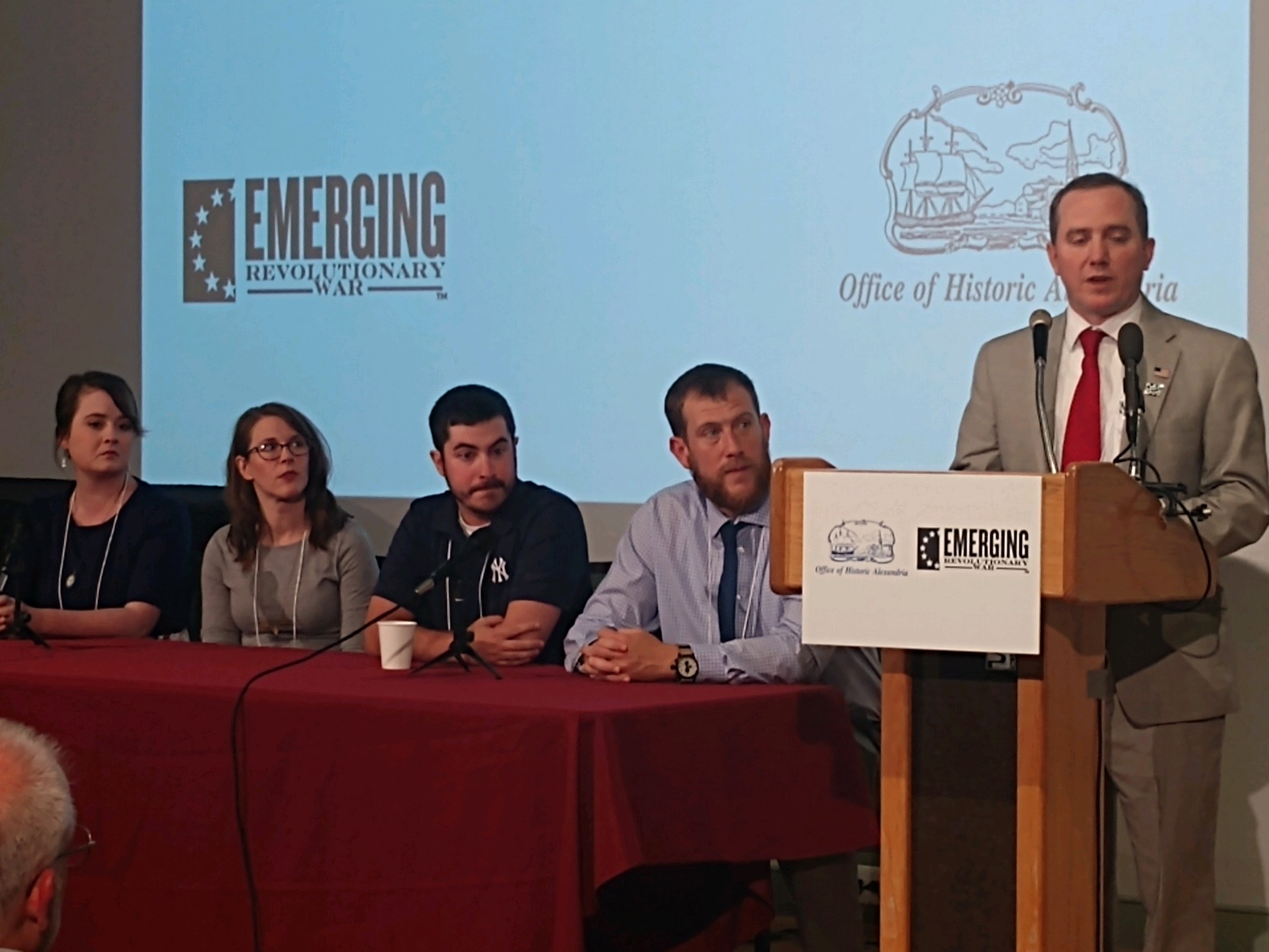
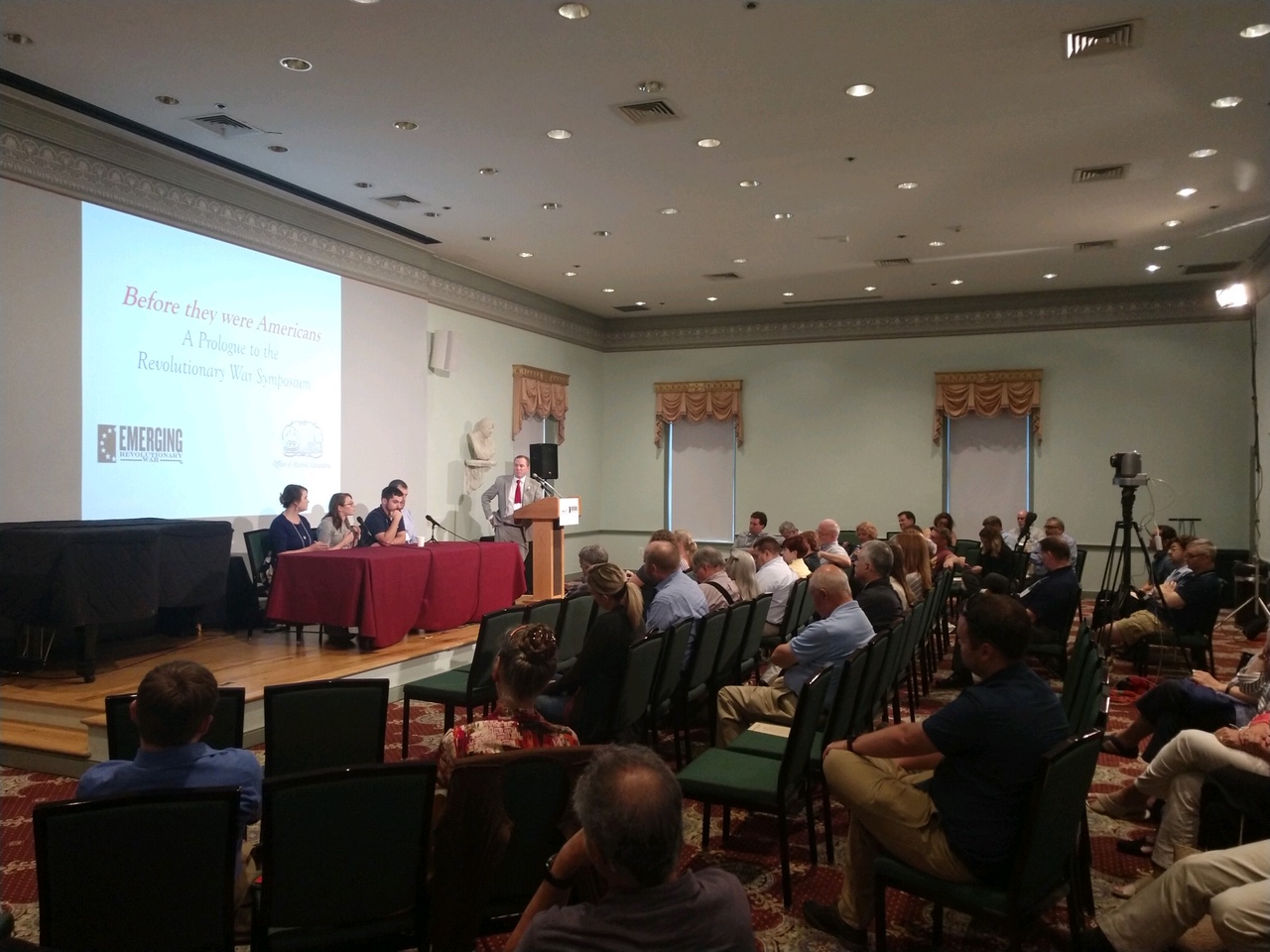
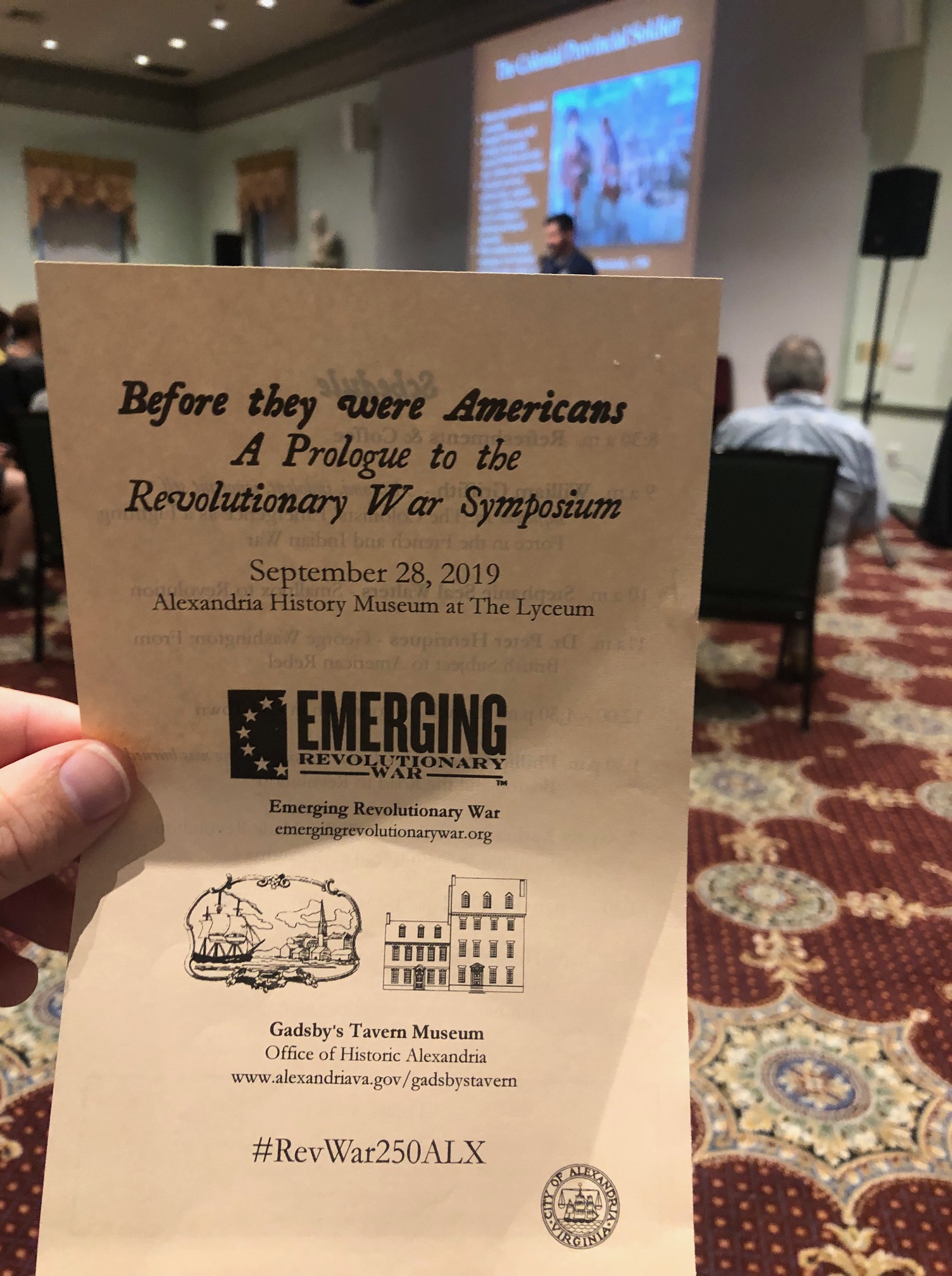
One week has passed since the first annual Emerging Revolutionary War symposium. Held in conjunction with Historic Alexandria, Virginia at the Lyceum, the theme was “Before they were Americans.”

With a day of lectures, keynoted by Dr. Peter Henriques, professor emeritus of George Mason University the topics ranged from the French and Indian War, to George Washington, to material culture, smallpox, and Boston on the Road to Revolution. The day ended with a panel of historians in a Q&A session.

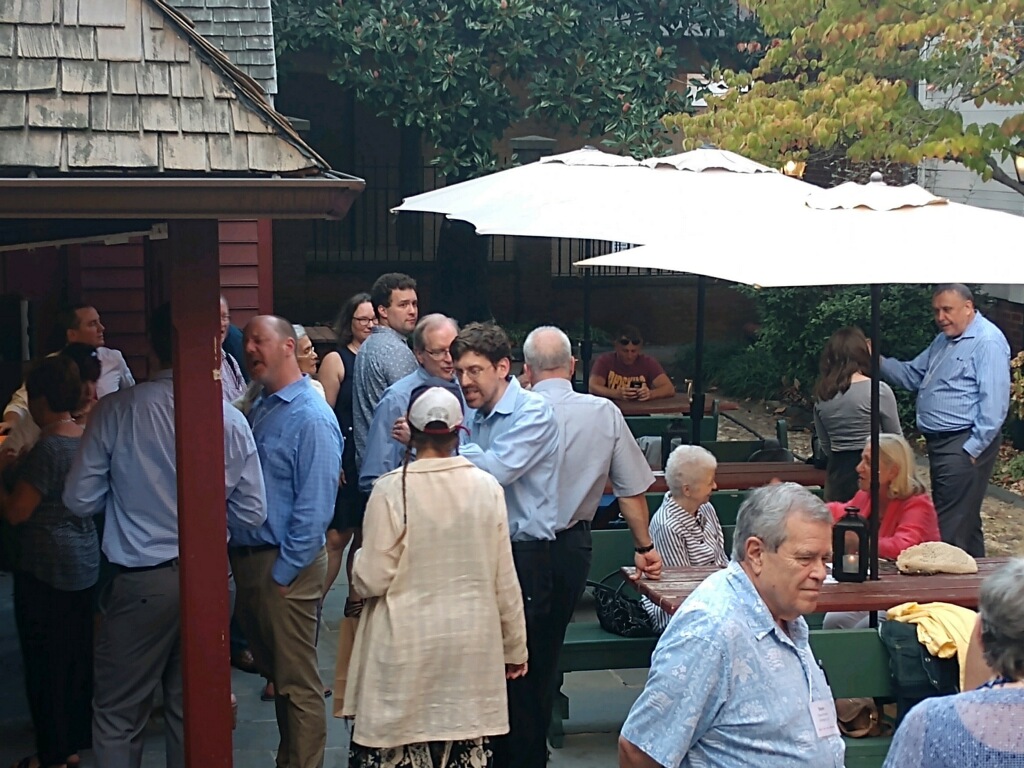
Over 70 people attended and many joined members of Emerging Revolutionary War and Historic Alexandria at Gadsby’s Tavern, an 18th century tavern with a great connection to American history, including a a ballroom used by Washington to celebrate his birthdays!

Plans are already in motion for the second annual Emerging Revolutionary War symposium to be held in late September of 2020 back in Alexandria, Virginia. Stay tuned to this blog and our Facebook page for information as that day draws near.

In the meantime, check out some of the photos below, taken by ERW historian Rob Orrison, who along with Liz Williams of Historic Alexandria were the driving forces behind making this symposium possible. A big thank you to all who attended and we hope to see you next year!
Disaster on the Eastern Frontier

Emerging Revolutionary War welcomes back guest historian Travis Shaw.

Part One

I’d be willing to bet that Maine isn’t the first place to come to mind when you hear the word “frontier”. For many Americans I imagine they immediately think of the wild west. Wagon trains of pioneers crossing the prairies, and Native nations like the Sioux and Apache ranging the plains on horseback. A century before the age of Manifest Destiny, however, the region that is now the state of Maine marked the eastern frontier of the English colonies. It was a wild and sparsely settled place, caught between New England and the French colonies to the north. The few European settlers eked out a living from the thin, rocky soil or turned to lumbering and to the sea. They lived alongside and often fought against the region’s original inhabitants – the Wabanaki or “People of the Dawn.” For two centuries the Eastern Frontier was torn apart by war between various European powers and their respective Native allies. Nowhere is this more clearly evident today than in the small coastal town of Castine, Maine.

Castine is located near the mouth of the Penobscot River, more or less in the middle of the Maine coast (Google Maps)

Continue reading “Disaster on the Eastern Frontier”

“Elbow Room” for “Uncle Johnny”

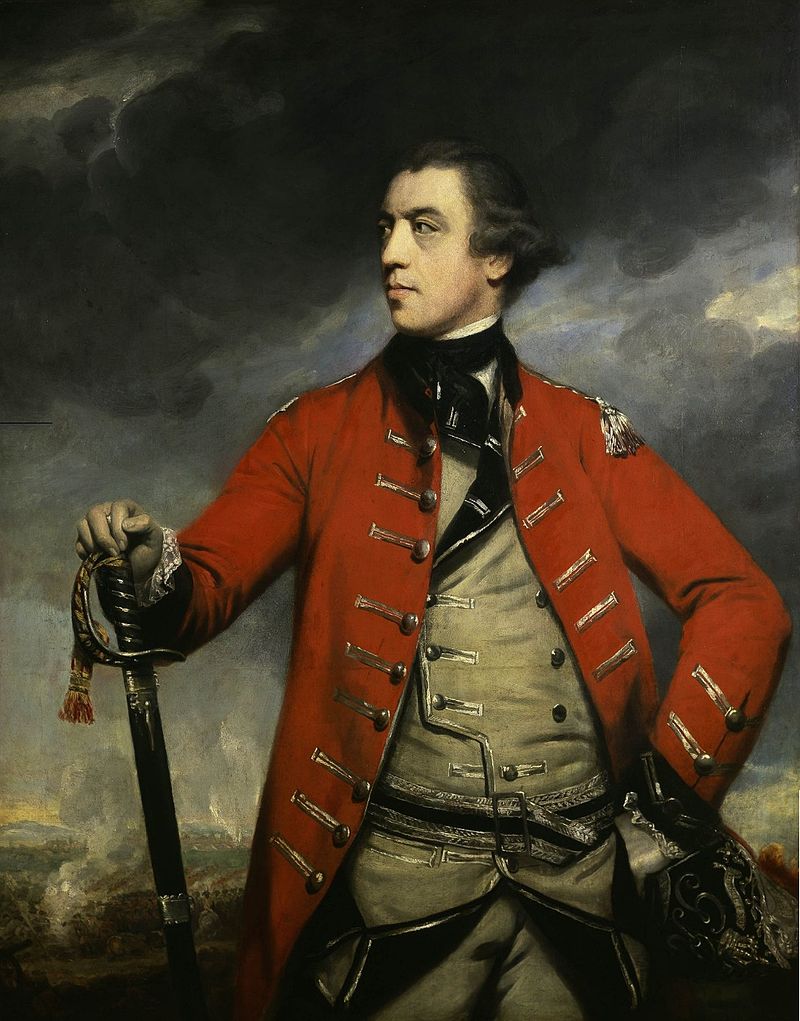
On this date in 1777, British General John Burgoyne surrendered to American General Horatio Gates around Saratoga, New York. This victory solidified French support for the fledgling American nation and became one of the turning points in the road to independence.

800px-BurgoyneByReynolds
General John Burgoyne

Out of this momentous occasion came an anecdote about the British general officer. The short story has some truth in it, yet, whether the entire tale is accurate, well, I’ll leave that for you to decide!

Two years prior to the Battles of Saratoga and upon arriving in Boston, Massachusetts, General Burgoyne remarked “Well, let us get in, and we’ll soon find elbow-room” when he was told the numbers of militia besieging British regulars around the town.

After his capitulation, Burgoyne and his forces were marched toward Albany, New York, and multitudes of people turned out to see the vanquished British and German soldiery along the route. One resident supposedly yelled from her homestead doorway;

“Make elbow room for General Burgoyne.” 

Not what he had envisioned in 1775 upon disembarking in North America. Yet, history does not relate what “Gentleman Johnny” Burgoyne thought exactly about the elbow room he received in the countryside of upstate New York!*


This slideshow requires JavaScript.


*“Gentleman Johnny” was a nickname acquired by Burgoyne was stationed in London with the Horse Guards, a fashionable cavalry regiment.” 

**Information gathered from A.J. Langguth’s “Patriots” and The Patriot Resource, which can be found here.

“Acts of a Rude Rabble…” General Gage, Lord Dartmouth and Ignorant Orders

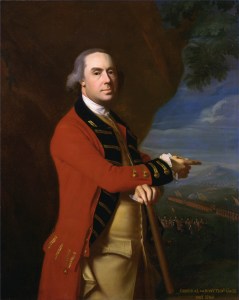
Thomas_Gage_John_Singleton_Copley
General Thomas Gage

When one studies British General Thomas Gage and his performance leading up to Lexington and Concord you must step back and put yourself in Gage’s position. A man that believed not only in Royal authority over the American colonies, but also in the basic rules of law. Gage was not anti-American by any means.


In November 1763, Gage was placed in overall command of British forces in the American colonies and settles in New York. At this time Gage was well respected by most American colonists. Of course, this all changed in 1774 when Gage was sent north to Boston to become the Royal-appointed Governor of Massachusetts and enforce the highly unpopular Port Bill that closed the port of Boston among other harsh actions. He was walking into a situation that most historians today argue was a no-win situation. Continue reading ““Acts of a Rude Rabble…” General Gage, Lord Dartmouth and Ignorant Orders”

An Account of April 19, 1775

“the Country was an amazing strong one; full of Hills, Woods, stone Walls, & c., which the Rebels did not fail to take advantage of, for they were all lined with People who kept an incessant fire upon us…”

From the diary of Lieutenant Frederick Mackenzie who was part of the 23rd Regiment–the Royal Welch Fusiliers that survived the ordeal of April 19, 1775. He would keep a diary until the early 1790’s and chronicled his experiences in the American Revolutionary War. His account on April 19, of the retreat from Concord is most descriptive. The British did not just take the brunt of the firing as the marched hurriedly back toward Boston and safety, but;

“as we did too upon them, but not with the same advantage, as they were so concealed there was hardly any seeing them: in this way we marched between 9 and 10 miles, their numbers increasing from all parts…”

The column was led by Lieutenant Colonel Francis Smith and had been tasked by General Thomas Gage, British military leader in North America, to root out the military supplies being stored in Concord by the colonials. The mission, albeit supposedly secretive, did not remain so for long, and the colonials got word out to the countryside. After initial firing at Lexington Green and then at the North Bridge in Concord, the British had to march back through the countryside, facing arriving militia and minute men.

“while ours was reducing by deaths, wounds, and fatigue; and  we were totally surrounded with such an incessant fire as it is impossible to conceive; our ammunition was likewise near expended.”  

IMG_7229
Modern-day view along Battle Road, the route the British column retreated back toward Boston on (author collection)

Luckily, for Mackenzie and the other struggling British officers and rank-and-file, on a rise in the ground, outside the town of Menotomy, was a relief column, ready to provide a few moments’ respite.


Emerging Revolutionary War Weekender: The Boston Tea Party Ships & Museum

Emerging Revolutionary War welcomes guest historian Paige Gibbons Backus to the blog. This Weekend marks the 244th anniversary of the Boston Tea Party.

boston-museum-about-museum-experience

Boston Tea Party Ships and Museum

306 Congress St., Boston, MA 02210

http://www.bostonteapartyship.com

We all know the holidays are some of the heaviest travelled times of the year and over my Thanksgiving holiday, I had the opportunity visit Boston for a day. When in the city for only one day, what do we go and see? Do you go to the U.S.S. Constitution, Bunker Hill, Faneuil Hall, or the Paul Revere House? Do you go to the colonial meetinghouses, the historic cemeteries, or just walk around the historic sections of the city? One of the sites that I decided to visit was the Boston Tea Party Ships & Museum. I heard many good things about it from online reviews and professional colleagues about the interactive exhibits and experiences available there. Working at an immersive historic site myself, I was definitely curious to see what they had done to make their history exciting to audiences, and despite the museum’s shortcomings, make it interesting they did.

One of the highlights of the Boston Tea Party Ships is that they did a decent job creating an interactive experience for visitors. After purchasing tickets outside, visitors receive an identity card and a feather, and are then invited into a room meant to replicate the South Meetinghouse. From there, first-person actors serving as tour guides take visitors through the planning, implementation, and effects of the Boston Tea Party. For example, Sam Adams rallied the crowd weaving in the events leading to the Boston Tea Party, even teaching visitors how to show approval or displeasure in a public setting, (to which I was hissing before it was cool). He even called on visitors with various identity cards to voice their opinion, bringing in interesting, albeit reluctant, audience participation. After the visitors were riled up, we donned our feathers in our hair and were lead onto the ships to commence tossing the tea. Continue reading “Emerging Revolutionary War Weekender: The Boston Tea Party Ships & Museum”

“I hope my visit to Boston will do good…” Confederate Colonel John S. Mosby and American Revolution

A version of this post appeared in the Emerging Civil War blog on August 17, 2018.

396781_3669473495948_5063264_n
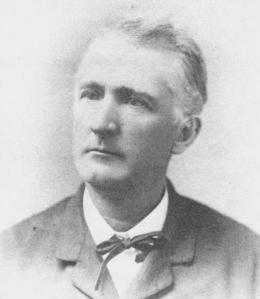
John S. Mosby, photographed here as a Federal civil servant

Those who know me know of my “interest” in famous Confederate partisan, John S. Mosby. Ok, some would say “love affair,” but either way, I grew up reading about Mosby and his exploits during the Civil War. It was not until later in my life that I started to read about the most interesting part of Mosby’s life—not his time in the war, but his time AFTER the war.

Mosby had a deep interest and passion in American history and you can see that on a trip that Mosby took north in April 1906 to one of the sacred sites of America’s founding: Boston, Massachusetts. In a 1906 letter to his friend Sam Chapman (a former member of Mosby’s Rangers), Mosby describes his visit and the many ironies (as a southerner) he experienced. Continue reading ““I hope my visit to Boston will do good…” Confederate Colonel John S. Mosby and American Revolution”

“Old Ironsides” To Set Sail Again!

Happen to be around Boston this weekend? Or live within traveling distance? Check out the special event happening this weekend from Sunday, July 23rd through Monday, July 24th at the U.S.S. Constitution Museum and Charlestown Navy Yard.

The U.S.S. Constitution, the oldest commissioned naval vessel still afloat will set sail again. Launched in 1797 and named by President George Washington, the vessel is a wooden-hulled, three-masted heavy frigate. She has been dry-docked since May 18, 2015 but will return to the water on July 23rd.

Old Ironsides
“Old Ironsides” the U.S.S. Constitution, photo taken April 2016 (author collection)

The event, co-sponsored with the National Parks of Boston will have a full-plate of free, family-fun events starting at 4:00 p.m. on Sunday and continuing into the morning hours of Monday.

For a full-listing of these events, including information about the museum, and answers to a few frequently answered questions, click here.

For those that cannot make it live to the re-launch, the event will be live on Facebook video streams at 4:00 p.m. and 6:00 p.m. along with live video streams throughout the night of the major events. Check out the Facebook site for the museum by clicking here.

ERW Weekender: Bunker Hill Monument & Museum

Emerging Revolutionary War welcomes back guest historian Katie Turner Getty. 

Towering over Charlestown, Massachusetts, its foundation set in sacred battleground soil, the Bunker Hill Monument is a 221 foot obelisk commemorating the Battle of Bunker Hill. The cornerstone of the monument was laid by the Marquis De Lafayette in 1825, fifty years after the battle was fought on June 17, 1775.

BunkerHillMon-KTGetty
Bunker Hill Monument (author collection)

Although the land surrounding the monument has been greatly developed since the battle, visitors today can get still get a sense of the 18th-century landscape just by walking through Charlestown and climbing the hill to reach Monument Square. Approaching visitors are greeted by the statue of Colonel William Prescott, the gray granite of the monument serving as an impressive backdrop behind him. Continue reading “ERW Weekender: Bunker Hill Monument & Museum”