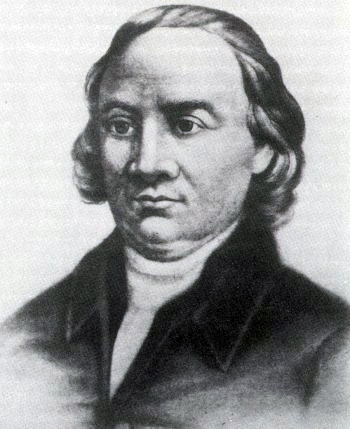
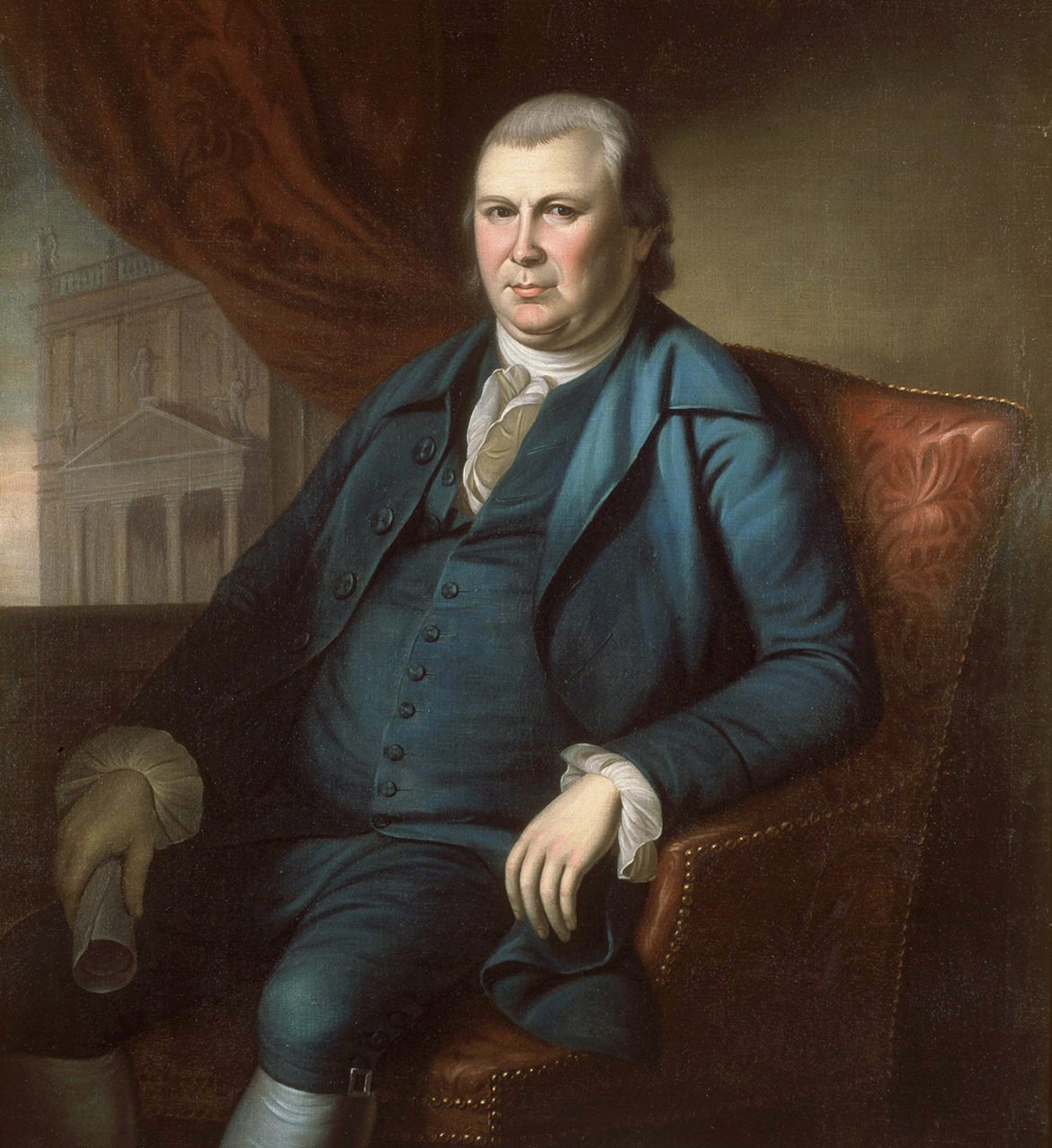
Robert Morris: Founding Father and Revolutionary Financier

Emerging Revolutionary War welcomes back guest historian Michael Aubrecht

To call Robert Morris “a political renaissance man” would be an understatement. He was vice president of the Pennsylvania Committee of Safety (1775–76) and was a member of the Continental Congress (1775–78) as well as a member of the Pennsylvania legislature (1778–79, 1780–81, 1785–86). Morris practically controlled the financial operations of the Revolutionary War from 1776 to 1783. He was a delegate to the Constitutional Convention (1787) and served in the U.S. Senate (1789–95). Perhaps most impressive is the fact that he signed the Declaration of Independence and the Articles of Confederation and later signed the U.S. Constitution.

At the start of the war Robert Morris was one of the wealthiest men in the colonies, but he would go on to claim bankruptcy after some catastrophic decisions. To fully appreciate the contributions of Robert Morris we must go back and examine him from the beginning.

Robert Morris

Robert Morris was born on January 31, 1734, in Liverpool, England, the son of Robert Morris, Sr., and Elizabeth Murphet Morris. His mother died when he was only two and he was raised by his grandmother. Morris’ father immigrated to the colonies in 1700, settled in Maryland and in 1738 he began a successful career working for Foster, Cunliffe and Sons of Liverpool. His job was to purchase and ship tobacco back to England. Morris Sr. was known for his ingenuity, and he was the creator of the tobacco inspection law. He was also regarded as an inventive merchant and was the first to keep his accounts in money rather than in gallons, pounds, or yards.

In 1750 tragedy would once again strike the Morris family. In July Morris Sr. hosted a dinner party aboard one of the company’s ships. As he prepared to depart a farewell salute was fired from the ship’s cannon and wadding from the shot burst through the side of the boat and severely injured him. He died a few days later of blood poisoning on July 12, 1750. The tragedy had a terrible effect on Morris who became an orphan at the age of 16. Looking for a change he left Maryland for Philadelphia in 1748. He was taken under the wing of his father’s friend, Mr. Greenway, who filled the gap left by the death of Morris’ father. Raised with a tremendous work ethic Morris flourished as a clerk at the merchant firm of Charles Willing & Co. 

Following in his father’s footsteps Morris was also gifted with successful ingenuity. In his twenties he took his earnings and joined a few friends in establishing the London Coffee House. (Today the Philadelphia Stock Exchange claims the coffee house as its origin.) Morris was sent as a ship’s captain on a trading mission to Jamaica during the Seven Years War (1756-1763). He was captured by a group of French Privateers but managed to escape to Cuba where he remained until an American ship arrived in Havana. Only then was he able to secure safe passage back to Philadelphia. 

Shortly after Morris’ return to the colonies Willing retired and handed the firm over to his son Thomas who offered him a partnership. This resulted in the formation of Willing, Morris & Co. The firm boasted three ships that were dispatched to the West Indies and England importing British cargo and exporting American goods. This relationship lasted for over 40 years and was immensely successful. At one point, Morris was ranked by the Encyclopedia of American Wealth, along with Charles Carroll of Carrollton, as the two wealthiest signers of the Declaration of Independence.

As influential merchants, Morris and Willing disagreed with the changes in tax policy. In 1765, the Stamp Act was passed and was met with massive resistance. Morris was at the forefront and led protests in the streets. His fervor was so striking that he convinced the stamp collector to suspend his post and return the stamps back to their origin. The tax collector stated that if he had not complied, he feared his house would have been torn down “brick by brick.” In 1769, the partners organized the first non-importation agreement, which forever ended the slave trade in the Philadelphia region.

Morris married Mary White on March 2, 1769, and they had seven children. In 1770, he bought an eighty-acre farm on the eastern bank of the Schuylkill River where he built a home he named “The Hills.” Due to his growing reputation Morris was asked to be a warden of the port of Philadelphia. Showing his tenacity, he convinced the captain of a tea ship to return to England in 1775.

Later on, Morris was appointed to the Model Treaty Committee following Richard Henry Lee’s resolution for independence on June 7, 1776. The resulting treaty projected international relations based on free trade and not political alliance. The treaty was eventually taken to Paris by Benjamin Franklin who transformed it into the Treaty of Alliance which was made possible by the Continental Army’s victory at Yorktown in 1781. 

Scholars disagree as to whether Morris was present on July 4 when the Declaration of Independence was approved. But when it came time to sign the Declaration on August 2 he did so. Morris boldly stated that it was “the duty of every individual to act his part in whatever station his country may call him to in hours of difficulty, danger and distress.” Until peace was achieved in 1783, Morris performed services in support of the war. His efforts earned him the moniker of “Financier of the Revolution.”

Michael is the author of “The Letters of Robert Morris: Founding Father and Revolutionary Financier.

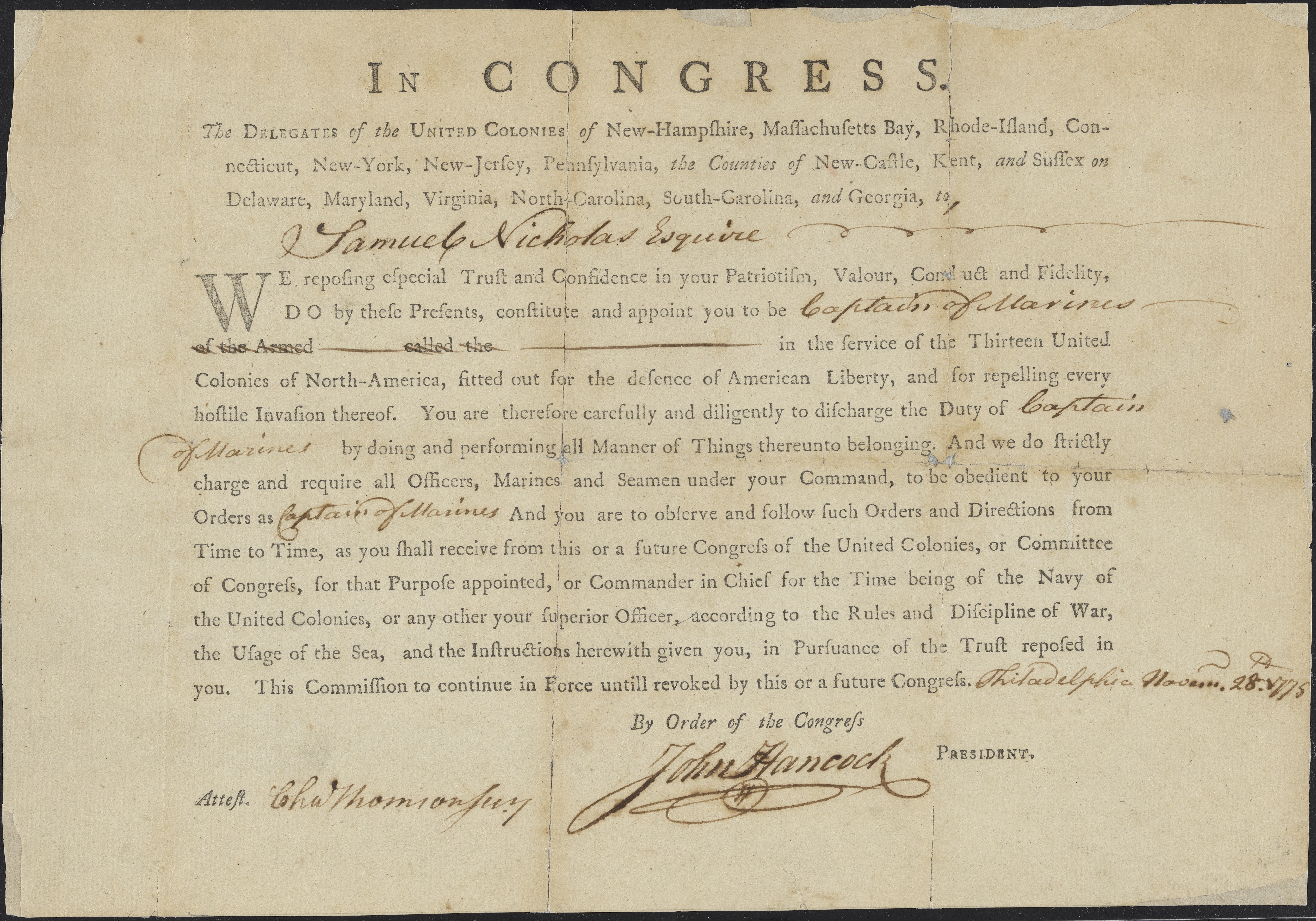
Congress Creates the Marine Corps, November 10, 1775

The Commission of Captain Samuel Nicholas, the first American Marine. (USMC)

Today marks the 250th birthday of the Marine Corps. November 10, 1775 was a milestone in the creation of American naval power, but the birthday story is a little more complicated.

The Continental Congress resolved to create a navy under its auspices on October 13, 1775, but much work remained to build American naval power to a point where it might serve a strategic purpose.  Individual colonies had already begun creating naval forces and George Washington had leased ships under the army’s authority.  Thus, the resolution served as more of milestone on a long road, rather than a fresh beginning.  

On October 30, the Continental Congress considered the reports of its naval committee and confirmed recommendations for two vessels of 14 and 10 guns.  Moreover, it resolved to add two more ships to its burgeoning navy, one of 20 guns and one carrying up to 36 guns.  It also added four new members to the naval committee, bringing it to a total of seven.  Stephen Hopkins (RI), Joseph Hewes (NC), Richard Henry Lee (VA), and John Adams (MA) joined John Langdon (NH), Silas Deane (CT), and Christopher Gadsden (SC).[1]  On November 2, Congress gave the naval committee authority to call on the treasury for up to $100,000 to acquire a navy and delegated to the committee the authority to recruit officers and seamen, offering them prize money in the amount of one-half the value of all warships and one-third the value of transports made prizes.[2]  It also took up a petition from a Committee of Safety in Passamaquoddy, Nova Scotia to join the association represented by the Continental Congress.  Naturally, Congress appointed a committee—Silas Deane, John Jay, Stephen Hopkins, John Langdon, and John Adams to consider the matter.  The naval expansion and Passamaquoddy petition sparked a new round of thinking about American naval power.

Philip Livingston’s Grave, York, PA

While driving near York, Pennsylvania, I decided to stop by Prospect Hill Cemetery to visit the grave of Union General William Franklin. The cemetery was massive, and after locating Franklin’s grave and snapping a few photographs, I continued up the hill where I saw a plot devoted to dead Union soldiers who died while being treated at the army hospital located in York during the war. They were men from all throughout the North. Many of them simply having volunteered to fight, marched away from home, got sick, and died.

An older grave caught my eye just a stone’s throw away from the Civil War graves – a notable one that I did not know was in the cemetery. It was the grave of another non-Pennsylvanian. In fact, he was a New Yorker, and died in York in June of 1778, while a sitting member of the Continental Congress. It was the final resting place of a signer of the Declaration of Independence – Philip Livingston.

Philip Livingston certainly is not one of the Founding Fathers we remember. In fact, we probably remember his brother, William, who served as New Jersey’s Governor during the war, more. But Philip had a very impressive resume and played a part in nearly every major political conference in the colonies held in the years leading up to and during the early days of the American Revolution.

Born in 1716, Livingston graduated from Yale and pursued a career in the import business. Quickly, he built on his status and influence after relocating to Manhattan. He attended the Albany Congress in 1754, and was a member of the Stamp Act Congress, New York’s Committee of Safety, and president of the New York Provincial Congress in 1775. The prior year, Livingston was appointed to the First Continental Congress and was forced to flee his Manhattan home with his family when the British occupied the city in 1776. While he participated in the Second Continental Congress, he also served in the New York Senate.

Unfortunately, Livingston would never get to see his dream of an independent American nation become a reality. Following the British capture of Philadelphia in 1777, the Continental Congress relocated to York, Pennsylvania. Livingston had been suffering from dropsy, and his health was quickly deteriorating. He died suddenly in York while Congress was in session on June 12, 1778, and was laid to rest on Prospect Hill.

Grave of Philip Livingston, Prospect Hill Cemetery, York, Pennsylvania

If you ever find yourself near York, take the time to visit the grave of a Founding Father who, far from home, died before the cause in which he pledged his life and sacred honor for could be won.

The Nassau Cannon

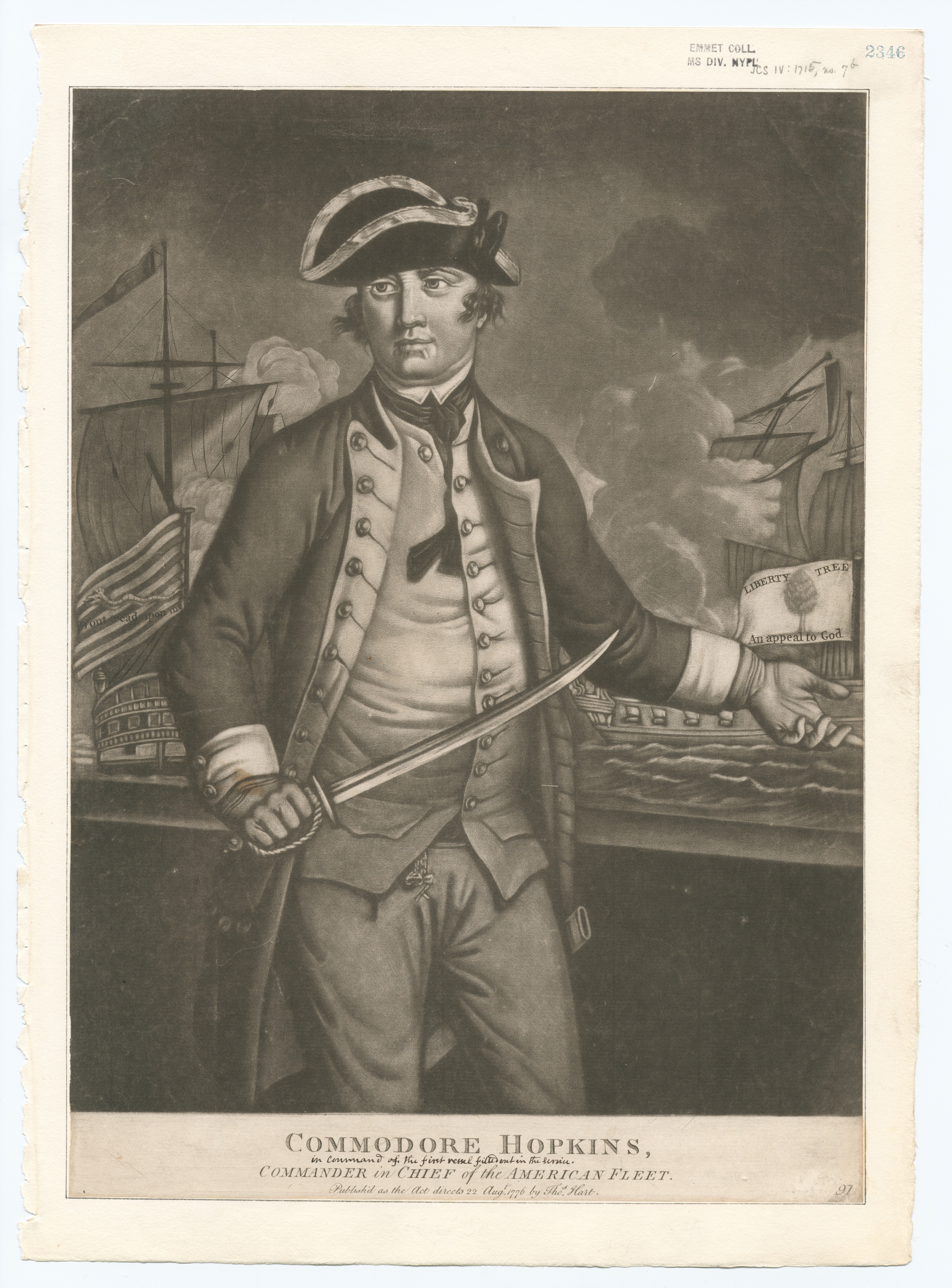
In March, 1776 Commodore Esek Hopkins led the bulk of the Continental Navy on a raid to the Bahamas, where it occupied the town of New Providence on Nassau Island for two weeks.  Hopkins and his captains were drawn by a report of gunpowder stored in the town, which the patriot cause desperately needed.[1]  Unfortunately for Hopkins, the colony’s governor had spirited away some 150 barrels the night before the American flotilla’s arrival.  Not all was lost as the Marines quickly demanded and received the surrender of two small forts defending the town and its harbor.  With those in hand, Hopkins and his men quickly got to work removing artillery, military stores, and other useful supplies.

            While the American Marines and sailors managed to recover just 24 casks of powder, their haul in sizeable artillery pieces and mortars was impressive: 88 cannon ranging from 9- to 36-pounders; 15 mortars from 4-11 inches; 5,458 shells; 11,071 roundshot; 165 chain & double shot, plus fuses, rams, sponges, carriage trucks, mortar beds, copper hoops, and various stores not required for artillery.[2]  It was a boon to be sure.  The curious part of Hopkins’ inventory of captured war material, however, is that he sent it to Connecticut Governor Jonathan Trumbull, not a representative of the Naval Committee that had issued his orders.  To John Hancock, president of the Continental Congress, he sent a report of his mission, but only mentioned “I have taken all the Stores onboard the fleet.”[3]  Indeed, his report of the armaments aboard the British schooner Hawke, which the fleet captured on its return to American waters, was more complete.  It took another day, until April 9, for Hopkins to forward the inventory of seized cannon.  Congress merely resolved that an extract of his letter should be published for delegates to peruse.[4] Perhaps inadvertently, Hopkins exacerbated regional political conflicts and undermined his own command.

Continue reading “The Nassau Cannon”

July 17, 1775: The Start of the Beeline March

“The Shot Heard Round the World” on April 19, 1775, put the American colonies into a fever pitch and a war footing, but 18th-century travel limitations naturally caused that word to spread slowly. It did not reach the town of Mecklenburg, in Berkeley County, Virginia (now Shepherdstown, in Jefferson County, West Virginia) for 21 days. On May 10, Mecklenburg’s citizens learned of the fights between colonists and British soldiers at Lexington and Concord. Coupled with news of Virginia royal governor Lord Dunmore’s removal of powder from the magazine in Williamsburg, Mecklenburg’s citizens prepared to offer whatever aid they could to their fellow beleaguered colonists.

The rallying point for the Beeline March

The militia in Mecklenburg strapped on their accouterments and began to drill. On June 10, the drilling militia was welcomed to the property of Colonel William Morgan, just outside town, for a barbecue. Songs were sung and all those present made a pledge that they would return to the same spot in Morgan’s Grove fifty years from that day.

Following the patriotic fanfare, the men returned to drilling, wondering if they might have the chance to face the British. A decision made in far-off Philadelphia soon promised Berkeley’s militiamen that chance. On June 14, the Continental Congress declared that “six companies of expert riflemen, be immediately raised in Pennsylvania, two in Maryland, and two in Virginia.” Once formed and equipped, “each company…shall march and join the army near Boston, to be there employed as light infantry, under the command of the chief Officer in that army.”

The Virginia companies went to Daniel Morgan, who organized his company in Winchester, and Hugh Stephenson, the leader of the company rendezvousing at Mecklenburg. Joining soldiers signed one-year enlistments. Henry Bedinger, one of Stephenson’s men, recorded that “none were received but young men of Character, and of sufficient property to Clothe themselves completely, find their own arms, and accoutrements, that is, an approved Rifle, handsome shot pouch, and powder-horn, blanket, with such decent clothing as should be prescribed.” It took less than seven days to raise each company to the strength of 100 men. Only the delay in getting enough rifles to arm the entire Mecklenburg company prevented them from leaving immediately after filling the ranks.

Once mustered, Stephenson and Morgan agreed to meet in Frederick, Maryland, and march to Boston together. On July 15, Morgan’s men marched first, stealing a step on the Mecklenburg men, who left Morgan’s Grove on July 17. “Morgan having the start we used every exertion to overhaul him, in Vain, altho’ we marched (always in single file) from 30 to 36 miles a number of days,” said Bedinger.

Food and cheering citizens greeted Stephenson’s men along the march and kept their marching feet moving at the blistering pace needed to catch Morgan. Only two men failed to make the entire march (one was court-martialed, and the other was accidentally wounded). On August 11, after a march of over 500 miles in 25 days and just behind Morgan’s men, Stephenson’s company halted in front of General George Washington in Cambridge. When the Mecklenburg riflemen saw the general, they “presented their arms to him as he slowly rode by us looking attentively and affectionately at the soldiers from his native state. When he shook hands with our captain, it was said they both shed tears.”

Stephenson’s Company reporting to General Washington at Cambridge (My Ride to the Barbecue)

The march has gone down in history as the Beeline March due to the quick and direct nature of the expedition to augment the Continental forces in front of Boston. Fifty years later, the pledge made on June 10, 1775, was kept, though the numbers of Stephenson’s company were considerably smaller. Five decades after the march, only five participants still lived; just two returned to Morgan’s Grove to commemorate the feat. One of them was Michael Bedinger, who recorded his experiences in the Beeline March. At the anniversary ceremony, he sang “two patriotic songs…the very same that had been sung at that spot fifty years before.”

Today, two markers commemorate the Beeline March’s genesis. In Morgan’s Grove Park, a marker dedicated in 1988 marks the “Shepherdstown Rally Point” (Mecklenburg was later renamed Shepherdstown). Down the road from the park in Elmwood Cemetery, a 1932 monument erected by the Daughters of the American Revolution sits with the names of the commissioned and non-commissioned officers of Stephenson’s company.

For a burgeoning armed force that was seeking to stand up to one of the world’s most powerful military forces, the Beeline March showed the spirit of the American soldier in the early days of the Revolutionary War.

“It it with great reluctance, I trouble you on a subject.”

In the throes of the winter of 1778, spent at Valley Forge, General George Washington and his staff formulated a mountain of paperwork to multiple recipients of the American cause. On February 16, 1778, Alexander Hamilton composed a letter for the commander-in-chief of the Continental army to a gentleman who had moved from the military to the political ranks; George Clinton of New York.

George Clinton

He had seen service in the Hudson Highlands and had been commissioned a brigadier general in the Continental army on March 25, 1777. Later that same year both governor and lieutenant governor of New York, formally resigning the latter and accepting the former on July 30, 1777. In that capacity, he received the letter, excerpts below, from Valley Forge.

“It is with great reluctance, I trouble you on a subject, which does not properly fall within your province; but it is a subject that occasions me more distress, than I have felt, since the commencement of the war; and which loudly demands the most zealous exertions of every person of weight and authority, who is interested in the success of our affairs.” I mean the present dreadful situation of the army for want of provisions and the miserable prospects before us, with respect to futurity. It is more alarming, than you will probably conceive, for to form a just idea, it were necessary to be on the spot.2 For some days past, there has been little less, than a famine in camp. A part of the army has been a week, without any kind of flesh & the rest three or four days.3 Naked and starving as they are, we cannot eno⟨ugh⟩ admire the incomparable patience and fidelity of the soldiery, that they have not been, ere this, excited by their sufferings, to a general mutiny and dispersion. Strong symptoms however of discontent have appeared in particular instances; and nothing but the most active effort⟨s⟩ every where, can long avert so shocking a catastrophe.

Washington then asks for any help or supplies that Clinton can send his way, even though the army is outside the state lines of New York. Washington’s mindset is that the cause of the army in Pennsylvania is the cause of American independence and that Clinton, who had served would recognize that and do his utmost to provide what he can.

“I am calling upon all those, whose stations and influence enable them to contribute their aid upon so important an occasion, and from your well known zeal, I expect every thing within the compass of your power, and that the abilities and resources of the state over which you preside, will admit. I am sensible of the disadvantages it labours under, from having been so long the scene of war, and that it must be exceedingly drained by the great demands to which it has been subject, But though you may not be able to contribute materially to our relief, you can perhaps do something towards it; and any assistance, however trifling in itself, will be of great moment, at so critical a juncture, and will conduce to keeping the army together, ’till the Commissary’s department can be put upon a better footing, and effectual measures concerted to secure a permanent and competent supply. What methods you can take, you will be the best judge of; but if you can devise any means to procure a quantity of cattle or other kind of flesh, for the use of this army, to be at camp in the course of a month, you will render a most essential service to the common cause.

Not only did Clinton receive this missive from Washington, dated February 16, but the following day Gouverneur Morris from a camp committee established by the Continental Congress also sent the New York governor a letter asking for any assistance he could provide for the army at Valley Forge.

These letters underscore the seriousness of the plight of the army encamped at Valley Forge as the winter slowly turned to spring. The action at Washington’s headquarters and from the camp committee helped create a path forward through that pivotal winter. To learn more about what transpired during those six months from December 1777 to June 1778, follow the link above to the “2022 Bus Tour” and join Emerging Revolutionary War on our second annual bus tour November 11-13, 2022.

The entire letter from Washington (Hamilton) to George Clinton can be found here.

Americana Corner

Our monthly recap of what our good friend and fellow historian Tom Hand has written on his blog, AmericanaCorner.

The Midnight Ride of Paul Revere
October 26th

The story of Paul Revere and his Midnight Ride is one of the many fascinating subjects of the grand American past. Taking place in conjunction with the Battles of Lexington and Concord, on April 19, 1775, the tale has passed down from generation to generation. Read more here.

Forefathers Gather at Historic First Continental Congress
October 19th

The First Continental Congress was a key link in the chain of events that led to our nation’s gaining its independence from England. The brief convention brought together most of the influential leaders from colonial America to determine an answer to Parliament’s recently enacted Coercive Acts. Read more here.

The Boston Tea Party Takes Colonists Past the Point of No Return
October 12th

The Boston Tea Party is one of the most iconic moments in American history. In some ways, it sealed our fate to separate from England and become our own nation. The road that led to this watershed event began several years earlier with the Townshend Acts. Read more here.

Aftermath of the Boston Massacre
October 5th

The violence on the evening of March 5, 1770, in Boston is known to us today as the Boston Massacre. It was an unfortunate incident that left five people dead and growing anger between American colonists and leaders in England. Read more here.

“God willing and the Creek don’t rise.”

If you are from a certain geographical area of the United States the title of this post is a saying you have heard numerous times. Heck, you may even use it yourself. I’ll admit that I have found usage of this American style vernacular a few instances in my lifetime.

Did you know that there is one version that connects the popular saying to a figure in American history and has its origin dating back into the 18th century?

While reading a history of Osceola, I came across the mention of Benjamin Hawkins and as many of you know, did some internet research, consulted other books on the Seminoles, Creeks, and other Native Americans and the research took off from there. This is just a brief overview of Hawkins and his possible, albeit tenuous, connection to this saying.

A possible first mention of the saying above is attributed to Hawkins, whose name probably does not ring a bell for a large segment of people, historians included. Hawkins, born in North Carolina on August 15, 1754 into a family of six, was a gifted individual who attended the College of New Jersey, now known as Princeton University with an aptitude for linguistics, which apparently including learning Native American dialects.

Continue reading ““God willing and the Creek don’t rise.””

Thanksgiving with George Washington

St Paul's Chapel New York (Wikimedia Commons)
St. Paul’s Chapel, New York (Wikimedia Commons)

Setting aside one day to give national thanks to God for the blessings of the prior year and beseech him for future blessings had been frequently practiced in England, but it merged with several Puritan traditions in New England during the 17th century.  By the time of the American Revolution, Thanksgiving was a well-established custom.   The Second Continental Congress turned a regional tradition into a national one when offered its first Thanksgiving Proclamation on November 1, 1777, recommending that the individual states of the new United States set apart December 18th as a day of Thanksgiving and praise.  During the Revolution, Congress continued the practice, issuing its last proclamation in 1784.

Continue reading “Thanksgiving with George Washington”

Review: Founding Martyr, The Life and Death of Dr. Joseph Warren, the American Revolution’s Lost Hero by Christian Di Spigna

ERW Book Reviews (1)

Doctor. Major General. President of the Provincial Congress. Author of political tracts. A true patriot. Forgotten.

41mPwaMUWfL._SX336_BO1,204,203,200_All these words, plus many more, are titles that depict the life of Dr. Joseph Warren. However, the last term is most synonymous with the Massachusetts doctor who fell in the Battle of Bunker Hill on June 17, 1775 in the early stages of the American Revolutionary War. That last word, forgotten, is exactly what author and historian Christian Di Spigna is hoping to expunge with his new biography, Founding Martyr. 

Di Spigna, an early American history expert and Colonial Williamsburg volunteer, focuses his account of Dr. Warren on not the events immediately surrounding his death at Bunker Hill and subsequent martyrdom but “to fill in the more obscure parts of Warren’s life” which will lead to understanding more of the “key period in the formation of his character, his special networks, and ultimately his medical and political careers” (pg. 7). Continue reading “Review: Founding Martyr, The Life and Death of Dr. Joseph Warren, the American Revolution’s Lost Hero by Christian Di Spigna”