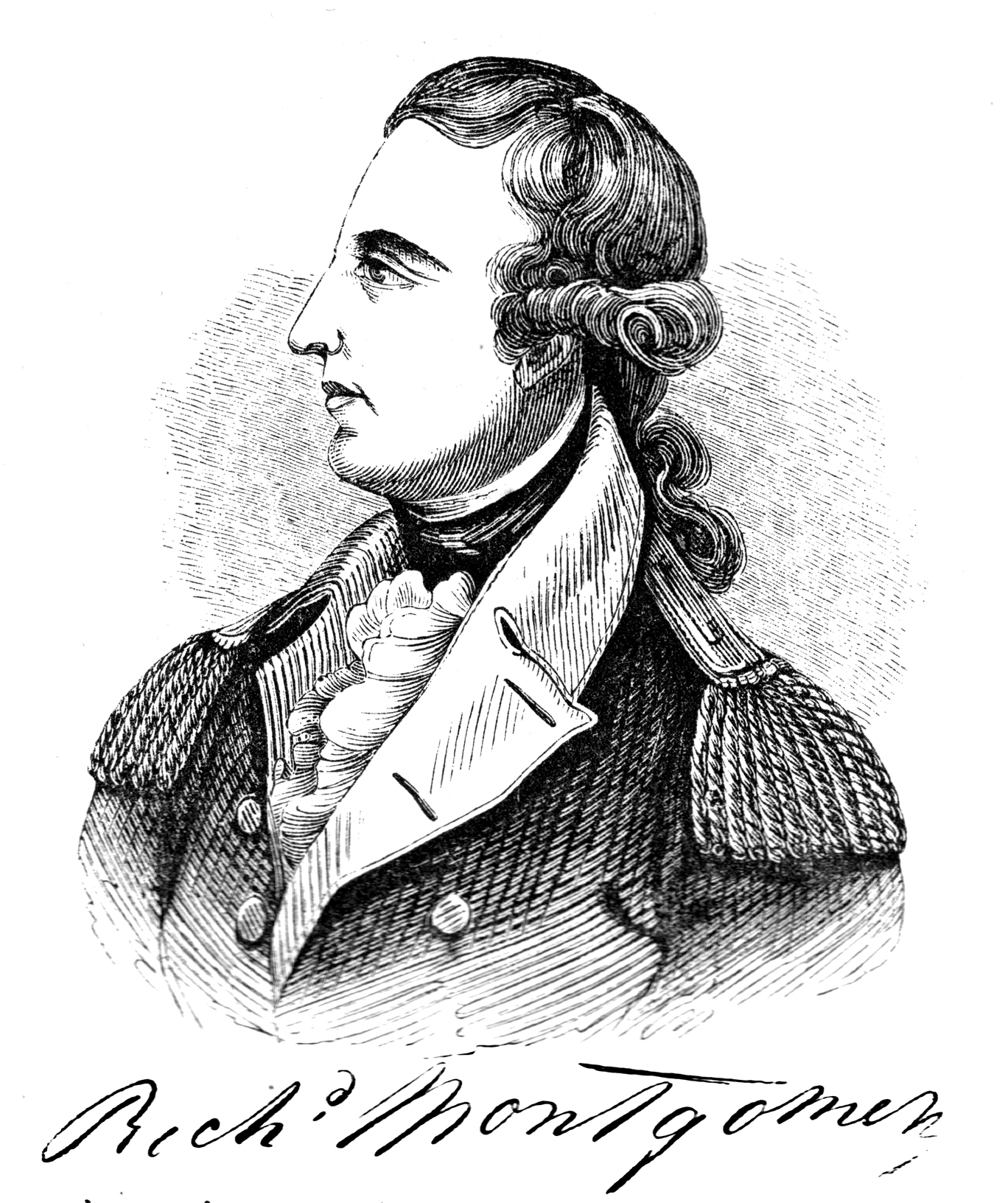
Continental General Richard Montgomery huddled over his desk outside the walled city of Quebec, clinging to candlelight as he wrote a letter to his wife. Wind howled and snow pelted the Continental forces preparing to attack the city on the St. Lawrence River. “I wish it were well over with all my heart, and I sigh for home like a New Englander,” Montgomery confessed to his wife, Janet. He had come a long way over the last few months—and even farther over the course of his life.
General Richard Montgomery
Like a New Englander, Montgomery wrote. Despite his rank in the Continental Army, he was no New Englander, but an Old Englander. His path to becoming an American hero resembled that of several Revolutionary leaders. Like George Washington, Horatio Gates, and others, Montgomery had served in the British Army during the French and Indian War. His road to an American generalship, however, was far from straightforward. Indeed, he was a latecomer to the American cause.
In honor of the 250th anniversary of the Battle of Quebec, we reshare guest historian Scott Patchan’s post on Daniel Morgan during the Canadian Campaign of 1775. This post originally posted in December 2015.
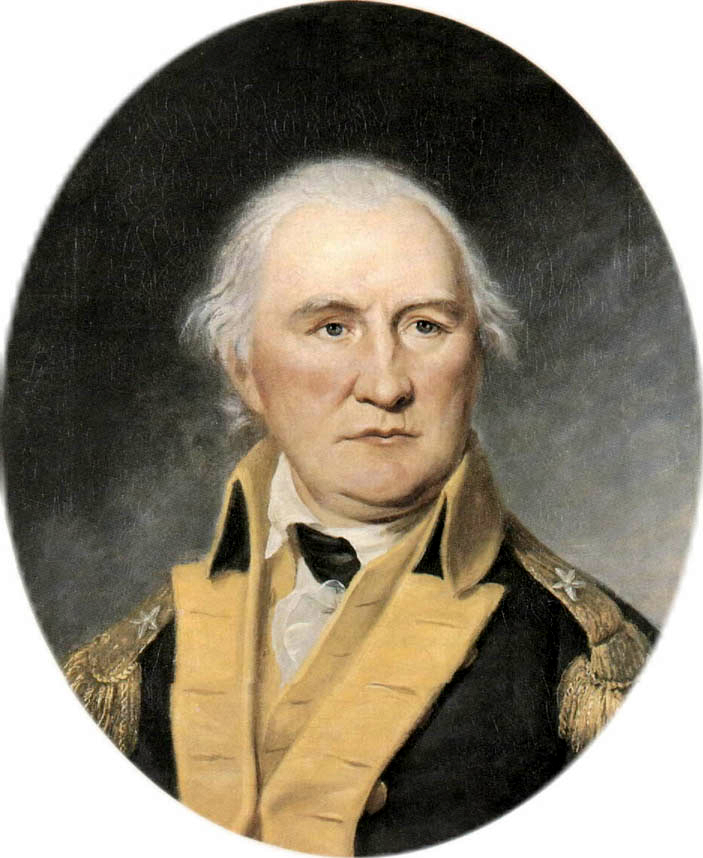
When the situation deteriorated to outright rebellion against the crown, Morgan raised a regiment of crack riflemen from Frederick County, and marched them to Boston in twenty-one days to take part in the siege of Boston. There, he served under his former commander from the French and Indian War, General George Washington. Morgan learned the hard way that orders must be followed. He once allowed his riflemen to exceed orders in firing upon British positions at Boston. Washington called Morgan on the disobedience, and Daniel thought that he would be cashiered from the army. Washington, however, relented the next day, but Morgan had learned a valuable lesson about following orders.
Daniel Morgan in the American Revolution
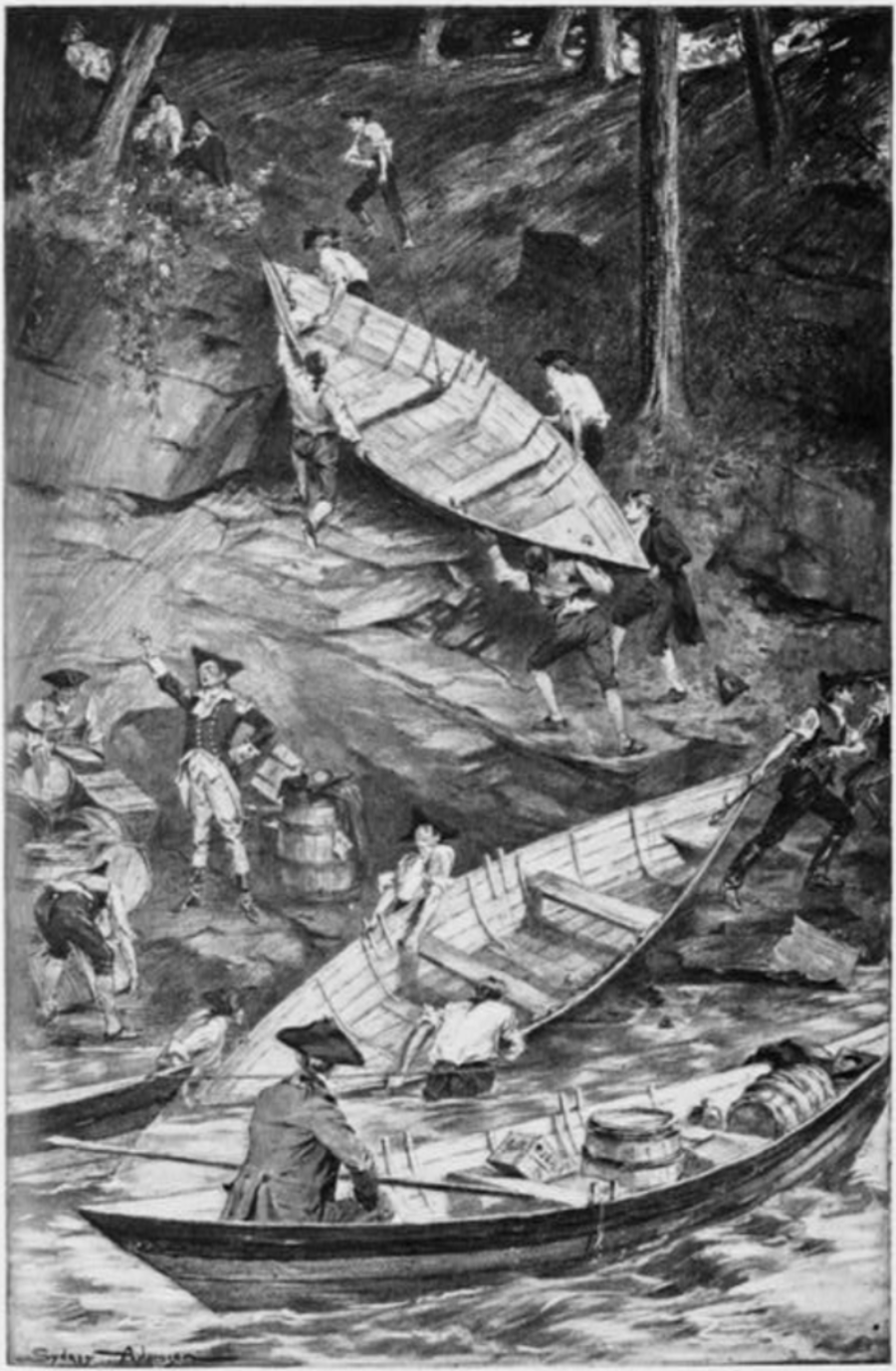
In the fall of 1775, Washington sent Morgan as commander of three companies of Continental riflemen on a mission to capture Quebec from the British. Morgan’s command marched with the column of Colonel Benedict Arnold. They traversed the Maine wilderness, rowing up stream to the “Great Carrying Place,” where carried their canoes and bateaux for great distances overland to another series of streams and lakes that took them to Quebec. As the cold weather set in, sickness and hunger overtook the column and Arnold sent those unfit for duty back to the rear. After covering 350 miles, the American arrived in front of Quebec in early November, surprising the British.
Although Morgan wanted to attack immediately and utilize the element of surprise, he was overruled and the small American force besieged Quebec, waiting for another column under General Richard Montgomery to arrive from the Hudson Valley. When a British party sallied forth and captured one of Morgan’s riflemen on November 18, Arnold believed the British would come out and fight in the open. As such, Arnold drew up his army in front of the fortifications to meet them. They declined his offer and instead looked down on the ragamuffin Americans from the ramparts and exchanged taunts and catcalls. The overall situation frustrated the irascible Morgan, and when his men complained that Arnold was not giving the riflemen their fair share of rations, the “Old Wagoner” violently argued with Arnold, and nearly came to blows with the future traitor. Morgan departed Arnold, leaving him with angry warning about poor treatment of the riflemen. From that time forward, Morgan’s command always received their fair share of the army’s rations.
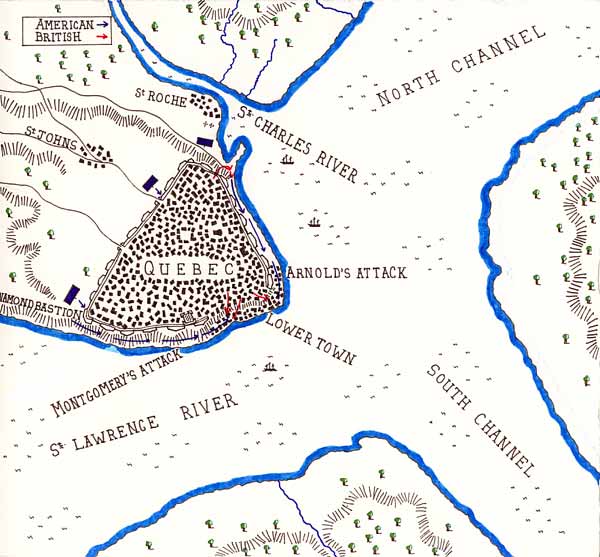
Montgomery’s column arrived on December 5, and the Americans commenced setting up his mortars and artillery outside of Quebec. The Americans finally attacked during a snowstorm in the early morning darkness of December 31, but their force numbered only 950 men. Arnold’s column came under fire as it moved toward the ramparts of Quebec, and a musket ball struck Arnold taking him out of action. Although Morgan was not the senior officer, the others insisted that he take command, having seen actual combat which they had not. Morgan later noted that this “reflected credit on their judgment.” At Morgan’s order, his riflemen rushed to the front, armed with both their Pennsylvania rifles and a spontoon for the assault while some carried ladders to storm the walls. They quickly drove a small force of British away and closed in on the walls.
Map of Battle of Quebec, 1775 (courtesy of British Battles)
Morgan ordered the men up the ladders and first one gingerly began the climb. Morgan sensed his hesitancy, pulled him down and scaled it himself, shouting, “Now boys, Follow me!” The men instantly complied, and Morgan reached the top of the wall where a volley of musketry exploded, knocking him back to the snow-covered ground. The burst burnt his hair and blackened his face; one ball grazed his cheek and another pierced his hat; but Morgan was otherwise unhurt. Stunned he laid motionless on the ground for a moment, and the attack stopped, his men thinking him dead. But he soon stirred and clambered up the ladder to the cheers of his men who followed suit. This time he stopped before reaching the top, and hurtled himself over the rampart into the midst of the enemy. He landed on a cannon and injured his back and found British bayonets levelled at him from all directions. While the British focused on Morgan, his riflemen poured over the wall and came to his rescue, driving off Morgan’s would-be impalers. Morgan kept up a close pursuit of the British who offered weak resistance to the attacking riflemen. Although Morgan had broken into Quebec, the main body of Arnold’s division failed to follow the riflemen over the wall and exploit the opportunity at hand. Morgan captured much of the lower portion of Quebec with only two companies of his riflemen. He later described the breakdown that occurred:
“Here, I was ordered to wait for General Montgomery, and a fatal order it was. It prevented me from taking the garrison, as I had already captured half of the town. The sally port through the (second) barrier was standing open; the guard had left it, and the people were running from the upper town in whole platoons, giving themselves up as prisoners to get out of the way of the confusion which might shortly ensue. I went up to the edge of the upper town with an interpreter to see what was going on, as the firing had ceased. Finding no person in arms at all, I returned and called a council of war of what few officers I had with me; for the greater part of our force had missed their way, and had not got into the town. Here I was overruled by sound judgment and good reasoning. It was said in the first place that if I went on I should break orders; in the next, that I had more prisoners than I had men; and that if I left them they might break out and retake the battery we had just captured and cut off our retreat. It was further urged that Gen. Montgomery was coming down along the shore of the St Lawrence, and would join us in a few minutes; and that we were sure of conquest if we acted with caution and prudence. To these good reasons I gave up my own original opinion, and lost the town.”
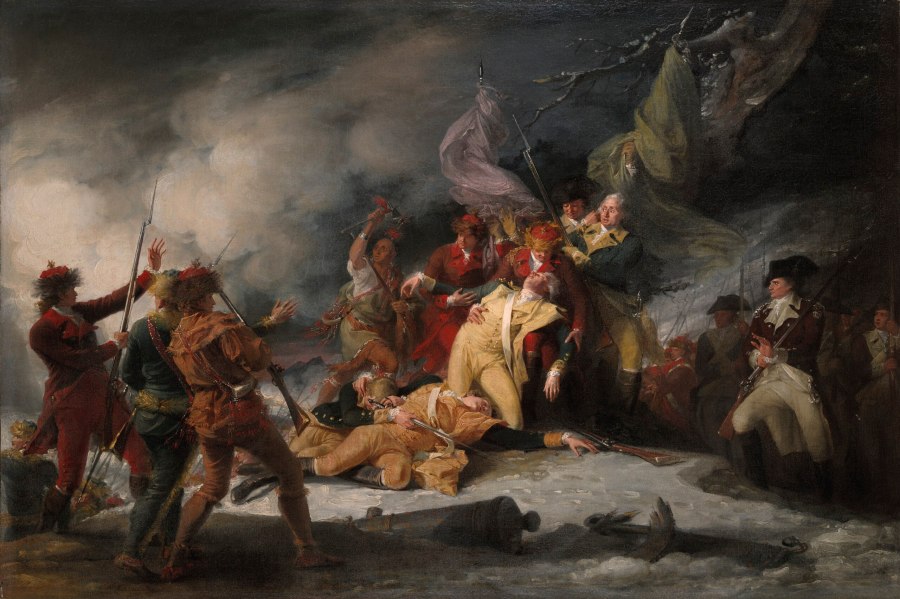
Montgomery never arrived; he had been killed in the first blast of musketry against his column, and his command broke. As time went on, the British regained their composure and pushed back against Morgan’s command. Morgan went back and brought up 200 New Englanders who joined the riflemen as they attempted to renew the attack. Now, the previously undefended point, was well manned, and daylight illuminated the paucity of Morgan’s numbers. Nevertheless, Morgan pressed them back further into the town to an interior fortification. A brave British officer led a counterattack, but Morgan personally shot him dead and disrupted the assault. Nevertheless, the time for action had passed. The British had become aware that Morgan’s was the only active American force in the city and closed in around him. In the meanwhile, additional British forces reoccupied the gates Morgan had initially taken and trapped him in the city. Morgan had no choice but to surrender his small command.
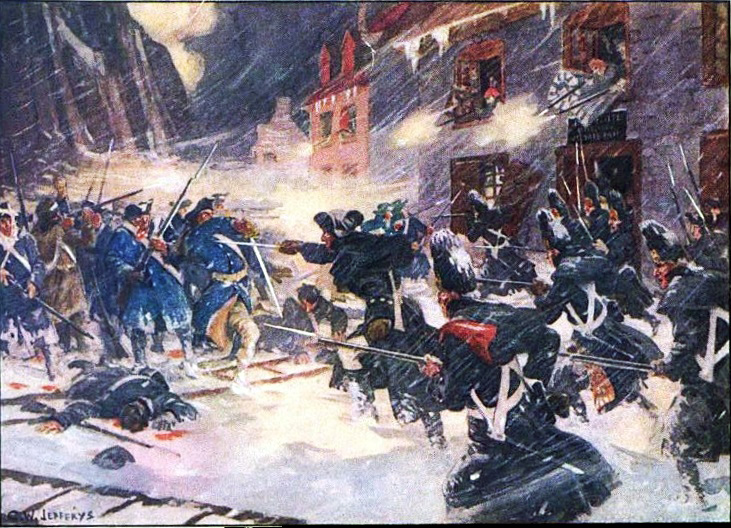
One artist’s depiction of the Battle of Quebec, 1775. Both forces are wearing blue overcoats. (courtesy of British Battles)
Morgan and the other officers enjoyed a liberal captivity with generous quarters in a seminary. The British officers visited them often and remained on friendly terms with the Americans. Morgan developed a dislike for some of his fellow officers whom he regarded as dishonest and scheming, and his fighting skills were brought to bear on at least one occasion when several men teamed up against big Dan Morgan. The imprisonment ended when the British returned the American officers on September 24, 1776, in New Jersey. Morgan returned to his wife and two daughters at his home outside of Battletown or Berryville, where he awaited his proper exchange. While there, he named his home “Soldier’s Rest,” as he recuperated from the trials of the taxing expedition to Quebec. The war was still young, and the Continental Army would soon be calling upon his services again. A special command of riflemen was being organized and Morgan would be its commander.
Emerging Revolutionary War welcomes guest historian Andrew J. Lucien. Brief bio of Andrew follows the post.
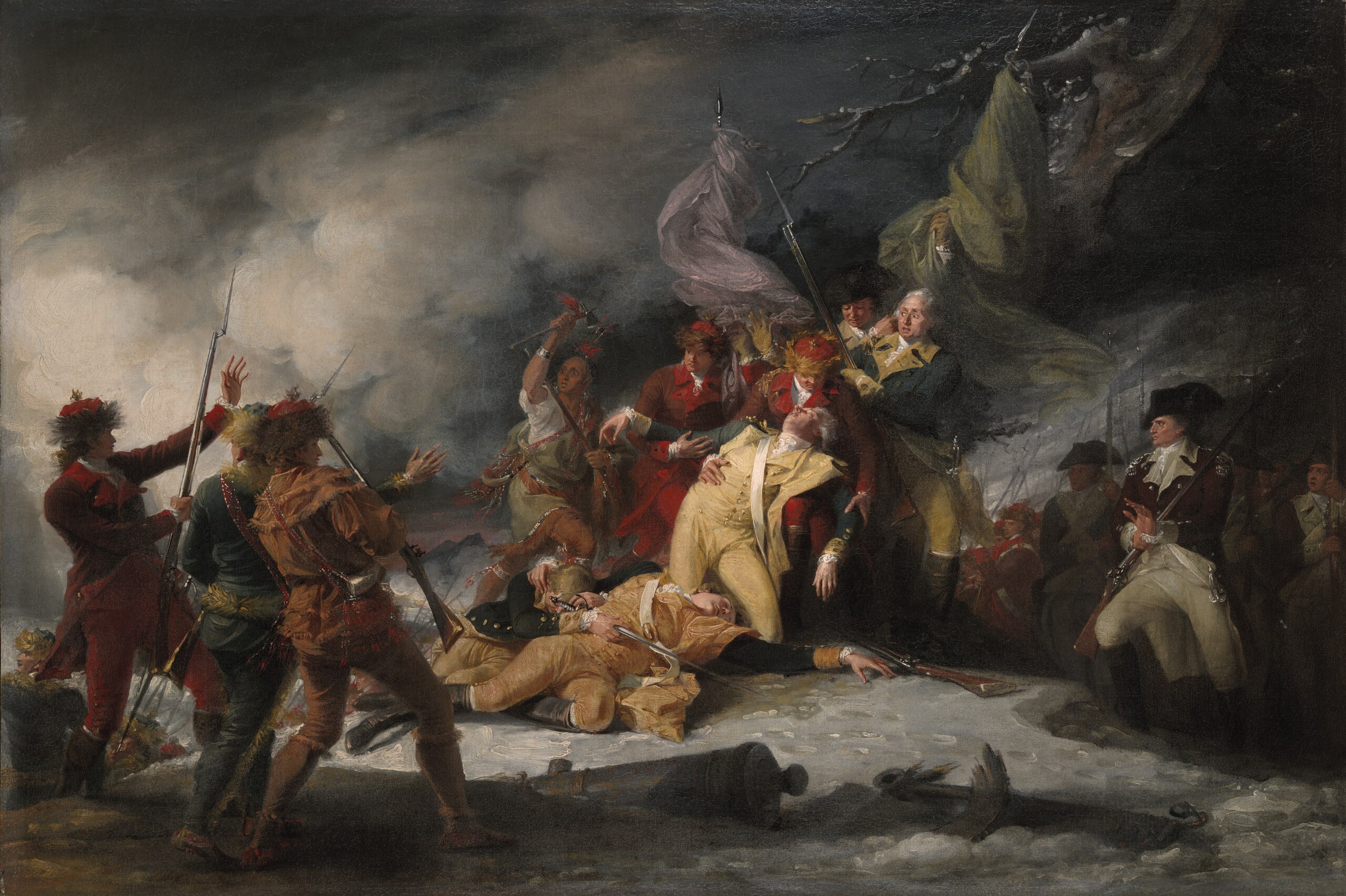
Death of General Richard Montgomery
Bunker Hill, Valley Forge, Yorktown, July 4, George Washington. These are the most common images that come to mind when the American Revolution is mentioned by most people. The collective unconscious of America has become steeped in the imagery of glorious American victories to win our independence from the superpower of the time. However, what many are unaware of is the unusual campaign that took place from 1775 to 1776, in an attempt to gain the support of Canada in our quest for independence. This campaign featured several battles, with the key one being the Battle of Quebec. This marked a significant turning point in the campaign and the war as a whole.
In 1775, the fate of the impending schism between Britain and its North American colonies was all but sealed. The colonial fervor had reached a climax at the Battles of Lexington and Concord in the spring of 1775, setting the mother country and its colony down a path of armed conflict. As tensions rose in 1775, Ethan Allan, along with Benedict Arnold, captured the British fort at Ticonderoga in early May, resulting in much-needed guns for the colonials. With successful action undertaken in the northern reaches of New York state, the Continental Congress approved plans to invade Canada. Intelligence led the patriots to believe that there were fewer than 700 British soldiers stationed in the Canadian territory and that the popular sentiment in the territory was in favor of rebellion, and that they, too, might take up arms against the British Crown.
By late September, Ethan Allan unsuccessfully attempted to capture Montreal. Near the same time, Benedict Arnold began to lead a force of around 1,100 men from Boston on an enterprise aimed at aiding in the capture of Canada (only about 600 would reach their destination). These men would eventually join forces with Richard Montgomery’s force around Quebec in December of 1775, “to finish the Glorious work you begun,” to quote George Washington. By the time Arnold’s men reached Canada, they were “in a very weak condition.” Montgomery’s force was moving north from Lake Champlain. His men captured Fort Chambly and Fort St. Johns. Following these captures, the force under Montgomery advanced on Montreal. The British governor, Guy Carlton, took approximately 150 men with him from Montreal to Quebec, believing it to be a more important and defensible position. Montreal was easily captured on the 13th. Montgomery did not rest long after capturing the fort, leaving a small garrison in Montreal and heading to join forces with Arnold’s men at Point aux Trembles. Montgomery, “…was anxious, after the capture of Chamblee, St. Johns and Montreal, to add Quebec, as a prime trophy to the laurels already won.”
With the combined force of Montgomery and Arnold now outside of Quebec, Montgomery sent Carlton multiple messages to surrender, which were all rejected. Upon hearing the refutation of his final offer, Montgomery was supposed to have said he would “dine in Quebec or Hell at Christmas.” Finally, with all other options seemingly exhausted, it was planned to forcibly take the city by sending Arnold’s corps to assault the lower town via St. Roque. Montgomery was to attack the lower town via Pres-de-Ville, near Cape Diamond. There was to be a fient east of St. John’s Gate under Colonel Livingston and one at Cape Diamond under Major Brown. The ultimate goal was to meet in the lower town, then storm the upper town.
Around midnight as the 31st began, clouds began to fill the sky and snow began to fall. This was a signal to the Americans to begin preparing for an assault, using the snowstorm as cover. By 2 a.m., the American troops began their movements. At about 4 a.m., Captain Malcolm Fraser saw flashes and lights on the Heights of Abraham. Fraser suspected that the lights were a sign of the American troops’ movement and ordered his guards to arm. The British began to play their drums and ring their bells to alert the men of Quebec to prepare for the city’s defense. The Americans launched two rockets to signal the beginning of their assault. With the rockets illuminating the early morning sky, the rebels began to fire their muskets into the British line. With the darkness of the morning still upon the soldiers, the British were unable to see their opponents, except when their muskets would flash and illuminate their heads. They used the flash of the muskets to guide their return volleys. The Americans began to launch artillery into Quebec from St. Roque. When Arnold saw the rockets in the morning sky, he led about 600 men from St. Roque to attack the British works at Saut-au-Matelot. Montgomery led his force of about 300 men to attack the works at Pres-de-Ville. Montgomery believed that this location was ripe for an escalade.
Arnold and the rest of his column advanced along the waterfront through St. Roque. The British sailors stationed there rained fire down on the Americans from atop the ramparts. The Americans “could see nothing but the blaze from the muzzles of their muskets.” As the Americans pressed forward, they lost the cover of the houses. Arnold was hit in the leg by enemy fire near the first barricade, and he was taken from the field by two men. Arnold tried to rally his men as he was taken away. Despite the setback, the Americans under Daniel Morgan pressed forward and used their ladders to scale and capture the first barricade at Saut-au-Matelot, along with 30 British troops. Here, the Americans found their muskets useless due to the snow. Many colonial troops resorted to confiscating British muskets. The Americans continued about 250-300 yards further to attempt to capture the second barrier, where they met opposition from the British. The Americans, on a narrow street, moved against the British, who had their own strong defenses, including a 12-foot-high barrier, cannons, and two lines of soldiers ready to repulse the attacking Americans. The British fired down on the Americans from the tops of the buildings. The colonial troops attempted to climb the barrier but were forced back by the British inside with their bayonets fixed. They then fired from under the cover of the houses, allowing the British to see them only as they moved from house to house. The attackers contemplated retreating; however, they tarried, ultimately a dire mistake. Carleton, aware of the developing assault, men to attack the flank of the Americans. With the Americans now flanked and facing stiff opposition in front, they surrendered to the British force.
Montgomery and his men suffered a far more deadly fate. As his column approached Pres-de-Ville, Captain Barnsfair had his men next to their guns and at the ready when the Americans arrived. The British had erected a barrier here with a battery. The Americans advanced within 50 yards of the British guns and halted, then resumed their advance, likely because they believed the soldiers were not on guard. Barnsfair “declared he would not fire till he was sure of doing execution, and… waited till the enemy came within… about thirty yards’ distance” and then called out, “fire!” “Shrieks and groans followed the discharge.” The fire of canister, grapeshot, and musketfire was deadly. When the fire stopped, the field of battle was clear with no rebels left standing on the field. Montogemery was one of the casualties of the action, found lying on his back with his arm still in the air. Seeing the folly of another assault, the remaining men retreated. An officer of Carlton’s declared the battle “a glorious day for us, and as compleat a little victory as was ever gained.” When the dust settled, the Americans suffered about 50 killed, 34 wounded, and 431 captured or missing, while the British defenders lost only 5 killed and 14 wounded. The fighting had lasted only around 4 hours.
Bibliography:
“An Account of the Assault on Quebec, 1775,” The Pennsylvania Magazine of History and Biography 14, no. 1 (1890): 47–63.
Blockade of Quebec in 1775–1776 by the American Revolutionists (les Bastonnais). Historical event, Quebec City, 1775–1776.
Caldwell, Henry. The Invasion of Canada in 1775. Quebec: Literary and Historical Society of Quebec, [microform].
Hatch, Robert McConnell. Thrust for Canada: The American Attempt on Quebec in 1775–1776. Boston: Houghton Mifflin, 1979.
Henry, John Joseph. Account of Arnold’s Campaign Against Quebec, and of the Hardships and Sufferings of That Band of Heroes Who Traversed the Wilderness of Maine from Cambridge to the St. Lawrence, in the Autumn of 1775. Albany: Joel Munsell, 1877.
Bio:
Andrew Lucien is a social studies curriculum director at the Cleveland Metropolitan School District, host of The Civil War Center podcast, and founder of thecivilwarcenter.com. He has written extensively on the Civil War and Revolutionary War.
Emerging Revolutionary War welcomes back guest historian Michael Aubrecht
To call Robert Morris “a political renaissance man” would be an understatement. He was vice president of the Pennsylvania Committee of Safety (1775–76) and was a member of the Continental Congress (1775–78) as well as a member of the Pennsylvania legislature (1778–79, 1780–81, 1785–86). Morris practically controlled the financial operations of the Revolutionary War from 1776 to 1783. He was a delegate to the Constitutional Convention (1787) and served in the U.S. Senate (1789–95). Perhaps most impressive is the fact that he signed the Declaration of Independence and the Articles of Confederation and later signed the U.S. Constitution.
At the start of the war Robert Morris was one of the wealthiest men in the colonies, but he would go on to claim bankruptcy after some catastrophic decisions. To fully appreciate the contributions of Robert Morris we must go back and examine him from the beginning.
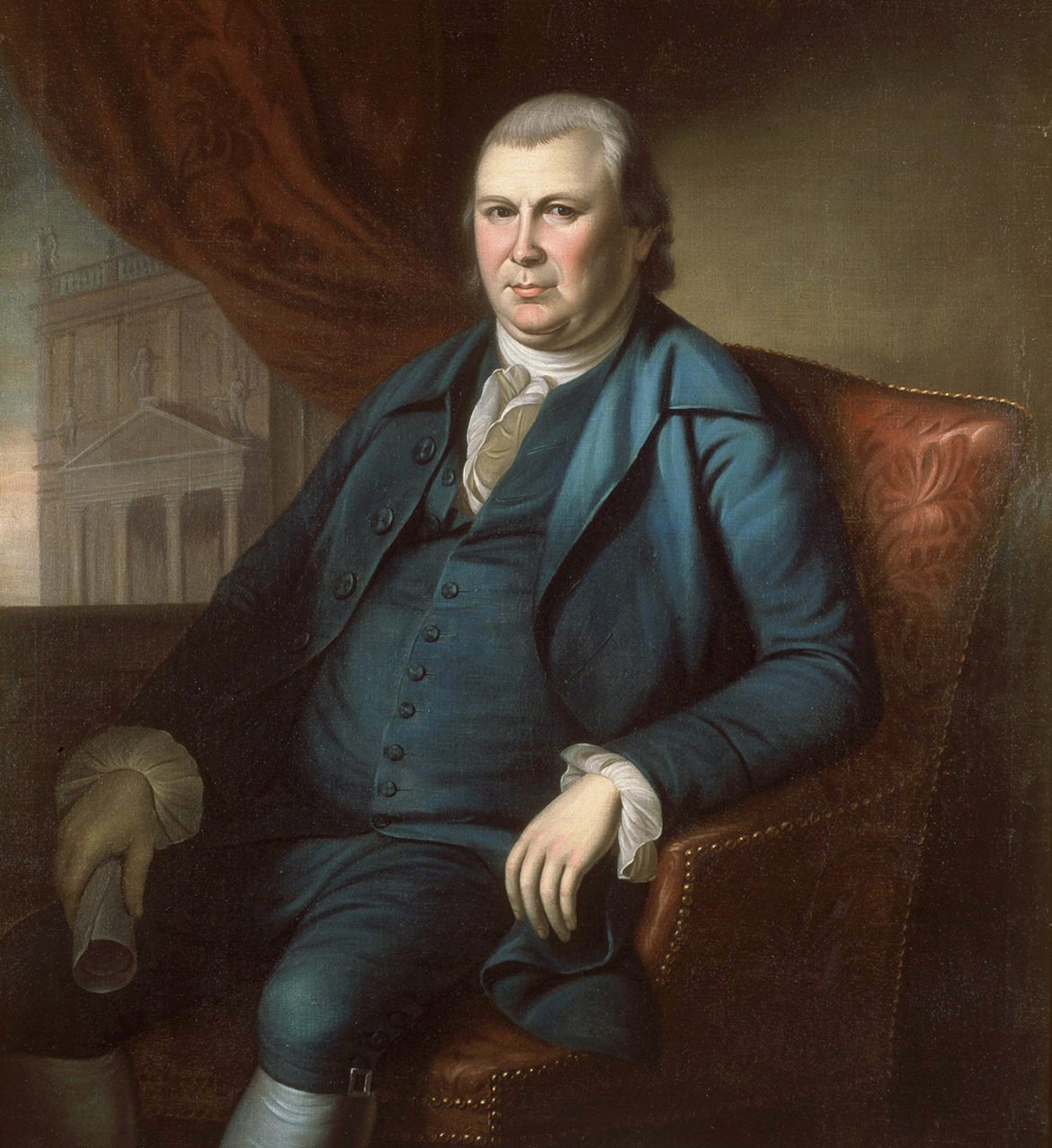
Robert Morris
Robert Morris was born on January 31, 1734, in Liverpool, England, the son of Robert Morris, Sr., and Elizabeth Murphet Morris. His mother died when he was only two and he was raised by his grandmother. Morris’ father immigrated to the colonies in 1700, settled in Maryland and in 1738 he began a successful career working for Foster, Cunliffe and Sons of Liverpool. His job was to purchase and ship tobacco back to England. Morris Sr. was known for his ingenuity, and he was the creator of the tobacco inspection law. He was also regarded as an inventive merchant and was the first to keep his accounts in money rather than in gallons, pounds, or yards.
In 1750 tragedy would once again strike the Morris family. In July Morris Sr. hosted a dinner party aboard one of the company’s ships. As he prepared to depart a farewell salute was fired from the ship’s cannon and wadding from the shot burst through the side of the boat and severely injured him. He died a few days later of blood poisoning on July 12, 1750. The tragedy had a terrible effect on Morris who became an orphan at the age of 16. Looking for a change he left Maryland for Philadelphia in 1748. He was taken under the wing of his father’s friend, Mr. Greenway, who filled the gap left by the death of Morris’ father. Raised with a tremendous work ethic Morris flourished as a clerk at the merchant firm of Charles Willing & Co.
Following in his father’s footsteps Morris was also gifted with successful ingenuity. In his twenties he took his earnings and joined a few friends in establishing the London Coffee House. (Today the Philadelphia Stock Exchange claims the coffee house as its origin.) Morris was sent as a ship’s captain on a trading mission to Jamaica during the Seven Years War (1756-1763). He was captured by a group of French Privateers but managed to escape to Cuba where he remained until an American ship arrived in Havana. Only then was he able to secure safe passage back to Philadelphia.
Shortly after Morris’ return to the colonies Willing retired and handed the firm over to his son Thomas who offered him a partnership. This resulted in the formation of Willing, Morris & Co. The firm boasted three ships that were dispatched to the West Indies and England importing British cargo and exporting American goods. This relationship lasted for over 40 years and was immensely successful. At one point, Morris was ranked by the Encyclopedia of American Wealth, along with Charles Carroll of Carrollton, as the two wealthiest signers of the Declaration of Independence.
As influential merchants, Morris and Willing disagreed with the changes in tax policy. In 1765, the Stamp Act was passed and was met with massive resistance. Morris was at the forefront and led protests in the streets. His fervor was so striking that he convinced the stamp collector to suspend his post and return the stamps back to their origin. The tax collector stated that if he had not complied, he feared his house would have been torn down “brick by brick.” In 1769, the partners organized the first non-importation agreement, which forever ended the slave trade in the Philadelphia region.
Morris married Mary White on March 2, 1769, and they had seven children. In 1770, he bought an eighty-acre farm on the eastern bank of the Schuylkill River where he built a home he named “The Hills.” Due to his growing reputation Morris was asked to be a warden of the port of Philadelphia. Showing his tenacity, he convinced the captain of a tea ship to return to England in 1775.
Later on, Morris was appointed to the Model Treaty Committee following Richard Henry Lee’s resolution for independence on June 7, 1776. The resulting treaty projected international relations based on free trade and not political alliance. The treaty was eventually taken to Paris by Benjamin Franklin who transformed it into the Treaty of Alliance which was made possible by the Continental Army’s victory at Yorktown in 1781.
Scholars disagree as to whether Morris was present on July 4 when the Declaration of Independence was approved. But when it came time to sign the Declaration on August 2 he did so. Morris boldly stated that it was “the duty of every individual to act his part in whatever station his country may call him to in hours of difficulty, danger and distress.” Until peace was achieved in 1783, Morris performed services in support of the war. His efforts earned him the moniker of “Financier of the Revolution.”
Michael is the author of “The Letters of Robert Morris: Founding Father and Revolutionary Financier.“
Join us this Sunday, December 14th at 7pm as we return LIVE for this Rev War Revelry on the Canadian Campaign of 1775. We will discuss Arnold, Montgomery, Morgan and others on America’s attempt to capture Montreal, Quebec and create a “14th state.” From Arnold’s arduous march to Quebec through the wilds of Maine to Montgomery’s capture of Montreal, our historians Alex Cain and Mike Cecere will cover the entire campaign and answer the question “was the capture of Canada possible?”
This fall and winter mark the 250th anniversary of the campaign and the battles of Montreal and Quebec, and both of our speakers have taken part in the commemorative events. Grab a drink and watch live on our Facebook page, also add questions in the chat.
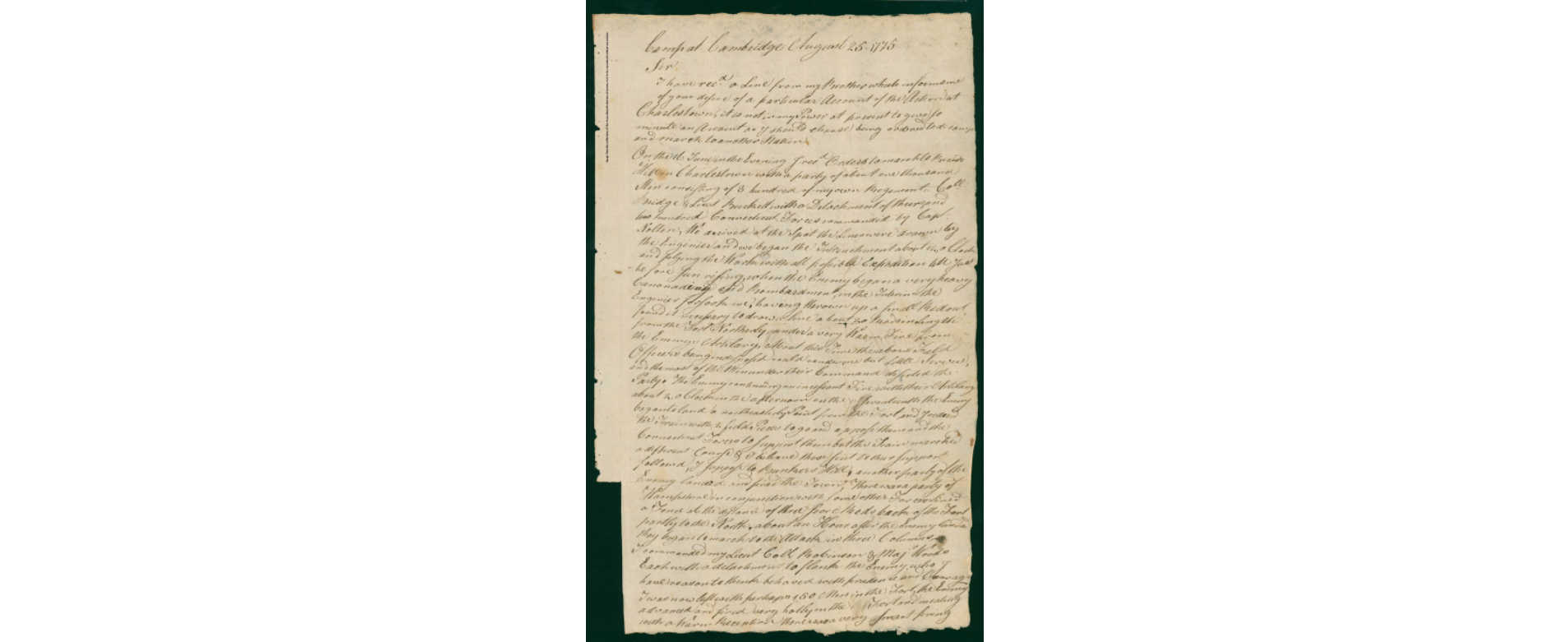
Approximately two months after waging the defense of Breed’s Hill, on the Charlestown peninsula, against the British, Colonel William Prescott put quill to paper to write to John Adams. In this communique, he discussed the action at Breed’s Hill, known as the Battle of Bunker Hill, fought on June 17, 1775, to his fellow Massachusetts native. Take note that he even wrote his account about the orders he received and which hill that missive directed him to. Since the waft of smoke has drifted from the battle on that June day, veterans, officers, and historians have debated why Prescott and company chose Breed’s Hill instead of Bunker Hill. This letter is just another wrinkle in that timeless debate.
Camp at Cambridge August 25.1775
Sir
I have recd. a Line from my Brother which informs me of your desire of a particular Account of the Action at Charlestown, it is not in my Power at present to give so minute an Account as I should choose being ordered to decamp and march to another Station.
On the 16 June in the Evening I recd. Orders to march to Breeds Hill in Charlestown with a party of about one thousand Men consisting of 3 hundred of my own Regiment, Coll. Bridge & Lieut Breckett with a Detachment of theirs, and two hundred Connecticut Forces commanded by Capt. Nolten, We arrived at the Spot the Lines were drawn by the Enginier and we began the Intrenchmant about 12, o Clock and plying the Work with all possible Expodition till Just before sun rising, when the Enemy began a very heavy Canonading and Bombardment, in the Interin [Interim] the Enginier forsook me, having thrown up a small Redout, found it necessary to draw a Line about 20 Rods in length from the Fort Northerly, under a very Warm Fire from the Enemys Artilary, About this Time the above Field Officers being indisposed could render me but Little Service, and the most of the Men under their Command deserted the Party. The Enemy continueing an incessant Fire with their Artilary. about 2, o Clock in the afternoon on the seventeenth the Enemy began to land a northeasterly Point from the Fort, and I orderd the Train with 2 field Pieces to go and oppose them and the Connecticut Forces to support them but the Train marched a different Course & I believe those sent to their support followd, I suppose to Bunkers Hill, another party of the Enemy landed and fired the Town, There was a party of Hampshire in conjunction with some other Forces Lined a Fence at the distance of three score Rods back of the Fort partly to the North, about an Hour after the Enemy landed they began to march to the Attack in three Columns, I commanded my Lieut Coll. Robinson & Majr. Woods Each with a detachment to flank the Enemy, who I have reason to think behaved with prudence and Courage.
I was now left with perhaps 150 Men in the Fort, the Enemy advanced and fired very hotly on the Fort and meating with a Warm Reception there was a very smart firing on both sides. after a considerable Time finding our Amunition was almost spent I commanded a sessation till the Enemy advanced within 30 yards when we gave them such a hot fire, that the [y] were obliged to retire nearly 150 yards before they could Rally and come again to the Attack. Our Amunition being nea [r ]ly exaustid could keep up only a scattering Fire. The Enemy being numerous surrounded our little Fort began to mount our Lines and enter the Fort with their Bayonets, we was obliged to retreat through them while they kept up as hot a fire as it was possible for them to make we having very few Bayonets could make no resistance, we kept the fort about one hour and twenty Minutes after the Attack with small Arms, This is nearly the State of Facts tho’ imperfect & too general which if any ways satisfactory to you will afford pleasure to your most obedient humble Servt.
William Prescott To the honble John Adams Esqr.
Image of original letter from Prescott to Adams, courtesy of Massachusetts Historical Society
Join us this Sunday as we welcome historian Patrick H. Hannum, as we discuss the events leading up to and including the Battle of Great Bridge, fought on December 9, 1775. Patrick will also share his research of the men who were there at the battle and the long lasting impacts his small battle had on Virginia in the American Revolution. With the 250th anniversary of the Battle of Great Bridge upon us, this is a great time to catch up on the events in Virginia during the fall of 1775.
Patrick H. (Pat) Hannum served for 45 years the Department of Defense, 29 years as a U.S. Marine (Assault Amphibious Vehicle Officer), including battalion command, and 16 years as a civilian professor at the Joint Forces Staff College, National Defense University, where he specialized in operational-level warfare and Phase II Joint Professional Military Education. He continues to study and promote the history and relevance of the American Revolution through membership in the Norfolk Chapter of the Sons of the American Revolution and the Great Bridge Battlefield & Waterways History Foundation, including staff rides, battlefield tours and other educational venues.
This Rev War Revelry will be recorded and placed on our Facebook page this Sunday at 7pm and subsequently on our You Tube and Spotify Channels. So after you fill up on turkey and football, tune in to catch a little history!
Emerging Revolutionary War welcomes guest historian Ben Powers
Introduction
Nathaniel Greene is renowned for leading the Southern Department during the American Revolution, achieving significant strategic results against Lords Cornwallis and Rawdon, even though he lost several battles. Historian Theodore Thayer called him “the strategist of the American Revolution.”[1] Greene carefully planned his army’s movements to maximize maneuverability, chose to fight in situations with roughly equal numbers, strengthened support from auxiliary and irregular forces, and put the British in increasingly worse positions. His main goal was to keep his army active—success meant staying in the field and avoiding severe losses. This led Cornwallis to make decisions that resulted in his defeat at Yorktown, Virginia, in October 1781. Greene’s careful coordination of military actions to achieve strategic results hinted at what would later be called “operational art,” a concept later connected to leaders like Napoleon Bonaparte and Soviet theorists.[2] Greene’s skills showed the main elements of operational art, making him more than a strategist—he was an early example of an operational artist.
Some Definitions
The “operational level of war” is a twentieth-century concept describing military activities between the tactical level (winning battles) and the strategic level (achieving national aims through armed force and other instruments of power). In current doctrine, tactics involve sequencing forces in time and space to accomplish missions like seizing terrain. Strategy is how national leaders and senior commanders use available means to achieve defined ends. The operational level connects these two, as theater commanders sequence campaigns to achieve strategic objectives, a concept relevant for analyzing Greene’s approach.
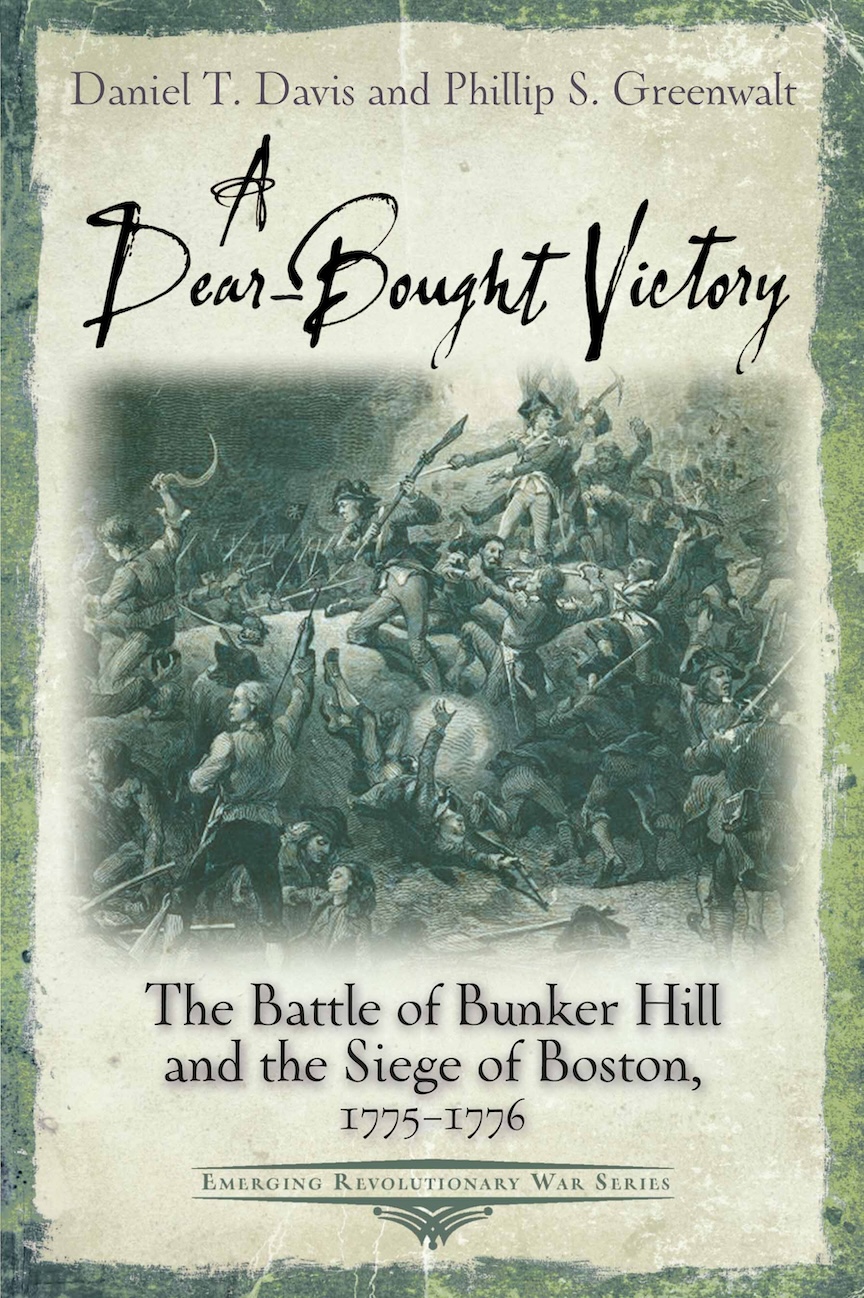
We’re excited to share one of the 2026 new releases in the Emerging Revolutionary War Series. Published by Savas Beatie, a sneak peek, including the cover, is below.
About the Book:
“I wish we could sell them another hill at the same price we did Bunkers Hill,” Nathanael Greene wrote to the governor of Rhode Island after the battle of June 17, 1775.
Actually fought on Breed’s Hill outside Boston, Massachusetts, the battle of Bunker Hill proved a pyrrhic victory for British forces. Confident in their ability to overwhelm the New England militia that opposed them, long lines of neatly uniformed British infantry and marines swept uphill toward a quickly built earthen redoubt defended by a motely collection of farmers, shopkeepers, and tradesmen.
“Don’t fire until you see the whites of their eyes!” the colonials urged each other—or did they?
By the end of the fight, the British gained the summit and Colonial forces scattered. One of the patriot leaders, Dr. Joseph Warren, lay dead—one of the first martyrs of the American Revolution. But for the British, the scene was far, far worse: it would be the greatest number of casualties they would ever suffer in any battle of the American Revolution. As British General Henry Clinton commented afterward, “A few more such victories would have surely put an end to British dominion in America.”
The siege of Boston would continue, but the sobering lesson of Bunker Hill changed British strategy—as did the arrival soon thereafter of a new commander-in-chief of Continental forces: General George Washington.
In A Dear-Bought Victory, historians Daniel T. Davis and Phillip S. Greenwalt separate the facts from the myths as they take readers to the slopes of Breed’s Hill and along the Boston siege lines as they explore a battle that continues to hold a place in popular memory unlike few others.
About the Authors:
Daniel T. Davis is the Senior Education Manager at the American Battlefield Trust. He is a graduate of Longwood University with a bachelor’s degree in public history. Dan has worked as a Ranger/Historian at Appomattox Court House National Historical Park and Fredericksburg and Spotsylvania National Military Park. He is the author or co-author of numerous books on the American Civil War. This is his first co-authored book in the Emerging Revolutionary War Series. Dan is a native of Fredericksburg, Virginia.
Phillip S. Greenwalt is the co-founder of Emerging Revolutionary War and a full-time contributor to Emerging Civil War. He is a graduate of Wheeling Jesuit University with a bachelor’s degree in history along with graduate degrees in American History and International Studies and Leadership from George Mason University and Arizona State University, respectively. He is the author of co-author of seven books on the American Revolutionary and Civil Wars. Phill has worked for the National Park Service for the last 17 years at numerous natural and cultural sites. He is a native of Baltimore, Maryland.
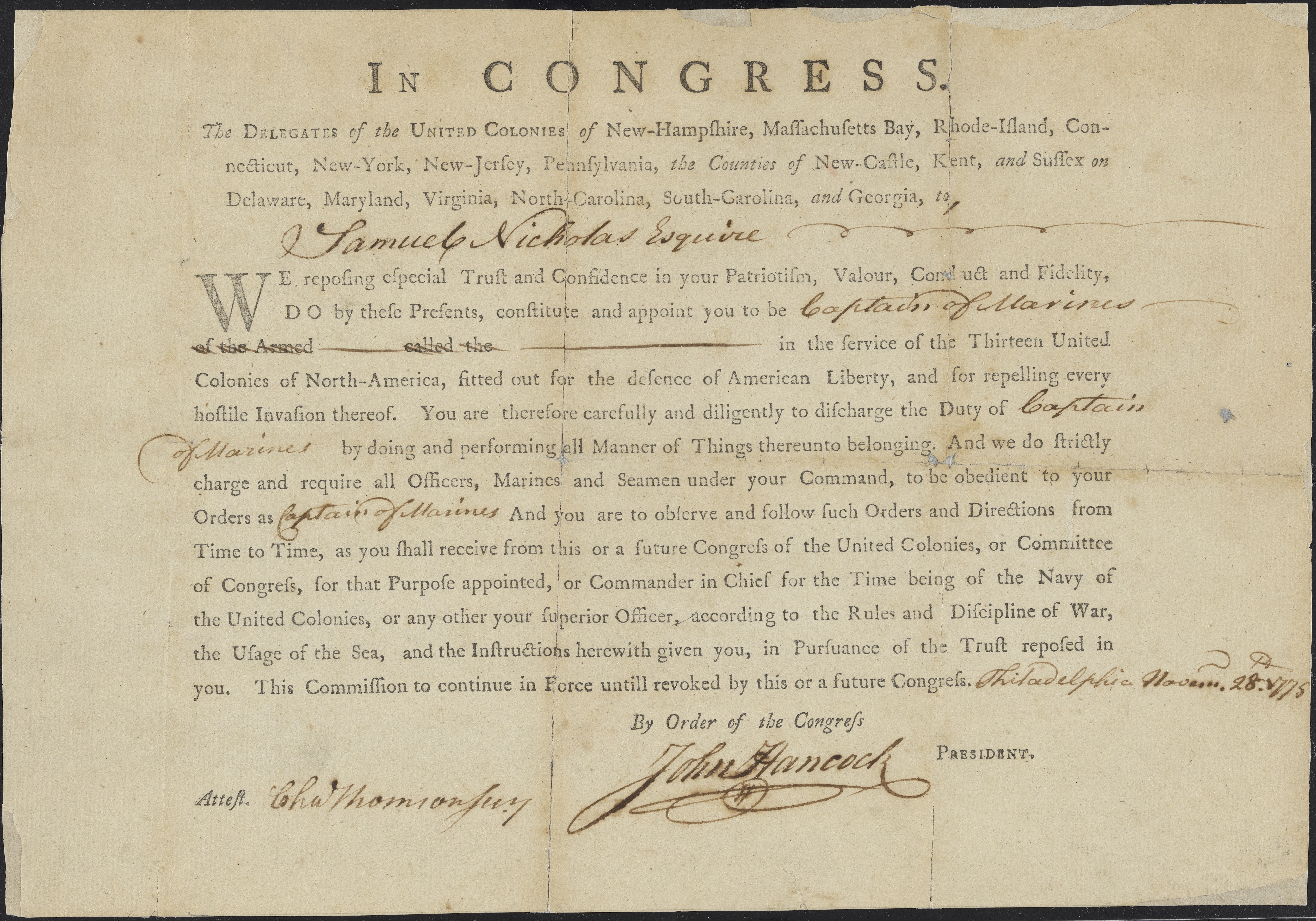
The Commission of Captain Samuel Nicholas, the first American Marine. (USMC)
Today marks the 250th birthday of the Marine Corps. November 10, 1775 was a milestone in the creation of American naval power, but the birthday story is a little more complicated.
The Continental Congress resolved to create a navy under its auspices on October 13, 1775, but much work remained to build American naval power to a point where it might serve a strategic purpose. Individual colonies had already begun creating naval forces and George Washington had leased ships under the army’s authority. Thus, the resolution served as more of milestone on a long road, rather than a fresh beginning.
On October 30, the Continental Congress considered the reports of its naval committee and confirmed recommendations for two vessels of 14 and 10 guns. Moreover, it resolved to add two more ships to its burgeoning navy, one of 20 guns and one carrying up to 36 guns. It also added four new members to the naval committee, bringing it to a total of seven. Stephen Hopkins (RI), Joseph Hewes (NC), Richard Henry Lee (VA), and John Adams (MA) joined John Langdon (NH), Silas Deane (CT), and Christopher Gadsden (SC).[1] On November 2, Congress gave the naval committee authority to call on the treasury for up to $100,000 to acquire a navy and delegated to the committee the authority to recruit officers and seamen, offering them prize money in the amount of one-half the value of all warships and one-third the value of transports made prizes.[2] It also took up a petition from a Committee of Safety in Passamaquoddy, Nova Scotia to join the association represented by the Continental Congress. Naturally, Congress appointed a committee—Silas Deane, John Jay, Stephen Hopkins, John Langdon, and John Adams to consider the matter. The naval expansion and Passamaquoddy petition sparked a new round of thinking about American naval power.


 Emerging Revolutionary War Era