

Join us this Sunday, January 11th at 7pm as we welcome back historian Patrick Hannum as we discuss the events in Virginia after the Battle of Great Bridge. The results of the British loss at Great Bridge had profound impacts on Dunmore’s plans in Virginia which led to the destruction of Virginia’s largest city. Was Norfolk burned by Dunmore as has been popularly understood or is the story more complicated? What became of the former slaves that joined Dunmore’s army? Tune in and learn about the events in Virginia in the winter 1775 – spring 1776. This Revelry is pre-recorded and will be posted to our Facebook page on Jan. 11 at 7pm and also to our You Tube and Spotify channels.
Category: 1776
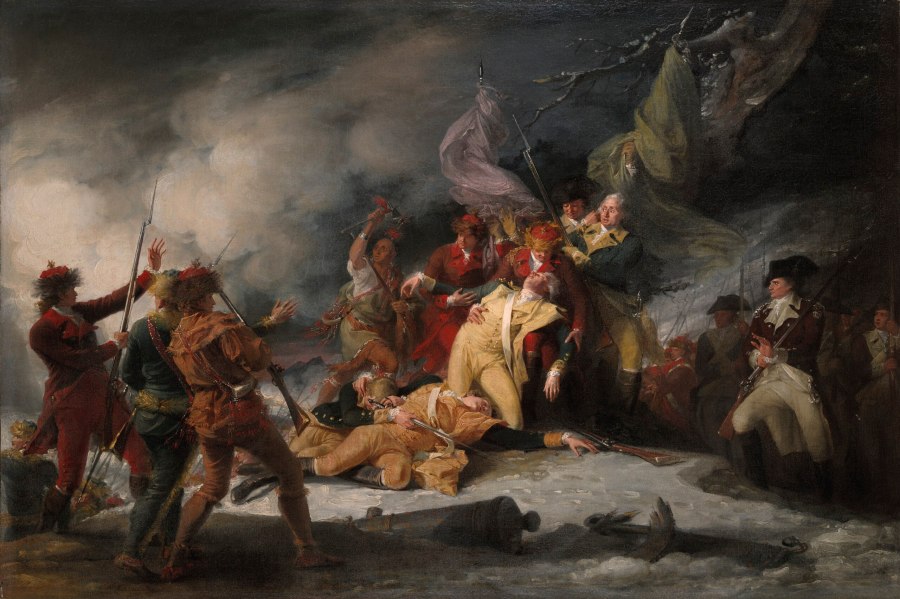
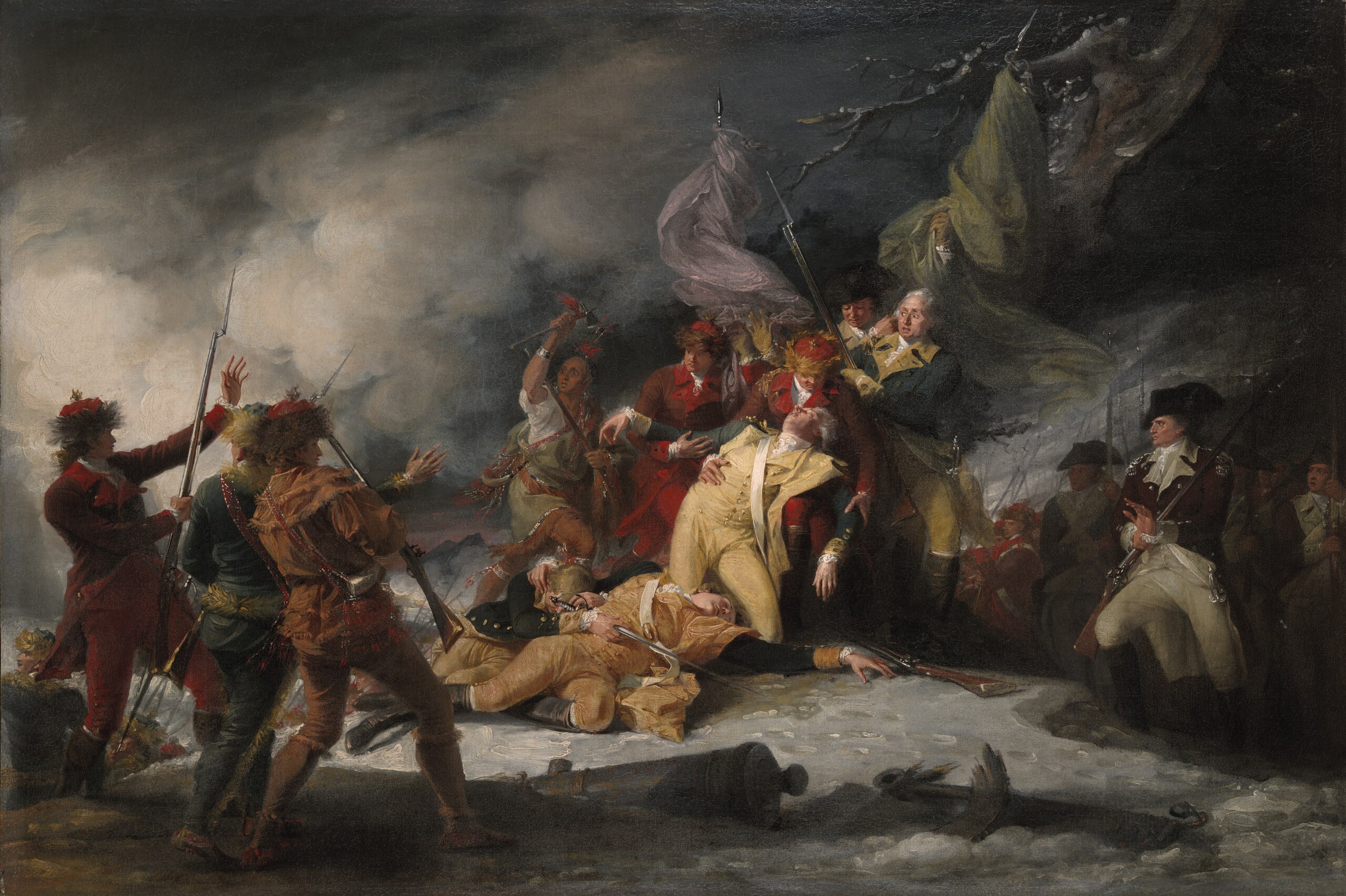
The Battle of Quebec
Emerging Revolutionary War welcomes guest historian Andrew J. Lucien. Brief bio of Andrew follows the post.
Bunker Hill, Valley Forge, Yorktown, July 4, George Washington. These are the most common images that come to mind when the American Revolution is mentioned by most people. The collective unconscious of America has become steeped in the imagery of glorious American victories to win our independence from the superpower of the time. However, what many are unaware of is the unusual campaign that took place from 1775 to 1776, in an attempt to gain the support of Canada in our quest for independence. This campaign featured several battles, with the key one being the Battle of Quebec. This marked a significant turning point in the campaign and the war as a whole.
In 1775, the fate of the impending schism between Britain and its North American colonies was all but sealed. The colonial fervor had reached a climax at the Battles of Lexington and Concord in the spring of 1775, setting the mother country and its colony down a path of armed conflict. As tensions rose in 1775, Ethan Allan, along with Benedict Arnold, captured the British fort at Ticonderoga in early May, resulting in much-needed guns for the colonials. With successful action undertaken in the northern reaches of New York state, the Continental Congress approved plans to invade Canada. Intelligence led the patriots to believe that there were fewer than 700 British soldiers stationed in the Canadian territory and that the popular sentiment in the territory was in favor of rebellion, and that they, too, might take up arms against the British Crown.
By late September, Ethan Allan unsuccessfully attempted to capture Montreal. Near the same time, Benedict Arnold began to lead a force of around 1,100 men from Boston on an enterprise aimed at aiding in the capture of Canada (only about 600 would reach their destination). These men would eventually join forces with Richard Montgomery’s force around Quebec in December of 1775, “to finish the Glorious work you begun,” to quote George Washington. By the time Arnold’s men reached Canada, they were “in a very weak condition.” Montgomery’s force was moving north from Lake Champlain. His men captured Fort Chambly and Fort St. Johns. Following these captures, the force under Montgomery advanced on Montreal. The British governor, Guy Carlton, took approximately 150 men with him from Montreal to Quebec, believing it to be a more important and defensible position. Montreal was easily captured on the 13th. Montgomery did not rest long after capturing the fort, leaving a small garrison in Montreal and heading to join forces with Arnold’s men at Point aux Trembles. Montgomery, “…was anxious, after the capture of Chamblee, St. Johns and Montreal, to add Quebec, as a prime trophy to the laurels already won.”
With the combined force of Montgomery and Arnold now outside of Quebec, Montgomery sent Carlton multiple messages to surrender, which were all rejected. Upon hearing the refutation of his final offer, Montgomery was supposed to have said he would “dine in Quebec or Hell at Christmas.” Finally, with all other options seemingly exhausted, it was planned to forcibly take the city by sending Arnold’s corps to assault the lower town via St. Roque. Montgomery was to attack the lower town via Pres-de-Ville, near Cape Diamond. There was to be a fient east of St. John’s Gate under Colonel Livingston and one at Cape Diamond under Major Brown. The ultimate goal was to meet in the lower town, then storm the upper town.
Around midnight as the 31st began, clouds began to fill the sky and snow began to fall. This was a signal to the Americans to begin preparing for an assault, using the snowstorm as cover. By 2 a.m., the American troops began their movements. At about 4 a.m., Captain Malcolm Fraser saw flashes and lights on the Heights of Abraham. Fraser suspected that the lights were a sign of the American troops’ movement and ordered his guards to arm. The British began to play their drums and ring their bells to alert the men of Quebec to prepare for the city’s defense. The Americans launched two rockets to signal the beginning of their assault. With the rockets illuminating the early morning sky, the rebels began to fire their muskets into the British line. With the darkness of the morning still upon the soldiers, the British were unable to see their opponents, except when their muskets would flash and illuminate their heads. They used the flash of the muskets to guide their return volleys. The Americans began to launch artillery into Quebec from St. Roque. When Arnold saw the rockets in the morning sky, he led about 600 men from St. Roque to attack the British works at Saut-au-Matelot. Montgomery led his force of about 300 men to attack the works at Pres-de-Ville. Montgomery believed that this location was ripe for an escalade.
Arnold and the rest of his column advanced along the waterfront through St. Roque. The British sailors stationed there rained fire down on the Americans from atop the ramparts. The Americans “could see nothing but the blaze from the muzzles of their muskets.” As the Americans pressed forward, they lost the cover of the houses. Arnold was hit in the leg by enemy fire near the first barricade, and he was taken from the field by two men. Arnold tried to rally his men as he was taken away. Despite the setback, the Americans under Daniel Morgan pressed forward and used their ladders to scale and capture the first barricade at Saut-au-Matelot, along with 30 British troops. Here, the Americans found their muskets useless due to the snow. Many colonial troops resorted to confiscating British muskets. The Americans continued about 250-300 yards further to attempt to capture the second barrier, where they met opposition from the British. The Americans, on a narrow street, moved against the British, who had their own strong defenses, including a 12-foot-high barrier, cannons, and two lines of soldiers ready to repulse the attacking Americans. The British fired down on the Americans from the tops of the buildings. The colonial troops attempted to climb the barrier but were forced back by the British inside with their bayonets fixed. They then fired from under the cover of the houses, allowing the British to see them only as they moved from house to house. The attackers contemplated retreating; however, they tarried, ultimately a dire mistake. Carleton, aware of the developing assault, men to attack the flank of the Americans. With the Americans now flanked and facing stiff opposition in front, they surrendered to the British force.
Montgomery and his men suffered a far more deadly fate. As his column approached Pres-de-Ville, Captain Barnsfair had his men next to their guns and at the ready when the Americans arrived. The British had erected a barrier here with a battery. The Americans advanced within 50 yards of the British guns and halted, then resumed their advance, likely because they believed the soldiers were not on guard. Barnsfair “declared he would not fire till he was sure of doing execution, and… waited till the enemy came within… about thirty yards’ distance” and then called out, “fire!” “Shrieks and groans followed the discharge.” The fire of canister, grapeshot, and musketfire was deadly. When the fire stopped, the field of battle was clear with no rebels left standing on the field. Montogemery was one of the casualties of the action, found lying on his back with his arm still in the air. Seeing the folly of another assault, the remaining men retreated. An officer of Carlton’s declared the battle “a glorious day for us, and as compleat a little victory as was ever gained.” When the dust settled, the Americans suffered about 50 killed, 34 wounded, and 431 captured or missing, while the British defenders lost only 5 killed and 14 wounded. The fighting had lasted only around 4 hours.
Bibliography:
“An Account of the Assault on Quebec, 1775,” The Pennsylvania Magazine of History and Biography 14, no. 1 (1890): 47–63.
Blockade of Quebec in 1775–1776 by the American Revolutionists (les Bastonnais). Historical event, Quebec City, 1775–1776.
Caldwell, Henry. The Invasion of Canada in 1775. Quebec: Literary and Historical Society of Quebec, [microform].
Hatch, Robert McConnell. Thrust for Canada: The American Attempt on Quebec in 1775–1776. Boston: Houghton Mifflin, 1979.
Henry, John Joseph. Account of Arnold’s Campaign Against Quebec, and of the Hardships and Sufferings of That Band of Heroes Who Traversed the Wilderness of Maine from Cambridge to the St. Lawrence, in the Autumn of 1775. Albany: Joel Munsell, 1877.
Bio:
Andrew Lucien is a social studies curriculum director at the Cleveland Metropolitan School District, host of The Civil War Center podcast, and founder of thecivilwarcenter.com. He has written extensively on the Civil War and Revolutionary War.
Robert Morris: Founding Father and Revolutionary Financier
Emerging Revolutionary War welcomes back guest historian Michael Aubrecht
To call Robert Morris “a political renaissance man” would be an understatement. He was vice president of the Pennsylvania Committee of Safety (1775–76) and was a member of the Continental Congress (1775–78) as well as a member of the Pennsylvania legislature (1778–79, 1780–81, 1785–86). Morris practically controlled the financial operations of the Revolutionary War from 1776 to 1783. He was a delegate to the Constitutional Convention (1787) and served in the U.S. Senate (1789–95). Perhaps most impressive is the fact that he signed the Declaration of Independence and the Articles of Confederation and later signed the U.S. Constitution.
At the start of the war Robert Morris was one of the wealthiest men in the colonies, but he would go on to claim bankruptcy after some catastrophic decisions. To fully appreciate the contributions of Robert Morris we must go back and examine him from the beginning.
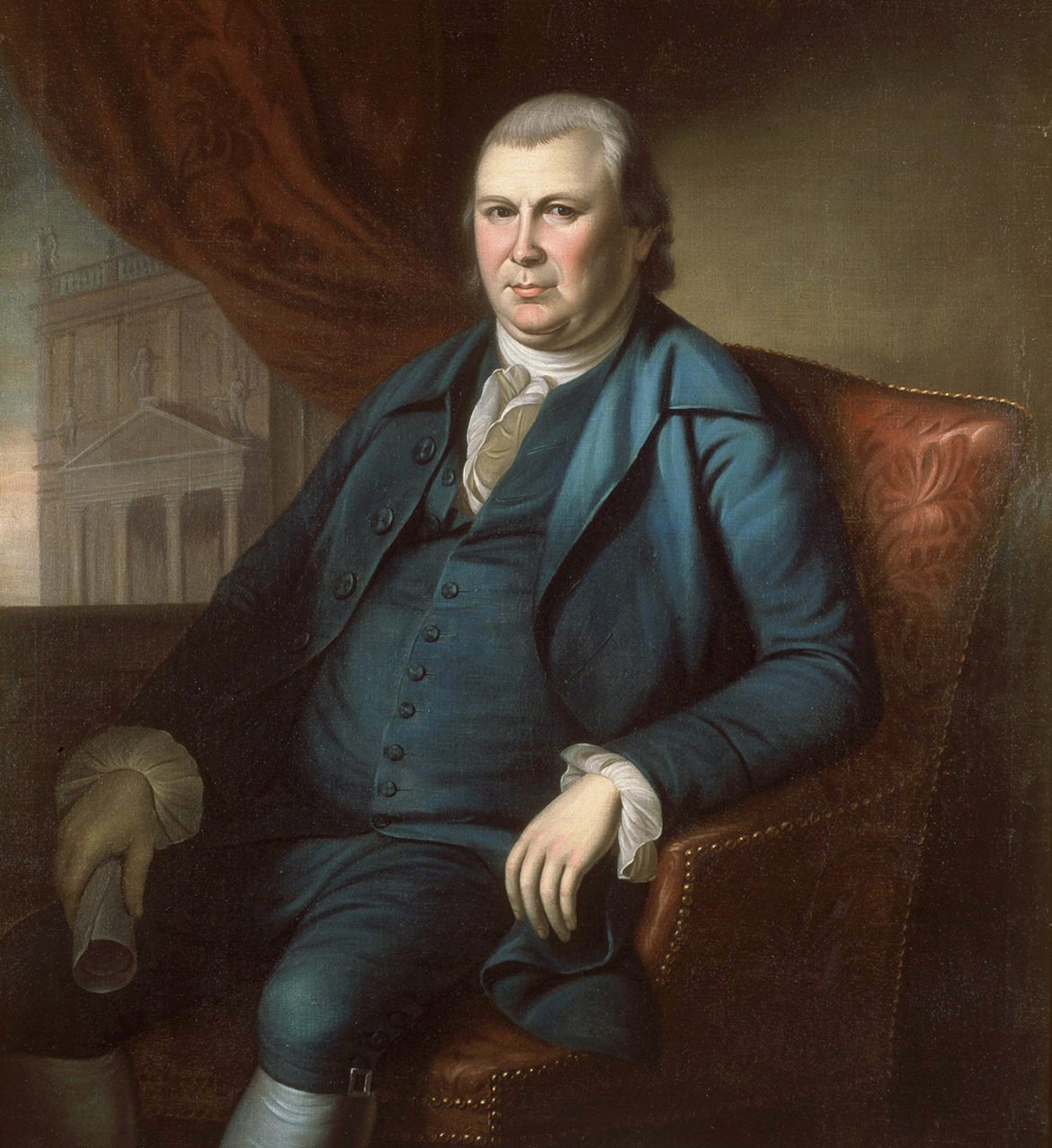
Robert Morris was born on January 31, 1734, in Liverpool, England, the son of Robert Morris, Sr., and Elizabeth Murphet Morris. His mother died when he was only two and he was raised by his grandmother. Morris’ father immigrated to the colonies in 1700, settled in Maryland and in 1738 he began a successful career working for Foster, Cunliffe and Sons of Liverpool. His job was to purchase and ship tobacco back to England. Morris Sr. was known for his ingenuity, and he was the creator of the tobacco inspection law. He was also regarded as an inventive merchant and was the first to keep his accounts in money rather than in gallons, pounds, or yards.
In 1750 tragedy would once again strike the Morris family. In July Morris Sr. hosted a dinner party aboard one of the company’s ships. As he prepared to depart a farewell salute was fired from the ship’s cannon and wadding from the shot burst through the side of the boat and severely injured him. He died a few days later of blood poisoning on July 12, 1750. The tragedy had a terrible effect on Morris who became an orphan at the age of 16. Looking for a change he left Maryland for Philadelphia in 1748. He was taken under the wing of his father’s friend, Mr. Greenway, who filled the gap left by the death of Morris’ father. Raised with a tremendous work ethic Morris flourished as a clerk at the merchant firm of Charles Willing & Co.
Following in his father’s footsteps Morris was also gifted with successful ingenuity. In his twenties he took his earnings and joined a few friends in establishing the London Coffee House. (Today the Philadelphia Stock Exchange claims the coffee house as its origin.) Morris was sent as a ship’s captain on a trading mission to Jamaica during the Seven Years War (1756-1763). He was captured by a group of French Privateers but managed to escape to Cuba where he remained until an American ship arrived in Havana. Only then was he able to secure safe passage back to Philadelphia.
Shortly after Morris’ return to the colonies Willing retired and handed the firm over to his son Thomas who offered him a partnership. This resulted in the formation of Willing, Morris & Co. The firm boasted three ships that were dispatched to the West Indies and England importing British cargo and exporting American goods. This relationship lasted for over 40 years and was immensely successful. At one point, Morris was ranked by the Encyclopedia of American Wealth, along with Charles Carroll of Carrollton, as the two wealthiest signers of the Declaration of Independence.
As influential merchants, Morris and Willing disagreed with the changes in tax policy. In 1765, the Stamp Act was passed and was met with massive resistance. Morris was at the forefront and led protests in the streets. His fervor was so striking that he convinced the stamp collector to suspend his post and return the stamps back to their origin. The tax collector stated that if he had not complied, he feared his house would have been torn down “brick by brick.” In 1769, the partners organized the first non-importation agreement, which forever ended the slave trade in the Philadelphia region.
Morris married Mary White on March 2, 1769, and they had seven children. In 1770, he bought an eighty-acre farm on the eastern bank of the Schuylkill River where he built a home he named “The Hills.” Due to his growing reputation Morris was asked to be a warden of the port of Philadelphia. Showing his tenacity, he convinced the captain of a tea ship to return to England in 1775.
Later on, Morris was appointed to the Model Treaty Committee following Richard Henry Lee’s resolution for independence on June 7, 1776. The resulting treaty projected international relations based on free trade and not political alliance. The treaty was eventually taken to Paris by Benjamin Franklin who transformed it into the Treaty of Alliance which was made possible by the Continental Army’s victory at Yorktown in 1781.
Scholars disagree as to whether Morris was present on July 4 when the Declaration of Independence was approved. But when it came time to sign the Declaration on August 2 he did so. Morris boldly stated that it was “the duty of every individual to act his part in whatever station his country may call him to in hours of difficulty, danger and distress.” Until peace was achieved in 1783, Morris performed services in support of the war. His efforts earned him the moniker of “Financier of the Revolution.”
Michael is the author of “The Letters of Robert Morris: Founding Father and Revolutionary Financier.“
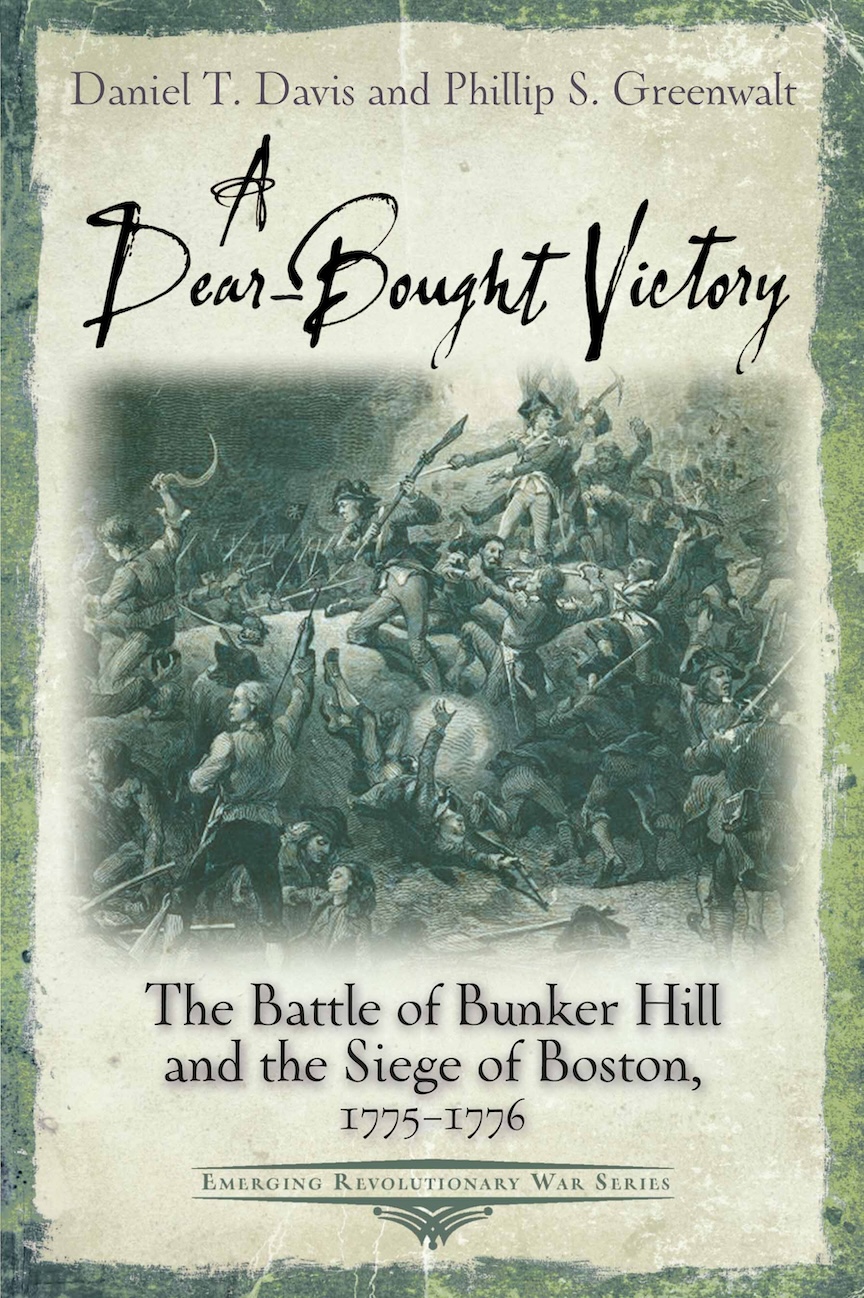
Coming Soon: A Dear-Bought Victory: The Battle of Bunker Hill and the Siege of Boston 1775-1776
We’re excited to share one of the 2026 new releases in the Emerging Revolutionary War Series. Published by Savas Beatie, a sneak peek, including the cover, is below.
About the Book:
“I wish we could sell them another hill at the same price we did Bunkers Hill,” Nathanael Greene wrote to the governor of Rhode Island after the battle of June 17, 1775.
Actually fought on Breed’s Hill outside Boston, Massachusetts, the battle of Bunker Hill proved a pyrrhic victory for British forces. Confident in their ability to overwhelm the New England militia that opposed them, long lines of neatly uniformed British infantry and marines swept uphill toward a quickly built earthen redoubt defended by a motely collection of farmers, shopkeepers, and tradesmen.
“Don’t fire until you see the whites of their eyes!” the colonials urged each other—or did they?
By the end of the fight, the British gained the summit and Colonial forces scattered. One of the patriot leaders, Dr. Joseph Warren, lay dead—one of the first martyrs of the American Revolution. But for the British, the scene was far, far worse: it would be the greatest number of casualties they would ever suffer in any battle of the American Revolution. As British General Henry Clinton commented afterward, “A few more such victories would have surely put an end to British dominion in America.”
The siege of Boston would continue, but the sobering lesson of Bunker Hill changed British strategy—as did the arrival soon thereafter of a new commander-in-chief of Continental forces: General George Washington.
In A Dear-Bought Victory, historians Daniel T. Davis and Phillip S. Greenwalt separate the facts from the myths as they take readers to the slopes of Breed’s Hill and along the Boston siege lines as they explore a battle that continues to hold a place in popular memory unlike few others.
About the Authors:
Daniel T. Davis is the Senior Education Manager at the American Battlefield Trust. He is a graduate of Longwood University with a bachelor’s degree in public history. Dan has worked as a Ranger/Historian at Appomattox Court House National Historical Park and Fredericksburg and Spotsylvania National Military Park. He is the author or co-author of numerous books on the American Civil War. This is his first co-authored book in the Emerging Revolutionary War Series. Dan is a native of Fredericksburg, Virginia.
Phillip S. Greenwalt is the co-founder of Emerging Revolutionary War and a full-time contributor to Emerging Civil War. He is a graduate of Wheeling Jesuit University with a bachelor’s degree in history along with graduate degrees in American History and International Studies and Leadership from George Mason University and Arizona State University, respectively. He is the author of co-author of seven books on the American Revolutionary and Civil Wars. Phill has worked for the National Park Service for the last 17 years at numerous natural and cultural sites. He is a native of Baltimore, Maryland.
ERW Recaps Ken Burns’ “American Revolution” -Nightly at 10pm!
There is a lot of anticipation on the upcoming Ken Burns’ documentary on the American Revolution. The series will run on PBS starting this Sunday at 8pm and running through Friday. Emerging Revolutionary War invites you to join us each night at 10pm on our Facebook page as we recap each episode with our Emerging Revolutionary War historians. These will be live streams, so join in on the discussion via the chat.
We have seen various previews of the documentary and we are excited about the potential this series might have on generating more public interest in the American Revolution and the 250th anniversary events over the next six years.
Be sure to join us and we hope to see you at 10pm on Sunday night!
An Englishman’s Journal of the Revolutionary War: The Journals of Nicholas Cresswell 1774-1777
Emerging Revolutionary War welcomes guest historian Kenneth Bancroft
“Nothing but War is talked of…This cannot be redressing grievances, it is open rebellion…”1
250 years ago on October 20, 1775 a 25 year old Englishman wrote these words in Alexandria, Virginia, noting that “everything is in confusion…soon they will declare Independence.”2.Nicholas Cresswell had arrived in America a year and a half prior to that entry in a journal that he kept to chronicle his venture to “shape his course in the world” and set up a new life inVirginia, “as I like the situation of that Colony the best.”3 He was aware of grumblings from colonials, but his focus was on land and his adventure had him traveling and trading with the Native Americans in the Ohio country and experiencing the slave culture in the colonies, especially the horrific sugar plantations in Barbados.
But what his journal is most known for is his observations and critique of the revolutionary world from Virginia to New York in 1774 through 1777. Cresswell’s misfortune, among others, was that he arrived in America seeking opportunity just as the Imperial Crisis over the Intolerable Acts had began. News of, and reaction to the closure of the port of Boston frequently disrupted his schemes and social life. As an Englishman still loyal to the Crown, his Revolutionary War journal offers a unique outsider look at the costs of the conflict in the country and towns as opposed to the more common tomes of soldier life.
“No prospect of getting home this winter, as I am suspected of being a Spy.”4 Cresswell’s tenure in America was tenuous. Unsuccessful in trying to establish himself with land and basically broke, he blamed his misfortune on the “Liberty Mad”5 political climate that considered him a ‘Tory’ who would not commit to the cause. His penchant for getting into drunken political arguments did not help and kept getting him in trouble with local Committees of Safety.
“Am determined to make my escape the first opportunity.”6 By that point Cresswell knew it was time to forgo his quest and return to England, but the question was how, especially with non- importation measures and the war closing ports. What followed next for Cresswell was an amazing account of encounters with revolutionary notables and locations such as Thomas Jefferson, Patrick Henry, and British General Howe in Philadelphia, Williamsburg, and New York respectively. Ultimately, Cresswell was able to secure passage back to England where he reluctantly picked up where he left off by order of his father to “shear or bind corn.”7
1 Nicholas Cresswell, The Journals of Nicholas Cresswell, 1774-1777, (North Charleston, South Carolina: reprinted 2024), 97.
2 Ibid, 97.
3 Ibid, 3.
4 Ibid, 101.
5 Ibid, 47.
6 Ibid, 143.
7 Ibid, 214.
The Journals of Nicholas Cresswell was first published in 1924 and offers a candid account of the American Revolution from a viewpoint not typically explored. Its accounts of mustering militia, salt shortages, political pulpits, and anti-Tory riots and fights add color to our revolutionary origins. Add to that Cresswell’s experiences with the Native Americans in the Ohio country and the plantations in Barbados which further inform our understanding of our colonial past. Join Cresswell’s journey! To read more about Cresswell’s journey click here. The blog is an online platform and resource to follow his daily posts as they occurred 250 years ago. Keyword search features and research links are featured as well. Follow along on Facebook, too, at Nicholas Cresswell Journals.
Rev War Revelry: King George and Broadswords, The Battle of Moores Creek Bridge with Bert Dunkerly
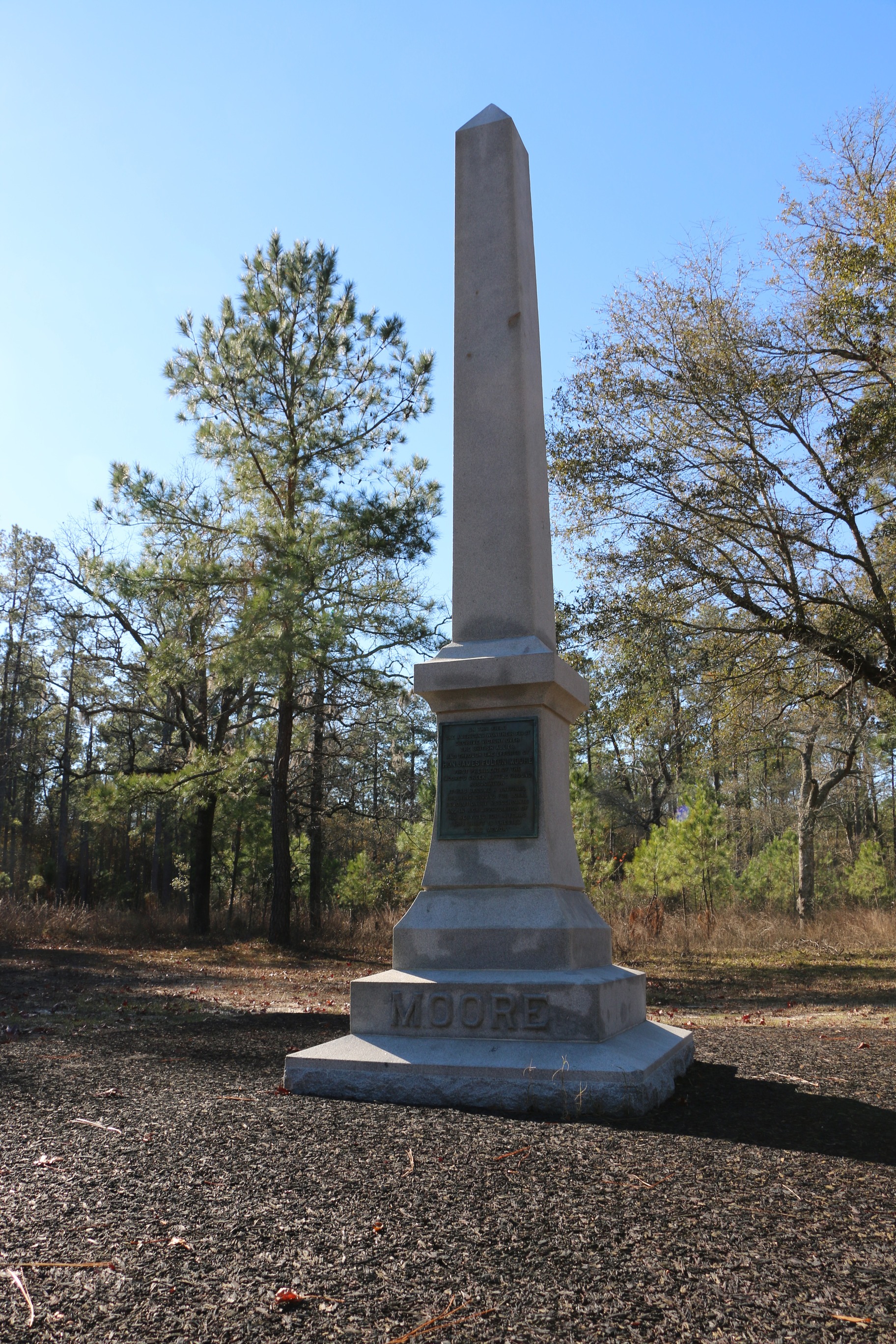
On February 27, 1776 Patriot and Loyalist forces faced off at Moores Creek Bridge in southeastern North Carolina. Loyalist forces anticipated support from a British army arriving along the North Carolina coast and planned to use this combination force to return British authority in North Carolina. Though, when help did not arrive, a mixed bag of North Carolina Patriots turned back an attack at Moores Creek Bridge. Their victory, combined with the Patriot victory at Great Bridge, VA in December 1775, solidified their control of North Carolina. Additionally, the Loyalist defeat served as a major deterrent for Loyalist support until the opening of the Southern Campaign four years later. This small action had long lasting impact on the entire war in the south.
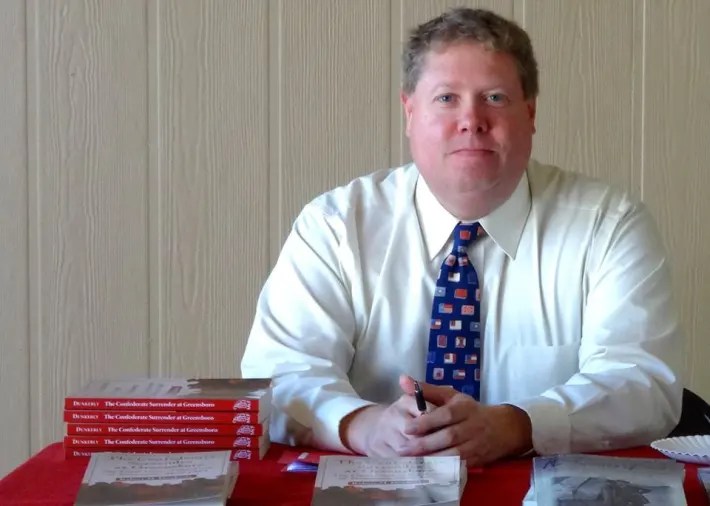
Join us this Sunday night at 7pm on our You Tube Channel ( https://www.youtube.com/@emergingrevolutionarywar8217 ) as we welcome back our own ERW historian Bert Dunkerly. Bert has extensive knowledge on the history of this battle and experience working at the battlefield itself. We will discuss the complex situation leading up to the battle and how this small battle changed the war strategy in the south. Grab a drink and join in on the discussion!
The Nassau Cannon
In March, 1776 Commodore Esek Hopkins led the bulk of the Continental Navy on a raid to the Bahamas, where it occupied the town of New Providence on Nassau Island for two weeks. Hopkins and his captains were drawn by a report of gunpowder stored in the town, which the patriot cause desperately needed.[1] Unfortunately for Hopkins, the colony’s governor had spirited away some 150 barrels the night before the American flotilla’s arrival. Not all was lost as the Marines quickly demanded and received the surrender of two small forts defending the town and its harbor. With those in hand, Hopkins and his men quickly got to work removing artillery, military stores, and other useful supplies.
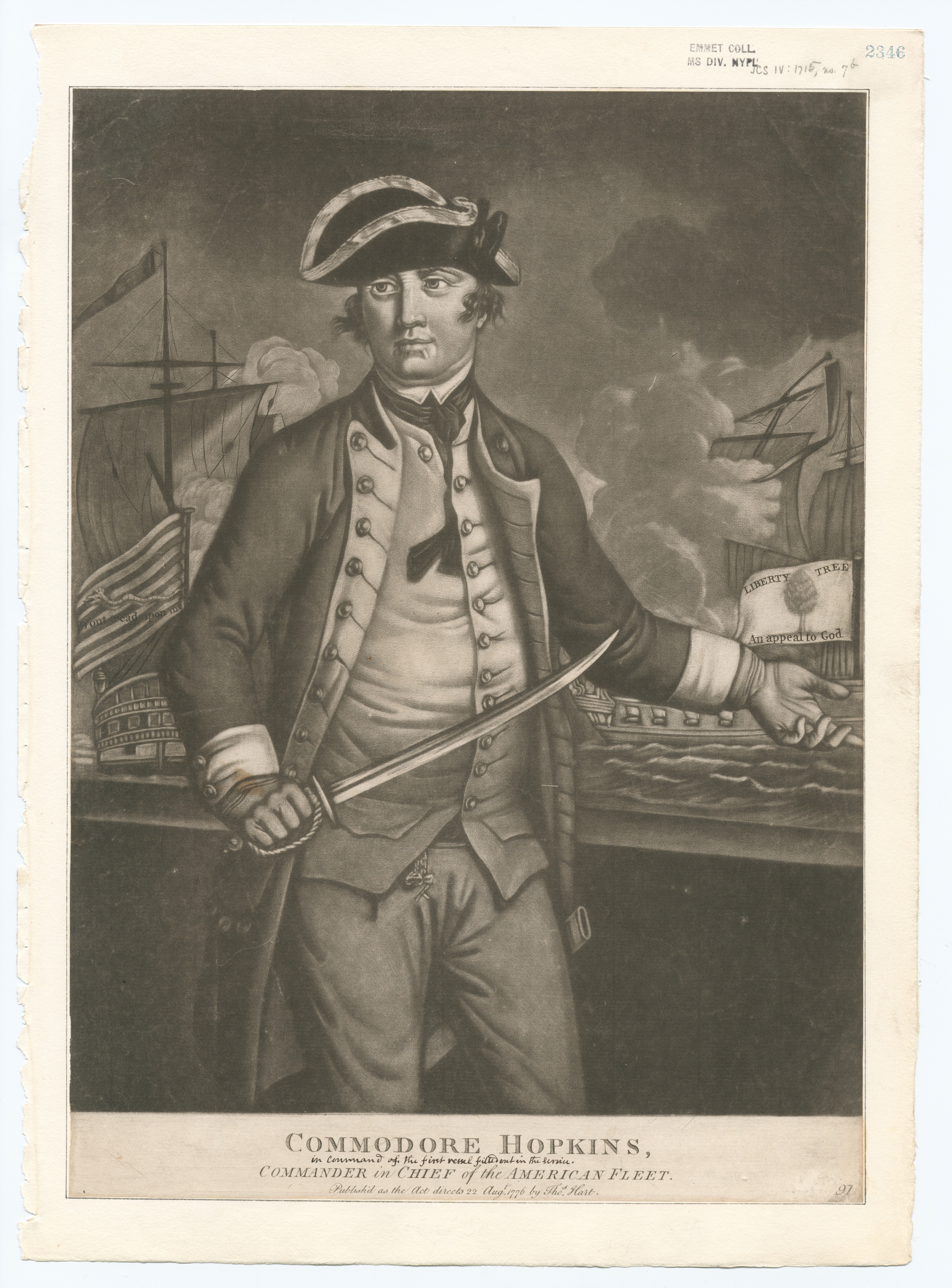
While the American Marines and sailors managed to recover just 24 casks of powder, their haul in sizeable artillery pieces and mortars was impressive: 88 cannon ranging from 9- to 36-pounders; 15 mortars from 4-11 inches; 5,458 shells; 11,071 roundshot; 165 chain & double shot, plus fuses, rams, sponges, carriage trucks, mortar beds, copper hoops, and various stores not required for artillery.[2] It was a boon to be sure. The curious part of Hopkins’ inventory of captured war material, however, is that he sent it to Connecticut Governor Jonathan Trumbull, not a representative of the Naval Committee that had issued his orders. To John Hancock, president of the Continental Congress, he sent a report of his mission, but only mentioned “I have taken all the Stores onboard the fleet.”[3] Indeed, his report of the armaments aboard the British schooner Hawke, which the fleet captured on its return to American waters, was more complete. It took another day, until April 9, for Hopkins to forward the inventory of seized cannon. Congress merely resolved that an extract of his letter should be published for delegates to peruse.[4] Perhaps inadvertently, Hopkins exacerbated regional political conflicts and undermined his own command.
Continue reading “The Nassau Cannon”Rev War Revelry: “For Britannia’s Glory and Wealth” with Author and Historian Glenn Williams, PhD

Join us this Sunday night at 7pm as we welcome Glenn F. Williams, PhD to our popular Sunday night Rev War Revelry! Glenn will examine the political and economic causes of the American Revolution beginning at the end of the Seven Years War / French and Indian War through the resistance movements. He will dispel or clarify some of the popular beliefs about the grievances that eventually led the thirteen colonies to break with the Mother Country. This will be a timely discussion as we approach the 250th anniversary of the Boston Tea Party. Glenn Williams is a retired U.S. Army officer that until recently also enjoyed a “second career” as a military historian. He retired as a senior Historian after 18 years at the U.S. Army Center of Military History and 3 1/2 years as the historian of the American Battlefield Protection Program of the U.S. National Park Service.
Grab your favorite drink and tune in, we will be live so feel free to drop your questions in the live chat. If you are not able to tune in on Sunday, the video will be placed on our You Tube and podcast channels.

Rev War Revelry: Old South Meeting House and the Boston Tea Party

Join us this Sunday, October 15th at 7pm as we welcome Matthew Wilding, Director of Education and Interpretation at Revolutionary Spaces. Revolutionary Spaces manages the Old South Meeting House and the Old State House in historic Boston. We will discuss the history of the Old South Meeting House and its important role in the revolutionary movement in Boston (especially during the Boston Tea Party). We will also cover their plans for the 250th anniversary of the Boston Tea Party, including their new exhibit on the destruction of property in public protests.
Grab a drink and follow along as we start to gear up for the 250th anniversary of the Boston Tea Party with Emerging Revolutionary War!
 Emerging Revolutionary War Era