Do you remember those 1970s-era TV commercials for Heinz ketchup? A young boy, with his glass ketchup bottle turned upside down over a hamburger, waits for the ketchup to flow. In the background, Carly Simon sang, “Anticipation”: “It’s making me wait. It’s keeping me way-yay-yay-yay-yay-yay-yayting.”
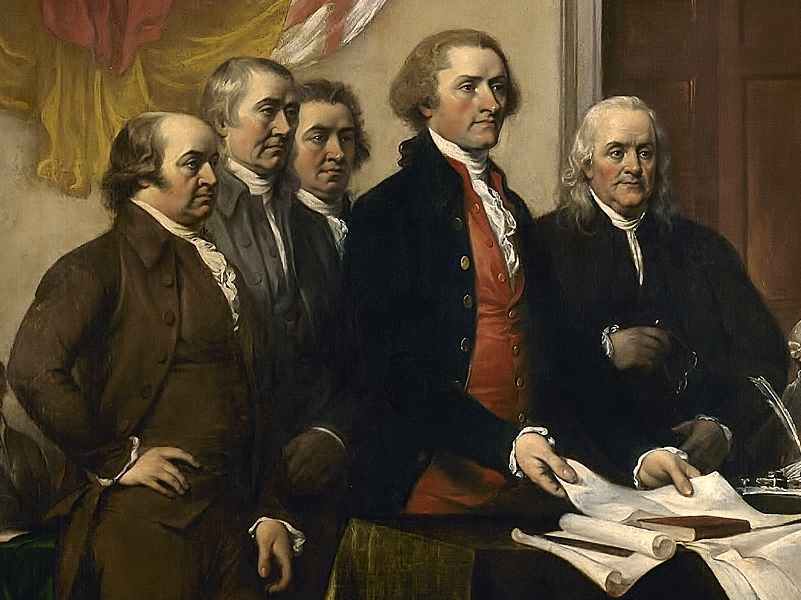
Had Carly Simon been alive 250 years ago, I have no doubt her song would have been playing in the background for Thomas Jefferson on June 29, 1776. The day before, June 28, he and his four colleagues on the “Committee of Five” had formally submitted their draft of the Declaration of Independence. Congress accepted the draft, but delegates were not yet ready to take up the document as a piece of business. They would not do so until July 1.
This Sunday at 7pm on our Facebook page, join ERW historians and guests as we discuss the road to independence on this 250th anniversary of the Declaration of Independence. We will unwind some of the myths and misconceptions of the summer 1776 events in Philadelphia. Why do we celebrate July 4th and not July 2nd? Who really wrote the Declaration and what do we know about the debates around independence. This is a great way to get ready for your July 4th celebrations!
This Rev War Revelry is pre-recorded and will be posted to our Facebook page and You Tube Channel at 7pm on Sunday, June 28th.
Have you ever heard of the popular saying, “No good deed goes unpunished?”
I wonder if there is a reverse to that, especially when it comes to stumbling into history?
Earlier in June, my uncle needed to go out of town and wanted someone to watch his house and two cats. He resides outside of Wilmington, Delaware. Thinking mid-June would be a good time to catch some of the historical sites in Philadelphia on the brink of the 250th in July, and with World Cup soccer games being played in the same city, even better.
I planned to go into the “City of Brotherly Love” one day, but thought the other day I would just drive around Wilmington and New Castle and see what I could discover. A day with no set plans. And that is when I stumbled into “Separation Day” in New Castle.
The United States Army traces its birthday back to June 14, 1775—the date the Second Congressional Congress voted to adopt the New England army then encircling the British in Boston.
Almost a year later to the day—June 12, 1776—the Congress voted to establish the Board of war and Ordnance, the precursor to today’s Department of Defense.[1] One could therefore make the argument that June 12, 2026, is the 250th birthday of the department. At the very least, one could directly trace the department’s ancestry back that far.
Congress voted to establish the board in response to pressure from Gen. George Washington, who desperately needed help managing the logistics of feeding, clothing, arming, equipping, and otherwise supplying the army. He spent at least as much time begging (in a dignified but humble way) various colonies for support as he did planning and executing military strategy and tactics. Supply worries were never far from his mind. “The reflection upon my Situation, & that of this Army, produces many an uneasy hour when all around me are wrapped in Sleep . . .” he wrote a confidant.[2]
But because everything about the Continental government was voluntary, that meant colonies—soon to be states—did not have to comply with Washington’s requests, let alone any Congressional resolutions. Colonies chronically undershot troop quotas and financial contributions.
Naivety ran high in those heady, early days of the war. Colonies believed militia, rather than a trained professional army, could somehow win the war. Their “patriotic spirit” would be enough to overcome the discipline and experience of the British army and its hired mercenaries. Even members of Congress, tied more regularly to military affairs through Washington’s correspondence, bought into the idea.
“You think the present army assisted by the militia is sufficient to oppose the force of Great Britain, formidable as it appears on paper,” one of Washington’s key confidents, Gen. Nathaniel Greene, told Congress in early June. He assured them they were “greatly deceived.”[3]
The creation of the Board of War did much to make the scales fall from Congressional eyes. It did so by bringing key members of Congress more directly into the management of the war.
On June 12, 1776 in Williamsburg, Virginia, the Fifth Virginia Convention took a momentous step in defining new American liberty. The Virginia Declaration of Rights stands as one of the most influential political documents in American history. Adopted on June 12, 1776, it established a comprehensive statement of individual liberties and principles of government at a pivotal moment in the struggle for independence from Great Britain. Written primarily by George Mason, the Declaration articulated ideas about natural rights, popular sovereignty, freedom of the press, religious liberty, and the limits of governmental power. Its impact extended far beyond Virginia, influencing the United States Declaration of Independence, the United States Constitution, and the Bill of Rights.
The Virginia Declaration of Rights emerged during a period of revolutionary change. Colonists increasingly believed that British policies violated their rights as Englishmen and threatened their political freedoms. In response, revolutionary leaders sought not only independence but also a clear statement of the principles upon which a new government would rest. The Virginia Declaration of Rights provided such a foundation, becoming a landmark in the development of democratic governance and constitutional liberty.
Virginia played a leading role in this revolutionary process. The colony possessed many influential political thinkers who believed that government existed to serve the people and protect their rights. When Virginia’s Fifth Convention met in Williamsburg in the spring of 1776, delegates recognized the need to define the principles that would guide the formation of a new state government. Before drafting a constitution, they decided to establish a declaration of rights that would set limits on governmental authority and affirm the liberties of citizens.
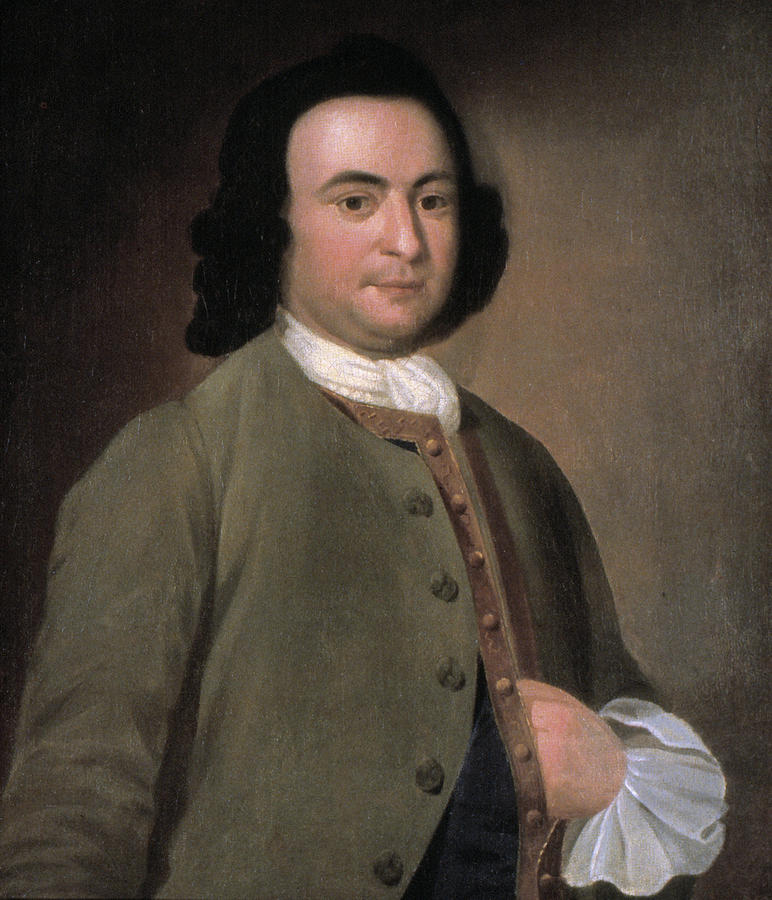
George Mason, a respected Virginia planter and political philosopher, was tasked with preparing the document. Drawing upon Enlightenment ideas, English constitutional traditions, and colonial experiences, Mason produced a draft that would become the Virginia Declaration of Rights. Born in 1725, Mason was a wealthy landowner and self-educated scholar who developed strong views regarding individual liberty and responsible government.
George Mason, Courtesy Encyclopedia of Virginia
Unlike some of his contemporaries, Mason was deeply concerned about the concentration of political power. He believed that governments derived their authority from the consent of the governed and that citizens possessed inherent rights that no government could legitimately violate. His ideas reflected the influence of Enlightenment thinkers such as John Locke, who argued that individuals possessed natural rights to life, liberty, and property.
Mason’s draft underwent revisions by the Convention, but its essential principles remained intact. His work established a model for future declarations and constitutional protections. Although Mason later refused to sign the United States Constitution because it lacked a bill of rights, his ideas eventually shaped the first ten amendments to the Constitution.
The Virginia Declaration of Rights contains sixteen sections, each addressing specific political and civil principles. Together, they create a coherent philosophy of government centered on liberty and popular sovereignty.
The first article is perhaps the most famous. It declares that all men are by nature equally free and independent and possess inherent rights that cannot be surrendered when entering society. These rights include the enjoyment of life and liberty, the means of acquiring property, and the pursuit of happiness and safety.
This statement represented a significant departure from traditional notions of government based on inherited privilege or monarchy. Instead, it asserted that rights existed before government and that government existed primarily to protect those rights.
The concept of natural rights became a cornerstone of American political thought. Thomas Jefferson echoed these ideas in the Declaration of Independence when he wrote that all men are created equal and endowed with unalienable rights.
Another fundamental principle is the idea that political power originates with the people. The Declaration states that government is instituted for the common benefit, protection, and security of the people, nation, or community.
This concept, known as popular sovereignty, rejects the doctrine of divine-right monarchy. According to the Declaration, rulers derive their authority from the consent of the governed rather than from hereditary privilege or divine appointment. If a government becomes destructive of the public welfare, the people have the right to reform, alter, or abolish it.
These ideas helped justify the American Revolution and became essential features of democratic government. The Declaration emphasizes the importance of dividing governmental authority among different branches. It argues that the legislative, executive, and judicial powers should be separate and distinct.
The purpose of this separation is to prevent tyranny and protect liberty. By ensuring that no single branch accumulates excessive power, the government can maintain accountability and preserve individual rights. This principle later became a central feature of both state constitutions and the United States Constitution.
The Declaration asserts that elections should be free and that citizens who have a permanent interest in and attachment to the community possess the right to vote and participate in government. Free elections are essential to representative government because they enable citizens to hold leaders accountable and ensure that governmental authority reflects the will of the people.
Several sections of the Declaration protect individuals against arbitrary government action. These provisions guarantee due process of law, prohibit excessive bail and cruel punishments, and affirm the right to a fair and impartial trial. Such protections reflect concerns about abuses of power by government officials. By requiring legal procedures and impartial justice, the Declaration seeks to safeguard individual liberty against arbitrary authority.
These principles later influenced the Fifth, Sixth, and Eighth Amendments to the United States Constitution. The Declaration proclaims that freedom of the press is one of the great bulwarks of liberty and can never be restrained except by despotic governments. This provision recognizes the importance of an independent press in informing citizens, exposing abuses of power, and promoting public debate. The protection of press freedom became an essential component of democratic society and influenced the First Amendment.
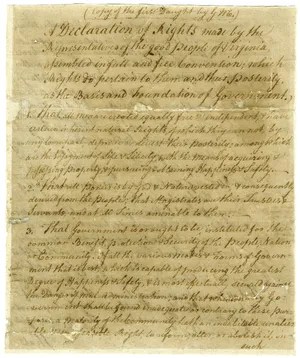
George Mason’s hand written copy of the Virginia Declaration of Rights, Courtesy Library of Virginia
The final section of the Declaration addresses religion and conscience. It states that religion can be directed only by reason and conviction rather than force or violence and that all individuals are entitled to the free exercise of religion.
Although the original language was somewhat limited, it represented a major step toward religious freedom. James Madison later strengthened these principles in Virginia’s Statute for Religious Freedom and in the First Amendment’s protections for religious liberty.
Thomas Jefferson drew heavily from Mason’s language and ideas when drafting the Declaration of Independence. The Declaration’s assertion that all men are by nature free and possess inherent rights closely parallels Jefferson’s statement that all men are created equal and endowed with unalienable rights. Similarly, the Virginia Declaration’s emphasis on government deriving its authority from the people and the right of citizens to alter or abolish oppressive governments appears prominently in the Declaration of Independence.
Perhaps the Declaration’s greatest legacy lies in its influence on the United States Bill of Rights. When delegates met at the Constitutional Convention in 1787, they created a new federal government but did not initially include a bill of rights. This omission concerned many Americans, including George Mason, who feared that the new government might threaten individual liberties.
The ensuing debate led to the adoption of the first ten amendments in 1791. James Madison, drawing heavily upon Virginia’s constitutional traditions, proposed amendments that reflected many principles found in Mason’s Declaration.
Examples include:
Freedom of speech, religion, press, and assembly.
Protection against unreasonable searches and seizures.
Guarantees of due process.
Rights to fair and speedy trials.
Prohibitions against excessive bail and cruel punishments.
The parallels between the Virginia Declaration and the Bill of Rights are unmistakable. Many of the liberties Americans enjoy today can be traced directly to Mason’s work.
Despite its significance, the Virginia Declaration of Rights contained important limitations and contradictions. Political participation was largely restricted to property-owning white males. Women, slaves, Native Americans, and many others were excluded from the political community envisioned by the document. These contradictions highlight the gap between revolutionary ideals and social realities. Over time, however, reformers and civil rights advocates invoked the Declaration’s principles to challenge inequality and expand the scope of liberty.
More than two centuries after its adoption, the Virginia Declaration of Rights remains a landmark in constitutional history. It was among the first modern documents to articulate a comprehensive set of individual rights and establish the principle that government exists to serve the people.
Its influence can be seen not only in American constitutional law but also in international human rights traditions. Documents such as the French Declaration of the Rights of Man and of the Citizen and later human rights instruments reflect similar commitments to liberty, equality, and popular sovereignty.
The Declaration’s enduring significance lies in its assertion that rights are inherent to human beings and that governments must respect and protect those rights. These principles continue to shape democratic societies around the world 250 years later.
Nothing marked Friday, June 7, 1776, as an unusual day in Philadelphia. Residents of the city would not have taken much notice of Richard Henry Lee walking the three blocks from his temporary quarters in the home of Dr. William Shippen to the Pennsylvania State House, as he had done for several weeks prior as a member of Virginia’s delegation in the Second Continental Congress.
There was little in Lee’s manners or features that stood out, save his tall and lanky frame and the vanishing hair of a 44-year-old man in 18th-century America. Passers by might have noted the black silk glove covering Lee’s mangled, one-finger left hand, the stark reminder of a hunting accident he suffered years ago.
Richard Henry Lee, 1794.
One document in a stack of papers Lee carried looked like any other about the mundane business of the Congress trying to come to grips with fielding an army against Great Britain while also remaining loosely tied to the mother country. It was a document to sever that tie and declare Britain’s American colonies “free and independent states.”
Emerging Revolutionary War welcomes back guest historian Michael Aubrecht
If one was to define the life and legacy of Colonel Johann Gottlieb Rall (Rahl) they may use the term “victim of circumstance.” His is the ironic tale of a military man, whose stubborn nature and bad luck resulted in an untimely death. As the commander of the Hessian Troops garrisoned at Trenton New Jersey, Rall was the unfortunate recipient of General George Washington’s surprise attack that followed his brilliant crossing of the Delaware River on Christmas night in 1776.
There have been many different versions of this story, but a reexamination of the events by modern military historians has yielded a more redeeming conclusion to Rall’s defeat. Whereas it was once believed that the Hessian troops were celebrating the holiday and simply too intoxicated to properly defend the garrison and themselves, experts now believe that Rall and a sober regiment of German soldiers may have underestimated the resolve of their adversaries.
One aspect of this story that hasn’t changed took place prior to the attack…
A young boy had been given a spy report from a local Loyalist with directions to deliver it to a Hessian colonel who was in occupation of the City of Trenton. The note, written in English, was intended to inform the commander that the Continental Army was crossing the river and planning to attack. It is said that the colonel did not want to be interrupted during his Chess game (some say cards), so he put the unread note in his pocket. The story concludes with the note being found, still in his pocket, unopened, after he died in battle.
As both a Chess and Rev-War aficionado, I decided to do a little research into this specific part of the story to see what information was available. What I found was completely different than I had originally anticipated.
Emerging Revolutionary War welcomes guest historians Lori Amos Doss & Jarred A. Marlowe, bios follow part one.
Part 1: From Charlotte County to Washington’s Guard
James Johnston was born in Charlotte County, Virginia, around 1756, though no exact record of his birth has survived. Like many Revolutionary War soldiers, much of his early life remains in shadow. Even the identities of his parents are uncertain, despite Johnston referring to them in later accounts. What we do know begins in November 1776, when he made the decision to leave home and enlist in the Continental Army for a three-year term.
He joined the 14th Virginia Regiment under Colonel Charles Lewis and soon marched north to join George Washington’s army at Morristown, New Jersey. At that stage of the war, the Continental Army was still finding its footing. Enlistments were short, supplies were inconsistent, and discipline varied widely from unit to unit. Yet within a matter of months, Johnston distinguished himself.
On May 1, 1777, he was selected for the Commander in Chief’s Guard, an elite corps formed to protect Washington personally, as well as the army’s funds and official documents. This was one of the most trusted assignments in the army. Officers were instructed to select men known for their honesty, sobriety, and reliability. Washington also had a preference for appearance, requesting soldiers who were well built, neat, and presentable. Johnston’s selection tells us a great deal about how he was viewed by those who knew him. He was not simply capable. He was dependable.
As the Second Continental Congress in Philadelphia debated on next steps and the ultimate goal of the war with Great Britain, leaders in Virginia decided to push the needle. Virginia was the largest (population and economically wise) colony in the 13 rebellious colonies. Many of its leaders were seen as leaders in the Continental Congress and in revolutionary thought. Other colonial leaders, including John Adams, knew that for the war and independence to be successful, Virginia needed to be a leading participant in the effort.
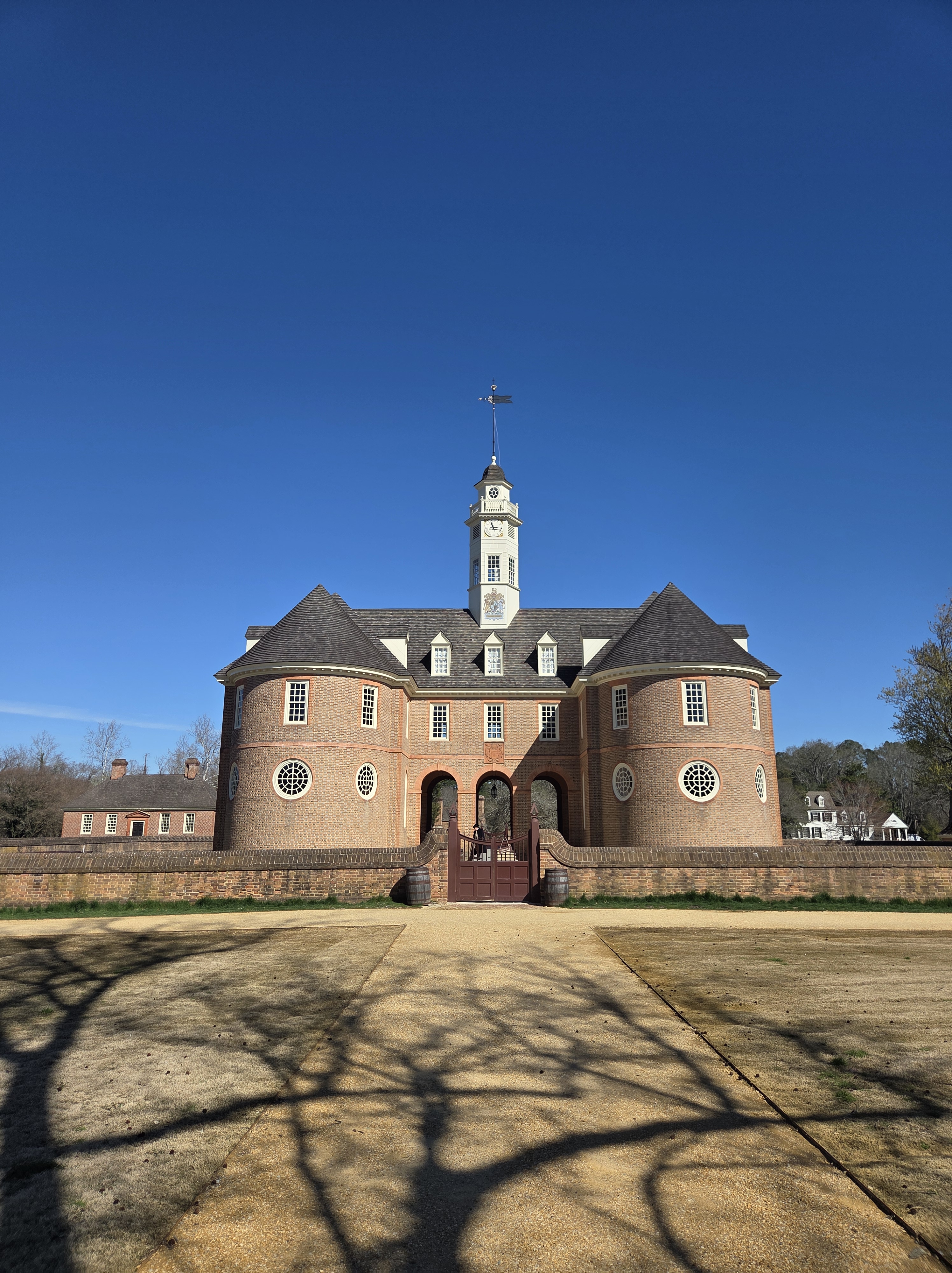
The Fifth Virginia Convention, the extra-legal body running Virginia in the absence of Royal authority, met in the Virginia Capitol in Williamsburg on May 6, 1776. There was a lot to discuss among the members. The Convention consisted of more conservative planters from the eastern part of the colony. These members tended to favor reconciliation with the mother country. Other members of the convention, that supported a more radical response were from the western part of the colony (west of the fall line) and many of its legal and philosophical minds (George Mason, James Madison, George Wythe). These men, who held the majority of the Convention, favored independence and also held the hearts and minds of most Virginians.
The most significant action of the Fifth Convention came on May 15, 1776, adopting groundbreaking resolutions. First the Convention directed Virginia’s delegates to the Continental Congress to propose a formal declaration of independence, to “declare the United Colonies free and independent states…” This directive was the first official call from any colony for a complete break with Britain. It signaled that reconciliation was no longer the goal; independence had become both necessary and inevitable in the minds of Virginia’s revolutionary leaders.
The resolution went even further. It not only urged independence but also called for the establishment of foreign alliances and confederation among the colonies. These measures demonstrated a sophisticated understanding of what independence would require: diplomatic recognition, military support, and political unity. Virginia’s leadership recognized that separation from Britain would not be sustainable without these elements in place. Soon, on June 7, 1776 in Philadelphia, Virginian Richard Henry Lee took the direction from the Fifth Convention and proposed that the Continental Congress declare independence.
Secondly, the Convention called for constructing its own independent government, taking concrete steps to replace colonial rule with a republican system. This new constitution of the “Commonwealth of Virginia’ would set up the system for which Virginia would be governed. Finally, the convention appointed a committee to draft a declaration of rights. This effort reflected the belief that independence was not just about rejecting British authority but also about creating a new political order grounded in principles of liberty and self-government.
One of the most influential figures in this process was George Mason. Mason drafted the Virginia Declaration of Rights, a document that would become one of the most important statements of political philosophy in the revolutionary era. Adopted in June 1776, it asserted that all men are by nature equally free and possess inherent rights, including the enjoyment of life and liberty, the means of acquiring property, and the pursuit of happiness and safety. It also emphasized that government derives its power from the people and must be accountable to them.
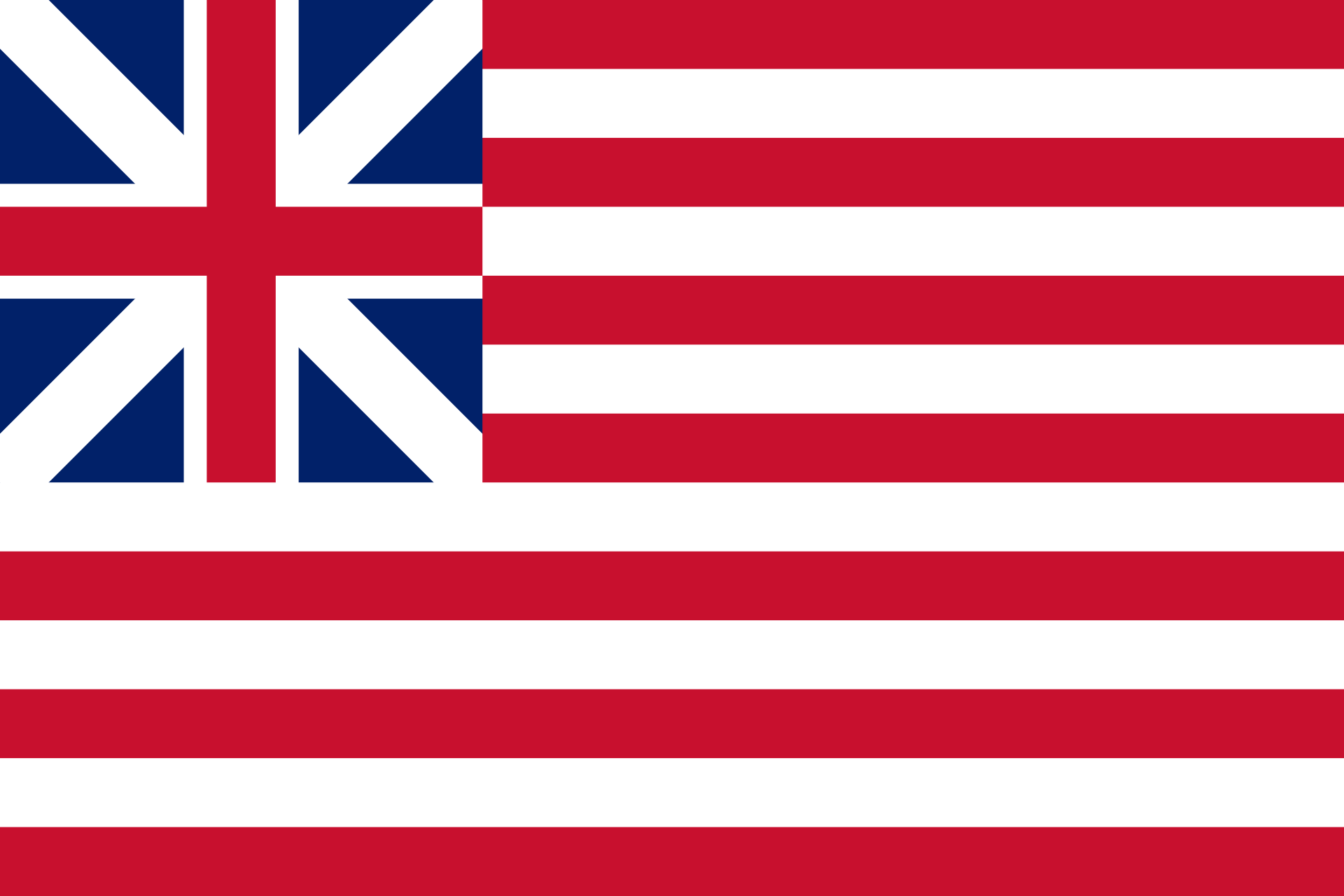
Delegate James Madison wrote townspeople in Williamsburg took down the Union Jack and replaced it with the Continental Union flag.
Another key figure connected to Virginia’s revolutionary leadership was Thomas Jefferson, who was serving in the Continental Congress. Although he was not present at the Virginia Convention in May, the instructions sent by Virginia directly influenced his work. When Congress appointed a committee to draft a declaration of independence, Jefferson drew heavily on ideas similar to those expressed in Mason’s document. The resulting United States Declaration of Independence, adopted in July, echoed Virginia’s emphasis on natural rights and the legitimacy of revolution against unjust government. The Convention also created a committee to design a state seal, this committee (led by George Wythe) adopted the seal of Virginia that is the basis for the seal used today.
Virginia’s actions in May 1776 also reflected broader social and political changes within the colony. The authority of the royal governor, Lord Dunmore, had effectively collapsed, and revolutionary institutions had taken control. Local committees and militias enforced the decisions of the convention, demonstrating that power had shifted from imperial officials to colonial leaders. This transition was not without conflict, but by May 1776, the revolutionary cause had gained widespread support among Virginia’s population. In the mind of Virginians, as of May 1776, Virginia was independent of the King and Parliament of Great Britain.
On June 12th, a follow up article will commemorate the 250th anniversary of the Virginia Declaration of Rights.
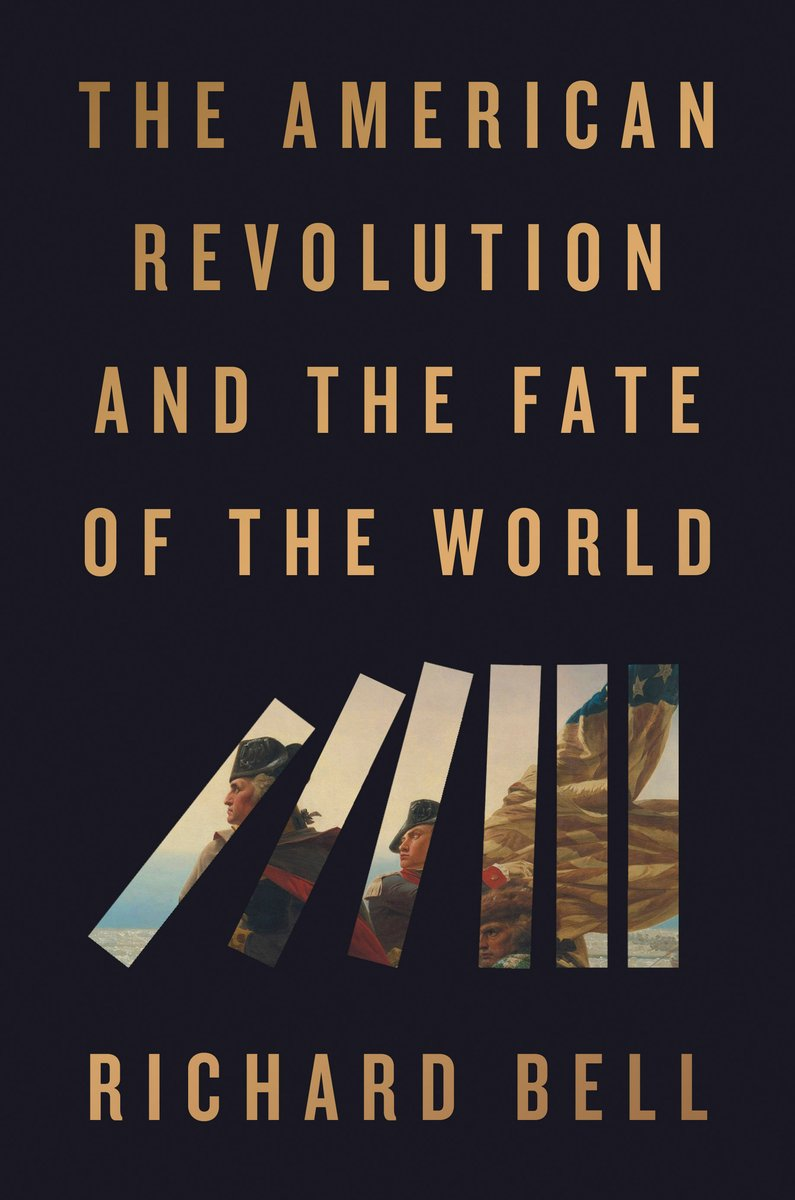
Dr. Richard Bell, historian and professor of history at the University of Maryland, will discuss his new book, “The American Revolution and the Fate of the World.” Published by Penguin Random House, this “revelatory and enthralling book, award-winning historian Richard Bell reveals the full breadth and depth of America’s founding event. The American Revolution was not only the colonies’ triumphant liberation from the rule of an overbearing England; it was also a cataclysm that pulled in participants from around the globe and threw the entire world order into chaos.”
We look forward to you tuning in to this Sunday evening, 7 pm EDT on our Facebook page for this discussion with Dr. Bell!



 Emerging Revolutionary War Era