Southside Revolutionary Virginia 1775 Tour – October 12, 2019

From our friends at the American Revolution Round Table of Richmond 

Tour Leader –  Dr. Patrick H. (Pat) Hannum, Professor, Joint Forces Staff College, National Defense University, Lt Col USMC (Ret)
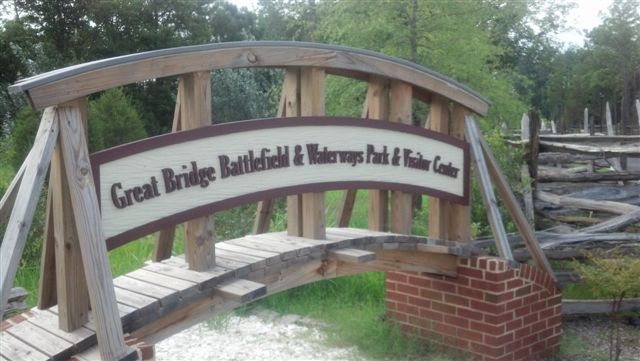
Great Bridge
Great Bridge Battlefield (courtesy of Great Bridge Battlefield & Waterways History Foundation)

This tour will visit three critically important Revolutionary War sites, in the modern Cities of Norfolk, Virginia Beach and Chesapeake, in order to help inform the important events and explain how the Whig Government ousted the Royal Governor, Lord Dunmore, and British military forces from the State of Virginia. These events largely unfolded in the fall of 1775 and culminated with the destruction of the City of Norfolk in early 1776. Strategically important, these events led to near uncontested Whig control of the State of Virginia for three and one-half years. The British defeat at Yorktown in October 1781 traces its roots to the critical decisions and decisive actions of the Whig Governments of Virginia and North Carolina in the fall of 1775.  We will visit: Continue reading “Southside Revolutionary Virginia 1775 Tour – October 12, 2019”

The Oriskany Battlefield (part one)

Monument 01part one of two

The rolling hills and dale that make up the Oriskany Battlefield look bleak and washed out on this overcast day. The battle took place in the full flush of August green, but I visit on a dreary off-season day. The battlefield sits next to state route 69, which winds through a rural part of upstate New York that, itself, looks time-forgotten.

The most prominent feature of the battlefield is the tall needle-like obelisk, dedicated on August 6, 1884—the 107th anniversary of the battle. The battlefield received formal protection from the state forty-six years later, in 1927, on the battle’s sesquicentennial. Initially comprised of five acres, the park now includes 70 acres, with the old Erie Canal running along its northern border. Continue reading “The Oriskany Battlefield (part one)”

August in Lexington, Massachusetts

From our friends at the Lexington Historical Society, a few events to mark on your calendar if going to be in that area of the country. Click here for more information about the events below.

On Thursday, August 8th at 7:00 p.m. at the Lexington Depot
I Am An Honest Woman: Female Revolutionary Resistance 

Most women had limited opportunities for political action during the American Revolution. While some of the lower classes could take to the streets, “genteel” women had to find more subtle ways to support the Patriot cause, while maintaining the illusion of domestic contentment. Dr. Emily Murphy, National Park Service curator and living historian, will discuss the “Daughters of Liberty” and their political accomplishments. These women were able to take an active role in the Revolution by politicizing traditional female activities, like spinning flax into linen to create homespun fabric in protest of British imports. A group of 50 protesting Bostonian men would incite a riot, but who would cross a crowd of dutiful housewives showing off their domestic skills?

Saturday, August 31, 12:00 – 4:00 p.m., across from Battle Green on Harrington Road
Lexington’s Spinning Protest

On the exact 250th anniversary of the 1769 spinning protest in Lexington, come to a reenactment of that important event! There will be spinners in period dress, interpreters sharing information about the craft of spinning, the political climate of the time and the British goods boycott that sparked the 1769 spinning bee. Plus, a preview of our 2020 Buckman Tavern exhibit on women and political protest. Free and open to the public.

ERW Weekender: A Visit to Fort Stanwix

Fort Stanwix in Rome, New York, has plenty of history to offer, but it’s equally a success story of urban renewal. The fort’s original location was long swallowed up by the city’s expansion in the twentieth century, but it was then reclaimed in advance of the American Bicentennial. City blocks were razed, the fort reconstructed, and American history became a central tourist attraction in the heart of downtown Rome. It’s a “faithful reproduction,” the Park Service says, constructed using “many original plans and documents.”

The site of Fort Stanwix in 1969 and after its reclamation in 1976. (courtesy NPS)

Continue reading “ERW Weekender: A Visit to Fort Stanwix”

Rise and Fight Again for Southern Revolutionary History

From our friends at American Battlefield Trust (ABT). To learn more about the ABT, click here.

ABT

At stake are 31 acres associated with two Southern Campaign Revolutionary War battlefields, Hanging Rock in South Carolina and Guilford Courthouse in North Carolina.

At Hanging Rock, generous battlefield preservationists like you have already secured 141 acres. These 30 acres in the part of the battlefield where the initial Patriot attack began will add significantly to the land we have saved there already.

At Guilford Courthouse, the half-acre tract at stake may be small, but it’s part of a larger strategy to deal with the modern development crowding in on this battlefield from all points of the compass. Our plan is to buy up plots of battlefield land – including small ones and those with non-historic structures on them like this one – remove all non-historic structures and restore the battlefield. The Guilford Courthouse National Military Park has generously agreed to take responsibility for demolishing and removing the house on this plot, a considerable cost that we would typically need to cover. Continue reading “Rise and Fight Again for Southern Revolutionary History”

Press Release: Veterans Dig History in Groundbreaking Project at Saratoga Battlefield

From our friends at American Battlefield Trust (ABT), for more information about the ABT click here.

ABT


Iraq, Afghanistan and Vietnam veterans have returned to the battlefield.  But instead of the Middle East or Southeast Asia, they are mustering at Saratoga National Historical Park where they will be applying their military knowledge and newly learnt archaeological skills to conduct a field survey at the famous Revolutionary War battlefield.

Approximately 33 veterans will participate in the project created by the American Veterans Archaeological Recovery (AVAR) in cooperation with the American Battlefield Trust and the National Park Service (NPS).  Working together, they will attempt to verify revolutionary-era troop locations during the 1777 battle while aiding participants’ transition back to civilian life.  AVAR recruits veteran participants through social media, and specifically targets those who feel isolated and disconnected after leaving service; the organization predominantly recruits veterans from recent conflicts, such as Iraq and Afghanistan, with a young average participant age of 35. Continue reading “Press Release: Veterans Dig History in Groundbreaking Project at Saratoga Battlefield”

Battle of Fort San Carlos – Westernmost Battle of the American Revolution

St. Louis, Missouri is considered the gateway to the west for the United States beginning in the 19th century. In the 18th century, St. Louis was not on the radar of many in the burgeoning United States.

IMG_6914
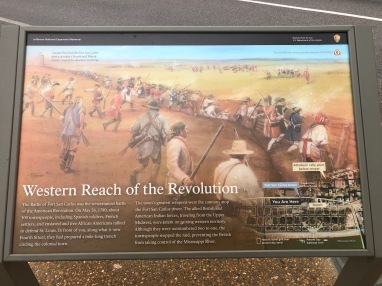
Western Reach of the Revolution, wayside informational tablet at Gateway Arch National Park (author collection)

However, the westernmost engagement of the American Revolution unfolded in the town of St. Louis, crushing British designs to conquer the territory from the Spanish, who were allied with the French and thus the United States.

On May 26, 1780, a hodgepodge force of 300 townsfolk, free and enslaved blacks, French settlers, and Spanish soldiers rallied to defend their town from the advance of a combined British and Native American force. Continue reading “Battle of Fort San Carlos – Westernmost Battle of the American Revolution”

George Washington, Daniel Morgan, and Winchester, Virginia on Memorial Day

I’ve been intermittently visiting Winchester, VA for years, usually with an eye toward understanding its place in the Civil War.  Tradition has it that no town changed hands more frequently. But, the town also has a prominent, if sometimes overlooked, role in America’s colonial and Revolutionary War history.  In particular, it enjoyed a close relationship with George Washington and Daniel Morgan, helping shape both men.

W%oQ3yOcQbOrOlCK890IDQ
George Washington as a Teenage Surveyor, Winchester, VA

Winchester, or Frederick Town, as it was then known, was the largest village in the lower Shenandoah Valley when Lord Thomas Fairfax decided to relocate from England to his land grant in northern Virginia and became a way-station of sorts for people traveling along the Great Wagon road that ran from Pennsylvania to North Carolina in the 18thcentury.  So, when the Fairfax family hired a teenaged George Washington to help survey its grants in the Shenandoah, Winchester was a logical place for the surveying team to make its temporary home base.  (In truth, surveying teams were constantly moving to maximize their efficient use of time: the saddle might be considered home.)  While the teenager was less than impressed with most accommodations on the frontier, he was pleased with Fredericktown.  He recorded in his diary: Continue reading “George Washington, Daniel Morgan, and Winchester, Virginia on Memorial Day”

Announcement: Tours of Camden Battlefield and Hobkirk’s Hill

scarban

From our friends at the Southern Campaigns of the American Revolution comes this announcement of a Corps of Discovery tour that will cover the battles mentioned above. Led by historians David P. Reuwer and Charles B. Baxley, this comprehensive tour will be held on May 4, 2019.

Joining Reuwer and Baxley will be Dr. Tray Dunaway who will talk about the restoration forestry that has taken place at Camden Battlefield that has returned the field to the approximate look it did during the battle in August 1780. Also part of the day will be the historians guiding the tour of Hobkirk’s Hill, which includes Bill Denton, Rick Wise, Tom Oblak, and Guy Wallace.

Updates on the Historic Camden Foundation and the Liberty Trail will be part of the day as well which will start at 10:00 a.m. at the Historic Camden Revolutionary War Site and conclude at around 4:00 p.m. after the touring of Hobkirk’s Hill.

The tours are free and more information about the day can be found here.

Hope you can join our friends and fellow historians in South Carolina on May 4th!


ERW Weekender: In the Footsteps of James Madison

Emerging Revolutionary War welcomes guest historian Kate Bitely 

In the Foot Steps of James Madison.

A view of the front yard of Montpelier
A view from the front yard of Montpelier (author collection)

Spring is finally here in Virginia and if you are looking for a place to explore that offers a great outdoor experience, get in the car and head to Montpelier, in Orange Virginia. James Madison’s plantation home offers visitors a glimpse of what life was like in colonial America.   Be sure to start your trip with the feature film in the welcome center that provides highlights of Montpelier’s lengthy history dating back to the mid 1700’s.  The preserved property has something to offer everyone including hikes, gardens, and a breath-taking view of the blue ridge mountains. The grounds are filled with opportunities to learn about our nation’s early history and the impact it still has on our country today. Continue reading “ERW Weekender: In the Footsteps of James Madison”