Norman MacLeod’s Campaign Journal, October 13, 1778

Sketch of Wabash River, 1778
Sketch of the Wabash River Made During Hamilton’s 1778 Campaign (Wikimedia Commons)

In the summer of 1778, Lieutenant Colonel George Rogers Clark of the Virginia militia launched one of the most daring American military operations of the Revolutionary War when he invaded the “Illinois country” and captured Cahokia and Kaskaskia in modern-day Illinois and Vincennes in southern Indiana, effectively neutralizing British power on the Illinois, Wabash, and Mississippi Rivers.  Henry Hamilton, Lieutenant Governor of Quebec and Britain’s Superintendent for Indian Affairs in Detroit, could not allow such audacity to succeed, lest Britain’s influence with the western Indian nations wane.  Learning of Fort Sackville’s fall at Vincennes on the Wabash River, he set out to recapture it.

Continue reading “Norman MacLeod’s Campaign Journal, October 13, 1778”

The Battle of the Clintons

This past spring I was able to visit a fascinating historic site, one that is largely overlooked in the larger story of the Revolution. Many of us know that in 1777 the British planned to use the Hudson River to cut off New England from the other states.

With General William Howe in New York City, and General John Burgoyne moving south from Canada, the plan seemed destined for success. Yet Howe decided to move his army by water to the Chesapeake and advance on Philadelphia.

It is commonly assumed that his lack of cooperation with Burgoyne was one major reason for the latter’s failure, and surrender, at Saratoga. In fact, a force of British troops did ascend the Hudson, hoping to cooperate with Burgoyne. I was able to follow and retrace the little known expedition.

Continue reading “The Battle of the Clintons”

A Title

asb

When writing a book, one of the most important initial aspects is picking a title. The author needs one that is expressive, attracts attention, but has some overall tie-in that provides a fitting capture of the essence of the book.

One of the advantages of writing history is the use of quotes. Let the participants, combatants, or witnesses of the event provide the context for a title. When one resonates, go with it!

With the recent publication, the co-author, Robert Orrison and myself bounced various potential titles off each other. Then we had a list of our favorites included in the initial information sheet sent to Ted Savas, of Savas Beatie, LLC, the publisher. Yet, one continued to stand out, as it was written in a diary by a British junior officer slightly more than a month before the Battles of Lexington and Concord.


The entire inscription is below:

“It is certain both sides were ripe for it, and a single blow would have occasioned the commencement of hostilities.” —Lieutenant Frederick Mackenzie, Royal Welch Fusiliers, March 6, 1775.

Mackenzie’s uncanny foresight predicted the exact outcome of the fighting that erupted on April 19, 1775. With casualties suffered by both sides, the war of words and near-misses became a war of shot and shell.

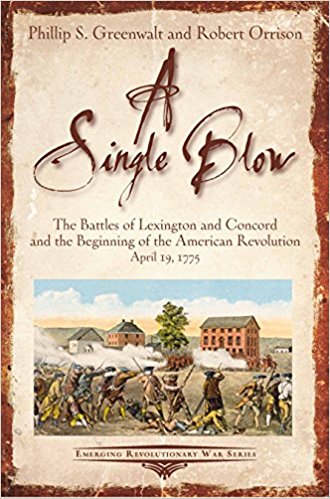
Hostilities had commenced and we had a title. A Single Blow: The Battles of Lexington and Concord and the The Beginning of the American Revolution. 


The Carlyle House Congress and Britain’s Military Objectives for 1755

The campaigns of 1755 began when Britain’s ranking military leaders in North America met in Alexandria, Virginia with the colonial royal governors of Maryland, Massachusetts, New York, Pennsylvania, and Virginia, at the home of prominent Ohio Company member, John Carlyle. On April 14-15, 1755, in what became known as the “Carlyle House Congress,” the newly minted commander in chief of His Majesty’s Forces in North America, Major General Edward Braddock, presented London’s military objectives for that coming spring and summer. The Crown’s strategy, on paper, was simple: capture and hold key French fortifications within the boundaries of New York, Nova Scotia, and Pennsylvania before the enemy could concentrate his strength. This plan was intended to oust the French from His Majesty’s colonial possessions on the continent before a large-scale conflict could commence.

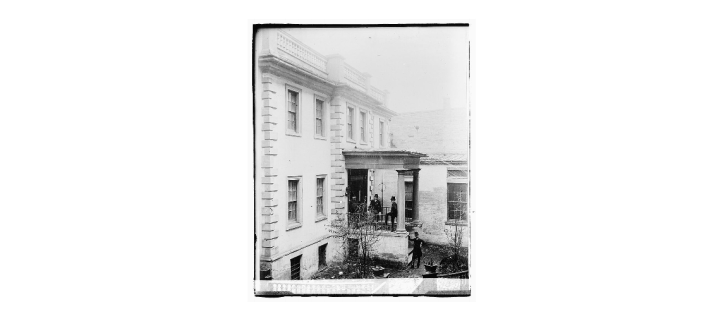
Carlyle House
The John Carlyle House, c. 1918-1920, Library of Congress.

The task of subduing the French, Canadians, and their Native American auxiliaries in these regions fell upon a mixed contingent of British Regular soldiers, colonial provincial troops, and British-allied Native American warriors. How each group would be utilized depended upon how the respective expeditionary field commander chose to execute his orders by moving, supplying, and fighting his men. Continue reading “The Carlyle House Congress and Britain’s Military Objectives for 1755”

Winning the Battles and Losing the War: A Review of Whispers Across the Atlantick: General William Howe and the American Revolution, by David Smith

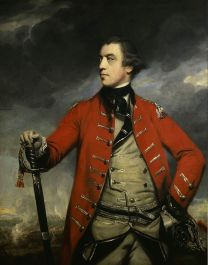
General William Howe Color (Wikimedia Commons).jpeg

(William Howe, Wikimedia Commons)

David Smith, Whispers Across the Atlantick: General William Howe and the American Revolution, (NY: Osprey Publishing, 2017).

If it’s true that George Washington lost all his battles, but won the war, then it’s equally true that Sir William Howe won all his battles and lost the war.  Of course, neither premise is accurate, but they pithily sum up the conventional interpretation of each commander’s accomplishments on the battlefield, wrong as they may be.  Washington’s role as Commander-in-Chief has come under increased scrutiny as Americans revisit their history.  His chief adversary, however, Sir William Howe, has largely escaped focused study.  David Smith set out to rectify that shortfall in his doctoral dissertation, which became the basis of Whispers Across the Atlantick.  Historians should thank him for it.  Continue reading “Winning the Battles and Losing the War: A Review of Whispers Across the Atlantick: General William Howe and the American Revolution, by David Smith”

Dr. Prescott, Love & War

Love brought Dr. Samuel Prescott, a practicing physician, to the town of Lexington on the night of April 18, 1775. The young doctor was courting Ms. Lydia Mulliken, when the alarm of the British soldiers marching from Boston went out to the local militia. Lydia’s brother was one of those called to gather.

Love. That emotion also drew Dr. Prescott back toward his hometown of Concord—this time to alert friends, neighbors, and family members of the urgent news of the evening. En route, Dr. Prescott along with Paul Revere and William Dawes, alerted the countryside of the moving British troops. After being vetted and vouchsafed as a true friend of liberty, Dr. Prescott rode posthaste to his hometown, where his word carried greater weight.

paul_revere
A artist’s interpretation of Paul Revere’s (or maybe William Dawes or Dr. Samuel Prescott)’s ride to warn the Massachusetts countryside. (courtesy of VFW)

Continue reading “Dr. Prescott, Love & War”

“Acts of a Rude Rabble…” General Gage, Lord Dartmouth and Ignorant Orders

Thomas_Gage_John_Singleton_Copley
General Thomas Gage

When one studies British General Thomas Gage and his performance leading up to Lexington and Concord you must step back and put yourself in Gage’s position. A man that believed not only in Royal authority over the American colonies, but also in the basic rules of law. Gage was not anti-American by any means.


In November 1763, Gage was placed in overall command of British forces in the American colonies and settles in New York. At this time Gage was well respected by most American colonists. Of course, this all changed in 1774 when Gage was sent north to Boston to become the Royal-appointed Governor of Massachusetts and enforce the highly unpopular Port Bill that closed the port of Boston among other harsh actions. He was walking into a situation that most historians today argue was a no-win situation. Continue reading ““Acts of a Rude Rabble…” General Gage, Lord Dartmouth and Ignorant Orders”

Two Riders….Gage Gathers Information

As British General Thomas Gage and his American Whig (or Patriot) antagonists squared off in Boston and the surrounding towns, information gathering became the key to success. Both sides had created networks of spies, but the advantage was clearly in favor of the Whigs. During the winter 1774-1775, groups such as the Sons of Liberty had established a complex spy network within Boston comprised of a system of riders that spread information and “alarms’ quickly. The Committee of Safety and the Massachusetts Provincial Congress relied on this network to stay informed of what was going on in Boston and the British intentions. Continue reading “Two Riders….Gage Gathers Information”

An Account of April 19, 1775

“the Country was an amazing strong one; full of Hills, Woods, stone Walls, & c., which the Rebels did not fail to take advantage of, for they were all lined with People who kept an incessant fire upon us…”

From the diary of Lieutenant Frederick Mackenzie who was part of the 23rd Regiment–the Royal Welch Fusiliers that survived the ordeal of April 19, 1775. He would keep a diary until the early 1790’s and chronicled his experiences in the American Revolutionary War. His account on April 19, of the retreat from Concord is most descriptive. The British did not just take the brunt of the firing as the marched hurriedly back toward Boston and safety, but;

“as we did too upon them, but not with the same advantage, as they were so concealed there was hardly any seeing them: in this way we marched between 9 and 10 miles, their numbers increasing from all parts…”

The column was led by Lieutenant Colonel Francis Smith and had been tasked by General Thomas Gage, British military leader in North America, to root out the military supplies being stored in Concord by the colonials. The mission, albeit supposedly secretive, did not remain so for long, and the colonials got word out to the countryside. After initial firing at Lexington Green and then at the North Bridge in Concord, the British had to march back through the countryside, facing arriving militia and minute men.

“while ours was reducing by deaths, wounds, and fatigue; and  we were totally surrounded with such an incessant fire as it is impossible to conceive; our ammunition was likewise near expended.”  

IMG_7229
Modern-day view along Battle Road, the route the British column retreated back toward Boston on (author collection)

Luckily, for Mackenzie and the other struggling British officers and rank-and-file, on a rise in the ground, outside the town of Menotomy, was a relief column, ready to provide a few moments’ respite.


From Campaign 1776: Ten Crucial Days

Emerging Revolutionary War is pleased to share the following information from our friends at Campaign 1776 managed by the Civil War Trust. 

unnamed

“As many of you may know, this winter marks the 241st anniversary of the American victories at the battles of Trenton and Princeton. The Continental Army’s triumphs in the Ten Crucial Days campaign proved instrumental to rekindling Patriot morale and keeping the cause for American independence alive in the wake of early defeats. Continue reading “From Campaign 1776: Ten Crucial Days”