Emerging Revolutionary War welcomes back guest historian Blake McGready for part two of the series. To read part one, click here.
While her poetry avoided wartime
setbacks and conjured stories of revolutionary unity, Stockton’s poems did
confront the violent realities of what she called “a most cruel and
eventful war”. Her choice
allusions demonstrate how, in her mind, wartime violence bound the
revolutionaries together. Following the death of General Joseph Warren
at the battle of Bunker Hill she lamented, “That heart, which, studious of his
countries good / Held up her rights and seal’d them with his blood!” In 1776 Stockton
wrote of revolutionary soldiers who “fought and bled to save their native land
/ From bowing to a tyrant’s stern command,” and honored great men dying on
battlefields “Made fertile by the blood of heroes slain.” Whereas historians
have noted how the war’s violence was often deliberately excluded from the
popular imagination, by contrast, Stockton’s war and violence were inseparable.[i]
Emerging Revolutionary War welcomes guest historian Blake McGready. A short bio is at the end of this post.
In December 1776, Richard Stockton of Princeton, New Jersey, a signer of the Declaration of Independence, disavowed the American Revolution and swore allegiance to King George III. After British forces imprisoned Stockton, he accepted his captor’s amnesty offer. Revolutionaries considered Stockton’s decision an act of cold betrayal and condemned his perfidy. And yet, following his death in 1781, most biographies avoided or ignored Stockton’s questionable political commitment; one tribute claimed his conviction inspired “the utmost confidence of his associates and the country at large.” Stockton owed much of this comeback to his wife, Annis Boudinot. As a prolific and published poet, she helped erase much of her husband’s political infidelity in her writings. At the time of his death she praised him in one tribute, “Can we forget how patiently he bore / The various conflicts of the trying hour / While meekness, faith, and piety refin’d.” She carefully forgot that her husband abandoned the revolutionaries during “the trying hour.”[i]
Annis Boudinot (Mrs. Richard) Stockton by James Sharples Senior, from life, 1796-1797. Courtesy, Independence National Historical Park.
Setting aside one day to give national thanks to God for the blessings of the prior year and beseech him for future blessings had been frequently practiced in England, but it merged with several Puritan traditions in New England during the 17th century. By the time of the American Revolution, Thanksgiving was a well-established custom. The Second Continental Congress turned a regional tradition into a national one when offered its first Thanksgiving Proclamation on November 1, 1777, recommending that the individual states of the new United States set apart December 18th as a day of Thanksgiving and praise. During the Revolution, Congress continued the practice, issuing its last proclamation in 1784.
Emerging Revolutionary War welcomes back guest historian Daniel T. Davis.
Last month, I heard Emerging Revolutionary War co-founder Phill Greenwalt remark “when you think about retreats, victory is a word that doesn’t come to mind.” The period of January 18 to February 14, 1781 is the exception to the rule. During this time frame, the American army under Maj. Gen. Nathanael Greene and the British under Charles, Lord Cornwallis, marched across the backcountry of the Carolinas. Known as the “Race to the Dan”, this episode between the engagements at Cowpens and Guilford Courthouse, is a largely forgotten but consequential even in the Southern Campaign of 1781.
When you mention the name “Charles Lee” in many Revolutionary War circles, one immediately thinks of Maj. Gen. Charles Lee. Though there was another Charles Lee and it can be argued provided more contributions to the United States than the British born military general.
Charles Lee, Courtesy of Department of Justice
Charles Lee was born in 1758 on his father’s plantation Leesylvania in Prince William County, Virginia. The 2,000-acre farm that sat on the Potomac River and neighbored other Potomac River families such as the Fairfaxes, Washingtons and Masons. Charles’ father, Henry Lee II, a political colleague and friend of George Washington, Charles was one of eight siblings and five males that would solidify the Lee family’s role as leaders in politics and society. Continue reading “George Washington’s “Favorite” Charles Lee”→
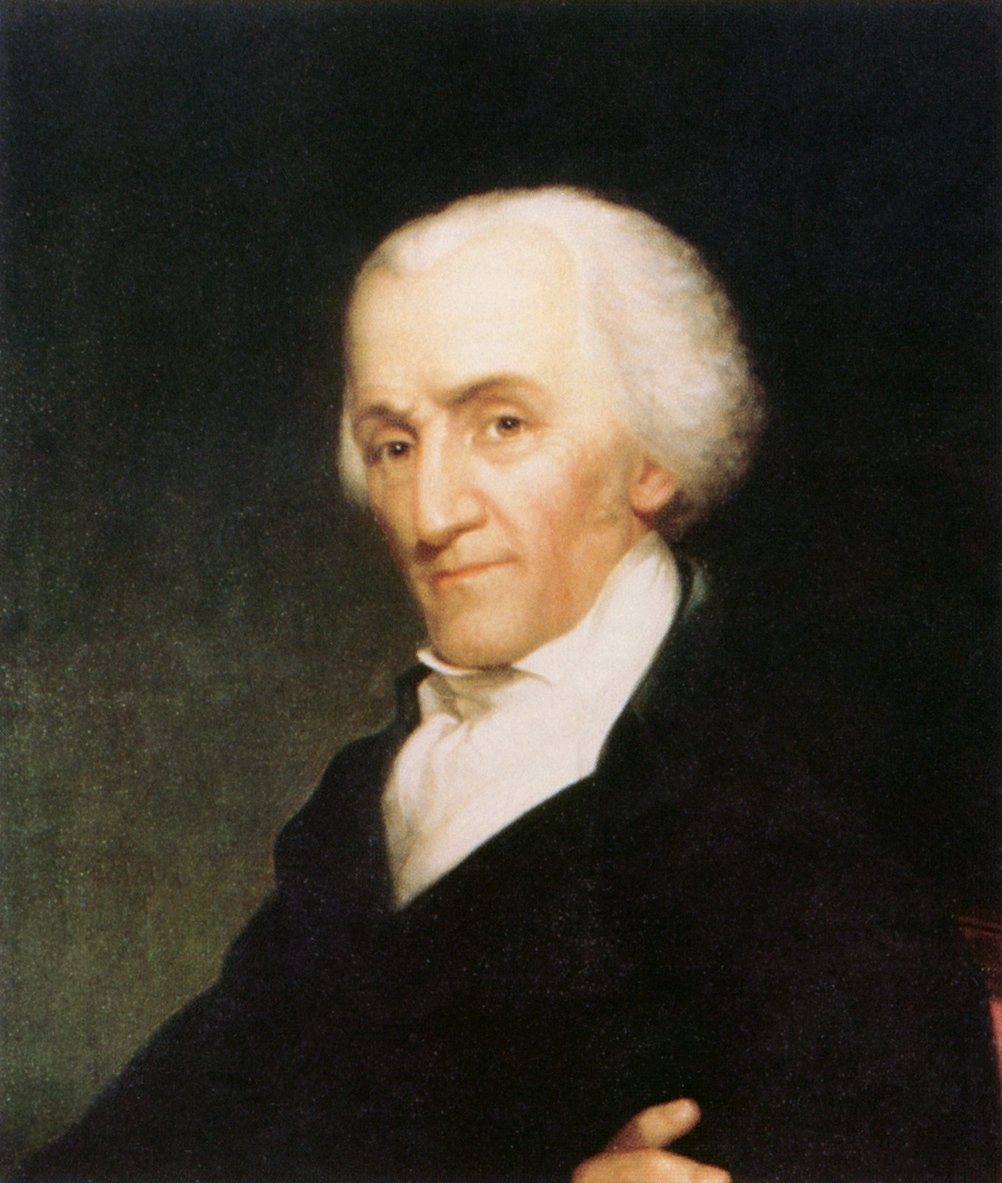
Massachusetts Governor and U.S. Vice President Elbridge Gerry
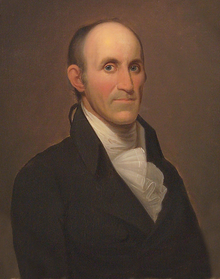
Lately, the term “gerrymandering” is getting thrown around as some sort of new illness that afflicts the republic. The process essentially involves drawing electoral district boundaries in ways that benefit one political party or the other and dates back to 1812 Massachusetts, when Governor Elbridge Gerry, a member in good standing of the founding generation, signed legislation radically redrawing electoral districts in the state to favor the Democratic-Republican Party.
Born in 1744, Gerry was a Massachusetts merchant and vocal opponent of British policy in the colonies who served in the Second Continental Congress, signed the Declaration of Independence, the Articles of Confederation, and attended the Constitutional Convention. Like a few of his contemporaries, notably George Mason and Patrick Henry of Virginia, he refused to sign the Constitution due to its lack of an explicit Bill of Rights. Nonetheless, he went on to serve as an envoy to France in the Adams administration, then was elected to the U.S. House of Representatives, as Governor of Massachusetts, and then was Vice President under James Madison. Only a few men had a better claim on the term “founding father.”
I’ve been intermittently visiting Winchester, VA for years, usually with an eye toward understanding its place in the Civil War. Tradition has it that no town changed hands more frequently. But, the town also has a prominent, if sometimes overlooked, role in America’s colonial and Revolutionary War history. In particular, it enjoyed a close relationship with George Washington and Daniel Morgan, helping shape both men.
George Washington as a Teenage Surveyor, Winchester, VA
Winchester, or Frederick Town, as it was then known, was the largest village in the lower Shenandoah Valley when Lord Thomas Fairfax decided to relocate from England to his land grant in northern Virginia and became a way-station of sorts for people traveling along the Great Wagon road that ran from Pennsylvania to North Carolina in the 18thcentury. So, when the Fairfax family hired a teenaged George Washington to help survey its grants in the Shenandoah, Winchester was a logical place for the surveying team to make its temporary home base. (In truth, surveying teams were constantly moving to maximize their efficient use of time: the saddle might be considered home.) While the teenager was less than impressed with most accommodations on the frontier, he was pleased with Fredericktown. He recorded in his diary: Continue reading “George Washington, Daniel Morgan, and Winchester, Virginia on Memorial Day”→
Emerging Revolutionary War welcomes guest historian Kieran O’Keefe.
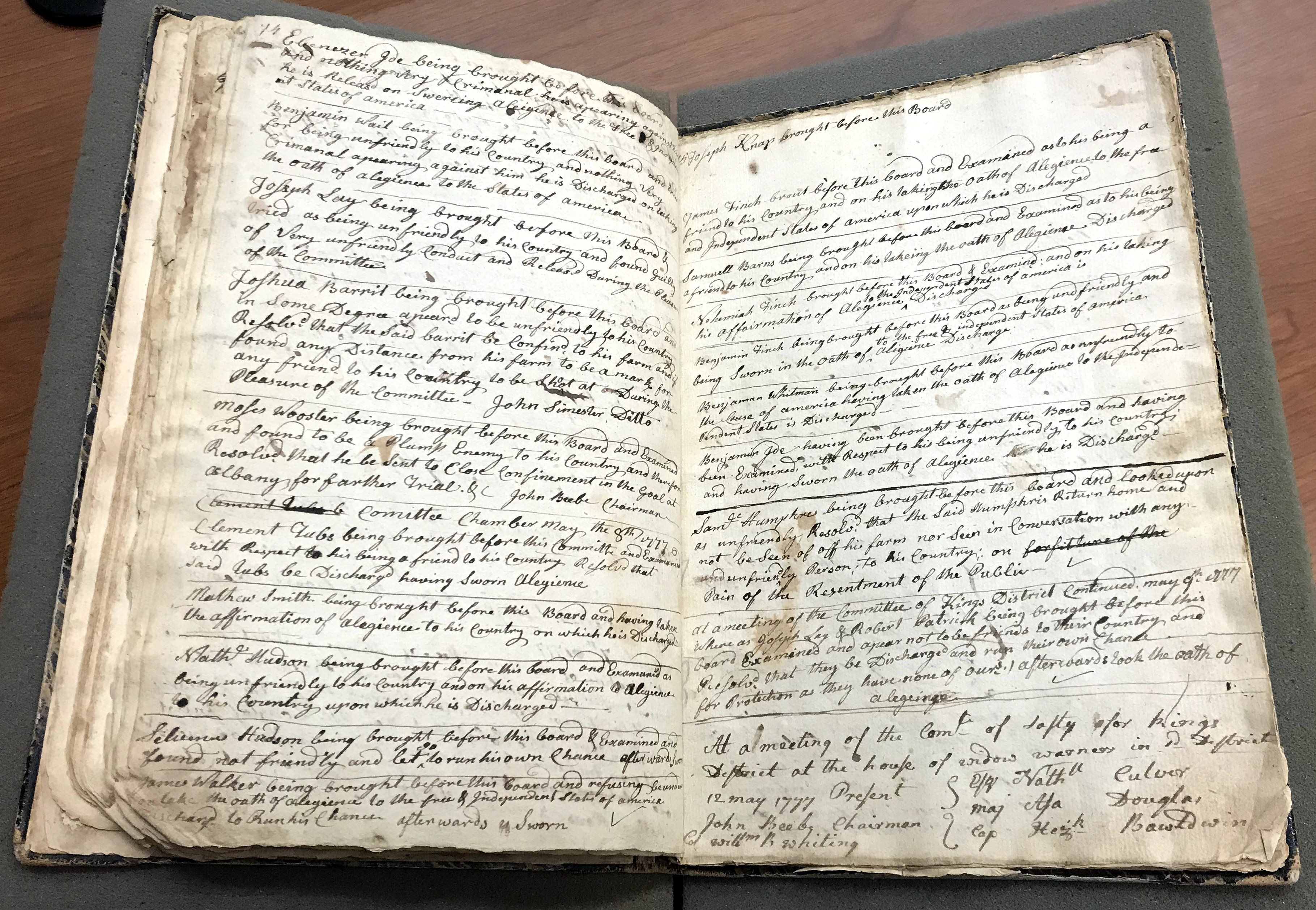
While the most famous scenes of the American Revolutionary War involve major battles or deliberations in Congress, the driving force behind the Revolution within small towns were committees of safety. As the war progressed and British authority dissipated, these committees became the effective government in most localities until the formal establishment of state governments. They had responsibilities such as regulating the economy, suppressing loyalists, procuring military supplies, raising revolutionary forces, and overseeing civil and criminal justice. Despite their ubiquity, it is rare to find the records of a committee completely intact. One such exception is the King’s District Committee of Albany County, New York, whose minutes survive in the Library of Congress.
The First Continental Congress created the committee system when it adopted the Continental Association in 1774. The Association called for the non-importation, non-consumption, and non-exportation of goods between the colonies and Great Britain, Ireland, and the British West Indies. This boycott was to put economic pressure on Britain to repeal the punitive Coercive Acts, which punished Massachusetts for the Boston Tea Party by closing the port of Boston and bringing the colony under tighter royal control with the aid of British redcoats. The Continental Association also stated that “a committee be chosen in every county, city, and town, by those who are qualified to vote for representatives in the legislature, whose business it shall be attentively to observe the conduct of all persons touching this association.” These committees were to ensure that all Americans adhered to the boycott stipulated in the Association. Committees began forming throughout the colonies in late 1774 and soon took on a greater role than originally designed, frequently seizing the reins of local government. The committees were unusually democratic. They generally consisted of about five men who were popularly elected, and many members were from the middling ranks of society with no prior political experience.
The King’s District Committee record book (author collection)
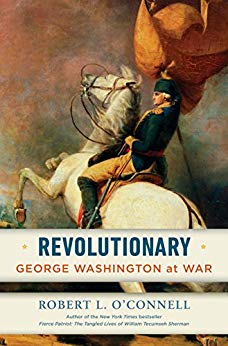
Robert L. O’Connell, Revolutionary: Washington at War, e-book, (New York: Random House, 2019), $32 in hardback.
Robert L. O’Connell is best known for asking “big” questions. Armed with a PhD in history and a lengthy career in the intelligence community, his books Of Arms & Men: A History of War, Weapons, and Aggression (1989) and Ride of the Second Horseman: The Birth and Death of War (1995) tackled the origins, nature, and future of warfare. In the last decade, however, he has turned his sights on more specific targets: Hannibal at Cannae, William Tecumseh Sherman, and, most recently, George Washington. Released earlier this year, O’Connell’s Revolutionary: George Washington at War is just the latest work to tackle the martial aspects of George Washington’s life and career.
Emerging Revolutionary War welcomes guest historian Kate Bitely
In the Foot Steps of James Madison.
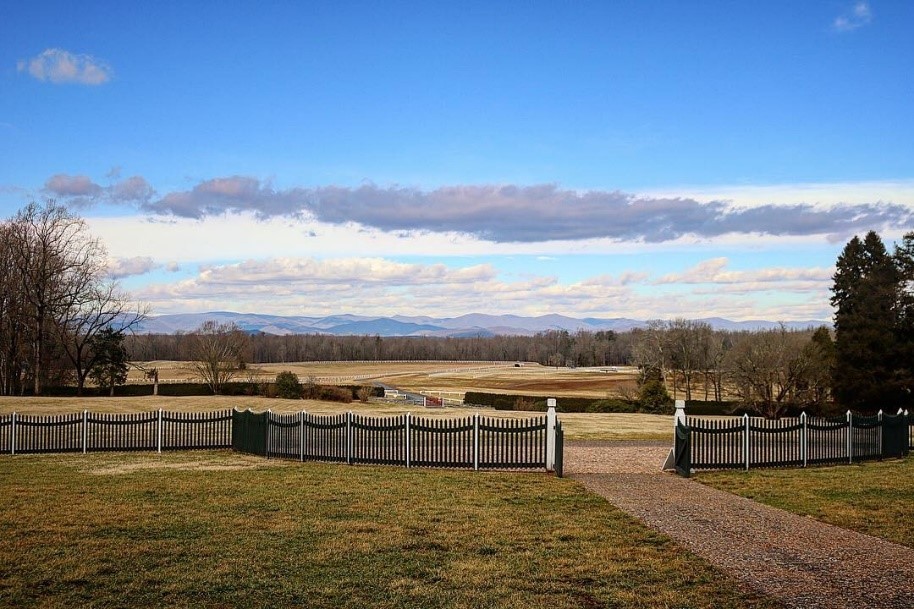
A view from the front yard of Montpelier (author collection)
Spring is finally here in Virginia and if you are looking for a place to explore that offers a great outdoor experience, get in the car and head to Montpelier, in Orange Virginia. James Madison’s plantation home offers visitors a glimpse of what life was like in colonial America. Be sure to start your trip with the feature film in the welcome center that provides highlights of Montpelier’s lengthy history dating back to the mid 1700’s. The preserved property has something to offer everyone including hikes, gardens, and a breath-taking view of the blue ridge mountains. The grounds are filled with opportunities to learn about our nation’s early history and the impact it still has on our country today. Continue reading “ERW Weekender: In the Footsteps of James Madison”→