Emerging Revolutionary War welcomes guest historian Blake McGready. A short bio is at the end of this post.
In December 1776, Richard Stockton of Princeton, New Jersey, a signer of the Declaration of Independence, disavowed the American Revolution and swore allegiance to King George III. After British forces imprisoned Stockton, he accepted his captor’s amnesty offer. Revolutionaries considered Stockton’s decision an act of cold betrayal and condemned his perfidy. And yet, following his death in 1781, most biographies avoided or ignored Stockton’s questionable political commitment; one tribute claimed his conviction inspired “the utmost confidence of his associates and the country at large.” Stockton owed much of this comeback to his wife, Annis Boudinot. As a prolific and published poet, she helped erase much of her husband’s political infidelity in her writings. At the time of his death she praised him in one tribute, “Can we forget how patiently he bore / The various conflicts of the trying hour / While meekness, faith, and piety refin’d.” She carefully forgot that her husband abandoned the revolutionaries during “the trying hour.”[i]
Annis Boudinot (Mrs. Richard) Stockton by James Sharples Senior, from life, 1796-1797. Courtesy, Independence National Historical Park.
Setting aside one day to give national thanks to God for the blessings of the prior year and beseech him for future blessings had been frequently practiced in England, but it merged with several Puritan traditions in New England during the 17th century. By the time of the American Revolution, Thanksgiving was a well-established custom. The Second Continental Congress turned a regional tradition into a national one when offered its first Thanksgiving Proclamation on November 1, 1777, recommending that the individual states of the new United States set apart December 18th as a day of Thanksgiving and praise. During the Revolution, Congress continued the practice, issuing its last proclamation in 1784.
Billy Griffith, Kevin Pawlak, Rob Orrison and Mark Maloy at George Washington’s HQ in Newburgh, NY
Just over two weeks ago, ERW historians Billy Griffith, Phillip Greenwalt, Mark Maloy, Rob Orrison and Kevin Pawlak took a long weekend trip up to upstate New York. This was the fourth year that ERW authors have gotten together to take a “field trip” to see sites related to the French and Indian War and the American Revolution.
The trips not only serve as chances for research, but also to make new connections with public historians working in the American Revolution era. Along the way, we posted several videos from locations to give our followers an idea of some of the great places to visit out there. Again, our goal is to not just share this history, but to get people to visit these great sites.
Sites visited on the first day included the Stony Point Battlefield, where Americans under Gen. Anthony Wayne over ran a surprised British outpost. Reading about this action almost rings empty until you stand on the ground. Looking at the steep terrain that Wayne’s men climbed after traversing through a wetland, it is hard to imagine how the Continentals were able to take the British fort with so few casualties. Later that day we made a quick stop at George Washington’s headquarters in Newburgh. Here Washington lived from April 1782 to August 1783 and where he learned of the cease fire with the British, wrote his now famous circular letter to the colonial governors on his vision for the new government. Most importantly, here Washington responded to the Newburgh Conspiracy of his officers looking to possibly over throw the civil government. This site is also important in the history of the museum field as it is the first publicly owned historic site in the United States, opened in 1850 as a museum. A worthwhile nearby site, the New Windsor Cantonment site, preserves the camp site of the Continental Army during the 1782-1783 time period. Several of the buildings are rebuilt, including the Temple of Virtue, where Washington made his impassioned speech to his officers (with the assistance of his glasses) to diffuse their discontent with Congress.
The morning of the second day of the trip was spent visiting sites around Lake George, NY, including some much over looked French and Indian War sites. That afternoon sites along the upper Hudson including the site of the murder of Jane McCrea, Fort Edward and sites in Albany.
Park Interpreter Bob Hoar explains the terrain of the battlefield
Early Sunday morning, a quick trip to the Bennington Battlefield State Park was highlighted with a great personal tour by Bob Hoar. The battlefield is well preserved and interpreted. Bob also shared some of his research into reinterpreting the battlefield using first person accounts and the landscape. Again, understanding the landscape of these places creates such a better understanding.
The majority of the day on Sunday was spent at Saratoga National Historical Park, posting several Facebook Live videos from various points across the battlefield. Also a special visit to the surrender site in Schuylerville which was recently preserved and opened as a memorial by the Friends of Saratoga Battlefield. A great preservation victory that adds to the overall story of Saratoga.
One of the highlights of the trip took place on Monday, where we received a behind the
Curator Matthew Keagle gave a behind the scenes tour of Fort Ticonderoga’s amazing collection storage.
scenes tour by Fort Ticonderoga staff. We started by learning about the military interpretive program by Ron Vido, Military Programs Supervisor. Anyone who has visited Fort Ticonderoga knows about their quality interpretive staff and programs. Ron also shared with us their plans to slowly restore the Carillon Battlefield (1758), which will be a great addition to the understanding of North America’s bloodiest battle before the Civil War. That afternoon we were treated to a behind the scenes tour of Fort Ticonderoga’s collections storage by Curator Matthew Keagle. The Fort has been collecting 18th century items for nearly 100 years. Their collection is one of the largest collection of 18th century military artifacts in the United States. From a Continental knapsack to an original copy of Baron von Steuben’s drill manual, the collection on display is only a small portion of what the museum owns. Matt also shared the museum’s ongoing work to digitize their collection for the purpose of research. The day was capped off by a visit to one of the best preserved battlefields in the United States, Hubbardton. Fought as part of the Saratoga Campaign, this is Vermont’s only battlefield. The landscape at the foot of the Green Mountains is amazing and the viewsheds are near pristine. A nice state park and visitor center are there to help explain the events of July 7, 1777.
Thank you to all the people that assisted us in this trip and all the sites that were nice enough to host us. We will be posting more on the blog in the future focusing on some of the stories around these amazing sites. Again, we encourage you to take the time to visit all these places. History books are great, but there is no substitute for being in the footsteps of history
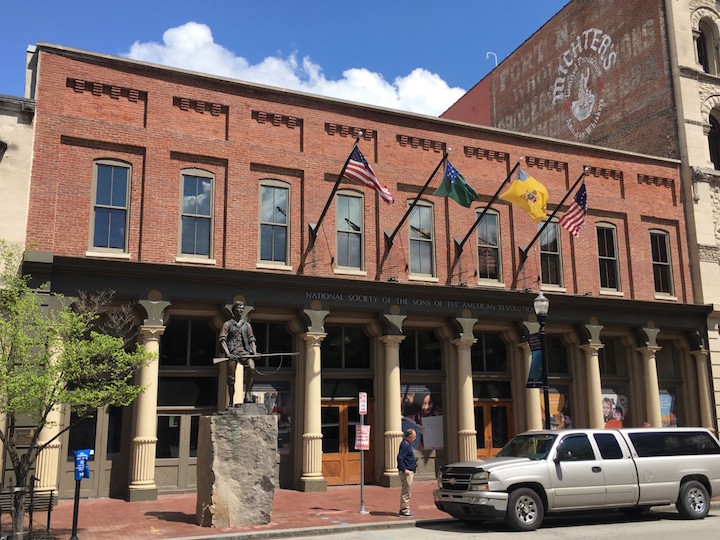
In Louisville, Kentucky, earlier this month, I paid a visit to the Louisville Slugger Factory and Museum downtown. Across the street, I was pleasantly surprised to see a marvelous statue of a minuteman.
The plaque on the back reads
Sons of Liberty—1775
To Honor the History of Philadelphia Continental Chapter 1901
Pennsylvania Society Founded 1893
By its Compatriots 2009
The statue stands outside the headquarters of the National Society of the Sons of the American Revolution. “Located along Main Street’s Museum Row in downtown Louisville,” the society’s website says, “the Sons of the American Revolution is the leading male lineage society that perpetuates the ideals of the war for independence.”
The statue was publicly unveiled in November 2015. According to the Louisville Courier Journal, “The 800-pound, 8-foot high bronze statue of the Minuteman holding a musket rests upon 19,000 pounds of quarried Kentucky limestone, material specifically requested by the artist James Muir.”
A few weeks ago, heading to the airport after the first Emerging Revolutionary War symposium, fellow ERW historian Rob Orrison made a pit stop in a residential neighborhood in Prince William County, Virginia.
To the average traveler to the Ronald Reagan International Washington National Airport this slight detour would not be normal. Yet, for two historians of early American history, these detours are rarely common.
This particular detour took us to a portion of the King’s Highway that has been preserved by the Prince William County Historic Preservation Division. Along this stretch soldiers in the French Army under Comte de Rocambeau and Continentals under General George Washington traversed on their way to Yorktown to entrap the British under General Lord Charles Cornwallis.
Thus, one king’s soldiers, King Louis XVI took a route named for monarch to assist rebels in trapping the ground forces of another king, that of Great Britain by using a road named for the British monarch. Interesting to think about the naming of the road in those terms.
Portions of this route are still preserved today, other sections have been modernized and blacktopped to be Route 1.
Below are a few photos I snapped, including the size 14 Nike shoe belonging to yours truly, re-enacting marching down the thoroughfare like the patriots of 1781.
While the Second Continental Congress met
in the early summer of 1776, colonists in the far away backcountry of South
Carolina faced a threat from a perennial foe, the Cherokees. While delegates
debated a declaration of independence, war parties struck settlements between
the Broad and Saluda Rivers in the Ninety Six District. In response to these
raids, militia Major Andrew Williamson mustered his Ninety Six regiment.
Augmented by militia from the Carolinas and Virginia, he commenced a campaign
against the Cherokee villages along the eastern face of the Blue Ridge.
General Andrew Pickens of South Carolina
Williamson struck at Esseneca on August 1.
The colonials sustained twenty casualties but forced the warriors to abandon
the village. Over the course of the next week, Williamson moved further into
enemy territory. Rather than engage his force, the Cherokees retreated before
the advance. Williamson burned a number of towns including Oconee, Estatoe and
Toxaway.
The regiment reached Tamassee on August 12.
Once again, Williamson found the village abandoned. He decided to send out
scouting parties to examine the nearby hills. One of the patrols was led by a
company commander from the Long Canes region of South Carolina, Captain Andrew
Pickens. He took with him about sixty men. To cover more ground, Pickens
divided his group and continued on with thirty five militiamen.
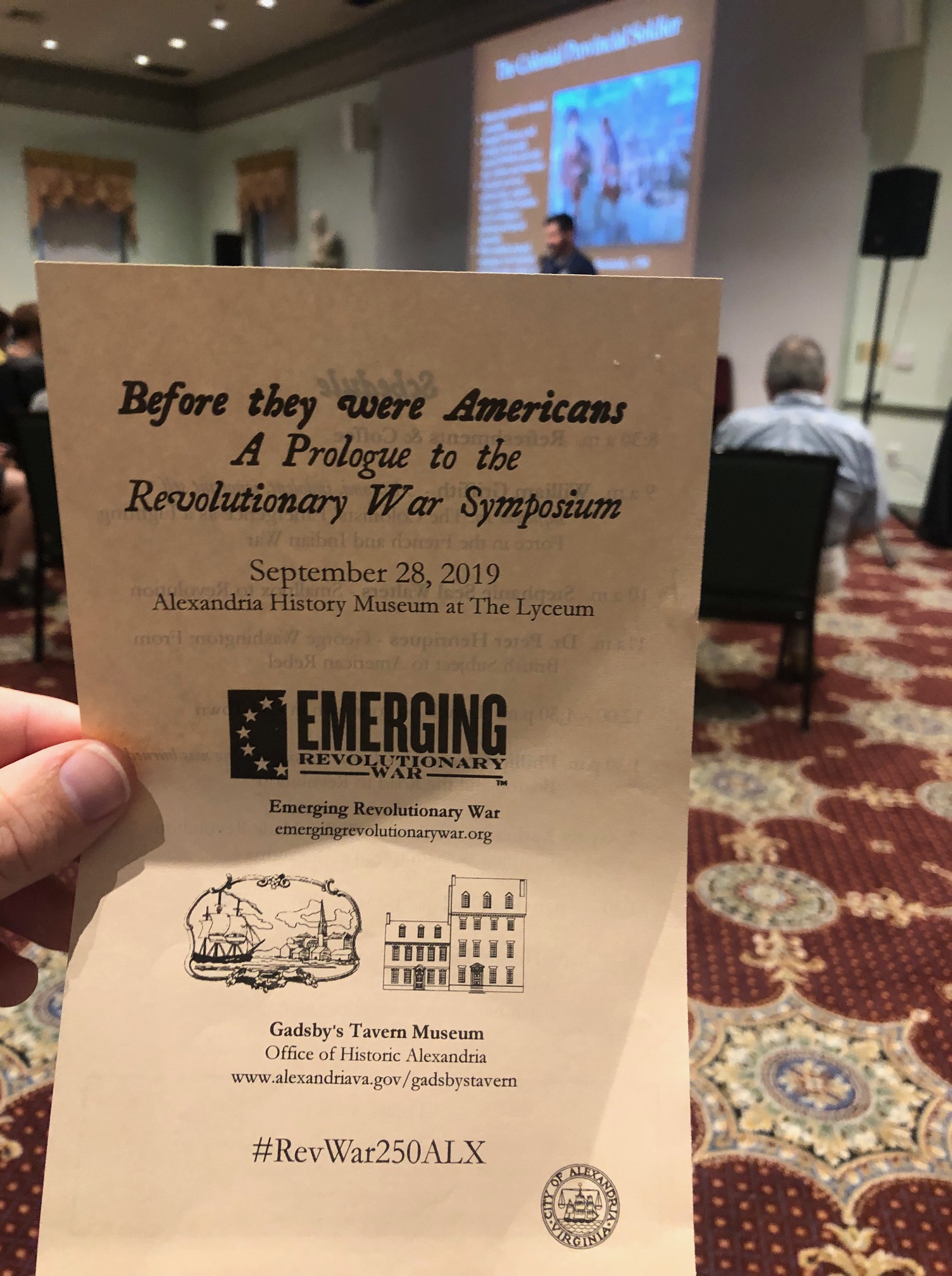
One week has passed since the first annual Emerging Revolutionary War symposium. Held in conjunction with Historic Alexandria, Virginia at the Lyceum, the theme was “Before they were Americans.”
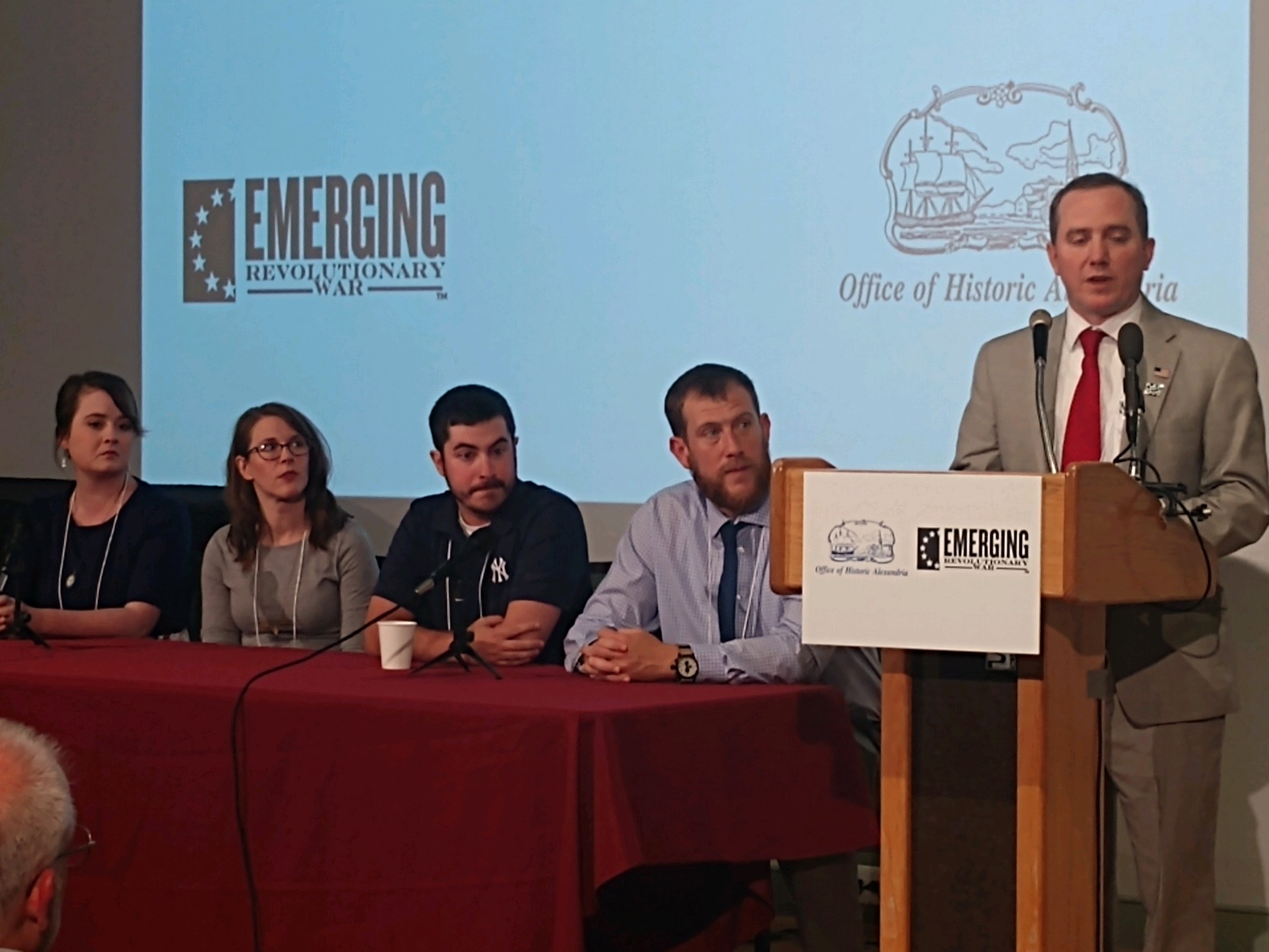
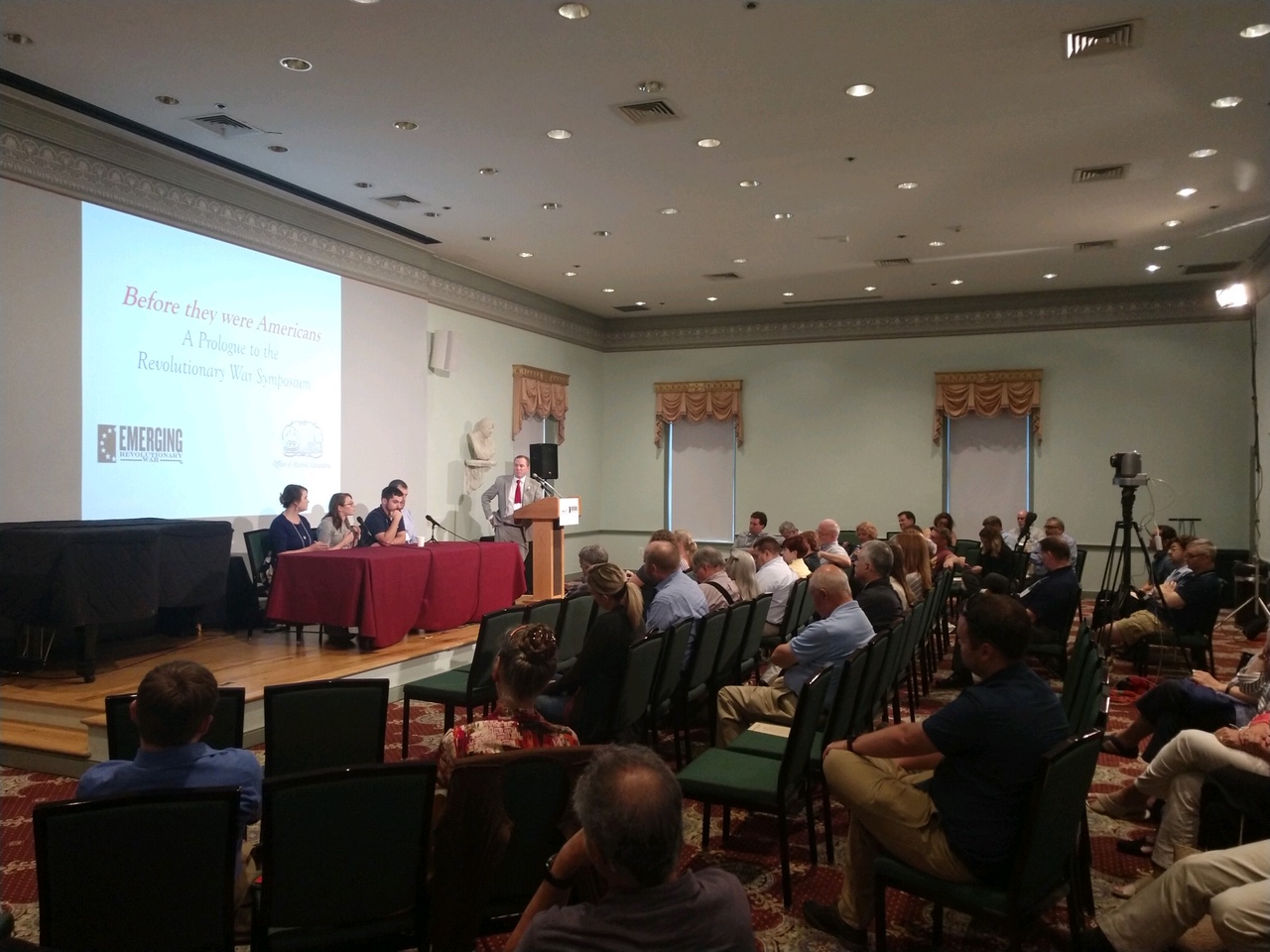
With a day of lectures, keynoted by Dr. Peter Henriques, professor emeritus of George Mason University the topics ranged from the French and Indian War, to George Washington, to material culture, smallpox, and Boston on the Road to Revolution. The day ended with a panel of historians in a Q&A session.
Over 70 people attended and many joined members of Emerging Revolutionary War and Historic Alexandria at Gadsby’s Tavern, an 18th century tavern with a great connection to American history, including a a ballroom used by Washington to celebrate his birthdays!
Plans are already in motion for the second annual Emerging Revolutionary War symposium to be held in late September of 2020 back in Alexandria, Virginia. Stay tuned to this blog and our Facebook page for information as that day draws near.
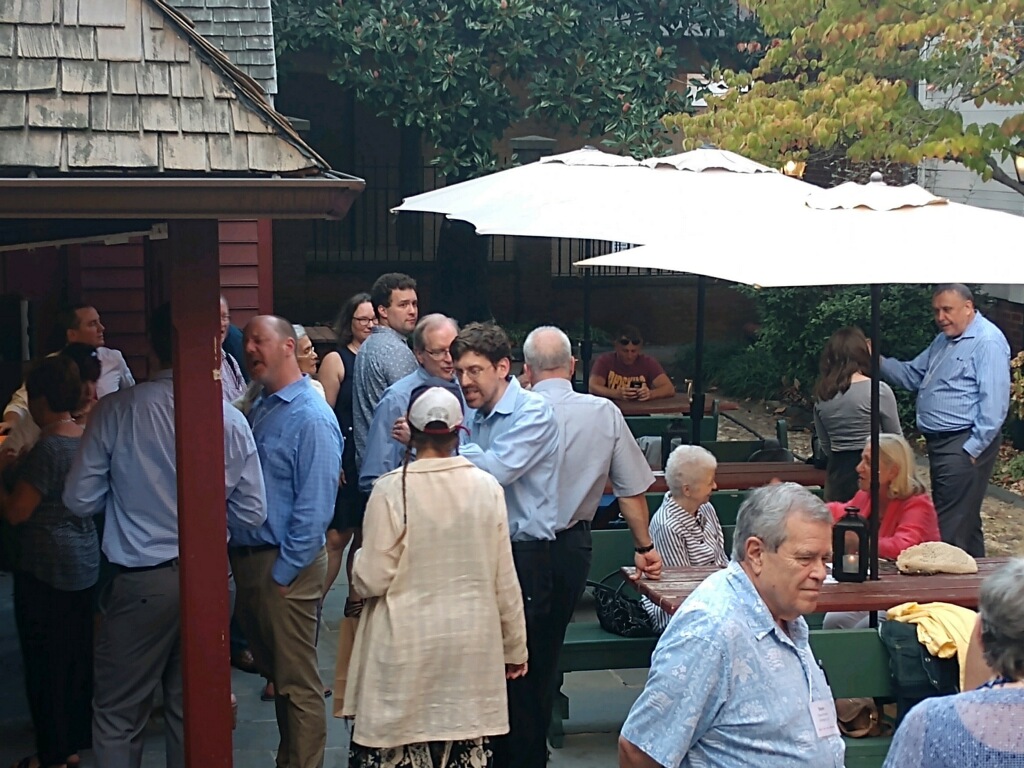
In the meantime, check out some of the photos below, taken by ERW historian Rob Orrison, who along with Liz Williams of Historic Alexandria were the driving forces behind making this symposium possible. A big thank you to all who attended and we hope to see you next year!
Dr. Peter Henriques discusses George Washington’s route to becoming a revolutionary
The panel discussion with ERW historian Mark Maloy as the MC
Crowd listens intently during the panel discussion at the end of the lectures at the first annual ERW symposium
Attendees and speakers gather at Gadsby’s Tavern after the successful conclusion of the symposium
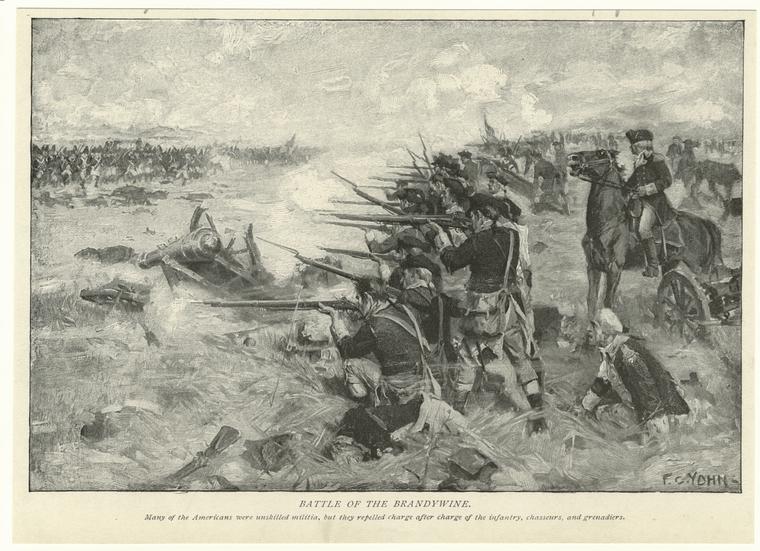
Before the horrific terrorist attacks that struck the United States on September 11, 2001, this date in American history saw the longest single day engagement with the highest number of combatants during the entire American Revolution fought in southeastern Pennsylvania.
Known to history as the Battle of Brandywine, approximately 30,000 soldiers were involved and 1,887 became casualties, the majority, 1,300 being Americans. One of those 1,300 individuals was Reverend or Chaplain Joab Trout, from New Hampshire.
Battle of Brandywine (courtesy of NYPL)
The night before the engagement, he gave the following sermon beat the evening call on the eve of battle. And 242 years later the words still echo with a sense of patriotism and stoicism for a cause that was worth fighting and dying for. Below is the full sermon:
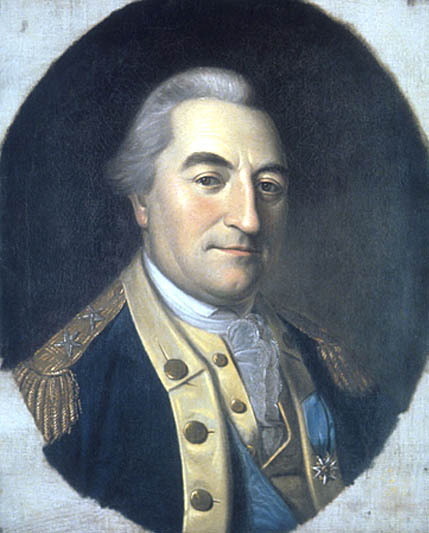
Sebastien Le Prestre de Vauban, Seigneur de Vauban, and finally Marquis de Vauban, as one of his biographies begins, is probably not a household name to many enthusiasts of American history. Especially since he died on March 30, 1707 and never set foot in the Western Hemisphere. However, he did have a nephew, Jacques Anne Joseph Le Prestre de Vauban who served as General Jean-Baptiste Rochambeau’s aide-de-camp during the war. So, there is a family connection.
Sébastien Le Prestre de Vauban (courtesy of Wikipedia)
Yet, he left his mark on places like Yorktown, Virginia, fought 74 years after his death and half-a-world away. French engineers, critical to eventual American victory in the American Revolutionary War, plied de Vauban’s craft and studied his text and learned from his exploits. Continue reading “Sébastien Le Prestre de Vauban”→
On this date in 1780, Johann von Robias, Baron de Kalb, died of wounds received three days earlier during the Battle of Camden, South Carolina.
de Kalb, born on June 19, 1721 in the Principality of Bayreuth, was in charge of the American right wing during the engagement at Camden, leading the premier units, the Delawareans and Marylanders, of General Horatio Gates’ Southern Army.
When the left and center of the American line disintegrated, de Kalb’s force had to beat a hasty retreat before becoming completely surrounded. During this juncture of the fighting, the Baron’s horse was shot out from under him and the German was thrown to the ground. Before he could gain his feet, he was hit with three musket balls and bayoneted multiple times by approaching British soldiers. The wounds would prove mortal. Continue reading ““De Kalb has died, as he has lived, the unconquered friend of liberty””→








 Emerging Revolutionary War Era