Revolution on the Ohio Frontier: Fort Laurens

img_2465
The Museum at Fort Laurens, Ohio

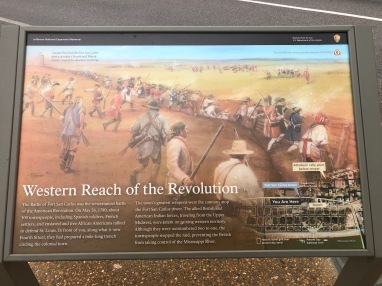
For much of the American Revolution, the British waged war on their rebelling colonists in the Ohio River Valley via proxy, relying on western Indian nations (Shawnee, Wyandot, Mingo, Chippewa, Ottawa, and others) to attack isolated American settlements and villages across the Ohio River.  The Continental Congress, already unable to meet the needs of its own army along the coasts, could offer little in the way of assistance. So, frontier defense largely fell upon the local militia.  They adopted a two-pronged strategy: 1) build forts and blockhouses along the frontier, giving settlers a place of safe haven when Indian raiding parties were about, and 2) preemptive raids against Native American villages in an attempt to disrupt their preparations for raids against the settlers.

In 1777, however, Congress realized that more aggressive measures were required: the war would have to be carried against the heart of British power at Detroit, from where the British coordinated, supplied, and rewarded Native American raids. With that in mind, Congress and Continental authorities at Pittsburgh began planning an offensive to capture the British post between Lakes Huron and Erie.  First, they would need to secure the continued neutrality of the Delaware Indian nation in the Muskingum River Valley, which today is in Eastern Ohio. Second, they would need to build a substantial network of forts capable of sustaining an overland offensive. Building a new fort in Delaware territory would serve both goals.

Continue reading “Revolution on the Ohio Frontier: Fort Laurens”

The Battle of the Kegs (January 5th, 1778)

Francis Hopkinson
Francis Hopkinson, Signer of the Declaration and Satirical Lyricist

The Philadelphia Campaign did not end well for the Continental Army after three separate defeats at Brandywine, Paoli, and Germantown followed by the British occupation of the new nation’s capital.   Among other things, however, it would produce an amusing little ditty commemorating an attack on the British on January 5, 1778 for American audiences eager to poke fun at the British.

When informed that the British had occupied his adopted hometown, Benjamin Franklin reportedly waved off his concern and replied, “No, Philadelphia has captured Howe.”[i]  Franklin was more militarily astute than many politicians observing the war.  When his army captured Continue reading “The Battle of the Kegs (January 5th, 1778)”

Inspiring Books of the American Revolutionary War Era

The start of a new year seems to be coupled with new resolutions and fresh beginnings, naturally. If your list includes looking for that one book to start 2019 with or looking to dive into the American Revolutionary Era with a reading list or you were casting around to settle on a new interest to begin the year with, Emerging Revolutionary War has you covered!

With 2018 coming to a close, Emerging Revolutionary War asked its cadre of historians to share their answers to the following question;

“What was the one book that most influenced you and sparked your interest in this time period of history?”

Their answers are below! Continue reading “Inspiring Books of the American Revolutionary War Era”

Visiting the Scene of Action: Battle of Camden

A reflection on the previous month’s exploration in South Carolina.

IMG_1905 (1)August 16, 1780 would prove to be a devastating day for the American Army in the south, known as the “Grand Army” by its commander, Maj. Gen. Horatio Gates, the Hero of Saratoga. The battle between this army and that of Lt. Gen. Charles, Earl Cornwallis, in the Pine Barrens near the South Carolina town of Camden, would end in the total rout of the Americans and the destruction of the reputation of its commander. It would also temporarily leave the southern colonies without a central army to oppose the British.

On November 1, members of the Emerging Revolutionary War Era staff took a road trip to Camden, SC to research the battle, walk the battlefield and meet with local historians in preparation for an upcoming addition to our book series, on the Battle of Camden.  On the way down, we took the opportunity of visiting other sites of combat, actions that occurred prior to and after the fight at Camden. Continue reading “Visiting the Scene of Action: Battle of Camden”

Disaster on the Eastern Frontier

Emerging Revolutionary War welcomes back guest historian Travis Shaw.

Part One

I’d be willing to bet that Maine isn’t the first place to come to mind when you hear the word “frontier”. For many Americans I imagine they immediately think of the wild west. Wagon trains of pioneers crossing the prairies, and Native nations like the Sioux and Apache ranging the plains on horseback. A century before the age of Manifest Destiny, however, the region that is now the state of Maine marked the eastern frontier of the English colonies. It was a wild and sparsely settled place, caught between New England and the French colonies to the north. The few European settlers eked out a living from the thin, rocky soil or turned to lumbering and to the sea. They lived alongside and often fought against the region’s original inhabitants – the Wabanaki or “People of the Dawn.” For two centuries the Eastern Frontier was torn apart by war between various European powers and their respective Native allies. Nowhere is this more clearly evident today than in the small coastal town of Castine, Maine.

Castine is located near the mouth of the Penobscot River, more or less in the middle of the Maine coast (Google Maps)

Continue reading “Disaster on the Eastern Frontier”

Press Release: Victory at Yorktown

ABT

Breaking on Friday, the 237th anniversary of the surrender of British Lord Charles Cornwallis’ surrender at Yorktown, there was another victory.

The American Battlefield Trust announced the successful acquisition of 49 acres of “hallowed ground associated with the 1781 battle.”

The full press release is at the link below!

Victory at Yorktown!

“Elbow Room” for “Uncle Johnny”

On this date in 1777, British General John Burgoyne surrendered to American General Horatio Gates around Saratoga, New York. This victory solidified French support for the fledgling American nation and became one of the turning points in the road to independence.

800px-BurgoyneByReynolds
General John Burgoyne

Out of this momentous occasion came an anecdote about the British general officer. The short story has some truth in it, yet, whether the entire tale is accurate, well, I’ll leave that for you to decide!

Two years prior to the Battles of Saratoga and upon arriving in Boston, Massachusetts, General Burgoyne remarked “Well, let us get in, and we’ll soon find elbow-room” when he was told the numbers of militia besieging British regulars around the town.

After his capitulation, Burgoyne and his forces were marched toward Albany, New York, and multitudes of people turned out to see the vanquished British and German soldiery along the route. One resident supposedly yelled from her homestead doorway;

“Make elbow room for General Burgoyne.” 

Not what he had envisioned in 1775 upon disembarking in North America. Yet, history does not relate what “Gentleman Johnny” Burgoyne thought exactly about the elbow room he received in the countryside of upstate New York!*


This slideshow requires JavaScript.


*“Gentleman Johnny” was a nickname acquired by Burgoyne was stationed in London with the Horse Guards, a fashionable cavalry regiment.” 

**Information gathered from A.J. Langguth’s “Patriots” and The Patriot Resource, which can be found here.

George Washington’s Greatest Speech?

On the morning of March 15, 1783, George Washington strode into the “New Building” or “Temple” as the structure was referred as, to address the assembled officers of the Continental Army. He asked General Horatio Gates if he could have the floor to say a few words and when he unfolded his pieces of paper on the podium, the words lost their importance.

Why? Continue reading “George Washington’s Greatest Speech?”

Summer Lecture on Summer of 1787

This past July I had the pleasure to attend and present at the American Battlefield Trust Teacher Institute. One of the keynote speakers was David O. Steward, the author of Summer of 1787: The Men Who Invented the Constitution. During his talk, there were a few points that stuck out to me and I share them with you.summer of 1787 stewart

  • 72 elected, 55 attended, and 35 delegates were probably there all summer.
  • Out of the 55 that attended, 39 affixed their signatures to the document

In reference to George Washington, Stewart candidly remarked he had “more influence by keeping his mouth shut” almost as if by his calm, quiet demeanor, he was displaying that “I trust in you and I’ll try and make it work” with whatever the delegates designed in that hot and stuffy room in Philadelphia.  Continue reading “Summer Lecture on Summer of 1787”

Captain John Asbhy

Part Two

Captain John Ashby and his fellow Virginians would face their greatest test of the war on the afternoon of September 11th, 1777 at the Battle of Brandywine. Following a wide flank march the bulk of the Crown forces emerged on Washington’s right flank, ready to trap and smash the Continental Army. Washington reorganized his line, drawing men north in a desperate attempt to meet the new threat. The Third Virginia was ordered into position far in advance of the American lines – their objective was to hold a wooded hill near the Birmingham Friends Meeting House in order to buy time for the rest of the American troops to take up position. Ashby and his fellow officers arranged their men among the buildings and woodlot of the Samuel Jones farm and awaited the attack that was certain to come.

The Battle of Brandywine, September 11, 1777 (American Battlefield Trust)

Continue reading “Captain John Asbhy”