The Supreme Court at Risk

Emerging Revolutionary War welcomes back guest historian Dan Welch.

It’s December 9, 1775. Not only was the future of the fledgling Patriot’s cause at stake, but the future of our yet-to-be created Supreme Court was as well. 

Over the previous months, rebel forces in the area had been engaged with Lord Dunmore’s troops for control of military supplies in the colony of Virginia. This eventually led towards the area around Norfolk, where Dunmore’s forces had fortified a position opposite a river crossing that was strategic both militarily and economically. The position, south of Norfolk, at Great Bridge, was not uncontested. Just opposite Dunmore’s stockade, known as Fort Murray, on the other side of the river, rebel forces settled in, arriving on December 2.

Col. William Wofford, in command of the 2nd Virginia Regiment and about 100 men of the Culpeper Minutemen battalion, began entrenching their position opposite Fort Murray while more militia from surrounding Virginia counties and North Carolina marched towards their aid. As more men arrived, as well as several pieces of field artillery, Lord Dunmore grew wary. He believed his only course of action was to attack Wofford’s men and drive them from the field. The attack was set to begin by dawn’s early light on December 9, 1775.

Found in the ranks of Wofford’s command that morning as the battle opened was a father and son, Thomas and John Marshall. Thomas, a vestryman, High Sheriff, and a member of the House of Burgesses had brought his son with him into the patriot ranks from Fauquier County.  By the time of the battle, Thomas, who had been active in the organizing and raising the Culpeper Minutemen, had been appointed its major. His son John, age 20, its first lieutenant.

John Marshall’s biographer later recounted the importance of this moment on the young nineteen-year-old, writing “The young soldier in this brief time saw a flash of the great truth that liberty can be made a reality and then possessed only by men who are strong, courageous, unselfish, and wise enough to act unitedly…He began to discern, though vaguely as yet, the supreme need of the organization of democracy.”

John Marshall went on to serve as the fourth Chief Justice of the United States Supreme Court in 1801. Marshall remained at the post for thirty-four years, and, during his tenure, the Marshall Court brought the role of the Supreme Court to the fore, issued more than 1,000 decisions, and set the precedent of handing down a single majority opinion.  These accomplishments and influences are just some of many that Marshall had on the Court, the federal government, and American history.  Today, on the 245th anniversary of the battle of Great Bridge, it’s interesting to pause, reflect, and wonder how very different the United States and the Supreme Court might have been had Colonel Wofford’s forces, among them John Marshall, been defeated that day at the “second Bunker’s Hill affair….”
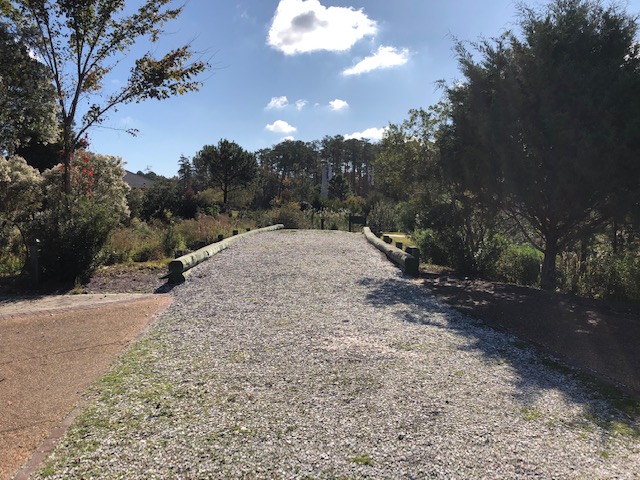
Pictures of Great Bridge Battlefield and monuments.

Announcing “Rev War Roundtable with ERW” on Zoom!

On April 19, 1775, Massachusetts militia and minutemen responded to the call of British Regulars, “redcoats” marching from Boston to the town of Concord. What ensued was the “shot heard around the world” at the North Bridge in that town. What that shot signified was the changing course from words to war, that would define the relationship between 13 British North American colonies and Great Britain.

Now, 245 years later, Emerging Revolutionary War will turn that war back into words with its inaugural Rev War Revelry Zoom series. On Sunday, 7 p.m. EST, tune in to listen and watch historians from Emerging Revolutionary War discuss in an informal setting this momentous day in American history. Other topics are welcomed that pertain to the American Revolutionary War era as well.

As the title of the Zoom series relates, this will be similar to a tavern talk, much like the talks and information sharing rendezvous that went on in the 18th century, in places like Boston, where the road to revolution gained momentum as ales and spirits flowed. Thus, grab your favorite beverage, rest assured that ERW historians will be doing the same and join us, virtually, in our tavern Sunday evening.

The Sons of Liberty in Kentucky

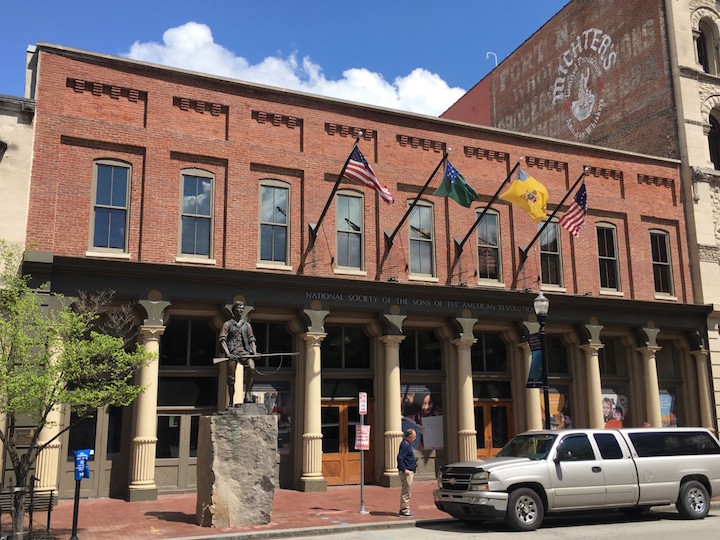
In Louisville, Kentucky, earlier this month, I paid a visit to the Louisville Slugger Factory and Museum downtown. Across the street, I was pleasantly surprised to see a marvelous statue of a minuteman.

Sons of American Revolution Statue

The plaque on the back reads

Sons of Liberty—1775

To Honor the History
of
Philadelphia Continental Chapter
1901

Pennsylvania Society
Founded 1893

By its Compatriots
2009

The statue stands outside the headquarters of the National Society of the Sons of the American Revolution. “Located along Main Street’s Museum Row in downtown Louisville,” the society’s website says, “the Sons of the American Revolution is the leading male lineage society that perpetuates the ideals of the war for independence.”

Sons of American Revolution Museum

The statue was publicly unveiled in November 2015. According to the Louisville Courier Journal, “The 800-pound, 8-foot high bronze statue of the Minuteman holding a musket rests upon 19,000 pounds of quarried Kentucky limestone, material specifically requested by the artist James Muir.”

Announcing the First Emerging Revolutionary War Symposium!

Mark your calendars for September 28, 2019!  Emerging Revolutionary War is excited toPrint announce that we are partnering with Gadsby’s Tavern Museum and The Lyceum of Alexandria, VA to bring to you a day long Symposium focusing on the American Revolution.

GTHomepageExterior(1).jpg
Gadsby’s Tavern Museum

Alexandria is George Washington’s hometown and we feel is a great place for us to start this new endeavor. Historic “Old Town” Alexandria is home to dozens of museums and historic sites as well as great pubs, restaurants and shops. Gadsby’s Tavern Museum is the premier 18th century tavern museum in the country and is host to the famous annual George Washington Birthnight Ball.  The Lyceum: Alexandria’s History Museum will be our host location. Today The Lyceum serves as the City’s history museum and is a center of learning through lectures, demonstrations and exhibits.

This year’s theme is “Before They Were Americans”  and will highlight several topics

Lyceum_017_720x483_72_RGB
The Lyceum

about the years leading up to the American Revolution. Our speakers include: Phillip Greenwalt, Katherine Gruber, William Griffith, Stephanie Seal Walters and Dr. Peter Henriques as the keynote. Registration will open on July 1, 2019 through AlexandriaVA.gov/Shop or by calling 703-746-4242. Stay tuned as we highlight each of our speakers and their topics.


Captain John Ashby

Emerging Revolutionary War welcomes guest historian Travis Shaw. 

Part One

As he looked northward across the open ground in front of his position, Captain John Ashby could see the advance guard of the British army moving steadily closer. They came on in a loose, open line, taking time to return the fire of Ashby’s men. Made up of red-coated light infantry and their German counterparts, the rifle-armed Jaegers, the advance guard were the cream of the Crown forces – men chosen for their fitness, marksmanship, and ability to endure hardship. Ashby and his men were veterans, so they must have known they’d be in for a fight. As the battle intensified around him, one wonders if Captain Ashby’s thoughts turned to home. The Brandywine Valley of Pennsylvania was a long way from his native Virginia Piedmont.

The Crooked Run Valley in northern Fauquier County looks much as it did when John Ashby lived there two centuries ago (Author_s photo)
The Crooked Run Valley in northern Fauquier County looks much as it did when John Ashby lived there two centuries ago (Author’s photo)

John Ashby was born in 1740 in northwestern Fauquier County, among the foothills of the Blue Ridge Mountains. The son of Robert Ashby and Rosanna Berry, he grew up at Yew Hill, the family estate that lay just a few miles from the Gap that bears the family’s name to this day[1]. John’s uncle and namesake, Captain “Jack” Ashby commanded a company of Virginia rangers during the French and Indian War, where he made the acquaintance (and drew the ire) of a young George Washington[2]. Continue reading “Captain John Ashby”

Dr. Prescott, Love & War

Love brought Dr. Samuel Prescott, a practicing physician, to the town of Lexington on the night of April 18, 1775. The young doctor was courting Ms. Lydia Mulliken, when the alarm of the British soldiers marching from Boston went out to the local militia. Lydia’s brother was one of those called to gather.

Love. That emotion also drew Dr. Prescott back toward his hometown of Concord—this time to alert friends, neighbors, and family members of the urgent news of the evening. En route, Dr. Prescott along with Paul Revere and William Dawes, alerted the countryside of the moving British troops. After being vetted and vouchsafed as a true friend of liberty, Dr. Prescott rode posthaste to his hometown, where his word carried greater weight.

paul_revere
A artist’s interpretation of Paul Revere’s (or maybe William Dawes or Dr. Samuel Prescott)’s ride to warn the Massachusetts countryside. (courtesy of VFW)

Continue reading “Dr. Prescott, Love & War”

Two Riders….Gage Gathers Information

As British General Thomas Gage and his American Whig (or Patriot) antagonists squared off in Boston and the surrounding towns, information gathering became the key to success. Both sides had created networks of spies, but the advantage was clearly in favor of the Whigs. During the winter 1774-1775, groups such as the Sons of Liberty had established a complex spy network within Boston comprised of a system of riders that spread information and “alarms’ quickly. The Committee of Safety and the Massachusetts Provincial Congress relied on this network to stay informed of what was going on in Boston and the British intentions. Continue reading “Two Riders….Gage Gathers Information”

An Account of April 19, 1775

“the Country was an amazing strong one; full of Hills, Woods, stone Walls, & c., which the Rebels did not fail to take advantage of, for they were all lined with People who kept an incessant fire upon us…”

From the diary of Lieutenant Frederick Mackenzie who was part of the 23rd Regiment–the Royal Welch Fusiliers that survived the ordeal of April 19, 1775. He would keep a diary until the early 1790’s and chronicled his experiences in the American Revolutionary War. His account on April 19, of the retreat from Concord is most descriptive. The British did not just take the brunt of the firing as the marched hurriedly back toward Boston and safety, but;

“as we did too upon them, but not with the same advantage, as they were so concealed there was hardly any seeing them: in this way we marched between 9 and 10 miles, their numbers increasing from all parts…”

The column was led by Lieutenant Colonel Francis Smith and had been tasked by General Thomas Gage, British military leader in North America, to root out the military supplies being stored in Concord by the colonials. The mission, albeit supposedly secretive, did not remain so for long, and the colonials got word out to the countryside. After initial firing at Lexington Green and then at the North Bridge in Concord, the British had to march back through the countryside, facing arriving militia and minute men.

“while ours was reducing by deaths, wounds, and fatigue; and  we were totally surrounded with such an incessant fire as it is impossible to conceive; our ammunition was likewise near expended.”  

IMG_7229
Modern-day view along Battle Road, the route the British column retreated back toward Boston on (author collection)

Luckily, for Mackenzie and the other struggling British officers and rank-and-file, on a rise in the ground, outside the town of Menotomy, was a relief column, ready to provide a few moments’ respite.


“I hope my visit to Boston will do good…” Confederate Colonel John S. Mosby and American Revolution

A version of this post appeared in the Emerging Civil War blog on August 17, 2018.

396781_3669473495948_5063264_n
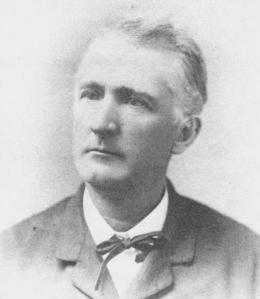
John S. Mosby, photographed here as a Federal civil servant

Those who know me know of my “interest” in famous Confederate partisan, John S. Mosby. Ok, some would say “love affair,” but either way, I grew up reading about Mosby and his exploits during the Civil War. It was not until later in my life that I started to read about the most interesting part of Mosby’s life—not his time in the war, but his time AFTER the war.

Mosby had a deep interest and passion in American history and you can see that on a trip that Mosby took north in April 1906 to one of the sacred sites of America’s founding: Boston, Massachusetts. In a 1906 letter to his friend Sam Chapman (a former member of Mosby’s Rangers), Mosby describes his visit and the many ironies (as a southerner) he experienced. Continue reading ““I hope my visit to Boston will do good…” Confederate Colonel John S. Mosby and American Revolution”

Ankle Deep In Blood: The Jason Russell House

Emerging Revolutionary War is honored to welcome back historian Katie Turner Getty. Biography of Ms. Getty is below the post. 

On April 19, 1775, the placid farm of fifty-eight-year-old Jason Russell of Menotomy erupted into carnage when he, along with eleven other Americans, were shot and bayonetted by British soldiers in his home and yard.

Image1-KTGetty
Jason Russell House (author collection)

As American militia and minutemen poured in from surrounding towns, the British—fatigued yet furious—found themselves under increasingly heavy musket fire. As they pulled back from Concord and retreated to Boston, the main column passed near Russell’s house which stood near the battle road. Russell had just returned home after secreting his family at a nearby farm. Unbeknownst to him, American minutemen and British soldiers would soon converge upon his property and a desperate battle would occur within the walls of his own house.

Earlier that day, twenty-six-year-old Gideon Foster had set off from Danvers with a company of minutemen. The men had set a scorching pace and made the sixteen mile journey to Menotomy in four hours, running half the way.[1] Upon arriving, Foster’s men joined others from Lynn, Beverly, Salem, Dedham, and Needham.[2]  Some took cover behind trees and others in Russell’s yard, where a breastwork was constructed out of shingles.

Image3-KTGetty
The Fight at the Jason Russell House, bicentennial painting by Ruth Linnell Berry (1974). Appearing with permission from the Arlington Historical Society.

The men focused their attention on the approaching main column of British troops and fired upon them. Capt. Israel Hutchinson, a seasoned French and Indian War veteran, warned that flank-guards would likely be traversing the fields alongside the road[3], helping the main column to pass unmolested. But before the men could reconsider their position or move to a more defensible location, the flank-guard was upon them, trapping the men against the main column.

In a frantic search for cover, many of the men bolted into Russell’s house. Jason Russell, too, attempted to dash inside but was slowed by his lame leg.[4] He was shot twice and fell on his doorstep. The soldiers tore inside the house in hot pursuit of the men, bayonetting Jason Russell’s body eleven times as they passed.

Once inside the house, the Americans had no choice but to fight for their lives in rooms with no egress, in very close quarters, against raging, bayonet-wielding soldiers. It was a bloodbath. With two rooms on the bottom floor, a narrow stairwell, and two rooms on the top floor, Jason Russell’s house offered very little refuge.  Soldiers outside the house hailed musket fire into the windows.

Image2-KTGetty
Sign depicting what happened at the Jason Russell House on April 19, 1775

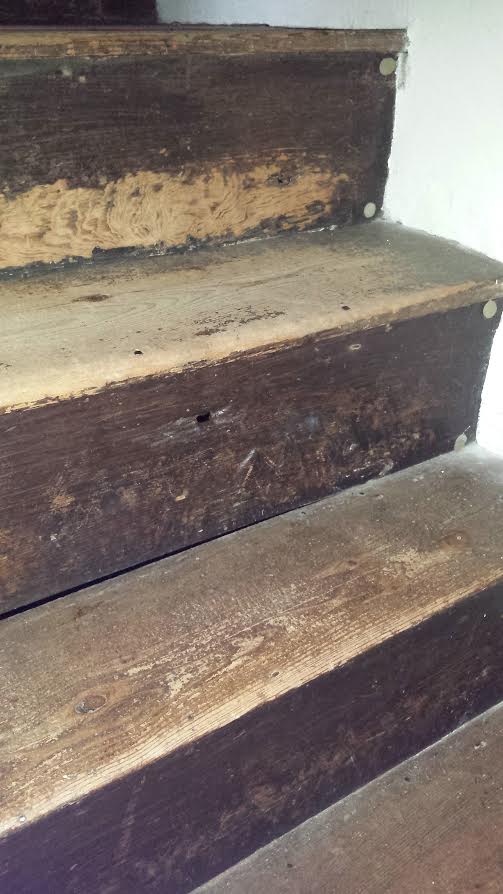
With nowhere else to go, several men rushed into the cellar. What at first would seem to be an ill-advised hiding spot turned out to be the only sanctuary that Russell’s home could offer. Taking position near the bottom of the stairs, the men raised their muskets and shot dead the first soldier who descended.[5] Any other soldiers who attempted to follow were met with blazing musket fire. Holes left by musket balls are still visible in the stairwell, attesting to the firestorm.

Soon, the house grew quiet. All of the men who had sought safety in the house had been killed, with the exception of the men who took refuge in the cellar. The British ransacked the house then left.[6]

In 1835, sixty years after the bloodbath at Russell’s house, a memorial was erected in Danvers to commemorate the townsmen who lost their lives in Menotomy that day. Danvers lost the second highest number of men, after Lexington[7], and all of them at Jason Russell’s house. Foster, the commander of the company of minutemen who had ran halfway to Menotomy, was by then the last surviving Danvers veteran of the war. Aged eighty-six, he addressed the crowd assembled for the dedication of the monument and recounted the events of April 19th:

On that morning, more than one hundred of my townsmen hastened to the field of battle…ready to offer their lives on the altar of their liberties. Seven of those who thus started in the prime of life and vigor of manhood, ere that day’s sun descended in the west, were numbered with the dead.[8]  

Foster called the dedication of the memorial “One of the happiest days and most pleasing events of my life.”[9]

In total, twelve Americans were killed at Jason Russell’s house.  Jason’s wife, Elizabeth, returned home to find her husband dead. He and the other fallen Americans, their bodies riddled with musket balls and slashed by bayonets, had been laid out on the floor in the kitchen, the blood from their wounds pooling around them. Elizabeth later said that “the blood in the room was almost ankle deep”.[10]

Image4-KTGetty
Musket ball damage to the staircase of the Russell House


*Biography: Katie Turner Getty is a lawyer, history enthusiast, and lifelong resident of Boston. She holds an A.A. from Bunker Hill Community College in Charlestown, Massachusetts, a B.A. in History from Wellesley College, and a J.D. from New England Law Boston. She can often be found exploring historic sites both on and off the Freedom Trail.

*Sources*

The Jason Russell House is located at 7 Jason Street in Arlington, Massachusetts. Their website is http://www.arlingtonhistorical.org/visit/jason-russell-house/ 

[1] Daniel P. King, An Address Commemorative of Seven Young Men of Danvers. (Salem, 1835), 28.

[2] Arlington Historical Society http://www.arlingtonhistorical.org/learn/articles/the-battle-of-menotomy/

[3] J.W. Hanson, History of the Town of Danvers (Danvers, 1848), 107.

[4] Samuel Abbot Smith, West Cambridge 1775, 3rd ed. (Boston, 1864),  38. https://archive.org/details/westcambridge17700smit

[5] Ibid., 38.

[6] Ibid.

[7] Hanson, 91.   

[8] King, Appendix, 27.

[9] King, 28.

[10] Smith, 39.