Engagement at Osborne’s Landing, VA

During the Revolutionary War, the individual states formed their own navies for local defense and military operations.  These state navies existed simultaneously with the Continental Navy. Like many state navies, Virginia’s began when the war started and there was a need to defend the state’s coastline and waterways, just as troops were organized to defend its land. The Virginia State Navy patrolled the Chesapeake Bay, provided security on its rivers, and even went to Europe and the Caribbean to bring back supplies.

After several years of inactivity, by 1781 the war had returned to Virginia. British troops occupied Portsmouth and used it as a base for raids. Governor Thomas Jefferson scrambled to get the state’s defenses ready.

British forces under General Benedict Arnold capture the fledging capital of Richmond, where he dispersed local militia and destroyed supplies. Arnold withdrew to the British base at Portsmouth, but the redcoats would soon be back in the area.

Marching south with reinforcements from New Jersey was General Lafayette. By late April he reached Hanover Court House, and continued on towards Richmond. 

On April 8 General Phillips from Portsmouth up the James River to City Point. From there they moved on to Petersburg. The town was an important crossroads, port, and supply base for the Continental army. Generals Friedrich Von Steuben and Peter Muhlenberg had been gathering militia here, and they made a stand just south of the town on April 25. The British drove the defenders back, and the Americans retreated to Richmond. Phillips followed, intending to again capture the state capital.

As part of the British advance, General Arnold with the 76th, 80th, and some Jaegers (German riflemen) and Queen’s Rangers moved towards Osborn’s Landing on the James River. They arrived on April 27 and incredibly, won a naval battle without a navy!

Osborn’s Landing was a wharf about a dozen miles south of Richmond on the west bank of the James River. Assembled here were several merchant ships and the entire Virginia State Navy- nine warships with severely understrength crews. Across the river on the eastern bank were local militia from Henrico County.

This sketch of the engagement was drawn by British officer John Simcoe

Arnold sent a message to the American commander (whose identity is not recorded), “offering one half the contents of their cargoes in case they did not destroy any part.” The nameless American commander sent word, in answer, “We are determined and ready to defend our ships, and will sink them rather than surrender.” With that Arnold took them up on their offer.

The Queen’s Rangers and Hessian Jaegers charged down to the wharf, while the two British infantry regiments provided covering fire. Arnold also deployed two 3-pound and two 6-pound guns, which opened fire on the American ships “with great effect.” The Tempest became a primary target, and the Jaegers advanced, “by a route partly covered with ditches, within thirty yards of her stern.” The rifle fire prevented the crews from properly manning their guns on deck.

British artillery fire severed the rigging of the Tempest, and she began to drift, so the crew abandoned the ship. The other warships were also taking fire, and their crews abandoned them as well. Along with the Tempest, the other large warships lost were the Renown and the Jefferson.

The British destroyed the entire Virginia State Navy, and captured twelve private ships with 2,000 hogsheads of tobacco, flour, rope, and other supplies- all without a single ship of their own in the fight.

Phillips arrived at the town of Manchester, opposite Richmond, and Arnold’s forces joined them after moving up from Osborn’s. The British prepared to cross the shallow river and take the capital for the second time in three months. Yet the arrival of Lafayette on the high ground above the river convinced the British to turn back.   

There are few reminders of the Revolution in the Richmond-Petersburg area. Today the site of Osborn’s Landing is inaccessible. Across the river, on the eastern shore, is a county boat landing and picnic area, with historic markers about the engagement. Ironically, Governor Thomas Jefferson’s grandfather, also named Thomas Jefferson, was born at Osborne’s Landing in 1677.
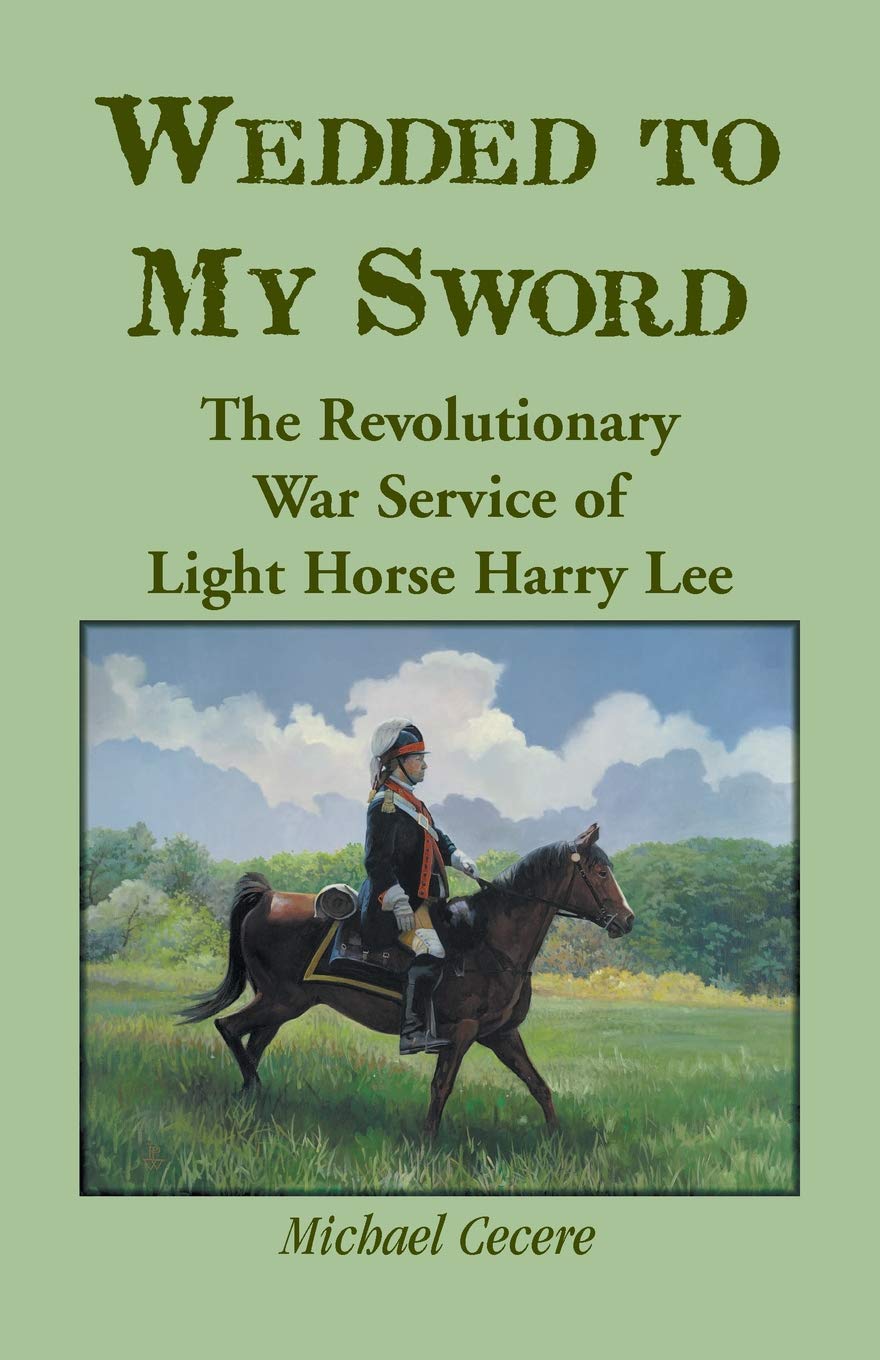
“Rev War Revelry” Light Horse Harry Lee Discussion

On January 29, 1756, Henry Lee III is born at Leesylvania Plantation in Prince William County, Virginia. Part of the prestigious Lee family of Virginia, his father was a cousin of Richard Henry and Francis Lightfoot Lee, two brothers who signed the Declaration of Independence.

Henry Lee would blossom into one of the better cavalry commanders in the American Revolution, earning the nickname, “Light Horse Harry” Lee because of his accomplishments. With January being his birth month, Emerging Revolutionary War welcomes historian and author Mike Cecere, who will discuss his book, “Wedded to my Sword, The Revolutionary War Service of Light Horse Harry Lee.”

Cecere, former high school and community college history teacher is the author of thirteen books on the American Revolution, most focused on aspects of the colony of Virginia and/or her native sons.

This Sunday we hope you spend some time joining us on the next installment of “Rev War Revelry’ as we discuss the Lee that was born in January and became a military hero of the American Revolution. This historian happy hour will be live on our Facebook page at 7 pm EST.

(Yes, we do know there is another Lee that is born in January and plays a prominent role in history).

The Traitor Returns

Westover Plantation, the beautiful Georgian-style colonial home once owned by Virginia’s Byrd family, sits atop a high bank, overlooking the James River. Located in Charles City County, Westover is a mere 25 miles from the Virginia state capital of Richmond. It was here, on January 4, 1781, that a visitor would arrive who ultimately would set Richmond “on its ear”; he was the infamous traitor, Benedict Arnold.

Westover Plantation

Throughout January 2021, Richmond National Battlefield Park, in partnership with Historic St. John’s Church Foundation, will commemorate what has come to be remembered as Arnold’s Raid through a series of three virtual presentations that will premiere on the Facebook channels of both organizations as well as on YouTube. The presentations will air on January 5, 10, and 17, all at 1:00PM. 

In his first assignment as a general officer in His Majesty’s service, the newly minted Brigadier General, Benedict Arnold, sailed south from New York in late December 1780, heading to the Chesapeake Bay. The force he commanded numbered around 1,600 and was quite impressive, being comprised of both regular and loyalist troops. Upon reaching the Chesapeake, Arnold seized smaller craft that would take his strike force up the James River. Ultimately, his target would be Richmond, the new state capital of Virginia. Thus far in the Revolution, Virginia had played a critical role in the war effort in terms of supplying men and material. Knocking Virginia out of the war, therefore, could greatly aid Britain in ending the conflict. The destruction of its capital city could hasten that end. On January 4, 1781, Arnold would land his troops at Westover Plantation and begin the 25-mile march to Richmond.

Back in the 21st Century, Rangers of Richmond National Battlefield Park came to the site of beautiful Westover Plantation on the frigidly cold morning of December 26 to begin filming the presentation called “The Raid”, which will air on January 10.  This video will center on Arnold’s activities before, during, and after his visit to Richmond and feature several sites around the city that figured prominently in the story. Joining the Rangers at Westover, in the icy wind from off the river, was professional living historian, Beau Robbins, who would be portraying an officer of the 60th Regiment, Royal American Legion. As Robbins, joined by his wife, walked through the main gate of Westover, his scarlet cape fluttered about him in the wind like a comic book superhero. A few visitors roamed the site as well, at a distance; the sight of an officer in scarlet certainly turned a few heads.

Living Historian, Beau Robbins

Other sites involved in “The Raid” include Chimborazo Park, where around 200 or so local militia fired a volley and fled before Arnold’s troops on January 5, 1781, St. John’s Church, where a good portion of Arnold’s command bedded down that evening in the churchyard, and the corner of 19th and Main Streets, where once stood the prosperous City Tavern and where Arnold himself would quarter. Other living historians would likewise join us, representing the local militia, British infantry, and the German (Hessian) Jaeger Corps. Social distancing was certainly the order of the day for this specific filming.

It goes without saying that 2020 was an incredibly different and challenging year due to the appearance of the COVID-19 pandemic. Individuals and businesses alike have been hard-pressed to re-think how lives should be lived, and business conducted amid the ever-tightening restrictions on social gatherings and the importance of social distancing. The history/museum world is no different. What has changed, though, for many history-based organizations is a new dependence on virtual programming in order to meet the needs and interests of our audience. This comes as somewhat of a contrast with other years as, in the past, there seemed to be an aversion by some to utilizing virtual programs. For many, the idea persisted that visitors would choose to not visit a site in person if they had already seen that site virtually. “That’s hogwash.” Beau Robbins said as we discussed this topic at Westover. “Seeing a video of an historic site only whets my appetite to go there; to see that site for myself.” As a life-long student of American history, I tend to agree.  

Honestly speaking, nothing can replace the personal touch and connection with visitors that in-person history programs provide. For those who are able to visit a battlefield, an historic building or home, walking along with a guide and hearing the stories of that site is certainly a wonderful form of education and, hopefully, an experience to be remembered. But, what about those people on the other side of the country perhaps; people who may long to see those sites but who, realistically, will never be able to make the trip? There, I think, lies the true niche of the virtual program. It allows an historic site to share its storytelling with all who are interested. In some cases, as well, virtual programming may mean the difference between reaching hundreds vs. perhaps thousands. It’s certainly something to think about as we move forward into whatever our new “normal” will be.

“Butchered him with the greatest Barbarity” – The tragic death of Bartholomew Yates

John Trumbull’s painting depicts the mortal wounding of General Hugh Mercer, but one of those Americans mortally wounded was Lt. Bartholomew Yates.

Perhaps one of the most tragic and brutal stories from the Ten Crucial Days is the death of young Lieutenant Bartholomew Yates. Yates was an 18 year old officer in the 1st Virginia Regiment. He was originally from Gloucester County, Virginia, where his father Reverend Robert Yates was a minister of Petsworth Parish. He fought with his regiment at the Battle of Harlem Heights and at Trenton and Assunpink Creek.

However, he met his gloomy end at Princeton. The fighting on the fields south of the New Jersey town was brief but bloody. The 1st Virginia Regiment was in General Hugh Mercer‘s brigade that was the first engage the British at Princeton. The British 17th Regiment of Foot and Mercer’s men slugged it out in musket volleys in the William Clarke orchard. Shortly after the opening of the battle, Mercer discovered his 350 man brigade was greatly outnumbered and out matched. He ordered his men to retreat as the British lowered their bayonets and charged at Mercer’s men. Mercer’s men broke and ran. The British fell upon those Americans who were wounded or left behind.

Major John Fleming, commanding the 1st Virginia Regiment, had just ordered his men to dress their ranks when he was shot and killed. Mercer, on foot as his horse had been wounded, drew his sword and prepared to fight to the death. The British soldiers clubbed him on the head and bayoneted him seven times, mortally wounding him.

Yates was among those killed in the William Clarke orchard in a most brutal manner that many witnesses remembered. Captain John Chilton of the 3rd Virginia wrote, “Lieut. Yates had got a slight wound in the thigh which threw him into the hands of the enemy who immediately butchered him with the greatest Barbarity.” Dr. Benjamin Rush, who would treat many of the wounded after the battle described Lt. Yates’s death in terrifying detail:

“he received a wound in his side, which brought him to the ground. Upon seeing the enemy advance toward him, he begged for quarters; a British soldier stopped, and after deliberately loading his musket, by his side, shot him through the breast. Finding that he was still alive, he stabbed him in thirteen places with his bayonet; the poor youth all the while crying for mercy. Upon the enemy being forced to retreat, either the same or another soldier, finding he was not dead, struck him with a butt of a musket on the side of his head. He languished a week in the greatest anguish, and then died (I declare it upon my honour, as a man and a physician) of the wounds he received after he fell and begged for quarter.”

Continue reading ““Butchered him with the greatest Barbarity” – The tragic death of Bartholomew Yates”

“The year is over, I am heartily glad of it and hope you nor America will ever be plagued with such another.”

After reading this title you may assume this is a quote about the year 2020, but this is actually a quote from financier of the Revolution Robert Morris in a letter to George Washington describing the year 1776. While the year 1776 started with much promise and hope with the capture of Boston and the passage of the Declaration of Independence, the second half of the year saw the Patriot cause nearly destroyed.

After losing New York City and a long string of battles, Washington’s Continental Army had shrunk from more than 23,000 men to just around 5,000 by December. Washington breathed life into the dying cause at Trenton on the day after Christmas, defeating a Hessian garrison.  This glimmer of hope was almost crushed by the fact that most of his army’s enlistments expired on January 1st, and his army was on the verge of dissolution. As General Cornwallis and a large British army marched towards Washington and his army at Trenton, Washington needed to convince his veterans to hold on. It led to one of the most dramatic moments of the Revolution, which occurred on New Year’s Eve, 1776.

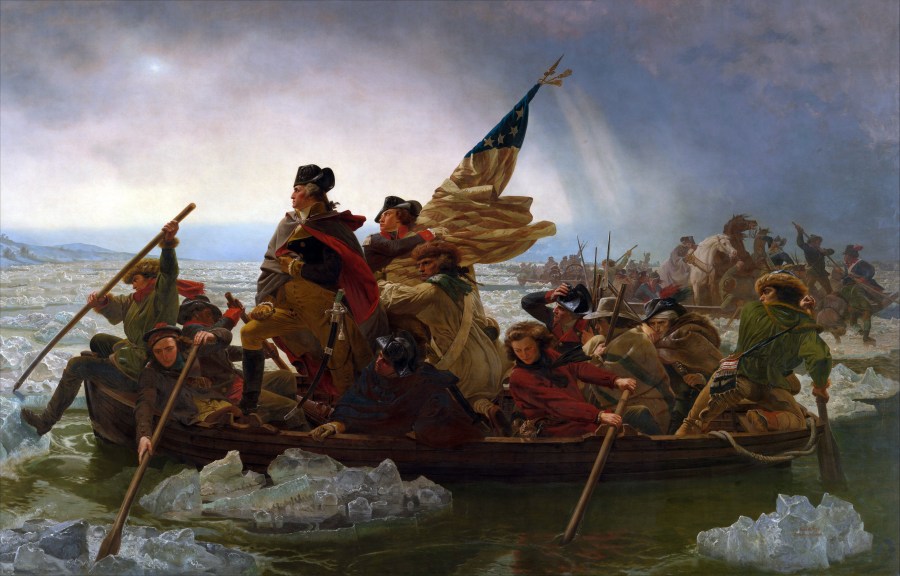
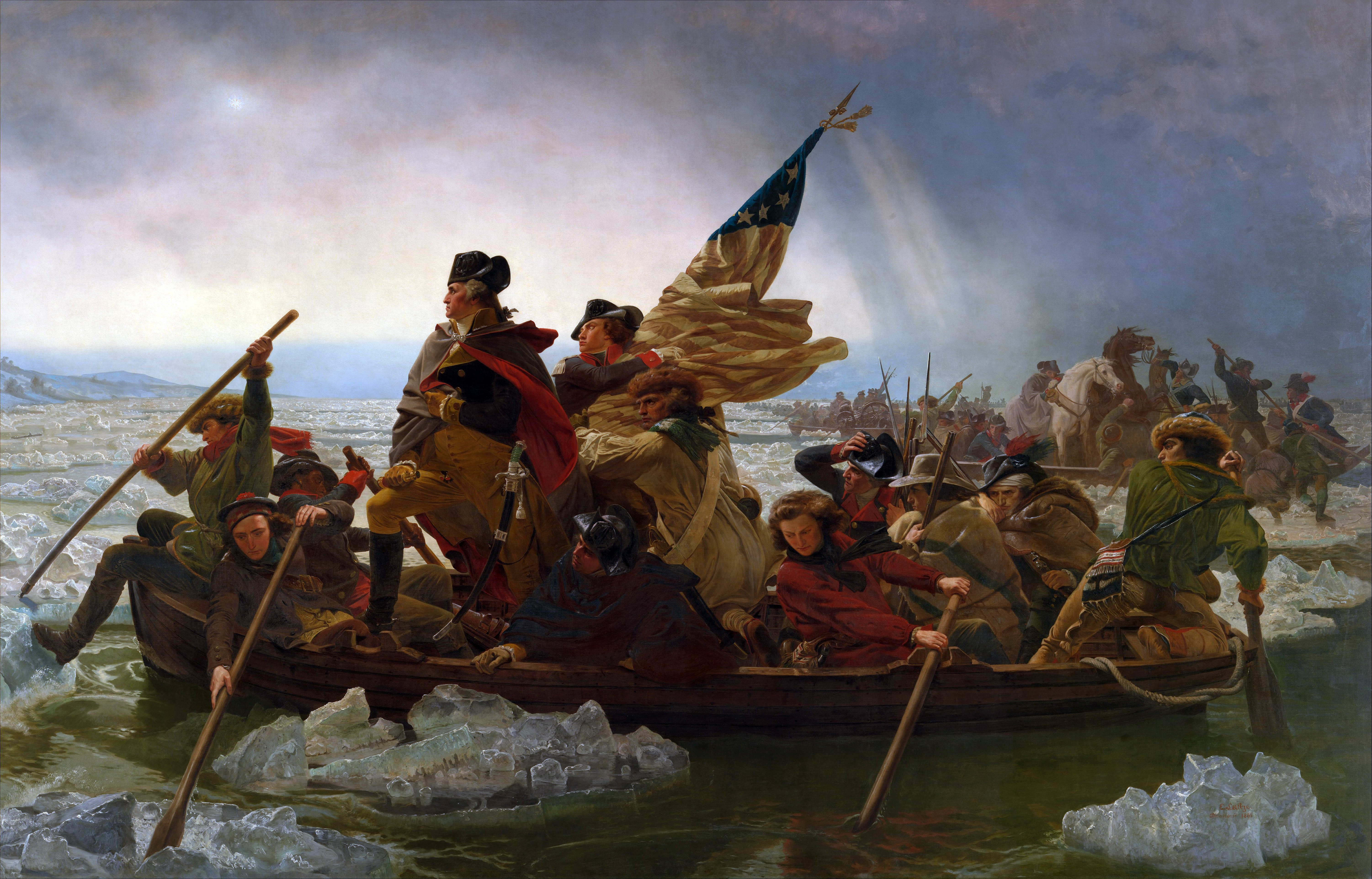
Washington receiving a salute at Trenton.

While many of Washington’s brave men believed they had done their duty, at this moment, they were needed more than ever before. All day on December 31, 1776, Washington’s generals appealed to the soldiers through impassioned speeches to reenlist. Washington authorized an exorbitant $10 bounty to those men who agreed to remain. Despite all these exhortations, very few men were agreeing to stay on. Finally, in one of the most affecting scenes of his life, Washington himself personally appealed to the patriotism of the men who had campaigned by his side.

Washington paraded Gen. John Sullivan’s and Gen. Nathanael Greene’s divisions just outside Trenton. He entreated the men to stay on just a few weeks more. He asked those who wished to reenlist to move forward, but at that point no one moved. Sergeant Nathaniel Root of the 20th Continental Regiment (Connecticut) remembered that the men were “worn down with fatigue and privation” and had their “hearts fixed on home.” Washington, pleading with his brave soldiers wheeled his horse in front of the men and declared to them:

“My brave fellows, you have done all I asked you to do, and more than could be reasonably expected; but your country is at stake, your wives, your houses and all that you hold dear. You have worn yourselves out with fatigues and hardships, but we know not how to spare you. If you will consent to stay only one month longer, you will render that service to the cause of liberty and to your country which you probably never can do under any other circumstances. The present is emphatically the crisis which is to decide our destiny.”

Moved by their commander’s words, more than two hundred of these men stepped forward to stay on and fight. The combination of patriotic pleas and hard currency helped persuade many more to stay. Washington retained a force of about 3,000 men from his army. These veterans would prove invaluable in the coming days, and some of them would tragically pay the ultimate price in the coming days.

America has persevered through many terrible years, and we shall again. The men who persevered in the winter of 1776-1777 give us hope. Happy New Year, from all of us at Emerging Revolutionary War!

To learn more about the campaign that saved the Revolution, check out my book: Victory or Death: The Battles of Trenton and Princeton or consider joining us on a tour of the actual sites in November.

“Rev War Revelry” Discusses the Ten Crucial Days

On December 27, 2020 at 7 p.m. Emerging Revolutionary War historian Mark Maloy will sit down and talk with experts on the Ten Crucial Days campaign of 1776-1777 for the last “Rev War Revelry” for 2020.  Mark Maloy (author of Victory or Death: The Battles of Trenton and Princeton) will be joined by Larry Kidder (author of Ten Crucial Days: Washington’s Vision for Victory Unfolds), David Price (author of The Road to Assunpink Creek) and Roger Williams (Co-founder of TenCrucialDays.org) to talk all things Ten Crucial Days.  You can watch this discussion live on our Facebook page.

Everyone has heard about how Washington crossed the Delaware River on Christmas night in 1776, but now you can learn the fuller story. We’ll be talking on the 244th anniversary of the actual Ten Crucial Days, which occurred between December 25, 1776 and January 3, 1777. We’ll discuss the important events that occurred and look at some of the myths, misconceptions and lesser-known people involved. Additionally, we’ll talk about the sites where these important actions occurred and what you can see there today.

So, grab your favorite drink, this Christmastime season, and settle in to learn more about the ten days that saved the Revolution and changed the course of American history.

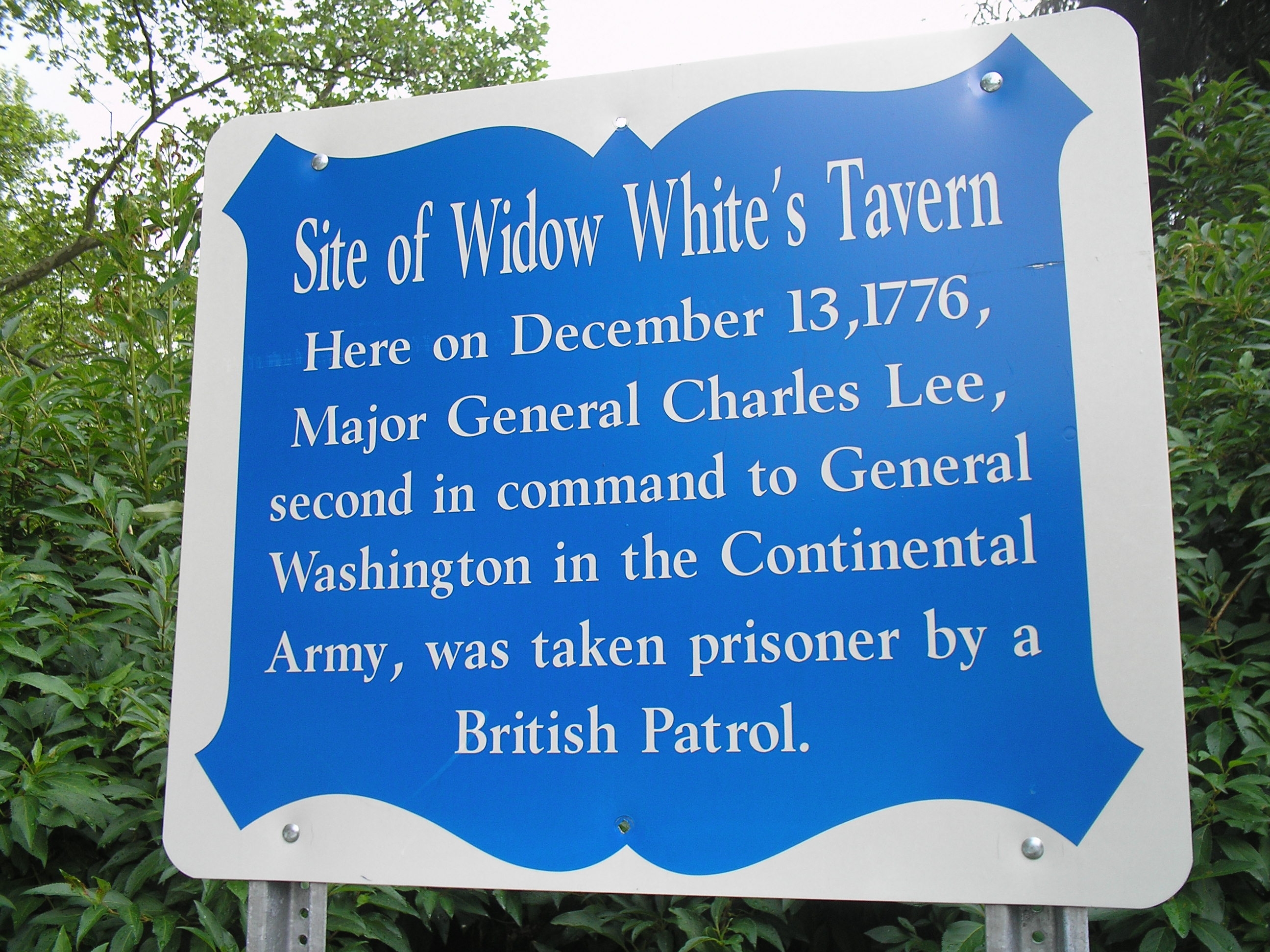
Lee’s Plight at the Widow White’s: The Capture of Major General Charles Lee, December 12–13, 1776 – 244 Years Later

December 1776 was one of the darkest months in American history. The American Revolution was on the brink of collapse. New York City had fallen, George Washington’s Continental Army was disintegrating before the country’s eyes, and the British Army under Sir William Howe was steamrolling its way across New Jersey toward the Delaware River—the only barrier preventing Howe from squeezing the life out of the rebellion.

Following the fall of Forts Lee and Washington along the Hudson River the previous month, the Continental Army fled from the British in two major wings. Washington, commanding just 3,000 men, hastily made his way across the northern part of New Jersey in an attempt to get over the Delaware and into Pennsylvania. Major General Charles Lee, who the commander in chief described as, “The first officer in Military knowledge and experience we have in the whole army….,” commanded the other wing—7,000 men at White Plains situated above New York City in case Howe attempted to head north. Lee was eccentric and erratic, but was by far the American commander with the most military experience and knowledge at this early stage in the conflict, as Washington had admitted. This could not, however, protect Lee from the enemy.

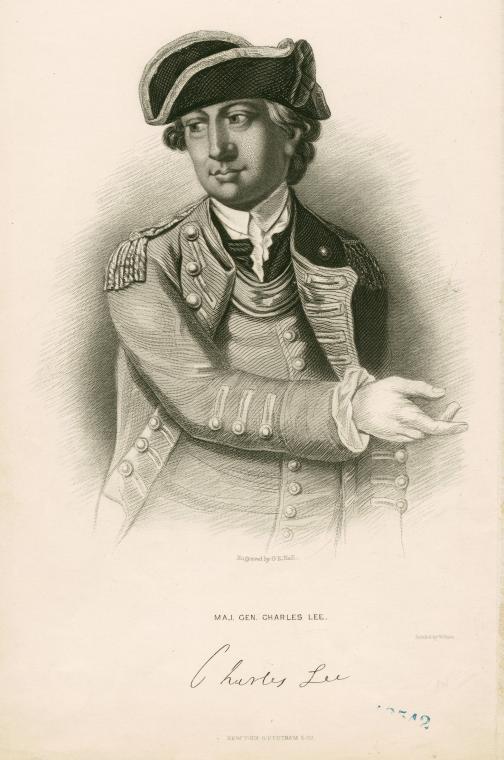
Major General Charles Lee (1732-1782), the Continental Army’s second in command. New York Public Library Digital Collections

On multiple occasions at the end of November and in early December, Washington asked, requested, and then ordered Lee to bring his command into Pennsylvania so the army may be reunited. Lee hesitated, drug his feet, and then began to grow fond of the idea of having his own independent command in New Jersey away from the reigns of his superior, whose abilities he doubted. While Washington waited, Lee wrote to Congress on December 8 that he planned to stay east of the Delaware River and “annoy, distract, and consequently weaken [the British] in a desultory war.” On December 10, his command marched into Morristown, New Jersey, and two days later moved south west to Bernardsville. It was here, that Lee decided to search for more suitable conditions for a general to make his headquarters for the evening. He found what he was looking for three miles to the east in Basking Ridge at the two-story Widow White’s Tavern. With him, he took his aide, Major William Bradford, two French volunteer officers, and fifteen guards who situated themselves around the building. That evening, Major James Wilkinson, General Horatio Gates’s aide, rode to White’s Tavern with a dispatch for Lee from his superior.

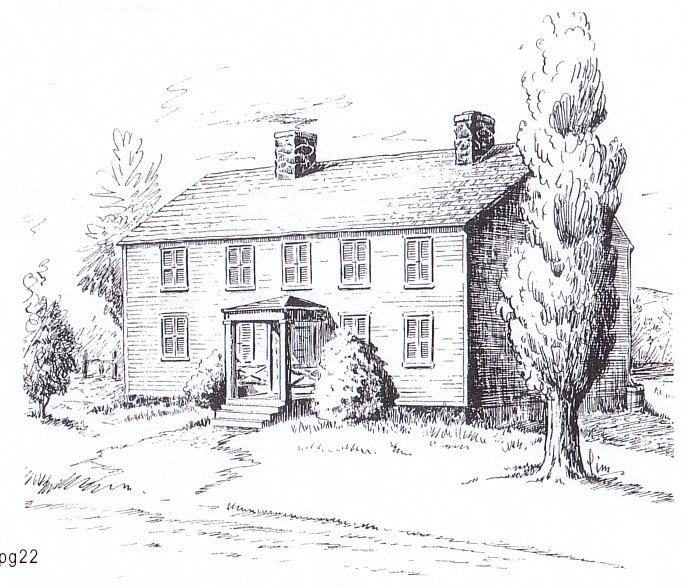
The Widow White’s Tavern, Basking Ridge, NJ.

While Lee and his party got themselves comfortable that night, British dragoons were galloping about Central Jersey trying to find out all they could about Lee’s command’s whereabouts. Lieutenant Colonel William Harcourt, 22 year old Cornet Banastre Tarleton, and thirty or more horsemen of the 16th Dragoons had left General Charles Cornwallis’s headquarters at Pennington earlier in the day and rode willy-nilly to Hillsborough on their intelligence gathering mission without any success. They made their camp there in a house that was lit on fire in the middle of the night, forcing them to make a hasty escape and sleep within a hay barn. Early the next morning, they mounted up and continued on their task. Tarleton and several other dragoons were sent ahead of the rest of the group.

As the sun rose, the two groups headed in the direction of Morristown, scooping up several rebels along the way, but only receiving sketchy information about the enemy’s location. Near Basking Ridge, their luck changed as a rider from Gen. Sullivan was intercepted who had just returned from Lee’s headquarters. He led Tarleton and Harcourt within sight of White’s Tavern. Harcourt quickly formulated his plan of action—Lee was there, and he was going to capture this grand prize. Young Tarleton was ordered to rush the guards at the front of the structure, while he took his party around the back to surround and cut off their escape. It was 10 a.m.

As the dragoons prepared to make their attack, Lee was still inside White’s Tavern. Even though his command had begun to march out of Bernardsville, he chose to stay behind and finish breakfast and dictating a response to Wilkinson for Gates. His response was a clear shot at Washington: “… entre nous [between us], a certain great man is damnably deficient—He has thrown me into a situation where I have my choice of difficulties—if I stay in this Province [New Jersey] I risk myself and army and if I do not stay the Province is lost forever … unless something which I do not expect turns up we are lost—our counsels have been weak to the last degree….” Lee had no idea of the risk he was actually facing at that moment.

Shots rang out from outside after Lee finished his message. Tarleton and his dragoons swept out through the woods and violently fell upon the general’s guard. “I went on at full Speed,” Tarleton later recounted, “when perceiving 2 [guards] at a Door and a loaded Waggon; I push’d at them making all the Noise I cou’d. The [guards] were struck with a Panic, dropp’d their arms and fled. I order’d my Men to fire into the House thro’ every Window and Door, and cut up as many of the Guard as they cou’d.” Within minutes the fire ceased and the cornet demanded Lee and everyone inside the tavern to surrender or he set fire to it and kill them all. Lee was upstairs during the fighting hoping and watching for reinforcements. They would not come. Recognizing the inevitable, he sent Maj. Bradford outside to inform Tarleton that he would surrender.

The Capture of General Lee in Basking Ridge, NJ. NYPL

In the wake of the skirmish, Bradford, Wilkinson, and one of the Frenchmen managed to make their escape. Lee, however, would not be so fortunate. After surrendering himself to Harcourt, he was taken back to Pennington, sent to New Brunswick, and eventually to New York City for confinement. He would not be paroled and returned to the Continental Army for nearly sixteen months. The American army and the status of its cause for independence which it fought and bled for would be much different then.  

Marker at the Site of Widow White’s Tavern at the intersection of South Finley Avenue and Colonial Drive, Basking Ridge, NJ. The Historical Marker Database. http://www.hmdb.org.

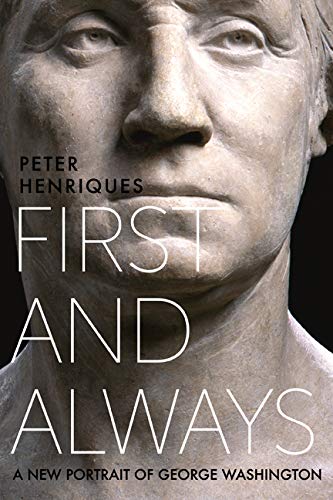
Dr. Peter Henriques Book Talk

On December 13, 2020 at 7 p.m. Emerging Revolutionary War historian Mark Maloy will sit down and talk with preeminent George Washington historian Dr. Peter Henriques to discuss his latest book about the indispensable man of the Revolution, First and Always: A New Portrait of George Washington.  Peter Henriques is Professor of History, Emeritus, at George Mason University and gave the keynote address at the inaugural Emerging Revolutionary War Symposium in May of 2019.  You can watch this discussion live on our Facebook page.

George Washington is without a doubt the most important man in the story of America’s founding.  Henriques has studied Washington for decades and in 2006 published a book Realistic Visionary: A Portrait of George Washington.  Rather than a biography that covers everything in Washington’s life, both Realistic Visionary and now First and Always are “portraits.”  They are broken up into individual stand-alone essays and delve in depth into some of the most interesting and at times controversial aspects of Washington’s life.  Among these are Washington’s relationships with his mother, fellow Founding Fathers, and slavery.  The result is a deeper and fuller understanding of who George Washington really was.

To get a signed copy of Dr. Henriques new book First and Always, you can send $27.95 to 13704 Heritage Valley Way, Gainesville, VA, 20155.

Additionally, we will be talking with Dr. Henriques on the 221st anniversary of the final illness of George Washington.  Washington became ill on December 13, 1799 and died late in the evening on December 14, 1799.  Henriques is an expert on the death of George Washington and the author of a book The Death of George Washington: He Died as He Lived that explores the final days of George Washington, so we will also discuss Washington’s death. We hope you are able to join us! If you miss the live talk, you will still be able to watch it on either our Facebook page or YouTube page in the future.

“Rev War Revelry” Author Discussion: Eric Sterner – “Anatomy of a Massacre: The Destruction of Gnadenhutten, 1782”

Gnadenhutten. Pronounced with a silent “G” does not smoothly roll of the tongue. Nor is it a historical event that most people are aware of. Cue Eric Stener, historian with Emerging Revolutionary War, contributing historian to both the Journal of the American Revolution and Emerging Civil War while conducting a career in government and public policy, specializing on national security and aerospace.

And now specializing on the Massacre at Gnadenhutten. His latest publication, part of the Journal of American Revolution Books is a November 2020 release that examines the March 8, 1872 massacre of peaceful Native Americans under the tutelage of missionaries from the Church of the United Brethren. Conducted by western settlers, the atrocity caught the attention of revolutionaries such as Benjamin Franklin who wrote, “the abominable Murders committed by some of the frontier People on the poor Moravian Indians, has given me infinite Pain and Vexation.”

Although “ample incidents of good and evil on March 8, that summation does not explain what brought murderers and victims together on the banks of the Muskingum River in today’s Ohio.”

For that reason we turn to the next “Rev War Revelry” this Sunday, at 7 p.m. EST on our Facebook page as we discuss his latest work with author Eric Sterner. For more information or to purchase your copy of his book, click here.

We look forward to you joining us this Sunday for the next historian happy hour!

Dills Bluff: A Sign of the End

Yorktown, of course, wasn’t the end of the Revolutionary War. It wasn’t even the end of military action.

Take, for instance, the battle of Dill’s Bluff on James Island, outside Charleston—the last military action of the Revolution in South Carolina. The engagement took place on Nov. 14, 1782.

Today, nothing remains of the battlefield, which is marked only by a single two-sided sign. Continue reading “Dills Bluff: A Sign of the End”