The Ring Fight and the Emergence of Andrew Pickens

While the Second Continental Congress met in the early summer of 1776, colonists in the far away backcountry of South Carolina faced a threat from a perennial foe, the Cherokees. While delegates debated a declaration of independence, war parties struck settlements between the Broad and Saluda Rivers in the Ninety Six District. In response to these raids, militia Major Andrew Williamson mustered his Ninety Six regiment. Augmented by militia from the Carolinas and Virginia, he commenced a campaign against the Cherokee villages along the eastern face of the Blue Ridge.

General Andrew Pickens of South Carolina

Williamson struck at Esseneca on August 1. The colonials sustained twenty casualties but forced the warriors to abandon the village. Over the course of the next week, Williamson moved further into enemy territory. Rather than engage his force, the Cherokees retreated before the advance. Williamson burned a number of towns including Oconee, Estatoe and Toxaway.

The regiment reached Tamassee on August 12. Once again, Williamson found the village abandoned. He decided to send out scouting parties to examine the nearby hills. One of the patrols was led by a company commander from the Long Canes region of South Carolina, Captain Andrew Pickens. He took with him about sixty men. To cover more ground, Pickens divided his group and continued on with thirty five militiamen.

Sébastien Le Prestre de Vauban

Sebastien Le Prestre de Vauban, Seigneur de Vauban, and finally Marquis de Vauban, as one of his biographies begins, is probably not a household name to many enthusiasts of American history. Especially since he died on March 30, 1707 and never set foot in the Western Hemisphere. However, he did have a nephew, Jacques Anne Joseph Le Prestre de Vauban who served as General Jean-Baptiste Rochambeau’s aide-de-camp during the war. So, there is a family connection.

Sebastien_le_Prestre_de_Vauban
Sébastien Le Prestre de Vauban (courtesy of Wikipedia)

Yet, he left his mark on places like Yorktown, Virginia, fought 74 years after his death and half-a-world away. French engineers, critical to eventual American victory in the American Revolutionary War, plied de Vauban’s craft and studied his text and learned from his exploits. Continue reading “Sébastien Le Prestre de Vauban”

Southside Revolutionary Virginia 1775 Tour – October 12, 2019

From our friends at the American Revolution Round Table of Richmond 

Tour Leader –  Dr. Patrick H. (Pat) Hannum, Professor, Joint Forces Staff College, National Defense University, Lt Col USMC (Ret)

Great Bridge
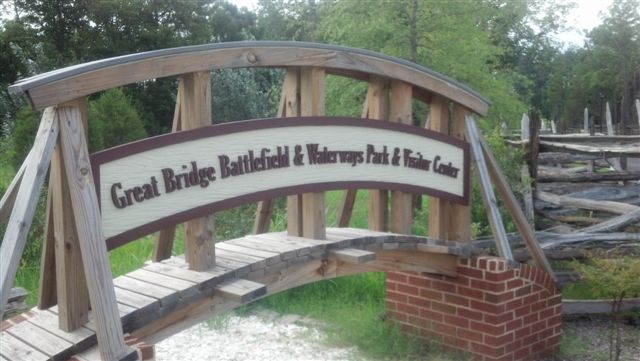
Great Bridge Battlefield (courtesy of Great Bridge Battlefield & Waterways History Foundation)

This tour will visit three critically important Revolutionary War sites, in the modern Cities of Norfolk, Virginia Beach and Chesapeake, in order to help inform the important events and explain how the Whig Government ousted the Royal Governor, Lord Dunmore, and British military forces from the State of Virginia. These events largely unfolded in the fall of 1775 and culminated with the destruction of the City of Norfolk in early 1776. Strategically important, these events led to near uncontested Whig control of the State of Virginia for three and one-half years. The British defeat at Yorktown in October 1781 traces its roots to the critical decisions and decisive actions of the Whig Governments of Virginia and North Carolina in the fall of 1775.  We will visit: Continue reading “Southside Revolutionary Virginia 1775 Tour – October 12, 2019”

Unfinished Business?

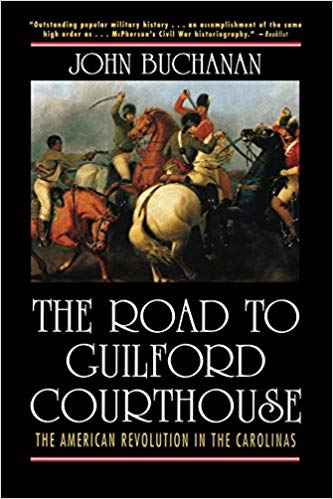
While prepping for a few summer programs I was re-reading The Road to Guilford Courthouse, The American Revolution in the Carolinas by John Buchanan.

51tpuLN5M1L._SX331_BO1,204,203,200_
The Road to Guilford Courthouse by John Buchanan

In his prologue, Buchanan states the following premise:

“But that tragedy [the American Civil War] is of far less interest than the American Revolution. The Revolution was the most important event in American history. The Civil War was unfinished business. The armies of the Revolutionary War were small but the stage global, the characters larger than life. The American Revolution was the first of the great modern revolutions, arguably the most important, and certainly the only one that did not end in tyranny or one-party rule.” 

The Civil War is the most written about subject in American history, but is it the most important? Is it just the book-end of the American Revolution and was just wrapping up “unfinished business” as Buchanan writes.

Do you agree with the author? Disagree? Conversations and perspectives help shape our recollections and allows for fresh outlooks and critical observations into our shared past. So, feel free to comment below with your thoughts, opinions, and/or insights!


Rise and Fight Again for Southern Revolutionary History

From our friends at American Battlefield Trust (ABT). To learn more about the ABT, click here.

ABT

At stake are 31 acres associated with two Southern Campaign Revolutionary War battlefields, Hanging Rock in South Carolina and Guilford Courthouse in North Carolina.

At Hanging Rock, generous battlefield preservationists like you have already secured 141 acres. These 30 acres in the part of the battlefield where the initial Patriot attack began will add significantly to the land we have saved there already.

At Guilford Courthouse, the half-acre tract at stake may be small, but it’s part of a larger strategy to deal with the modern development crowding in on this battlefield from all points of the compass. Our plan is to buy up plots of battlefield land – including small ones and those with non-historic structures on them like this one – remove all non-historic structures and restore the battlefield. The Guilford Courthouse National Military Park has generously agreed to take responsibility for demolishing and removing the house on this plot, a considerable cost that we would typically need to cover. Continue reading “Rise and Fight Again for Southern Revolutionary History”

First Shots

IMG_6846-min
Lexington Minuteman Statue , facing the route of the British advance (author collection)

We all have bucket list items that we want to check off in our lifetime. Some revolve around traveling, some may revolve around learning a new hobby or skill. We may have different categories of items. The last is true for me.

One of those categories was to see the first shots of the wars of the United States (okay and the French and Indian War, since that started the march toward independence, when looked at through the lens of history and distance). Continue reading “First Shots”

Women in War

As February turns to March, our friends at American Battlefield Trust (ABT), in honor of Women’s History Month, are starting a series on “Women in War.”

ABT

The objective of the initiative is to highlight the important role women have played in America’s conflicts, especially the wars that the Trust is actively trying to preserve the hallowed ground from. From the home-front to the front-lines, women were crucial to all aspects of the winning or sustaining the fight during the respective conflicts.

That got one historian at Emerging Revolutionary War thinking.

If you had to list the most influential women during the American Revolutionary War time period, who would top the list?

Feel free to comment below!

For information about the ABT’s month-long series click here.

Visiting the Scene of Action: Battle of Camden

A reflection on the previous month’s exploration in South Carolina.

IMG_1905 (1)August 16, 1780 would prove to be a devastating day for the American Army in the south, known as the “Grand Army” by its commander, Maj. Gen. Horatio Gates, the Hero of Saratoga. The battle between this army and that of Lt. Gen. Charles, Earl Cornwallis, in the Pine Barrens near the South Carolina town of Camden, would end in the total rout of the Americans and the destruction of the reputation of its commander. It would also temporarily leave the southern colonies without a central army to oppose the British.

On November 1, members of the Emerging Revolutionary War Era staff took a road trip to Camden, SC to research the battle, walk the battlefield and meet with local historians in preparation for an upcoming addition to our book series, on the Battle of Camden.  On the way down, we took the opportunity of visiting other sites of combat, actions that occurred prior to and after the fight at Camden. Continue reading “Visiting the Scene of Action: Battle of Camden”

Book Review: A Battlefield Atlas of the American Revolution by Craig L. Symonds

ERW Book Reviews (1)

As a young history buff, I remember well wearing out the pages of the original A Battlefield Atlas of American Revolution by Craig Symonds. Though I have no idea where that well worn out book is today, I am happy to see that Symonds has revised and re-released his encompassing atlas, published by Savas Beatie Publishing.917TV+p0UsL.jpg

Symonds, using his experience as a lifelong teacher, approaches the war from the viewpoint of an educator. Breaking the war into four parts chronologically, Symonds provides a short narrative at the beginning of each section giving an overview of the action in each region and year. The battle descriptions for each map are thorough and give a great account of the action and the impact each event had on the overall campaign or war effort.

Symonds should be commended for covering lesser known campaigns and battles of the American Revolution such as Valcour Island, Fort Stanwix, Oriskany, Newport, Penobscot Bay and others. This enhances the work as it shows where these battles took place and speaks to the depth that Symonds took to comb the entire continent to include these minor yet important engagements in the atlas. For many readers, this will be the first time these actions have been visualized through maps.

As in his previous work, cartographer William Clipson provides easy to read and clear maps. The maps provide a good mix of detail and broadness to appeal to the casual history buff and dedicated researcher. As in his other atlases, the text flows well with the map as Symonds has numbers in the text that relate to specific parts of the map.

Though I enjoyed this book, there are two critiques of this volume. First, the size of the text which is very small and condensed. The font style and size selected could prove to be hard for some people to read. Secondly, a few of the maps have been cropped to the point where parts of the maps and text have been cut off, making them incomplete.

This book is a great addition to any library or better yet, in the glove box of your car as you visit these battlefields. It is a perfect companion in the field that allows one to understand the action and provides just enough of an overview to fill in for those battlefields that do not have any signage or interpretation. The information is detailed enough to give you a clear understanding of the battle and campaigns and the maps provide a great visualization of the action.


George Washington’s Greatest Speech?

On the morning of March 15, 1783, George Washington strode into the “New Building” or “Temple” as the structure was referred as, to address the assembled officers of the Continental Army. He asked General Horatio Gates if he could have the floor to say a few words and when he unfolded his pieces of paper on the podium, the words lost their importance.

Why? Continue reading “George Washington’s Greatest Speech?”