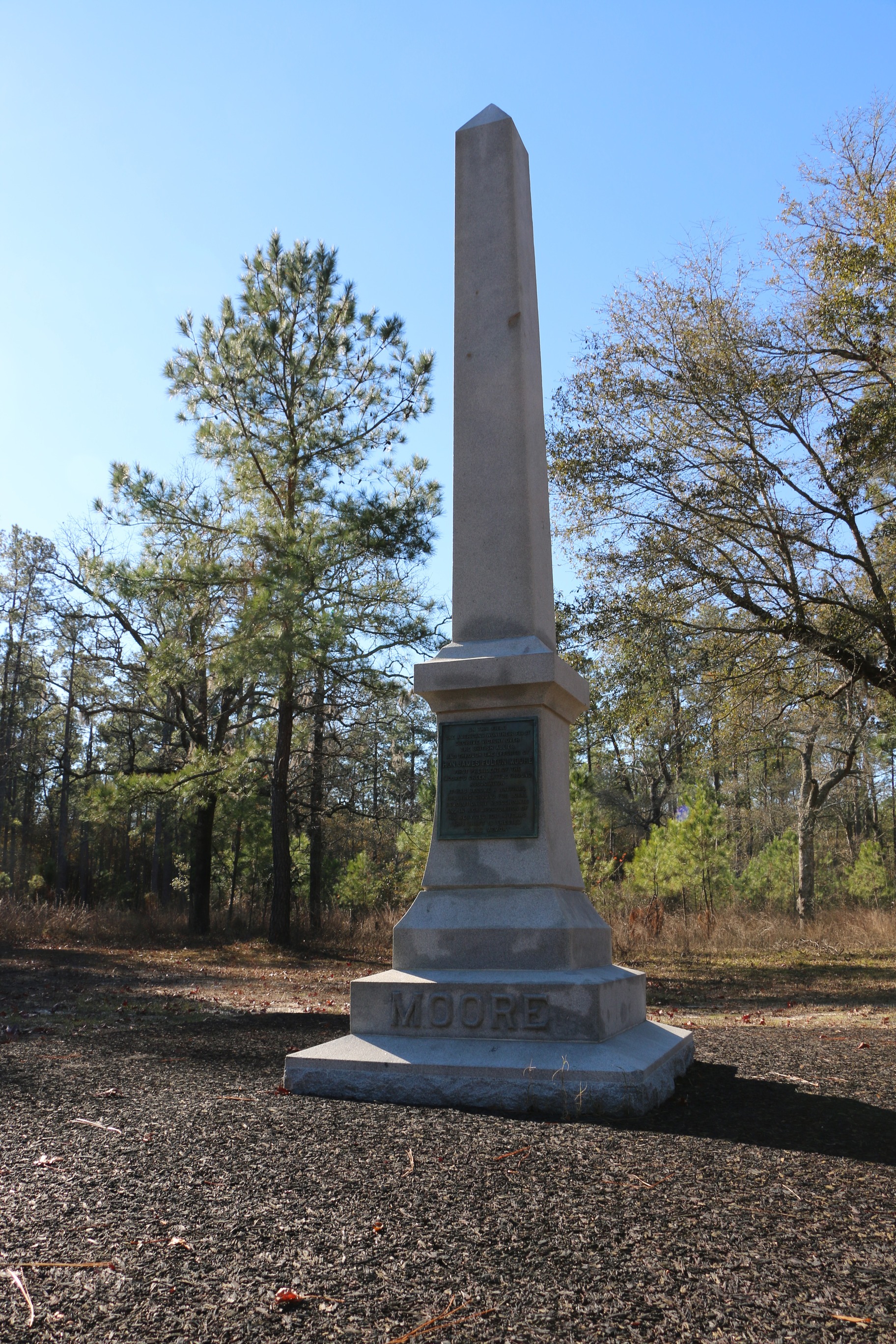
On February 27, 1776 Patriot and Loyalist forces faced off at Moores Creek Bridge in southeastern North Carolina. Loyalist forces anticipated support from a British army arriving along the North Carolina coast and planned to use this combination force to return British authority in North Carolina. Though, when help did not arrive, a mixed bag of North Carolina Patriots turned back an attack at Moores Creek Bridge. Their victory, combined with the Patriot victory at Great Bridge, VA in December 1775, solidified their control of North Carolina. Additionally, the Loyalist defeat served as a major deterrent for Loyalist support until the opening of the Southern Campaign four years later. This small action had long lasting impact on the entire war in the south.
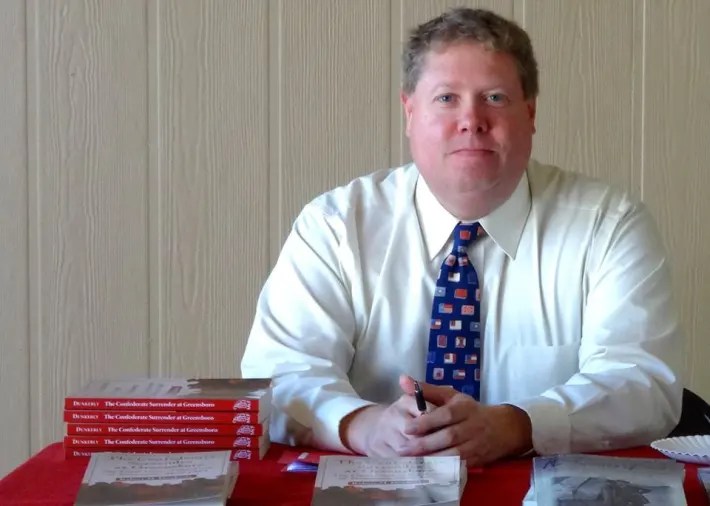
Join us this Sunday night at 7pm on our You Tube Channel ( https://www.youtube.com/@emergingrevolutionarywar8217 ) as we welcome back our own ERW historian Bert Dunkerly. Bert has extensive knowledge on the history of this battle and experience working at the battlefield itself. We will discuss the complex situation leading up to the battle and how this small battle changed the war strategy in the south. Grab a drink and join in on the discussion!
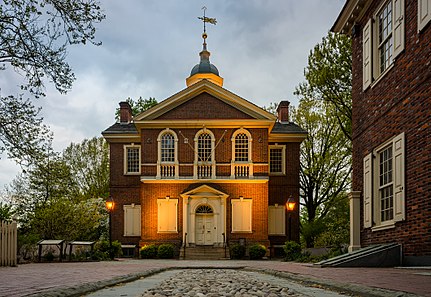
Join us this Sunday, July 7th at 7pm for our next Rev War Revelry as we continue to commemorate the 250th anniversary of the events that led to the American Revolution. We welcome Executive Director Michael Norris to discuss the historic Carpenters Hall in Philadelphia and the role it played in hosting the First Continental Congress. The First Continental Congress convened in Carpenters’ Hall in Philadelphia, Pennsylvania, between September 5 and October 26, 1774. Delegates from twelve of Britain’s thirteen American colonies attended. The Congress was a direct result of the Parliament’s reaction to the Boston Tea Party (December 1773). This gathering of colonial leaders intended to create a united front in their response to what they believed was Parliamentary over reach in the “Coercive Acts.”
Grab a drink and join us on our You Tube Channel: https://www.youtube.com/@emergingrevolutionarywar8217 Feel free to interact with the discussion by adding questions in the video chat. Once the video is over we will repost the video to our Facebook page and our Spotify account. We hope to see you then!
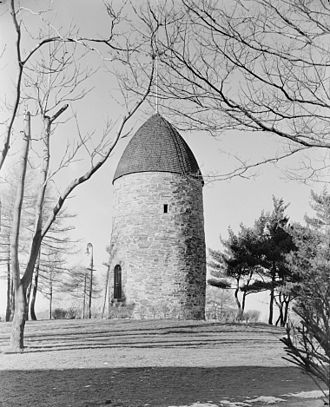
The Charlestown, now Somerville, Powder Magazinewas the focus of the September 1, 1774 Powder Alarm. The historic structure still stands today.
Join ERW this Sunday at 7pm as we welcome back historian and author J.L Bell. We will discuss the events in Boston and Massachusetts in 1774 after the passing of the now popularly called “Intolerable Acts” in response to the Boston Tea Party. A time of political, social and economic upheaval for everyone in the colony, the events that transpired had big impacts across all the colonies and set the stage for April 19, 1775. J.L. Bell is a renowned historian who operates a very comprehensive blog focused on Boston 1775 (https://boston1775.blogspot.com/ )
Grab a drink and sit back and learn about the events that rapidly progressed during 1774 towards warfare and bloodshed. J.L. Bell will provide a great insight into how things quickly deteriorated in Massachusetts and how that impacted all the colonies as a whole. Unlike previous revelries, this revelry will run live on our You Tube channel at: https://www.youtube.com/@emergingrevolutionarywar8217 . Due to new rules and regulations with Facebook, we can no longer stream our revelries live on Facebook. We hope that will change in the future. We will post the You Tube video to our Facebook page after the live broadcast. We hope to see you this Sunday, June 9, 2024 at 7pm on our You Tube Channel!
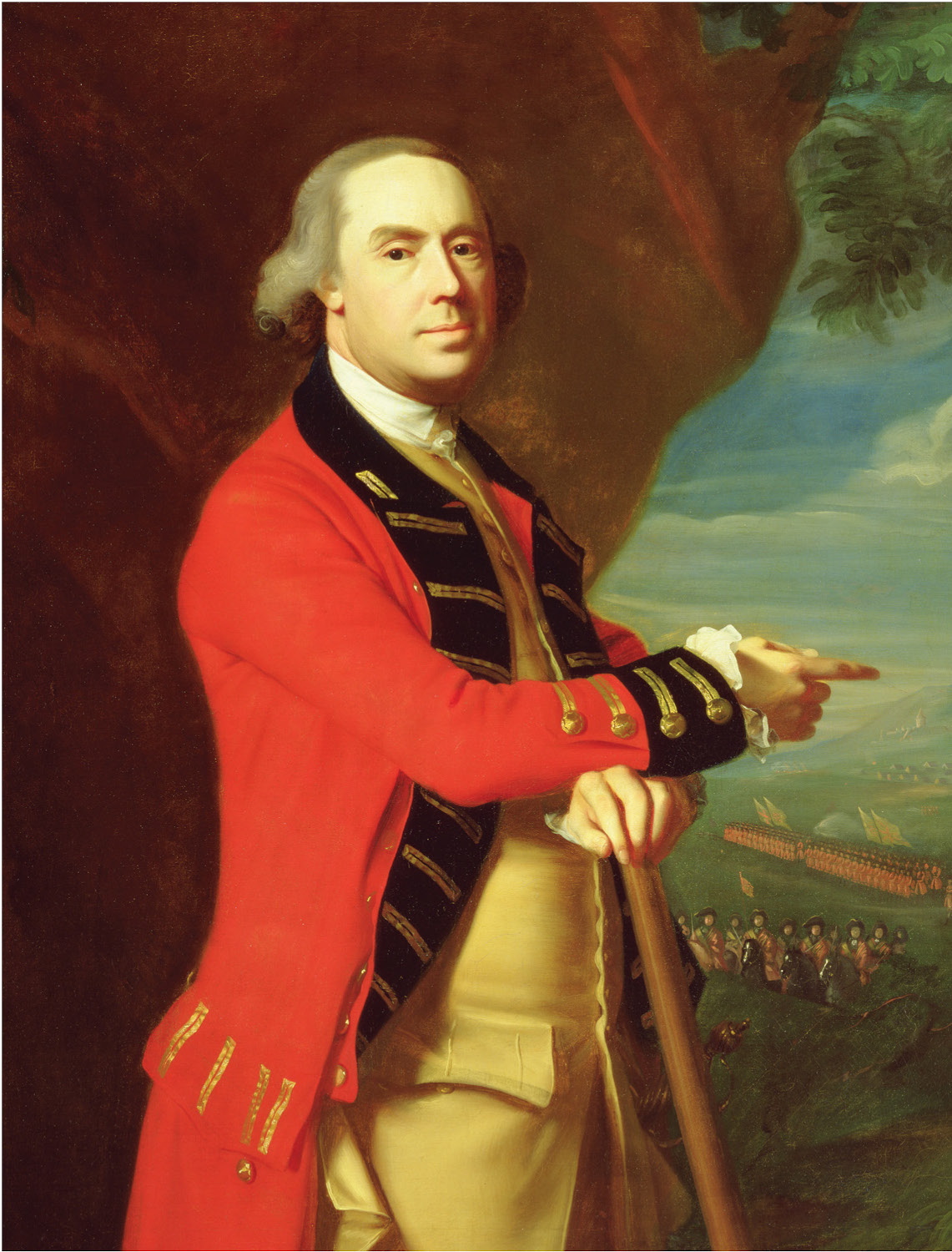
On May 13, 1774, the newly Royally appointed Governor of Massachusetts arrived in Boston. General (and now Governor) Thomas Gage was well known to the American colonists. Gage served as a Major in the 44th Regiment of Foot in the French and Indian War, most notably in the Battle of the Monongahela. When several of Gage’s officers fell, he took up temporary command of the 44th during the battle. During that time Gage got to know George Washington and both men respected each other. After the war, Gage received a promotion to Brigadier General and was appointed the military governor of Montreal.
Portrait of Thomas Gage by John Singleton Copley
Soon after, Gage became the commander in chief of all British forces in North America. He moved to New York city to administer the King’s forces in the American colonies. Gage’s popularity increased as he focused on creating peace with the Indian population along the new western border of the colonies through various treaties. Gage and his American born wife, Margaret, were well accepted into New York society. Gage always believed that the democratic spirit that pervaded the colonies were a threat to British rule. With many of the colonists accustomed to electing their own representation, he believed this created more division with the home country than making them British citizens. Gage had long believed that democracy was too rooted in colonial society. In 1772 he wrote “democracy is too prevalent in America.”
As tensions began to increase within the American colonies, Gage’s response exasperated the situation. He contracted many of the British military posts back to the colonial cities along the eastern seaboard (which in part led to the Boston Massacre in 1770). He believed a show of military strength would help put out the fires of discontent. Further, he concluded that the unrest was mostly pushed by a very small minority, not the vast majority of colonials. He underestimated how the masses would respond to his hard hand. Now Gage, who was in Great Britain when the news of the Boston Tea Party arrived, was seen as a great fit to handle the crisis in Boston. His military back ground and experience as a civil leader (and liked by many in the colonies) made him on paper an ideal candidate for Governor of Massachusetts in this unsettled time.
Many in Boston welcomed Gage when he arrived that May. Mostly because they had become so disenchanted with former Governor Thomas Hutchinson, who was completely not up to the task that faced him in 1773. The recently passed Boston Port Act (passed in March 1774, this act closed the port of Boston until the loss of the tea was paid for) grew tensions in Boston, but large segments of the population believed that those that destroyed the tea should pay for it. Soon, it was the next piece of news from Great Britain that shook the foundation of something the majority of Bay Staters took pride in, self-rule.
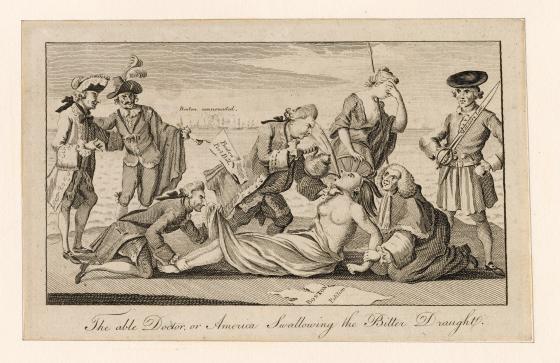
“The able doctor, or America swallowing the bitter draught,” 1774. This illustration depicts the British forcing a Native American woman (a symbol of the American colonies) to drink tea.
Word arrived of two new laws recently passed on May 20, 1774, Parliament passed the Massachusetts Government Act and Impartial Administration of Justice Act. These two acts were punitive in measure and sought to bring the colony under direct Royal control. The Government Act stated “Parliament passes this act turning the Massachusetts Council into a body of crown appointees“ (similar to other Royal colonies like Virginia) when up to then they were elected. Also, it restricted the traditional “town meeting” to just one a year. Town meetings were an essential local governing tool to not just govern localities but also to provide open communication across the colony. The Justice Act gave the governor the power to a trial to another colony or to Great Britain if he determined “that an indifferent trial cannot be had within the said province.” Judgment by one’s peers was a long-standing tradition in Massachusetts and in British law dating back to the Magna Carta. These measures essentially dissolved important aspects of the Massachusetts Charter of 1691.
Furthermore, Gage inflamed the situation more in Boston by bringing with him more British Regular troops. By the end of 1774, Gage had more than 4,000 soldiers in and around Boston. Gage could see the situation worsening but was unable to determine how to best deal with what confronted him. Whig leaders such as Dr. Joseph Warren, Paul Revere and Samuel Adams used these newly passed acts as proof that Great Britain was infringing on their rights and liberties. Using groups like the Sons of Liberty, Whig leaders began to gain great influence as many of the colonists began to turn against Great Britian. Soon many of these community organizations began to arm themselves and coordinate with the other colonies via committees of correspondence. Gage, feeling the situation was becoming dangerous wrote back to authorities in Great Britain “Affairs here are worse than even in the Time of the Stamp Act, I don’t mean in Boston, for throughout the Country. The New England Provinces…are I may say in Arms.” Events were beginning to build towards armed revolution, not just in Massachusetts, but across a more unified American colonies.
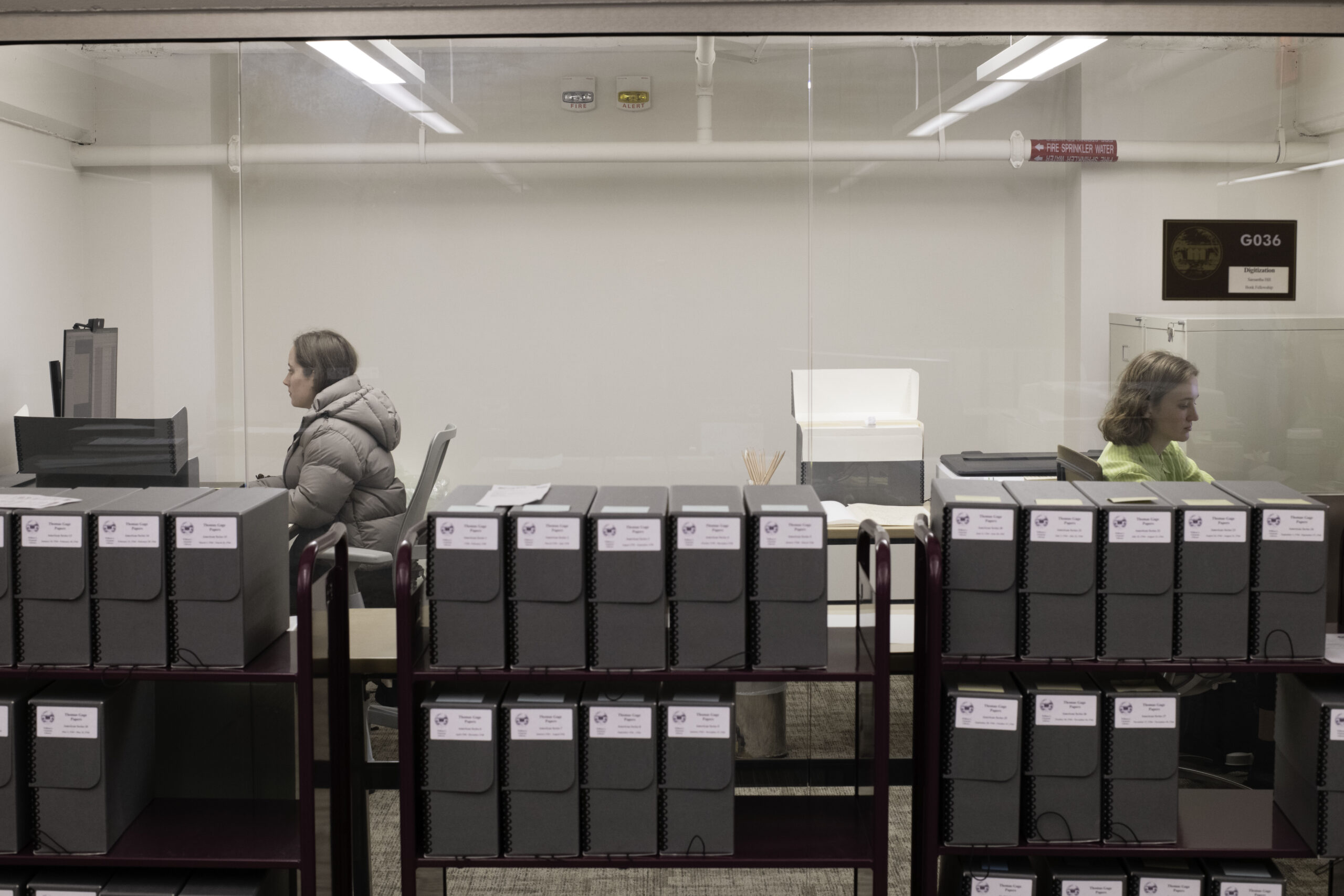
William L. Clements Library at the University of Michigan is now digitizing Gate’s papers with help from a grant of the National Endowment for the Humanities. Over the next year or so, this great resource on the colonial America will become accessible via the library’s website.
If not for his connections to some of the most famous commanders and events of 18th-century military history, British general Charles O’Hara might only get a passing mention in many history books. He still hardly gets more than that.
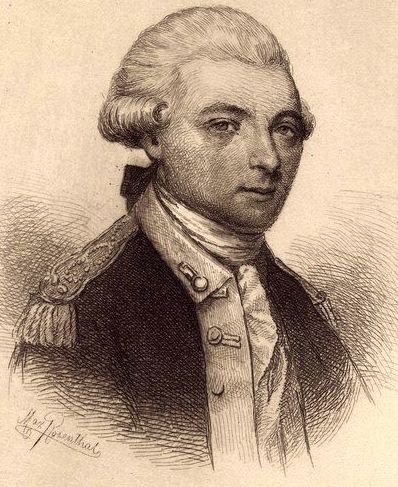
Charles O’Hara
Charles O’Hara came into this world unceremoniously as the illegitimate son of James O’Hara, a British baron. The younger O’Hara cut his teeth in military matters at the young age of 12 in the 3rd Dragoons before receiving an officer’s appointment in the Coldstream Guards. He served in an officer’s capacity in Germany, Portugal (with Charles Lee), and Africa. O’Hara was strict but liked by the men who served under him.
O’Hara’s years of military service brought him to North America in July 1778. Lieutenant General Henry Clinton appointed him to command the troops at Sandy Hook, New Jersey, to protect New York City because of his engineering skills and a recommendation from Admiral Richard Howe. Two years later, O’Hara wound up under the command of Lord Charles Cornwallis in the Southern theater. He performed ably there, leading the pursuit of Cornwallis’ army toward the Dan River in early 1781 and leading the British counterattack at the Battle of Guilford Courthouse. O’Hara led from the front and received two wounds to show for it. His nephew died during the battle.
At Yorktown, O’Hara drew the duty of surrendering Cornwallis’ army to General George Washington and Comte de Rochambeau. As the surrendering British columns approached the Allied lines, O’Hara asked to see Rochambeau. Whether this was a slight against Washington or not is unclear, but Rochambeau referred him to Washington. O’Hara apologized to Washington and explained why Cornwalls was not in attendance. Then, O’Hara handed Cornwallis’ sword to Washington, who refused it and passed O’Hara along to Benjamin Lincoln. O’Hara handed the sword to Lincoln. He looked it over, held it for a brief moment, and returned it to O’Hara. The surrender of the British army then began.
After dining with Washington following the surrender proceedings at Yorktown, O’Hara became Washington’s prisoner until receiving his exchange on February 9, 1782. He returned to England with Cornwallis’ praise and a promotion to major general. Back home in England, O’Hara fell into hard financial times from a gambling debt and ran away from them to mainland Europe. In stepped his old friend and commander Charles Cornwallis, who helped O’Hara offset the debts.
O’Hara received another promotion in 1792 to lieutenant general and lieutenant governor of Gibraltar, a post he long desired. There, misfortune found him once more when he faced the young Napoleon Bonaparte on the battlefield of Toulon. On November 23, 1793, the defeated O’Hara surrendered to Napoleon.
Labeled an insurrectionist, O’Hara found himself in prison in Luxembourg. During his nearly two years there, he befriended American Thomas Paine until his exchange in August 1795. Ironically, the man exchanged for him was the Comte de Rochambeau. He once again took the post of Governor of Gibraltar, where he died in 1802 from the effects of his war wounds suffered two decades earlier.
Despite taking part in one of the most famous events of the Revolutionary War, O’Hara has faded into general obscurity even though he bears the distinction of being the only person to surrender to both Washington and Napoleon.
He is featured regularly on the screen in The Patriot, but most people likely do not even know the character’s name or backstory. There is plenty more to be told in his story.
The Battle of Bunker Hill is routinely mentioned in the pantheon of memorable American military victories. Although myths of the engagement have obscured some of the history, much like the smoke of battle, the patriot victory on June 17, 1775, was another pivotal moment in the early stages of what became the American Revolutionary War.
To discuss the engagement, ramifications, and interpretation of the battle, Emerging Revolutionary War welcomes historian Dr. Paul Douglas Lockhart, Professor of History at Wright State and author of “The Whites of Their Eyes, Bunker Hill, the First American Army, and the Emergence of George Washington.” A full biography of Dr. Lockhart, including his other works, is at the bottom of this post.
As a teaser, this may be the first time in “Rev War Revelry” history that we mention Artemas Ward, who according to Dr. Lockhart is the “unsung hero of the battle (and indeed of 1775).” Come hear why! And full disclosure, I agree.
We hope you can join us on Sunday, January 21 at 7 p.m. EDT on Emerging Revolutionary War’s Facebook page for the next installment of the popular “Rev War Revelry.” Be ready to ask questions as you sip your favorite beverage during this historian happy hour.
Biography of Dr. Lockhart
“Paul Douglas Lockhart is Professor of History at Wright State University in Dayton, Ohio, where he has taught since earning his PhD in 1989. A native of Poughkeepsie, New York, Lockhart completed the PhD at Purdue University, where he studied military history with the late Gunther Rothenberg, the renowned Napoleonic scholar, and early modern European history with Charles Ingrao. He has seven single-author books to his credit. Four of them deal with the history of Scandinavia during the “Age of Greatness,” including Denmark, 1513-1660: The Rise and Decline of a Renaissance Monarchy, published by Oxford University Press in 2007. He is probably better known for his books on military history: The Drillmaster of Valley Forge: The Baron de Steuben and the Making of the American Army (2008), The Whites of Their Eyes: Bunker Hill, The First American Army, and the Emergence of George Washington (2011), and most recently his study of the parallel evolution of warfare and firearms: Firepower: How Weapons Shaped Warfare (2021). Wright State has awarded him the Brage Golding Distinguished Professorship and the Trustees’ Award for Faculty Excellence, the University’s highest academic honor. The Ohio Academy of History named him Distinguished Historian for 2020-21, and in 2021 he was elected to membership in The Royal Society for Danish History for his contributions to the history of Denmark, an honor rarely accorded to foreigners. He lives in Centerville, Ohio, with his family.”
As we move towards to the 250th anniversary of the Boston Tea Party, we at ERW have gotten a lot of questions with a central theme…” why was it tea that led to revolution?” Was tea so central to colonial life that it was worth risking war or was it something else? The answer is somewhere in the middle and as with most history, there is nuance to the story (and yes, tea WAS a big part of everyday live in British America).
On May 10, 1773, Parliament passed the Tea Act, this act was a way for the British government to help bail out a major corporation, the British East India Company. The British East India Company was one of the largest global companies and faced immense debt and financial trouble. Furthering their troubles, they held a large amount of tea stored in warehouses in London. The British East India Company sought a way to offload this tea, which was considered some of the best tea in the world. The company’s success was directly tied to Great Britain’s international strategy, as the company spread British influence across the globe especially in India where they basically managed the British colony. The Tea Act reduced the cost on the tea (cutting out the “middleman” in Great Britain), and now the colonists could buy the tea directly from the British East India Company.
The British colonies in North America consumed on average of 1.2 million pounds of black tea annually. In 1773, about 1/3 of the population drank tea at least twice a day. It was a common luxury among most middle- and upper-class colonists. They preferred black tea but also drank green tea. Black tea varieties included Bohea, Congou and Souchong and common green tea varieties included Singlo and Hyson. All the tea that the British East India Company sold was grown and imported from China. Tea from China was preferred by most for better flavor, but it tended to be more expensive. The North American colonies consumed a lot of smuggled tea from the Dutch, the quality of the tea was not the same but much cheaper. A large market grew for smuggled tea with most British port officials looking the other way. All of this changed when the Tea Act was passed.
Nineteenthcentury lithograph depicting a tea plantation in Qing China
Many in Parliament believed the colonists would have little opposition to this new act. They could now purchase their preferred tea for a cheaper price than the smuggled tea from the Netherlands. Unfortunately for Royal leaders, this was not the case. As word reached the colonies Whig leaders such as Samuel Adams called it nothing more than a British authorized monopoly of the tea market, cutting into the pockets of colonial merchants (though their tea smuggling business was illegal to begin with). The Tea Act also highlighted a British policy that the colonists opposed for many years, the Townshend Acts. The Townshend Acts imposed duties on imported lead, glass, paper, paint, and tea. This “tax” was payable at ports and funded the salaries of colonial judges, governors, and other government officials. This angered many colonial leaders for two reasons. First, it levied another tax on the colonists without having their own representation in Parliament. Secondly, it made the government officials more beholden to the British government (and the tax) than the colonial governments.
Whig groups like the Sons of Liberty used local taverns as places for their meetings. The most famous being the Green Dragon Tavern in Boston. It no longer stands today.
As the news of the Tea Act reached the colonies, the reaction was mixed. Whig leaders in major cities such as Charleston, New York, Philadelphia and Boston saw it as a way to reinvigorate their cause of opposing British rule. Recently things were mostly quiet with little interest by the public for protest. But now the Whig spin machine went into full affect. The Tea Act was a direct affront to colonial self-rule and economic interest. The taxes paid for the tea went to British officials in the colonies and the cheaper priced (and better quality) tea would put many American merchants out of business. Whigs were able to control the message that the Tea Act was just another way for Parliament to make money off the colonists, who did not have representation in Parliament.
As part of the Tea Act, consignees were appointed to oversee the sale of tea and the collection of the taxes on behalf of the British East India Company. As the tea began to arrive in colonial ports, public pressure was put on consignees to resign. This pressure was successful in New York, Philadelphia and in Charleston. Each of these cities were able to either stop the tea from being offloaded or, as in the case of Charleston, they confiscated the tea and didn’t allow any duties to be paid on it. All of these were direct affronts to the law but the events in Boston proved to be the most dramatic.
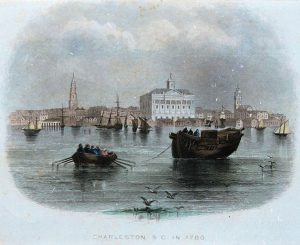
Ca, 1780 view of Charleston Harbor, and the Exchange Building where the confiscated tea was locked away by Whig leaders.
Unlike in other port cities, the consignees in Boston refused to resign. Richard Clarke, leading merchant in Boston and one of consignees faced a mob at his warehouse trying to pressure him and the other consignees to resign. Encouraged by the Massachusetts Governor Thomas Hutchinson (who had two sons serving as tea consignees) to stand their ground, the consignees refused to resign. Soon news arrived that the first ship carrying the tea, the Dartmouth, was arriving in Boston soon.
Hosting several town meetings, some hosting thousands of people, Whig leaders such as Samuel Adams, Dr. Joseph Warren and John Hancock were able to organize a strong opposition to the tea. Of course, Boston was already a tinderbox due to the “Boston Massacre” in 1770 and the large contingent of British regular troops stationed in Boston. Bostonians were reminded daily of Royal influence. The Whigs protested to the Governor to order the ships to return to England, but Hutchinson refused to do so and claimed he didn’t have that authority. Many historians believed Hutchinson, who recently had resigned as Governor and was awaiting his replacement, had grown tired and frustrated with the likes of the Whigs and Sons of Liberty in Boston and was trying to press the issue.
On November 28, the Dartmouth arrived in Boston Harbor. Captain James Hall was turned away at the first wharf he sailed too and was redirected to Griffins Wharf. Everyone knew that once a ship entered the harbor, the captain had twenty days to unload the cargo and pay the custom duties. Soon two more ships arrived at Griffins Wharf with more tea. With the Governor refusing to allow the ships to leave the harbor and local patrols watching the ships to make sure the tea was not offloaded, the stage was set for December 16th, the last day the ship’s captains had to unload their cargo.
Joseph Galloway is best known as one of the preeminent and prominent Loyalists who remained in the American colonies through the majority of the American Revolution. Prior to the colonies declaring independence, especially during the First Continental Congress, Galloway was active in the debates that decided the path forward. Besides attending and being active in the discussions in Philadelphia he penned a pamphlet entitled A Candid Examination of the Mutual Claims of Great Britain and the Colonies.
Within the pages, he called African American slavery “the dangerous enemy within” and the “natural weakness” of the soon-to-be Southern states. If a division ensued, Galloway predicted that,
“If the colonies happen to vie and try their reciprocal strength with each other, the political force of the Northern Colonies will soon destroy the opulent force of the Southern.”
Furthermore, Galloway pointed to the colonies/states of Georgia, Maryland, North and South Carolina, and Virginia as vulnerable because of the institution of slavery. In a conflict without the overarching guidance by Great Britain, the division between Northern and Southern colonies/states would lead to a domestic civil war and the possibility that African American slaves would join the Northern effort in vanquishing their former owners.
Although Galloway was writing to prop support for remaining loyal to the British crown he foreshadowed accurately the rift that plagued the independent United States. In laying out his views, Galloway quite succinctly predicted what would happen in 78 years after independence was won by the United States.
Galloway left Philadelphia when the British evacuated the city in 1778 and left for England where he would position himself in a leading role for loyalists in exiles. He never returned to the United States. His succinct prediction of the future though proved eerily accurate.
Sources:
Disunion Among Ourselves, The Perilous Politics of the American Revolution by Eli Merritt
University of Michigan, Evans Early American Imprint Collection, click here for the link.
We are excited to announce our 2024 (fourth annual!) bus tour location will be Lexington and Concord on October 11-13, 2024. Join historians Phillip Greenwalt, Rob Orrison and Alex Cain as we tour the sites associated with the beginning of the American Revolution on April 19, 1775. The tour will cover events in Lexington, Concord and sites along the “Battle Road.” Tickets are $250 per person and includes a Friday night lecture, all day tour on Saturday and half day tour on Sunday (bus tour transportation and Saturday lunch included in cost).
Join us for our FOURTH annual tour as we take on the beginning of the American Revolution just a few months before the 250th anniversary. Learn about the dramatic events that led to the first shots for the Revolution and the bloody aftermath. We will visit Lexington Green, Buckman’s Tavern, North Bridge in Concord, Battle Road including Merriam’s Corner, Parker’s Revenge and the Jason Russell House. There is no better way to experience history than to stand in the footsteps of where it happened!
Join us this Sunday night at 7pm as we welcome Glenn F. Williams, PhD to our popular Sunday night Rev War Revelry! Glenn will examine the political and economic causes of the American Revolution beginning at the end of the Seven Years War / French and Indian War through the resistance movements. He will dispel or clarify some of the popular beliefs about the grievances that eventually led the thirteen colonies to break with the Mother Country. This will be a timely discussion as we approach the 250th anniversary of the Boston Tea Party. Glenn Williams is a retired U.S. Army officer that until recently also enjoyed a “second career” as a military historian. He retired as a senior Historian after 18 years at the U.S. Army Center of Military History and 3 1/2 years as the historian of the American Battlefield Protection Program of the U.S. National Park Service.
Grab your favorite drink and tune in, we will be live so feel free to drop your questions in the live chat. If you are not able to tune in on Sunday, the video will be placed on our You Tube and podcast channels.









 Emerging Revolutionary War Era