Robert Morris: Founding Father and Revolutionary Financier

Emerging Revolutionary War welcomes back guest historian Michael Aubrecht

To call Robert Morris “a political renaissance man” would be an understatement. He was vice president of the Pennsylvania Committee of Safety (1775–76) and was a member of the Continental Congress (1775–78) as well as a member of the Pennsylvania legislature (1778–79, 1780–81, 1785–86). Morris practically controlled the financial operations of the Revolutionary War from 1776 to 1783. He was a delegate to the Constitutional Convention (1787) and served in the U.S. Senate (1789–95). Perhaps most impressive is the fact that he signed the Declaration of Independence and the Articles of Confederation and later signed the U.S. Constitution.

At the start of the war Robert Morris was one of the wealthiest men in the colonies, but he would go on to claim bankruptcy after some catastrophic decisions. To fully appreciate the contributions of Robert Morris we must go back and examine him from the beginning.

Robert Morris

Robert Morris was born on January 31, 1734, in Liverpool, England, the son of Robert Morris, Sr., and Elizabeth Murphet Morris. His mother died when he was only two and he was raised by his grandmother. Morris’ father immigrated to the colonies in 1700, settled in Maryland and in 1738 he began a successful career working for Foster, Cunliffe and Sons of Liverpool. His job was to purchase and ship tobacco back to England. Morris Sr. was known for his ingenuity, and he was the creator of the tobacco inspection law. He was also regarded as an inventive merchant and was the first to keep his accounts in money rather than in gallons, pounds, or yards.

In 1750 tragedy would once again strike the Morris family. In July Morris Sr. hosted a dinner party aboard one of the company’s ships. As he prepared to depart a farewell salute was fired from the ship’s cannon and wadding from the shot burst through the side of the boat and severely injured him. He died a few days later of blood poisoning on July 12, 1750. The tragedy had a terrible effect on Morris who became an orphan at the age of 16. Looking for a change he left Maryland for Philadelphia in 1748. He was taken under the wing of his father’s friend, Mr. Greenway, who filled the gap left by the death of Morris’ father. Raised with a tremendous work ethic Morris flourished as a clerk at the merchant firm of Charles Willing & Co. 

Following in his father’s footsteps Morris was also gifted with successful ingenuity. In his twenties he took his earnings and joined a few friends in establishing the London Coffee House. (Today the Philadelphia Stock Exchange claims the coffee house as its origin.) Morris was sent as a ship’s captain on a trading mission to Jamaica during the Seven Years War (1756-1763). He was captured by a group of French Privateers but managed to escape to Cuba where he remained until an American ship arrived in Havana. Only then was he able to secure safe passage back to Philadelphia. 

Shortly after Morris’ return to the colonies Willing retired and handed the firm over to his son Thomas who offered him a partnership. This resulted in the formation of Willing, Morris & Co. The firm boasted three ships that were dispatched to the West Indies and England importing British cargo and exporting American goods. This relationship lasted for over 40 years and was immensely successful. At one point, Morris was ranked by the Encyclopedia of American Wealth, along with Charles Carroll of Carrollton, as the two wealthiest signers of the Declaration of Independence.

As influential merchants, Morris and Willing disagreed with the changes in tax policy. In 1765, the Stamp Act was passed and was met with massive resistance. Morris was at the forefront and led protests in the streets. His fervor was so striking that he convinced the stamp collector to suspend his post and return the stamps back to their origin. The tax collector stated that if he had not complied, he feared his house would have been torn down “brick by brick.” In 1769, the partners organized the first non-importation agreement, which forever ended the slave trade in the Philadelphia region.

Morris married Mary White on March 2, 1769, and they had seven children. In 1770, he bought an eighty-acre farm on the eastern bank of the Schuylkill River where he built a home he named “The Hills.” Due to his growing reputation Morris was asked to be a warden of the port of Philadelphia. Showing his tenacity, he convinced the captain of a tea ship to return to England in 1775.

Later on, Morris was appointed to the Model Treaty Committee following Richard Henry Lee’s resolution for independence on June 7, 1776. The resulting treaty projected international relations based on free trade and not political alliance. The treaty was eventually taken to Paris by Benjamin Franklin who transformed it into the Treaty of Alliance which was made possible by the Continental Army’s victory at Yorktown in 1781. 

Scholars disagree as to whether Morris was present on July 4 when the Declaration of Independence was approved. But when it came time to sign the Declaration on August 2 he did so. Morris boldly stated that it was “the duty of every individual to act his part in whatever station his country may call him to in hours of difficulty, danger and distress.” Until peace was achieved in 1783, Morris performed services in support of the war. His efforts earned him the moniker of “Financier of the Revolution.”

Michael is the author of “The Letters of Robert Morris: Founding Father and Revolutionary Financier.

The Adams Family Memorials in Quincy’s Merrymount Park

I want to take a moment to give a shout out to the Quincy Historical Society in Quincy, Massachusetts.

For my upcoming ERW Series book on John Adams in the Revolution, Atlas of Independence, I included an appendix that highlights a number of Adams-related sites in his hometown of Quincy: his birthplace; the home he first lived in with Abigail; his later-in-life home, Peacefield; the “Church of the Presidents,” which includes his crypt; and several other cool spots.

One of the places I direct people is to Merrymount Park, which features two monuments to Adams and members of his family. The newer of the two consists of a statue of John that stands across a small plaza from a dual statue of Abigail and a young John Quincy. The distance symbolizes the distance between John and his family for much of his public life.

Sculptor Lloyd Lillie created the Abigail and John Quincy statues first, in 1997. They stood together in downtown Quincy along Hancock Street. John was installed across from them in 2001, separated by traffic. When the city redesigned downtown and created the new Hancock-Adams Commons in 2022, the statues were relocated to Merrymount Park to join an older monument already standing there.

That older monument was a little harder to investigate.

The monument itself is made from Quincy granite, a longtime staple of the local economy. A bas relief bronze tablet mounted on the granite shows John and an adult John Quincy—both as presidents—seated together for an imagined conversation with each other. An inscription reads: “Father and Son, Second and Sixth Presidents of the Nation, Statesmen, Diplomats, Patriots, and Builders of our great Republic, they labored in the vanguard of human democracy on this soil.”

Beyond that, I knew the memorial had once been moved to the site where the John and John Quincy birthplaces stand along Franklin Street, but I didn’t know when and I didn’t know when the monument came back to Merrymount. I couldn’t even find the year of the monument’s dedication or the name of the sculptor. The internet didn’t seem to know these things, and none of my reference materials referenced them.

And so it was that I reached out to the Quincy Historical Society to see if they might have anything in their archives that could help me out.

Archivist Mikayla Martin went above and beyond to assist, sending me a neat little bonanza of stuff! Since she sent me more material than I had room for in the book, I thought I’d take the opportunity to share my windfall here so that you, too, could benefit from the Quincy Historical Society’s kindness.

The memorial, as it turned out, was dedicated in 1927. The chief of staff of the United States Army at the time, Maj. Gen. Charles P. Summerall, served as master of ceremonies for the event, according to a clipping from the Patriot Ledger the historical society sent me:

Photographer Warren S. Parker captured this image of the Adams Memorial on April 18, 1929. (courtesy of the Quincy Historical Society)

The Patriot Ledger hailed the memorial’s sculptor, Bruce Wilder Saville, as “One of Quincy’s most distinguished native sons.” Saville was best known in town for another of his works, the WWI “Doughboy” Memorial that stood in front of the Coddington School. The Quincy Historical Society included Saville’s obituary from the Patriot Ledger, which I’ll reproduce below, along with a photo of the Doughboy Memorial that the society sent me.

Another newspaper clipping revealed that the $5,000 memorial was a gift to the city of Quincy from the U.S. government. In 1961, city leaders voted to move the monument to the Adams birthplaces, but when the NPS took over management of the site 1979, the city returned the monument to Merrymount Park. I’ll reproduce a newspaper article related to that, as well (see below).

Every monument and memorial has a story of its own, and I find those stories fascinating. They can tell us a lot about the people they honor as well as the people who are doing the honoring.

Please consider supporting your own local historical society (and, if you’re so inclined, please consider supporting the Quincy Historical Society while you’re at it). Organizations like this provide invaluable services to researchers everywhere, but more importantly, they carry the torch for the history in your own back yard.

250 Years Ago Today: The Battle of Great Bridge

On the cold morning of December 9, 1775, a British force of redcoats marched out of their wooden stockade and advanced towards the rebel earthworks on the southern end of the Great Bridge.  For days both sides were expecting an action, and now it was about to happen.  Royal Governor Dunmore, believing that Patriot cannon from North Carolina were on their way to drive the British from Great Bridge, sent Captain Samuel Leslie with 120 men of the 14th Regiment of Foot to drive the Patriots out with a straight frontal assault.

Leading the attack were about 60 grenadiers of the 14th Regiment of Foot under the command of Captain Charles Fordyce.  Behind them were some other British regulars, some Loyalist militia and some of Royal Governor Dunmore’s Ethiopian Regiment.  Across the Great Bridge was a long causeway with swamp on either side.  Any attack by the British would be across this this causeway with no other way to maneuver.  At the southern end of the causeway were Patriot earthworks manned by Col. William Woodford’s 2nd Virginia Regiment.  To their left were positioned some riflemen of the Culpeper Minute Men.  Out on the causeway were some Patriot pickets, including the free African American Billy Flora.

As the British advanced across the bridge, they began to engage the American pickets.  The pickets after firing for a few minutes began to pull back into the main American lines.  Fordyce and the grenadiers continued to push forward despite receiving fire from the pickets as well as the extremely accurate Culpeper riflemen.

With the American fire alerting everyone, American reinforcements advanced into the main American lines.  Lieutenant Edward Travis of the 2nd Virginia had his men hold their fire until the British advanced to point blank range.

The British grenadiers, marching forward six men abreast, hoped to rush the American position at the point of the bayonet.  When they were just 50 yards from the American line, the 2nd Virginians aimed at the British soldiers and poured a heavy fire into them.  Now the grenadiers were being hit from the flank by the American riflemen as well as from the front by the muskets of the 2nd Virginia.  The fire was galling.  Fordyce removed his hat and waved it enjoining his men to follow him into the American works.  Fifteen paces from the American lines, Fordyce fell at the head of the column with 14 musket balls in his body.

Colonel Woodford remembered that “perhaps a hotter fire never happened or a greater carnage.”  The British continued to engage for a little, but as more Patriot troops filled the American earthworks, and as the British sustained heavy fire the from the front and the right, they decided to pull back across the Great Bridge.  They left behind a grisly scene, as the British suffered 17 men killed and 44 wounded or captured, about 50% of the attacking force.  The Americans only had one man wounded in the hand.

The day had been an important Patriot victory.  Dunmore was forced to cede the ground.  William Woodford wrote to Patrick Henry that “the victory was complete . . . This was a second Bunker’s Hill affair, in miniature, with this difference, that we kept our post and had only one man wounded in the hand.”

To learn more about this significant, though often overlooked battle of the Revolutionary War, be sure to visit our Facebook page today, as historians from Emerging Revolutionary War will be filming videos in real time from the battlefield.  Also, check out our Rev War Revelry with historian Patrick Hannum where we discuss in more depth the battle.

Holiday Kick-Off from Mt. Vernon….Place, Baltimore

On the first Thursday of December, the unofficial kick-off to the holiday season takes place in Baltimore, Maryland. This year, on December 4, was the 54th year of the celebration. The 178-foot-tall George Washington Monument, the construction of which started on July 4, 1815, and was completed in 1829, is graced with lights and fireworks that light up the city sky about the figure of Washington.

On both sides of the Washington Monument stand two equestrian statues grace the grounds. One is of a local American Revolutionary War hero, John Eager Howard, born in Baltimore County in 1752. On the other side is honorary American, the Honorable Marquis de Lafayette.

If you peer to the left of the Howard equestrian statue photo, you see the spire of a Victorian Gothic church. Built in 1872, the church stands on the location of the Howard residence. On January 11, 1843, Francis Scott Key died there, at the age of 63.

If you celebrate, Emerging Revolutionary War hopes your holiday season kicks off grandly as well. If I may, if looking for a gift for that history enthusiast, check out the Emerging Revolutionary War store here. Or the Emerging Revolutionary War Series, here.

Emerging Revolutionary War Merchandise!

It has taken us awhile, but after a few years of our followers and tour goers asking for the ability to purchase ERW merchandise, we have finally created a store via Cafe Press. You will find a few clothing options along with hats, bumper magnets and it wouldn’t be an ERW store without a pint glass.

It is nothing fancy, but wanted to give everyone the ability to purchase some ERW bling and we appreciate the support as you wearing our logo is the best marketing we can hope for! We have tried to keep the prices low and all proceeds go to support our operations (website and podcast support etc..).

You can visit the merchandise store here: https://www.cafepress.com/shop/EmergingRevolutionaryWar

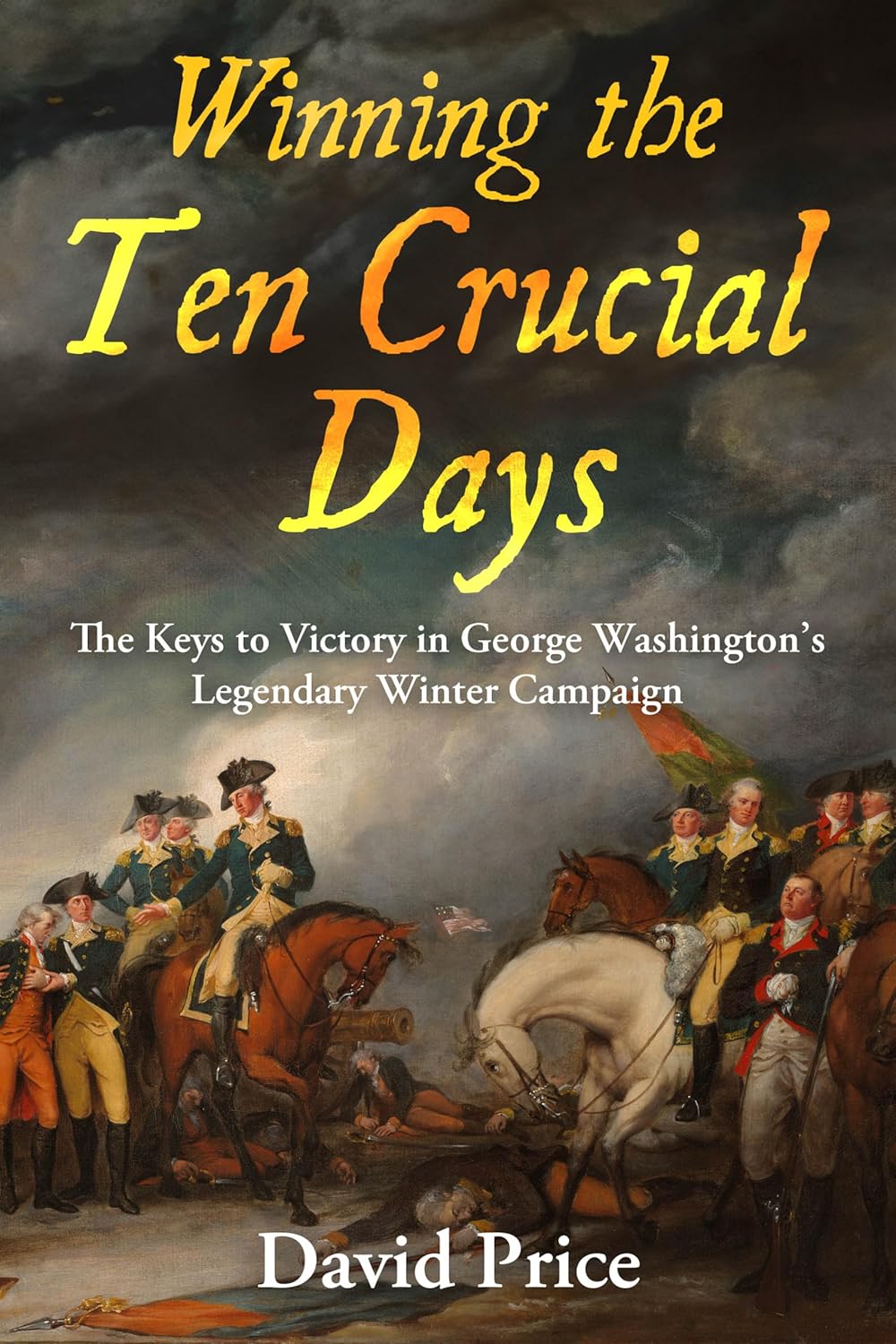
Coming Soon: A Dear-Bought Victory: The Battle of Bunker Hill and the Siege of Boston 1775-1776

We’re excited to share one of the 2026 new releases in the Emerging Revolutionary War Series. Published by Savas Beatie, a sneak peek, including the cover, is below.

About the Book:

“I wish we could sell them another hill at the same price we did Bunkers Hill,” Nathanael Greene wrote to the governor of Rhode Island after the battle of June 17, 1775.

Actually fought on Breed’s Hill outside Boston, Massachusetts, the battle of Bunker Hill proved a pyrrhic victory for British forces. Confident in their ability to overwhelm the New England militia that opposed them, long lines of neatly uniformed British infantry and marines swept uphill toward a quickly built earthen redoubt defended by a motely collection of farmers, shopkeepers, and tradesmen.

“Don’t fire until you see the whites of their eyes!” the colonials urged each other—or did they?

By the end of the fight, the British gained the summit and Colonial forces scattered. One of the patriot leaders, Dr. Joseph Warren, lay dead—one of the first martyrs of the American Revolution. But for the British, the scene was far, far worse: it would be the greatest number of casualties they would ever suffer in any battle of the American Revolution. As British General Henry Clinton commented afterward, “A few more such victories would have surely put an end to British dominion in America.”

The siege of Boston would continue, but the sobering lesson of Bunker Hill changed British strategy—as did the arrival soon thereafter of a new commander-in-chief of Continental forces: General George Washington.

In A Dear-Bought Victory, historians Daniel T. Davis and Phillip S. Greenwalt separate the facts from the myths as they take readers to the slopes of Breed’s Hill and along the Boston siege lines as they explore a battle that continues to hold a place in popular memory unlike few others.

About the Authors:

Daniel T. Davis is the Senior Education Manager at the American Battlefield Trust. He is a graduate of Longwood University with a bachelor’s degree in public history. Dan has worked as a Ranger/Historian at Appomattox Court House National Historical Park and Fredericksburg and Spotsylvania National Military Park. He is the author or co-author of numerous books on the American Civil War. This is his first co-authored book in the Emerging Revolutionary War Series. Dan is a native of Fredericksburg, Virginia.

Phillip S. Greenwalt is the co-founder of Emerging Revolutionary War and a full-time contributor to Emerging Civil War. He is a graduate of Wheeling Jesuit University with a bachelor’s degree in history along with graduate degrees in American History and International Studies and Leadership from George Mason University and Arizona State University, respectively. He is the author of co-author of seven books on the American Revolutionary and Civil Wars. Phill has worked for the National Park Service for the last 17 years at numerous natural and cultural sites. He is a native of Baltimore, Maryland.

Rev War Revelry: The Disagreeable Situation: American Prisoner Administration in the Revolutionary War with Dr. Brynne Long

Join us this Sunday night at 7pm on our Facebook page as we welcome Dr. Susan Brynne Long. While partisan warfare in the American south has gained popular and scholarly attention in recent years, little work has been done on the prisoners of the backcountry theater. Scholarship on British and Loyalist captives has emphasized the vigilante justice to which they were often subject, but less attention has been paid to the role of military tradition and lived experiences with prisoners in their administration. Dr. Long is filling that gap, with her research emphasizing the role of these factors in the progression of the backcountry war, resulting in an administrative structure of prisoner administration that prioritized humane treatment, even though southern revolutionaries failed to enforce compliance with this standard.

Dr. Susan Brynne Long is an instructor of history at the University of Nebraska – Omaha, whose research and teaching focus on early America and military history. Her current research is about the American administration of British allied prisoners of war in the Revolution.

This Rev War Revelry will be pre-recorded and posted on our Facebook page at 7pm on November 16. 2025. Then it will be posted to our You Tube and Spotify channels.

The End of the Great War

World War I ended in a Burger King parking lot in New Jersey. Really! Trust me. While visiting Revolutionary War sites in New Jersey, I had to chance to visit something I’d known about but not yet seen. I hope readers are ok this slight deviation from Revolutionary history.

World War I raged from 1914-1918, with the United States entering in 1917. The Allied nations consisted of the U.S., U.K., France, Italy, Russia, Serbia, and Japan. The Central Powers included Germany, Austria-Hungary, Bulgaria, and the Ottoman Empire. By the fall of 1918 the other Central Powers had dropped out, leaving only Germany still fighting.

On November 11, 1918, Germany agreed to an armistice with the Allies, halting the fighting. Negotiations began on a final peace treaty, resulting in the Treaty of Versailles, signed in 1919. But the U.S. did not sign it. Wilson, a Democrat, faced Republican opposition in Congress. Large portions of the American population also opposed the settlement. There was also opposition to Wilson’s proposed League of Nations, an organization similar to today’s United Nations.

So while the rest of the Allies settled with Germany in 1919, for two more years the U.S. and Germany were still at war, with the Armistice in place. President Wilson’s successor, Warren G. Harding, also opposed the Treaty of Versailles, so suggested that Congress make a separate peace treaty that did not include American membership in the League of Nations. Senator Philander Knox introduced such a resolution and it passed the Senate in April, 1921.

Representative Stephen G. Porter proposed a similar measure in the House. Both houses of Congress modified the two proposals, creating the Knox–Porter joint resolution and passing it on July 1. At the time President Hardig was visiting New Jersey Senator Joseph S. Frelinghuysen and were playing golf at the Raritan Valley Country Club.

The golf course was across the street was the Frelinghuysen estate. Word arrived that a courier was on his way from the Raritan train station, having traveled from Washington with the signing copy of the resolution. Harding walked back to the estate, signed the document, and then returned to complete his round of golf. The Frelinghuysen estate was destroyed by fire in the 1950s, and the site is now occupied by a shopping center and parking lot, with a small plaque marking the place where the home once stood.

Marker and hedges at the estate site.
The old entrance to the Estate where Harding signed the treaty. Author Photo.

Senator Joseph S. Frelinghuysen was the descendant of Frederick Frelinghuysen, who served as a Major General of militia during the Revolution. He was also in the Continental Congress and the Senate.

Historic marker.
The historic marker explains the events here of 1921. Author Photo.

So while we think of World War I as ending on November 11, 1918, the actual peace treaty with Germany didn’t occur until three years later. Article 1 of the treaty required Germany to grant to the U.S. government all rights and privileges that were enjoyed by the other Allies that had ratified the Versailles treaty two years earlier. And today there’s a Burger King on the site in Somerville, New Jersey.

Congress Creates the Marine Corps, November 10, 1775

The Commission of Captain Samuel Nicholas, the first American Marine. (USMC)

Today marks the 250th birthday of the Marine Corps. November 10, 1775 was a milestone in the creation of American naval power, but the birthday story is a little more complicated.

The Continental Congress resolved to create a navy under its auspices on October 13, 1775, but much work remained to build American naval power to a point where it might serve a strategic purpose.  Individual colonies had already begun creating naval forces and George Washington had leased ships under the army’s authority.  Thus, the resolution served as more of milestone on a long road, rather than a fresh beginning.  

On October 30, the Continental Congress considered the reports of its naval committee and confirmed recommendations for two vessels of 14 and 10 guns.  Moreover, it resolved to add two more ships to its burgeoning navy, one of 20 guns and one carrying up to 36 guns.  It also added four new members to the naval committee, bringing it to a total of seven.  Stephen Hopkins (RI), Joseph Hewes (NC), Richard Henry Lee (VA), and John Adams (MA) joined John Langdon (NH), Silas Deane (CT), and Christopher Gadsden (SC).[1]  On November 2, Congress gave the naval committee authority to call on the treasury for up to $100,000 to acquire a navy and delegated to the committee the authority to recruit officers and seamen, offering them prize money in the amount of one-half the value of all warships and one-third the value of transports made prizes.[2]  It also took up a petition from a Committee of Safety in Passamaquoddy, Nova Scotia to join the association represented by the Continental Congress.  Naturally, Congress appointed a committee—Silas Deane, John Jay, Stephen Hopkins, John Langdon, and John Adams to consider the matter.  The naval expansion and Passamaquoddy petition sparked a new round of thinking about American naval power.

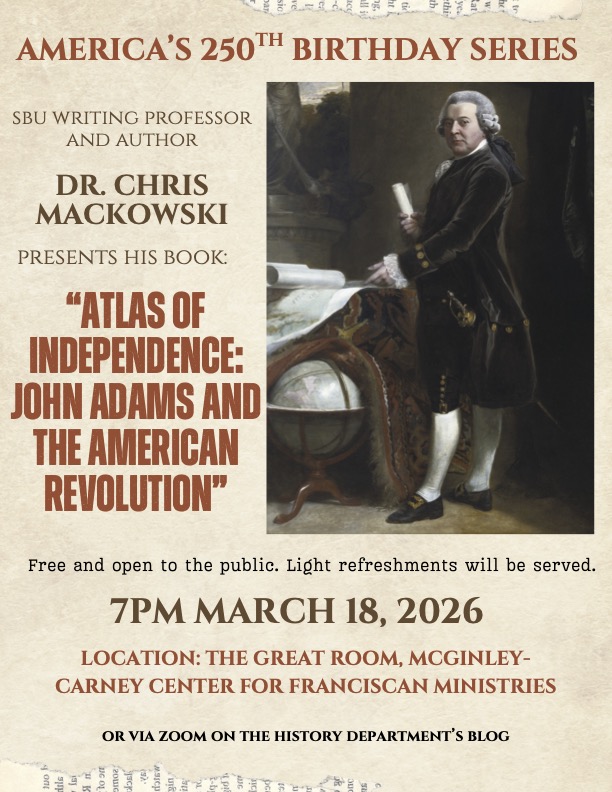
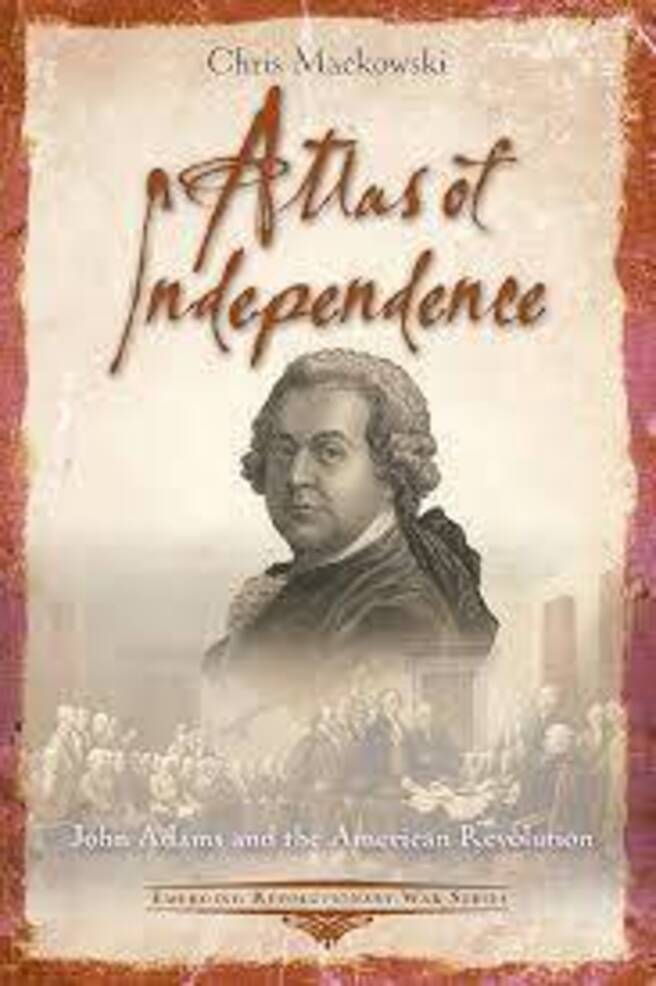
Coming Soon: Atlas of Independence: John Adams and the American Revolution

We’re excited to share a sneak-peak of our next upcoming title in the Emerging Revolutionary War Series, published by Savas Beatie:

About the Book:

“The man to whom the country is most indebted for the great measure of independence is Mr. John Adams…. I call him the Atlas of American independence.”

So attested one of the delegates to the Second Continental Congress, moved to support independence after months of angst, indecision, dithering, and fear. Thomas Jefferson called Adams “our colossus on the floor,” arguing with power, passion, and persuasive force of reason why America needed to take the extraordinary step to break from the British Empire and set up an independent nation.

Born of humble means outside Boston, Massachusetts, Adams’s work ethic led him to become one of the colony’s most successful attorneys. Yet he burned with a powerful ambition and yearned for more. “I never shall shine, till some animating Occasion calls forth all my Powers,” he fretted.

Festering tension in Boston with British soldiers and taxation and trade policies—tension that spread across all thirteen colonies—provided the occasion Adam longed for, and soon he found himself at the center of the storm, thrust onto the national stage where all his “Powers” transformed him into the intellectual architect of American independence. Perhaps more than any other American, he rose to the historical moment, urging his contemporaries into the unknown future.

But his efforts came at tremendous cost: long separations from his beloved children and “dearest friend” and wife, Abigail, who forged for herself a role as long-distance political counselor even as she managed affairs on the family farm in a way nearly unprecedented for 18th century America.

“The times alone have destined me to fame,” Adams wrote. Atlas of Independence: John Adams and the American Revolution offers a reader-friendly overview of Adams’s seminal role in that tumultuous Founding time.

About the Author:

Chris Mackowski, Ph.D., is a writing professor in St. Bonaventure University’s Jandoli School of Communication. He is the co-founder and editor-in-chief of Emerging Civil War and advisory editor for Emerging Revolutionary War.

He has written, co-written, or edited more than thirty books.